ER Bills and Collections After a Crash: How Medical Debt Can Pressure Bad Settlements
ER Bills and Collections After a Crash: How Medical Debt Can Pressure Bad Settlements
Educational information only, not legal advice. Medical-billing, lien, reimbursement, collection, and settlement-disbursement issues are fact-specific. Oregon rules may interact with policy language, federal benefits, and the details of your claim.
If an emergency room bill arrives before the injury claim is resolved, it can make a quick settlement offer feel like relief. That is exactly why medical debt pressure deserves careful attention. A settlement release can close the liability claim even when billing, lien, and reimbursement issues are still unresolved.
For the bigger picture, start with our guide to how medical bills, liens, and subrogation change your Oregon injury settlement. This post focuses on the narrower problem of ER bills and collection pressure after a crash.
Quick answer
Do not treat an ER bill, a collection notice, and a settlement lien as the same thing. They may all relate to the same treatment, but they can create different legal and practical problems. Before accepting a settlement, identify which bills PIP has paid or denied, which balances remain unpaid, whether any provider claims a statutory lien, and whether collection activity has started.
Why ER billing can move faster than the injury claim
The ER treats the acute injury first and sorts out payment later. The third-party injury claim usually moves more slowly because it depends on fault, injury documentation, treatment progress, and insurance evaluation. That gap can leave an injured person receiving balance statements and collection warnings while the liability insurer is still “reviewing” the claim.
In Oregon auto cases, personal injury protection may be available under ORS 742.520 and related statutes. The Oregon Division of Financial Regulation explains that PIP covers reasonable and necessary medical expenses incurred within two years, up to $15,000 or the PIP limit. But PIP review does not always stop billing confusion. Providers may need claim information, health insurance may ask about available auto coverage, and denials or delays can leave the patient in the middle.
Collections pressure can distort settlement decisions
Collection pressure is real. It can affect credit concerns, household stress, and the feeling that any cash now is better than waiting. But a low settlement that does not account for unresolved medical bills may only move the problem from the claims file to the injured person’s bank account.
Before signing a release, ask: what bills remain unpaid, who is claiming reimbursement, and what will be paid from settlement funds? A gross settlement number is not the same as net recovery.
What to preserve when ER bills arrive
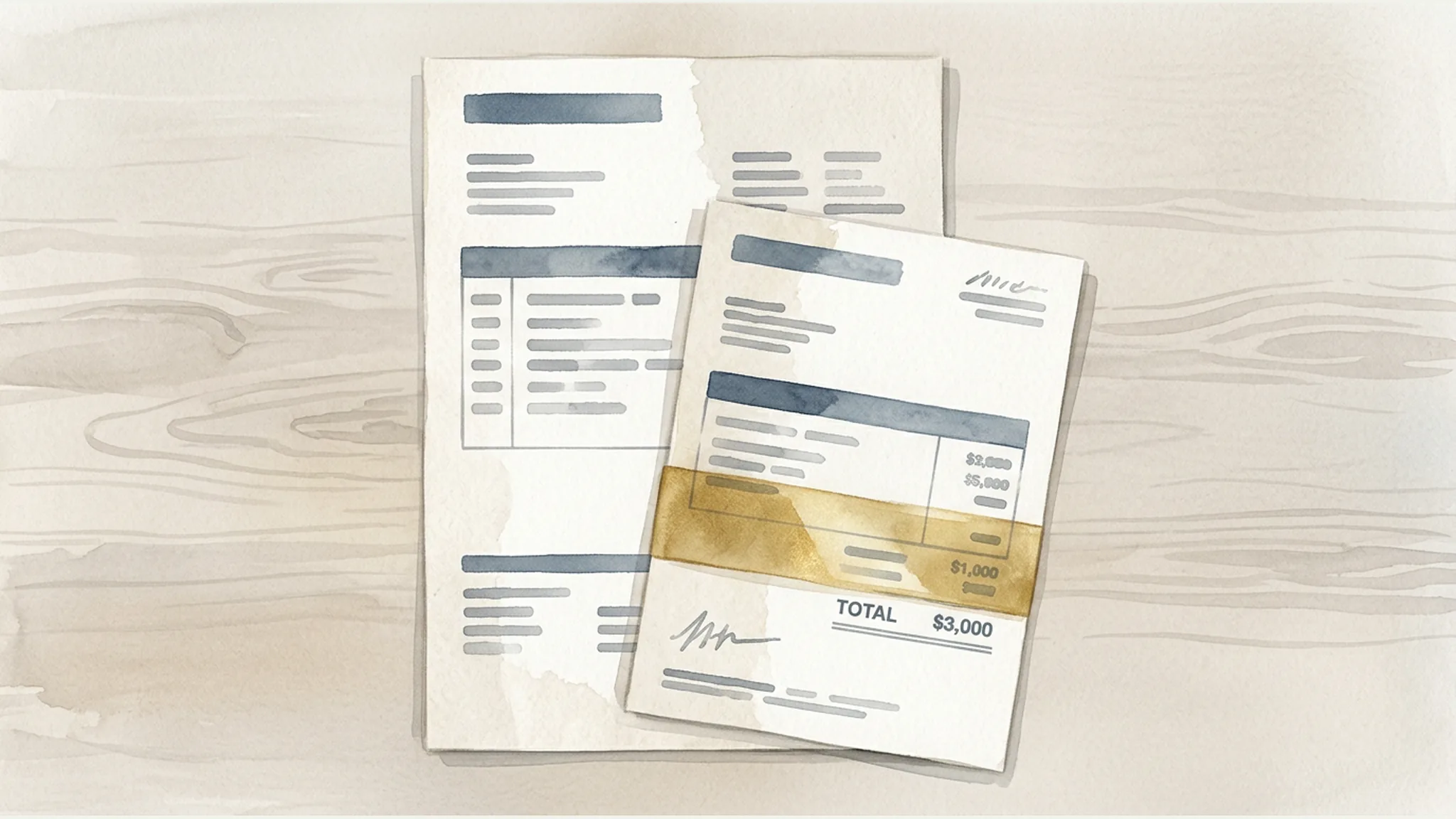
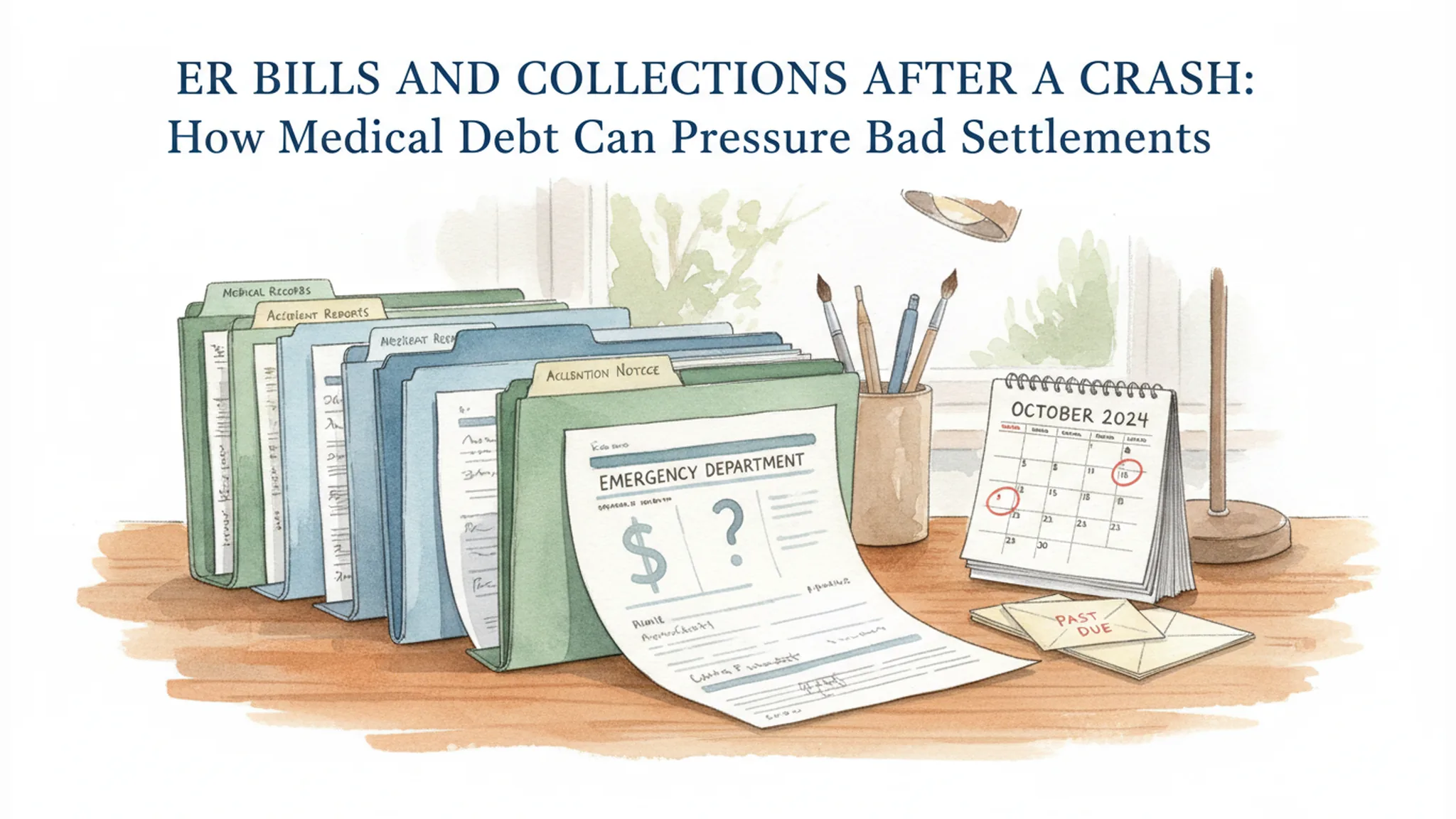
Save the original ER bill, itemized statements, explanation-of-benefits forms, PIP payment logs, denial letters, collection letters, and any notice that uses lien language. If you receive a lien notice, save the envelope and date received. Oregon medical-services lien rules under ORS 87.555 to 87.585 are notice-sensitive, so paperwork details can matter.
Also keep a timeline: crash date, ER date, first bill date, PIP submission date, denial date, collection transfer date, and any settlement offer date. That timeline can help show whether billing pressure is affecting settlement timing before the claim is ready to resolve.
How this connects to liens and reimbursement
Some providers may have statutory lien rights if they comply with Oregon’s medical-services lien statutes. Others may simply have an unpaid bill. PIP reimbursement and health-plan reimbursement are separate categories. For a narrower explanation of Oregon provider liens, see Medical Liens 101 in Oregon.
Sources
Client-First Fee Promise
Client First = Bills First, Fees Second
Your unpaid medical bills do not have to make your lawyer's fee bigger. Johnson Law subtracts qualifying medical bills before calculating our fee, helping clients keep more of their settlement.
Applies to qualifying cases. Results vary.