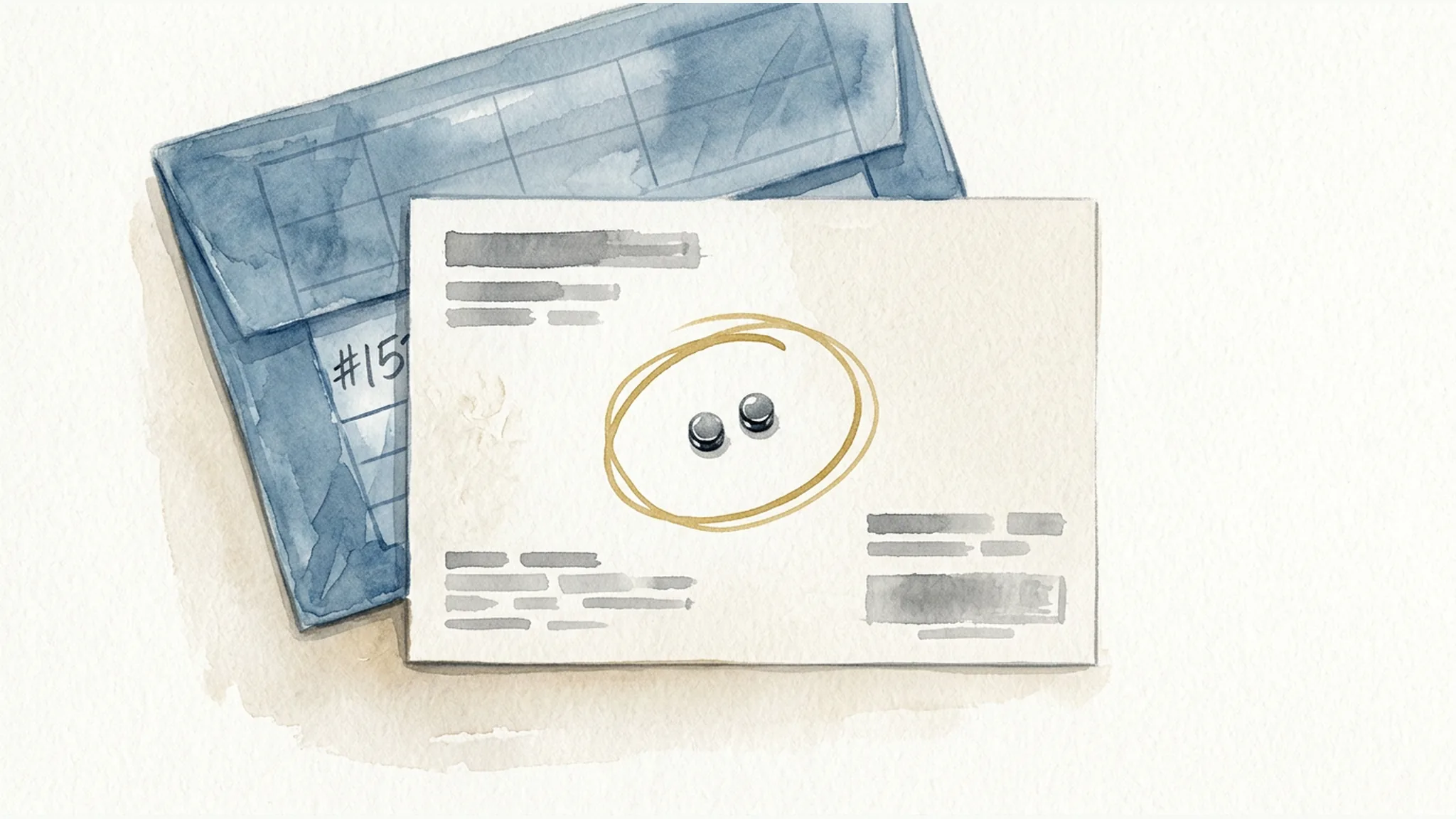
Lithium Battery Toy Burns, Explosions, and Recalls: Is It Automatically a Lawsuit in Oregon?
Lithium Battery Toy Burns, Explosions, and Recalls: Is It Automatically a Lawsuit in Oregon?
No. A toy battery injury, CPSC recall, SaferProducts.gov report, or online warning does not automatically mean there is an Oregon lawsuit.
It may still matter. A recall can identify a hazard. A public incident report can point to a pattern. A burned toy, exposed button battery, overheated battery pack, or damaged charger can become important evidence. But an Oregon product-liability claim still depends on proof: what product was involved, who made or sold it, what defect or warning problem is alleged, whether that condition caused the injury, what harm occurred, whether the evidence is preserved, and whether the claim is timely.
Educational disclaimer: This article provides general educational information only. It is not legal advice, medical advice, or a substitute for emergency care or poison-control guidance. If a child may have swallowed or inserted a button or coin battery, treat that as an emergency and follow medical, poison-control, or emergency-care guidance immediately. Legal questions come after safety and treatment.
For related product-liability context, Johnson Law has separate guides on dangerous baby and child product liability in Oregon, magnet toy ingestion and two-magnet injury risks, preserving child safety product evidence, and why product-defect claims still require proof.
First Priority: Medical and Safety Steps After a Suspected Battery Injury
Battery-toy cases can involve two very different kinds of danger: small button or coin batteries that can be swallowed or inserted, and larger battery packs or electrical components that can overheat, smoke, burn, ignite, or explode. Either situation can be serious. The first question is not “Do we have a case?” It is “Is the child safe, and what care is needed right now?”
Suspected button or coin battery ingestion
The Consumer Product Safety Commission warns that button cell and coin batteries are associated with thousands of emergency-department visits each year. The National Capital Poison Center explains that swallowed batteries can cause severe throat or esophageal burns in as little as two hours, that a battery stuck in the esophagus must be removed as quickly as possible, and that an x-ray is usually needed right away to determine where the battery is.
If ingestion or insertion is suspected, use emergency medical resources right away. Do not wait to see whether symptoms appear. Do not prioritize saving packaging, searching for recalls, or photographing the toy over medical care.
The National Capital Poison Center has published specific button-battery guidance, including narrow circumstances in which honey may be given while traveling to the ER: the child must be at least 12 months old, the battery must have been swallowed within the prior 12 hours, the child must be able to swallow, and honey must be immediately available. The guidance also says not to delay ER care. Johnson Law is not giving medical advice; parents and caregivers should follow clinicians, poison control, and emergency-care instructions.
Burns, smoke, overheating, fire, or explosion
Other battery toy incidents may involve burns, smoke, melting plastic, overheating battery surfaces, a charger or circuit board problem, fire, or an explosion-like event. In those situations, seek appropriate emergency care and avoid unsafe handling of a damaged product.
If it is safe to do so later, the condition of the toy, battery compartment, battery pack, charger, labels, packaging, and surrounding area may be important. But no evidence-preservation step is worth risking another burn, fire, shock, or exposure.
What Kinds of Lithium Battery Toy Hazards Are We Talking About?
“Lithium battery toy injury” can describe several different scenarios. Keeping the categories separate matters because the safety rules, defect theory, evidence, and medical issues may be different.
Button and coin batteries: access, ingestion, and chemical burns
Current CPSC consumer guidance says toys with button cell or coin batteries are required to have a secure closure requiring a screwdriver, coin, or tool to open, and it advises families to check toys at home to make sure battery compartments are secured.
CPSC has also discussed why lithium coin batteries are especially dangerous when ingested: their higher voltage and capacity can create a chemical-burn threat, and even partially discharged lithium batteries can cause life-threatening injuries if swallowed.
In an August 2024 proposed rule about toys containing button cell or coin cell batteries, CPSC estimated 4,500 U.S. hospital emergency-department visits from 2016 through 2022 associated with a person—generally a child—accessing a button or coin battery from a toy. CPSC described that estimate as conservative and a lower bound. That number is important, but it should be read carefully: it concerns button or coin battery access from toys during the 2016–2022 period, not every kind of lithium battery toy injury.
As of the publication review for this post, the toy-specific Federal Register item found for those added button/coin battery requirements was a proposed rule, not a final rule. Product type, manufacture or import date, and the rule in effect at the relevant time can all matter.
Lithium-ion packs: overheating, smoke, fire, burns, and explosions
Some toys or child-oriented ride-on products use rechargeable lithium-ion battery packs or electrical systems. Those cases may involve a different mechanism: overheating, short circuits, charger problems, battery-pack failure, smoke, fire, burns, melting, or explosions.
For example, CPSC’s 2016 recall of self-balancing scooters and hoverboards by multiple firms stated that lithium-ion battery packs could overheat, posing risks of smoking, catching fire, and/or exploding. CPSC reported at least 99 incidents involving overheating, sparking, smoking, fire, or explosion, including burn injuries and property damage. Hoverboards may or may not be treated as “toys” for a particular legal or regulatory analysis, but the recall is a useful example of lithium-ion pack fire and explosion risk.
Burn-hazard recalls may not include reported injuries
Not every battery-related recall includes a reported injury. That is one reason a recall is not the same as an individual legal claim.
In February 2026, CPSC recalled TheKiddoSpace LED Soccer Hover Balls because the toys’ battery surface temperature exceeded the allowable limit, violating the toy standard and posing a burn-injury risk. CPSC reported three burning-smell reports and no injuries at the time of the recall.
That kind of recall may still be important. It may identify a hazard, a product model, a seller, a remedy, or a standard violation. But if a family is evaluating a legal claim, the investigation still has to connect the specific toy and event to an actual injury or property damage.
What a CPSC Recall or SaferProducts.gov Report Does—and Does Not—Mean
Federal product-safety tools are important, but they are not the same thing as an Oregon civil lawsuit.
A recall is a safety notice, not a lawsuit
CPSC recalls can tell consumers that a product presents a hazard, violates a standard, or should be repaired, replaced, refunded, or taken out of use. A recall may help identify the product, manufacturer, importer, seller, hazard, and remedy.
But a recall does not automatically prove that a specific child’s injury was caused by a legally actionable defect. It also does not automatically prove negligence, strict liability, damages, or admissibility of every recall-related fact in court.
Oregon Evidence Code Rule 407 limits the use of later remedial measures to prove negligence or culpable conduct, while allowing them for some other purposes, such as ownership, control, feasibility if disputed, or impeachment. That does not mean recall evidence is never useful. It means recall evidence can be legally nuanced and should not be treated as automatic proof.
SaferProducts.gov reports can be useful leads
SaferProducts.gov is CPSC’s public database for consumer product safety reports. CPSC says reports may help it decide whether to recall a product, fine a manufacturer, create a regulation, or take other action. Reports can describe injury or risk of injury and may include a manufacturer or private-labeler response.
Those reports can be useful leads. They may show that others reported a similar event, identify a model number, or point to a developing safety issue. But they are still reports that require verification. Filing or reading a SaferProducts.gov report does not file an Oregon lawsuit, establish a defect, or prove causation by itself.
Federal battery rules depend on product type and timing
Reese’s Law required federal safety requirements for button cell or coin batteries and consumer products containing them. CPSC’s direct final rule incorporated ANSI/UL 4200A-2023 into 16 CFR part 1263 for covered consumer products.
Toy products can have a specific regulatory pathway. CPSC guidance states that the Reese’s Law requirements under 16 CFR part 1263 do not apply to toy products designed, manufactured, or marketed as playthings for children under 14 if those toys comply with the battery-accessibility and labeling requirements of 16 CFR part 1250, which incorporates ASTM F963.
That distinction matters. A legal or safety analysis may depend on whether the product is a toy, whether it contains a button or coin battery, when it was manufactured or imported, what rule applied at the time, and whether the product complied with the applicable standard.
The Oregon Product-Liability Questions Behind a Battery Toy Case
Oregon product-liability law does not ask only whether a product was dangerous in a general sense. It asks specific questions about the product, alleged defect, causation, harm, defendants, defenses, and deadlines.
What kind of defect or warning problem is alleged?
Oregon defines a “product liability civil action” as a civil action against a manufacturer, distributor, seller, or lessor for personal injury, death, or property damage arising out of a design, inspection, testing, manufacturing, or other defect; a failure to warn; or a failure to properly instruct in product use.
In a battery toy case, that may raise questions such as:
- Was the battery compartment too easy for a child to open?
- Did the toy lack proper screws, covers, warnings, or instructions?
- Did the battery, charger, circuit board, or wiring overheat during reasonably expected use?
- Was there a manufacturing, inspection, testing, or quality-control problem?
- Did the packaging, manual, online listing, or recall notice communicate the hazard clearly enough?
Those are investigation questions, not automatic conclusions.
Was the product unreasonably dangerous, and did that condition cause harm?
Oregon’s strict product-liability statute applies when a seller or lessor sells or leases a product in a defective condition unreasonably dangerous to the user, consumer, or property, and that condition causes physical harm or property damage.
Oregon also has a disputable presumption that a product as manufactured and sold or leased is not unreasonably dangerous for its intended use. In design-defect cases, the Oregon Supreme Court has described the standard as a consumer-expectations test: whether the product was defective and dangerous beyond what an ordinary consumer would expect when it left the defendant’s hands.
That is why injury plus recall is not the whole analysis. A family may still need evidence connecting the specific product condition to the specific injury.
Who may be responsible?
Potential defendants may include a manufacturer, distributor, seller, or lessor. In online-marketplace or imported-product cases, identifying the right company can be one of the hard parts.
Oregon’s strict product-liability statute can apply even if the seller or lessor exercised all possible care and even if the injured user did not buy or lease the product directly from that seller or lessor. That can matter when a toy was a gift, bought by another family member, purchased online, or acquired secondhand.
But the product still has to be identified. Model numbers, seller names, importer information, receipts, packaging, manuals, online order pages, and recall notices may all matter.
What injury or damage is documented?
Product-liability claims are tied to harm. In a battery toy case, documentation may include emergency-room records, x-rays or imaging references, burn treatment, poison-control contact records, photographs of visible injury, property-damage photos, fire reports, damaged clothing or flooring, and a timeline of what happened.
A frightening near miss, a recall notice, or a general fear that a toy could have caused harm may be important from a safety perspective. Whether it supports a civil claim depends on the specific facts and Oregon law.
Examples: How Recall Facts Might Fit Into a Claim Investigation
Recall examples can make the “not automatic” point clearer. They show how different battery-toy hazards are described publicly, but they do not prove any individual claim.
Accessible button batteries in light-up toys
In May 2026, CPSC recalled ZMC Group battery-operated light-up toys because the toys violated the mandatory safety standard for children’s toys by containing button cell batteries that were easily accessible to children, creating a risk of serious injury or death from ingestion.
That kind of recall may be important to investigate when a child accessed a battery from the same product. It may help identify the toy, the hazard, the standard involved, and the recall remedy. But the individual legal analysis would still ask what product was involved, whether the child accessed that battery, what injury occurred, and how the evidence connects the product condition to the harm.
Battery surface temperatures and burn hazards
TheKiddoSpace LED Soccer Hover Balls recall involved battery surface temperatures that exceeded the allowable limit and a burn hazard. CPSC reported three burning-smell reports and no injuries at the time of the recall.
That example shows why a recall is not the same as a damages finding. A product may be recalled for a burn hazard even before CPSC has reported consumer injuries. Conversely, the absence of reported injuries in a recall notice does not prove that no one could have been hurt.
Circuit boards, overheating, and ignition
In March 2026, CPSC recalled FUNTOK 24V ride-on trucks because the circuit board could overheat and ignite, posing fire and burn hazards. CPSC reported 11 reports of catching fire, sparking, burning, melting, overheating, and smoking, with no injuries reported at the time of the recall.
For a family evaluating a possible claim, that type of notice could be a starting point. The investigation may still need the actual truck, charger, battery pack, circuit components if preserved, photographs, purchase records, and documentation of any injury or property damage.
Lithium-ion pack fires and explosions
CPSC’s 2016 hoverboard recall is a broader lithium-ion battery-pack example. It involved reports of overheating, sparking, smoking, fire, and explosion, including burns and property damage.
The lesson is not that every rechargeable ride-on or lithium-ion powered product is defective. The lesson is that battery-pack failures can create serious burn and fire issues, and the legal analysis depends on product-specific evidence.
Evidence Oregon Parents Should Preserve If It Is Safe
Evidence can disappear quickly in a battery toy case. The toy may be thrown away, the battery may be removed, the online listing may change, the seller may disappear, or the recall page may be hard to connect to the exact model.
Preserve evidence only if it is safe. Do not handle burned, smoking, leaking, energized, or unstable products without appropriate safety guidance. Johnson Law’s general guide to preserving evidence after an accident explains why avoiding alteration, disposal, or loss can matter in injury cases.
Preserve the product and battery components
If safe, keep the toy and related components, including:
- the toy itself;
- the battery, button or coin cell, battery pack, or replacement batteries;
- the battery door, screws, clips, cover, or compartment parts;
- the charger, cord, adapter, or charging base;
- any circuit board or electrical component that detached; and
- damaged packaging, labels, warnings, or instructions.
Do not repair, test, recharge, or disassemble the product just to “see what happened.” Changing the product may create evidence problems and safety risks.
Photograph condition and access points
Photos may help document the product before it is moved, discarded, repaired, or degraded. Consider photographing:
- the battery compartment and how it opens;
- whether a screw, coin, or tool appears necessary;
- missing screws, loose covers, broken tabs, or accessible batteries;
- warning labels and age labels;
- burn marks, melted areas, smoke damage, or fire damage;
- the toy’s model number, serial number, brand, importer, and seller labels; and
- the packaging, manual, and online listing if available.
Save purchase and seller information
Seller identity can matter, especially for imported toys, marketplace purchases, gifts, and secondhand products. Save receipts, order confirmations, marketplace pages, seller profiles, shipping labels, manuals, warranty cards, recall notices, emails, and screenshots showing the product name, model, seller, and date.
If the toy was a gift, ask the purchaser to preserve their order records before the account history, listing, or seller page changes.
Keep medical and incident records
Medical and incident records can help connect the event to the injury. Relevant records may include ER documents, x-ray or imaging references, burn-treatment records, poison-control call information, clinician instructions, photographs of injuries over time, fire-department reports, property-damage estimates, and a written timeline.
Parents do not need to publish or share private medical details publicly. The practical point is to keep records organized and avoid losing evidence that may be needed later.
Why Defendants May Dispute Even a Serious Battery Toy Injury
Serious injuries can still produce disputed claims. That does not mean the injury is not real. It means the legal system requires proof and gives defendants a chance to contest liability, causation, fault, damages, or timing.
Product misuse, alteration, or replacement batteries
In a battery toy case, a defendant may ask whether the product was modified, whether the wrong charger was used, whether replacement batteries were installed correctly, whether the battery door was missing, or whether the toy was used outside its instructions.
Those issues do not automatically defeat a claim. They may become causation or comparative-fault issues depending on the facts. For a broader discussion, see Johnson Law’s guide to product-defect claims and misuse defenses.
Supervision and recall-notice issues
Defendants may also raise caregiver conduct, supervision, storage, prior warnings, or ignored recall notices. These issues must be handled carefully. Child-fault and family-conduct questions are sensitive, age-dependent, and fact-specific.
Oregon comparative-fault law generally reduces damages by the claimant’s percentage of fault and does not bar recovery unless the claimant’s fault is greater than the combined fault of specified others. How that framework applies in a child battery-toy case is not something a general article can calculate.
Causation and product identification
Product identification can be central. A family may know “it was a light-up toy” or “it was a hover ball,” but the legal investigation may need the exact model, manufacturer, importer, seller, purchase date, battery type, and recall match.
Causation can also be disputed. Did the battery come from that toy? Did the burn come from the toy or another source? Did the fire start in the circuit board, charger, battery pack, or elsewhere? The more complete the evidence, the more carefully those questions can be evaluated.
Deadlines Are Important, Especially for Older, Secondhand, or Imported Toys
Oregon deadline rules can be complicated in product-liability cases, especially when a child is injured, the toy is older, the product was imported, or the purchase records are missing.
Oregon product-liability deadlines are fact-specific
Oregon product-liability civil actions for personal injury or property damage generally must be commenced within two years after the plaintiff discovers, or reasonably should have discovered, the injury or property damage and the causal relationship to the product or defendant’s conduct, subject to repose limits.
That is a general rule, not a deadline calculation for any specific family. The discovery date, the product’s purchase history, the defendant’s identity, and the kind of claim can all matter. Johnson Law’s overview of Oregon statute of limitations issues provides broader deadline context, but child product-liability deadlines require case-specific analysis.
Children’s claims can involve tolling, but do not assume there is unlimited time
Oregon has a minor-tolling statute, ORS 12.160, but it does not mean families can wait indefinitely. The statute includes limits, including that the extension may not exceed five years or one year after the child turns 18, whichever occurs first. It also contains a provision addressing a parent, guardian, or conservator’s medical-expense claim when the child’s claim is tolled.
Minor tolling can interact with Oregon product-liability statutes, repose rules, and other claim-specific deadlines. Parents should not rely on a general blog post to calculate the date.
Older, secondhand, imported, or marketplace toys can complicate timing
Oregon product-liability law includes repose provisions tied to when the product was first purchased for use or consumption and, in some situations, the law of the state where the product was manufactured or imported.
That can matter for toys bought used, toys kept for years, toys purchased through online marketplaces, foreign-made products, and products without clear packaging or receipts. If an injury is significant, delay can make evidence and deadline issues harder.
When to Consider Talking With an Oregon Product-Liability Lawyer
It may be worth seeking a legal evaluation when a battery toy incident involves:
- emergency care, burns, ingestion, surgery, hospitalization, scarring, or other significant injury;
- fire, smoke, melting, explosion, or property damage;
- a CPSC recall, standard violation, or similar product-safety notice;
- an accessible button or coin battery compartment;
- unclear manufacturer, seller, importer, or marketplace information;
- a toy received as a gift or bought by someone else;
- a secondhand, older, or imported product; or
- approaching deadlines or uncertainty about when the product was purchased.
An evaluation is not a promise that a claim exists or that any outcome will occur. The purpose is to look at the product, records, injuries, defendants, causation evidence, and timing before evidence disappears or deadlines pass.
Questions about a serious Oregon toy battery injury? Johnson Law can review the product, records, and timing issues and explain possible next steps. Contacting Johnson Law does not create an attorney-client relationship unless both sides agree to representation.
FAQs About Lithium Battery Toy Injuries and Recalls
Does a toy battery recall automatically mean I have a lawsuit in Oregon?
No. A recall may be an important safety warning and evidence lead, but Oregon claims still require proof of a product defect or warning/instruction problem, causation, injury or property damage, responsible parties, and timeliness.
Is a SaferProducts.gov report the same as filing a legal claim?
No. SaferProducts.gov is a CPSC public safety-reporting tool. Reports may help CPSC evaluate recalls, penalties, regulations, or other action, but they do not file an Oregon lawsuit or prove liability by themselves.
What should I do if my child may have swallowed a button or coin battery?
Treat suspected ingestion as an emergency. CPSC and the National Capital Poison Center warn that swallowed button or coin batteries can cause severe injury quickly, including serious throat or esophageal burns. Follow emergency, poison-control, and clinician guidance immediately, and do not delay medical care for legal or evidence-gathering steps.
What evidence should parents keep after a battery toy burn or fire?
If safe, preserve the toy, batteries, battery door or cover, screws, charger, packaging, labels, instructions, receipts, online order records, seller information, recall notices, photographs, medical records, and incident records. Do not handle damaged or unsafe products just to preserve evidence.
Can a case still exist if the toy was a gift or bought online by someone else?
Possibly. Oregon strict product-liability law can apply even if the injured user did not buy or lease the product directly from the seller or lessor. But the product, seller, manufacturer, importer, and purchase history still need to be identified as clearly as possible.
How long do parents have to bring a child’s battery toy injury claim in Oregon?
Deadlines are fact-specific. Oregon product-liability limitation and repose rules, minor tolling, product age, manufacturing or import location, and other issues can interact. Families should not assume there is unlimited time, even when a child is injured.
Sources
- ORS Chapter 30 – Oregon product-liability provisions, including ORS 30.900, 30.905, 30.910, and 30.920
- ORS Chapter 12 – ORS 12.160 minor tolling
- ORS Chapter 31 – ORS 31.600 comparative fault
- ORS Chapter 40 – ORS 40.185 / Oregon Evidence Code Rule 407
- CPSC Button Cell & Coin Battery Information Center
- National Capital Poison Center button battery guidance
- National Capital Poison Center button battery ingestion guideline
- CPSC Button Cell and Coin Battery Business Guidance
- eCFR – 16 CFR Part 1263
- Federal Register – CPSC proposed rule, “Safety Standard for Toys: Requirements for Toys Containing Button Cell or Coin Cell Batteries,” 89 FR 65791
- Federal Register – extension of comment period for the proposed toy button/coin battery rule, 89 FR 79488
- CPSC recall – ZMC Group battery-operated light-up toys
- CPSC recall – TheKiddoSpace LED Soccer Hover Balls
- CPSC recall – FUNTOK 24V ride-on trucks
- CPSC recall – self-balancing scooters and hoverboards
Client-First Fee Promise
Client First = Bills First, Fees Second
Your unpaid medical bills do not have to make your lawyer's fee bigger. Johnson Law subtracts qualifying medical bills before calculating our fee, helping clients keep more of their settlement.
Applies to qualifying cases. Results vary.