Portland Transit Injury Claims: What Changes When TriMet, MAX, or Streetcar Is Involved
Portland Transit Injury Claims: What Changes When TriMet, MAX, or Streetcar Is Involved
Educational information only, not legal advice.
If you are hurt in a Portland transit-related incident, the biggest legal difference is often not the size of the vehicle or the fact that public transportation was involved. The bigger issue is that many of these claims raise public-body rules under Oregon law.
That can change the timeline, the notice analysis, the evidence strategy, and even who the proper defendant may be. A TriMet bus crash, a MAX platform fall, a Portland Streetcar incident, or an injury in a transit parking or transfer area may look like an ordinary injury claim at first. But once a public body is involved, the Oregon Tort Claims Act, often called the OTCA, can become central.
If you want broader background first, see our Oregon personal injury guide, our personal injury practice area page, and our post on preserving evidence after an accident.
This guide focuses on public transit. A collision at an Oregon grade crossing involving a freight railroad or a private-road crossing used by a non-transit railroad requires a different signal, sightline, entity, and train-evidence analysis; see our guide to Oregon railroad-crossing injury claims.
Why transit injury claims are not always handled like ordinary private injury cases
Under Oregon law, TriMet is not treated like an ordinary private transportation company. A mass transit district is a local government body, and Oregon statutes also describe a mass transit district as a municipal corporation and public body. That matters because Oregon’s tort rules for public bodies work differently from the rules people usually associate with a standard car crash or private-property injury case.
The OTCA generally provides the exclusive tort-remedy framework for public bodies and for their officers, employees, or agents acting within the scope of their duties. In practical terms, that means a transit injury claim may start with public-body analysis instead of only ordinary negligence analysis.
That does not mean every incident near transit automatically has the same defendant or the same legal path. The details still matter. A rider injury on a TriMet bus, a fall on a MAX platform, a Streetcar incident, or a hazard in an adjacent area may involve different entities, different property-control questions, or a mix of public and private actors.
When TriMet, MAX, and Portland Streetcar should be treated differently
TriMet bus and MAX incidents
TriMet publicly states that it provides bus, light rail, and commuter rail service in the Portland region. That makes TriMet an obvious starting point for many bus and MAX-related incidents.
Oregon law also defines a mass transit system broadly. The statutory definition includes property, equipment, and improvements used to move passengers, including park-and-ride stations, transfer stations, parking lots, malls, and skyways. So a transit-related claim is not limited to what happens inside a vehicle. A claim involving a MAX platform, transit center, or park-and-ride area may still raise TriMet and OTCA issues.
For example, a LIFT name on a vehicle is a starting point, not proof of the driver’s legal employer, agency relationship, or proper defendant. Use the vehicle identifier, incident date, and time to help verify who operated the vehicle and in what role. Those facts also matter when identifying the proper notice recipient; branding alone does not establish which public-body rules apply to an operator or contractor.
Portland Streetcar incidents
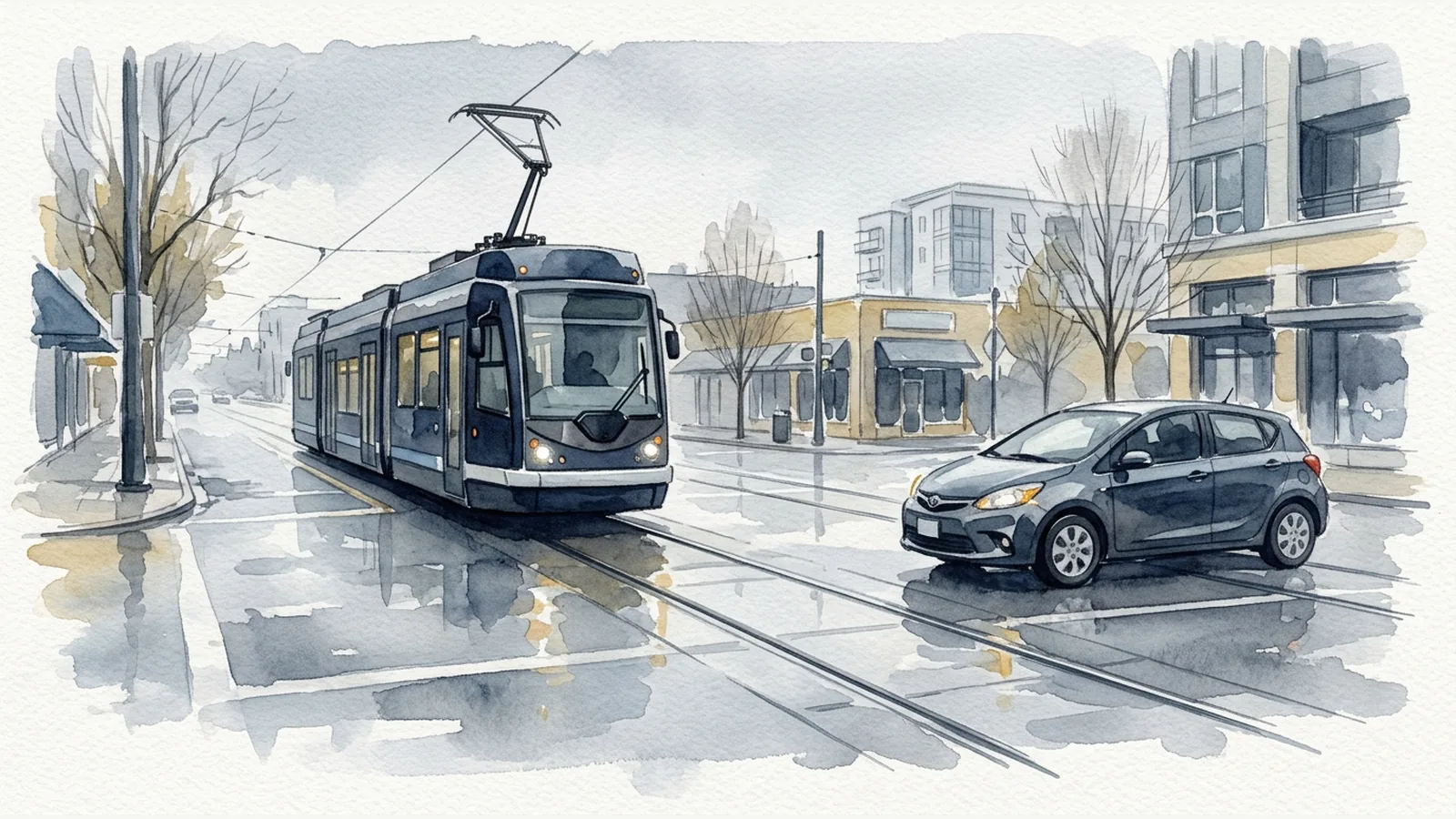
Portland Streetcar should not be collapsed into TriMet. The official Streetcar site separates Streetcar contacts from TriMet MAX and bus contacts, and the Streetcar materials also point to City of Portland, PBOT, or other public-entity questions.
That means Streetcar incidents can raise municipal or public-body issues too. But the safer approach is to verify the exact legal entity or entities involved instead of assuming every Streetcar claim should be handled exactly like a TriMet claim.
Why entity mix-ups matter early
The OTCA has specific notice rules, including rules about where formal notice must be delivered for a local public body. If the wrong entity receives a complaint or notice, that may create problems later.
That is why readers should avoid assuming that contacting the wrong office, filing a general customer-service complaint, or sending information to the wrong transit system protects a claim. With Portland Streetcar in particular, entity verification may need extra attention at the beginning because the proper notice target may depend on the incident-specific facts.
The first major change: OTCA notice issues can matter long before the lawsuit deadline
The general notice rule
For claims governed by the OTCA, timely notice issues are one of the biggest ways a transit injury claim can differ from an ordinary private-party injury case. In practice, many claimants reduce risk by giving prompt formal notice, but the statute recognizes more than one way notice may be satisfied.
The 180-day deadline and the wrongful-death timeline
In general, OTCA notice must be satisfied within 180 days after the alleged loss or injury. For wrongful death claims, the general notice period is one year. Oregon law also excludes up to 90 days in certain situations when the injured person is unable to give notice because of injury, minority, incompetency, or other incapacity. This is not an automatic extra 90 days; the statutory conditions must be evaluated.
These notice issues can arise quickly, especially when someone assumes they have plenty of time because they are thinking only about a standard injury filing deadline.
Why the two-year lawsuit deadline is not the whole story
Under ORS 30.275(9), OTCA claims generally must be commenced within two years after the alleged loss or injury, subject to the listed statutory exceptions. Giving notice does not commence a lawsuit or restart that period. That sounds familiar because many ordinary Oregon personal-injury claims also use a two-year limitations period.
But the comparison can be misleading. Because the notice analysis can arise well before the ordinary lawsuit deadline, readers should not assume the two-year filing period tells the whole timing story.
If you want more general deadline background, our statute of limitations guide covers the broader timing framework.
What formal notice must include
Formal OTCA notice must generally be in writing. It must state that a claim for damages is or will be asserted, and it must include the time, place, and circumstances of the event so far as known, along with the claimant’s name and mailing address.
For a local public body, Oregon law also specifies where that notice generally must go, such as the public body’s principal administrative office, a member of its governing body, or an attorney designated as general counsel.
Why a complaint or incident report may not be enough
Under ORS 30.275(6)–(7), qualifying actual notice must reach a statutorily authorized recipient, give the recipient actual knowledge of the time, place, and circumstances giving rise to the claim, and reasonably indicate the particular person’s intent to assert a claim. Awareness of a collision alone is insufficient, but informal communication is not categorically disqualified.
The claimant bears the burden of proving sufficient notice. Do not assume a complaint or incident report meets the content, recipient, and timing requirements. Our guide to Oregon public-body claim notice explains the broader framework.
Defendant identification can be more complicated than in a typical crash case
Public body versus employee or operator
The OTCA changes how defendants are analyzed. Under Oregon law, the tort remedy against a public body and its officers, employees, or agents acting within the scope of duties is exclusive. Oregon law also directs courts, in claims within OTCA damages limits, to substitute the public body as the defendant when a plaintiff sues a public officer, employee, or agent acting within the scope of duties.
That can make the case structure different from an ordinary collision where a driver and employer may both remain central in a more familiar private-case format.
Transit property, adjacent property, and mixed-control scenarios
Transit incidents do not always happen in a simple vehicle-on-vehicle setting. They can involve station approaches, platforms, transfer areas, park-and-rides, sidewalks, parking lots, or other connected spaces.
Because Oregon’s statutory definition of a mass transit system is broad, some of those areas may fall within transit-property analysis. But that does not mean every nearby surface or adjoining location is automatically controlled by the same entity. In real cases, property control may need to be verified carefully.
Streetcar cases may require extra entity verification
This is especially important in Portland Streetcar matters. The public-facing materials support the idea that Streetcar incidents can involve municipal or public-system issues, but they do not justify assuming one fixed defendant in every case.
If the incident involves Streetcar operations, Streetcar property, city infrastructure, contractors, or adjacent property conditions, the proper notice target and the proper defendant may require fact-specific verification.
For a related public-body context, see our post on road-hazard injury claims against a city or state in Oregon.
Evidence can disappear quickly in transit cases
Why early evidence preservation matters
Transit claims may involve surveillance footage, incident records, operator information, and other system-specific evidence that can become harder to obtain over time.
TriMet’s public-records page specifically warns that requests for video surveillance data should be submitted promptly because the video is generally available only within a limited window before it is automatically overwritten. That makes early evidence preservation especially important in bus, MAX, platform, and station-area cases.
The separate guide to who may hold Portland camera footage and why retention varies maps the possible private, City, and TriMet custodians and the different request paths they may require.
Records requests are not the same as tort-claim notice
- Incident report: Documents an event; it is not automatic proof that a damages claim reached an authorized recipient.
- Records or preservation request: Seeks existing material or asks that it be retained. Using TriMet’s public-records process does not guarantee footage exists, will be produced, or will be preserved. Neither type of request automatically satisfies claim notice.
- Claim notice: Must satisfy the applicable statutory route, content, recipient, and timing requirements under ORS 30.275. It addresses claim rights, not the separate work of identifying and preserving evidence. Completing one task should not be assumed to complete the others.
TriMet, MAX, and Streetcar evidence differences
Evidence may differ depending on the transit system and the type of incident. TriMet publicly notes limited availability for surveillance video and possible charges for some on-board video extraction. Portland Streetcar’s public materials reference onboard camera installations, which suggests that footage may exist in at least some cases.
At the same time, the sources reviewed here do not provide a fixed public retention period for Streetcar footage, and this article does not assume one. That kind of detail may need to be confirmed in a specific case.
Bus route, operator, and police records may follow separate paths
After a TriMet bus collision or sudden-stop injury, useful identifying details can include the route number, vehicle number, direction of travel, stop or intersection, date, and precise time. Those details may help identify the operator, onboard video, incident materials, dispatch or operational records, and other bus-specific evidence. Witness names, photos, and medical documentation still matter too.
If Portland police responded, police records may need to be requested separately from TriMet records. The Portland Police Bureau says its public-records process is used to seek non-exempt reports and records, while information connected to an ongoing investigation may be exempt from disclosure. Oregon law also provides for a TriMet Crash Advisory Committee to review qualifying injury or fatal crashes, although the committee may decline some reviews. Its existence should not be taken to mean that every bus incident produces an immediately available public file.
Public-records production may involve fees, redactions, exemptions, or delay. TriMet’s records process, a police-records request, an evidence-preservation request, and OTCA notice are separate steps; completing one should not be assumed to complete the others.
Control of the location affects the evidence trail
The question of who controlled the location can also affect where records may be found. Surveillance, maintenance information, and incident reporting may sit with different entities depending on whether the event happened on a vehicle, on transit property, in a city-controlled area, or in a mixed-control location.
That is one reason early case review in a transit matter often focuses on both evidence preservation and entity identification at the same time.
For the broader spoliation framework, read Don’t Lose Your Evidence: Understanding Spoliation in Personal Injury Cases.
Damages limits, punitive-damages restrictions, and immunity issues can change case value and strategy
OTCA damages limits
Claims against local public bodies under the OTCA are subject to statutory damages limitations for personal injury and death, with annual cost-of-living adjustments after July 1, 2015.
The important point for readers is structural: public-body claims may involve damages limits that do not apply the same way in many private cases. The exact adjusted figure depends on the year the claim arose and should be verified for that incident year from an official Oregon source.
No punitive damages under the OTCA
Oregon law also states that punitive damages may not be awarded on claims subject to the OTCA. That is another way a public-body transit claim may differ from some private tort cases.
Immunity can depend on how the claim is framed
Public-body immunity issues can matter too. Oregon preserves immunity for certain discretionary functions or duties, even if the discretion was abused.
That does not mean every transit injury claim is barred. It does mean the framing of the claim can matter. A claim focused on day-to-day operational negligence may present different issues than a claim aimed at broader policy choices, route planning, or design decisions.
Why this matters for readers
Taken together, notice requirements, public-body defenses, damages limits, punitive-damages restrictions, and defendant-substitution rules can change the practical shape of a case. They can affect early evaluation, timing, evidence strategy, and expectations.
That is why a Portland transit injury claim should not be treated as if it were automatically identical to a routine private-driver or private-property claim.
Common Portland transit scenarios where these issues come up
TriMet bus collision or sudden-stop injury
If someone is hurt in a TriMet bus collision or in a sudden-stop event while boarding or riding, the claim may involve a public body from the start. That can make early notice and early evidence preservation especially important.
Bus-specific fault can also be more complicated than asking whether the bus struck another vehicle. Depending on what happened, the evidence may need to address the operator’s lookout, speed, following distance, turn, lane movement, braking, or response to traffic; whether a passenger was boarding, seated, standing, or preparing to exit; and whether another motorist, cyclist, pedestrian, or road condition caused or contributed to an evasive maneuver.
A sudden stop does not by itself establish who was legally at fault. Onboard video, passenger and street witnesses, vehicle positions, operator and route records, police materials, and evidence from other involved motorists may help reconstruct why the bus stopped, swerved, or collided. A private driver who cut off or struck a bus may remain important even when TriMet is also part of the analysis, and Oregon comparative-fault rules may require responsibility to be evaluated among multiple parties.
Claims involving private intercity and charter buses require a different passenger-carrier, trip-classification, and company-record analysis. They should not be treated as TriMet matters merely because both involve buses.
MAX platform or station-area fall
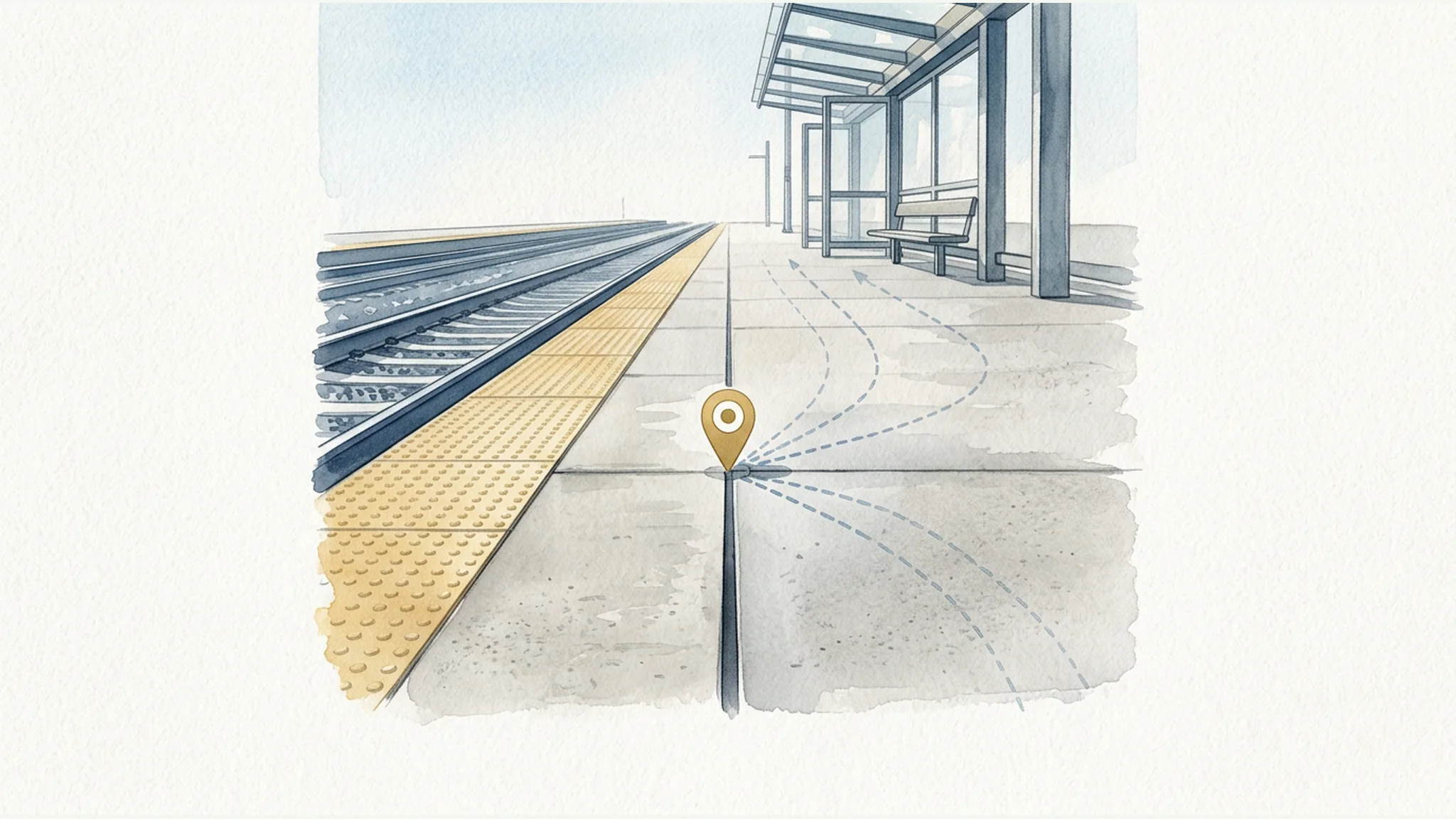
A fall on a MAX platform or in a station area may raise questions about who controlled the exact location and whether the area is part of the transit system, another public body’s property, or a mixed-control setting. Those control questions can affect both notice and defendant identification.
For a narrower discussion of station-area slips, trips, assaults, lighting, and platform-control evidence, see our guide to MAX platform injury claims in Portland.
Portland Streetcar collision or onboard incident
An onboard Streetcar injury or Streetcar-related collision can also raise public-body issues. But because the correct legal entity may not be obvious from the rider’s perspective, it is important not to oversimplify these claims.
For a closer look at tracks, turning vehicles, signal phases, operator conduct, entity roles, and collision records, see our guide to Portland Streetcar collision liability.
Park-and-ride or transfer-center injury
Oregon’s statutory definition of a mass transit system specifically includes park-and-ride stations, transfer stations, and parking lots. So an injury in one of those locations may still involve transit-related public-body analysis rather than only a standard private premises framework.
Practical steps after a Portland transit injury
After a transit-related injury in Portland, practical early steps often include:
- getting medical care and documenting what happened;
- identifying whether TriMet, MAX property, Portland Streetcar, another public body, a contractor, or a private actor may be involved;
- avoiding the assumption that an informal complaint protects the claim;
- moving quickly to preserve evidence, especially potential video; and
- treating Oregon public-body deadlines as urgent.
These steps do not guarantee any outcome, but they can help preserve information and reduce the risk of missing a transit-specific issue early.
FAQ
Does a TriMet injury claim have the same deadline as a normal Oregon injury case?
Not necessarily. The lawsuit deadline may still be two years in many situations, but OTCA notice issues can matter much sooner. For many injury claims involving a public body, the 180-day OTCA notice period can become important very quickly, and many claimants address that risk by giving prompt formal notice.
Is filing a complaint with TriMet enough to protect my claim?
Not automatically. A complaint may qualify as actual notice only if its content, authorized recipient, and timing satisfy the statute. The claimant bears the burden of proof; merely reporting an incident is not enough to assume the claim is protected.
If I was hurt on a MAX platform, is TriMet always the defendant?
Not automatically. TriMet may be central in many MAX-related matters, but the exact property area and who controlled it may still need to be verified.
Are Portland Streetcar claims handled the same way as TriMet claims?
Not automatically. Streetcar incidents can raise public-body issues too, but the correct entity should be verified carefully rather than assumed.
Can video footage from a transit incident disappear?
Yes. TriMet publicly says surveillance video should be requested promptly because it is generally available only for a limited time before being overwritten. Public materials reviewed here also suggest that some Streetcar incidents may involve onboard camera footage, but this article does not assume a specific retention period for Streetcar video.
Who may be responsible for a sudden stop on a TriMet bus?
It depends on why the stop occurred and whether anyone failed to use reasonable care. The evidence may point toward operator conduct, another motorist or road user, a road condition, or more than one contributing cause. The fact that a passenger fell during braking does not, by itself, resolve fault.
Do Oregon public-body claims have damages limits?
Yes. OTCA claims can involve statutory damages limitations, but the exact amount depends on the incident year and should be verified from an official Oregon source.
Bottom line
When TriMet, MAX, or Portland Streetcar is involved, the key difference is often not just the transit setting itself. The bigger change is that Oregon public-body law may affect the claim from the beginning.
That can mean earlier notice issues, more complicated defendant identification, faster evidence-preservation concerns, and additional limits or defenses that do not appear in the same way in many private cases. For Portland transit injuries, early factual and procedural review can matter alongside the underlying facts of how the injury happened.
Source notes
This article is based on Oregon statutes and public-agency materials, including ORS 267.200, ORS 174.116, ORS 30.265, ORS 30.269, ORS 30.272, ORS 30.275, ORS 31.600, ORS 31.610, Oregon public-records statutes in ORS chapter 192, TriMet public-records and security materials, Portland Police Bureau records information, and ORS 267.480.
- ORS 30.275, including subsection (2) on notice timing, (6)–(7) on actual notice and proof, and (9) on commencing an action.
- TriMet public records, for records requests and availability limitations.
Client-First Fee Promise
Client First = Bills First, Fees Second
Your unpaid medical bills do not have to make your lawyer's fee bigger. Johnson Law subtracts qualifying medical bills before calculating our fee, helping clients keep more of their settlement.
Applies to qualifying cases. Results vary.