Rideshare Hit-and-Run: What to Do When the At-Fault Driver Disappears
Rideshare Hit-and-Run: What to Do When the At-Fault Driver Disappears
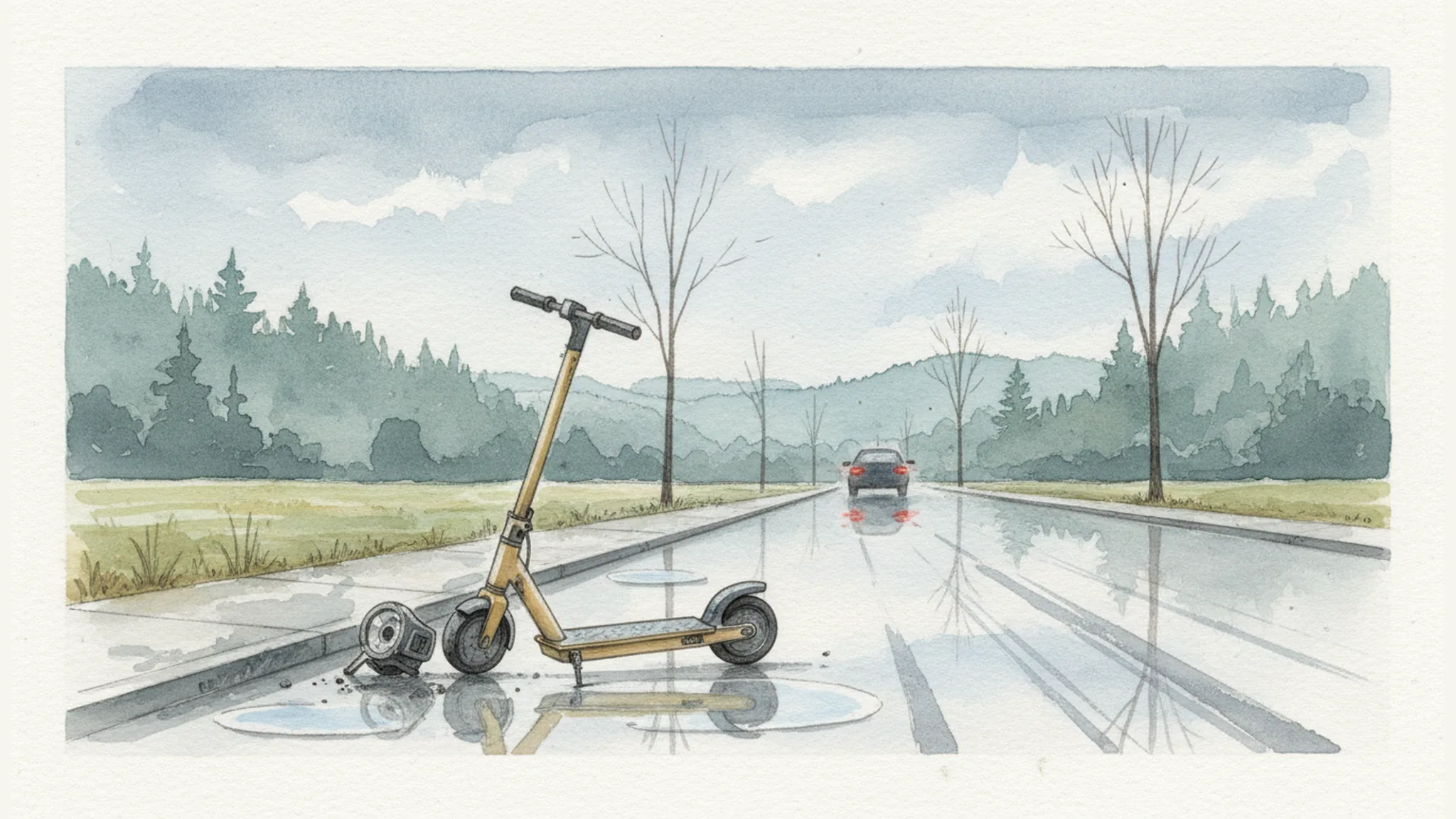
A rideshare hit-and-run can feel like the claim left with the other driver. It may not be that simple.
If you were injured as an Uber or Lyft passenger, or while driving for a rideshare platform in Oregon, there may still be records to preserve and possible insurance paths to evaluate. The key is not to guess which policy applies in the first few hours. The key is to make the crash traceable: get medical help, report promptly, save app evidence, notify the right insurers, and protect time-sensitive Oregon uninsured motorist issues.
Educational information only, not legal advice. This article is Oregon-focused educational information, not legal advice. Coverage depends on the facts, app status, policy language, notices, and applicable Oregon or local rules.
Key takeaways
- A disappearing at-fault driver does not automatically end a rideshare hit-and-run injury claim, but coverage is not automatic.
- Police, Oregon DMV, rideshare platform, and insurance notices serve different purposes. One notice usually does not replace the others.
- Save rideshare-specific evidence quickly: trip receipts, route maps, screenshots, messages, app status, crash-report confirmations, photos, witness information, and nearby camera locations.
- Oregon PIP, UM/UIM, and liability coverage are separate insurance concepts. Do not assume one applies because another might.
- Oregon hit-and-run and phantom-vehicle UM claims can involve technical issues, including physical contact, corroboration, a 72-hour report issue, and a 30-day sworn-statement issue.
The first thing to know: the claim may not disappear with the driver
When another driver leaves after a crash, it is natural to worry that no one can be held responsible. In a rideshare crash, the picture can be especially confusing because several possible records and coverage sources may exist: the rideshare app, the rideshare vehicle’s insurance, the passenger’s own auto policy, the rideshare driver’s personal or platform-related coverage, police records, and any available scene evidence.
Oregon law also treats certain unidentified-driver situations as potentially relevant to uninsured motorist coverage. Under Oregon’s UM statute, an “uninsured vehicle” can include a hit-and-run vehicle or phantom vehicle if the statutory and policy requirements are met. That does not mean UM coverage applies in every case. It means the analysis does not necessarily stop just because the other driver disappeared.
For broader background on the insurance layers in these cases, see Johnson Law’s guide to how Uber and Lyft liability works in Oregon and our page on Oregon rideshare accident claims.
Step 1: Get medical help and make an official report
The first priority is safety. You do not need to solve the insurance map at the scene.
Call 911 for injuries or immediate danger
If anyone is hurt, traffic is dangerous, or emergency help is needed, call 911. If the situation is not an emergency, Oregon DMV guidance still says drivers involved in reportable collisions should immediately notify police, using a non-emergency number when appropriate.
Oregon law requires drivers involved in injury or death collisions to stop, remain at the scene, provide identifying and insurance information, and render reasonable assistance. Oregon also has duties for drivers involved in property-damage collisions. Those duties matter, but an injured passenger or rideshare driver should focus first on safety, medical care, and preserving what can be preserved.
Do not assume a police report satisfies Oregon DMV reporting
Oregon DMV says drivers must submit an Oregon Traffic Collision and Insurance Report within 72 hours when a crash involves injury or death, certain vehicle-damage thresholds, towing with qualifying damage, or qualifying property damage. DMV also states that a driver may still need to file a DMV collision report even if law enforcement files a report.
This DMV reporting rule is directed to drivers, not every injured passenger. If you were the rideshare passenger, you may not be the person required to file the driver report. But if you were driving, do not assume the police report alone handles Oregon DMV reporting.
Oregon DMV’s reporting page is here: Collision Reporting and Responsibilities.
Preserve report numbers and submission records
Keep copies or screenshots of:
- the police case number;
- any DMV collision report submission or copy, if you were required to file one;
- the date and time you contacted police;
- the officer or agency name, if available;
- the crash location and direction of travel; and
- any report or reference number from the rideshare platform or insurer.
These records may matter later if an insurer questions notice, timing, or what happened.
Step 2: Preserve rideshare and scene evidence before it disappears
Hit-and-run claims often turn on details that are easy to lose. App screens change. Dashcam footage is overwritten. Businesses may delete surveillance video. Witnesses leave.
Oregon’s Division of Financial Regulation advises people in crashes to take photos, collect witness information, and contact insurers promptly. In a rideshare hit-and-run, that general advice should be adapted to the app-based setting.
Save app records
If you were a passenger, save:
- the trip receipt;
- trip ID or ride number;
- pickup and drop-off points;
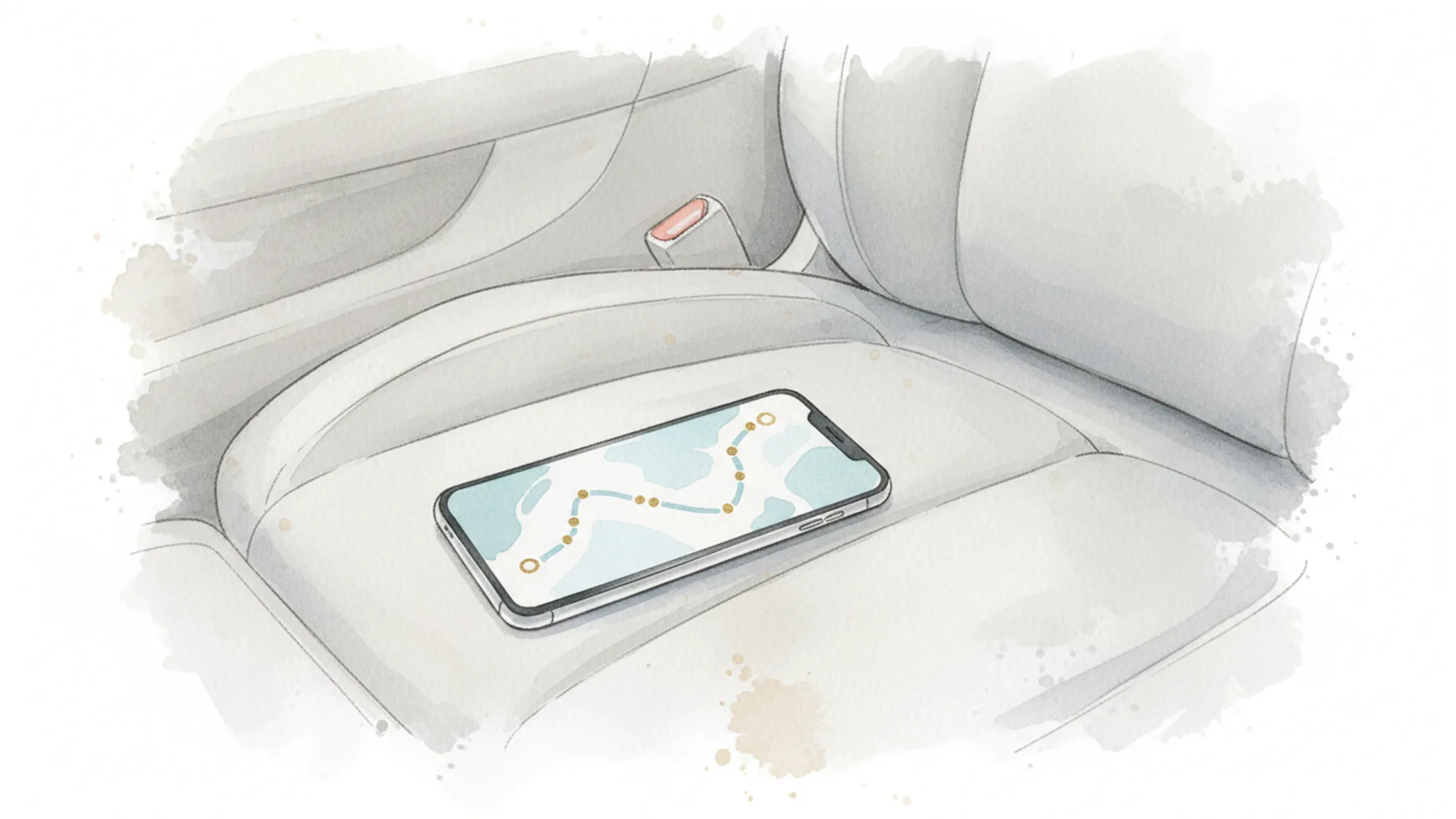
- route map;
- date and time stamps;
- driver name and vehicle information shown in the app;
- messages with the driver or platform;
- fare receipt and payment record;
- any platform crash report confirmation; and
- screenshots before and after reporting the crash.
If you were the rideshare driver, also preserve app-status evidence showing whether you were offline, logged in and waiting, en route to pick up a passenger, or transporting a passenger. Uber and Lyft both describe coverage in terms of app status or trip phase, and public platform pages repeatedly note that coverage can vary by state, status, and policy terms.
For a deeper discussion of why app status can matter, see Johnson Law’s article on how rideshare app status can affect insurance coverage.
Save scene records
If it is safe, photograph or record:
- vehicle damage;
- the crash location from several angles;
- traffic lights, stop signs, lane markings, or construction zones;
- debris, skid marks, glass, paint transfer, or license plate fragments;
- weather and lighting conditions;
- visible injuries, if appropriate; and
- the position of the rideshare vehicle after the crash.
If you cannot safely take photos, write down what you remember as soon as possible. Oregon DFR suggests sketching how a crash occurred if a camera is not available.
Identify witness and camera sources
Try to preserve names, phone numbers, or other identifying information for:
- passengers;
- the rideshare driver;
- nearby drivers or pedestrians;
- businesses with exterior cameras;
- homes with doorbell cameras;
- transit vehicles or stops;
- dashcams; and
- responding officers or agencies.
These details do not guarantee that a claim is proven. They can, however, help connect the crash to an unidentified vehicle and may matter in uninsured motorist or phantom-vehicle analysis.
Step 3: Report the crash to the right places, but keep the notices separate
One of the easiest mistakes after a rideshare crash is assuming that “I reported it” means every required notice has been handled. Police reporting, Oregon DMV reporting, platform reporting, and insurance notice are different.
Police and Oregon DMV reporting
Police and DMV reports create official records. In Oregon, reportable crashes can trigger both law-enforcement reporting rules and DMV reporting rules. Oregon DMV states that if filing within 72 hours is not possible, the report should be submitted as soon as possible.
That 72-hour DMV collision reporting issue is separate from the 72-hour report language that appears in Oregon’s statutory uninsured motorist provisions for hit-and-run and phantom-vehicle claims. Both can matter, but they are not the same notice.
Rideshare app reporting
Report the crash through the rideshare platform where applicable. Uber’s public insurance page instructs drivers involved in crashes to check for injuries, contact police and paramedics if there are injuries or damage, save the police report number, take photos if safe, collect information, and report through app or support channels as soon as reasonable. Uber also identifies rider and third-party accident reporting paths. Lyft likewise describes coverage and claim handling in relation to app status and ride activity.
Before and after reporting through the app, save screenshots and confirmation numbers. Platform reporting can help preserve trip records and trigger a claim process, but it does not replace police reporting, Oregon DMV reporting, or insurance notice.
Insurance notice
Oregon DFR advises crash participants to contact their insurance company as soon as possible because most policies require prompt claim notification. In a rideshare hit-and-run, relevant insurers may include the rideshare vehicle’s insurer, a TNC-related policy, your own auto insurer, or another household policy depending on the facts.
When giving notice, be accurate and avoid guessing. If you do not know the speed, exact sequence, full injury picture, or whether the unknown vehicle made contact, say so. If injuries or coverage are disputed, consider getting legal guidance before giving a detailed recorded statement.
Step 4: Understand the three insurance buckets that may matter
Rideshare hit-and-run claims become confusing when different coverages are blended together. It helps to separate three buckets: liability coverage, PIP, and UM/UIM.
Liability coverage: when someone else is legally responsible
Liability coverage is tied to legal responsibility for causing harm. If the unknown driver caused the crash but cannot be identified, that driver’s liability insurer may be unavailable because no one knows who they are.
That is different from a crash where the rideshare driver may have caused or partly caused the collision. In a known two-driver situation, fault may involve the rideshare driver, another driver, or both. If the other driver is known and both drivers may share responsibility, Johnson Law’s article on what happens when both drivers may share fault may be more directly relevant.
Public Uber and Lyft insurance pages discuss third-party liability coverage at different app stages, but those general descriptions should not be treated as a promise that liability coverage pays for a hit-and-run caused by another driver. Current policies, certificates, app status, and Oregon law must be reviewed.
PIP: early no-fault benefits that may apply in Oregon
Personal injury protection, or PIP, is different from liability coverage. Oregon requires certain motor vehicle liability policies issued for delivery in Oregon to include PIP benefits. Oregon law also requires a transportation network company to provide a motor vehicle liability policy with PIP benefits to each driver who operates a personal motor vehicle in affiliation with the TNC.
Oregon PIP can include up to $15,000 in aggregate reasonable and necessary medical, hospital, dental, surgical, ambulance, and prosthetic expenses incurred within two years after injury. It can also include specified income-loss, essential-services, funeral, and child-care benefits when statutory conditions are met.
That does not mean PIP pays every bill or applies in every rideshare situation. The correct policy, statutory limits, exclusions, deductibles, timing, and coordination rules still matter. For more detail, see Johnson Law’s guide to what Oregon PIP may pay after a crash.
UM/UIM: when the at-fault driver is unknown, uninsured, or underinsured
Uninsured and underinsured motorist coverage is another separate bucket. Oregon law requires UM coverage in motor vehicle liability policies subject to ORS 742.502, and Oregon’s statutory UM provisions include defined categories for hit-and-run vehicles and phantom vehicles. In a true unidentified-driver claim, the issue is usually UM rather than UIM; UIM generally addresses a known underinsured driver’s available liability coverage.
UM/UIM analysis can be especially fact-specific in rideshare cases. A passenger may be occupying a vehicle they do not own. The vehicle may be operating as a public or livery conveyance. The rideshare app status may affect which policies are potentially involved. Oregon’s UM statute includes allocation language for occupants of non-owned vehicles and public or livery conveyances.
In plain English: there may be a possible UM path when the at-fault driver disappears, but it requires careful review. For general terminology, see Johnson Law’s Oregon auto insurance coverage basics.
Step 5: Oregon hit-and-run and phantom-vehicle UM rules can be technical
Oregon’s UM statute draws important distinctions between a hit-and-run vehicle and a phantom vehicle. This is one reason fast reporting and evidence preservation matter.
Physical-contact hit-and-run claims
Under ORS 742.504, a statutory “hit-and-run vehicle” involves bodily injury to an insured caused through physical contact with the insured or with a vehicle the insured occupied, when the owner or operator cannot be identified and statutory conditions are met.
Physical contact can become a key issue. A crash where an unknown car hits the rideshare vehicle and leaves may raise different proof questions than a crash where the rideshare driver swerves to avoid an unknown car and there is no contact.
No-contact phantom-vehicle claims
Oregon’s UM statute separately defines a “phantom vehicle” as a no-physical-contact vehicle that causes bodily injury in a motor vehicle accident when the owner or operator cannot be identified, the facts are corroborated by competent evidence other than claimant testimony, and statutory report and sworn-statement conditions are met.
That corroboration requirement is why witness information, video, dashcam footage, road debris, vehicle movement, and app records may matter. Do not assume a no-contact crash is treated the same way as a physical-contact hit-and-run.
The 72-hour report and 30-day sworn statement
Oregon’s statutory UM provisions for hit-and-run and phantom-vehicle claims include a report within 72 hours to a police, peace, or judicial officer, ODOT, or an equivalent department in the state where the accident occurred. They also include a sworn statement to the insurer within 30 days thereafter setting out the claim against unidentified persons.
These timing requirements can be important. If a rideshare hit-and-run just happened, report promptly and get help identifying which notices are needed. If time has already passed, do not assume the claim is over. Policy language, facts, and Oregon law should be reviewed before reaching that conclusion.
Step 6: Rideshare app status can change the insurance analysis
Rideshare insurance often depends on what the driver was doing in the app at the time of the crash. That is why app evidence belongs near the top of the preservation list.
If you were a rideshare passenger
Save the trip receipt, route, driver information, platform support report, and any communications. A passenger claim may involve the rideshare vehicle’s coverage, the passenger’s own policy, possible PIP, possible UM for an unidentified at-fault driver, or some combination depending on facts and policy terms.
Do not assume you must know which policy applies before you report and preserve evidence. You usually will not have the insurance certificates or policy language at the scene.
If you were the rideshare driver
Save proof of whether the app was off, logged in and waiting for ride requests, matched with a rider, en route to pickup, or carrying a passenger. Oregon law allows an insurer to exclude coverage, including PIP, from a private passenger motor vehicle liability policy for loss or injury occurring while a driver operates a private passenger motor vehicle to provide compensated transportation services in affiliation with a TNC. Oregon DFR also cautions TNC drivers not to assume a personal auto policy will cover TNC driving.
This does not mean there is no coverage. It means the platform status, personal policy, TNC policy, and Oregon statutes need to be reviewed together.
For driver-specific coverage questions after a work-related rideshare crash, see Johnson Law’s guide to PIP, UM/UIM, and gig-worker coverage questions for injured Uber and Lyft drivers.
If the crash happened in Portland
Portland has local TNC insurance rules that define Period 1, Period 2, and Period 3. Portland City Code 16.40.230 also includes insurance requirements for permitted TNCs, including Period 2 and Period 3 requirements that reference UM/UIM coverage.
Those Portland rules are local permit requirements, not a statewide Oregon guarantee in every rideshare crash. They also do not replace review of the actual policy, certificate, app records, and facts. Still, if a crash happened in Portland, those local requirements may be part of the coverage review.
Step 7: What not to do after a rideshare hit-and-run
After a frightening crash, it is easy to make decisions just to get through the day. These guardrails can help protect the record:
- Do not leave medical symptoms undocumented.
- Do not rely only on the rideshare app report.
- Do not assume a police report replaces Oregon DMV reporting if you are a driver with a reportable collision.
- Do not guess about speed, fault, impact, or injuries in insurance statements.
- Do not delete trip receipts, messages, photos, push notifications, or app emails.
- Do not wait to ask about UM notice issues if the at-fault driver disappeared.
- Do not assume late reporting automatically ends the claim, but do not delay getting policy-specific help.
Step 8: How an Oregon lawyer can help sort the coverage map
The hard part of a rideshare hit-and-run is often not one single legal issue. It is the overlap of several issues: app status, PIP, UM/UIM, liability coverage, unknown-driver proof, police and DMV records, platform reporting, and policy notice.
An Oregon lawyer can help by:
- identifying possible PIP, UM/UIM, and liability policies;
- requesting or reviewing rideshare platform insurance certificates and app-trip records;
- preserving evidence for hit-and-run or phantom-vehicle proof;
- tracking Oregon report, notice, and sworn-statement issues;
- communicating with insurers while keeping facts accurate and consistent; and
- explaining how Oregon and, when relevant, Portland-specific rules may affect the analysis.
This review should be individualized. No public Uber or Lyft webpage, and no general article, can determine which policy applies to a specific Oregon crash.
Conclusion: take one step at a time
If the at-fault driver disappeared after a rideshare crash, you do not have to identify every coverage issue before taking useful steps. Get medical help. Report promptly. Save the app records. Preserve scene evidence. Notify insurers carefully. Ask about PIP and UM without assuming either one automatically applies. If another at-fault driver is later identified, UIM questions may also need review.
Johnson Law helps injured people evaluate Oregon rideshare accident claims, including cases involving disappearing drivers and disputed insurance layers. If you were hurt in a rideshare hit-and-run, you can contact Johnson Law for Oregon-specific guidance about your next steps.
This article is for educational information only and is not legal advice. Reading it does not create an attorney-client relationship.
FAQ
Can I make a rideshare hit-and-run injury claim if the other driver was never found?
Possibly, but it depends on the facts and policies. Oregon UM rules, PIP, app status, proof of the unidentified vehicle, notice, and policy language may all matter. A disappearing driver does not automatically end the analysis, but coverage should not be assumed. UIM issues are more likely when a known driver has liability coverage that may be insufficient.
Does Oregon PIP apply even if the hit-and-run driver caused the crash?
PIP may apply without proving fault, but the correct policy must be identified. Oregon PIP is subject to statutory limits, policy terms, exclusions, deductibles, coordination rules, and timing requirements. It should not be treated as automatic payment of all bills.
What is the difference between a hit-and-run vehicle and a phantom vehicle in Oregon UM claims?
Under Oregon’s statutory UM provisions, a hit-and-run vehicle involves physical contact with the insured or a vehicle the insured occupied. A phantom vehicle involves no physical contact and generally requires corroborating evidence beyond the claimant’s testimony, along with report and sworn-statement conditions.
What if I missed the 72-hour report or 30-day sworn-statement deadline?
Act quickly and get policy-specific advice. These requirements can be important in Oregon UM hit-and-run and phantom-vehicle claims, but a late report should not lead you to assume the claim is automatically over without review of the facts, policy language, and applicable law.
Should I report the crash to Uber or Lyft?
Yes, report through the platform where applicable and save proof of the report. But platform reporting does not replace police reporting, Oregon DMV reporting where required, or insurance notice.
Does Portland have special rideshare insurance rules?
Yes. Portland City Code includes TNC period definitions and insurance requirements for permitted TNCs. Those local rules should be treated as Portland-specific. They are not a substitute for reviewing the actual policy, certificate, app records, and Oregon law.
Source notes
- Oregon DMV, Collision Reporting and Responsibilities.
- Oregon Division of Financial Regulation, What to do if you are in an accident and Insurance in a sharing economy.
- ORS Chapter 811 crash duties and reporting statutes, including ORS 811.700, ORS 811.705, and ORS 811.745: Oregon Revised Statutes Chapter 811.
- ORS Chapter 742 UM and PIP statutes, including ORS 742.502, ORS 742.504, ORS 742.520, ORS 742.524, and ORS 742.526: Oregon Revised Statutes Chapter 742.
- ORS 806.070 minimum financial responsibility schedule: Oregon Revised Statutes Chapter 806.
- Portland City Code 16.40.230, TNC Insurance Requirements, cited only for Portland-specific TNC rules.
- Uber, Insurance to help protect you, and Lyft Help, Insurance coverage while driving with Lyft, cited for platform procedure and app-status context, not as Oregon-specific legal authority.
Client-First Fee Promise
Client First = Bills First, Fees Second
Your unpaid medical bills do not have to make your lawyer's fee bigger. Johnson Law subtracts qualifying medical bills before calculating our fee, helping clients keep more of their settlement.
Applies to qualifying cases. Results vary.