VW/Audi Steering Recall 26V590: Vehicles, Bolt Risk and Remedy
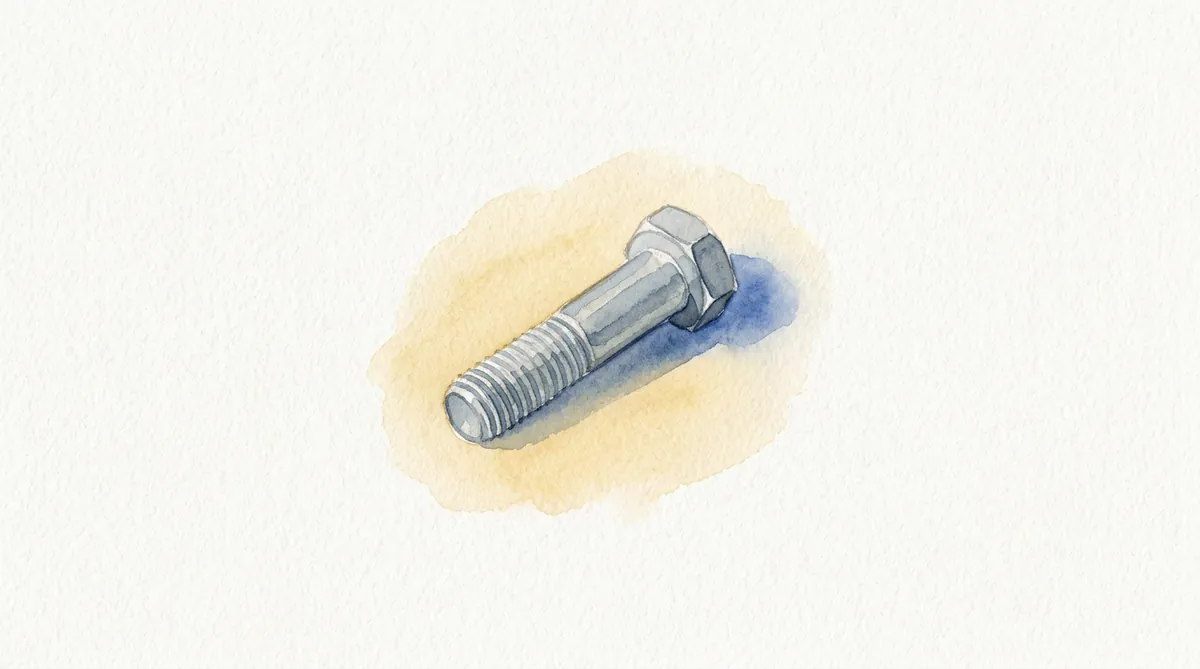
Volkswagen/Audi recall campaign 26V590 concerns a specific connection: a bolt mounting the steering rack to the subframe. According to NHTSA’s September 17 acknowledgment, the bolt may corrode and break. Bolt failure can break the housing and cause loss of steering control.
The recall identifies a potential risk; it does not establish that the bolt failed in every covered vehicle or caused a particular crash.
Which vehicles are included in recall 26V590?
NHTSA’s acknowledgment identifies:
| Item | Campaign details |
|---|---|
| Campaign | 26V590; campaign lookup identifier 26V590000 |
| Manufacturer report date | September 11, 2026 |
| Potentially affected population | 208,724 vehicles |
| Volkswagen models | Certain 2018 Tiguan and 2018–2019 Atlas vehicles |
| Audi model | Certain 2019–2021 Q3 vehicles |
The 208,724 figure is a potentially affected population, not a count of failures or crashes. Only certain vehicles in these model years are included; applicability is VIN-specific. The acknowledgment states that affected VINs were searchable September 16.
The September 11 manufacturer report, September 17 acknowledgment and September 18 Reuters report are separate records, not a timeline of when the condition was discovered. NHTSA also provides a campaign lookup record.
How the mounting bolt can affect steering
The bolt connects the steering rack to the subframe. NHTSA’s acknowledgment describes this possible sequence:
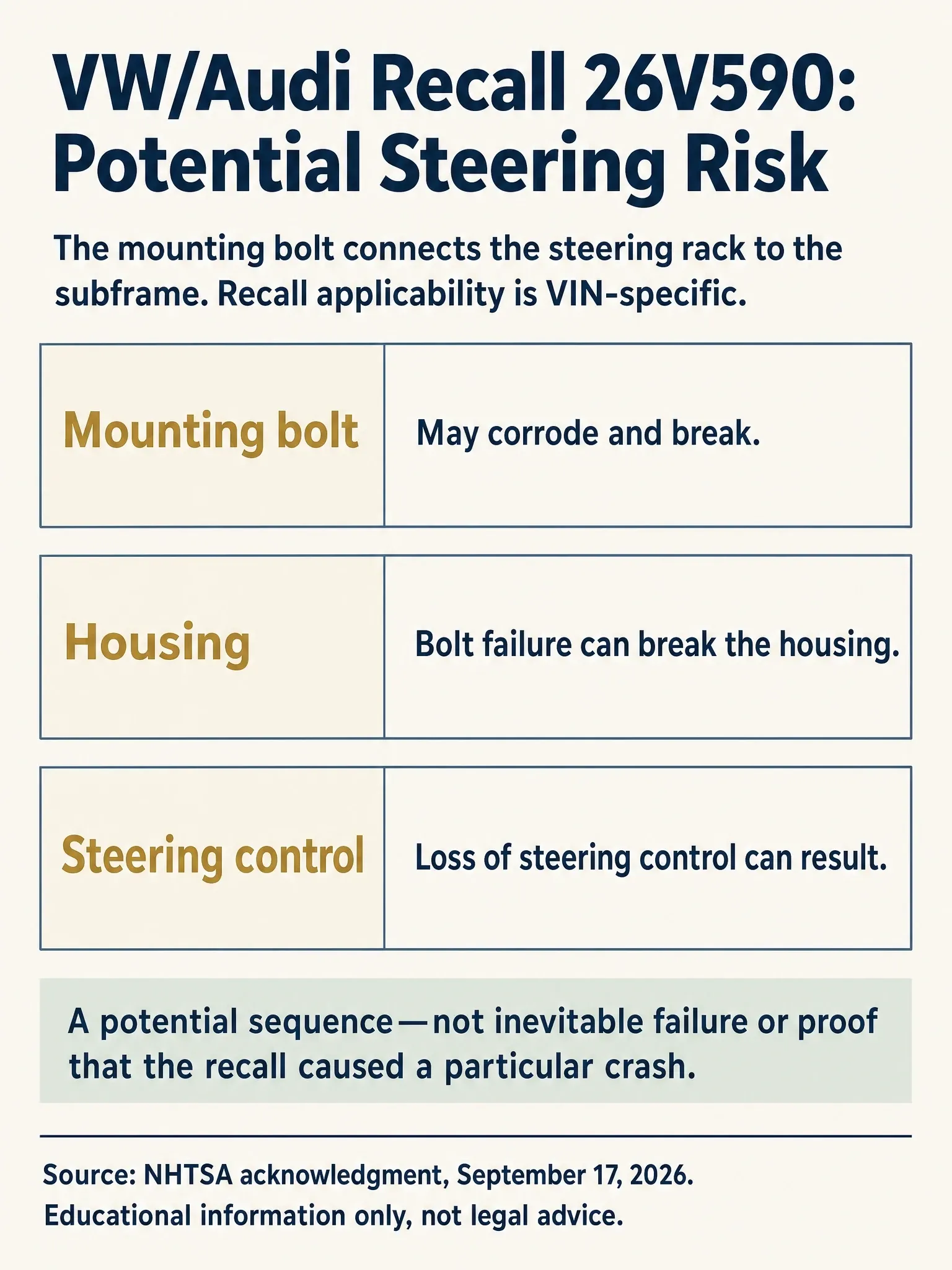
The mounting bolt may corrode and break → bolt failure can break the housing → loss of steering control can result.
This is a potential failure sequence, not an inevitable outcome for every recalled vehicle or a finding about what happened in a particular crash.
What is the announced repair, and when were letters expected?
The announced remedy is free replacement of the right-side steering-rack mounting bolt, not a promise to replace the entire steering rack.
As of September 18, 2026, owner notification letters were expected November 10, 2026. That was a planned mailing date, not confirmation that letters had been sent. It does not establish when repairs are available for an individual vehicle.
For general waiting-period questions, see our general guidance while a recall remedy is pending. That guide does not establish that this campaign’s repair is unavailable.
Does this recall explain a particular crash?
Recall inclusion alone does not show that the bolt failed or caused a crash. For an individual vehicle, the unresolved questions include its VIN, repair history, component condition, and whether damage occurred before, during or after the collision. The campaign summary does not answer those questions.
This article is based on NHTSA’s acknowledgment, not the manufacturer’s Part 573 report, which was not retrieved. It does not establish incident, injury or warranty totals, when the condition was discovered, or its technical root cause. Those limits do not mean that no incidents occurred.
For broader defective-product claim questions, Johnson Law provides separate service information. The existence of this federal campaign does not establish an individual liability claim.
This article provides educational information only, not legal advice.
Sources
- NHTSA acknowledgment for campaign 26V590, dated September 17, 2026: vehicle scope, potentially affected population, mechanism, remedy and notification information.
- Reuters, September 18, 2026 recall report: contemporaneous reporting date.
- NHTSA campaign lookup, 26V590000: campaign reference.
Client-First Fee Promise
Client First = Bills First, Fees Second
Your unpaid medical bills do not have to make your lawyer's fee bigger. Johnson Law subtracts qualifying medical bills before calculating our fee, helping clients keep more of their settlement.
Applies to qualifying cases. Results vary.