Jet Ski Rental Injury Near Portland: When the Waiver Doesn’t Actually End the Case
Jet Ski Rental Injury Near Portland: When the Waiver Doesn’t Actually End the Case
Educational information only, not legal advice. This article provides general educational information about Oregon law and personal watercraft injuries. A specific case can turn on the waiver language, the waterway, the conduct involved, the available evidence, and whether Oregon law, Washington law, federal admiralty principles, or other rules apply.
If you were hurt on a rental Jet Ski or other personal watercraft near Portland, the waiver you signed is important. It may affect what claims are available, what arguments the rental company raises, and how the case is evaluated.
But a waiver is not the only question.
Oregon personal watercraft rentals operate within a broader boating-safety framework. Rental companies may have duties as boat liveries. Operators must follow Oregon PWC rules. Required safety equipment, rental records, written rules, checklist review, accident reporting, and the exact wording of the waiver can all matter.
The Short Answer: A Waiver Matters, But It May Not Be the Whole Case
Signing a jet ski rental waiver in Oregon does not automatically answer every injury-claim question. A waiver may be enforceable in some circumstances and may create real defenses. It can also be limited by its wording, by the facts surrounding how it was presented, and by Oregon’s case-specific approach to certain recreational releases.
The safer way to think about it is this:
- What did the waiver actually say?
- What conduct did it purport to release?
- Was the injured person the renter, a passenger, another boater, a swimmer, or someone on a dock?
- Did the rental company comply with Oregon PWC rental rules?
- Did the operator follow Oregon PWC operating rules?
- Did other parties contribute, such as another boater, marina, dock owner, maintenance contractor, manufacturer, event organizer, or public entity?
- Where exactly did the incident happen?
Those questions can matter because Oregon boating rules and rental-company obligations exist separately from a private waiver form. A signed document may be part of the case, but it is not always the whole case.
Why Oregon Jet Ski Rentals Are More Than a Private Contract
Jet Ski is a brand name, but Oregon sources usually discuss this category as “personal watercraft,” or PWC. Under Oregon’s small-watercraft laws, the legal analysis often begins with a broader boating framework rather than just the rental agreement.
Personal Watercraft as Oregon Boats and Motorboats
Oregon’s small-watercraft chapter defines “boat” broadly as watercraft used, or capable of being used, for transportation on water, with certain exclusions such as beach and water toys, boathouses, and floating homes. Oregon also defines “motorboat” as a boat propelled in whole or in part by machinery.
That matters because a rental PWC used for transportation on the water generally fits within Oregon’s boating-law framework. The Oregon State Marine Board also describes a personal watercraft as a motorboat that uses a water jet pump as its primary propulsion.
In practical terms, a rental jet ski injury near Portland is usually not analyzed only as a private contract dispute. Oregon boating statutes, administrative rules, and Marine Board guidance may all provide context for what should have happened before, during, and after the ride.
Rental Companies as Boat Liveries
Oregon defines an “operator of a boat livery” as a person engaged wholly or partly in the business of chartering or renting boats to others. Oregon law also prohibits a person from acting as a boat-livery operator without a boat-livery registration issued by the State Marine Board.
That does not mean every paperwork problem automatically proves a civil injury claim. It does mean the rental business may have regulatory obligations beyond the waiver itself. If someone is injured, the company’s registration, records, safety checklist, equipment practices, and warnings can become important evidence.
What the Rental Company Was Supposed to Provide or Review
Oregon law and Marine Board rules identify specific rental and livery duties for personal watercraft. These duties are important because they can help show what evidence should exist and what safety steps should have occurred before the PWC left the rental location.
Required PFDs, Decals, and Safety Information
Oregon law provides that a boat-livery operator may not permit a rented boat to depart from the livery premises unless the boat is equipped as required by Oregon small-watercraft statutes. Oregon also directs the State Marine Board to set minimum equipment requirements for boats rented or chartered to the public and authorizes inspections and compliance consequences for rental or charter boats.
For PWC rentals specifically, Oregon administrative rules prohibit renting, leasing, or chartering a personal watercraft unless required equipment is provided. That includes an inherently buoyant wearable personal flotation device for each rider. The rule does not allow inflatable PFDs for PWC rentals.
Oregon PWC livery rules also require a safe-operation decal on every rental personal watercraft. The decal must be clearly visible to the operator while at the controls and must include information such as controls, steering, speed and distance rules, rules of the road, and required PFD wearing.
If a crash, ejection, near-drowning, or collision occurs, these details may matter. Questions about the type and condition of the PFD, whether the decal was present and visible, and what safety information was provided can be part of the factual investigation.
The Watercraft Rental Safety Checklist
Oregon PWC livery rules require the rental business to provide a written copy of Oregon’s PWC rules to the renter and any person who will operate the PWC. The rules also require the Watercraft Rental Safety Checklist to be reviewed by the livery operator with the rental customer and signed by both parties.
That checklist has another important role. Oregon’s boating education statute exempts certain renters from carrying a boating safety education card if the person is at least 16, rents a motorboat over 10 horsepower, and completes the required dockside safety checklist before operating the boat. The Oregon State Marine Board similarly explains that renters generally do not need to complete a boater education course before renting, but they must complete a watercraft rental safety checklist before departure.
The point is not that the checklist proves negligence by itself. It does not replace every safety duty. But it is a required rental document and a useful evidence source. In a disputed injury case, the checklist may help answer what was reviewed, who signed, whether the operator was identified, and whether required PWC rules were actually discussed.
Rental Records and Boat Identification
Oregon boat-livery operators must keep written rental records for at least six months. Those records must include information such as the renter’s name, the boat identifying number, the date and hour of departure, the expected return, and the actual return.
After a PWC injury, those records can help identify the exact craft involved, the rental period, the customer listed on the rental, and whether the business retained basic documentation. They may also help connect the waiver, checklist, boat ID, and incident timeline.
Because the six-month retention period is not long, injured people and families should avoid delay when asking about records or speaking with counsel about preservation steps.
Operator Conduct Can Be a Separate Issue From the Waiver
The rental company’s waiver is one issue. The conduct of the person operating the PWC is another.
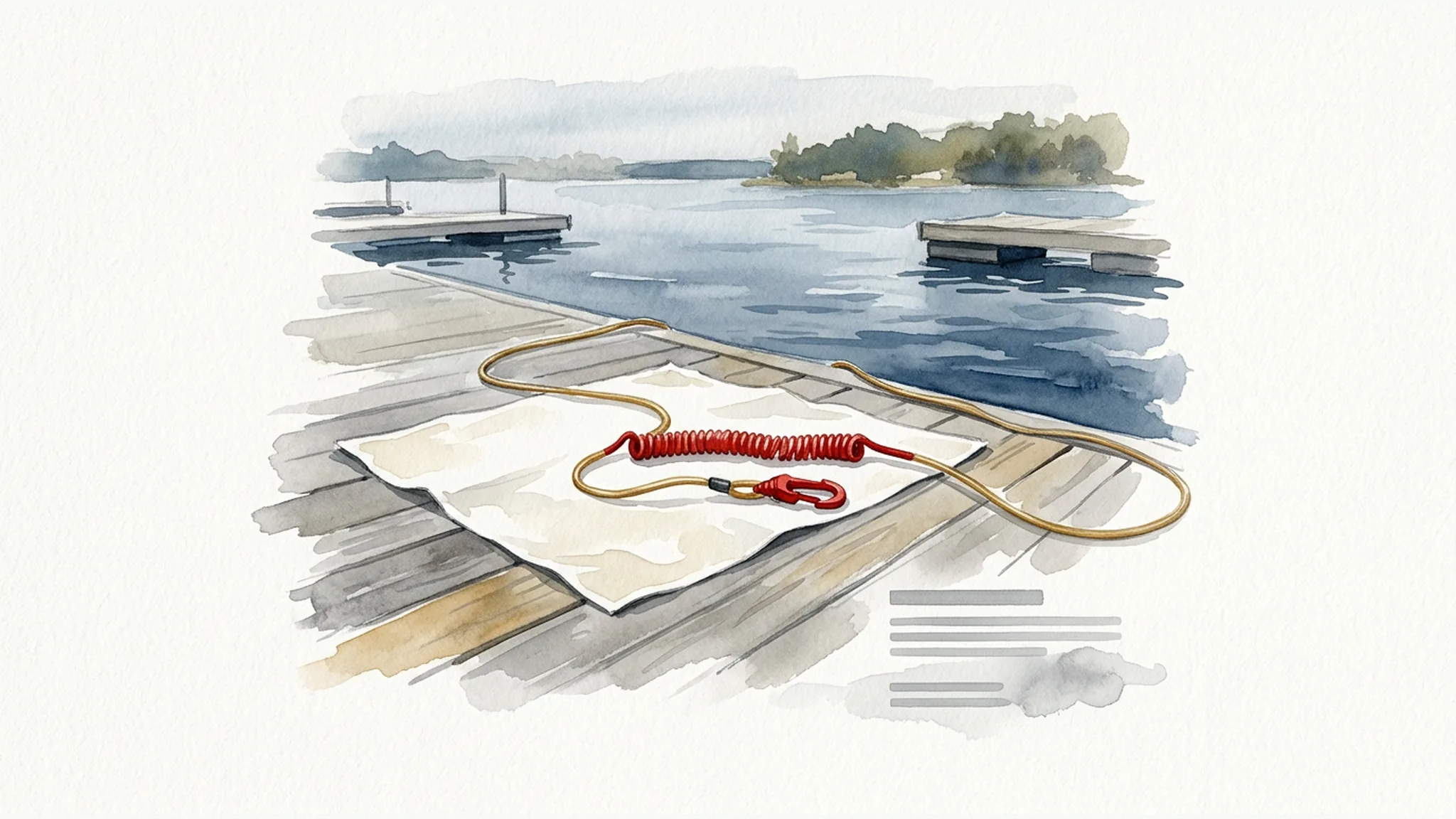
Oregon PWC rules require operators and riders to wear inherently buoyant Coast Guard-approved wearable PFDs. Oregon rules also require the operator to attach a manufacturer-provided lanyard-type engine cutoff switch to the operator’s person, clothing, or PFD.
The rules further require PWC operation in a reasonable and prudent manner. They identify unsafe or reckless maneuvers such as weaving through congested traffic, jumping wakes unreasonably close to another vessel, and swerving at the last moment to avoid a collision.
Those operator rules may matter whether the injured person was the operator, a passenger, someone on another vessel, a swimmer, or a person near a dock or marina.
Speed, Distance, Wake, and Congested River Conditions
Portland-area waterways can be busy. On the Willamette River or Columbia River, a PWC may be operating near docks, marinas, boat launch ramps, swimmers, non-motorized vessels, sailboats, motorboats, floating homes, and shoreline activity.
Oregon PWC rules include slow-no-wake limits within specified distances of locations and people such as boat launch ramps, docks, swim floats, piers, marinas, moorages, floating homes, boathouses, swimmers, diving flags, banks, and wading anglers. The rules also include distance limits around anchored or non-motorized vessels and a 10 mph limit when approaching within 100 feet of another motorized or sail vessel underway.
Oregon statutes also address unsafe boat operation and reckless boating. Oregon defines unsafe boat operation as operating a boat in a way that endangers, or would be likely to endanger, a person or property. Oregon’s reckless boating statute includes reckless operation that endangers safety and operating at a speed greater than will permit stopping within the assured clear distance ahead while using reasonable care.
These rules are fact-intensive. A river incident may require careful review of speed, distance, visibility, wake, traffic, launch location, dock layout, and the movements of other vessels.
Lanyards, PFDs, and Loss-of-Control Incidents
Some PWC injuries involve ejection, loss of control, failure to stop, a runaway craft, or near-drowning. In those situations, the PFD and engine cutoff lanyard may be central evidence.
Useful questions may include:
- Was every rider provided and wearing the required inherently buoyant PFD?
- Was the lanyard-type engine cutoff switch attached to the operator as Oregon rules require?
- Was the lanyard functional and compatible with the PWC?
- Did the operator receive instruction about the lanyard and steering controls?
- Was the safe-operation decal visible from the controls?
The answers may bear on operator conduct, rental-company instruction, equipment condition, and causation. They should not be guessed at; they should be investigated through documents, photos, witness statements, and physical evidence where available.
Alcohol, Cannabis, or Other Impairment
Oregon law prohibits operating, propelling, or being in actual physical control of a boat on Oregon waters while under the influence of intoxicating liquor, cannabis, psilocybin, an inhalant, or a controlled substance. Oregon law also prohibits an owner or person in charge or control of a boat from authorizing or knowingly permitting operation by an impaired person.
The Oregon State Marine Board’s rental-business guidance warns that knowingly renting equipment to a drug- or alcohol-impaired boater could create liability concerns. In any specific case, however, knowledge and control are fact questions. It may matter what the rental company saw, what it was told, what employees documented, and whether impairment was apparent before the PWC was released.
What Bagley Does—and Does Not—Say About Recreational Waivers in Oregon
Oregon waiver law is case-specific. The leading Oregon Supreme Court recreational-waiver case often discussed in this context is Bagley v. Mt. Bachelor, Inc., 356 Or 543 (2014).
In Bagley, the Oregon Supreme Court held that enforcing an anticipatory release of a ski-area operator’s own negligence liability would be unconscionable under the facts of that consumer recreational transaction. The court reversed summary judgment for the operator.
That holding is important, but it has limits.
Why “It Was Just Recreation” Does Not Automatically End the Analysis
One reason Bagley matters is that the Oregon Supreme Court did not treat the recreational setting as an automatic reason to enforce the release. The court explained that the fact a recreational business does not provide an essential public service does not, by itself, compel enforcement of a release.
That point can be relevant in a PWC rental case because rental companies may argue that the customer voluntarily chose a recreational activity and signed a take-it-or-leave-it form. Oregon law does not reduce the analysis to that single fact.
Why Bagley Still Requires a Fact-Specific Review
Bagley was a ski-area case, not a jet ski rental case. It did not say all recreational waivers are invalid. It did not decide the enforceability of every PWC rental waiver. And it did not remove the need to review the actual document and facts.
The Bagley analysis included procedural and substantive factors. Procedural factors included disparity in bargaining power and a take-it-or-leave-it consumer release. Substantive factors included the defendant’s superior ability to guard against hazards of its own creation and to spread or insure against those risks.
For a rental PWC injury, those questions may look different depending on the facts. The analysis may involve the waiver wording, the rental process, whether rules and safety information were reviewed, whether the rental company complied with PWC livery rules, whether equipment was safe and complete, and what conduct allegedly caused the injury.
The bottom line: Bagley can help explain why a waiver does not automatically end every Oregon recreational-negligence case, but it does not guarantee that a jet ski rental waiver will be unenforceable.
Evidence to Preserve After a Rental PWC Injury Near Portland
Because waiver and boating-rule issues are fact-specific, evidence preservation is critical. Important records may be held by the rental company, a marina, another boater, a public agency, a medical provider, an insurer, or a family member’s phone.
If you are dealing with a serious water injury, near-drowning, or fatal incident, Johnson Law has additional information about Portland drowning and near-drowning claims. For broader accident evidence steps, see our guide to preserving accident evidence before it disappears.
Documents to Ask About
Potentially important documents may include:
- the waiver and rental agreement;
- the Watercraft Rental Safety Checklist;
- the written Oregon PWC rules provided to the renter and operator;
- the rental record required for boat liveries;
- the PWC identifying number;
- proof of livery registration, if available;
- inspection, maintenance, or equipment records, if relevant and available;
- accident reports or incident reports;
- post-incident emails, text messages, app messages, or claim communications; and
- any later settlement offer or release.
Be careful not to confuse the pre-injury rental waiver with a post-injury settlement release. A rental waiver is usually signed before the activity. A settlement release may be presented after an injury, often in exchange for payment. Before signing a later release or quick settlement, it is wise to understand what rights may be affected. Johnson Law has more information on how to evaluate a quick settlement offer or release before signing.
Physical and Digital Evidence
Physical and digital evidence may include:
- photos or video of the PWC;
- photos of the PFDs, lanyard, safety decal, controls, dock, launch ramp, and surrounding area;
- the names and contact information of witnesses;
- marina, dock, rental-business, or nearby security video, if any;
- weather, visibility, current, wake, and river-condition observations;
- GPS, phone, or app data, if available;
- medical records and discharge paperwork; and
- photos of bruising, cuts, casts, flotation devices, damaged gear, or property damage.
Do not put yourself or anyone else at risk to collect evidence. If the PWC is in the water, at a secured facility, or controlled by another party, evidence requests should be handled safely and lawfully.
Accident Reporting and Post-Incident Duties
Oregon law requires a boat operator involved in an accident causing injury or death to stop at or near the scene, remain until statutory duties are fulfilled, provide identifying information, and render reasonable assistance when treatment is apparent or requested.
Oregon law also requires certain boating accidents to be reported to the State Marine Board. Oregon administrative rules require written reporting within 48 hours for accidents involving death or injury requiring treatment beyond first aid, and within 10 days for accidents involving only property or equipment damage over $2,000.
These reporting and assistance duties are separate from whether someone can prove a civil injury claim. But reports, witness information, and post-incident conduct can become important evidence.
Portland-Area Waterways: Why Location Can Change the Questions
The exact location of a PWC injury can affect the legal and factual questions. Portland-area incidents may involve the Willamette River, the Columbia River, marinas, docks, launch ramps, public parks, floating homes, private rental locations, or busy mixed-use waterways.
Willamette and Columbia River Context
Oregon State Marine Board guidance says personal watercraft are allowed on the entire Columbia River and on the Willamette River main stem downstream from the Beltline Road overpass at river mile 178 in Eugene. The same guidance states that Willamette tributaries such as the Tualatin, Yamhill, Molalla, Santiam, and McKenzie are closed to PWC.
That broad guidance does not answer every local question. A specific incident may still involve local restrictions, launch rules, marina rules, swim areas, enforcement issues, or conditions at a particular dock or ramp.
The Columbia River can also raise additional complexity because it is a boundary and navigable waterway. Depending on where and how an incident occurred, Washington law, Oregon law, or federal admiralty issues may need closer review. This article does not resolve those questions; it flags them because location can matter.
When Public Docks, Parks, or Ramps May Add Separate Issues
Most rental PWC injury questions involve private rental-company conduct, operator conduct, equipment, and waiver language. But some facts can add public-entity issues.
For example, a case may require additional analysis if the injury involved a public dock, public park, public launch ramp, public event, public-body maintenance issue, or records held by a government agency. In those situations, public-body notice and records issues may matter separately from the rental waiver.
That does not mean a public entity is automatically responsible. It means the identity of the property owner, event organizer, records holder, or maintenance entity can affect deadlines, evidence requests, and claim routing.
Questions That Can Determine Whether the Waiver Ends the Case
If you are trying to organize what happened, these questions can help focus the discussion:
Questions About the Waiver and Rental Process
- What exactly did the waiver say?
- Did it purport to release ordinary negligence, reckless conduct, statutory violations, equipment failures, third-party conduct, or something else?
- Was the waiver presented as a take-it-or-leave-it condition of renting?
- Who signed it: the injured person, the renter, a parent or guardian, a passenger, or someone else?
- Was the waiver signed before the ride, or was a separate release presented after the injury?
Questions About Rental-Company Duties
- Was the rental company registered as a boat livery?
- Were required inherently buoyant PFDs provided for each rider?
- Was the safe-operation decal present and visible from the controls?
- Were written Oregon PWC rules provided to the renter and each operator?
- Was the Watercraft Rental Safety Checklist reviewed and signed by both parties?
- Did the operator carry the required checklist portion?
- Did the rental company keep the required rental record?
Questions About Operator Conduct and Location
- Did speed, wake, congestion, or distance from docks, swimmers, launch ramps, other vessels, or shore play a role?
- Was the engine cutoff lanyard attached to the operator?
- Was every rider wearing the required PFD?
- Did alcohol, cannabis, psilocybin, inhalants, or controlled substances play a role?
- If impairment was involved, what did the rental company know or have reason to know before releasing the PWC?
- Was the operator under 18, was anyone under 16 operating without required accompaniment, or was a youth too young to operate under Oregon rules?
- Was the incident on Oregon waters, Washington waters, boundary waters, or navigable waters where admiralty questions may matter?
- Were other parties involved, such as another boater, marina, dock owner, event organizer, maintenance contractor, manufacturer, or public entity?
This checklist is not a substitute for legal advice. It is a way to avoid the common mistake of assuming that the waiver alone answers the entire case.
What to Do Next if You or a Family Member Was Hurt
After a rental PWC injury, several practical steps can help protect records and clarify what happened:
- Get medical care and follow up on recommended treatment.
- Save the waiver, rental agreement, receipts, checklist, photos, texts, emails, and claim communications.
- Write down the exact rental location, waterway, launch area, time, weather, and witness names while memories are fresh.
- Identify the PWC, rental company, operator, passengers, other vessels, marina, dock, or public location involved.
- Ask about accident reports and preserve any report numbers or agency contacts.
- Avoid signing a post-injury release or quick settlement before understanding what it covers.
- Speak with an Oregon injury lawyer if the injury is serious, the facts are disputed, or the rental company or insurer says the waiver ends the case.
Johnson Law can review Oregon personal injury questions involving serious water injuries, rental-company conduct, and evidence preservation. Contacting a lawyer does not guarantee a claim or outcome, but it can help identify deadlines, preserve evidence, and separate waiver defenses from other issues that may still matter.
FAQ
Does signing a jet ski rental waiver in Oregon mean I cannot sue?
Not automatically. A waiver can matter and may create defenses, but Oregon waiver analysis is fact-specific. The exact wording, how the waiver was presented, what conduct caused the injury, and whether separate Oregon boating or rental duties were involved can all affect the analysis.
Are Oregon jet ski rental companies required to provide safety equipment?
Oregon PWC livery rules require required equipment for rental personal watercraft, including an inherently buoyant wearable PFD for each rider. The rules also require other safety steps, including a visible safe-operation decal, written Oregon PWC rules, and review and signing of the Watercraft Rental Safety Checklist.
Do renters need an Oregon boating education card to operate a rental PWC?
Oregon State Marine Board guidance says boat renters generally do not need to complete a boater education course before renting, but they must complete a watercraft rental safety checklist before departure. Oregon’s boating education statute includes a rental exemption from carrying a boating safety education card when the person is at least 16, rents a motorboat over 10 horsepower, and completes the required dockside safety checklist before operating.
What evidence should I save after a Portland-area PWC rental injury?
Save the waiver, rental agreement, safety checklist, written rules, rental record if available, PWC identifying information, photos or video, witness information, PFD and lanyard details, medical records, incident reports, and communications with the rental company or insurer. Because Oregon livery records must be kept for at least six months, delay can make evidence harder to obtain.
What if alcohol or cannabis was involved in the jet ski incident?
Oregon law prohibits boating while under the influence of intoxicating liquor, cannabis, psilocybin, inhalants, or controlled substances. Oregon law also prohibits an owner or person in charge of a boat from authorizing or knowingly permitting an impaired person to operate. In a rental case, what the rental company knew, when it knew it, and what control it had are fact-specific questions.
Does Bagley mean all Oregon recreational waivers are invalid?
No. Bagley v. Mt. Bachelor, Inc. is an important Oregon Supreme Court case about a recreational release, but it involved a ski-area release and a fact-specific unconscionability analysis. It does not invalidate every recreational waiver and does not specifically decide PWC rental waiver cases.
Sources
This article is based on the approved fact sheet for this post and the following primary or official source categories:
- ORS Chapter 830, Small Watercraft, including definitions of boat, motorboat, boat livery, and waters of this state; boat-livery equipment, record, inspection/equipment-rule, and registration provisions; unsafe and reckless boating provisions; impaired boating; accident duties; and accident reporting.
- OAR 250-021-0030, Personal Watercraft Operating Rules, including PFD, lanyard, prudent operation, unsafe maneuver, wake/distance/speed, and age/rental restrictions.
- OAR 250-021-0100, Personal Watercraft Livery Operations, including required rental equipment, inherently buoyant PFDs, safe-operation decals, written PWC rules, Watercraft Rental Safety Checklist review/signature/carrying/retention requirements, and the no-inflatable-PFD rule for PWC rentals.
- OAR 250-010-0110, Investigation of Accidents, for Oregon boating accident reporting timelines.
- Oregon State Marine Board guidance on boat rental businesses, boating education cards, and statewide and local PWC regulations.
- Bagley v. Mt. Bachelor, Inc., 356 Or 543 (2014), for Oregon’s fact-specific treatment of a recreational anticipatory release under the circumstances of that case.
No directly on-point Oregon appellate case addressing a personal watercraft or jet ski rental waiver was identified in the approved fact sheet. This article therefore treats Bagley as a leading recreational-waiver authority, not as a PWC-specific holding.
Client-First Fee Promise
Client First = Bills First, Fees Second
Your unpaid medical bills do not have to make your lawyer's fee bigger. Johnson Law subtracts qualifying medical bills before calculating our fee, helping clients keep more of their settlement.
Applies to qualifying cases. Results vary.