Injured on SE Powell or Other State-Managed Roads in Portland: Why ODOT vs PBOT Matters
Injured on SE Powell or Other State-Managed Roads in Portland: Why ODOT vs PBOT Matters
If you were hurt on SE Powell Boulevard or another major road in Portland, it is natural to assume the City of Portland or PBOT is the place to start. That assumption is not always safe.
SE Powell Boulevard is U.S. 26. Some roads inside Portland city limits remain state highways or U.S./Oregon routes that involve the Oregon Department of Transportation (ODOT) for key road-authority, maintenance, or project purposes. That does not mean ODOT is automatically responsible for every injury on those roads. It does mean the exact location, roadway feature, and public body involved should be identified early—especially when Oregon public-body notice deadlines may apply.
Educational disclaimer: This article provides general educational information about Oregon and Portland roadway-injury issues. It is not legal advice, not a claim-notice form, and not a substitute for case-specific legal review. Public-body notice rules are technical and fact-specific.
Key Takeaways
- SE Powell Boulevard is U.S. 26, and major Portland corridors can involve ODOT even though they run inside city limits.
- The exact segment and roadway feature matter. Travel lanes, sidewalks, medians, intersections, work zones, and local side streets may point to different responsibilities.
- Oregon public-body claims often require notice within 180 days for non-death injury claims, but notice rules are technical and separate from filing a lawsuit.
- State-claim notice and City of Portland claim procedures are not interchangeable. Claims against the State route differently than claims against the City.
- Roadway control or maintenance responsibility does not automatically prove negligence, but it can affect which records to request and which public bodies may need timely notice.
A Portland Road Can Be Inside the City Without Being Only a PBOT Issue
Portland streets are not all handled the same way. PBOT identifies SE Powell Boulevard (U.S. 26) among U.S. and state routes in Portland handled by ODOT for winter-weather road treatment. PBOT gives other examples too, including N Lombard and outer NE Sandy as U.S. 30B, SW Barbur as OR-99W, and SW Macadam as OR-43.
Oregon law also draws a road-authority line between state highways and local streets. ORS 810.010 makes ODOT the road authority for state highways, including interstate highways. Incorporated cities are generally the road authority for highways, roads, streets, and alleys within city boundaries other than state highways.
But that is not the end of the analysis. ORS 810.010 also says those road-authority designations do not themselves decide maintenance responsibility. In real injury claims, the important question may be narrower: Who controlled or maintained the particular feature involved—travel lane, sidewalk, median, signal, work zone, intersecting side street, or something else?
That is why “it happened in Portland” is not enough. It may be a Portland issue, an ODOT issue, both, or neither depending on the facts.
Why SE Powell Is the Useful Example
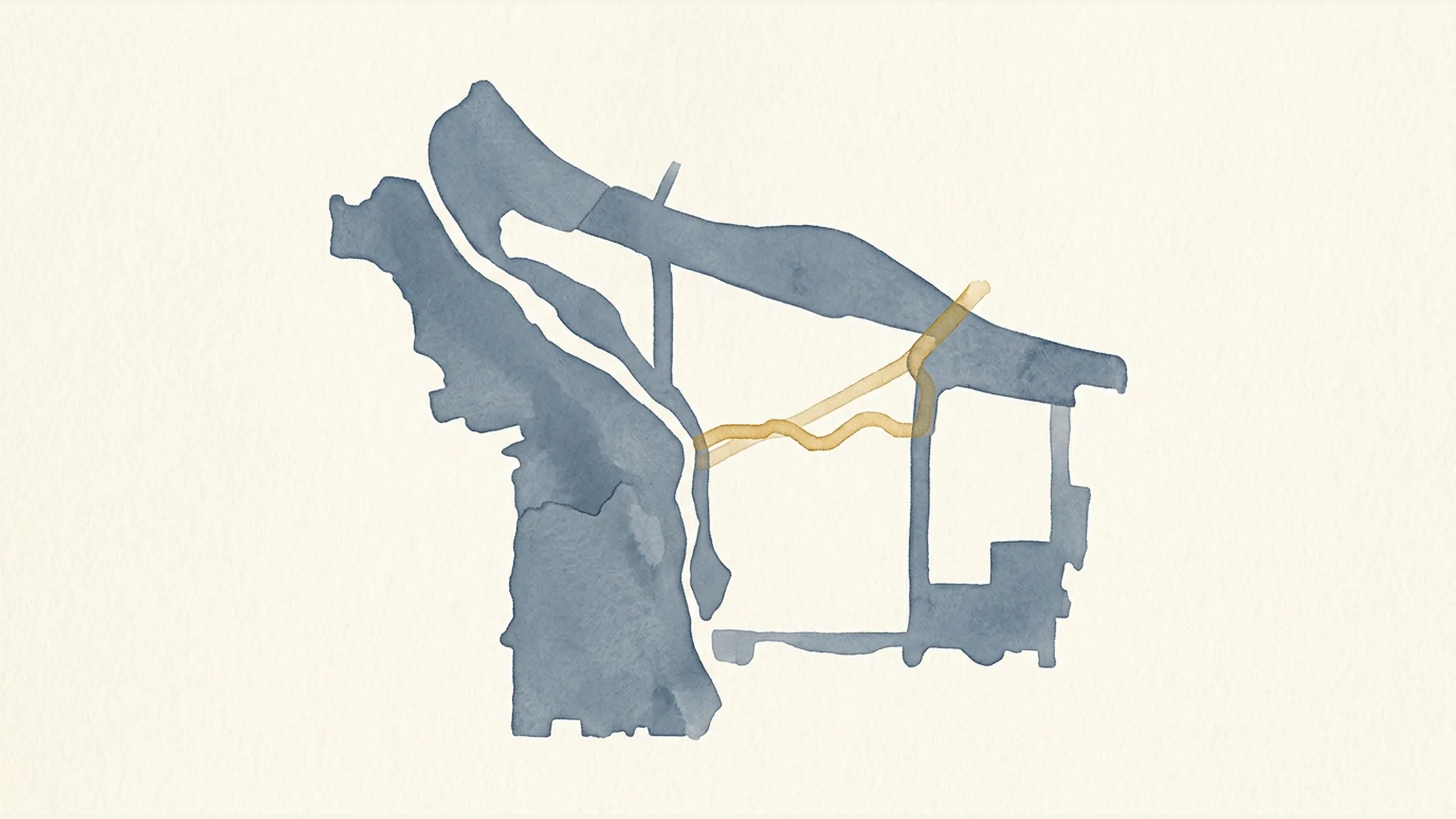
SE Powell is a strong example because it is both a familiar Portland corridor and part of U.S. 26. ODOT and Portland materials show several layers of state and city involvement along Powell, including state-highway routing, maintenance distinctions, project partnerships, and potential jurisdictional-transfer issues.
ODOT’s Inner Powell study describes the study area as SE Powell Boulevard from SE 9th Avenue to the I-205 interchange, about 4.5 miles long. Portland policy materials also state that U.S. Highway 26 is routed on Powell Boulevard and that jurisdictional agreements with ODOT exist.
Inner Powell: SE 9th to I-205
ODOT’s Inner Powell materials distinguish between different portions of the corridor.
For SE Powell from SE 9th Avenue to SE 86th Avenue, ODOT’s study describes the road as a state highway over a city street. According to that study, ODOT maintains the roadway curb-to-curb, while the City maintains landscaped medians and areas outside the curb line, such as sidewalks.
For the segment from SE 86th Avenue to I-205, ODOT’s study describes State Fee Simple right-of-way owned, controlled, and maintained by the State, except for certain elements governed by maintenance agreements between ODOT and the City.
Those distinctions matter. A crash in a travel lane, a fall on a sidewalk, a hazard in a landscaped median, or a problem at an intersecting street may not all raise the same agency questions.
Outer Powell: East of I-205
Outer Powell adds another layer because ODOT and Portland materials discuss safety improvements and an intended transfer of jurisdiction after construction.
ODOT’s Outer Powell project materials describe a transportation safety project on outer SE Powell Boulevard from I-205 to SE 122nd Avenue and from SE 136th Avenue to just east of SE 174th Avenue, with the first phase from SE 122nd Avenue to SE 136th Avenue described as complete. ODOT materials also identify SE Powell Boulevard as one of Portland’s top 30 high crash streets and say the project is intended to improve safety for all users and reduce the number and severity of crashes in the area.
That designation can guide follow-up questions, but it does not establish fault or identify the responsible agency at a particular point. Johnson Law’s guide to using Portland High Crash Network data after a street injury explains how to preserve a dated query and move from network context to location-specific records.
ODOT’s Outer Powell FAQ says ODOT is leading the project in partnership with PBOT, TriMet, and project advisory groups, and that once improvements are constructed ODOT will transfer jurisdiction of the Outer Powell corridor from I-205 to just east of SE 174th Avenue to the City of Portland consistent with House Bill 2017. Portland ordinances likewise describe Outer Powell / U.S. 26 jurisdiction and transfer intent.
That transfer language is date-sensitive. Before relying on a specific corridor status in a claim, the current ODOT and Portland status should be checked.
ODOT vs PBOT Is Not Just a Label—It Can Affect Notice, Records, and Responsibility
The difference between ODOT and PBOT is not just bureaucratic. In an injury claim involving a public road, identifying the right public body can affect where notice goes, which records matter, and which agency or entity may have information about the roadway condition.
This still does not mean roadway ownership or maintenance responsibility proves negligence. Liability can depend on facts such as notice of a dangerous condition, foreseeability, causation, reasonableness, immunity, damages, and other defenses. But the agency question often needs to be sorted out early because Oregon public-body notice deadlines can arrive before a lawsuit is filed.
Notice routing can differ
ORS 30.275 says that an action arising from an act or omission of a public body or its officer, employee, or agent cannot be maintained unless notice of claim is given as required by the statute. For a broader overview of that timing issue, see Johnson Law’s guide to the Oregon Tort Claims Act notice deadline.
The formal-notice route depends on the public body. For a claim against the State or its officer, employee, or agent, ORS 30.275 provides that formal notice must be given by mail or personal delivery to the office of the Director of the Oregon Department of Administrative Services. DAS Risk Management also provides state-claim information and describes the State of Oregon as a self-insured public entity.
For a local public body, ORS 30.275 provides different formal-notice options, such as the public body’s principal administrative office, a member of its governing body, or an attorney designated as general counsel. Portland’s Risk Management materials address claims against the City, and Portland’s general liability claim form specifically warns: “Please be sure your claim is against the City of Portland, not another public entity.” Portland City Code also provides that claims against the City are presented to the Risk Manager.
In plain English: a City of Portland claim path and a State of Oregon / ODOT claim path are not the same thing.
Records and maintenance history can differ
The relevant records may also be in different places. Depending on the injury, the key records could involve ODOT maintenance history, PBOT or City records, construction or utility work, signal or traffic-control records, contractor records, or reports involving a public vehicle. In bike-lane turning conflicts, those same agency questions can affect requests for ODOT versus PBOT records in Portland right-hook crashes.
For example, a roadway defect, debris issue, or maintenance-history question may overlap with road-hazard claims against a city or state. For a narrower workflow involving pothole reporting, PBOT-versus-ODOT responsibility, and property-damage versus injury records, see how to identify who handles a Portland-area pothole claim. A work zone, utility cut, steel plate, cone setup, or temporary traffic-control issue may overlap with Portland construction-zone injury claims. If an agency vehicle or public employee is involved, the records question can be different again; Johnson Law’s guide to government-held crash evidence discusses that issue in another context.
The point is not to assume a single file cabinet. The point is to identify the roadway feature and the potential public bodies early enough that records and notice issues can be addressed.
More than one entity may matter
ODOT vs PBOT is not always binary. A single crash or injury location may involve:
- a state-controlled travel lane;
- a City-maintained sidewalk or landscaped median;
- a local intersecting street;
- a contractor or utility working in the right-of-way;
- a private driver;
- TriMet assets or operations; or
- a public vehicle or employee.
That is why a careful review usually starts with the exact facts, not just the street name.
The Exact Location and Roadway Feature Matter
“On Powell” is not specific enough. The location and roadway feature can change the analysis.
ORS 373.020 addresses streets taken over by ODOT for state highway routing through cities. It provides that ODOT has jurisdiction and control from curb to curb, or over the portion of right-of-way used for highway purposes where there is no regular curb, while responsibility and jurisdiction over other portions remains in the city.
That statutory curb-to-curb concept lines up with the practical distinction in ODOT’s Inner Powell study: for part of Inner Powell, ODOT maintains the roadway curb-to-curb while the City maintains landscaped medians and areas outside the curb line, such as sidewalks. City ordinance materials for Outer Powell also distinguish the main U.S. 26 highway from intersecting local streets, which are part of the city street system.
PBOT’s pavement-maintenance responsibility materials and map may be a public clue for pavement responsibility, but they should not be treated as a conclusive tort-liability answer. Claim responsibility may require checking statutes, agreements, current project status, maintenance records, and the exact roadway element involved.
Examples of details that can change the analysis
Details that may matter include:
- whether the injury occurred in a travel lane, bike lane, sidewalk, curb area, landscaped median, or intersection;
- whether the location was on mainline Powell or on an intersecting local street;
- whether there was an active work zone, utility repair, steel plate, trench, temporary traffic control, or construction equipment;
- whether the issue involved ordinary roadway condition, signal equipment, debris, signage, or pavement marking;
- whether a public vehicle, transit vehicle, contractor vehicle, or private driver was involved; and
- the precise cross street, direction of travel, lane, and side of the road.
These details may help identify the right agency records and notice path. They do not, by themselves, decide liability.
Oregon Public-Body Notice Deadlines Can Arrive Quickly
Public-body claim timing is one reason ODOT vs PBOT identification matters. Oregon’s Tort Claims Act notice rules can apply when a claim arises from an act or omission of a public body or its officer, employee, or agent.
Under ORS 30.275, notice is generally required within 180 days after the alleged loss or injury for claims other than wrongful death. For wrongful-death claims, the statute provides a one-year notice period. The statute also contains a limited exclusion of up to 90 days when the injured person is unable to give notice because of injury, minority, incompetency, or other incapacity.
Those rules are technical. They are also separate from the question of whether a claim has merit. If a Portland road injury might involve a public body, the Oregon Tort Claims Act notice deadline should be evaluated promptly.
Notice is not the same as a lawsuit
Notice is not the same thing as filing a lawsuit. ORS 30.275 includes notice requirements, formal-notice content requirements, and a separate provision generally requiring Oregon Tort Claims Act actions to be commenced within two years after the alleged loss or injury.
That means a person may face an earlier notice issue even though the lawsuit deadline is later. Missing or misrouting notice can become a major issue before the case ever reaches the merits.
Informal communications may not be enough
ORS 30.275 recognizes several ways notice may be satisfied, including formal notice, actual notice, commencement of an action within the applicable notice period, or payment of all or part of the claim by or on behalf of the public body. But actual-notice disputes can be technical and fact-specific.
Do not assume that a police report, 911 call, agency email, claim form, or insurance communication automatically satisfies the statute. ORS 30.275 also places the burden on the plaintiff to prove that notice was given as required.
What an Injured Person Should Preserve or Write Down Early
Without trying to turn this article into a do-it-yourself notice form, there are practical details that may help identify the right public bodies and records after a road injury.
If it is safe and practical, consider preserving or writing down:
- the exact location, including cross streets, direction of travel, lane, sidewalk, median, curb area, or intersection details;
- whether the injury happened on mainline Powell or on an intersecting local street;
- photos or video of the roadway condition, signage, signal equipment, work-zone setup, curb, sidewalk, median, debris, or temporary traffic-control devices;
- whether there appeared to be public-vehicle, construction, utility, transit, or contractor involvement;
- medical treatment dates and incident-date documents that may relate to notice timing; and
- communications with agencies, insurers, or investigators.
Keeping those materials does not mean any communication already satisfies legal notice. It simply helps preserve facts that may matter when identifying the correct entity, records, and deadlines. Johnson Law also has a general guide to preserving evidence after an accident.
When SE Powell Is Not the Only Road to Think About
Powell is not the only Portland corridor where the city/state distinction can matter. PBOT’s winter-weather materials identify several U.S. or state routes in Portland handled by ODOT for winter-weather treatment, including N Lombard / outer NE Sandy (U.S. 30B), SW Barbur (OR-99W), and SW Macadam (OR-43).
Those examples do not mean each corridor has the same ownership, maintenance, transfer, or liability rules. They show the larger point: a road can be physically inside Portland but still involve ODOT for important purposes.
Bottom Line: Identify the Roadway Feature and Public Bodies Before Deadlines Run
After an injury on SE Powell or another major Portland corridor, the first agency assumption may be wrong or incomplete. The road may be a state highway, a city street, or a corridor where state and city responsibilities differ by segment and roadway feature.
ODOT vs PBOT can affect formal notice routing, records, and maintenance-history questions. It does not automatically prove fault, and it does not rule out other responsible actors such as contractors, utilities, transit entities, public employees, or private drivers.
Because Oregon public-body notice deadlines can be short and technical, an important early step is to identify the exact location, roadway feature, and potentially involved public bodies as soon as practical. This article is general educational information only, not legal advice. A lawyer can evaluate case-specific facts, notice requirements, and claim routing. You can also learn more about Johnson Law’s Portland injury work on our Portland personal injury lawyer page.
FAQ
Is SE Powell Boulevard controlled by ODOT or PBOT?
It depends on the segment and roadway feature. SE Powell is U.S. 26, and ODOT/PBOT materials show state and city responsibilities can differ by location and element. ODOT’s Inner Powell study, for example, describes certain curb-to-curb roadway maintenance by ODOT while identifying City maintenance for landscaped medians and areas outside the curb line, such as sidewalks, on part of the corridor.
If my crash happened in Portland, do I file a claim with the City of Portland?
Not automatically. A Portland location may involve the City, ODOT/the State, another public body, a contractor, a utility, TriMet, a public employee, or a private driver. The correct claim route depends on the facts and should not be assumed from the city limits alone.
What is the Oregon public-body notice deadline after a road injury?
ORS 30.275 generally requires notice within 180 days for non-death claims and one year for wrongful-death claims, with technical statutory provisions that may matter in limited circumstances. Notice is separate from filing a lawsuit, and the plaintiff bears the burden of proving notice was given as required.
Is sending a Portland claim form the same as notifying ODOT?
No. State claims and City claims route differently. ORS 30.275 provides one formal-notice route for claims against the State and different formal-notice options for local public bodies. Portland’s own general liability claim form warns claimants to make sure the claim is against the City of Portland and not another public entity.
Does ODOT maintenance responsibility mean ODOT is automatically liable?
No. Maintenance or control may affect which records and notice paths matter, but liability still depends on specific proof, defenses, immunity issues, causation, damages, and the facts of the incident.
Why do sidewalks and medians matter on a state highway inside Portland?
Some materials distinguish curb-to-curb roadway responsibility from areas outside the curb line, such as sidewalks or medians. On a state highway routed through a city, the exact roadway feature involved can affect which public body or records may matter.
Source Notes
This article is based on primary and official sources reviewed for publication, including ORS 30.275, ORS 810.010, ORS 373.020 and ORS 373.030, ORS chapter 366, PBOT’s Winter Weather Basics and FAQ, ODOT’s Inner Powell Boulevard State of Good Repair Study, ODOT’s Inner Powell project page, ODOT’s Outer Powell Transportation Safety Project, ODOT’s Outer Powell FAQ, City of Portland Ordinances 191027 and 191007, Portland Risk Management claim materials, Portland City Code 3.72.020, and Oregon DAS Risk Management claim materials.
Client-First Fee Promise
Client First = Bills First, Fees Second
Your unpaid medical bills do not have to make your lawyer's fee bigger. Johnson Law subtracts qualifying medical bills before calculating our fee, helping clients keep more of their settlement.
Applies to qualifying cases. Results vary.