Pothole Damage vs. Injury Claim: PBOT Street or ODOT Highway—Who Owns the Road?
Pothole Damage vs. Injury Claim: PBOT Street or ODOT Highway—Who Owns the Road?
After a Portland-area pothole incident, “Who owns the road?” is only the first question. The road owner, the entity responsible for maintenance on the incident date, the office that receives a hazard report, the holder of maintenance records, and the proper recipient of claim notice may not all be the same.
Start by documenting the precise location. Then investigate both ownership and maintenance responsibility, report the hazard through the appropriate channel, and separately address any potential Oregon Tort Claims Act (OTCA) notice. A routine pothole report does not automatically preserve a claim for vehicle damage or bodily injury.
This article provides general educational information, not legal advice. Public-body notice questions, responsible entities, and deadlines can depend on the specific facts and current law.
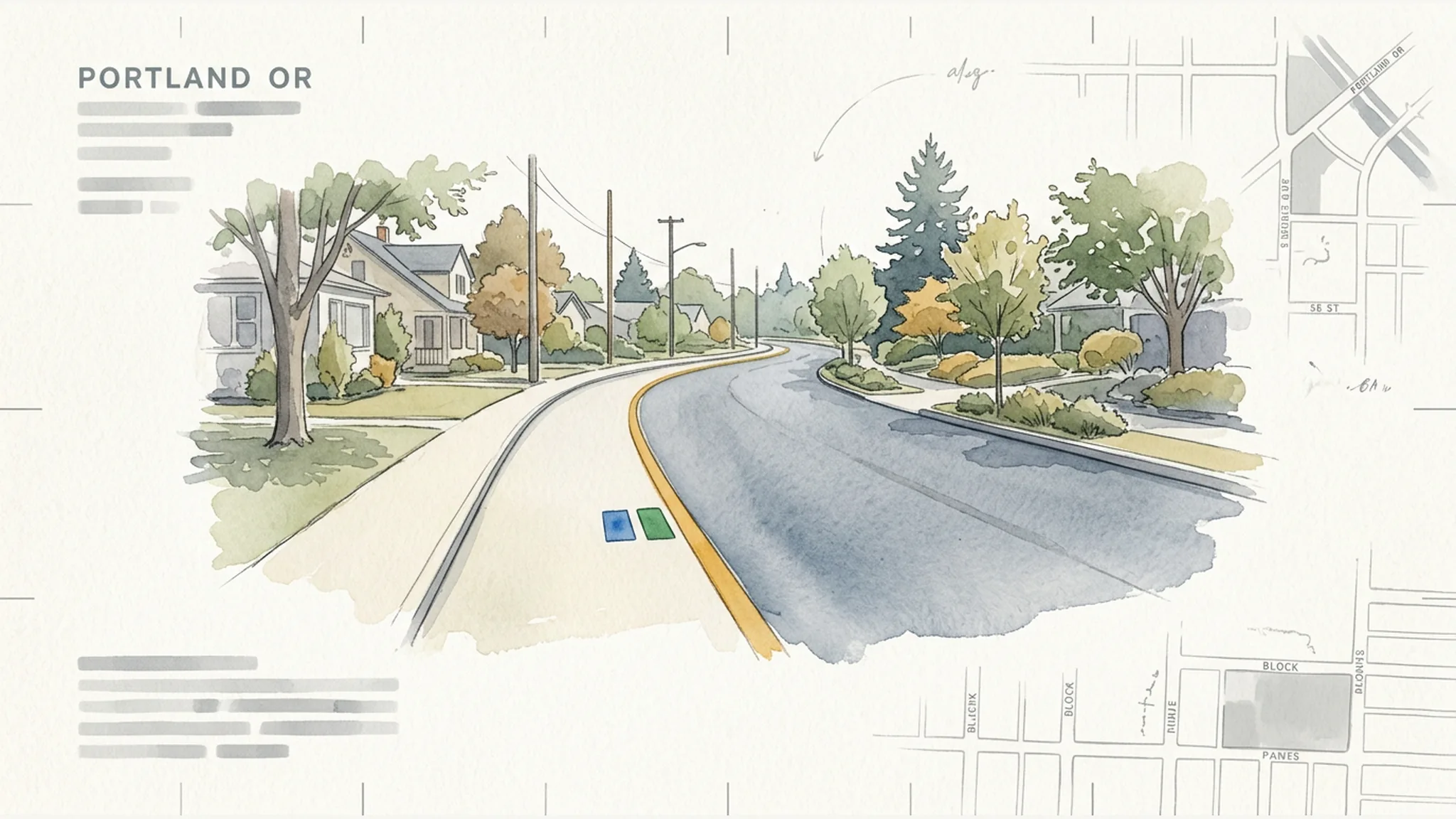
First, Identify the Exact Pothole Location and What Happened
The precise location matters at every stage. It helps an agency find the hazard, helps distinguish one road segment from another, and may later help identify the owner, maintainer, and relevant records.
Record the location precisely
Write down as much of the following as you safely can:
- the approximate address, milepoint, or nearest cross street;
- a nearby landmark or roadway feature;
- your direction of travel and lane;
- the date and time of the incident; and
- where the pothole sat in relation to the lane, shoulder, intersection, bridge, or other feature.
Do not rely only on a posted route shield. ODOT’s Road Assets and Mileage resources distinguish posted route numbers from official ODOT highway names and numbers. That distinction can matter when you search an official map or ask an agency about a particular segment.
Safely document the defect and the incident
If conditions allow, take photographs of both the pothole and the wider scene. A close photo may show the condition itself, while a wider view can show its relationship to the lane and nearby landmarks. A simple diagram can also help. Record witness contact information and retain any hazard-report confirmation, report number, or later work-order identifier.
These are practical documentation steps, not statutory elements that prove a claim. Do not enter traffic or put yourself in danger to obtain evidence.
If the event qualifies as a reportable collision under Oregon DMV rules, the DMV report is another separate obligation. Oregon DMV says a driver generally must report within 72 hours when a collision causes injury or death, more than $2,500 in damage to the reporting driver’s vehicle, more than $2,500 in damage to nonvehicle property, or more than $2,500 in damage to any vehicle when any vehicle is towed. DMV also says the driver must file even if law enforcement files a report. A DMV report is not a pothole maintenance report or OTCA notice.
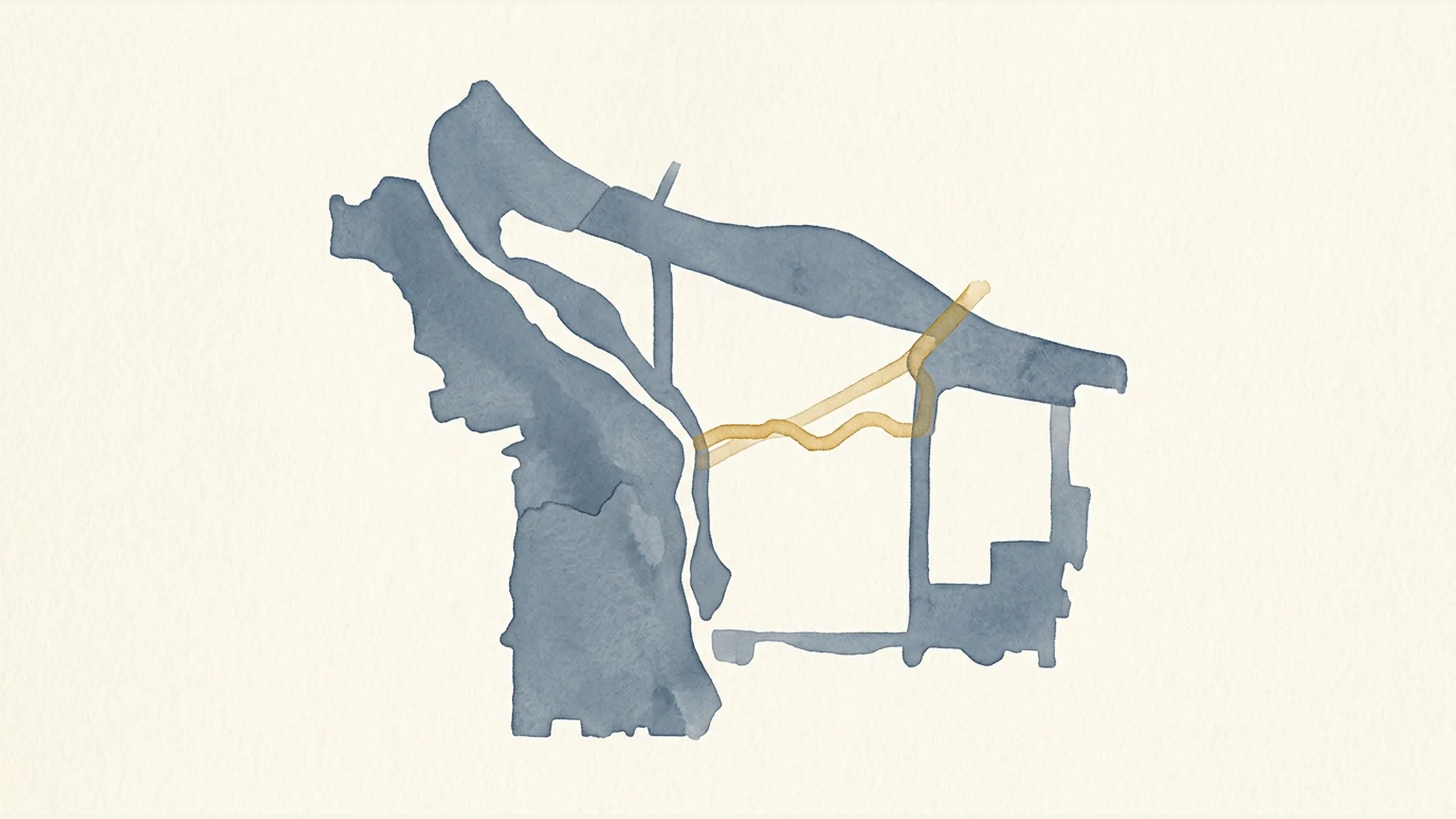
Who Owns or Maintains the Road: PBOT, ODOT, Multnomah County, or Another Entity?
ODOT is generally responsible for Oregon state and interstate highways. Cities, counties, and certain federal agencies generally handle other public roads. But those general rules do not conclusively identify responsibility for a particular pothole.
Use the road type and highway shield only as starting clues
A state or federal highway shield may point toward ODOT, but ODOT’s Highway Ownership History explains that roadway history and intergovernmental agreements can affect the terms and limits of jurisdiction. Likewise, a Portland address does not establish that PBOT maintained the road.
That is why ODOT versus PBOT responsibility can depend on the exact road segment. The location must be investigated rather than assumed.
Check official maps, inventories, and the exact segment
ODOT directs the public to its Road Assets and Mileage resources and TransGIS jurisdiction map when investigating a specific road. Match any result to the exact direction, lane, cross street, structure, and incident date. Treat the map as an investigation tool, not conclusive proof of ownership, maintenance responsibility, notice requirements, or liability.
Separate ownership from maintenance responsibility
Oregon law generally places construction, improvement, maintenance, and repair of a designated state highway under ODOT jurisdiction. It also permits state-local agreements and jurisdictional transfers that may allocate work differently.
The Oregon Court of Appeals case Thompson v. City of Portland illustrates the distinction. It involved a bicyclist injured by a pothole on a road owned by Multnomah County but maintained by Portland under an intergovernmental agreement. The case does not determine responsibility for a different location, but it shows why “owner” and “maintainer” cannot be treated as synonyms.
Multnomah County also maintains roads in specified county service areas and six Willamette River bridges: Broadway, Burnside, Hawthorne, Morrison, Sellwood, and Wapato. Utilities, contractors, federal agencies, transit entities, and other local governments may also be relevant in some locations. PBOT notes, for example, that rectangular utility-access cuts may be a contractor’s repair responsibility. That shape is only a clue, not a rule that conclusively identifies who is responsible.
Treat these as five different questions
For a particular pothole, ask:
- Who owned the road, lane, bridge, or structure on the incident date?
- Who was responsible for inspecting, maintaining, or repairing it then?
- Which agency should receive the safety or maintenance report?
- Which entity holds complaints, work orders, inspections, repair records, or maintenance agreements?
- Who is the proper OTCA notice recipient or a potentially liable defendant?
An answer to one does not automatically answer the others.
Report the Hazard Through the Right Official Channel
Reporting a pothole may help the agency investigate an ongoing hazard. It also creates a record worth saving. But maintenance reporting and a claim for damages are different processes.
PBOT pothole and emergency-hazard reporting
As of July 2026, PBOT accepts pothole, sinkhole, and emergency road-hazard reports through PDX Reporter and its 24/7 Maintenance Dispatch at 503-823-1700. City pothole materials also list 503-823-BUMP (2867). PBOT asks for an approximate address and description.
Save the submission, confirmation, report number, and any later work-order number. Official channels and phone numbers can change, so confirm the current instructions before relying on them.
ODOT highway-hazard and repair reporting
ODOT’s current guidance uses overlapping channels based on the condition:
- For emergencies, hazards, or debris on a state highway, call Oregon State Police dispatch at *OSP (*677); ODOT’s 2026 packet also says to call 911 for an emergency.
- Report needed repairs such as potholes or damaged signs to Ask ODOT online or at 1-888-275-6368.
- For road hazards such as downed trees, wires, mud, or rocks in the Portland metro or Hood River area, ODOT’s current Summer News Packet webpage lists the regional dispatch number 503-283-5859.
ODOT also lists maintenance-district contacts for questions about specific highway sections. Confirm the current channel before reporting because these instructions can change.
A hazard report serves a different purpose from claim notice
A hazard report asks an agency to investigate or repair a road condition. It ordinarily does not tell a statutory recipient or tort-claims administrator that an identified person intends to seek damages.
Preserve the report because it may be part of the factual record. But do not assume that it starts, pauses, extends, or satisfies an OTCA notice period.
A Pothole Report Is Not the Same as Oregon Tort Claims Act Notice
The distinction matters whether the pothole caused property damage, bodily injury, or both. The Oregon Tort Claims Act notice requirements are separate from PBOT or ODOT maintenance reporting.
The general notice timing is earlier than the lawsuit limit
Under ORS 30.275, bodily-injury and property-damage claims generally fall within the 180-day notice category for “all other claims.” Wrongful-death notice is generally due within one year. The statute also generally requires an OTCA action to begin within two years after the alleged loss or injury.
Those are different periods serving different purposes. The statute includes a narrow incapacity exclusion, capped at 90 days, and Oregon cases recognize that discovery or accrual can be fact-specific. Readers should not assume that incapacity, delayed discovery, uncertainty about the public body, or an ongoing agency investigation provides extra time. Prompt analysis is important.
What formal or actual notice must communicate
ORS 30.275 describes formal notice as a written communication from the claimant or the claimant’s representative that:
- states that a claim for damages is or will be asserted;
- describes the known time, place, and circumstances; and
- provides the claimant’s name and mailing address.
The statute does not require one particular agency claim form. A form may help collect requested information, but statutory compliance depends on the actual communication, its recipient, its timing, and the facts.
“Actual notice” is also more than agency awareness of a pothole or incident. It requires a communication to a statutory recipient or tort-claims administrator that conveys the time, place, and circumstances and would cause a reasonable person to conclude that a particular person intends to assert a claim.
In Flug v. University of Oregon, the Oregon Supreme Court concluded that communications describing allegedly unlawful or unfair conduct did not provide notice because they did not communicate an intent to assert a claim. The narrow lesson here is that reporting a problem is not necessarily the same as communicating an intent to seek damages.
The proper recipient depends on the public body
Formal notice for a State claim must be mailed or personally delivered to the office of the Director of the Oregon Department of Administrative Services (DAS). For a local public-body claim, ORS 30.275 specifies notice to the public body at its principal administrative office, a member of its governing body, or its designated general counsel. The claimant bears the burden of proving compliant notice.
The current administrative channels are also separate from road maintenance:
- A claim seeking payment from the City for pothole-related personal injury or property damage goes through City Risk Management as a general liability claim, not through PBOT’s maintenance-report channel.
- Claims against the State are administered through DAS Risk Management, which provides routes for vehicle-involved and non-auto tort claims.
Using an agency’s claim process does not permit a blanket conclusion that every submission complies with ORS 30.275. Current instructions should be checked, and proof of delivery should be retained.
Notice to PBOT, the City of Portland, ODOT, DAS, Multnomah County, or another entity is not automatically effective against a different public body. When ownership or maintenance is uncertain, whether and how to notify more than one entity is an incident-specific legal question—not a decision that should be based on a highway shield or a mailing address alone.
Keep other official submissions separate too
A police report, DMV collision report, PBOT or ODOT maintenance report, public-records request, agency claim form, and statutory tort-claim notice may each serve a different purpose. None should be treated as automatically preserving a claim merely because it was submitted to a government office.
Property Damage and Bodily Injury Require Different Proof
Property-damage and bodily-injury claims generally fall within the same 180-day OTCA notice category, but the records needed to evaluate and support them are different.
Build a property-damage file
Official City and State materials identify records such as:
- photographs of the damaged vehicle, bicycle, motorcycle, wheel, tire, or other property;
- repair or replacement estimates;
- invoices, bills, and an itemized statement of damage;
- towing and related receipts; and
- model, part, or component information.
DAS generally encourages two estimates and may inspect damaged property. Where practical, consider retaining damaged components until any inspection issue has been addressed. These are practical evidence-preservation steps, not statutory notice elements or universal prerequisites to a claim.
Build a bodily-injury file
For bodily injury, relevant records may include:
- symptoms and diagnoses;
- treatment dates and provider information;
- medical bills and records; and
- effects on work or other activities.
DAS says it may request provider information and a medical authorization. Keeping organized records does not replace medical advice and does not, by itself, establish that the pothole medically caused an injury or that a public body is liable.
Readers seeking a broader discussion of injury claims caused by a pothole or other road hazard may also find the related motorcycle-focused article useful, although the outcome of any car, bicycle, motorcycle, pedestrian, or property-only claim depends on its own facts.
Records Can Help Investigate Notice and Negligence—but Do Not Wait for Them
City and ODOT public-records channels may provide a way to request complaint records, work orders, inspections, repair history, and jurisdiction or maintenance agreements for a specific location. Those records may help investigate who maintained the segment and whether an earlier complaint involved the same pothole.
Match prior records to the same defect
Location-specific matching is critical. In Thompson, the claimant relied in part on an older report, but the record showed that it concerned different potholes approximately one mile away. The court concluded that other theories in the record would have required speculation about when the pothole formed, how severe it was over time, and how the defendants might have discovered it.
An earlier complaint may be relevant when it can be reliably connected to the same location and defect. A nearby report is not automatically proof that an agency knew about the pothole involved in the incident.
A records request does not preserve a claim
Public-records requests may take time and may involve fees or redactions. A request is not OTCA notice. Do not wait for the records response before addressing a potentially applicable notice period.
Reporting, Notice, and Documentation Still Do Not Prove Negligence
Oregon public bodies are generally subject to civil actions for their torts under ORS 30.265, subject to statutory limitations and immunities. Complying with notice rules is a procedural issue; it does not establish fault.
A pothole negligence analysis may involve duty, breach, actual or constructive knowledge, causation, damages, defenses, and immunity. Actual prior notice is not necessarily the only possible theory, but speculation about when a defect formed or how an agency should have discovered it is not a substitute for evidence.
A prior report or work order is evidence to evaluate, not a verdict
Even a prior complaint tied to the same defect does not by itself prove breach, causation, damages, or liability. The context and the full record matter.
In Thompson, the Court of Appeals affirmed summary judgment based on the record before it, including discretionary immunity and the absence of evidence that the pothole at issue had been reported more than approximately 30 days before the crash. The opinion described a PBOT policy targeting pothole repair approximately 30 days after a report. That was the policy described in that case record—not a statute, a universal repair deadline, or a promise that any pothole will be repaired within 30 days.
Processing a claim does not guarantee payment
An agency’s acceptance or processing of a claim form does not establish negligence or assure reimbursement. Likewise, timely notice, detailed photographs, estimates, medical records, or a work order can be important without determining the final legal result.
A Practical Portland-Area Pothole Checklist
- Address immediate safety concerns. Document the exact location, direction, lane, date, time, defect, and wider scene without putting yourself at risk.
- Preserve the right type of evidence. Keep property-damage records, bodily-injury records, or both, depending on what occurred.
- Investigate the exact segment. Ask who owned it and who maintained or repaired it on the incident date.
- Report the hazard. Use the appropriate official PBOT, ODOT, County, or other maintenance channel and save the confirmation.
- Evaluate OTCA notice separately. Identify the potentially relevant public body, statutory recipient, content, and applicable timing. Do not assume the hazard report preserved a claim.
- Request useful records. Seek complaints, work orders, inspections, repair history, and relevant agreements, but do not wait for them before addressing notice.
- Keep procedure separate from proof. Reporting, notice, records, and documentation do not by themselves establish negligence or guarantee payment.
When the road owner, maintainer, notice recipient, or timing is uncertain, prompt incident-specific legal guidance may help clarify the questions that a map or agency report cannot answer. This article is general educational information only and is not legal advice.
Frequently Asked Questions
Does reporting a pothole to PBOT preserve my injury or vehicle-damage claim?
Ordinarily, no. A PBOT maintenance report asks the City to investigate or repair a hazard. OTCA notice serves a different purpose and depends on timing, content, the recipient, and whether the communication conveys that an identified person intends to assert a damages claim.
Is every state-route pothole in Portland ODOT’s responsibility?
No categorical answer is safe. A route shield is a clue, but ODOT’s road-ownership materials explain that roadway history and intergovernmental agreements can affect the terms and limits of jurisdiction. Agreements or transfers can also separate ownership from maintenance. Investigate the exact segment and incident date.
Do property-damage and bodily-injury claims have different Oregon tort-claim notice deadlines?
Both generally fall within ORS 30.275’s 180-day category for “all other claims.” Their supporting evidence differs, however, and incident-specific questions about timing, accrual, incapacity, and the proper public body require care. Do not assume the general category guarantees 180 days in every situation.
Should I send notice to both the City of Portland and the State if I am unsure who maintains the road?
There is no blanket answer. Notice to one public body is not automatically effective against another, and the proper recipient depends on the facts. Whether an incident calls for notices involving more than one entity requires prompt, incident-specific legal analysis.
Does an earlier pothole complaint prove that an agency was negligent?
No. The complaint must first be reliably connected to the same location and defect. Even then, it does not by itself establish breach, causation, damages, liability, or the absence of a defense or immunity.
Can I wait for public records before addressing claim notice?
That is risky. Records may help identify the maintainer or earlier complaints, but requests may take time. A public-records request is not OTCA notice and should not be allowed to consume a potentially applicable notice period.
Source Notes
Statutes, official agency materials, judicial materials, and other sources supporting this article include:
- Oregon Revised Statutes chapter 30, especially ORS 30.265 and ORS 30.275, for public-body tort claims, notice, recipients, timing, and limitations.
- Oregon Revised Statutes chapter 366, including ORS 366.290 and ORS 366.572 to 366.576, for state-highway jurisdiction and authorized agreements or transfers.
- ODOT Highway Ownership History and Road Assets and Mileage for general road-jurisdiction guidance and investigation resources.
- PBOT pothole and road-hazard reporting, City pothole-claim guidance, and City claim-filing guidance.
- Oregon DAS Risk Management claims overview and claims FAQ for State claim administration and requested supporting materials.
- Thompson v. City of Portland, 317 Or App 131, 505 P3d 484 (2022) (official OJD opinion PDF), for the owner-maintainer distinction and the case-specific treatment of prior pothole reports and PBOT policy.
- Flug v. University of Oregon, 335 Or 540, 73 P3d 917 (2003) (case-text mirror), for the narrow notice and discovery points discussed above. ORS 30.275 and the official Oregon Legislative Counsel annotations provide the primary legal support for the actual-notice rule.
- ODOT Summer News Packet webpage and ODOT Summer Travel News Packet 2026 for the condition-specific ODOT reporting channels stated as of July 2026.
- Oregon DMV collision reporting guidance for the separate 72-hour collision-report rule and listed thresholds.
Agency channels and Oregon law should be checked again when a reader needs to rely on them. The online 2025 ORS edition does not incorporate 2026 session laws.
Client-First Fee Promise
Client First = Bills First, Fees Second
Your unpaid medical bills do not have to make your lawyer's fee bigger. Johnson Law subtracts qualifying medical bills before calculating our fee, helping clients keep more of their settlement.
Applies to qualifying cases. Results vary.