Sliding on a Bridge Deck: What Makes Portland Ice and Barrier Crashes Different
Sliding on a Bridge Deck: What Makes Portland Ice and Barrier Crashes Different
A crash on an icy Portland bridge can raise questions that do not arise in an ordinary roadway collision. The deck may cool differently from nearby pavement. Ice may affect one lane or shaded segment but not another. Responsibility for the deck, approach, ramp, signs, or barrier may belong to different entities. If a vehicle strikes a bridge rail, the impact creates a separate set of evidence questions.
None of those facts automatically establishes negligence. A sound investigation keeps three issues separate: how each driver responded to the conditions, what the roadway and winter-response evidence shows, and whether there is a supported basis to examine the conduct of a public body or contractor.
Why a Bridge Deck Can Ice Before the Road Beside It
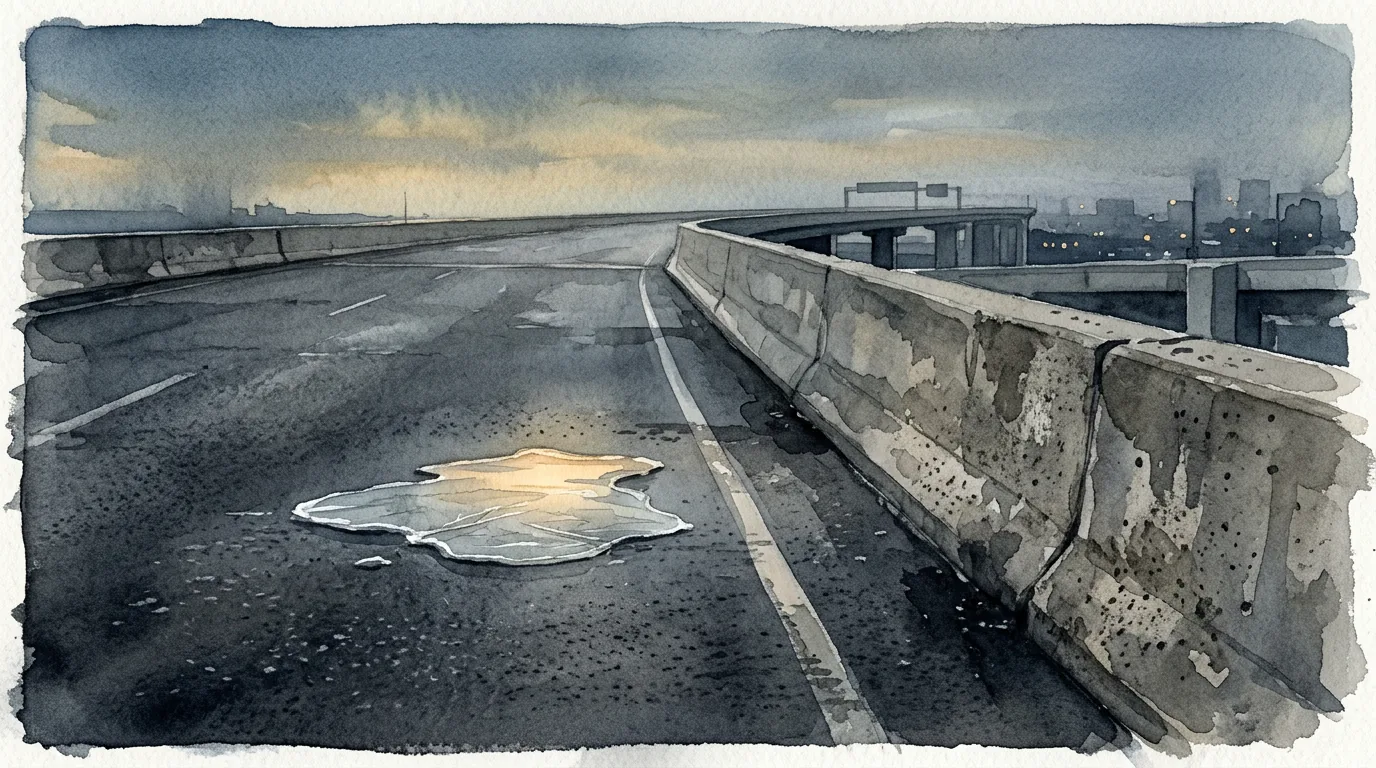
The National Weather Service explains that open air can surround a bridge above and below, while pavement built on the ground receives some heat from the earth. That difference can allow a bridge deck to freeze before an adjacent ground-supported road.
Black ice can make the danger difficult to recognize. ODOT describes it as a thin, transparent layer that may make pavement look wet. It is most common at night and very early in the morning, and bridges and overpasses are more prone to it because they receive less heat from the ground and lose more heat to the air. PBOT likewise cautions Portland road users that bridges and overpasses are among the places prone to freezing first.
Icing may also be uneven. A shaded part of a bridge can be icy while a sunnier part is not. These principles explain why bridge decks deserve caution; they do not prove that ice was present at a particular collision point, how extensive it was, or that anyone acted negligently.
Why the Exact Part of the Bridge Matters
“The bridge was icy” is usually too broad to describe the critical location. Useful details may include:
- the bridge name, travel direction, lane, and deck level;
- whether the slide began on an approach, ramp, main span, or another segment;
- the nearest pier, intersection, sign, or recognizable landmark;
- whether the area was shaded or exposed;
- where the vehicle first lost traction, contacted another vehicle, or hit the barrier; and
- the condition of the surface at each point.
The site of the initial slide may not be the site of the final impact. That distinction can matter when identifying the responsible entity and evaluating surface conditions, warnings, treatment activity, and barrier performance.
Three Questions That Should Not Be Collapsed Into One
Bridge-ice cases can involve more than one possible cause. Evidence about a driver does not answer the roadway-maintenance question, and evidence of ice does not establish public-body liability.
1. Did a Driver Respond Reasonably to the Conditions?
Oregon’s basic speed rule requires a driver to use a speed that is reasonable and prudent in light of traffic, the highway’s surface and width, weather, visibility, and other existing conditions. A driver can violate that rule while traveling below the posted speed limit.
That does not mean every driver who slides was speeding or negligent. Relevant facts may include speed, following distance, tires, visibility, warnings, and steering or braking inputs. Ice does not automatically excuse a loss of control, but a slide alone does not prove that a driver failed to act reasonably.
2. What Does the Roadway and Winter-Response Evidence Show?
The useful question is not simply whether an agency has a winter-weather policy. It is what happened at the relevant location and time. Potential evidence includes:
- forecasts and observed precipitation;
- available air or pavement-temperature information;
- treatment priorities and route assignments;
- crew dispatches, actual passes, and timing;
- which lanes or segments were covered;
- treatment materials used;
- hazard reports, warnings, advisories, and closures; and
- conditions reported before and after the crash.
PBOT says its snow-and-ice routes cover about one-third of Portland’s street grid and that its objective on those routes is at least one passable lane in each direction—not an ice-free guarantee for every street or lane. PBOT also says it uses liquid magnesium chloride on icing-prone roads, including exposed bridges and overpasses, and treats before storms when possible. Rain during above-freezing temperatures can wash pretreatment away.
ODOT similarly prioritizes winter work based on factors such as safety, traffic volume, and freight impacts. Its stated goal is to keep roads passable, not completely free of snow and ice. ODOT also notes that deicer, salt, sand, and plowing have different uses depending on the storm and location.
Ice can remain or reform after treatment. Conversely, the absence of one particular treatment material does not establish negligent maintenance. Event-specific records are needed to evaluate what was planned, observed, and done.
3. Is There a Supported Basis to Investigate a Public Body or Contractor?
Oregon law generally allows tort actions against public bodies under the Oregon Tort Claims Act, subject to important procedural rules, defenses, immunities, and limits. Public ownership alone is not liability. A claim still requires evidence tied to the correct party, an actionable duty and breach, causation, and damages.
Discretionary-function immunity can be a major issue. Oregon law does not support a simple rule that every design decision is immune or every maintenance act is actionable. The Oregon Supreme Court has explained that both highway design and maintenance can involve policy choices as well as implementation decisions. The precise act or omission and how the decision was made require fact-specific analysis.
A contractor may also have performed treatment, inspection, design, repair, or traffic-control work. The existence of a contract does not itself establish responsibility; the agreement, assigned duties, actual work, and connection to the crash would need examination.
Because government involvement creates separate procedural issues, readers should learn about Oregon public-body notice requirements promptly rather than waiting for the ordinary lawsuit deadline.
Who Handles a Portland Bridge? The Answer Depends on the Structure and Function
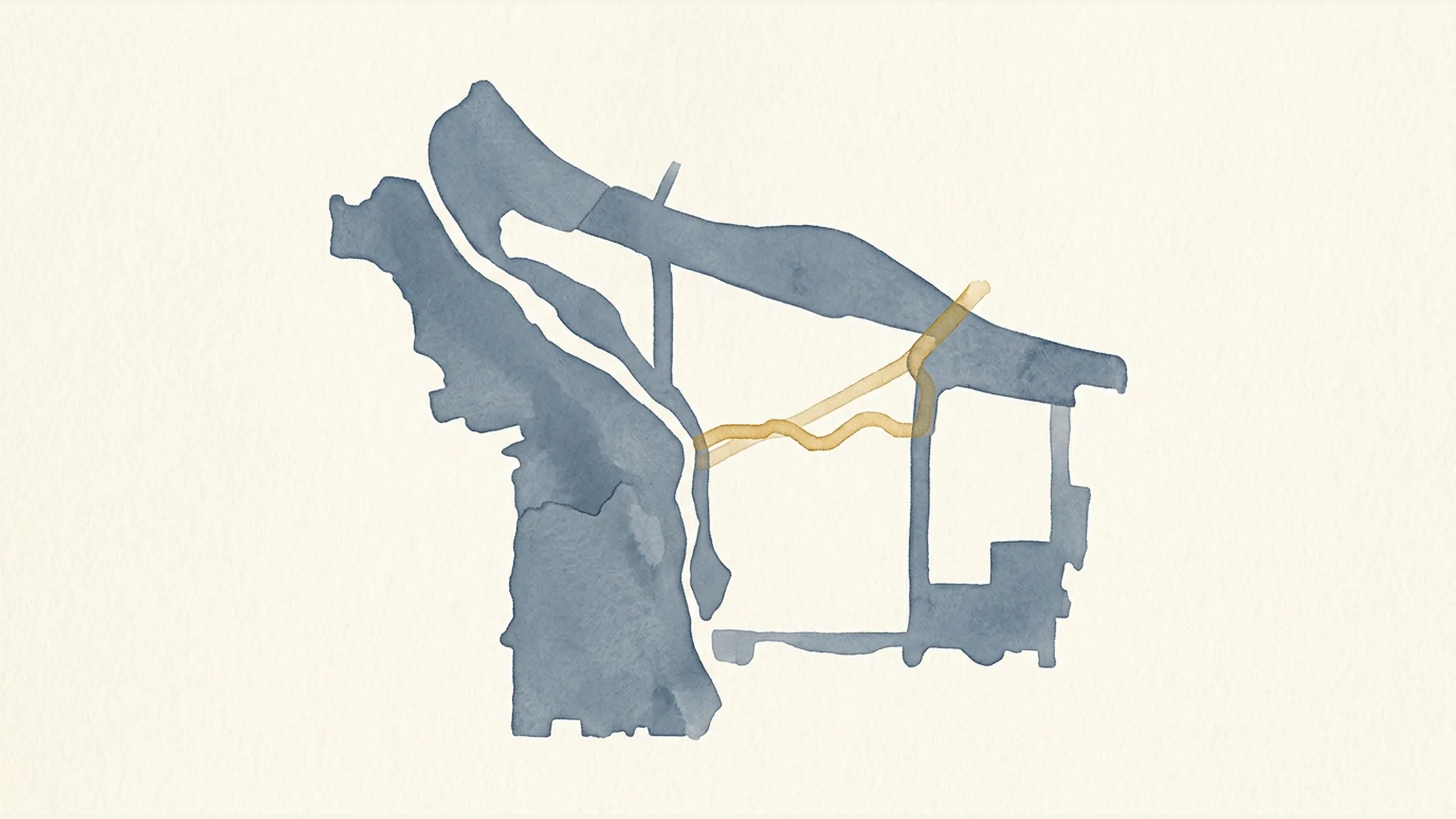
A bridge’s Portland location does not necessarily mean PBOT owns or maintains it. Multnomah County says it owns and maintains six Willamette River bridges: Broadway, Burnside, Hawthorne, Morrison, Sellwood, and Wapato/Sauvie Island. It identifies the Ross Island, Marquam, Fremont, and St. Johns bridges as maintained by ODOT. Other Portland spans can have other owners or operators.
PBOT describes itself as the lead snow-and-ice response agency for city streets, while ODOT handles interstate highways and U.S. and state routes in Portland. Multnomah County and other owners may separately handle their facilities.
Even identifying the bridge owner may not complete the inquiry. Responsibility can differ for the main deck, approach, ramp, drainage, lighting, signs, or barrier. The relevant location, facility component, function, and incident date should be verified rather than inferred from the bridge name or city limits. A broader discussion of road-maintenance claims against a city, county, or the state explains why ownership is only the beginning of that analysis.
A Barrier Impact Raises Its Own Evidence Questions
ODOT describes the principal purpose of a bridge rail as containing and redirecting an errant vehicle. That safety purpose is not a promise that every vehicle will be contained or redirected without injury in every real-world crash.
Barrier performance can depend on the vehicle’s size and type, speed, angle and orientation at impact, point of contact, and path before and after contact. The rail or transition type, installation, prior damage, inspection and repair history, and condition immediately before and after the crash may also matter.
Crash Dynamics and the Barrier’s Condition Both Matter
A serious injury or damaging impact does not by itself prove a defective barrier. Likewise, a rail that differs from a current standard is not automatically obsolete, noncompliant, or negligently maintained. A structure-specific assessment may require:
- plans and as-built drawings;
- the rail, end, and transition type;
- measurements and alteration history;
- the standards applicable when the system was installed or changed;
- inspection, damage, maintenance, and repair records;
- photographs from before and after the impact; and
- qualified analysis of crash dynamics and causation.
ODOT’s inspection framework includes bridge-railing and transition condition elements, damage inspections, maintenance recommendations, defect photographs, and critical-finding procedures. That framework identifies potentially useful record categories, but it does not prove that a particular record exists or identifies a defect.
Evidence to Preserve Quickly After a Portland Bridge Crash
Weather conditions change, traveler-information screens update, vehicles are towed, and damaged hardware may be repaired. Prompt preservation can help, but safety and medical care come first.
Start With Safety, Medical Care, and Required Reporting
Do not remain in traffic, enter a closed roadway, trespass, interfere with emergency crews, or handle damaged safety hardware to collect evidence. If taking photographs is unsafe, do not return to danger; witnesses, responders, records, and other lawful sources may provide information later.
Oregon DMV says a driver generally must submit an Oregon Traffic Collision and Insurance Report within 72 hours when a collision causes injury or death, more than $2,500 in damage to the driver’s vehicle, more than $2,500 in damage to any vehicle when any vehicle is towed, or more than $2,500 in damage to nonvehicle property. Whether a reporting category applies depends on the facts. A law-enforcement report does not replace a required DMV report.
A DMV report is also different from an insurance notice and from an Oregon Tort Claims Act notice.
Practical Evidence Checklist
When it can be done safely and lawfully, preserve or identify:
- Exact place and time: Bridge, direction, lane, deck level, approach or main span, nearest landmark, where the slide began, where each impact occurred, and vehicle rest positions.
- Surface conditions: Ice, water, slush, tire tracks, drainage, shade, lighting, and visible differences between deck segments or lanes.
- Warnings and digital information: Signs, variable messages, weather alerts, closures, advisories, and timestamped TripCheck or other relevant screenshots showing the URL, route, and camera identity.
- Vehicles and barrier: Multiple-angle photographs of vehicle damage and the barrier, rail end, or transition before conditions change, if safely feasible.
- People and sequence: Witness names and contact details, the vehicle path, reported speed, and what happened before, during, and after the slide.
- Physical evidence: Vehicle condition and available onboard or other crash-path information. Preservation should be addressed before repair, disposal, or destructive examination when possible.
- Agency activity: Treatment and plow logs, crew dispatches, retained route or GPS data, hazard complaints, material and application records, forecasts relied upon, and available pavement or air-temperature information.
- Bridge and barrier history: Bridge logs, incident or damage inspections, inspection and repair records, plans, as-builts, barrier and transition records, post-crash work, and prior similar-condition reports if they exist.
TripCheck is a live traveler-information system for current incidents, congestion, closures, conditions, and camera information. Preserve relevant material promptly, but do not assume its public interface keeps historical images or that a screenshot proves the condition at the exact collision point.
Official public-record request channels exist for ODOT, Portland, and Multnomah County. Record custody, retention, and availability vary, however, and a request generally seeks existing records—it does not ensure that all potentially relevant material will be preserved. A preservation request, public-records request, subpoena, crash report, and OTCA notice serve different functions.
Information about using Portland crash and roadway data as investigative leads may help identify agencies and records. Network data or prior crashes do not, by themselves, prove bridge icing or negligence in a particular collision.
Oregon Fault Rules Can Allow More Than One Cause to Be Examined
Oregon’s comparative-fault statute permits consideration of responsibility involving a claimant and other legally responsible actors. Under ORS 31.600, a claimant’s fault does not bar recovery if it is not greater than the combined fault of the persons specified in the statute. Any allowed damages are reduced in proportion to the claimant’s fault.
How that rule applies depends on the evidence and parties in a particular case. It does not support assigning percentages from the fact of a slide alone. Driver conduct, surface condition, winter response, warnings, contractor work, and barrier evidence must each be examined on their own footing before considering how they relate.
Public-Body Claims Bring Separate Oregon Notice and Lawsuit Deadlines
When a state or local public body may be involved, Oregon’s notice rule can arise much sooner than the general period for filing a lawsuit. ORS 30.275 generally requires tort-claim notice within 180 days for claims other than wrongful death and within one year for wrongful-death claims, subject to specified exceptions and fact-specific questions. The statute generally provides a separate two-year period for bringing an action, also subject to listed exceptions.
The two-year period does not replace the shorter notice requirement. Formal notice has requirements concerning its content and recipient, and statutory “actual notice” has separate requirements. Calling the police, filing a DMV report, notifying an insurer, submitting a hazard complaint, requesting records, or assuming that an agency knows about a crash should not be treated as automatically satisfying OTCA notice.
These are general rules, not a deadline calculation for any reader. Accrual, exceptions, incapacity provisions, the proper recipient, the correct public body, immunity, and other defenses can be fact-specific. Do not wait for day 180—or any stated outer date—to identify the relevant entity and obtain case-specific guidance.
What to Do With These Questions After an Injury
After immediate safety and medical needs are addressed, focus on the facts most likely to change: the precise location, surface condition, weather and traveler information, vehicle condition, witness accounts, and barrier scene. Identify who was responsible for the specific facility component and function instead of guessing from the bridge’s location. Keep reporting, insurer communications, preservation efforts, records requests, and OTCA notice separate.
A lawyer evaluating Portland personal injury claims involving public entities can assess case-specific evidence and deadlines. Seeking a review does not mean that bridge icing, public ownership, or a barrier impact establishes a claim; it provides a way to examine those questions before evidence disappears or a potentially applicable deadline passes.
Frequently Asked Questions
Why do Portland bridge decks freeze before nearby roads?
Open air surrounds an elevated deck above and below, while a ground-supported road receives some heat from the earth. A bridge can therefore cool and freeze sooner. Icing may also be uneven, particularly between shaded and sunnier areas. This susceptibility does not prove that ice existed at a particular crash site.
Does sliding on bridge ice mean the driver was negligent?
Not automatically. Oregon’s basic speed rule considers surface, weather, visibility, traffic, and other conditions, even when a vehicle is below the posted speed. Speed, following distance, tires, warnings, visibility, and driver inputs may matter. A slide alone neither proves nor disproves negligent driving.
Can a city, county, or ODOT be responsible for a bridge-ice crash?
Potential public-body responsibility depends on evidence involving the correct entity, its particular duty and conduct, causation, damages, proper notice, and applicable defenses or immunities. A bridge’s public ownership or the presence of ice is not enough by itself.
Does hitting a bridge barrier prove that the rail was defective?
No. Barrier performance can depend on impact speed, angle, vehicle type, point of contact, rail type and condition, installation and maintenance history, and applicable standards. Plans, inspections, photographs, measurements, and engineering analysis may be necessary.
What evidence should be preserved after a bridge-deck crash?
After prioritizing safety and care, preserve the exact place and time, surface and weather details, vehicle and barrier photographs, witness information, digital advisories, and available crash-path information. Treatment records, dispatches, complaints, inspections, plans, and repair history may also be relevant. Conditions and records can change, so prompt, lawful preservation matters.
What Oregon deadline may apply if a public body was involved?
ORS 30.275 generally provides a 180-day notice period for claims other than wrongful death, a one-year notice period for wrongful-death claims, and a separate general two-year action period, all subject to exceptions and fact-specific rules. Ordinary police or DMV reports, insurer communications, complaints, and records requests do not automatically satisfy OTCA notice. Prompt individualized review is important.
Educational Disclaimer
This article provides general educational information about Oregon law and Portland bridge-crash evidence. It is not legal advice and does not create an attorney-client relationship. Laws, agency responsibilities, records, and deadlines can change, and their application depends on the specific facts.
Source Notes
- National Weather Service, Cold and Winter Hazards: “Bridges Freeze First”.
- Oregon Department of Transportation, 2025 Winter Travel News Packet, Winter Maintenance Levels, and Winter Storm Toolbox.
- Portland Bureau of Transportation, Winter Weather Basics and FAQ.
- Multnomah County, Willamette River Bridges and Bridges Retention Schedule.
- Oregon Revised Statutes, ORS chapter 811 (basic speed rule), ORS chapter 31 (comparative fault), and ORS chapter 30 (Oregon Tort Claims Act).
- Oregon Supreme Court, Stevenson v. State Department of Transportation, 290 Or 3, 619 P2d 247 (1980).
- Oregon Department of Transportation, 2024 Bridge Condition Report, Major Bridge Maintenance Roadside Safety Feature Design, and 2026 Bridge Inspection Coding Guide.
- Federal Highway Administration, Guardrail 101 and Safety Analysis of Extruding W-Beam Guardrail Terminal Crashes. The detailed crash-analysis report concerns W-beam terminals; this article uses its general evidence-preservation principles without applying a terminal-specific failure theory to an unidentified bridge rail.
- Oregon Department of Transportation, Traveler Information and Oregon DMV, Collision Reporting and Responsibilities.
- Official public-record request pages: ODOT Public Records Center, City of Portland Public Records Requests, and Multnomah County Transportation Public Records.
Client-First Fee Promise
Client First = Bills First, Fees Second
Your unpaid medical bills do not have to make your lawyer's fee bigger. Johnson Law subtracts qualifying medical bills before calculating our fee, helping clients keep more of their settlement.
Applies to qualifying cases. Results vary.