Marijuana and THC Evidence After a Washington Car Crash: Impairment and Causation Are Different Questions

Marijuana and THC Evidence After a Washington Car Crash: Impairment and Causation Are Different Questions
Marijuana or THC evidence may matter after a Washington car crash, but no single allegation, item, or test result automatically proves the entire civil case. Finding cannabis in a vehicle is not the same as proving recent use. Recent use is not necessarily the same as impairment. And even evidence of impairment does not, by itself, establish which unsafe act caused a collision or which injuries and losses resulted.
For Vancouver and Clark County drivers and injury claimants, the most useful way to evaluate a marijuana allegation is to follow the evidence one link at a time:
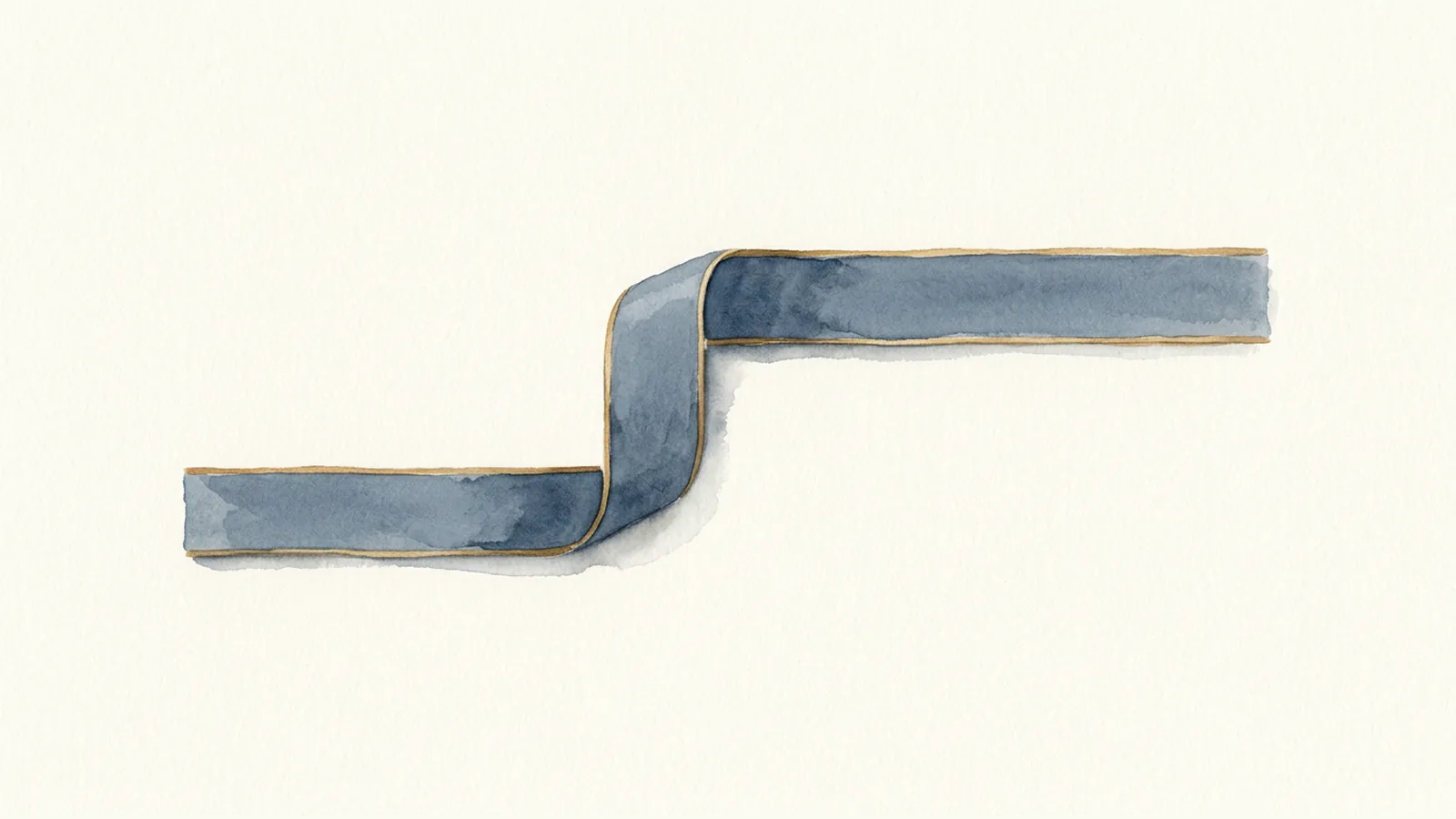
Possession or use → THC presence → impairment → unsafe driving → crash causation → injury and damages
This chain is an analytical tool for cannabis-based explanations, not a set of mandatory elements for every crash claim. Negligent driving and injuries can be proved without cannabis or impairment evidence, and actual impairment can be proved without a THC test. Evidence supporting one link may help establish the next, but it does not make that next step automatic. Washington’s criminal DUI rules and its civil negligence rules also answer different questions. A criminal threshold may establish one basis for a DUI offense, while a civil claim still requires proof of breach, causation, injury, damages, and any allocation of fault.
Start With the Evidence Chain, Not the Label “Marijuana-Related Crash”
Calling a collision “marijuana-related” can compress several disputed questions into one loaded label. A more reliable analysis asks what the evidence actually shows and why that fact matters to a disputed issue.
Washington’s evidence rules begin with relevance: Does the evidence make a consequential fact more or less probable? Even relevant evidence may be excluded if its probative value is substantially outweighed by dangers such as unfair prejudice, confusion, or misleading the jury. Evidence of another act also cannot be used merely to suggest that a person has a bad character and therefore must have driven carelessly on this occasion.
Those principles help identify which links matter to the particular theory being asserted.
Possession or use
Cannabis found in a vehicle may show possession or access. It does not necessarily show who used it, when anyone used it, whether the driver had THC in their body at the relevant time, or whether cannabis affected the driver’s abilities.
The legality of possession is a separate question too. Washington permits people age 21 or older to possess cannabis within statutory limits, while possession by a person under 21 is generally prohibited unless that person is a qualifying patient with valid authorization. Washington also separately regulates opened or accessibly stored cannabis in a vehicle on a highway and consuming cannabis in such a vehicle.
A lawful possession, an unlawful possession, a vehicle-storage infraction, and proof of actual use may therefore carry different meanings. None should be treated automatically as proof of impairment or crash causation.
THC presence
A toxicology result can provide evidence that a particular substance or analyte was detected. The next questions include what the test measured, the sample type, the concentration, the time between driving and collection, and the laboratory’s reporting limits and measurement uncertainty.
Those distinctions matter. The Washington State Patrol’s May 2025 testing scope reports delta-9 THC and delta-9-carboxy-THC and lists different reporting limits for them. A laboratory’s ability to detect or quantify an analyte describes the analysis; it is not itself a legal presumption that a driver was impaired or caused a crash.
The abstract of NHTSA’s July 2017 report to Congress identifies poor correlation between blood THC concentrations and impairment. It is a federal synthesis from 2017, not a finding about any particular driver or a complete statement of all research through 2026.
Impairment
Impairment asks whether cannabis affected driving-related abilities at the relevant time. Cannabis can impair driving-related skills, but the relationship between blood-THC concentration and an individual’s degree of impairment is not as direct as many people assume.
In the published decision State v. Fraser, the Washington Supreme Court upheld the constitutionality of Washington’s 5.00 ng/mL per se criminal DUI provision. At the same time, the court recognized that no universal blood-THC level correlates with impairment in the way 0.08 blood-alcohol concentration correlates with alcohol impairment. Absorption, frequency of use, body composition, and other pharmacokinetic factors can affect that relationship.
That does not make THC evidence irrelevant. It means the legal significance of a result and the scientific inference drawn from it must be stated carefully.
Unsafe driving
Civil crash analysis must examine conduct, whether or not toxicology evidence exists. What did the driver do or fail to do? Washington drivers owe nearby road users a duty to exercise ordinary care, and evidence of a traffic-rule violation may bear on whether a driver breached that duty.
The relevant evidence may include witness accounts, video, officer observations, lane and scene evidence, collision records, and vehicle data. Those sources can help answer what happened on the road rather than asking a THC result to supply an answer it cannot provide by itself.
Crash causation
Even when evidence supports impairment or a breach of a driving duty, a civil claim still requires a connection between the unsafe act and the collision. In practical terms: What driving act allegedly caused the crash? If impairment is part of the asserted causal theory, what evidence connects it to that act?
Washington law makes breach of a statutory or regulatory duty concerning driving under the influence negligence per se. But that rule addresses breach; it does not automatically establish cause in fact, legal causation, resulting injury, damages, or the allocation of fault.
The Washington Supreme Court’s published decision in Gerlach v. Cove Apartments, LLC illustrates the broader evidentiary point. Gerlach involved alcohol and a balcony fall—not cannabis or a vehicle collision. Intoxication was admitted, leaving causation and fault disputed. The court upheld exclusion of BAC results and related generalized-effects expert evidence that was speculative as applied to the claimant’s actual conduct and minimally probative of the disputed causal mechanism, with significant unfair-prejudice concerns. The lesson is not that intoxication evidence is always inadmissible. It is that generalized effects still need a case-specific connection to what allegedly caused the event.
Injury and damages
The final link concerns what the collision caused. Proof that a driver acted negligently does not itself establish that the crash caused every claimed medical condition or determine the nature and amount of the resulting losses.
Medical records and other loss evidence serve a different purpose from toxicology and driving evidence. A claimant still needs evidence connecting the collision to each claimed injury and damage. That distinction also matters when proving Washington pain-and-suffering damages: misconduct or impairment evidence is not a substitute for proof of the injury’s effects.
What a Washington THC Test Can—and Cannot—Establish
A THC result should be interpreted in relation to the question being asked. The criminal DUI statute, the rules governing evidence in impaired-driving proceedings, the toxicology details, and the civil theory of causation do not all perform the same function.
The 5.00 ng/mL threshold has a criminal role and a defined civil cross-reference
Under current RCW 46.61.502, a driver may commit DUI under one per se alternative by having at least 5.00 ng/mL THC in whole blood within two hours after driving. The statute also provides separate alternatives for driving while under the influence of or affected by cannabis or another drug, and for driving under the combined influence of alcohol, cannabis, and another drug.
The 5.00 ng/mL provision is therefore a criminal offense standard. It is not a universal scientific declaration that every person at or above that concentration is individually impaired, and it does not automatically establish which driver caused a civil collision.
There is also an express civil cross-reference: RCW 5.40.060 incorporates RCW 46.61.502. Evidence satisfying that incorporated standard conclusively establishes the under-the-influence element of the statutory civil defense—not causation or the percentage of fault. The defense’s remaining requirements are discussed below.
Below 5.00 ng/mL does not end the inquiry
A result below 5.00 ng/mL is not automatically irrelevant or exculpatory. The version of RCW 46.61.506 effective until June 30, 2027, applies to civil and criminal proceedings arising from alleged impaired driving. It allows a THC concentration below 5.00 ng/mL to be considered with other competent evidence and does not limit other competent evidence bearing on impairment.
That does not mean every detectable amount proves impairment. It means the fact finder may consider the result in context rather than treating the criminal per se threshold as the only possible dividing line.
Timing and laboratory details affect interpretation
Washington’s DUI statute permits a blood sample obtained more than two hours after alleged driving to be used as evidence that a person had at least 5.00 ng/mL within two hours. A result above 0.00 may also be used under the actual-influence or combined-influence alternatives.
The statute permits the evidence to be used; it does not dictate the weight it must receive. Sample timing, pharmacokinetics, the analytes reported, chain of custody, reporting limits, measurement uncertainty, observed conduct, and expert foundation may all affect what a result supports in a particular case.
Drivers under 21 face a separate criminal provision
Current RCW 46.61.503 creates a separate misdemeanor for a driver under 21 who, within two hours after driving or being in physical control, has a THC concentration above 0.00 but below the concentration specified in RCW 46.61.502.
That is another criminal rule with a defined statutory role. It should not be converted into an automatic civil finding that an under-21 driver caused a crash.
Criminal DUI Proof and Civil Crash Proof Answer Different Questions
An arrest, charge, toxicology result, or conviction may become part of a civil crash investigation. But the criminal and civil matters have different issues and consequences.
The criminal case asks whether the government can establish a charged offense under the applicable criminal standard. The civil injury claim asks questions such as whether a driver breached a duty, whether that breach proximately caused the crash and resulting injuries, what damages followed, and how fault should be allocated.
A DUI-related violation may establish breach without establishing the whole civil case
Under RCW 5.40.050, breach of a statutory or regulatory duty concerning driving under the influence is negligence per se. That is significant, but it is not the end of the civil analysis.
The remaining questions include duty, resulting injury, proximate cause, damages, and allocation of fault. And before negligence per se becomes relevant, there must be a proven DUI-related violation—not merely a suspicion, possession allegation, or unexplained THC result.
A criminal case does not automatically decide the civil claim
Police reports, toxicology records, laboratory materials, and criminal-court records may affect the evidence available and the timing of a civil investigation. They do not automatically resolve or pause an injury claim. Readers trying to understand those separate tracks can review the broader Washington injury-claim process and timing.
Why Admissibility Depends on Purpose, Foundation, and Causal Fit
Whether cannabis evidence may be presented in a civil trial does not turn on a blanket rule. The analysis is evidence-specific and issue-specific.
A court may ask:
- What consequential fact is the evidence offered to prove?
- Does the evidence make that fact more or less probable?
- Is there an adequate foundation connecting the evidence to that issue?
- Is its probative value substantially outweighed by the danger of unfair prejudice, confusion, or misleading the jury?
- Is the evidence being offered for a proper purpose rather than merely to portray someone as a careless person?
The answer can change with the evidence, the purpose for which it is offered, and the actual dispute.
Relevance begins with the disputed question
Marijuana found in a car could be relevant to a dispute about possession. Additional evidence might be needed to connect it to recent use by the driver. A toxicology result could bear on presence in the body but still require interpretation before it supports an impairment claim. And evidence of impairment may need a further connection to a specific unsafe maneuver before it helps prove crash causation.
The disputed question matters. Evidence aimed at showing who possessed cannabis does not necessarily help determine which vehicle crossed a center line.
Generalized impairment evidence still needs a case-specific connection
General information about how a substance may affect people is not automatically proof of how it affected a particular driver or caused a particular movement on the road. As Gerlach demonstrates in its different alcohol and premises-liability setting, generalized-effects testimony may have limited value when it is speculative as applied to the person’s actual conduct and disconnected from the disputed causal mechanism.
The closer the evidence fits the actual driving event, the more clearly a court can assess its probative value. The weaker that connection, the greater the concern that the label “intoxicated” may produce emotion or stigma instead of helping the fact finder resolve what happened.
Prejudice and propensity are separate concerns
Washington’s evidence rules allow a court to weigh unfair prejudice and confusion even when evidence has some relevance. They also restrict using other acts merely to prove that a person acted in conformity with a supposed character trait.
That does not make all possession, use, offense, or toxicology evidence inadmissible. It means the party offering the evidence should be able to identify a proper, supported purpose and connect it to a genuinely disputed issue.
An Unpublished Washington Case Illustrates the Danger of Skipping Steps
The Washington Court of Appeals’ 2026 opinion in Sedillo v. Finlan is unpublished and nonprecedential. It is useful here only as a factual illustration of what can happen when possession-related evidence is used to bridge the gaps to impairment and causation without adequate support. It does not establish a statewide cannabis-evidence rule.
What happened in Sedillo v. Finlan
Sedillo arose from a December 2017 head-on collision on South Skagit Highway. Sixteen-year-old Alex Finlan was driving a westbound pickup, and Herman Sedillo was driving an eastbound car. The central liability dispute was which driver crossed the center line. Finlan did not remember the collision.
A sheriff’s deputy found marijuana in Finlan’s truck. Finlan later pleaded guilty in juvenile court to a marijuana-related offense, but the appellate record did not establish the precise offense because the juvenile file was sealed.
At the civil trial, the jury assigned 80 percent of the fault to Finlan, and the trial court awarded Sedillo more than $1.8 million in damages. The Court of Appeals vacated the verdict and judgment and ordered a new trial limited to liability. The opinion did not determine the ultimate fault allocation on remand.
What the appellate court decided
The Court of Appeals held that admitting Finlan’s juvenile conviction under ER 609 and his first-deposition Fifth Amendment invocation about marijuana possession and selling under ER 403 was a prejudicial abuse of discretion. The juvenile-conviction ruling and the ER 403 balancing of the invocation were distinct. The decision did not impose a blanket ban on adverse inferences in civil cases.
The challenged inference had low probative value on the central question of which driver crossed the center line, while carrying a substantial danger of unfair prejudice. The court concluded that it was reasonably probable the jury could have reached a different verdict without the errors.
What the opinion did not decide
The limits of the opinion are important:
- The court did not find that Finlan was unimpaired.
- It did not find that he had not used marijuana.
- It expressly declined to decide claimed errors involving evidence of marijuana use on the crash date or earlier.
- It did not decide claimed errors involving expert testimony that intoxication caused the collision.
- It did not hold that all marijuana or THC evidence is inadmissible.
The research for this article also did not identify the exact juvenile offense or a post-remand outcome. Those gaps should not be filled with assumptions.
Why the opinion’s status matters
Sedillo was unpublished and nonprecedential as of the September 9, 2026 research cutoff. GR 14.1(a) expressly permits citation of unpublished Washington Court of Appeals opinions filed on or after March 1, 2013, as nonbinding authority if identified as such. They bind no court and may receive whatever persuasive value the court considers appropriate. The official information page’s “DO NOT CITE. SEE GR 14.1(a)” banner does not override that permission. Anyone considering the opinion for litigation should have counsel check its current status, the current rule, and controlling authority rather than relying on this article.
Evidence That May Help Connect—or Separate—the Links
No single evidence list fits every crash. The goal is to preserve and compare sources that may show whether each link in the chain is supported.
Toxicology and collection records
Depending on what exists in the file, useful details may include:
- the reported result and analytes;
- whether the sample was whole blood or another sample type;
- the collection time relative to alleged driving;
- chain-of-custody records;
- laboratory reporting limits; and
- measurement uncertainty accompanying a quantitative result.
These details can help a qualified reviewer understand what was tested and what the result may mean. None automatically establishes admissibility, impairment, or causation.
Observed behavior and driving evidence
Evidence about the actual event may include witness accounts, officer observations, Drug Recognition Expert findings if any, photographs, video, 911 or dispatch material, lane and scene evidence, collision records, tow and repair documents, and vehicle data.
For a Vancouver or Clark County crash, preserving records from different holders can be important because toxicology evidence and driving evidence answer different parts of the analysis. Johnson Law’s page on Vancouver car-crash evidence and claim guidance discusses the broader investigation and preservation process.
Medical and damages evidence
Medical records and other loss evidence address whether the collision caused particular injuries and damages. They should be evaluated separately from evidence offered to show possession, THC presence, impairment, or unsafe driving.
A complete claim therefore does not stop after establishing how the collision occurred. It also asks which conditions and losses resulted from that collision and what documentation supports them.
What If the Injured Person Is Accused of Cannabis Impairment?
An accusation that the injured person was impaired does not automatically eliminate a Washington injury claim.
RCW 5.40.060 creates a complete defense to a personal-injury or wrongful-death action only when the injured person was under the influence at the time of the occurrence, that condition was a proximate cause of the injury or death, and the fact finder assigns that person more than 50 percent of the fault. It expressly incorporates RCW 46.61.502: evidence satisfying that standard conclusively establishes only the under-the-influence element, not causation or fault percentage.
Under subsection (2), the defense is unavailable in an action against a motor-vehicle driver whose intoxication proximately caused the injury or death when the claimant’s intoxication did not proximately cause the occurrence.
Those requirements keep the core questions separate. Proof of substance use is not automatically proof of impairment. Proof of impairment is not automatically proof that the condition caused the occurrence or injury. And neither point alone determines the percentage of fault. How the statute applies requires case-specific analysis.
A Practical Way to Evaluate a Marijuana Allegation After a Vancouver-Area Crash
When cannabis becomes part of a crash investigation or injury claim, work through the questions in order:
- What evidence shows possession or use? Identify who possessed the cannabis, whether actual use is supported, and when any use allegedly occurred.
- What exactly did the test detect, and when? Review the analyte, concentration, sample type, collection time, reporting limits, and measurement uncertainty where available.
- What evidence supports impairment? Consider the result with competent evidence about the driver’s condition and conduct rather than assuming presence and impairment are interchangeable.
- What driving act was unsafe? Identify the maneuver, omission, or traffic-rule violation alleged to constitute breach.
- How did that act cause the collision? Identify how the unsafe act connects to the actual crash mechanism. Link impairment to that act only if impairment is part of the asserted causal theory.
- What evidence connects the crash to each injury and loss? Preserve medical and damages records that address injury causation and the claimed losses.
Prompt preservation can matter because relevant material may be held by law enforcement, laboratories, witnesses, medical providers, tow yards, repair facilities, public agencies, or private owners of video and vehicle data. The point is not to assume what any record will show. It is to avoid losing the opportunity to evaluate each link with the best available evidence.
Frequently Asked Questions
Does marijuana found in a vehicle prove a driver was impaired?
No. Marijuana in a vehicle may support possession or access, but recent use, THC presence, impairment, unsafe driving, and crash causation are separate propositions. Possession evidence may still be relevant when offered for a supported, case-specific purpose.
Does a THC blood result prove who caused a Washington car crash?
Not by itself. The result must be considered with details such as sample timing, sample type, laboratory analysis, observed conduct, driving evidence, and the alleged crash mechanism. Its relevance and weight depend on the question it is offered to answer.
What does Washington’s 5.00 ng/mL THC limit mean?
At least 5.00 ng/mL THC in whole blood within two hours after driving is one current per se criminal DUI alternative in Washington. RCW 5.40.060 expressly incorporates RCW 46.61.502, so evidence satisfying that standard conclusively establishes the under-the-influence element of the civil defense. It does not establish causation, fault percentage, injury, or damages by itself.
Can a THC result below 5.00 ng/mL still be considered?
Yes. The version of RCW 46.61.506 effective until June 30, 2027, permits a lower concentration to be considered with other competent evidence in civil and criminal proceedings arising from alleged impaired driving. A lower result does not necessarily prove or disprove impairment by itself.
Is cannabis evidence always admissible in a Washington crash case?
No categorical answer applies. Admissibility may depend on relevance, purpose, foundation, causal connection, and whether the probative value is substantially outweighed by risks such as unfair prejudice or confusion. Sedillo did not hold that all cannabis evidence is inadmissible.
Can an injured person lose a Washington claim because of cannabis impairment?
Not automatically. RCW 5.40.060 requires intoxication at the time of the occurrence, that condition’s proximate causation of injury or death, and more than 50 percent fault assigned to the injured person. Evidence satisfying the incorporated RCW 46.61.502 standard conclusively establishes only the under-the-influence element. Subsection (2) excludes the defense against a motor-vehicle driver whose intoxication proximately caused injury or death when the claimant’s intoxication did not proximately cause the occurrence. Application depends on the particular evidence and facts.
Source Notes
Research cutoff: September 9, 2026. The principal authorities and government materials used for this article are:
- RCW 46.61.502, RCW 46.61.503, and RCW 46.61.506, Washington State Legislature (criminal DUI alternatives, under-21 provision, and evidence of THC concentration).
- RCW 5.40.050 and RCW 5.40.060, Washington State Legislature (negligence per se and the statutory intoxication defense).
- RCW 69.50.4013 and RCW 46.61.745, Washington State Legislature (possession and cannabis in vehicles).
- Washington State Courts’ ER 401, ER 402, ER 403, ER 404, and ER 609 (relevance, admissibility, prejudice, other-acts evidence, and juvenile adjudications).
- State v. Fraser, 199 Wn.2d 465, 509 P.3d 282 (2022), Washington Supreme Court (Washington’s per se THC DUI provision and the limits of concentration-to-impairment correlation).
- Gerlach v. Cove Apartments, LLC, 196 Wn.2d 111, 471 P.3d 181 (2020), Washington Supreme Court (causal fit and unfair-prejudice analysis involving alcohol evidence in a different factual setting).
- Stanley v. Sierra Pacific Land & Timber, No. 59273-8-II (published, 2025), Washington Court of Appeals (ordinary care, negligence elements, and traffic-rule evidence).
- Sedillo v. Finlan, No. 87939-1-I (unpublished, nonprecedential, filed Aug. 31, 2026) and its official opinion information page, Washington Court of Appeals. It is included only as a factual illustration; counsel should check its current status and current authority before any litigation use.
- GR 14.1, Washington State Courts (unpublished opinions).
- NHTSA, Marijuana-Impaired Driving: A Report to Congress (July 2017) (abstract, printed page iii: poor correlation between blood THC concentrations and impairment). Verification was limited to front matter and the abstract because of access and extraction limitations; this article relies only on that narrowed statement.
- Washington State Patrol Toxicology Laboratory resources and its May 2025 DUI/DRE scope of testing (testing methods, analytes, reporting limits, and measurement uncertainty).
This article provides general educational information about Washington law, not legal advice. Laws, evidence rules, scientific materials, and case status can change, and the facts of each collision and claim matter.
Client-First Fee Promise
Client First = Bills First, Fees Second
Your unpaid medical bills do not have to make your lawyer's fee bigger. Johnson Law subtracts qualifying medical bills before calculating our fee, helping clients keep more of their settlement.
Applies to qualifying cases. Results vary.