MAX Platform Injury in Portland: When TriMet or Transit Property May Be Part of the Claim
MAX Platform Injury in Portland: When TriMet or Transit Property May Be Part of the Claim
If you were hurt on or near a Portland MAX platform, the first legal question is not simply “Can I sue TriMet?” It is more specific: where exactly did the injury happen, who controlled that part of the station area, what made the condition or security risk unreasonable, and what evidence still exists?
That matters whether the injury involved a slip, a trip, a platform-edge hazard, poor lighting, crowding, or an assault. A MAX station can involve transit property, public sidewalks, parking areas, elevators, ramps, nearby construction, private-adjacent property, security contractors, and more than one public body. In some cases, TriMet may be a potential defendant. In others, the more important defendant may be another property controller, contractor, security provider, adjacent owner, or public entity.
This article focuses on Oregon legal information for MAX platform and station-area injuries. It is educational only and is not legal advice for any specific incident.
For the broader public-transit framework, see Johnson Law’s guide to Portland transit injury claims involving TriMet, MAX, or Streetcar. This post stays narrower: the MAX platform or station area as a premises, security, and public-body evidence scene.
A MAX Platform Injury Is a Location-Specific Claim
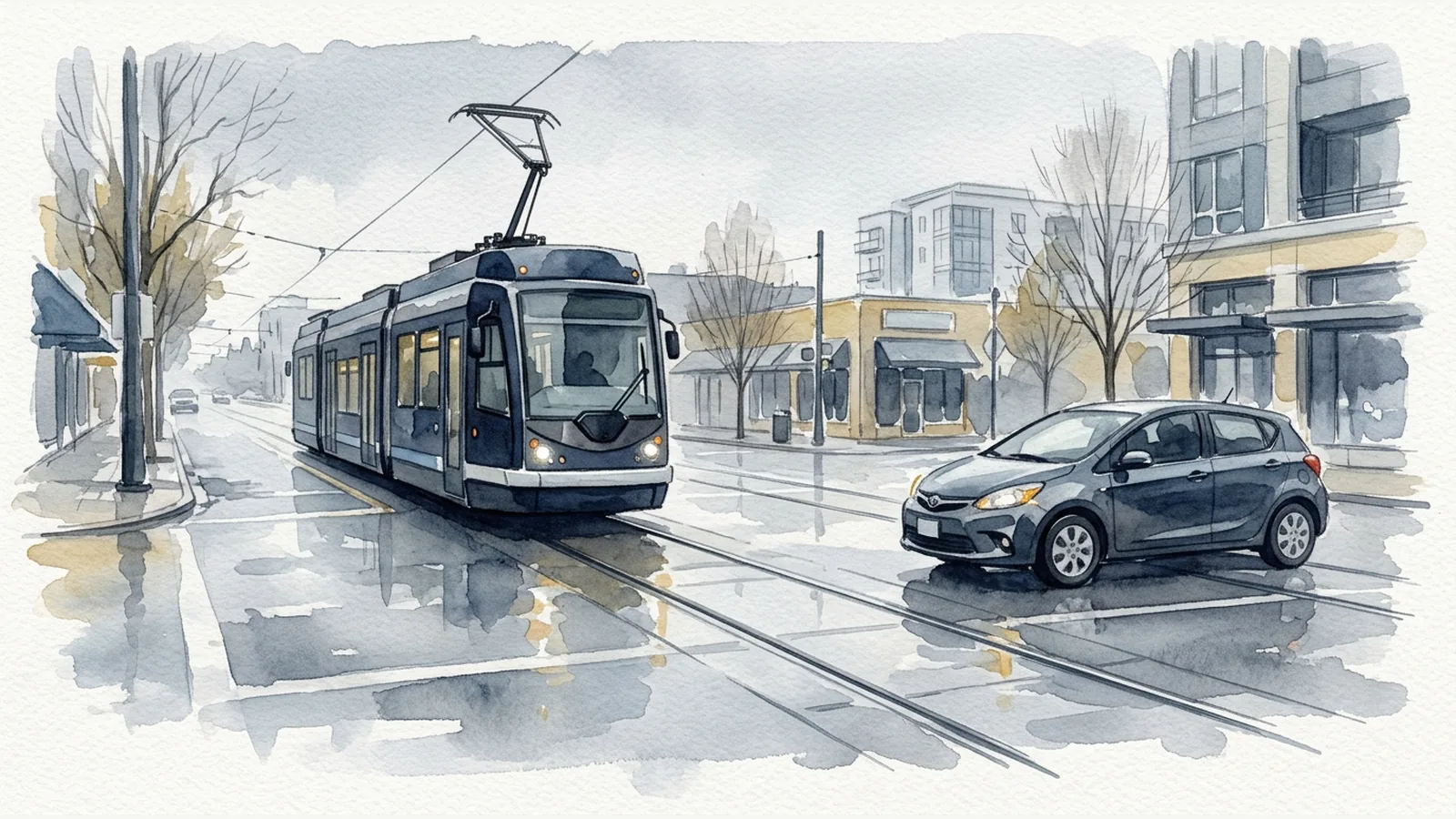
TriMet provides bus, light rail, commuter rail, and paratransit service in the Portland region. MAX Light Rail connects Portland City Center with communities and destinations including Beaverton, Clackamas, Gresham, Hillsboro, Milwaukie, North and Northeast Portland, and Portland International Airport.
Because the MAX system is broad and station layouts vary, “I was hurt at the MAX station” is usually not specific enough. A claim may turn on whether the injury happened:
- on the platform surface;
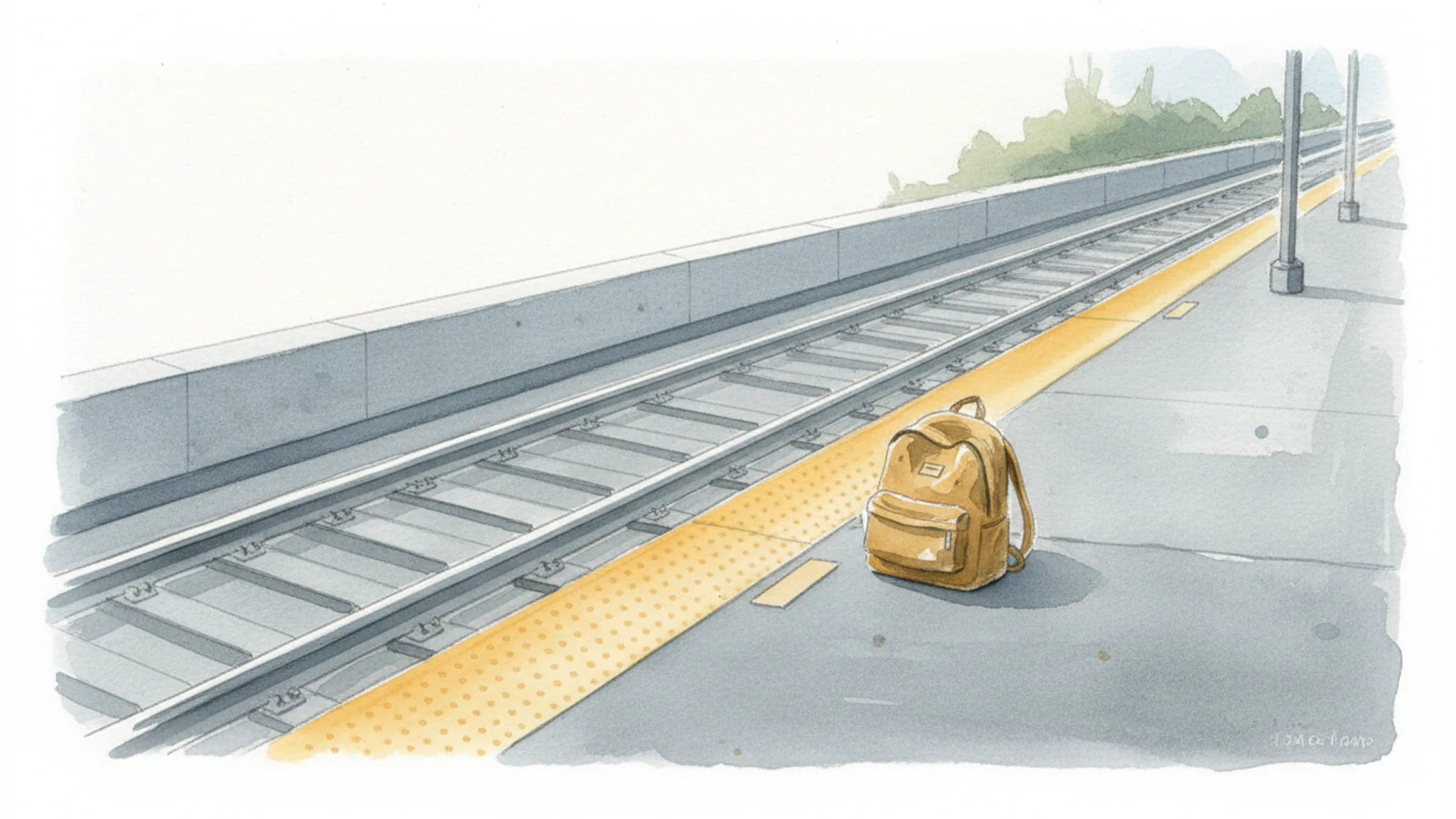
- at the platform edge;
- on stairs, ramps, an elevator, or an escalator;
- near a ticket machine, sign, bike parking area, quick-drop space, or Park & Ride;
- on the sidewalk approach to the station;
- in a transit center or parking area;
- near a construction zone or altered pedestrian route; or
- on property next to, but not actually controlled by, the transit agency.
TriMet publishes station-specific information, including location details, stop IDs, connections, and amenities that vary by station. Those details can become important because the conditions, sightlines, lighting, platform design, available camera coverage, and responsible maintenance entity may differ from one location to another.
Why “at the MAX station” is not specific enough
The exact place of injury helps answer several practical questions:
- Who owned, leased, maintained, or controlled that area?
- Was the hazard part of the platform, a station amenity, an adjacent sidewalk, or nearby private property?
- Were there warnings, cones, lighting, barriers, or staff nearby?
- Were there cameras pointed at the area?
- Was the risk connected to maintenance, security response, design, crowd control, or a third person’s conduct?
Those questions shape the potential defendants and the deadlines that may apply. When the injury happened on a sidewalk approach or near the edge of transit property, the analysis may overlap with Portland sidewalk defect claims and right-of-way control issues.
First Question: Who Controlled the Platform, Approach, or Security Condition?
TriMet-related injury claims often include a public-body issue. Oregon law provides that a mass transit district is a municipal corporation and a public body, corporate and politic, exercising public power. Oregon law also gives mass transit districts power to build, operate, improve, and maintain facilities and equipment for the mass transit system, including passenger terminal facilities and related facilities that encourage use of the system.
That does not mean TriMet is automatically liable for every injury at or near a MAX station. It means that, when TriMet or another public body is potentially involved, the claim may be governed by public-body rules as well as ordinary negligence principles.
Possible property or operational actors
Depending on the station and the incident, possible responsible actors may include:
- TriMet;
- the City of Portland or another city;
- ODOT;
- the Port of Portland;
- another public body;
- a private property owner next to the station;
- a maintenance or cleaning contractor;
- a construction or utility contractor;
- a security company; or
- multiple entities with overlapping responsibilities.
Defendant identification is not just a technical detail. It can affect notice deadlines, available defenses, insurance issues, evidence access, and whether Oregon Tort Claims Act rules apply.
Why station amenities and records matter
Station details can help pin down the evidence. The station name, stop ID, platform direction, nearby connection, amenity involved, and exact location within the station area may point toward relevant records such as maintenance logs, work orders, inspection records, security reports, camera footage, lighting records, or prior complaints.
For example, a fall near a ticket machine raises different evidence questions than a fall on a sidewalk approach. An assault in a poorly lit platform area raises different questions than a confrontation on a train or in a parking area. The legal analysis starts with the specific scene.
Slip or Trip on a MAX Platform: The Premises-Hazard Theory
A slip or trip claim focuses on whether a property possessor or responsible entity failed to use reasonable care regarding a dangerous condition. In Oregon, premises-liability principles generally require a possessor of land to make premises reasonably safe for an invitee’s visit, to exercise reasonable care to discover conditions creating unreasonable risks, and to eliminate the condition or warn foreseeable invitees.
On a MAX platform or station area, that may involve questions such as:
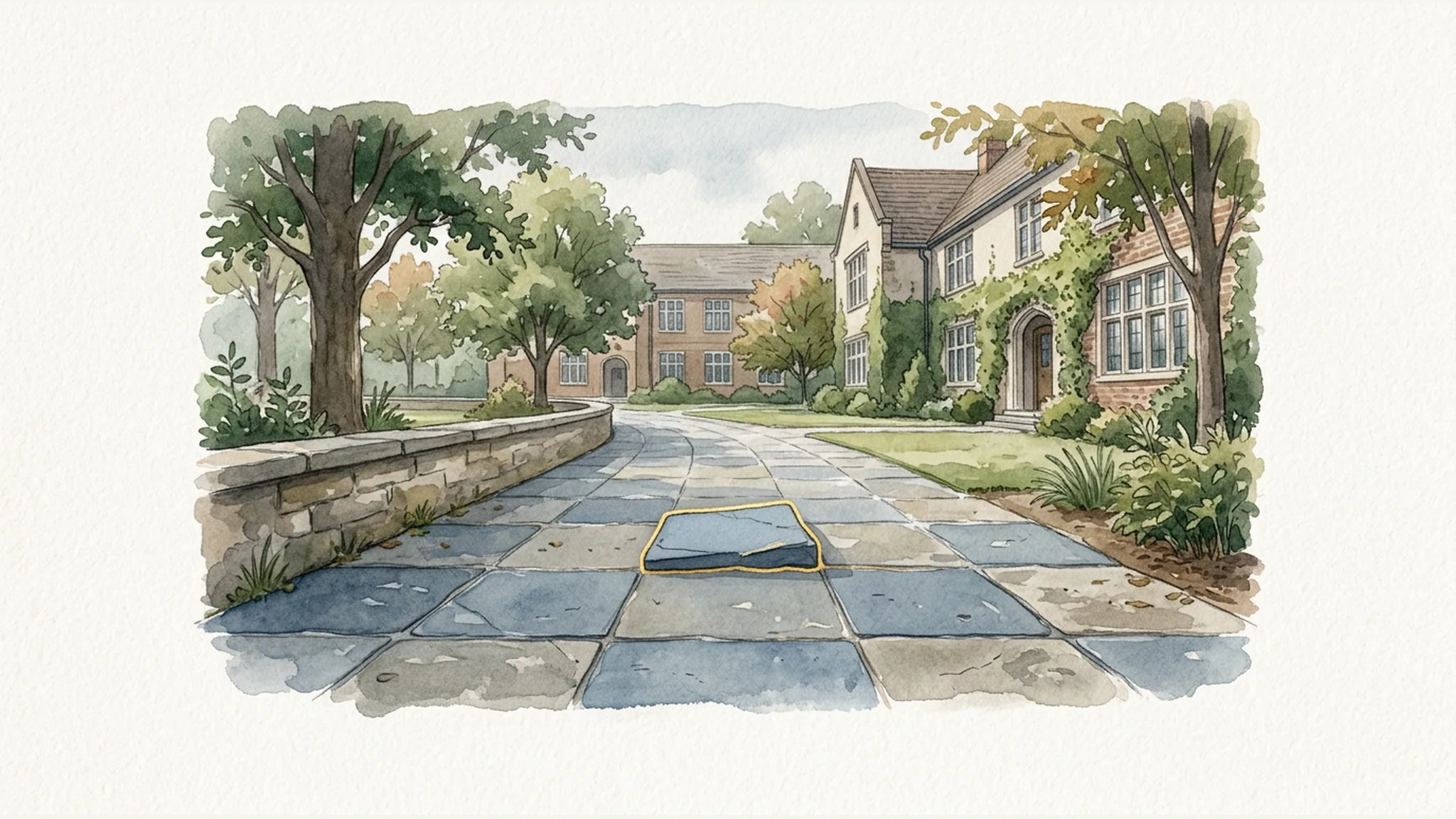
- Was there a surface defect, debris, liquid, ice, uneven transition, damaged plate, gap, obstruction, or unexpected elevation change?
- How long had the condition existed?
- Did anyone report it before the injury?
- Would reasonable inspection or maintenance have found it?
- Were warnings, cones, lighting, or barriers used?
- Did the condition cause the fall and the injury?
- Was the area controlled by TriMet, another public body, a contractor, or someone else?
The fact that a person fell does not prove negligence. The condition, notice, causation, and responsible entity all matter.
Examples of evidence to look for after a platform fall
Useful evidence after a platform fall may include:
- photos or video of the surface condition from several angles;
- the station name, stop ID, platform direction, and exact location;
- the date and time of the incident;
- lighting conditions and visibility;
- weather, debris, liquid, or other context known to the injured person;
- any warnings, cones, mats, barriers, or caution signs;
- names and contact information for witnesses;
- report numbers from TriMet, security, police, or 911;
- medical records documenting the injuries;
- shoes and clothing, if their condition may become relevant;
- nearby camera locations; and
- maintenance, cleaning, inspection, or complaint records that may need to be requested.
TriMet states that security cameras monitor MAX stations, transit centers, elevators, and onboard vehicles. That makes video preservation an important early issue, but it does not guarantee that footage exists, covers the right angle, is clear enough to use, or will be retained indefinitely. For a broader evidence-preservation overview, see our guide to preserving evidence before video or maintenance records disappear.
How rider conduct may become part of the defense
In platform-fall cases, defendants may argue that the rider ignored warnings, ran, stood too close to an edge, stepped around a visible hazard, looked away, or failed to watch footing.
Oregon comparative negligence law provides that contributory negligence does not bar recovery if the claimant’s fault was not greater than the combined fault of the persons specified in the statute, but damages are reduced in proportion to the claimant’s fault. In practical terms, rider conduct can matter, but a visible condition is not always an automatic end to the analysis. The question is usually how the conduct of each side compares under the facts.
Assault or Threat at a MAX Platform: The Security and Foreseeability Question
An assault-related MAX platform claim is different from a surface-hazard claim. The core issue is not only that a crime happened. The question is whether concrete facts made the risk foreseeable and whether a defendant’s conduct contributed to the harm.
Oregon foreseeability principles in negligence cases look at generalized risks of the type of incident and injury, not whether the exact sequence of events could be predicted. In criminal-attack cases, Oregon authority recognizes that foreseeability may be assessed from concrete facts about the person, location, and circumstances, including prior similar acts and the place and character of the location.
For a MAX platform assault, that may make facts like these important:
- prior reported threats, assaults, or similar incidents at the location;
- complaints or calls about the same person or group before the assault;
- whether TriMet staff, security, police, or 911 were alerted;
- the timeline between warning signs and the injury;
- lighting, sightlines, landscaping, or hidden areas;
- camera placement and whether footage was preserved;
- whether any posted or communicated rules were being violated;
- whether doors, aisles, platform movement, or exits were blocked; and
- whether security response records or dispatch records exist.
TriMet states that multiple teams provide a safety and security presence on board and at rail platforms and transit centers. TriMet also states that emergency incidents on the system are coordinated through the regional 911 system and that the closest available police can respond. Those statements can help identify potential evidence and actors, but they do not by themselves prove that a security breach occurred.
Evidence that may matter in an assault-related platform claim
After an assault or serious threat at a MAX station, relevant evidence may include:
- the station, platform, and exact location;
- 911, police, TriMet, or security report numbers;
- texts, calls, or online reports made before or after the incident;
- witness names and contact information;
- photos of lighting, sightlines, blocked areas, or the surrounding condition;
- video from station cameras, elevators, nearby businesses, buses, trains, or phones;
- prior complaints or incident records involving the same location or person;
- the timeline of warnings, response, and injury; and
- medical documentation and photographs of injuries.
TriMet’s Rules for Riding address threatening or intimidating riders or operators, interfering with movement of buses or trains, blocking aisles or doors, excessive noise, smoking, and other conduct. Those rules may help frame what was reported or observed, but posted rules do not automatically establish negligence.
If the claim turns on lighting, sightlines, camera quality, or a third-party security contractor, the analysis may overlap with poor lighting and crime-liability evidence or third-party security company responsibility. The transit-platform facts still need their own review.
Security presence is not the same as guaranteed prevention
Security teams, cameras, lighting, reporting options, and rules are evidence sources. They are not guarantees that a crime will be prevented or that a public body is liable whenever a crime occurs.
That distinction matters. Assault cases often require careful analysis of foreseeability, prior notice, response, causation, public-body immunity, and whether a private actor or contractor also played a role.
Public-Body Claims Add a Deadline Problem: Oregon Tort Claims Act Notice
When TriMet or another public body may be a defendant, Oregon Tort Claims Act notice can become one of the most urgent issues in the case.
Under Oregon law, public bodies are subject to civil action for torts subject to statutory limitations. But Oregon Tort Claims Act notice is generally required before maintaining an action arising from an act or omission of a public body or its officer, employee, or agent within the scope of the Act.
For many non-wrongful-death public-body claims, notice must be given within 180 days after the alleged loss or injury, subject to statutory language about certain incapacity periods. For wrongful-death claims, the notice period is one year after the alleged loss or injury. These rules are separate from the later deadline for filing a lawsuit.
Johnson Law has a separate guide to the Oregon Tort Claims Act notice deadline. The important point here is that transit-platform cases can trigger that public-body calendar before a person has finished medical treatment or identified every responsible actor.
A security report or police report may not be enough
One common mistake is assuming that a police report, TriMet security report, customer-service complaint, or call to 911 automatically counts as Oregon Tort Claims Act notice. It may not.
Formal notice under ORS 30.275 must include:
- a statement that a damages claim is or will be asserted against the public body or its officer, employee, or agent;
- a description of the time, place, and circumstances giving rise to the claim; and
- the claimant’s name and mailing address.
For local public bodies, formal notice is given by mail or personal delivery to the public body at its principal administrative office, to a member of the governing body, or to an attorney designated by the governing body as general counsel.
This article does not provide a current TriMet-specific notice address. That should be verified from a current official source before a claim notice is sent. ORS 30.275 also recognizes actual notice and a few other statutory ways notice can be satisfied, but whether those apply is fact-specific and should not be assumed from an ordinary incident report.
Notice deadline vs. lawsuit deadline
The Oregon Tort Claims Act notice deadline and the lawsuit filing deadline are different.
For public-body claims, ORS 30.275 generally requires that an action be commenced within two years after the alleged loss or injury, except as provided in listed statutes. That two-year action period does not erase the need to address the earlier notice deadline.
If a private defendant is involved, separate limitation rules may apply. Oregon’s general personal-injury limitation statute includes a two-year period for assault, battery, false imprisonment, and injuries to the person or rights of another not arising on contract and not otherwise enumerated. Some claims, including sexual-assault-related claims, may have specialized limitation rules not addressed here, so deadline analysis should be case-specific.
Immunity, Damages Limits, and Punitive Damages: Issues That Can Change a Public-Body Case
Public-body cases are not the same as ordinary private premises cases. Even when a claim can be brought, statutory limits and defenses may affect how it is evaluated.
Discretionary policy choices vs. maintenance failures
Oregon law provides immunity for public bodies and their officers, employees, and agents acting within scope for claims based on performance of, or failure to exercise or perform, a discretionary function or duty, whether or not the discretion is abused.
That can matter in MAX platform cases involving security staffing levels, design choices, crowd-control planning, lighting plans, camera placement, or other policy-level decisions. At the same time, maintenance, implementation, repair, or ignored known hazards may require a different analysis. The distinction can be fact-specific and should not be reduced to a simple rule.
Why damages limits are not a universal number
Oregon Tort Claims Act damages limits are date-sensitive and are adjusted over time. For causes of action arising on or after July 1, 2026 and before July 1, 2027, the Oregon Judicial Department lists local-public-body injury/death limits of $902,700 for a single claimant and $1,805,300 for multiple claimants. For July 1, 2025 through June 30, 2026, the listed local injury/death limits are lower.
Those figures should not be treated as universal claim values or universal caps for every incident. The applicable table depends on the date the cause of action arises and the legal status of the defendant.
Oregon law also provides that punitive damages may not be awarded on claims subject to ORS 30.260 to 30.300. That can surprise people in assault cases, where punitive damages may feel intuitive. Claims involving private defendants require separate analysis.
What to Preserve After a MAX Platform Injury
The first days after a MAX platform injury can be important because video, witness memory, surface conditions, lighting conditions, and report records may change quickly.
TriMet states that more than 10,000 security cameras monitor MAX stations, transit centers, elevators, and activity on board buses and trains. TriMet also states that bright LED lighting at rail stations, transit centers, and Park & Rides is part of its safety environment; that crews keep shrubs and plants low to reduce hiding spots and create open sightlines; and that through 2025 TriMet improved lighting at 90% of MAX, transit centers, and Park & Rides and upgraded cameras at more than 80%.
Those statements can be useful for identifying evidence to request and comparing agency-stated safety measures with the condition of a particular location. They do not prove what happened at a specific station or guarantee that footage exists.
Practical evidence checklist
After a MAX platform slip, trip, fall, assault, or threat, consider preserving or documenting:
- station name and stop ID;
- exact platform, direction, entrance, elevator, stairway, ticket area, or approach;
- date and time;
- photographs of the hazard, lighting, sightlines, warnings, or surrounding condition;
- witness names and contact information;
- report numbers and copies of communications with TriMet, security, police, 911, or nearby businesses;
- screenshots of texts, app reports, online submissions, or call logs;
- medical records and injury photographs;
- footwear, clothing, bags, or damaged items if they may matter;
- nearby camera locations;
- names or descriptions of employees, security, or responders;
- the timeline of reports, response, and medical care; and
- any prior complaints, maintenance issues, or repeated safety concerns known to the injured person.
Act quickly because video and records may not wait
The public materials reviewed for this article confirm extensive cameras but do not establish a specific retention period for MAX station footage. Because retention periods and camera coverage can vary, early preservation requests may matter.
For help identifying the likely custodian and request path, see the Portland camera-retention and records-custodian guide.
For urgent security issues, TriMet directs riders to text or call 911 or alert an operator or employee. For non-urgent security concerns, TriMet identifies a text/call option at 503-238-7433 (RIDE) or an online report option. Those reporting steps may create useful records, but they should not be confused with formal Oregon Tort Claims Act notice.
How Johnson Law Evaluates a MAX Platform Injury Claim
A careful MAX platform injury evaluation usually starts with the scene and the deadline calendar. Johnson Law would look at factors such as:
- the exact station, platform, and location;
- whether the case involves a surface hazard, lighting issue, crowding, assault, or other event;
- who owned, maintained, controlled, or provided security for the area;
- whether TriMet or another public body may be involved;
- whether Oregon Tort Claims Act notice has been addressed;
- what video, reports, inspection records, maintenance records, or witness evidence may exist;
- whether there were prior complaints or similar incidents;
- whether discretionary immunity, comparative fault, or damages limits may affect the claim; and
- whether a private contractor, security company, adjacent owner, or other entity may share responsibility.
The goal is not to assume that every MAX station injury is a valid claim. The goal is to identify the correct defendants, preserve time-sensitive evidence, and evaluate whether Oregon law supports a premises, security, or public-body theory.
Questions a lawyer may ask early
Early questions may include:
- Which MAX station was involved?
- What exact part of the station area was involved?
- What caused the fall, injury, assault, or threat?
- Were there photos, videos, witnesses, or report numbers?
- Was the incident reported to TriMet, security, police, or 911?
- Were there prior complaints, warnings, or similar incidents?
- Were lighting, sightlines, crowding, or barriers part of the problem?
- Is TriMet, another public body, a contractor, or a private owner potentially involved?
- Has the Oregon Tort Claims Act notice issue been evaluated?
If you are dealing with a serious MAX platform injury in Oregon, a prompt review can help separate ordinary incident reporting from legal notice, evaluate who may have controlled the injury scene, and preserve evidence before it becomes harder to obtain.
FAQ
Can I sue TriMet if I slipped or tripped on a MAX platform?
Potentially, but not automatically. The facts must support a claim against TriMet or another responsible entity. Ownership or control, notice of the condition, unreasonable risk, causation, public-body immunity, comparative fault, and available evidence all matter.
Is a TriMet security report the same as Oregon Tort Claims Act notice?
Not necessarily. ORS 30.275 has specific notice requirements and also recognizes actual notice and a few other statutory ways notice can be satisfied. A complaint, police report, 911 call, online report, or security contact may create important evidence, but it may not satisfy Oregon Tort Claims Act notice.
How long do I have to give notice after a MAX station injury?
For many non-wrongful-death public-body claims in Oregon, notice generally must be given within 180 days after the alleged loss or injury, subject to statutory qualifications. Wrongful-death claims have a one-year notice rule. The notice deadline is separate from the lawsuit filing deadline.
What evidence matters after an assault on a MAX platform?
Evidence may include prior reports or complaints, lighting, sightlines, camera footage, security response records, witness accounts, 911 or police records, and concrete facts about the location and circumstances. No single factor automatically proves liability. Some claims, including sexual-assault-related claims, may have specialized limitation rules, so deadlines should be evaluated case by case.
What if the hazard on the platform was obvious?
An obvious hazard can matter, especially in comparative-fault arguments. But Oregon comparative-fault principles may still require analysis of each party’s reasonableness. Depending on the facts, a visible hazard may reduce or defeat recovery, or it may still leave room for a claim.
Are punitive damages available against TriMet for a platform assault claim?
For claims subject to the Oregon Tort Claims Act, ORS 30.269 provides that punitive damages may not be awarded. If a private defendant is involved, the analysis may be different and would need separate review.
Source Notes
This article was prepared from the linked public sources below and is educational information only. It is not legal advice and does not create an attorney-client relationship.
- TriMet, About TriMet: local transit-system context.
- TriMet, MAX Light Rail Service and MAX station list: MAX system geography and station-specific details.
- ORS 267.200: Oregon mass transit district status and powers.
- ORS 30.260, ORS 30.265, and ORS 30.275: Oregon Tort Claims Act definitions, public-body liability framework, immunity, notice requirements, and time-of-action rules.
- ORS 30.269: punitive-damages restriction for claims subject to ORS 30.260 to 30.300.
- Oregon Judicial Department, annual Oregon Tort Claims Act liability limits: date-specific local-public-body injury/death limits.
- ORS 31.600: Oregon comparative negligence.
- ORS 12.110 and ORS 12.118: general and specialized limitation context.
- Woolston v. Wells, 297 Or 548 (1984): Oregon premises-liability and known/obvious hazard framing.
- Piazza v. Kellim, 360 Or 58 (2016), and Fazzolari v. Portland School District No. 1J, 303 Or 1 (1987): Oregon foreseeability framing.
- TriMet, Security on TriMet: security teams, 911 coordination, cameras, lighting, sightlines, and rider reporting options.
- TriMet, Rules for Riding: conduct rules relevant to threats, obstruction, and interference.
Client-First Fee Promise
Client First = Bills First, Fees Second
Your unpaid medical bills do not have to make your lawyer's fee bigger. Johnson Law subtracts qualifying medical bills before calculating our fee, helping clients keep more of their settlement.
Applies to qualifying cases. Results vary.