Mediation vs. Trial: When Mediation Works and When It’s a Waste of Time
Mediation vs. Trial: When Mediation Works and When It’s a Waste of Time
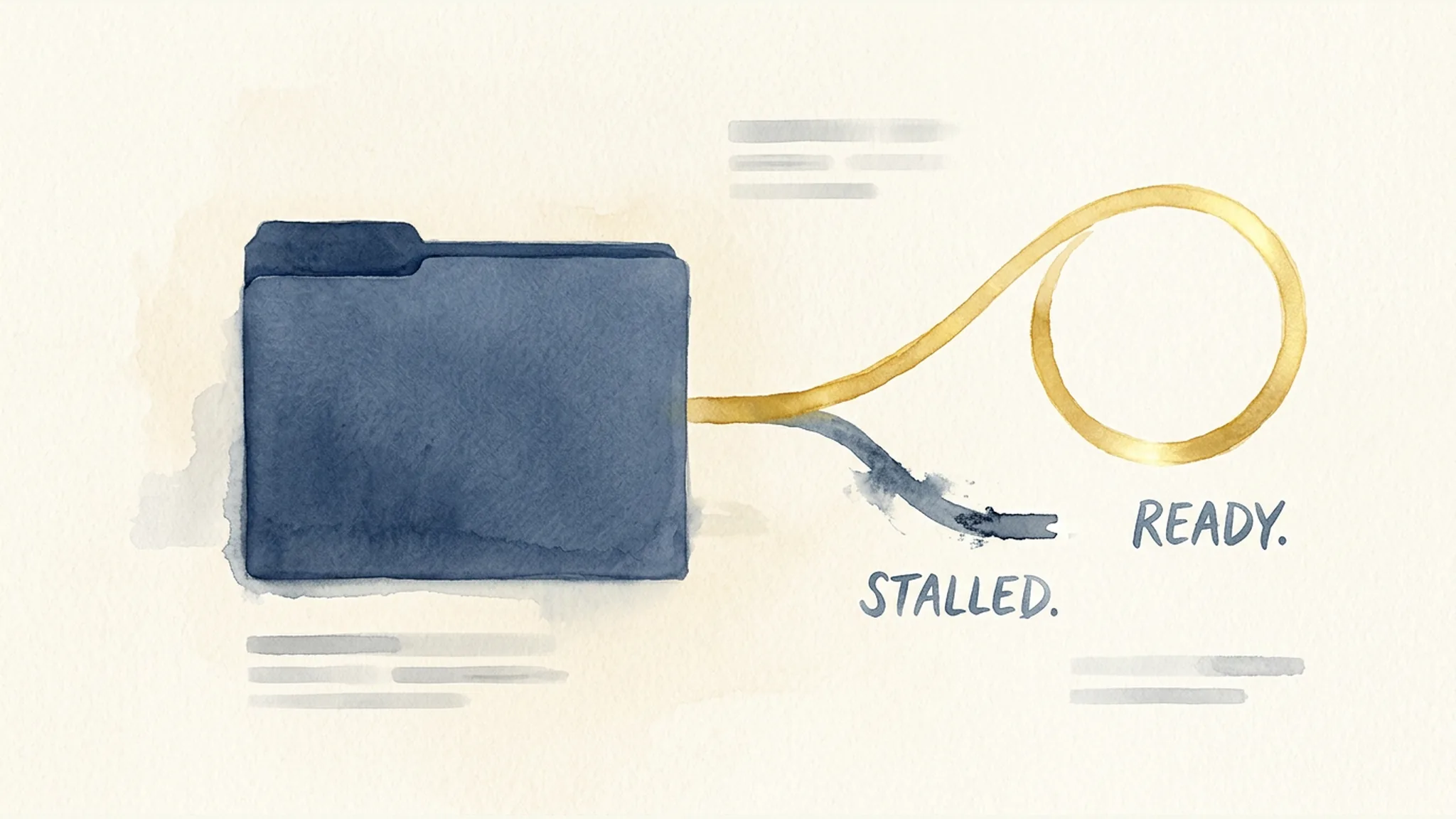
Mediation is useful when a personal injury case is ready for a serious settlement conversation. It can be frustrating—or genuinely unproductive—when the case still needs evidence, medical development, discovery, insurance authority, or court action before anyone can evaluate it honestly.
That is the practical difference. Mediation is not automatically the “easy” path, and trial is not automatically the “hard” path. They answer different questions. Mediation asks: can the parties agree on a resolution now? Trial asks: what will a judge or jury decide if the parties cannot agree?
For an injured person in Oregon, the real question is not simply “mediation or trial?” It is: is the claim developed enough that mediation has something meaningful to work with?
This article is educational information for Oregon injury claimants. It is not legal advice. Mediation strategy, filing deadlines, settlement value, and trial risk depend on the facts, evidence, insurance issues, and procedural posture of the specific case.
What mediation is—and what it is not
The Oregon Judicial Department describes mediation as a process where people with a disagreement talk with a neutral person to try to work out an agreement. Oregon statutes define mediation as a process in which a mediator assists and facilitates parties in reaching a mutually acceptable resolution.
That definition matters because mediation is often misunderstood. A mediator does not decide the case. A mediator does not take sides. A mediator does not give legal advice. And there is no settlement unless the parties agree.
Mediation is facilitated negotiation, not a decision by a judge or jury
In mediation, the neutral person helps the parties communicate, exchange positions, evaluate options, and sometimes consider proposed settlement terms. The mediator may meet with everyone together or separately. Either party may ask to meet with the mediator alone.
But the mediator is not a judge. If the injured person and the defense or insurer do not agree, the mediator cannot impose a result.
That is different from trial. At trial, the parties present evidence and arguments, and a judge or jury decides the disputed issues. Trial can resolve factual disputes that settlement talks cannot, but it also brings risk, cost, delay, and uncertainty for both sides.
Mediation can happen before trial, but it does not replace trial readiness
Mediation works best when it is connected to proof. In a personal injury case, that usually means the parties have enough information to discuss liability, comparative fault, injuries, medical treatment, wage loss, future care, insurance coverage, and other damages.
If those issues are not developed, mediation may become a long conversation about missing information. Sometimes that conversation still has value. Other times, the better next step is to gather records, send a demand package that gives the insurer something concrete to evaluate, file a lawsuit, complete discovery, or prepare for a court process that creates more pressure to evaluate the case.
For a broader decision framework, see Johnson Law’s guide to settlement versus filing a lawsuit. This article focuses on mediation as one tool inside that larger path.
Arbitration and settlement conferences are different processes
Mediation is also different from arbitration, court settlement conferences, and ordinary claim negotiation.
Arbitration is a process where an arbitrator may issue an award. In some Oregon civil cases—such as certain smaller monetary claims in Multnomah County—mandatory arbitration may be part of the court path, and Oregon law includes mechanisms for trial after an arbitration award in qualifying circumstances. That is not the same as mediation.
A court settlement conference is also different. Oregon’s Uniform Trial Court Rules allow judicial districts to adopt local rules for pretrial settlement conferences in civil cases. Those procedures can involve requirements about who must attend and whether a representative with settlement authority must appear. But a settlement conference is not automatically the same as private mediation, and local practices can vary.
Where mediation fits in an Oregon personal injury case
Mediation can appear at different points in an Oregon injury claim. It might happen before a lawsuit is filed, after a lawsuit begins, after some discovery, close to trial, or alongside other court procedures.
The timing often matters as much as the label.
Before a lawsuit: mediation as a structured settlement conversation
Before litigation, mediation can be a more structured version of settlement negotiation. It may help when both sides already have the important records and the dispute is narrow enough to discuss seriously.
For example, mediation may be worth considering when the insurer has reviewed medical records, wage information, liability evidence, coverage issues, and a demand package that gives the parties something concrete to evaluate. The mediator can then help the sides compare settlement options against the realistic alternative: continued negotiation, filing a lawsuit, arbitration where applicable, or trial.
Pre-suit mediation is less useful when it becomes a substitute for doing the work the claim actually needs. If the medical picture is incomplete, causation is undeveloped, or the insurer has not evaluated the claim with meaningful authority, the session may simply expose that the case is not ready.
After filing: mediation, settlement conferences, discovery, and trial dates
After a civil action is filed in Oregon and all parties have appeared, a circuit court judge may refer a civil dispute to mediation. If a party files a written objection, the action is removed from mediation and proceeds normally. Parties may also elect mediation by written stipulation at any time before trial.
Oregon law also addresses certain timeline effects for referred or elected mediation under ORS 36.185 to 36.210. Trial and discovery timelines may be tolled or stayed as to participants, subject to judicial discretion to preserve preexisting pretrial, trial, or temporary-relief dates. That is important, but it should not be treated as a blanket rule that every deadline stops whenever people talk settlement.
Oregon court rules also recognize pretrial settlement conferences in civil cases. Under UTCR 6.200, if a judicial district has adopted local rules and one party requests a pretrial settlement conference, the conference must be held unless good cause is shown. The rule also addresses attendance by a party or a representative of a corporation or insurance company with full settlement authority, unless telephone appearance is permitted for good cause. Pretrial settlement conferences must not delay trial scheduling.
If filing, discovery, depositions, arbitration, or trial-setting issues are becoming part of the case, Johnson Law’s overview of what happens after a lawsuit is filed may help put mediation in context.
Smaller civil cases: mandatory arbitration may also be part of the path
Some Oregon civil cases may involve mandatory arbitration depending on the claim and court rules. For example, Multnomah County states that civil cases with a monetary claim under $50,000 are subject to mandatory arbitration, and Oregon statutes include procedures for referral to arbitration and trial de novo mechanisms.
That does not make arbitration the same as mediation. It does mean that the path from claim to resolution may include more than one dispute-resolution process. A case might involve negotiation, mediation, arbitration, a settlement conference, and trial preparation at different points.
When mediation often works well
Mediation can work well when both sides have enough information, authority, and incentive to make a realistic decision. It does not require everyone to agree at the start. In fact, many cases mediate because the parties disagree. The key is whether the disagreement is ready to be evaluated.
Both sides have enough information to evaluate risk
Settlement decisions usually require a comparison of alternatives. What happens if there is no agreement? What evidence will each side have? What are the likely outcomes, probabilities, costs, delays, and time-value concerns?
Mediation is more useful when both sides can answer those questions with some discipline. In an injury case, that often means the parties have key medical records, bills, incident evidence, witness information, insurance information, and a clear explanation of the claimed damages.
Medical-expense disputes are a common reason settlement talks stall. If the numbers do not line up, it may help to separate the medical bill, the amount insurance paid, liens, and reimbursement issues before expecting mediation to solve the valuation dispute.
If the defense says it needs more records, or the injured person does not yet know the full medical picture, mediation may be premature. But if the missing information is limited and the parties understand the risk, a mediator may help them work through the gap.
The insurer or defense representative has meaningful authority
Mediation depends on people being able to make decisions. If the insurer or defense representative attends without enough authority to negotiate meaningfully, the process can stall.
Oregon court settlement conference rules recognize this problem by addressing attendance by a party or a representative of a corporation or insurance company with full settlement authority, unless telephone appearance is permitted for good cause. Private mediation does not always follow the same rule, but the practical point is similar: a productive session usually requires someone with real decision-making power.
This does not mean the defense must arrive ready to pay the injured person’s demand. It means the session should not be a performance where everyone knows the real decision-maker is absent or unreachable.
Liability and comparative fault can be assessed realistically
Oregon’s comparative negligence statute can affect how injury claims are evaluated. Under ORS 31.600, a claimant’s fault does not bar recovery if it is not greater than the combined fault of the relevant persons, but damages are reduced by the claimant’s percentage of fault. The statute also addresses how fault is compared among parties, liable third-party defendants, and settling persons, subject to its terms.
That can make mediation useful when liability is disputed but assessable. For example, if both sides understand the evidence and the likely fault arguments, mediation can help them price the risk of a jury assigning fault in different ways.
Mediation may be less productive when the liability record is still too thin. If important witnesses have not been interviewed, a police report is incomplete, a business has not produced video, or an expert issue remains undeveloped, the parties may be arguing in the dark.
Damages are documented enough to negotiate, even if the parties disagree
Injury damages do not need to be perfectly agreed before mediation. They rarely are. But the parties usually need enough documentation to discuss them seriously.
That may include medical treatment records, bills, wage-loss information, future-care opinions where applicable, and an explanation of how the injury affected daily life. When the dispute centers on medical causation, treatment necessity, future care, or the relationship between billed charges and insurance payments, mediation may need more development before it can be productive.
The question is not whether the defense accepts every damages claim. The question is whether the parties have enough information to evaluate the risk of proving or disproving those damages later.
Trial risk, delay, and cost give both sides a reason to compromise
The Oregon Judicial Department identifies potential benefits of mediation as party control, creative solutions, a private setting, and often lower cost or faster resolution than going before a judge. Those benefits are possible, not guaranteed.
The reason mediation can work is that both sides may prefer a controlled agreement to the uncertainty of continued litigation. Trial preparation can involve time, expense, expert issues, depositions, and the risk that a judge or jury sees the case differently than either side expects.
That pressure can make mediation more meaningful—not because trial is a threat to be used carelessly, but because settlement discussions are more realistic when everyone understands the alternative. If litigation expense risk is part of the decision, compare mediation against court costs, expert expenses, depositions, and other real cost risks instead of assuming trial pressure is only about the final verdict.
When mediation may be premature or a waste of time
“Waste of time” should not mean “the parties disagree.” Disagreement is exactly why mediation exists. Mediation becomes unproductive when the process is being used before the case is ready, without meaningful authority, or in a setting where one party cannot participate safely or freely.
Key evidence is still missing
If the important evidence has not been gathered, mediation may only confirm that the parties do not know enough yet.
Examples might include missing medical records, unresolved witness statements, unavailable video, incomplete employment records, or unclear insurance coverage information. The more the session depends on speculation, the easier it is for one side to discount the other’s position.
Sometimes mediation can help identify what is missing. But if everyone already knows the claim cannot be evaluated without that evidence, it may be better to get the information first.
The insurer has not evaluated the real damages or coverage issues
Insurance complications can be a practical impediment to settlement. If coverage is unclear, liens or reimbursement issues are not understood, or the insurer has not evaluated the full damages picture, mediation may not move the case forward.
This is not about assuming bad faith or accusing every insurer of delay. It is about readiness. A mediation session is only as useful as the decision-making it produces. If the defense position is based on an incomplete review, a mediator may have little room to help.
Causation, medical bills, or future treatment are still undeveloped
Personal injury cases often turn on causation: whether the incident caused the claimed injuries, treatment, limitations, or future needs. If that issue is central and undeveloped, mediation may be premature.
For example, the defense may argue that treatment was unrelated, excessive, or caused by a prior condition. The injured person may need medical records, provider opinions, expert review, preparation for a defense medical exam or IME, or discovery before the issue can be evaluated. In that situation, mediation might still happen, but the parties should be realistic about whether the record is ready.
The other side lacks authority or is using mediation only to gather information
Dispute-resolution research identifies impediments such as mistrust, withholding information, lack of interest in resolution, missing information, inadequate settlement authority, and insurance complications. Those problems can make mediation stall.
If one side attends only to learn the other side’s strategy, test reactions, or delay the next step, the process may not be productive. That does not mean every difficult mediation is improper. It means the parties should ask whether the session has a real path to decision-making.
Safety, pressure, or decision-making concerns make the process inappropriate
Oregon court guidance warns that mediation may be inappropriate where it poses a safety risk, where a party cannot make decisions, or where a party thinks they will agree to something they do not want.
That concern can matter in any dispute-resolution setting. Mediation depends on voluntary agreement. If a person feels unable to say no, cannot evaluate the decision, or faces coercive pressure, the process may not be appropriate without additional safeguards or a different path.
A filing deadline or trial schedule requires action first
Mediation should not be used as an excuse to miss a legal deadline. Oregon’s general personal injury limitation statute provides a two-year period for actions for injury to the person or rights not arising on contract and not otherwise enumerated. Specific claims can involve different rules, notices, defendants, or exceptions, so deadline analysis should be individualized.
The key point is simple: negotiating or mediating is not the same as filing on time. Unless a specific tolling rule, court order, or written agreement applies, settlement talks alone should not be assumed to protect the claim.
Confidentiality helps—but it has limits in Oregon
Confidentiality is one reason mediation can be useful. It can give the parties room to discuss settlement without turning every statement into trial evidence. But Oregon confidentiality rules are not a reason to be careless.
Mediation communications are generally protected
Oregon law provides that mediation communications are confidential and may not be disclosed except as provided in ORS 36.220 to 36.238. That protection can encourage candid settlement discussions.
The mediator’s reporting obligations are also limited in court-referred civil mediation. Under ORS 36.195, after court-referred mediation the mediator reports whether agreement was reached. If no agreement was reached, the mediator reports only that fact and may not recommend a resolution without written consent.
Settlement terms and existing evidence require separate care
Oregon law also includes important limits. Parties may agree in writing that all or part of the mediation communications are not confidential. Terms of a mediation agreement are not confidential unless the parties agree. And materials that are otherwise discoverable and were not prepared specifically for mediation do not become confidential merely because someone used them in mediation.
That last point is especially important in injury cases. A medical record, bill, photograph, employment record, or witness statement does not become secret just because it is discussed at mediation.
Confidentiality is not a reason to be careless
Because confidentiality has limits and exceptions, mediation should be prepared for thoughtfully. Parties should understand what they are sharing, why they are sharing it, and whether the information is already discoverable.
For an injured person, that usually means treating mediation as a serious legal event—not an informal conversation with no consequences.
Mediation does not erase deadlines or trial pressure
Mediation can happen alongside litigation, discovery, arbitration, settlement conferences, and trial preparation. It does not automatically pause every deadline or remove the need to prepare the case.
Negotiating is not the same as filing on time
Oregon’s general personal injury limitation period is two years for actions covered by ORS 12.110. Some cases may involve different deadlines or special notice requirements. Because missing a deadline can be case-ending, settlement talks should not be treated as a substitute for filing when filing is necessary.
This is one of the most common practical risks with informal negotiation. A claimant may keep talking with an insurer and assume the claim is “being handled,” while the legal deadline continues to approach.
Some mediation rules affect timelines, but do not assume all deadlines stop
Oregon law provides specific timeline effects for certain court-referred or stipulated mediation procedures under ORS 36.185 to 36.210. But those rules are not the same as a general promise that every negotiation, mediation session, or private settlement conversation tolls every deadline.
Court rules can also preserve trial pressure. UTCR 6.200 states that pretrial settlement conferences must not delay trial scheduling. UTCR 5.150 provides that certain streamlined civil jury cases may be set for trial no later than 180 days from the order and may be removed or exempted from mandatory arbitration and rules requiring mediation, arbitration, and other ADR.
The practical takeaway: confirm which deadlines apply before relying on any mediation-related timing rule.
Trial preparation can make mediation more meaningful
Being ready for trial does not mean refusing to settle. Often, it means the opposite: the parties can negotiate more realistically because they understand the evidence, risks, and costs of continuing.
Discovery, depositions, expert review, and motion practice can clarify what the case is really about. That can narrow the gap between the parties or show that settlement is not likely without a decision-maker. Either way, trial readiness gives mediation a factual foundation.
How to decide between another mediation session and moving toward trial
After a difficult mediation, the question is not always “settle or try the case.” Sometimes the better question is: what would make the next negotiation different?
What new information would change the negotiation?
If another mediation session would involve the same evidence, same authority, same unresolved disputes, and same positions, it may not add much. If new information is coming—medical opinions, discovery responses, deposition testimony, coverage clarification, or a trial ruling—waiting may make sense.
The value of another session depends on whether something material will change.
Is the gap about money, proof, liability, or authority?
Not every settlement gap is the same.
If the gap is mostly about money, a mediator may help the parties test risk and move toward a number. If the gap is about proof, the case may need more evidence. If the gap is about liability or comparative fault, the parties may need discovery or expert analysis. If the gap is about authority, the practical problem may be who is making the decision.
Understanding the reason for the gap helps determine whether mediation is still useful.
What happens if mediation fails?
Oregon court guidance makes clear that if mediation does not result in agreement, a party can still go to trial. That does not mean trial is automatic or always best. It means failed mediation is not the end of the case.
The parties should compare mediation against the realistic alternatives: continued negotiation, filing suit, discovery, arbitration if applicable, a settlement conference, or trial. Those alternatives involve probabilities, costs, delays, and risks.
What risks does each side face at trial?
Trial risk is not one-sided. The injured person may face uncertainty about causation, comparative fault, credibility, damages proof, evidentiary rulings, or whether a jury accepts the claimed losses. The defense may face uncertainty about liability, witness testimony, medical evidence, damages, and the possibility that a jury values the case more highly than expected.
Good mediation accounts for those risks without pretending anyone can predict the outcome with certainty.
Practical questions to ask before agreeing to mediate
Before agreeing to mediation—or before deciding that another session is worth the time—an injured person can ask practical readiness questions:
- What facts, records, or witness information are still missing?
- Has the insurer or defense side identified who will attend and whether that person has meaningful settlement authority?
- Are liability, comparative fault, medical causation, and damages developed enough to discuss realistically?
- Are medical bills, wage loss, future treatment, liens, reimbursement issues, or coverage questions still unresolved?
- Are there court deadlines, filing deadlines, arbitration issues, settlement conference rules, or trial dates that matter?
- What is the realistic alternative if no agreement is reached?
- Would another mediation session involve new information or just repeat the same positions?
- Is there any safety, pressure, or decision-making concern that makes mediation inappropriate?
These questions do not produce a universal answer. They help identify whether mediation is being used as a serious settlement tool or as a way to postpone harder decisions.
Bottom line: mediation is useful when it is tied to proof and leverage
Mediation can be a valuable part of an Oregon personal injury case. It can give the parties control, privacy, flexibility, and a chance to resolve the claim without asking a judge or jury to decide. It can also save time or cost in some situations.
But mediation is not magic. It does not prove liability, document damages, create settlement authority, stop every deadline, or force the other side to be reasonable. When the case needs evidence, discovery, filing, arbitration, or trial preparation, mediation may need to wait—or it may need to happen with a clear understanding of what it can and cannot accomplish.
If you were injured in Oregon and are trying to decide whether mediation makes sense, the better question is not whether mediation is “good” or “bad.” The better question is whether your case is ready for a meaningful settlement conversation, and what your realistic alternative is if no agreement is reached.
Johnson Law can help injured Oregonians evaluate case-specific mediation, settlement, filing, and trial-readiness questions. This article is general educational information, not legal advice, and it does not predict or guarantee any outcome.
FAQ
Is mediation required in every Oregon personal injury case?
No. Mediation is not required in every Oregon personal injury case. Depending on the posture of the case, mediation may be voluntary, court-referred subject to written objection, or elected by written stipulation. Local court settlement conference rules or arbitration rules may also affect the path of a civil case, but those are separate from saying every injury case must mediate.
Does a mediator decide who wins?
No. A mediator helps the parties communicate and explore settlement options. The mediator does not take sides, give legal advice, or decide who wins. A settlement happens only if the parties agree.
Can I still go to trial if mediation fails?
Yes. Oregon court guidance states that if mediation does not result in agreement, a party can still go to trial. Whether trial is the right next step depends on the case, deadlines, evidence, risks, and available procedures.
Is everything said in mediation confidential in Oregon?
No—not everything in every circumstance. Oregon law protects many mediation communications, but confidentiality has statutory limits. Parties can agree in writing that communications are not confidential, settlement terms are not confidential unless the parties agree, and otherwise discoverable materials do not become confidential merely because they are used in mediation.
Does mediation stop the Oregon personal injury statute of limitations?
Do not assume that it does. Oregon’s general personal injury limitation period is two years under ORS 12.110 for covered claims, but specific claims may involve different rules. Certain court-referred or stipulated mediation procedures may affect timelines in specific ways, and written agreements or court orders may matter. Deadline questions should be evaluated individually.
When is mediation not worth it?
Mediation may be premature or unproductive when key evidence is missing, the defense or insurer lacks meaningful authority, causation or damages are undeveloped, insurance or coverage issues have not been evaluated, safety or pressure concerns exist, or a filing deadline or trial schedule requires action first. A hard dispute does not automatically make mediation useless, but the dispute needs enough information and decision-making authority for the process to matter.
Sources
- Oregon Judicial Department, Mediation
- ORS chapter 36, Mediation and dispute resolution provisions
- Oregon Uniform Trial Court Rules
- ORS chapter 12, Limitations of Actions
- ORS chapter 31, Comparative negligence provisions
- Multnomah County Circuit Court, Civil
- Multnomah County Circuit Court, Mediation
- Bureau of Land Management negotiation guide with BATNA analysis
- Jeff Trueman, Mediation impediments research, Washington University Journal of Law & Policy
Client-First Fee Promise
Client First = Bills First, Fees Second
Your unpaid medical bills do not have to make your lawyer's fee bigger. Johnson Law subtracts qualifying medical bills before calculating our fee, helping clients keep more of their settlement.
Applies to qualifying cases. Results vary.