Litigation Steps Explained: From Filing to Discovery to Depositions, Without Legalese

Litigation Steps Explained: From Filing to Discovery to Depositions, Without Legalese
This article is for general educational information about Oregon personal injury litigation. It is not legal advice and does not create an attorney-client relationship. Court rules, deadlines, and local practices can change, and the right step in a case depends on the facts.
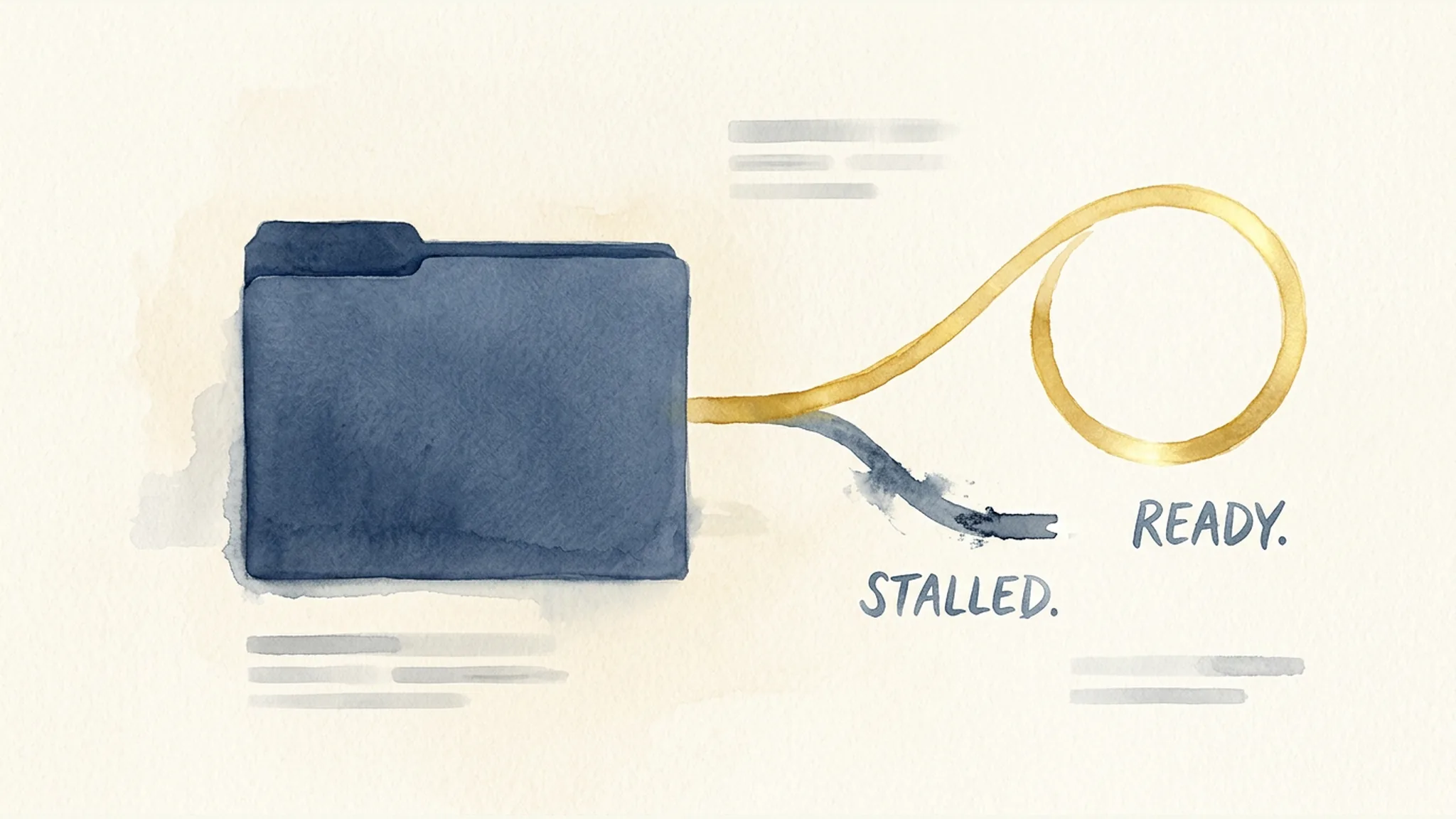
When settlement talks stall, the word “lawsuit” can make an injury claim feel more frightening than it needs to be. Many people picture a courtroom scene right away. In reality, filing a lawsuit usually begins a structured process: the defendant must be notified, the parties exchange information, witnesses may answer questions under oath, and the court manages the case toward possible resolution or trial.
That process matters because litigation can organize evidence and create decision points. It does not guarantee a trial. It does not guarantee settlement. And it does not follow the same timeline in every Oregon injury case.
The sections below explain the major steps in plain English, with Oregon personal injury cases in mind.
When an Injury Claim Becomes a Lawsuit
Many personal injury claims begin outside court, often with insurance communications, medical documentation, and settlement discussions. A lawsuit may become necessary when the sides cannot agree, when deadlines are approaching, when liability or damages are disputed, or when formal evidence-gathering is needed.
In Oregon circuit courts, the Oregon Rules of Civil Procedure generally govern civil practice unless a statute or other rule provides otherwise. That means a lawsuit is not just a demand letter with a court caption. It is a court-managed process with rules for filing, service, discovery, motions, and trial preparation.
For a broader overview of how a claim may move through different stages, Johnson Law’s injury-case process and personal injury case timeline pages may be useful companion resources. If you are still deciding whether litigation is necessary, see our guide to settlement versus filing a lawsuit.
Step 1 — Filing the Complaint Starts the Court Case
In general, an Oregon civil action begins when a complaint is filed with the court clerk. The Oregon Judicial Department describes filing as the step that starts the legal process in court, usually with a complaint or petition, and many cases require a filing fee.
In plain English, the complaint is the document that identifies the parties, sets out the basic claims, and asks the court for relief. In an injury case, that usually means the injured person is asking for money damages based on alleged wrongdoing, such as negligence.
This is not the same thing as proving the case. Filing starts the court case. Proof comes later through records, witness testimony, expert issues where applicable, discovery, motions, settlement activity, arbitration in qualifying cases, or trial.
Filing Is Not the Same as Solving Every Deadline Problem
One of the biggest misunderstandings is treating “filing” as if it automatically solves every timing issue. Filing, service, appearance, proof of service, and statutes of limitation are separate concepts.
Oregon’s general limitation period for many personal injury actions is two years, but that is not a universal rule for every injury-related claim. Claims involving public bodies, medical malpractice, wrongful death, minors, insurance issues, or other special circumstances may involve different deadlines or notice requirements.
For statute-of-limitations purposes, Oregon also has a separate commencement rule in ORS 12.020 that ties filing and service together and includes a 60-day service relation-back provision in many cases.
The safe takeaway is simple: do not assume the general two-year rule applies to every case, and do not assume filing alone answers every deadline question.
Step 2 — Service Gives the Defendant Formal Notice
After a complaint is filed, the defendant must be formally notified. This is called service of summons and complaint.
Oregon’s service rules require a method reasonably calculated to give the defendant notice and an opportunity to appear. Depending on the defendant and the circumstances, Oregon rules recognize methods such as personal service, substituted service, office service, service by mail, and publication where allowed.
The practical point is that service connects the filed lawsuit to the person or entity being sued. Until service issues are handled correctly, the case may not move the way the plaintiff expects.
What the Defendant’s 30-Day Response Window Means
When a defendant is served by a method other than publication, Oregon rules generally require the defendant to appear and defend within 30 days from service.
That does not mean the case is resolved in 30 days. It means the defendant’s formal response period has begun. The response may admit or deny allegations, raise defenses, or otherwise shape what the case is really about.
Why Proof of Service Matters for Case Management
Courts also need proof that service happened. Oregon’s Uniform Trial Court Rules include case-management consequences tied to proof of service and defendant appearance. UTCR 7.020 addresses return or acceptance of service, consequences around unfiled service proof at 63 days, and nonappearance at 91 days after filing.
The same rule also explains when a civil case is considered “at issue,” but the details matter. In general, once all defendants have appeared, UTCR 7.020 treats the case as at issue 91 days after filing or when pleadings are complete, whichever comes earlier. Nonappearing defendants trigger different case-management consequences.
For readers, the main idea is not to memorize these dates. It is to understand that filing the complaint is only the first procedural step. Service and proof of service affect how the court manages the case.
Step 3 — The Case Becomes “At Issue” and Starts Moving Toward a Schedule
“At issue” sounds technical, but the concept is practical. It is a court-management milestone. Once the case reaches that point, the court can more fully manage scheduling toward trial and related deadlines.
UTCR 7.020 says a civil trial date should be no later than one year from filing unless good cause is shown. That is a scheduling target, not a promise that every Oregon injury case will be tried within one year.
Many things can affect timing, including service problems, discovery disputes, motions, arbitration, trial de novo requests after arbitration, continuances, court congestion, case complexity, medical-treatment status, settlement activity, and local court practices.
Step 4 — Discovery Is Where Both Sides Exchange and Test Evidence
Discovery is often the heart of litigation. It is the formal evidence-exchange stage.
In Oregon, discovery can include depositions, written questions, requests for documents or things, property inspections, physical or mental examinations in appropriate circumstances, and requests for admission. The general scope covers nonprivileged matters relevant to the claims or defenses, including documents, tangible things, and the identities or locations of people with discoverable information.
Discovery is broad, but it is not unlimited. Privilege, relevance, privacy, protective orders, undue burden or expense, and court rulings can all limit what must be disclosed. Courts may enter protective orders for good cause to address discovery that would cause annoyance, embarrassment, oppression, undue burden, or expense.
Discovery can also change how the parties evaluate settlement. When records, testimony, insurance information, and witness accounts become clearer, both sides may reassess risk. That does not mean litigation automatically improves settlement value. It means the parties may be working with more organized information than they had during early claim handling. For more background on insurance-stage issues, see Johnson Law’s insurance claims guide.
Written Discovery and Document Requests
One common discovery tool is a request for production. In Oregon, these requests can seek documents, electronically stored information, photos, recordings, data compilations, tangible things, and property inspections when the requests fit within the rules.
A party generally has 30 days to respond unless a court order or agreement changes the timing. Defendants also generally cannot be required to produce before 45 days after service. Oregon rules also impose a continuing duty to produce responsive items that later come into a party’s possession, custody, or control if they are not objected to.
In a personal injury case, document discovery may involve medical records, wage information, photos, incident reports, communications, repair or maintenance records, insurance information, or other materials tied to liability and damages. The exact categories depend on the case.
Medical Information and Injury Claims
Injury lawsuits often involve medical information because the plaintiff is claiming physical or mental harm. That does not mean every private medical detail is automatically fair game.
Oregon rules address injury-related medical reports and notations, and ORCP 44 permits court-ordered physical or mental examinations when a condition is in controversy, on motion, for good cause, and with notice. These issues can be sensitive because they sit at the intersection of proof, privacy, and relevance. For a related practical discussion, see Johnson Law’s guide to Oregon defense medical exams and preparation.
The practical takeaway is that medical evidence often becomes part of injury litigation, but the scope still depends on the rules, the claims, objections, protective orders, and court decisions.
Requests for Admission Can Narrow the Fight
Requests for admission ask a party to admit or deny specific matters. They can narrow disputes by identifying what is truly contested and what can be treated as established for purposes of the case.
They also carry consequences. Under Oregon rules, matters can be admitted if a timely answer or objection is not served. That is one reason litigation deadlines should be treated seriously.
What Happens When Discovery Breaks Down
Sometimes one side believes the other has failed to provide required discovery, has objected improperly, or has not followed the rules. Oregon rules allow motions to compel and possible sanctions for discovery failures.
Sanctions are not automatic. They depend on the circumstances and the court’s ruling. But discovery disputes can add cost, delay, and pressure to a case.
Step 5 — Depositions Are Sworn Testimony, Not Casual Interviews
A deposition is a question-and-answer session under oath before trial. A lawyer asks questions. The witness answers under oath. The testimony is recorded and may be used later in the case.
Oregon rules allow oral depositions after service or appearance. A plaintiff generally needs court permission to take a deposition before the defendant’s 30-day response period expires unless an exception applies. A deposition notice must provide reasonable written notice and identify the time, place, and person to be examined. Witness attendance may be compelled by subpoena, and subpoenas can also require testimony, documents, electronically stored information, or things within discovery limits.
For an injured plaintiff, a deposition may cover the incident, injuries, medical treatment, prior conditions where relevant, work history, daily limitations, and damages. For other witnesses, it may cover what they saw, what records show, what a property owner knew, or other case-specific issues.
The key point is that a deposition is not a casual conversation. It is sworn testimony. If you want a deeper preparation-focused article, Johnson Law has a separate guide on what to expect in an Oregon personal injury deposition.
Why Depositions Can Change Settlement Discussions
Depositions can affect settlement discussions because they test what people will actually say under oath. A deposition may clarify strengths and weaknesses in liability, causation, damages, credibility, or witness memory.
Sometimes testimony confirms a party’s position. Sometimes it reveals problems. Sometimes it narrows the issues enough that settlement discussions become more concrete. But no deposition guarantees a particular result.
Step 6 — Motions, Settlement Conferences, and Arbitration May Shape the Path
Not every case moves in a straight line from filing to discovery to deposition to trial. Motions, settlement conferences, and arbitration can all affect the path.
Summary Judgment Means Asking the Court to Decide Without Trial
Summary judgment is a request for the court to decide an issue without trial. Under Oregon rules, the moving party must show there is no genuine issue of material fact and that the moving party is entitled to judgment as a matter of law.
In plain English, the motion argues that even with the evidence viewed under the applicable standard, a trial is not needed on that issue. Whether such a motion succeeds depends on the facts, the evidence, and the law.
Settlement Conferences Are One Way Courts Encourage Resolution
Oregon rules allow court-ordered settlement conferences at a party’s request or on the court’s own motion. A settlement conference is a structured effort to resolve the case or narrow disputes.
It does not guarantee settlement. It can, however, create a focused opportunity for the parties to evaluate risk after some litigation steps have already occurred.
Mediation is related but not identical to a court settlement conference, arbitration, or trial. For more on that distinction, see Johnson Law’s guide to how mediation differs from trial and when it may be premature.
Mandatory Arbitration Applies Only to Certain Smaller Damages-Only Cases
Oregon circuit courts have mandatory arbitration for civil cases where the only relief claimed is recovery of money or damages of less than $50,000, not including attorney fees, costs and disbursements, and interest on judgment. Arbitration is generally less formal and often quicker than trial.
But arbitration does not necessarily end the case. An arbitration award can be followed by a trial de novo if a party timely requests it within 20 days. That means qualifying arbitration cases may still continue after the arbitrator’s decision.
Step 7 — Trial Setting and Local Court Practices
Trial setting depends on statewide rules, local court procedures, motions, continuances, case complexity, settlement activity, and the court’s calendar.
As noted above, UTCR 7.020 includes a trial-date target of no later than one year from filing unless good cause is shown. That target should not be read as a guaranteed timeline.
Local rules can also matter. For example, Multnomah County’s 2026 Supplementary Local Rules include civil procedures addressing motion judges, motion setting, summary judgment, settlement conferences, trial call and assignment, remote appearance, and arbitration. Multnomah County also uses “Call” as part of its docketing and assignment system the judicial day before a hearing or trial, and SLR 3.183 describes when remote appearances may be requested and allowed by the judge or Presiding Judge/designee.
Those Multnomah County examples should not be treated as statewide procedure. Oregon counties may have different local practices.
Evidence to Preserve Once Litigation Is Possible
Litigation is easier to understand when you remember that the process is built around evidence. If a claim may need formal discovery, useful materials can include photos, videos, medical records, bills, wage records, repair records, incident reports, witness information, insurance letters, emails, texts, and other documents tied to liability or damages.
The specific preservation steps depend on the case. A vehicle crash, a slip-and-fall, a defective product, a worksite injury, and a medical-negligence claim may involve different records and different legal deadlines. The safest general habit is to avoid deleting, editing, discarding, or posting about potentially relevant materials before getting case-specific advice.
Why Litigation Can Increase Pressure Even Before Trial
Litigation often changes the feel of a personal injury case because both sides must move from broad positions to evidence.
The plaintiff may need to support the injury claim with medical information, wage records, photos, witness testimony, or other proof. The defense may need to disclose information within discovery rules, evaluate deposition testimony, address insurance-policy issues, and decide whether to file motions or pursue settlement.
Court deadlines, discovery obligations, depositions, settlement conferences, arbitration in qualifying cases, and trial settings can all create pressure points. But pressure is not the same as a promised outcome. A lawsuit may settle, narrow, go through arbitration, face motions, or proceed toward trial depending on the facts and rulings. Litigation costs can also matter; Johnson Law has a separate article on filing fees, depositions, experts, and court-cost risk.
What Injured Oregonians Should Take Away
If your Oregon injury claim is moving toward litigation, the most important thing to understand is the sequence:
- Filing starts the court case, but it does not automatically solve every deadline or service issue.
- Service gives the defendant formal notice and starts important response periods.
- “At issue” is a court-management milestone, not a magic guarantee of speed.
- Discovery is the formal evidence-exchange process.
- Depositions are sworn testimony and should be taken seriously.
- Motions, settlement conferences, arbitration, and trial setting may all affect the path.
- Local court practices, including Portland-area and Multnomah County procedures, can matter but should not be generalized to every Oregon county.
Litigation is not automatically a race to the courthouse steps on trial day. It is a structured process for testing evidence, narrowing disputes, and preparing for possible resolution or trial. Because deadlines and procedures are fact-specific, injured Oregonians should talk with counsel about the rules that apply to their claim, their county, and their stage of the case.
FAQ
Does filing a lawsuit mean my Oregon personal injury case will definitely go to trial?
No. Filing starts the court process, but many things may happen before any trial, including discovery, settlement discussions, court-ordered settlement conferences, motions, and arbitration in qualifying cases. Some cases settle; some narrow; some proceed toward trial. The path depends on the facts, evidence, rules, and court decisions.
How long does an Oregon injury lawsuit take after filing?
There is no single reliable timeline for every case. Oregon trial court rules include a trial-date target absent good cause, but service problems, discovery disputes, motions, arbitration, trial de novo requests, continuances, court congestion, case complexity, medical-treatment status, and settlement activity can all affect timing.
What is discovery in a personal injury case?
Discovery is the formal process for exchanging and testing information relevant to the claims and defenses. In Oregon, discovery may include document requests, electronically stored information, depositions, written questions, physical or mental examinations in appropriate circumstances, and requests for admission. Discovery is broad, but it is limited by privilege, relevance, privacy, protective orders, undue burden or expense, and court rulings.
What happens at a deposition?
A deposition is sworn testimony under oath before trial. A witness answers questions after proper notice, and the testimony is recorded. Depositions can affect how the parties evaluate settlement and prepare for trial because they show what a person will say under oath.
Can the other side get my medical records in an injury lawsuit?
Relevant injury-related medical information may be discoverable in a personal injury lawsuit, and Oregon rules address medical reports, notations, and physical or mental examinations in appropriate circumstances. That does not mean every private medical detail is automatically available. Relevance, privilege, privacy, protective orders, objections, and court rulings can affect the scope.
Does every Oregon injury case go to mandatory arbitration?
No. Oregon mandatory arbitration applies to certain civil cases where the only relief claimed is recovery of money or damages of less than $50,000, not including attorney fees, costs and disbursements, and interest on judgment. Arbitration is generally less formal and often quicker, but an award can be followed by trial de novo if a party timely requests it within 20 days.
Source Notes
This article relies on the approved fact sheet and the following source framework:
- Oregon Rules of Civil Procedure, including ORCP 1, 3, 7, 36, 39, 43, 44, 45, 46, 47, 54, and 55.
- ORS Chapter 12, including ORS 12.110 for Oregon’s general limitation period for many personal injury actions and ORS 12.020 for Oregon’s filing/service commencement rule and 60-day relation-back provision for limitations purposes.
- Oregon Judicial Department, “File a Case,” for general filing-process description.
- Current Oregon Judicial Department Uniform Trial Court Rules, especially UTCR 7.020, for service-proof case management, “at issue” timing, and the qualified trial-date target.
- Oregon Judicial Department arbitration materials, ORS 36.400–36.425, and current UTCR Chapter 13 for mandatory arbitration and trial de novo context.
- Multnomah County 2026 Supplementary Local Rules for carefully limited local examples involving motion practice, settlement conferences, trial call/assignment, remote appearance, and arbitration.
Client-First Fee Promise
Client First = Bills First, Fees Second
Your unpaid medical bills do not have to make your lawyer's fee bigger. Johnson Law subtracts qualifying medical bills before calculating our fee, helping clients keep more of their settlement.
Applies to qualifying cases. Results vary.