Hit by an Out-of-State Driver in Oregon: Which Law and Insurance Rules Apply?
Hit by an Out-of-State Driver in Oregon: Which Law and Insurance Rules Apply?
Getting hit by a driver with out-of-state plates can instantly make an already stressful crash feel confusing. You may wonder whether Oregon law applies, whether the other driver’s home-state insurance rules apply, or whether you need to file somewhere outside Oregon.
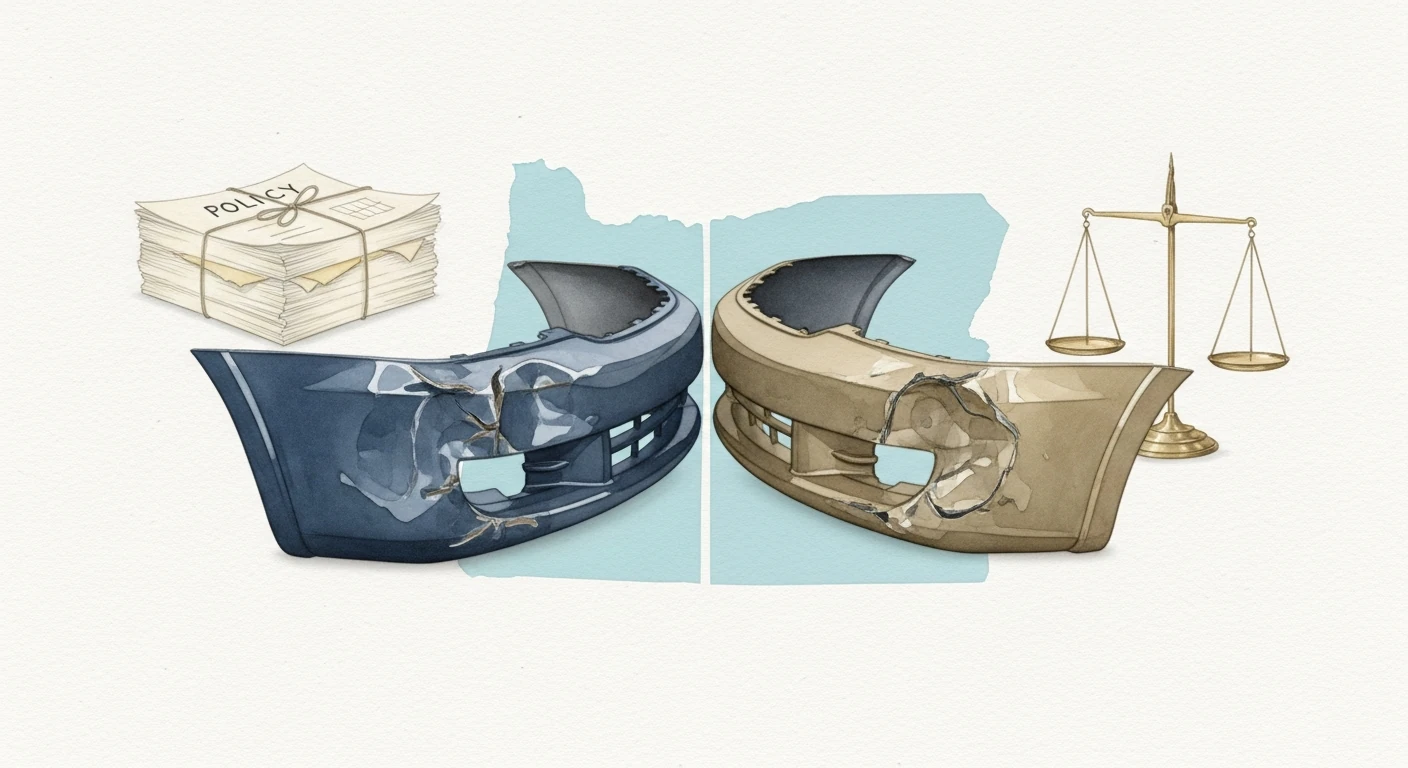
The short answer is this: in most cases, Oregon law governs fault because the crash happened in Oregon, while the at-fault driver’s policy terms still matter for coverage and limits. That combination is where most disputes begin.
This guide is narrowly focused on Oregon crashes involving a nonresident driver. It explains what usually stays Oregon-specific, what may depend on the other driver’s policy, what to do in the first week, and where PIP, UM/UIM, policy limits, and evidence strategy fit in. If the crash caused injuries, Johnson Law’s Oregon car accident claims page explains how we handle fault, coverage, medical documentation, and insurer pressure.
Important: This article is educational and not legal advice for any specific case.
Quick Answer: Oregon Fault Rules, Oregon Forum, Policy-Specific Coverage
If the collision happened in Oregon, Oregon law will usually control the fault analysis and Oregon is often the practical forum for the claim or lawsuit. But insurance payment issues can still depend on policy wording, coverage limits, exclusions, and out-of-state conformity provisions.
That is the key difference between this article and a general auto-insurance overview: the central problem is not just “what coverage exists?” It is how an Oregon injury claim interacts with a driver, adjuster, or policy based somewhere else.
For broader coverage background, see our Oregon auto insurance guide. For a narrower rental-vehicle scenario, see our guide to rental car crash insurance priority in Oregon.
The Core Issue: One Crash, Multiple Rule Sets
In these claims, people often mix up three separate questions:
- Who was at fault?
- Which court can hear the case?
- How much insurance money is actually available?
Those answers do not always come from the same place.
- Fault is usually evaluated under Oregon traffic and negligence law because the collision happened in Oregon.
- Court location (jurisdiction/venue) is usually Oregon for the same reason.
- Coverage amounts and exclusions are controlled by the actual policy language, often written in another state, sometimes modified by out-of-state coverage provisions.
Understanding that split prevents major errors early in a claim.
Which Law Usually Controls Fault in an Oregon Out-of-State Crash?
When a collision occurs in Portland, Salem, Eugene, or anywhere else in Oregon, fault is generally analyzed under Oregon law.
Oregon comparative fault framework
Oregon follows modified comparative fault principles. The governing statute is ORS 31.600. In plain terms, fault percentages can reduce recoverable damages, and outcomes can change significantly based on how fault is allocated.
That means evidence quality matters. If the insurer can shift even part of the blame to you, settlement value can change quickly.
Why this matters with out-of-state drivers
Some out-of-state adjusters evaluate claims through the lens of their own internal practices. Your claim still needs to be measured against Oregon rules if the crash happened here. Keeping the claim grounded in Oregon law is often essential to a fair valuation.
Where Can You File a Lawsuit?
In most situations, you can file in Oregon because:
- the crash occurred in Oregon,
- the harm occurred in Oregon, and
- key evidence (scene, officers, providers, witnesses) is usually in Oregon.
This is not just about convenience. It can materially affect litigation cost, timeline, and leverage during settlement negotiations.
Insurance Basics in Oregon You Should Know Before Negotiating
Even when the at-fault driver is from another state, Oregon insurance requirements shape your options.
Oregon liability minimums
Oregon’s financial responsibility law sets minimum liability coverage requirements. See ORS 806.070 and Oregon’s consumer insurance guidance at the Oregon Division of Financial Regulation (DFR).
Minimum limits are often too low for moderate or serious injuries, which is why policy-limit analysis should happen early. If the disclosed limit appears to cap the claim, our related article explains how to evaluate whether policy limits are the real ceiling.
Personal Injury Protection (PIP)
Oregon auto policies generally include PIP benefits. PIP can help pay medical expenses and certain wage losses regardless of fault, subject to statutory and policy terms. See ORS Chapter 742 and DFR’s auto-insurance resources.
PIP is especially important in out-of-state claims because it can provide immediate payment pathways while fault and third-party negotiations are still unresolved. For the detailed benefit categories and timing rules, see PIP in Oregon: what it pays and when it runs out.
Uninsured/Underinsured Motorist coverage (UM/UIM)
UM/UIM coverage can protect you if the other driver has no insurance or not enough insurance. Oregon’s UM/UIM framework is also addressed in ORS Chapter 742.
In real-world claims, UIM often becomes central when injuries are significant and the at-fault driver carries low limits. If the dispute shifts to your own insurer, Johnson Law’s UM/UIM article explains why your own insurance company may still evaluate fault, causation, damages, and procedure.
How the Out-of-State Driver’s Policy Fits In
Even though Oregon law often controls fault, the at-fault driver’s policy still controls many payment mechanics.
Key policy questions to investigate early
- What are the bodily injury and property damage limits?
- Is there an out-of-state coverage/conformity provision?
- Are there exclusions that might trigger denial (for example, non-permissive use or specific commercial-use disputes)?
- Is there umbrella coverage?
Getting these answers quickly helps avoid months of negotiation built on incorrect assumptions.
How this differs from a regular Oregon-only crash
The investigation may need to account for an insurer, policy, vehicle owner, or driver based outside Oregon. That can create practical friction even when the collision itself is governed by Oregon fault law. Examples include:
- an adjuster applying home-state assumptions to Oregon medical bills or liability rules;
- uncertainty about whether the policy conforms to Oregon minimum requirements for an Oregon crash;
- delayed confirmation of bodily-injury limits, umbrella coverage, or permissive-use facts; and
- difficulty getting driver, witness, or vehicle evidence when people quickly leave Oregon.
Those issues are why this topic deserves its own page instead of being folded into a general car-accident or auto-insurance guide.
Why adjuster location can affect claim handling
Out-of-state claim handlers may use cost assumptions that do not match Oregon medical pricing or repair costs. Keep your documentation local, itemized, and timeline-based.
First 7 Days After the Crash: Practical Action Plan
Out-of-state claims reward disciplined documentation. If you are physically able, these steps are high value:
- Get medical evaluation promptly and clearly describe symptom onset and progression.
- Report the collision to your insurer and open relevant claim channels (including PIP).
- Confirm DMV reporting duties using Oregon DMV guidance: Accident Reporting.
- Preserve evidence: photos, witness contacts, scene conditions, repair estimates, and the other vehicle’s plate/state information.
- Track wage and functional losses from day one.
- Keep a communication log for every insurer contact, including the adjuster’s location, claim number, and any statements about which policy applies.
Small gaps early often become large disputes later.
Building Proof: What Insurers Look For in Out-of-State Cases
Insurers pay claims based on evidence density, not just narrative. The strongest files usually show:
1) Clean timeline
- crash date,
- first treatment date,
- follow-up pattern,
- objective findings where available,
- and documented recovery course.
2) Consistent symptom reporting
Consistency across urgent care, primary care, PT, specialists, and personal logs helps credibility.
3) Economic loss documentation
- medical bills and EOBs,
- out-of-pocket expense receipts,
- employer wage confirmation,
- reduced hours or modified duties.
4) Functional impact evidence
Document how injuries affected sleep, driving, household tasks, caregiving, and daily activity tolerance.
5) Location-specific evidence
Because a nonresident driver may leave Oregon soon after the crash, preserve Oregon-based evidence before it disappears. Useful items may include scene photos, intersection layout, weather and lighting conditions, nearby business-camera locations, tow-yard information, repair inspections, police-report details, and witness contact information. For a practical checklist, see Johnson Law’s guide to crash photos people often forget.
Common Tactics in Out-of-State Insurance Claims
These disputes are predictable. Expect some mix of the following:
- Delay cycles: repeated document requests, long response gaps.
- Low initial valuation: offers based on minimal treatment windows.
- Recorded-statement pressure: attempts to lock in early language before diagnosis matures.
- Policy-limit ambiguity: delayed confirmation of available coverage.
The best counterstrategy is consistent records, clear written communication, and disciplined claim organization.
UIM Trap to Avoid: Settling Without Proper Coordination
When the at-fault driver’s limits are insufficient, people often move to UIM. A major risk in many cases is settling the underlying liability claim without following the required policy procedures tied to UIM rights.
Because procedure varies by policy and facts, do not assume the sequence is automatic. Before signing a release in a limits settlement, make sure your own policy requirements are addressed.
Oregon Deadlines and Reporting Rules That Can End a Claim
Substantive claim value does not matter if deadlines are missed.
Civil limitation periods
Oregon limitation statutes are in ORS Chapter 12. Personal injury deadlines can depend on claim type and facts.
For a deeper deadline-focused discussion, see our article on Oregon statutes of limitation in injury cases.
DMV crash reporting obligations
Oregon DMV reporting requirements are summarized here: ODOT DMV Accident Report.
Insurance consumer support
For consumer-facing insurance information and complaint processes, see the Oregon Division of Financial Regulation.
Frequently Asked Questions
If the other driver is from another state, do their state’s traffic laws control fault?
Usually no. If the crash occurred in Oregon, fault is generally evaluated under Oregon law.
Do I have to sue in the other driver’s home state?
Usually no. Oregon is often the practical and legal forum when the crash and injuries occurred here.
Can my own insurance matter even when the other driver is clearly at fault?
Yes. PIP may provide immediate medical/wage support, and UM/UIM may become essential if the at-fault driver is uninsured or underinsured.
Is this the same as a rental car accident?
Not necessarily. A rental crash can involve rental contract terms, waivers, credit-card benefits, and rental-company procedures. This article focuses on a different problem: a crash in Oregon involving a driver, insurer, or policy based outside Oregon.
What if the insurer says there wasn’t enough property damage for injury?
Property damage photos are only one data point. Medical records, objective findings, functional loss, and timeline consistency are often more important.
Where can I check Oregon’s insurance and reporting rules directly?
Use Oregon DFR, Oregon DMV, and Oregon Legislature statutes:
Key Takeaways
- In most out-of-state driver crashes in Oregon, Oregon law governs fault.
- Coverage and payout details still depend on policy language and limits.
- Your own policy (especially PIP and UM/UIM) may be central to full recovery.
- Early evidence discipline and timeline consistency are usually claim-defining.
- Missed procedural steps or deadlines can destroy an otherwise valid case.
Authoritative Sources and Further Reading
- Oregon Division of Financial Regulation: Auto Insurance FAQs
- Oregon DMV: Accident Reporting
- Oregon Revised Statutes (Home)
- ORS Chapter 12: Limitations
- ORS Chapter 31: Comparative Fault and Civil Liability
- ORS Chapter 742: Insurance Contracts, PIP, UM/UIM
- ORS Chapter 806: Financial Responsibility
- NHTSA: Event Data Recorders
- CDC: About Traumatic Brain Injury
Related Resources
Client-First Fee Promise
Client First = Bills First, Fees Second
Your unpaid medical bills do not have to make your lawyer's fee bigger. Johnson Law subtracts qualifying medical bills before calculating our fee, helping clients keep more of their settlement.
Applies to qualifying cases. Results vary.