After a Portland ER Visit: What the Medical Record Can Clarify—and What It Cannot Prove
After a Portland ER Visit: What the Medical Record Can Clarify—and What It Cannot Prove
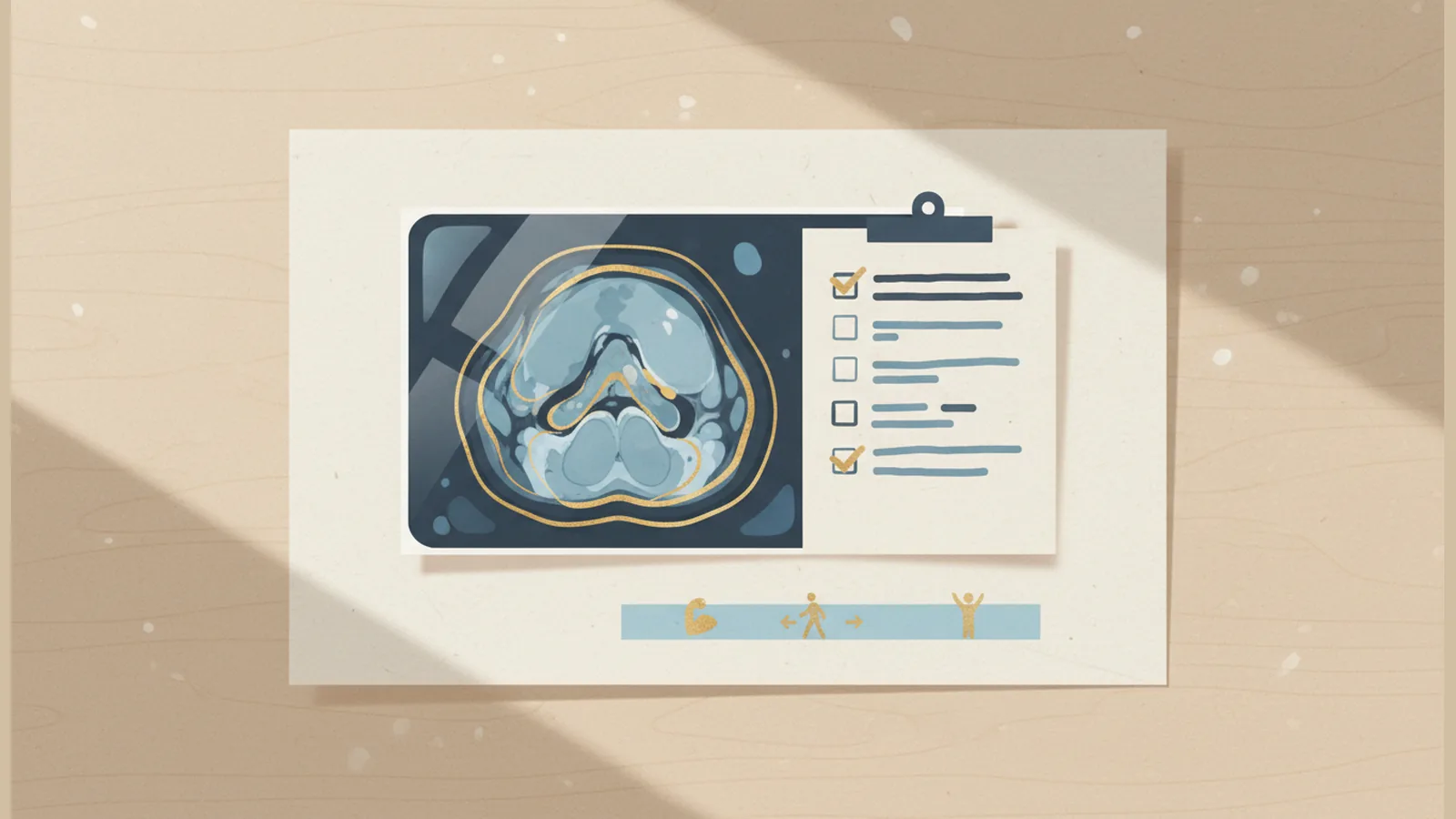
An emergency-room record can provide a time-stamped clinical snapshot after an injury. It may show why you sought care, what you told the care team, what clinicians observed, which tests and treatments occurred, and what the discharge plan called for. Records created during follow-up can then show how your symptoms, assessment, and care developed.
That can make the medical chronology clearer. It does not turn the chart into a scorecard for an injury claim. An ER record does not, by itself, establish who was at fault, whether an incident caused every condition, whether an injury will be permanent, what future care will be needed, or what a claim is worth.
Most importantly, medical care should be based on your symptoms, safety, and clinicians’ guidance—not on a desire to create claim documentation. Do not delay urgent care to preserve a timeline, and do not seek care solely to produce a record. When speaking with a clinician, be complete and accurate. There is no script to follow, and no one should exaggerate symptoms, conceal prior conditions, ask for an unsupported diagnosis, or use legal language to shape the chart.
This article uses the “first 72 hours” only as a practical way to discuss early records. Oregon does not have a universal rule requiring an injured person to visit an ER within 72 hours to preserve a claim.
This article provides general educational information only. It is not medical advice or legal advice, and it does not create an attorney-client relationship.
What an ER Record Can Show—and What It Cannot
Depending on the encounter, an ER file may document:
- the time of arrival and discharge;
- the patient’s account of when and how the injury occurred;
- reported symptoms and when they began or changed;
- examination findings observed by clinicians;
- tests, medication, procedures, and other treatment;
- an assessment or working diagnosis;
- activity or work restrictions; and
- warning signs, referrals, and follow-up instructions.
These entries can help organize what was reported, observed, ordered, and done at particular times. But a timestamp does not establish that the incident legally or medically caused every documented condition. Oregon causation questions may involve the entire body of evidence, including later records, expert medical evidence, prior conditions, and the facts of the incident.
Early documentation is not automatically more credible or legally important than accurate later documentation. ER notes can be incomplete, and symptoms can change or emerge after discharge. The chart is one part of a larger record. That is also why it helps to understand documentation beyond the medical chart.
The Parts of the ER File Do Different Jobs
“The ER record” is not necessarily one document. The file may contain multiple records that describe different types of information.
Patient history and reported symptoms
The chart may record your account of the incident, symptom onset, symptom changes, pain or other sensations, and relevant medical history. These are patient-reported facts. They are different from findings a clinician personally observes or a test detects.
That distinction does not make reported symptoms unimportant. Patient communication helps clinicians evaluate and treat the condition. The useful approach is straightforward: describe what you are experiencing and your relevant medical history accurately and completely so the clinician can evaluate your condition. The record should reflect the clinical encounter, not language selected for a claim.
Oregon evidence law recognizes exceptions that can apply to certain statements made for medical diagnosis or treatment and to qualifying regularly kept records. That does not make every medical entry automatically admissible or accepted for every purpose. Foundation, relevance, trustworthiness, embedded statements, and the reason the evidence is offered may all matter.
Examination findings, assessment, and treatment
Other portions of the file may document what clinicians observed during an examination, what tests they ordered, medications they administered, procedures they performed, and treatment they provided. The assessment or diagnosis is another distinct part of the record.
An ER diagnosis may be preliminary or symptom-based when the care team cannot yet establish a definitive diagnosis. It reflects the information and clinical judgment available at that stage; it does not necessarily settle the later medical picture or legal analysis.
A well-developed discharge process may communicate the diagnosis or working diagnosis, tests and treatment from the visit, the expected course, medication information, warning signs, applicable restrictions, and the plan for additional testing or follow-up. Not every Portland ER record will contain every item, however, and facilities may organize their records differently.
Discharge and after-visit materials
Discharge papers generally describe the plan known when the patient left. Depending on the case, they may include medication directions, return precautions, activity restrictions, pending-result instructions, and recommended follow-up.
These materials primarily serve patient safety and the transition to the next stage of care. They are not a legal checklist. They also may not be the complete chart. Clinician notes, nursing notes, test results, medication records, and finalized reports may exist separately from the after-visit summary.
Why the “First 72 Hours” Is a Timeline, Not a Treatment Deadline
The first few days may produce several dated records. Looking at them together can help a reader understand the early medical sequence, but the 72-hour period is not an evidence hierarchy.
What an early medical chronology may contain
An early chronology may connect the injury time reported in the history with arrival and discharge times, symptom onset or changes, examination findings, testing, medications, treatment, and dated follow-up directions. If a clinician later reviews a pending result or the patient attends follow-up, that event may create another dated entry.
This sequence may clarify what was known at different points. It does not mean a record created within 72 hours automatically carries more legal weight than a later record, nor does it establish that every documented condition came from the incident.
Symptoms can emerge or change after discharge
Some symptoms do not follow a neat schedule. The CDC explains that some mild traumatic brain injury or concussion symptoms appear immediately, while others may emerge hours or days later and may change during recovery. MedlinePlus similarly notes that whiplash symptoms may not appear immediately after a collision.
If you experience a new or changing symptom, report what you are actually experiencing and follow appropriate medical guidance. A later record can document that update without proving, by timing alone, what caused it. Readers dealing with this issue may also find this discussion of what to document when symptoms appear later useful.
Oregon’s actual 72-hour rule
Oregon does have a 72-hour rule in the motor-vehicle context, but it concerns a driver’s duty to submit a DMV collision report after a reportable collision. Reportable events include collisions involving injury or death and certain property-damage or towing circumstances.
That DMV deadline is not a deadline for receiving emergency treatment. It does not mean a person automatically loses an injury claim by not visiting an ER within 72 hours. It also does not apply to every type of injury incident.
Imaging Reports Need Context
Imaging can be an important part of an ER file, but the wording and status of a report matter. A patient should take questions about a result to the treating clinician rather than trying to diagnose an injury from portal language alone.
Report, images, and impression are distinct
A radiology report generally identifies the examination and clinical indication, describes the findings, and includes an impression summarizing the most important points. It may recommend additional or follow-up testing. Findings can be normal, abnormal, potentially abnormal, inconclusive, or incidental.
The written radiology report and the underlying images are distinct records. Obtaining one does not necessarily mean you have obtained the other.
Preliminary results may not be the final report
Discharge materials may reflect a preliminary interpretation, or a result may still be pending when the patient leaves. The final radiologist report is the radiologist’s final documented interpretation of the imaging examination. A later final report, addendum, or communication about a discrepancy may refine what appeared in the initial materials.
Follow your discharge instructions and contact the appropriate treating provider if a result is pending, changes, or is unclear. The report should be interpreted in the context of the examination, symptoms, and other clinical information.
The narrow concussion example
Adult mild traumatic brain injury is one specific example of why imaging must be understood within its clinical purpose. CDC guidance says clinicians should not routinely use CT or MRI to diagnose adult mild TBI or concussion; instead, clinicians should use clinical decision rules to determine whether imaging is needed.
For that reason, a normal CT—or the absence of a scan—does not necessarily establish that an adult had no concussion. This is a condition-specific point, not a rule that normal imaging is irrelevant to every injury. A separate article explains why a normal CT does not rule out every concussion.
Referrals, Follow-Up, and Later Records Continue the Story
Discharge is often a transition rather than the end of care. The next set of documents can show whether a recommended step occurred and what clinicians learned later.
A referral records a plan, not attendance
An ER referral may recommend primary care, a specialist, therapy, repeat imaging, or laboratory follow-up. The referral documents the clinician’s recommendation. It does not show that the patient scheduled or attended an appointment, completed a test, received a later diagnosis, or followed a treatment plan.
If the recommended step occurs, later scheduling, encounter, testing, and treatment records ordinarily document it. That distinction matters whenever someone is trying to understand what the file actually establishes.
Pending results and return precautions matter for safety
Follow-up instructions may identify who should review a pending result, how and when the patient should receive it, which symptoms require reevaluation, and whom to contact for urgent or nonurgent concerns. Read and follow the instructions given for your particular condition.
After a suspected concussion, CDC materials identify danger signs including a worsening headache, repeated vomiting, seizure, weakness or numbness, slurred speech, increasing confusion, marked drowsiness, or inability to wake. Those signs require immediate care rather than waiting for a routine follow-up visit. This is not a complete emergency-symptom list for every injury; follow your own discharge instructions and seek urgent medical help when symptoms or clinician guidance call for it.
What a Work Restriction Shows—and What Lost-Income Proof Requires
A work-status note may document the clinician’s assessment of medical capacity and safety. When medically appropriate, it may address time away from work, a reevaluation date, shorter hours, reduced physical activity, driving or machinery limits, reduced screen time, additional breaks, or modified tasks.
The restrictions should reflect the condition, symptoms, job demands, and clinician’s medical judgment—not a desired claim outcome. The CDC form supporting these examples concerns adult mild TBI. Restrictions for other injuries require condition-specific clinical judgment.
A work note does not by itself establish how much income was lost. Depending on the claim and work arrangement, payroll, schedules, employer documentation, tax records, or other income information may be needed. There is no single list that every insurer must accept. This guide to records that support lost-income proof addresses that separate question.
As of the article’s July 2026 legal review, Oregon PIP wage-loss benefits also have statutory conditions. The injured person generally must have been engaged in a remunerative occupation, and the disability must continue for at least 14 days. The statutory benefit is 70% of lost income, subject to a $3,000 monthly cap and a 52-week aggregate duration. An early ER restriction may document capacity at that time, but it cannot establish on day three that the disability will continue for at least 14 days. Eligibility and the amount due remain fact-specific.
How ER Documentation Fits Into an Oregon Claim
Medical records may be relevant to insurance benefits and to a liability claim, but those processes ask different questions. The significance of a document depends on the policy, claim type, incident, requested benefit, and other available evidence.
PIP “proof of loss” is broader than discharge paperwork
As of the article’s July 2026 legal review, Oregon law defines PIP “proof of loss” as documentation that allows the insurer to determine whether a person is entitled to benefits and the amount due. ER records may contribute to that documentation, but a discharge sheet may not be enough on its own.
Oregon’s statutory minimum PIP medical framework covers up to $15,000 in aggregate for reasonable and necessary covered medical and related expenses incurred within two years after injury. A policy may provide more favorable benefits. The statute does not promise payment of every charge: coverage, causal relationship, necessity, exclusions, limits, policy terms, and the adequacy of submitted information may be disputed.
PIP and a liability claim answer different questions
PIP concerns first-party policy benefits and the proof needed to determine entitlement and amount. A liability claim against another party separately involves fault, medical and legal causation, damages, defenses, and available coverage.
An ER chart may corroborate that the patient sought care, gave a particular history, reported particular symptoms, underwent certain examinations or tests, received treatment, and left with a stated plan. It does not alone establish negligence, all medical causation, permanency, future care, or monetary value. Medical records and chronology sit within a larger causation inquiry; they do not decide that inquiry by themselves.
Other clocks should not be confused with medical timing
Several time periods can arise after an Oregon motor-vehicle collision, but they are not interchangeable:
- The 72-hour Oregon DMV rule concerns reports by drivers involved in reportable motor-vehicle collisions.
- The Oregon Division of Financial Regulation advises consumers to contact their auto insurer as soon as possible because most policies require prompt notice. Its guidance does not create a universal 72-hour insurance-notice deadline; actual policy terms matter.
- A routine Oregon personal-injury action not subject to a different rule generally must be commenced within two years. For limitations purposes, Oregon generally ties commencement to filing and service; service completed within 60 days after filing can relate commencement back to the filing date under ORS 12.020. Different procedural rules or deadlines may apply.
- A claim against an Oregon public body generally has a much earlier tort-claim notice requirement—180 days for claims other than wrongful death—subject to statutory details and exceptions.
Different claims can have shorter or otherwise different deadlines. Defendant identity, policy terms, workers’ compensation issues, and other facts may also change the analysis. Anyone with a deadline concern should seek individualized legal guidance promptly rather than treating these general periods as a complete answer.
Getting the Complete Record in Portland
If you want to understand what was documented, first identify which documents you actually have. A portal summary and the complete record are not necessarily the same thing.
The after-visit summary may not be the whole chart
Potentially separate records include:
- clinician notes;
- triage and nursing notes;
- medication-administration records;
- orders;
- laboratory results;
- radiology reports and underlying images;
- billing and payment records;
- finalized reports; and
- later addenda.
Facilities may use different labels, portals, and release processes. A missing item in an after-visit packet does not necessarily mean it does not exist elsewhere in the record.
Access rights and timing
HIPAA generally gives individuals a right to inspect or obtain copies of protected health information in a covered entity’s designated record set. That can include medical and billing records, laboratory results, medical images, and clinical case notes.
A covered entity ordinarily must act on an access request within 30 calendar days. One extension of up to 30 additional days may be available if the requirements are met. Portal access may be faster. Exceptions, identity-verification requirements, requested format, and allowable fees can affect the process.
OHSU as a local example
OHSU allows adult patients to request medical records through the MyChart Sharing Hub or its Health Information Management process. OHSU’s Image Library separately manages diagnostic images and reports.
That is one Portland example, not a citywide procedure. Legacy, Providence, Kaiser, Adventist, and other facilities may use different request routes. Check with the facility that provided the care.
If Something Looks Wrong, Seek Accuracy—Not a Better Claim Narrative
If a medical or billing record appears inaccurate or incomplete, HIPAA provides a formal process to request an amendment. If a request is denied, the patient may be able to submit a statement of disagreement for inclusion with the record.
That process exists to address accuracy and completeness. It is not a way to rewrite an accurate note, erase an unfavorable clinical judgment, add symptoms that were never reported, or reshape the chart for an injury claim. A provider may deny an amendment request if it considers the record accurate and complete. An accepted amendment may be appended or linked to the affected record rather than deleting the original entry.
The safer principle throughout is accuracy: seek care for medical reasons, follow individualized discharge and follow-up instructions, communicate symptoms and history truthfully, and keep each document in context. If warning signs appear, medical safety comes first. If policy requirements, public-body involvement, causation, or deadlines are in question, individualized medical and legal guidance may be appropriate.
Frequently Asked Questions
Do I have to visit an Oregon ER within 72 hours to preserve an injury claim?
No supported Oregon law creates a universal requirement to visit an ER within 72 hours to preserve an injury claim. Oregon’s specific 72-hour rule discussed here concerns a driver’s duty to report a reportable motor-vehicle collision to the DMV. Medical care should be based on symptoms, safety, and clinical guidance—not on a claim tactic.
What does an ER record prove after an accident or other injury?
It may corroborate that an encounter occurred and document the patient’s reported history and symptoms, clinician observations, tests, treatment, and discharge plan. On its own, it does not prove fault, complete causation, permanency, future care, or claim value.
Does a normal CT mean I did not have a concussion?
Not necessarily. CDC guidance says CT and MRI are not routinely used to diagnose adult mild TBI or concussion. Whether imaging is needed and what a result means require clinical evaluation. This concussion-specific limitation should not be generalized to every injury or scan.
Does an ER referral show that I completed follow-up care?
No. A referral documents a recommended next step. Later scheduling, encounter, test, and treatment records show whether follow-up occurred and what happened.
Is an ER work note enough to prove lost wages?
Not by itself. A work note may document medical restrictions or capacity, while employment and income records may be needed to show the amount actually lost. Oregon PIP wage-loss benefits also have additional statutory requirements.
Can I correct an inaccurate ER record?
HIPAA provides a formal process to request amendment of inaccurate or incomplete medical or billing information. If a request is denied, a statement-of-disagreement process may be available. Amendment is not a method for rewriting an accurate note or changing the record to improve a claim narrative. An accepted amendment may be appended or linked rather than replacing the original entry.
Sources
- Agency for Healthcare Research and Quality, Improving the Emergency Department Discharge Process: Environmental Scan Report and the Re-Engineered Discharge Toolkit for discharge communication, referrals, pending results, and care transitions.
- Society for Academic Emergency Medicine, “Discharge Instructions” for the preliminary or symptom-based nature of some emergency-department diagnoses.
- CDC adult mild-TBI resources, concussion symptom guidance, patient discharge instructions, and return-to-work instructions.
- MedlinePlus, “Whiplash” for the limited point that symptoms may not appear immediately after a collision.
- RadiologyInfo, “All About Your Radiology Report” and the American College of Radiology communication practice parameter for report components and preliminary-versus-final imaging documentation.
- Oregon Revised Statutes, Chapter 742 for PIP proof of loss and medical- and wage-loss benefit provisions.
- ORS Chapter 40 for the limited evidence-law discussion, together with Enrolled HB 4157 (2026), which did not change the medical-treatment or qualifying business-record exceptions discussed above.
- ORS Chapter 12 and ORS 30.275 for the general commencement, limitation, and public-body notice caveats.
- Oregon DMV collision-reporting information and its Collision Information Exchange Checklist for the motor-vehicle reporting rule; Oregon Division of Financial Regulation consumer guidance for insurer-notice guidance.
- U.S. Department of Health and Human Services guidance on access to health information, medical-record amendments, and 45 C.F.R. § 164.526.
- OHSU Medical Records and the OHSU Image Library as Portland-local examples of record and image requests.
This article provides general educational information only. It is not medical advice or legal advice, and it does not create an attorney-client relationship. Medical needs, insurance policies, claims, and legal deadlines are fact-specific. Follow the guidance of qualified medical professionals and seek individualized legal advice when appropriate.
Client-First Fee Promise
Client First = Bills First, Fees Second
Your unpaid medical bills do not have to make your lawyer's fee bigger. Johnson Law subtracts qualifying medical bills before calculating our fee, helping clients keep more of their settlement.
Applies to qualifying cases. Results vary.