Intersection T-Bone in Portland: Who’s at Fault When Both Drivers Say They Had the Green?
Intersection T-Bone in Portland: Who’s at Fault When Both Drivers Say They Had the Green?
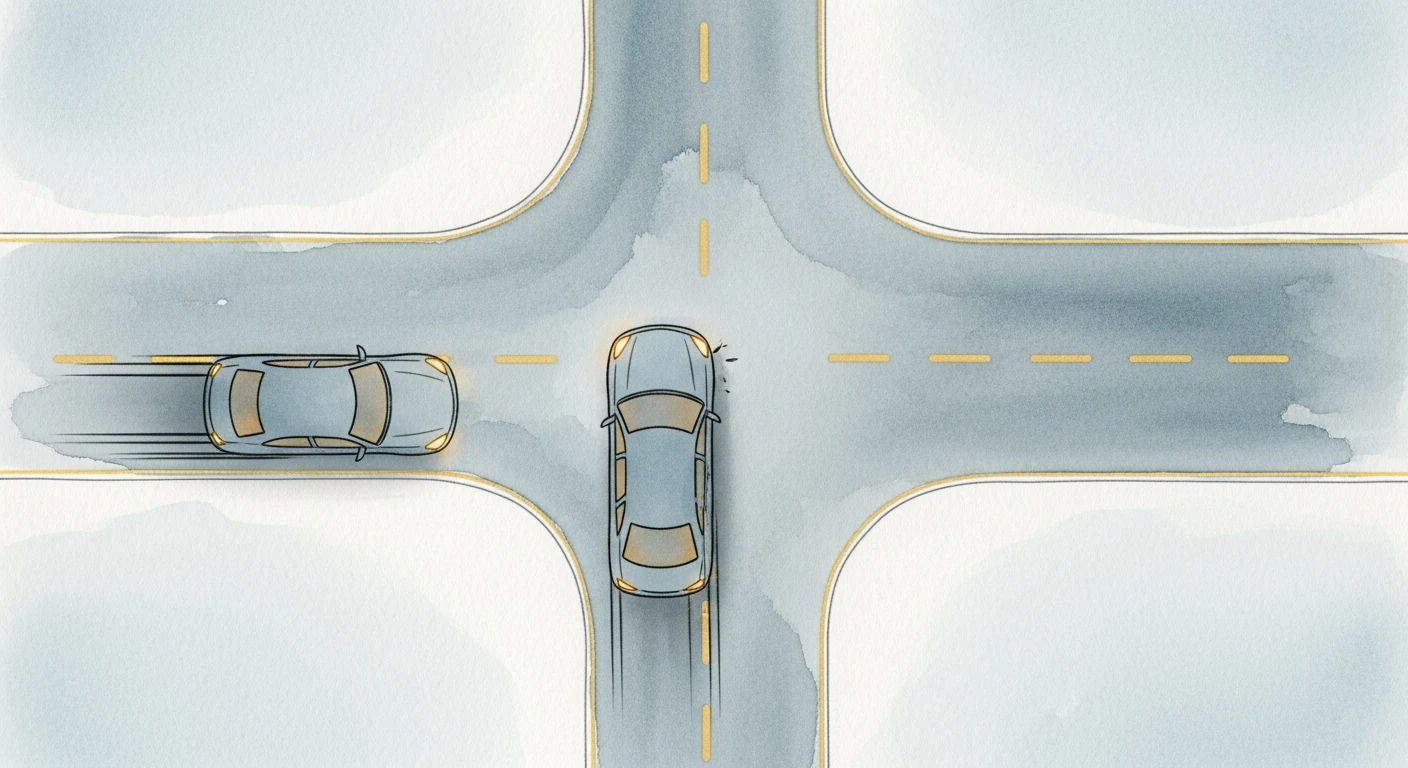
A T-bone crash at a Portland intersection can feel like the ground disappears under you. The impact is violent, the angles are awkward, and the aftermath is chaotic. Then comes the claim that turns a serious collision into a complicated dispute: both drivers insist they had a green light. In that moment, the accident becomes more than a collision—it becomes a credibility contest. And in Oregon, credibility alone rarely wins.
What actually decides these cases is evidence. The story that survives is the one backed by hard data, objective records, and a consistent timeline. That means understanding how Portland’s intersections are controlled, how Oregon’s fault rules work, and what kinds of proof insurance companies and courts rely on to break the deadlock. If you’re facing a disputed T-bone crash, the difference between a fair recovery and a devastating financial outcome often comes down to how fast and how thoroughly the evidence is preserved.
Why Fault Matters So Much in Oregon T-Bone Cases
Oregon follows a modified comparative fault system. Under ORS 31.600, you can recover damages only if you are 50% or less at fault. If you’re found 51% or more responsible, you recover nothing—and you may be liable for the other driver’s losses. You can read the statute directly at the Oregon Legislature’s website: ORS 31.600.
That rule makes disputed green-light collisions especially risky. If insurers can push enough blame onto you—even by 1%—they can shut your claim down entirely. Every fragment of evidence that confirms you had the right-of-way therefore has direct financial value.
Understanding What “Fault” Means in a Portland Intersection Crash
Legally, fault is about negligence—failing to use reasonable care. At a signalized intersection, that usually boils down to whether a driver obeyed the signal. Oregon law requires drivers to stop for a steady red light and only proceed on green or a proper turn signal. See ORS 811.260.
To prove the other driver was negligent, you generally need to show:
- Duty: The driver had a duty to obey traffic signals and drive safely.
- Breach: They ran the red light or entered the intersection without the right-of-way.
- Causation: That breach caused the T-bone collision.
- Damages: You suffered injuries, costs, or property damage.
The entire case often turns on the second point—breach. When both drivers claim green, you must prove the other driver entered on red or against a protected phase.
Why T-Bone Impacts Are So Severe
Side-impact crashes are uniquely dangerous because the struck vehicle has less structural protection at the doors than at the front or rear. The Insurance Institute for Highway Safety (IIHS) consistently identifies side impacts as a major source of serious injury, which is why side-impact ratings are a core part of modern vehicle safety evaluations. See IIHS’s side crash test explanations here: IIHS Side Crash Ratings.
That heightened injury risk is why T-bone crashes often involve:
- Serious orthopedic injuries (hips, ribs, pelvis)
- Head and neck trauma
- Long-term rehabilitation costs
- Permanent disability or reduced earning capacity
The more severe the injuries, the higher the stakes in the fault dispute.
The Evidence That Breaks a “He Said, She Said” Stalemate
A disputed green-light crash is not unsolvable. It just requires evidence beyond the drivers’ statements. Here are the most common sources that carry real weight.
1. Traffic Signal Timing and Phasing Data
Portland’s signalized intersections are managed through coordinated systems that follow programmed timing plans and detection logic. These systems generate logs that show how long each phase was green, yellow, and red. Signal timing data can often be obtained through Portland Bureau of Transportation (PBOT) records requests. PBOT publishes its traffic signal information and contacts here: PBOT Traffic Signals.
Why this matters: if you can match the crash time (from a 911 call, police report, or camera timestamp) to the signal log, you can establish which direction had a green phase at the exact moment of impact.
2. Intersection and Nearby Camera Footage
Footage can come from multiple sources:
- City-owned traffic cameras
- Transit agency cameras (e.g., TriMet bus footage)
- Private security cameras (businesses, apartments, homes)
- Vehicle dash cameras
Even if a camera doesn’t capture the exact impact, it may show approach speeds, signal phases, or the other vehicle entering against a red. The Federal Highway Administration explains how traffic control systems and detection operate at intersections here: FHWA Traffic Signal Timing.
3. Vehicle Event Data Recorders (EDR “Black Box” Data)
Most modern vehicles record pre-crash data such as speed, throttle, braking, and seatbelt use in the seconds before impact. The National Highway Traffic Safety Administration (NHTSA) explains EDR systems and the data they capture here: NHTSA Event Data Recorders.
EDR data can confirm whether the other driver braked, accelerated, or made no attempt to slow down before entering the intersection—facts that can support a red-light violation.
4. Physical Evidence and Crash Dynamics
Damage patterns, debris fields, and final resting positions tell a story:
- Impact location (front door vs. rear quarter panel) can show where your car was in the intersection.
- Angle and crush depth can indicate which driver had momentum and speed.
- Skid marks reveal whether anyone tried to stop.
Accident reconstruction experts use physics and measurements to build a timeline that either corroborates or contradicts each driver’s claim.
5. Neutral Witnesses
Independent witnesses—drivers stopped at the intersection, pedestrians, cyclists, or nearby workers—are powerful because they have no stake in the outcome. Their statements often carry more weight than either driver’s account. If you can locate witnesses quickly, their memory will be fresher and more reliable.
What to Do Immediately After a Disputed T-Bone Crash
Your actions in the first hours and days can determine whether crucial evidence is preserved or lost.
At the Scene
- Call 911 to request police and medical assistance.
- Avoid admitting fault or apologizing in a way that could be misinterpreted.
- Photograph everything: vehicle positions, signal lights, lane markings, skid marks, debris, and nearby cameras.
- Identify witnesses and collect contact information.
Within the First 24–72 Hours
- Seek medical care even if you feel “okay.” Some injuries show delayed symptoms.
- Request a copy of the police report as soon as it’s available.
- Write a detailed account of the crash while your memory is fresh.
- Preserve digital evidence (dash cam files, phone photos, texts, or GPS logs).
Preserving Evidence Before It Disappears
Two categories of evidence vanish quickly:
- Video footage often overwrites in days or weeks.
- EDR data can be lost if the vehicle is repaired, scrapped, or driven.
That’s why preservation letters (sometimes called “spoliation notices”) are so critical. They formally demand that a business, agency, or insurer preserve evidence that might otherwise be destroyed. In disputed intersection cases, these letters often go to:
- PBOT or ODOT for signal logs and camera footage
- Private property owners with exterior cameras
- The other driver’s insurer and storage yard to preserve the vehicle
How Oregon’s Comparative Fault Rules Affect the Settlement
If the other side can push the fault allocation above 50%, you lose the right to recover. Even a 20–30% fault assignment can sharply reduce the value of your claim. That’s why insurers often argue:
- You were speeding or distracted
- You entered late in the yellow
- Your view was obstructed and you failed to proceed safely
Each of these arguments can reduce your recovery. Objective evidence is the only reliable way to counter them.
Why Intersection Signals Are Complex (and Why That Matters)
Many drivers assume signals are simple—green for one direction, red for the other. In reality, modern intersections use:
- Protected left turns (arrow phases)
- All-red clearance intervals
- Vehicle detection sensors that adjust timing
- Coordination with adjacent intersections to manage traffic flow
Those details can explain how one driver perceived green while another actually had the right-of-way. Understanding the timing logic is often what resolves the dispute. The FHWA provides a useful overview of signal timing concepts here: FHWA Signal Timing Basics.
The Role of Expert Analysis
In many disputed T-bone cases, expert analysis makes the difference. A reconstruction professional can:
- Synchronize signal logs with the crash timeline
- Analyze EDR data from both vehicles
- Map impact points and angles
- Calculate probable speeds and reaction times
Their conclusions can convert a fuzzy narrative into a clear, science-based account. That’s often what persuades an insurer—or a jury—to assign fault correctly.
A Practical Checklist for Disputed Green-Light Crashes
Use this checklist to keep the evidence trail intact:
- Get emergency response and an official crash report
- Photograph the scene, signals, and nearby cameras
- Collect witness names and phone numbers
- Seek medical evaluation
- Preserve dash cam or phone data
- Request signal timing records
- Identify potential cameras along the route
- Protect EDR data before vehicles are repaired
Final Thoughts
When both drivers say they had the green, the case doesn’t come down to who argues louder—it comes down to who can prove it. Oregon’s comparative fault law makes the stakes high, and the consequences of being found mostly at fault are severe. But a disputed green-light crash is not impossible to solve. Signal timing data, camera footage, EDR logs, and crash reconstruction can transform a “he said, she said” dispute into a verified timeline.
If you’re dealing with a Portland intersection T-bone accident, focus on evidence early, preserve it aggressively, and use objective records to support your account. In these cases, the truth is almost always there—it just has to be captured before it disappears.
Client-First Fee Promise
Client First = Bills First, Fees Second
Your unpaid medical bills do not have to make your lawyer's fee bigger. Johnson Law subtracts qualifying medical bills before calculating our fee, helping clients keep more of their settlement.
Applies to qualifying cases. Results vary.