Pothole Damage vs. Injury Claim in Vancouver: City Street, Clark County Road, or WSDOT Highway?
Pothole Damage vs. Injury Claim in Vancouver: City Street, Clark County Road, or WSDOT Highway?
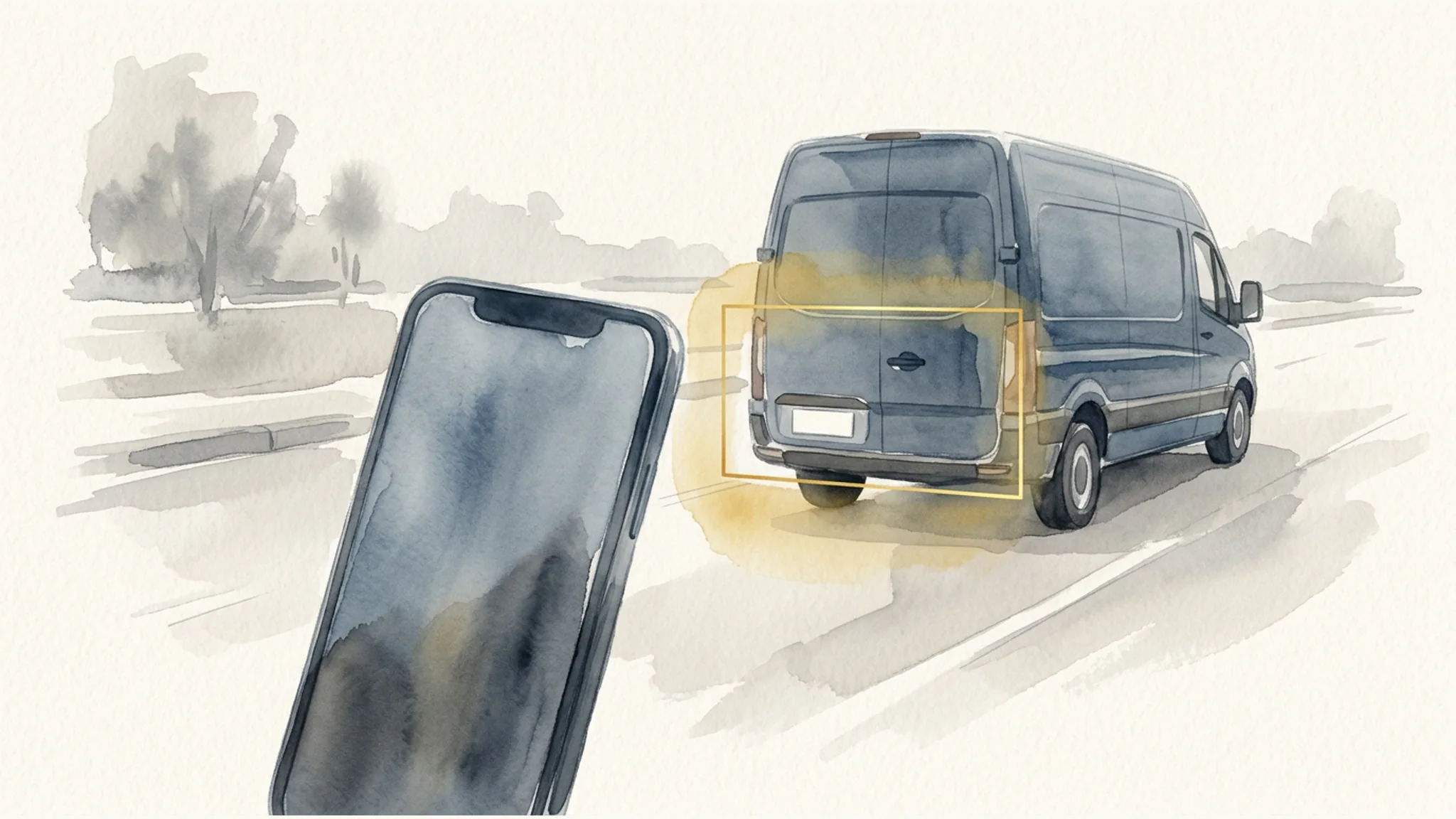
After a pothole incident in the Vancouver area, start with two questions: Where was the exact defect, and what harm did it cause?
Those details shape almost everything that follows. The relevant pavement could be associated with the City of Vancouver, unincorporated Clark County, or the Washington State Department of Transportation (WSDOT). A claim for a bent wheel or damaged suspension also requires different proof from a claim involving physical injuries—even when both arise from the same event.
Just as important, reporting the pothole is not the same as presenting a claim for damages. A public-records request and a collision report are separate processes too. Completing one does not mean the others have been completed.
This guide explains how to keep road responsibility, maintenance, hazard reporting, records, claim presentment, lawsuit timing, and liability proof distinct under Washington law. If the collision involved a public employee driving a government vehicle rather than a roadway defect, see our guide to claims involving a government-operated vehicle.
Start With the Exact Pothole Location—Not the Mailing Address
A Vancouver mailing address does not necessarily mean the incident occurred within Vancouver city limits. Some addresses using “Vancouver” are in unincorporated Clark County. A state route may also pass through the city, and responsibility for features along that route may be divided.
Before choosing an agency or form, record:
- the street or route name;
- the nearest address, intersection, cross street, or milepost;
- the direction of travel;
- the specific lane;
- the precise pavement feature involved;
- the date and time of the incident; and
- any nearby signs, ramps, bridges, utility work, drainage structures, or other landmarks that help identify the segment.
If it is safe to do so, take both wide photographs that establish the location and close photographs that show the defect. A scale or measurement may help, but no one should stand in traffic or create another hazard to obtain it. Preserve the original image files and any location data associated with them.
Check city limits and road-system clues
The City of Vancouver’s “Do I Live in Vancouver?” address tool and Clark County’s Property Information Center resources can help determine whether an address appears to be inside the city.
For road-system questions, useful starting points include:
- WSDOT’s State Highway Log and statewide GIS maps and data layers; and
- Clark County’s right-of-way inquiry.
These tools provide investigation leads. They do not conclusively establish who maintained the exact surface feature on the incident date. A route label, property boundary, or right-of-way designation is not necessarily the final answer.
Road Owner, Route Designation, and Maintainer May Not Be the Same
Several questions that sound similar can have different answers:
- Which road system includes the segment?
- Who owns the right of way?
- Who was responsible for inspecting or maintaining the pavement?
- Did a utility, contractor, or another agency perform work there?
- Which entity holds the relevant maintenance records?
- Which entity is the proper recipient of a tort claim?
Do not collapse these questions into a single assumption about “ownership.”
City street or unincorporated Clark County road?
Washington generally defines a county road as a highway outside an incorporated city or town that is not designated as a state highway. County roads are generally repaired and maintained under the county engineer’s supervision.
But public use of a road does not, by itself, necessarily show that Clark County adopted it into the county road system or assumed a maintenance duty. Annexations, boundary changes, private-road status, and agreements between entities can also affect the analysis.
A state route inside Vancouver can involve divided duties
A state-route shield does not mean WSDOT has exclusive responsibility for every part of the roadway inside Vancouver. Chapter 47.24 RCW divides certain functions between the State and cities by feature, assigns cities specified responsibilities, and permits cooperative arrangements. Limited-access highways receive distinct statutory treatment.
The practical question is therefore not simply, “Was this a state route?” It is, “Who was responsible for this particular pavement feature at this location on this date?”
Ramps, bridges, frontage roads, utility cuts, drainage features, and roads along jurisdictional boundaries may require a closer look at plans, contracts, or intergovernmental agreements.
Four Separate Processes After a Pothole Incident
The following processes have different purposes. None should be assumed to replace another.
| Process | Main purpose | Supported official channel | What it does not replace |
|---|---|---|---|
| Hazard report | Request inspection, warning, or repair | Vancouver Public Works, Clark County Public Works, or WSDOT’s feedback/Southwest Region channel, depending on the road | A public-records request, collision report, or tort-claim presentment |
| Public-records request | Seek identifiable agency records about the location and its history | The relevant City, County, or WSDOT public-records channel | Proof of notice, a collision report, or tort-claim presentment |
| Collision report | Address a separate driver-reporting requirement when applicable | Washington State Patrol’s collision-reporting process | A hazard report, proof of fault, or tort-claim presentment |
| Tort-claim presentment | Formally present a damages claim to the proper public entity before suit | The local entity’s appointed agent or, for a State claim, the DES Office of Risk Management | Proof that the government was negligent or that claimed losses were caused by the defect |
1. Hazard report: request inspection or repair
Use a hazard report to notify the operational agency and request attention to the road condition.
- City of Vancouver: Use the City’s Public Works Service Request and select “Street Maintenance.” The City states that the form is not monitored 24 hours a day and directs urgent Public Works issues to Dispatch at 360-487-8177.
- Unincorporated Clark County: Use the County’s road-concern form for nonurgent potholes and road concerns. Clark County directs urgent road problems to Public Works at 564-397-2446.
- State highway: WSDOT accepts highway-maintenance questions and comments through its feedback channel. Its Southwest Region, which serves Clark County, lists 360-905-2000 and swfeedback@wsdot.wa.gov. WSDOT directs roadway blockages or extreme roadway damage to 911.
Save a copy of the report, confirmation, submitted location description, date, photographs, and any service-request or work-order number. A post-incident report can document what was reported after the event, but it does not by itself prove that the agency knew about the same defect beforehand.
Most importantly, a hazard report is not a tort claim for damages.
2. Public-records request: investigate the location and history
A focused public-records request may help identify:
- prior complaints or service requests about the same defect;
- inspection records;
- work orders and repair records;
- agency photographs;
- maintenance or inspection policies;
- contracts involving work at the location; and
- intergovernmental maintenance agreements.
The City of Vancouver, Clark County, and WSDOT each provide official channels: the City’s Public Records Request page, the County’s Public Records Overview, and WSDOT’s Public Disclosure portal. Describe the location as precisely as possible using the street or route, lane and direction, cross street or milepost, specific feature, and a defined date range.
Washington’s five-business-day rule for public-records requests concerns the agency’s initial response. It does not necessarily require final production within five business days.
A records request does not toll a limitation period or satisfy tort-claim presentment. Records also must be evaluated carefully: a complaint about a nearby depression or general road deterioration does not automatically establish notice of the pothole involved in a later incident.
3. Collision report: a separate statutory question
When no officer investigates and agrees to submit the required report, Washington law generally calls for a driver to report within four days if a collision causes injury or death, or at least $1,000 in damage to any one person’s or unit’s property. A single-vehicle pothole incident can fall within that language. Washington State Patrol provides official collision-reporting information.
This is a separate statutory reporting issue, not a statement about who was liable. Required collision reports are generally confidential and are not themselves admissible as trial evidence arising from the collision, subject to statutory provisions and exceptions. Specified factual information may be available to interested parties.
The reporting threshold and instructions are date-sensitive. Confirm the current official requirements rather than relying on an old summary.
4. Tort-claim presentment: the damages process
Tort-claim presentment is the formal pre-suit process for seeking damages from a public entity. It is not simply another name for reporting a pothole, contacting an insurer, calling 911, submitting a collision report, asking for records, or speaking with a road crew.
Presentment also does not guarantee payment. It addresses a procedural prerequisite; the claimant still must prove a valid liability case and the claimed losses.
The proper process depends on the entity:
- a potential claim against Vancouver or Clark County generally uses Washington’s local-government framework under RCW 4.96.020; and
- a potential claim alleging WSDOT responsibility uses the State process through the Department of Enterprise Services (DES) under chapter 4.92 RCW.
If Vancouver or Clark County Is the Potential Entity: RCW 4.96.020
RCW 4.96.020 generally requires a local-government tort claim to be presented to the entity’s appointed claim agent within the applicable limitation period. The agent’s identity and business-hours address must be recorded with the county auditor.
Notice to one public body is not automatically effective against another. Before submitting anything, verify the current appointed agent, form, address, and instructions. Do not assume that an old form, a general department address, or a report sent to Public Works is sufficient.
The City currently publishes a Claims for Damages page with submission options through Risk and Safety. Clark County publishes claim information through Risk Management. These official pages can change and should be checked at the time of use.
The form has required subject matter
RCW 4.96.020 identifies subjects a local claim generally must address, including:
- claimant information;
- the conduct and circumstances underlying the claim;
- the injury or damage;
- the time and place of the event;
- people involved;
- the amount claimed;
- specified residence information; and
- an authorized signature.
The statute includes liberal-construction and substantial-compliance language, but whether a submission substantially complied is fact-specific. That language should not be treated as permission to use the wrong entity, omit material information, or disregard timing requirements.
The 60-day rule is a pre-suit wait, not a 60-day incident deadline
For a lawsuit subject to RCW 4.96.020, the statute generally requires waiting 60 calendar days after the local claim is first presented before beginning the lawsuit. It also provides tolling during that waiting period and contains an additional five-court-day timing provision.
This is not a rule saying that a claimant has only 60 days after the pothole incident to present a claim. Washington appellate courts have enforced the pre-suit waiting requirement, but the rule should not be reduced to a personalized deadline calculation in a general article.
Washington also generally places negligence actions involving bodily injury or injury to personal property within a three-year limitations category. That general statement is not a deadline calculation for an individual matter. Accrual, tolling, death, disability, party identification, amendment, commencement, and service issues can change the analysis. Uncertainty about the correct road entity should be investigated promptly rather than assumed to extend the available time.
Be careful with electronic submission
Current Vancouver and Clark County pages list electronic and other submission methods. RCW 4.96.020’s deemed-presentment language expressly addresses in-person delivery and receipt by mail. Because the legal sufficiency and effective date of a particular electronic submission can require a current, fact-specific analysis, verify the appointed agent’s instructions and retain proof of delivery and receipt rather than assuming an email or portal submission is legally effective on a particular date.
If WSDOT Is the Potential Entity: Use the State/DES Framework
An alleged tort involving WSDOT is a State claim, not a local-government claim under RCW 4.96.020.
RCW 4.92.090 addresses State tort liability. RCW 4.92.100 requires presentation to the DES Office of Risk Management on the State’s standard form. RCW 4.92.110 provides a parallel 60-calendar-day pre-suit waiting period and tolling rule.
DES provides the official State tort-claim process and explains that the State form is not for claims against cities, counties, private parties, or other non-State defendants.
A WSDOT maintenance comment or feedback submission may ask the agency to inspect or repair a highway condition. It is not DES tort-claim presentment.
Property Damage and Bodily Injury Need Different Evidence
Some scene evidence helps with either type of loss. Other documentation belongs in separate tracks.
Evidence both tracks may share
Preserve:
- the exact location, lane, direction, date, and time;
- wide and close photographs of the condition;
- a safe measurement or scale if available;
- witness names and contact information;
- photographs or video of the event and immediate aftermath;
- hazard-report confirmations; and
- records tied to the same defect and relevant time period.
Keep pre-incident evidence distinct from material created later. A report submitted after an incident does not itself establish that the agency had actual or constructive notice beforehand.
Vehicle and other property-damage evidence
Property-loss documentation may include:
- proof of ownership;
- photographs of the damaged vehicle or component;
- tire, wheel, suspension, or other relevant component details;
- diagnostic findings;
- repair estimates, invoices, and receipts;
- towing and rental records; and
- evidence of the property’s pre-loss condition or value when relevant.
A repair bill can document loss, but it does not independently prove who maintained the road, that the government was negligent, or that every repair was caused by the pothole.
Bodily-injury evidence
Injury documentation may include:
- symptoms noted at or near the time of the event;
- a clear description of the injury;
- the provider and treatment chronology;
- medical bills and records when requested under the correct entity’s instructions;
- the effect on ordinary activities; and
- wage-loss and work documentation.
Submission instructions differ. For example, the City’s form says not to send medical records initially, while other claim instructions may call for different materials. Follow the current instructions for the correct entity rather than using one universal packet.
For an auto injury, first-party Washington PIP benefits after an auto injury may be a separate issue. PIP does not decide road ownership, replace public-entity presentment, or resolve a property-only pothole claim.
What a Claim Still Has to Establish
Identifying the right process is important, but procedure is not proof of liability.
Reasonably safe does not mean perfect pavement
Washington governments owe ordinary care to keep public roads reasonably safe for ordinary travel. They are not insurers of perfect pavement.
A claimant still must address duty, breach, causation, and damages. Evidence that a pothole existed or that a vehicle needed repairs does not, by itself, establish every element.
Notice and an opportunity to respond are often central
When the government did not create or reasonably anticipate the unsafe condition, liability generally requires actual or constructive notice and a reasonable opportunity to correct the condition or warn travelers.
Constructive notice asks whether the same condition existed long enough that ordinary care would have discovered it. That is a fact-specific inquiry. Potentially useful evidence may include earlier reports about the same defect, inspection history, dated photographs, repair records, or evidence that the condition had existed for a substantial period.
But the connection matters. A complaint about a different pothole, general pavement wear, or a report made only after the incident does not automatically prove prior notice. Likewise, an old patch or failed repair does not automatically establish government creation, anticipation, breach, or causation.
Fault and defenses remain fact-specific
Washington’s comparative-fault statute can proportionately reduce compensatory damages; it does not automatically bar recovery. Assertions about speed, attention, lane position, tire condition, warnings, or whether the defect was avoidable require evidence rather than assumption.
Discretionary immunity can protect qualifying fundamental policy decisions, but it is not blanket immunity for all road maintenance. Whether conduct reflects protected policy-level decision-making or operational implementation depends on the facts and governing law. Routine pothole work should not be characterized as categorically immune—or categorically outside immunity.
Practical Pothole-Incident Checklist
- Protect safety first. Do not enter traffic or disturb the road to gather evidence.
- Pin down the segment. Record the route or street, cross street or milepost, direction, lane, feature, and incident date and time.
- Preserve scene evidence. Keep close and wide photographs, safe measurements if available, witness information, and original files.
- Separate the losses. Maintain one file for vehicle or other property evidence and another for symptoms, treatment, activity effects, and wage loss.
- Check jurisdiction clues. Use official City, County, and WSDOT tools, but treat maps and route labels as starting points rather than final proof.
- Investigate the maintainer. Ask who maintained the precise pavement feature on the incident date, including whether an agreement, utility project, or contractor may be relevant.
- Use the correct hazard channel. Request inspection or repair from the likely operational agency and save the confirmation. Follow current emergency directions for urgent hazards.
- Consider collision reporting separately. Check the current Washington reporting rules and official WSP instructions if no officer submitted the required report.
- Request focused records. Identify the precise location, defect, lane, and date range; remember that a records request does not preserve or prove a damages claim.
- Verify the proper claim process. Check the current appointed local claim agent and instructions under RCW 4.96.020, or use the State/DES framework for an alleged WSDOT tort. Do not assume another submission counts.
- Keep proof of delivery. Retain complete copies, confirmations, and evidence of receipt without assuming a particular delivery method establishes a legal presentment date.
- Investigate promptly. Do not assume uncertainty about ownership or maintenance stops a clock or extends a deadline. Seek individualized legal advice when needed.
How These Issues Can Affect a Washington Injury Claim
The need to identify the correct entity, obtain agency records, separate property and injury losses, and comply with public-body presentment procedures can affect how an injury claim develops. Those steps are distinct from the underlying proof of fault and damages, and none guarantees a particular timeline or result. Our overview of factors that can affect a Washington injury-claim timeline explains how evidence development, disputed parties, special procedures, and later claim stages can influence the path without creating one universal schedule.
Local Help for a Vancouver or Clark County Injury
Property-only reimbursement questions and bodily-injury claims are not identical. When a pothole incident causes physical injury, legal review may help identify the potentially responsible parties, preserve the separate evidence tracks, and evaluate the applicable public-entity process.
Johnson Law provides Vancouver and Clark County personal injury help. Readers injured in a motor-vehicle incident can also review our Vancouver car-accident injury guidance. These resources do not determine which agency was responsible for a particular road segment or predict the outcome of a claim.
Frequently Asked Questions
Does a Vancouver mailing address mean the City of Vancouver maintains the road?
No. A Vancouver postal address may be outside city limits. Even jurisdiction, route, or right-of-way information may not establish who maintained the precise pavement feature on the incident date. Use official maps as starting points, then investigate segment-level maintenance responsibility.
Is reporting a pothole the same as filing a claim for vehicle damage or injury?
No. A hazard report asks an operational agency to inspect or repair a condition. Tort-claim presentment is a separate damages process. Public-records requests and collision reports have different purposes as well.
What does RCW 4.96.020’s 60-day rule mean?
It is generally a pre-suit waiting period after a local-government tort claim is first presented, with statutory tolling provisions. It is not a 60-day deadline measured from the incident. Calculating the time applicable to a specific matter requires an individualized analysis.
Do I use the same claim process for Vancouver, Clark County, and WSDOT?
No. Potential claims against Vancouver or Clark County generally fall under the local-government framework in RCW 4.96.020. An alleged WSDOT tort follows the State process through DES under chapter 4.92 RCW. A submission to one entity is not automatically effective for another.
What records can help investigate whether an agency knew about the pothole?
A focused request may seek prior complaints, service requests, inspections, work orders, repairs, photographs, policies, contracts, and agreements tied to the same location and a defined date range. The records must relate meaningfully to the same defect; their existence does not automatically prove notice or negligence.
What evidence differs between a vehicle-damage claim and an injury claim?
Property proof tends to focus on ownership, pre-loss condition, damaged components, diagnostics, estimates, invoices, towing, and rental expenses. Injury proof tends to focus on contemporaneous symptoms, treatment chronology, activity effects, medical bills or records when requested, and wage loss. Both tracks may use scene photographs, location details, witnesses, and records about the defect.
Disclaimer
This article provides general educational information about Washington law and publicly available agency processes. It is not legal advice, does not create an attorney-client relationship, and does not calculate or preserve any deadline. Road responsibility, claim presentment, timing, liability, and available damages depend on the specific facts and current law. Agency contacts, forms, claim agents, submission instructions, and reporting thresholds can change; verify current official information before relying on it.
Source Notes
This article relies on the following primary and official sources identified in the approved fact sheet:
- RCW 4.96.010 and RCW 4.96.020 (local-government tort liability and claim presentment).
- RCW 4.92.090, RCW 4.92.100, and RCW 4.92.110 (State tort claims and pre-suit procedure).
- RCW 4.16.080 and RCW 4.22.005 (general limitations category and comparative fault).
- Chapter 36.75 RCW and chapter 47.24 RCW (county-road framework and city/state responsibilities on state highways).
- RCW 42.56.520 (initial public-records response).
- RCW 46.52.030, RCW 46.52.080, RCW 46.52.083, and WAC 446-85-010 (collision reporting, confidentiality, and records).
- Official City of Vancouver, Clark County, WSDOT, Washington State Patrol, and DES pages linked in the article for jurisdiction screening, hazard reporting, records, collision reporting, and claim channels.
- Washington appellate decisions discussed in the fact sheet, including Toney v. Lewis County, Hanson v. Carmona, Sluys v. City of Seattle, O’Neill v. City of Port Orchard, and Ehrhart v. King County. These authorities address distinct procedural or liability principles and should not be read as deciding responsibility for an unnamed pothole incident.
Client-First Fee Promise
Client First = Bills First, Fees Second
Your unpaid medical bills do not have to make your lawyer's fee bigger. Johnson Law subtracts qualifying medical bills before calculating our fee, helping clients keep more of their settlement.
Applies to qualifying cases. Results vary.