Proving Texting and Driving in a Crash: Dash Cam, Witnesses, and Metadata That Actually Matter
Proving Texting and Driving in a Crash: Dash Cam, Witnesses, and Metadata That Actually Matter
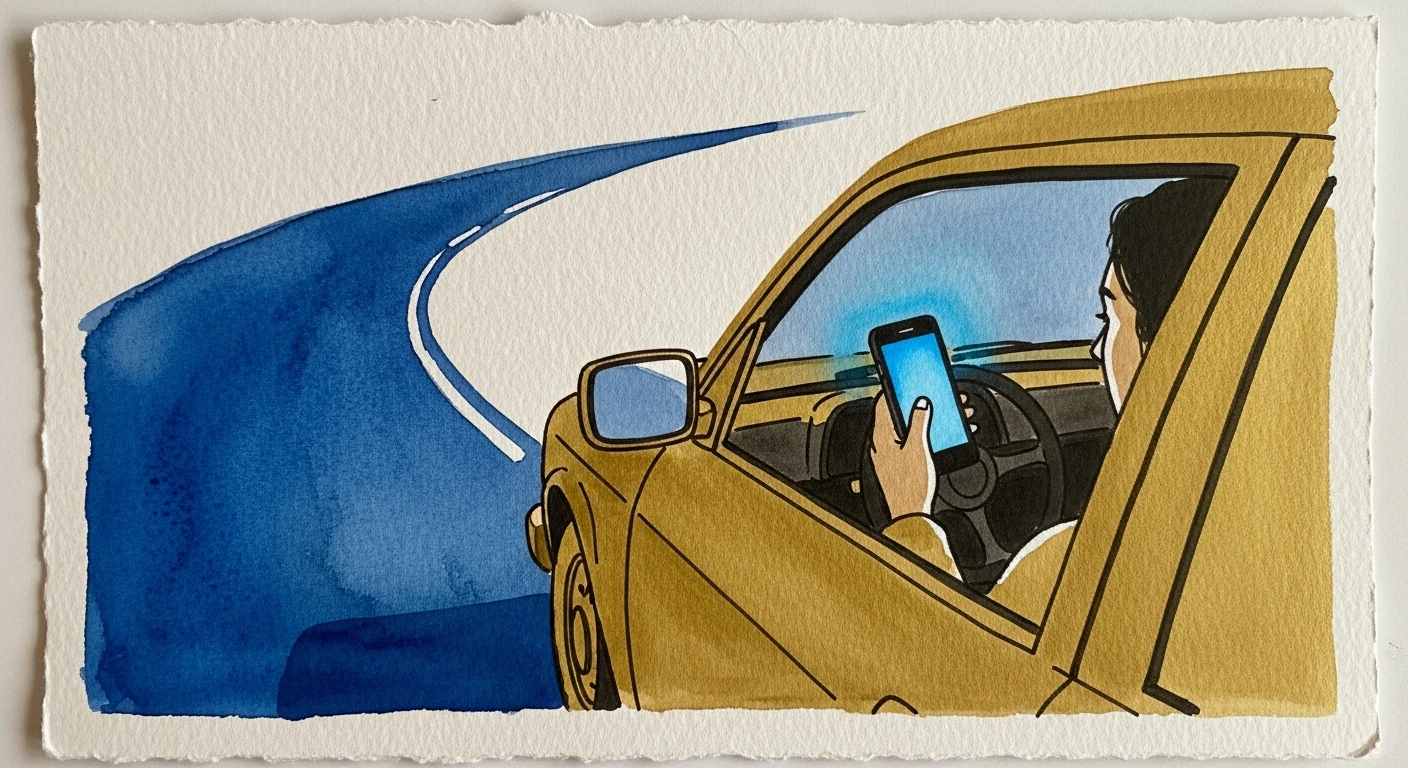
A collision with a distracted driver is uniquely frustrating. You might have seen their head down or the blue glow of a screen. You may even know, with absolute certainty, that a phone caused the crash. The problem is that certainty alone doesn’t win claims. Texting is fast, discreet, and easy to deny. That’s why the strongest cases are built on proof that survives scrutiny: video, data, and credible witnesses working together.
This guide walks through the evidence that actually carries weight—what it is, why it matters, and how it’s preserved. It also explains how modern crash investigations connect the dots between behavior and hard data. Along the way, you’ll see links to trusted sources on distracted driving research, crash data, and vehicle technology so you can understand the science behind the strategy.
Why proving texting matters (more than you might think)
Texting while driving is not just careless—it’s a layered distraction that takes a driver’s eyes, hands, and mind away from the road. The National Highway Traffic Safety Administration (NHTSA) emphasizes that these three kinds of distraction combine to create a high-risk scenario, which is why texting is singled out as especially dangerous in crash prevention research. NHTSA’s distracted driving overview lays out these risks in clear, accessible terms.
From a legal standpoint, proof of texting can turn a murky “accident” into a clear breach of duty. It can also:
- Remove ambiguity around fault. Concrete evidence makes it harder for insurers to claim you were partially responsible.
- Strengthen compensation demands. Clear negligence supports full recovery for medical expenses, lost income, and pain and suffering.
- Support punitive damages in some jurisdictions. Willful, illegal conduct like texting can sometimes justify additional damages meant to deter dangerous behavior.
This is why “they looked down” is rarely enough. You need evidence that connects the moment of distraction to the moment of impact.
The evidence that makes a texting case stick
A strong claim is rarely built on a single piece of proof. It’s built on corroboration—multiple sources that tell the same story from different angles. Here’s what that looks like.
1) Dash cam footage (the silent, unbiased witness)
Dash cams provide time-stamped, objective footage of driving behavior. The best footage doesn’t just show the crash—it shows how the driver behaved before it happened. Look for:
- Lane drift or wandering. Small, repeated corrections can signal a driver whose eyes are off the road.
- Failure to react. A lack of braking or swerving while traffic slows ahead often indicates inattention.
- Visible phone use. In some cases, the driver’s posture or the glow of a screen can be seen directly.
Dash cam footage is often decisive because it captures the seconds that human memory tends to blur. It can also validate your own safe driving, helping to defeat comparative fault arguments.
Preservation tips:
- Save the file immediately (most cameras overwrite footage in a loop).
- Back it up to multiple locations (cloud and local storage).
- Keep the original unedited file to avoid authenticity challenges.
2) Eyewitnesses (independent, human confirmation)
A neutral witness can be more persuasive than the parties involved, especially if they describe specific behavior like typing, holding a phone, or looking down repeatedly. If a witness also saw a near-miss or weaving before the collision, that context can be powerful.
Practical tips:
- Get names and phone numbers at the scene.
- Ask them to describe what they saw and when they saw it.
- Make sure the responding officer gets their information for the report.
3) Cell phone records and metadata (the digital timeline)
Cell phone records are often the most direct evidence of texting. While you can’t access another driver’s phone on your own, legal counsel can pursue the records through formal legal process. What matters most is timing—a text sent or received at the exact minute of a crash is hard to explain away.
Cell carriers retain logs that show:
- Times of texts sent and received.
- Calls made or received.
- Data usage at specific times (useful when messaging apps are involved).
For a deeper understanding of how carrier data is structured and preserved, the Federal Communications Commission’s consumer information on wireless services is a helpful starting point. While it’s not a litigation guide, it explains the kinds of data carriers maintain and the regulatory framework around it.
4) Event Data Recorders (EDRs) and crash data
Most modern vehicles contain an Event Data Recorder (EDR), sometimes called a “black box.” EDRs record crucial snapshots—speed, braking, throttle position, and steering angle—right before and during a crash. NHTSA’s EDR overview explains what these devices record and how they’re used in crash investigations.
EDR data doesn’t say “texting,” but it does show whether a driver tried to avoid a crash. For example:
- No braking and no steering input right before impact can indicate inattention.
- Constant speed into a stopped vehicle suggests the driver never saw the hazard.
When paired with witness accounts or phone metadata, EDR data becomes a powerful corroborator.
5) Police reports and on-scene observations
Police reports aren’t always definitive, but they can be meaningful—especially if:
- The report notes phone use or distracted behavior.
- The officer documents a statement by the driver (“I was looking down,” “I didn’t see you”).
- A citation is issued for distracted driving or an illegal phone-related offense.
The report often anchors the timeline and helps link other evidence together.
How investigators connect the dots
Texting cases are won when separate facts converge. Here’s how that usually looks:
- Dash cam footage shows a driver drifting and failing to brake.
- EDR data confirms there was no braking input in the seconds before impact.
- Cell records show a text message was sent at the minute of the crash.
- A witness reports the driver was looking down with a phone in hand.
Individually, each piece suggests distraction. Together, they establish it.
What to do immediately after a suspected texting crash
The first minutes after a crash can shape the entire case. If you’re able and safe to do so:
- Call 911 and request medical help. Medical records connect injuries to the crash.
- Document the scene. Take photos and videos of vehicle positions, damage, traffic signals, and road conditions.
- Note the absence of skid marks. No braking can be a key clue.
- Collect witness contacts. Independent voices matter.
- Record statements. If the other driver says anything about looking down or not seeing you, write it down verbatim.
Then, as soon as possible, speak with legal counsel about preserving evidence (especially EDR data and phone records), which can disappear quickly if a vehicle is repaired or a phone is replaced.
Common myths that weaken cases (and the reality)
Myth: “If there’s no ticket, you can’t prove texting.”
Reality: Citations help, but claims succeed based on evidence, not just tickets. Dash cam footage, witness accounts, and data logs can establish fault without a citation.
Myth: “Only texts count.”
Reality: Messaging apps, social media, and other in-app communications can be just as distracting and leave data footprints.
Myth: “They can delete everything.”
Reality: Carrier logs, EDR data, and cloud backups often retain evidence even if a phone is wiped—especially when preserved quickly through legal notice.
Why this evidence matters for compensation
Insurance companies look for uncertainty. The more ambiguity they can point to, the more they can reduce the value of your claim. Solid proof of texting:
- Limits arguments about shared blame.
- Supports full medical and wage-loss recovery.
- Reinforces claims for pain, suffering, and long-term impacts.
- May support punitive damages where allowed.
In short, evidence changes the conversation from “what happened?” to “what will it take to resolve this fairly?”
Related resources
Client-First Fee Promise
Client First = Bills First, Fees Second
Your unpaid medical bills do not have to make your lawyer's fee bigger. Johnson Law subtracts qualifying medical bills before calculating our fee, helping clients keep more of their settlement.
Applies to qualifying cases. Results vary.