Rollover Crash in Oregon: What Evidence Shows Why the Vehicle Rolled?
Rollover Crash in Oregon: What Evidence Shows Why the Vehicle Rolled?
A vehicle’s final resting position rarely explains the whole crash. Neither does a damaged tire, an event data recorder download, or a recall result.
To understand an Oregon rollover, the evidence should answer four separate questions:
- Why did the vehicle depart its path or begin to yaw?
- What initiated the roll?
- How did the rollover progress?
- How did each occupant’s injuries occur?
Those questions are related, but they are not interchangeable. A curb strike might help explain how a roll began without explaining why the vehicle reached the curb. Roof damage might help explain an injury without showing what caused the initial departure. A careful investigation builds the sequence from independent sources rather than treating one fact as the answer.
A rollover, by itself, does not prove driver fault, a tire or vehicle defect, negligent maintenance, unsafe loading, a dangerous road, or legal liability. The immediate task is to preserve the available evidence before towing, weather, traffic, repairs, salvage, cleaning, or routine data overwrite changes it.
The Four Questions a Rollover Investigation Should Keep Separate
The National Highway Traffic Safety Administration’s rollover-reconstruction framework treats pre-crash motion, roll initiation, later contacts and quarter-turns, roadway geometry, recorder information, and occupant outcomes as distinct parts of the analysis. That sequence gives occupants and families a practical way to organize the evidence.
1. Why did the vehicle depart its path or begin to yaw?
This first question concerns what happened before the roll began. Depending on the facts, investigators may examine steering or braking input, another vehicle’s movement, roadway geometry or surface condition, weather and visibility, tire support, vehicle-system condition, or movement of a load.
Relevant sources can include tire and wheel marks, video, witness observations, roadway features, vehicle-system findings, police materials, maintenance records, and any available electronic data. These sources must be compared. A steering input recorded shortly before a crash, for example, would not alone explain why that input occurred or establish fault.
2. What initiated the roll?
NHTSA distinguishes between tripped and untripped rollovers. In a tripped rollover, an external mechanism creates substantial lateral force or sudden sideways slowing. Possible mechanisms include contact with a curb, pothole, guardrail, soft soil, a wheel-rim and pavement interface, or wheels digging into earth. In an untripped rollover, tire-road friction initiates the roll without a separate tripping mechanism.
These are engineering descriptions, not fault labels. Finding evidence of a trip point may explain how the vehicle started to roll, but it does not explain why the vehicle reached that location or who, if anyone, was legally responsible.
3. How did the rollover progress?
After initiation, investigators may trace the vehicle’s quarter-turns, side and roof contacts, direction and distance of travel, heading changes, debris or fluid trail, and final resting position. Gouges, scrapes, vehicle deformation, broken glazing, and separated parts may help place particular contacts in the sequence.
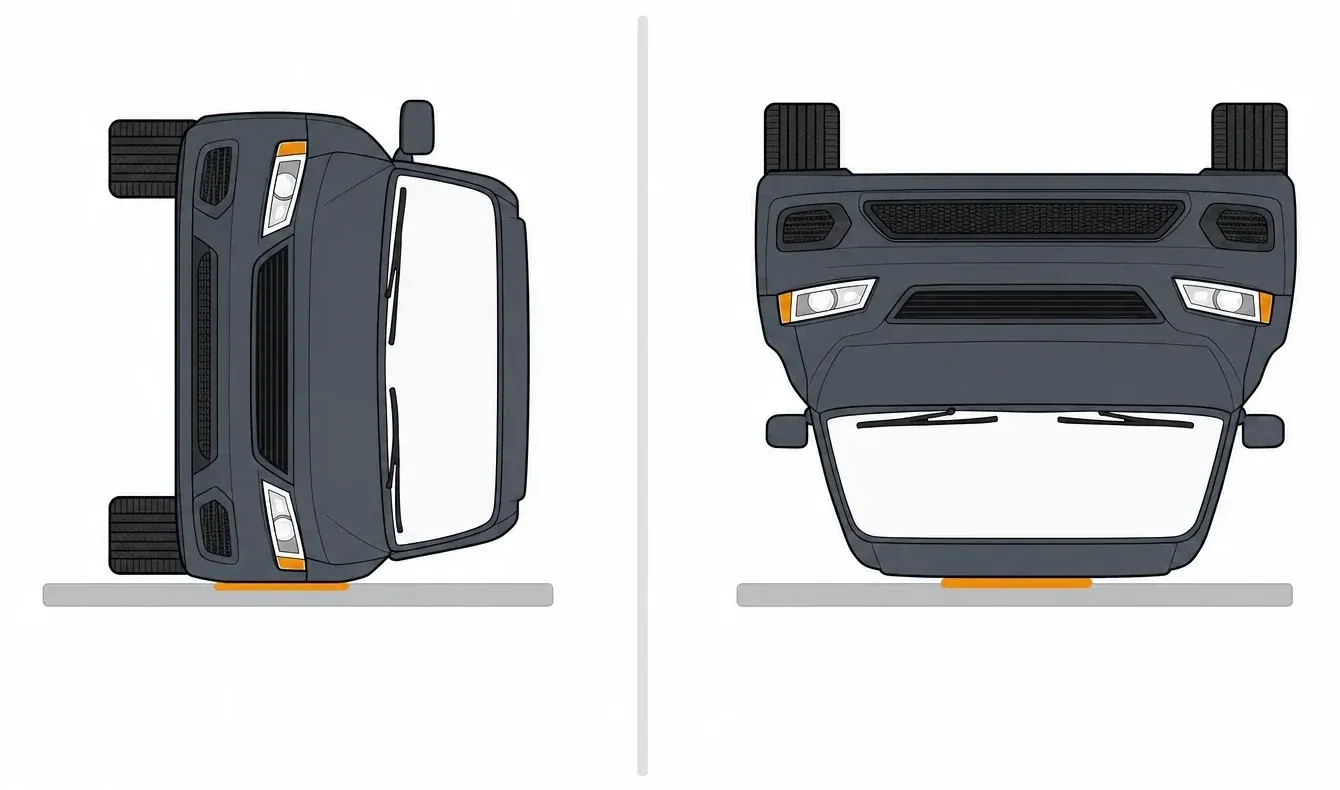
Side contact and roof contact are shown separately. These illustrations do not establish a particular rollover sequence or cause.
The sequence matters because later damage should not automatically be treated as the condition that caused the initial departure or roll. Comparing scene traces with police photographs, video, witness accounts, vehicle damage, and electronic timestamps may help distinguish earlier events from later ones.
4. How did each occupant’s injuries occur?
Crash causation and injury causation are different questions. An injury analysis may consider where each person was seated, restraint evidence, airbag or side-curtain activity, interior contact marks, roof or side intrusion, window openings, door and latch condition, possible partial or complete ejection paths, and medical injury patterns.
These observations may help evaluate occupant movement, crashworthiness, or safety-system performance. They do not independently show why the vehicle rolled, and serious injury, roof deformation, ejection, or non-deployment alone does not prove a defect.
Preserve the Evidence Before Trying to Interpret It
Medical care and physical safety come first. No one should return to an active roadway, enter an unsafe storage area, manipulate damaged systems, or attempt a technical inspection without permission and appropriate help.
Safe first steps for occupants and families
- Prioritize emergency and follow-up medical care. Stay out of traffic and other hazardous areas.
- Locate the vehicle. Obtain the exact tow or storage location and identify who controls it now.
- Request a written hold promptly. Ask relevant custodians not to sell, salvage, repair, clean, power up, alter, or dispose of the vehicle, modules, tires, wheels, fragments, or cargo. The request should also address tire inflation, deflation, or dismounting and any module replacement or download.
- Document the vehicle before it changes. When it can be done safely, lawfully, and with permission, arrange photographs of the exterior, roof, interior, tires and wheels, labels, cargo, restraints, airbags, and electronic-module connections.
- Preserve original files. Keep native photos, videos, dash-camera recordings, and telematics files with their metadata rather than relying only on screenshots or emailed copies.
- Identify records that may be deleted routinely. Seek police photographs and measurements, 911 and dispatch records, body-camera and dash-camera material, witness media, and nearby surveillance.
- Gather vehicle history and loading records. Preserve maintenance, tire, alignment, repair, modification, loading, trailer, fleet, and recall-related documents.
- Arrange qualified inspection and data retrieval. Before experimental power-up, disassembly, tire work, destructive testing, or another examination that may alter evidence, obtain case-specific legal and expert guidance. Where appropriate, identify and notify materially interested parties, allow a reasonable opportunity for nondestructive inspection, use a documented protocol, document the work before, during, and after it occurs, and retain removed material or samples.
The evidence-preservation principles in ASTM E1188-23 and ASTM E860-22 emphasize prompt collection, traceability, documentation before alteration, and procedures for examinations that could change evidence. Notice, inspection opportunities, protocols, and documentation must be evaluated for the particular matter; these are technical preservation practices, not universal requirements of Oregon law. A written hold also does not guarantee that evidence exists, will remain available, or will be admissible.
For a broader preservation discussion, see Protecting Crash Evidence in Oregon: What to Save and When It Matters.
What a basic chain-of-custody record should capture
For each item or file, record:
- what it is and its condition;
- who collected it, and when and where;
- any packaging, seal, or unique item number;
- every transfer and custodian;
- storage conditions;
- every inspection, scan, test, or download; and
- any alteration, removed sample, or missing fragment.
The log may cover the vehicle, electronic modules, each tire and wheel, fragments, cargo, photographs, scans, video exports, and native electronic files. Undocumented screenshots or copies can lose context that an original file and its metadata preserve.
Scene Evidence: Reconstructing the Path, Trip Point, and Final Rest
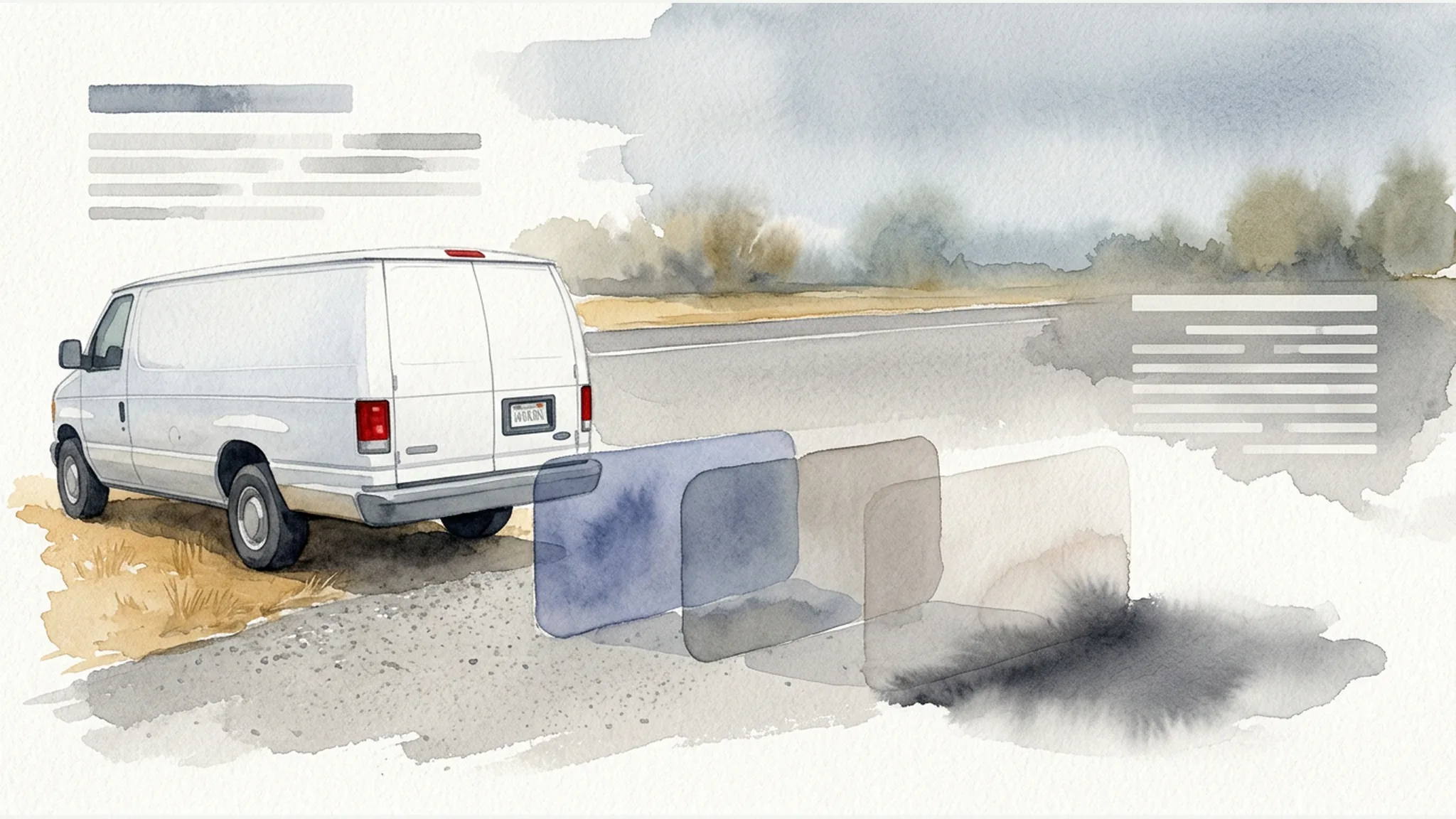
Scene evidence can connect the pre-roll movement, possible trip point, later contacts, and final rest. It can also disappear quickly.
Marks and disturbed surfaces
The Oregon Department of Transportation’s Safety Investigation Manual identifies roadway and scene details useful in safety investigations. In a rollover analysis, potentially relevant traces include:
- tire or wheel marks;
- gouges and scrapes;
- fluid or debris trails;
- contact with curbs, guardrails, or other roadside objects;
- shoulder disturbance; and
- furrows or wheel dig-in within soil.
These traces may help locate departure, yaw, first contact, a possible trip mechanism, and later body or roof contacts. They still require interpretation in context. A disturbed shoulder, for example, does not by itself show why the vehicle left the lane.
Roadway and environmental conditions
Document roadway curvature, grade, cross-slope or superelevation, lane and shoulder configuration, surface condition, sight distance, traffic-control condition, weather, and light. If road condition appears relevant, ownership, control, maintenance history, prior notice, and the governing legal rules require separate investigation. A road feature alone is not a conclusion about public-body liability.
Sequence and orientation evidence
The possible roll-initiation location, quarter-turns, side and roof contacts, travel distance, headings, and final rest should be compared with police photographs and sketches, witness accounts, video, vehicle deformation, and electronic timing.
Oregon police crash-report instructions call for location, road and environmental conditions, harmful-event sequence, vehicle movement, damage, occupants, narrative, and a sketch. A report or coded record is an important starting source, but it may simplify or omit sequence details and is not a substitute for physical reconstruction.
Tire and Wheel Evidence: Did the Condition Precede the Crash or Result From It?
A cut tire, separated tread, low post-crash pressure, or deformed rim can raise important questions. It does not answer the timing question by itself. Damage may have existed before the crash, occurred during impact, resulted from recovery or storage, or reflect more than one stage.
Preserve every tire and wheel in its post-crash state
Before inflation, deflation, cleaning, dismounting, repair, or disposal, a qualified inspection should document each tire’s mounted position and the condition of the tire and wheel. Relevant details can include:
- pressure, if it can be measured safely and meaningfully;
- tread depth and wear pattern;
- cuts, penetrations, and sidewall condition;
- bead, tread, and belt condition;
- heat or abrasion evidence;
- valves and tire-pressure-monitoring components;
- rim deformation; and
- recovered fragments.
Photograph all sidewalls. Record the Tire Identification Number and date code, recognizing that older tires may lawfully use an older TIN format and that the complete TIN may appear on only one sidewall. The NTSB’s tire-safety study provides useful investigation context, while 49 CFR 574.5 governs current TIN content and format.
Compare tire findings with the rest of the evidence
Compare the installed tire size with the vehicle’s Tire and Loading Information placard and owner’s manual. The manufacturer’s recommended cold pressure comes from the placard or manual—not the maximum pressure molded into the tire sidewall. NHTSA’s TireWise guidance explains this distinction.
Post-crash pressure does not necessarily establish pre-crash inflation. Impact damage, puncture, bead unseating, temperature, and recovery can change it. Tire findings should instead be correlated with scene marks, recovered fragments, rim contacts, maintenance history, warnings, video, and available electronic timing.
Vehicle Condition, Maintenance, and Modifications
The exact vehicle configuration matters. Preserve the VIN, build date, certification labels, gross vehicle and axle weight ratings, trim, restraint-control-module identification, tire placard, and other equipment labels. Manufacture date and configuration may affect installed systems, EDR capability, federal-standard applicability, and recall research.
A vehicle inspection may consider steering, suspension, hubs and bearings, brakes, wheels, electronic stability control, anti-lock braking, and related systems. It should also document aftermarket lift or lowering equipment, different wheels or tires, roof loads, and other modifications.
This is an investigation checklist, not a list of assumed causes. Physical findings should be matched to maintenance, tire-service, repair, alignment, warning-light, parts, installation, inspection, fleet, towing, and recovery records. The central timing question is whether a condition existed before impact or arose during impact, recovery, storage, or later work.
Loading Evidence: Weight Is Only Part of the Question
Loading analysis is not limited to whether the vehicle was “overloaded.” Investigators may need to document occupant seating, cargo mass and placement, cargo movement and tie-downs, roof loads, trailer connection and tongue-load information, receipts or scale records, and photographs taken before items were moved.
The Tire and Loading Information placard supplies a baseline for recommended tires and cold inflation pressure and states combined occupant-and-cargo capacity. Gross vehicle and axle weight ratings, tire load ratings, and any altered-vehicle labels may also be relevant. Under FMVSS No. 110, covered vehicles carry specified tire and loading information.
Labels do not establish the actual crash-time load, its distribution, or tire pressure. That requires evidence about the people, cargo, roof load, trailer, and vehicle configuration at the time.
EDR and Other Electronic Data: Useful, but Not the Whole Reconstruction
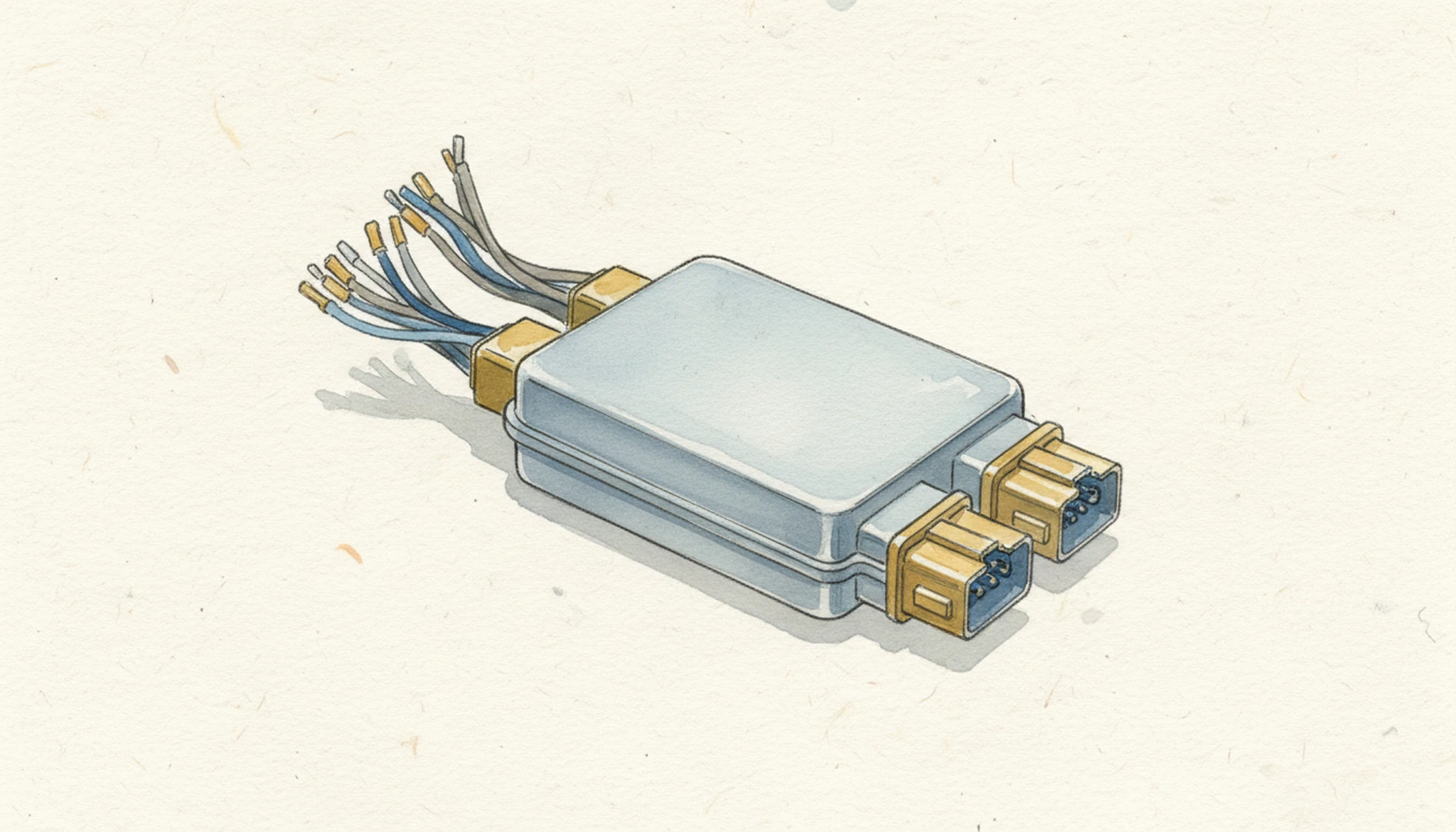
An event data recorder is sometimes called a vehicle “black box,” but the comparison can be misleading. Not every vehicle has an EDR, and not every crash produces a usable record.
First determine whether data may exist
EDR capability and retrieval support depend on the exact year, make, model, restraint-control-module part number, owner’s manual, and available retrieval tools. Federal 49 CFR Part 563 standardizes certain information when a covered vehicle is equipped with an EDR; it does not require every vehicle to have one.
What an EDR may record
For a typical vehicle covered by the current Part 563 requirements and equipped with an EDR, the minimum pre-crash window for indicated speed, accelerator or throttle, and service-brake status is generally five seconds at two samples per second. Roll angle, lateral change in velocity, steering, anti-lock braking, stability control, side-airbag information, and other fields may be conditional or absent.
A 2026 federal rule phases in a longer 20-second window at 10 samples per second for applicable EDR-equipped vehicles: 25% for September 1, 2028 through August 31, 2029, followed by 50%, 75%, and generally 100% beginning September 1, 2031. Later compliance dates apply to specified small-volume or limited-line manufacturers and altered or multistage vehicles, and voluntary early compliance is permitted. The rule remains “if equipped,” and the expanded window should not be assumed for a vehicle involved in a crash as of August 27, 2026.
Delta-V means a change in velocity during the recorded crash interval. It is not the vehicle’s pre-crash travel speed.
Presence, triggers, event locking or overwrite behavior, wheel-speed accuracy, timing, incomplete writes, and available fields vary by vehicle and event. That is why an EDR report should not be read as a complete reconstruction.
Preserve and interpret a download correctly
EDR retrieval requires access to the vehicle or module and specialized equipment. A qualified downloader should preserve the native output, metadata, vehicle and module photographs, tool and software versions, and data-limitations pages. The results should be correlated with scene marks, damage, video, witnesses, and records.
Avoid powering up or experimenting with a damaged vehicle in an effort to find data. Such actions can create safety risks or affect evidence.
Oregon access and ownership require lawful process
Under ORS 105.925–105.945, Oregon generally treats EDR data as owned by the vehicle owner, subject to statutory exceptions. When consent is the legal basis for access, all owners generally must consent to retrieval from a co-owned vehicle. An insurer generally may not condition payment of a claim on consent to retrieve or use the data.
Written consent is not the only possible lawful route. Court-order and specified statutory exceptions also exist. Ownership, access, and retrieval should be evaluated for the particular vehicle and circumstances.
Recall and Manufacturer Records: Leads, Not Answers by Themselves
Search the NHTSA recall portal by VIN for unrepaired recalls. Also search by year, make, model, tire, or equipment for broader recalls, investigations, complaints, and manufacturer communications. Save the search date, identifiers used, and result pages.
Recall research has important limits. VIN results may omit completed recalls, some newly announced or older recalls, some small-manufacturer recalls, non-safety campaigns, and international recalls.
A matching recall is an investigative lead. It does not prove that the recalled condition existed in the crash vehicle or contributed to the rollover. Likewise, “zero unrepaired recalls” does not establish that the vehicle, tire, or component was defect-free.
Crashworthiness Evidence: Explaining Injury After the Roll Began
Crashworthiness analysis focuses on what happened to occupants after roll initiation. Preserve the occupant compartment and safety systems, including:
- roof pillars, rails, and deformation measurements;
- glazing and window openings;
- doors and latches;
- seats and tracks;
- belt webbing, anchors, latches, and pretensioners;
- airbags and side curtains;
- the restraint-control module;
- interior contact marks; and
- evidence about occupant positions and possible ejection paths.
These observations should be compared with the rollover sequence and medical injury patterns. For deeper component-specific evidence, see the guides to seat-belt failure evidence and airbag non-deployment.
What federal standards can—and cannot—show
FMVSS No. 216a is a static roof-strength compliance standard. FMVSS No. 226 addresses ejection-mitigation performance for covered vehicles. Each has applicability rules and exclusions.
These are prescribed new-vehicle performance tests. Compliance with such a test does not decide how a particular used, modified, loaded, and damaged vehicle performed dynamically. Nor does it resolve defect, rollover causation, or injury causation in an individual crash.
How the Evidence Fits Together
No one evidence source should be asked to answer every question.
| Investigative question | Evidence that may help | What it does not prove alone |
|---|---|---|
| Why did the vehicle depart or yaw? | Scene marks, roadway geometry, video, witnesses, EDR, and steering, braking, or tire evidence | Fault or a component defect |
| What initiated the roll? | Curb, soil, or guardrail contacts; wheel or rim marks; trip-point evidence; and tire-road evidence | Why the vehicle reached that point or who was responsible |
| How did the roll progress? | Quarter-turn and contact marks, deformation, debris trails, final rest, and EDR or video timing | The original cause of departure |
| How did injuries occur? | Occupant positions, restraints, airbags, glazing, doors, roof, interior contacts, and medical patterns | Defect, liability, or why the roll began |
A stronger reconstruction aligns independent sources and accounts for conflicts and missing information. If a scene mark, EDR timestamp, damaged part, and video do not fit the same sequence, the inconsistency is a question to investigate—not a reason to select the most convenient item.
What the Rollover Alone Does Not Establish
Oregon product liability does not arise from rollover occurrence alone. For a claim under ORS 30.920, the statute addresses a seller or lessor engaged in the business, a product in a defective condition unreasonably dangerous to the user or consumer, causation of physical harm to a person or property, and a product expected to and actually reaching the user or consumer without substantial change in the condition in which it was sold or leased. For a design-defect claim, McCathern v. Toyota Motor Corp. identifies Oregon’s controlling test as consumer expectations: when the product left the defendant’s hands, it must have been defective and dangerous beyond what an ordinary consumer would expect. Whether evidence supports those elements is fact-specific; McCathern does not make rollover occurrence proof of a defect. A rollover also does not identify another driver’s responsibility, a road condition, faulty maintenance, improper loading, or another legal cause without supporting proof.
Oregon’s comparative-fault and seat-belt rules address different issues. Under ORS 31.600, a claimant generally may recover when the claimant’s fault is not greater than the combined fault of the persons compared under the statute, with damages reduced by the claimant’s percentage of fault. In a personal-injury motor-vehicle action, seat-belt nonuse evidence is generally limited to mitigation capped at 5%. That rule does not apply to a product-liability action or when nonuse substantially contributed to causing the accident itself. Seat-belt condition and marks can still be important technical evidence about occupant movement and injury causation.
Delay can still matter. Evidence custody and video retention may be time-sensitive, and no single deadline applies to every rollover. A noncontract personal-injury claim not specially enumerated is generally subject to a two-year period under ORS 12.110(1), while wrongful-death timing follows the discovery-and-repose structure in ORS 30.020(1). Product injury or property-damage claims generally have a two-year discovery period subject to ORS 30.905(2); product-death claims have distinct three-year discovery and repose rules under ORS 30.905(3)–(4).
If a public road, public vehicle, or public body may be involved, the Oregon Tort Claims Act generally requires notice within 180 days for claims other than wrongful death and within one year for wrongful death, subject to the statute’s limited incapacity exclusion and other exceptions. Covered actions generally must begin within two years. Formal notice has required content, methods, and recipients. A police report or agency awareness does not automatically establish “actual notice”; ORS 30.275(6) requires a qualifying communication from which a reasonable person would conclude that a particular person intends to assert a claim. Exact deadlines require case-specific review of the claim, defendant, injury or death, discovery, product history, tolling, and other facts.
Timely individual guidance may be useful when the vehicle is headed for salvage, EDR access is disputed, a public body may be involved, injuries are severe, or a tire or component issue is suspected. Broader information is available on Johnson Law’s Oregon car accident guidance page.
A Practical Rollover Evidence Checklist
- Address medical and personal safety first.
- Locate the vehicle and identify each person or business that controls it.
- Send targeted written preservation instructions before sale, salvage, repair, cleaning, power-up, tire work, module changes, or disposal.
- Preserve scene photographs, roadway traces, police materials, 911 and dispatch records, body-camera and dash-camera material, witness information, and nearby video.
- Preserve the vehicle, tires and wheels, fragments, cargo, labels, roof and interior, restraints, airbags, and electronic modules in documented condition.
- Gather maintenance, tire, alignment, repair, modification, loading, trailer, fleet, telematics, recall, and manufacturer records.
- Keep originals, native files, metadata, and a chain-of-custody log.
- Arrange qualified, preferably nondestructive inspection and lawful EDR retrieval before alteration. Before potentially destructive or evidence-altering work, obtain case-specific legal and expert guidance and, where appropriate, provide notice and a reasonable nondestructive inspection opportunity, follow a documented protocol, and preserve records and removed samples.
Frequently Asked Questions
Does a rollover mean the vehicle was defective?
No. A rollover alone does not establish a defect. The investigation must reconstruct the event sequence, identify the condition in question, and determine whether the evidence supports a causal connection. Serious injury or extensive damage also does not prove a defect by itself.
What is the difference between a tripped and untripped rollover?
A tripped rollover involves an external mechanism that creates substantial lateral force or sudden sideways slowing, such as a curb, guardrail, or wheels digging into soft soil. An untripped rollover is initiated through tire-road friction without a separate trip mechanism. Neither term assigns fault.
Can a damaged tire show that a blowout caused the rollover?
Not by itself. The damage may have preceded the crash or resulted from impact, recovery, storage, or later handling. Preserve the tire and wheel without alteration and compare their condition with scene marks, fragments, records, video, and vehicle evidence.
Does every vehicle have an EDR or “black box”?
No. Whether an EDR exists, what it records, whether the crash triggered a record, and whether retrieval tools support it depend on the exact vehicle and event. Even a successful download is only one part of the reconstruction.
Who owns EDR data in Oregon?
Oregon generally treats EDR data as owned by the vehicle owner, subject to statutory exceptions. Consent rules can be more complicated when a vehicle has multiple owners, and court-order or other statutory access routes may apply. Access should be evaluated case by case.
What should happen to the vehicle after a rollover?
Identify its custodian, request a written no-alteration hold, document its condition, and arrange a qualified inspection before repair, salvage, cleaning, power-up, tire work, module changes, or disposal. Do not manipulate damaged systems yourself.
Primary Source Notes
- National Highway Traffic Safety Administration, Review of NMVCCS Rollover Variables in Support of Rollover Reconstruction, DOT HS 811 235 — reconstruction sequence, trip point, quarter-turns, contacts, roadway geometry, and recorder inputs.
- National Highway Traffic Safety Administration, rollover-resistance rulemaking background — tripped and untripped rollover definitions.
- Oregon Department of Transportation, Safety Investigation Manual — scene, roadway, and environmental evidence categories.
- National Highway Traffic Safety Administration, Crash Investigation Sampling System — scene, vehicle, occupant-contact, interview, and medical-record investigation scope.
- National Transportation Safety Board, Selected Issues in Passenger Vehicle Tire Safety, and NHTSA, TireWise — tire and wheel examination and inflation guidance.
- Electronic Code of Federal Regulations, 49 CFR Part 563 — EDR standardization, fields, and retrieval-tool requirements for covered EDR-equipped vehicles.
- National Highway Traffic Safety Administration, 2026 EDR final rule, 91 FR 28432, as corrected at 91 FR 31368 — phased 20-second, 10-samples-per-second pre-crash requirements beginning September 1, 2028; the rule remains limited to applicable EDR-equipped vehicles.
- Oregon Legislative Assembly, ORS 105.925–105.945 — Oregon EDR ownership, consent, insurer restrictions, court-order access, and statutory exceptions.
- Oregon Legislative Assembly, ORS chapter 12, ORS chapter 30, and ORS chapter 31 — personal-injury, wrongful-death, product-liability, Oregon Tort Claims Act, comparative-fault, and seat-belt provisions discussed above.
- Oregon Supreme Court, McCathern v. Toyota Motor Corp., 332 Or 59, 23 P3d 320 (2001) — Oregon’s consumer-expectations design-defect test on the evidence presented in that case.
- Electronic Code of Federal Regulations, FMVSS Nos. 110, 216a, and 226 — tire/loading labels, static roof-strength testing, and ejection-mitigation performance.
- National Highway Traffic Safety Administration, Recalls — VIN and broader vehicle or equipment recall research.
- ASTM International, ASTM E1188-23 and ASTM E860-22 public abstracts — technical evidence-preservation and examination practices; these standards are not Oregon law.
This article provides educational information only and is not legal advice. It cannot determine defect, fault, causation, liability, evidence admissibility, or the deadline that applies to a particular crash.
Client-First Fee Promise
Client First = Bills First, Fees Second
Your unpaid medical bills do not have to make your lawyer's fee bigger. Johnson Law subtracts qualifying medical bills before calculating our fee, helping clients keep more of their settlement.
Applies to qualifying cases. Results vary.