Crush Injury From Heavy Machinery: Evidence That Must Be Preserved Immediately
Crush Injury From Heavy Machinery: Evidence That Must Be Preserved Immediately
A serious crush injury involving heavy machinery can leave a worker and family focused on emergency medical care, workers’ compensation paperwork, and basic survival. Evidence may not be the first thing anyone thinks about. But in machinery cases, the most important proof can change quickly: equipment gets moved, guards are reinstalled, video is overwritten, damaged parts are replaced, and witnesses scatter.
The first rule is safety. Do not move machinery, remove parts, enter restricted areas, or interfere with Oregon OSHA, law enforcement, or workplace safety personnel. Medical care and scene safety come first. Evidence preservation should be lawful, safe, and coordinated.
With that boundary in mind, the goal after a heavy-machinery crush injury is to identify what needs to be preserved before it disappears. That may include the machine itself, the surrounding scene, inspection and maintenance records, training documents, lockout/tagout materials, witness information, video, safety committee records, and documents showing who controlled the equipment.
This article is educational information only, not legal advice. Evidence duties, access rights, claim deadlines, and third-party liability issues depend on the facts of the incident and current Oregon law.
Heavy-machinery cases often overlap with workers’ comp versus third-party claims, defective equipment and product-liability evidence, product defect versus misuse defenses, and multi-company jobsite fault questions.
Start With Safety: Preserve Evidence Without Disturbing the Scene
After a machinery crush injury, no one should compromise medical care or create another hazard in an effort to collect proof. Injured workers and family members should not attempt to restart, move, dismantle, or photograph equipment from an unsafe or restricted location.
Oregon OSHA rules show why preservation can matter. For a fatality or catastrophe, Oregon OSHA prohibits the employer, the employer’s representatives, and others from disturbing the scene before Oregon OSHA authorizes it, except to rescue injured people or mitigate an imminent danger. That specific rule does not apply to every nonfatal single-worker crush injury, but it illustrates a broader point: once a scene changes, important facts may be harder to reconstruct.
Oregon OSHA compliance officers may also document certain reported accident scenes before an opening conference when the scene likely cannot be preserved and reasonable employer contact has been attempted. During inspections, Oregon OSHA may inspect records, conditions, structures, machines, materials, and methods, and may photograph or record unsafe acts, practices, procedures, or physical hazards. Those are agency inspection powers, not an injured worker’s automatic right to enter a workplace. Still, they highlight the types of evidence that can matter.
The First Evidence Categories to Identify After a Machinery Crush Injury
The injured worker may not personally have access to all evidence. A preservation request may need to go to an employer, insurer, equipment owner, maintenance company, contractor, rental company, manufacturer, or other entity. The key is to identify the categories quickly and avoid relying on memory after conditions change.
Scene and physical-condition evidence
Scene evidence can help explain how the crush injury happened. Depending on the facts, important details may include:
- the position of the machine or equipment after the incident;
- the pinch point, crush point, ingoing nip point, or other hazardous area involved;
- the location of the injured worker, operator, and nearby witnesses;
- floor or jobsite conditions;
- load position, visibility, barricades, lighting, and housekeeping;
- warning labels and posted instructions;
- the location and condition of controls, emergency stops, and guards; and
- any photos or video taken before the area was cleaned, repaired, or rearranged.
The point is not that an injured worker should personally gather all of this. The point is that once the scene changes, the original physical conditions may become disputed.
Machine condition evidence
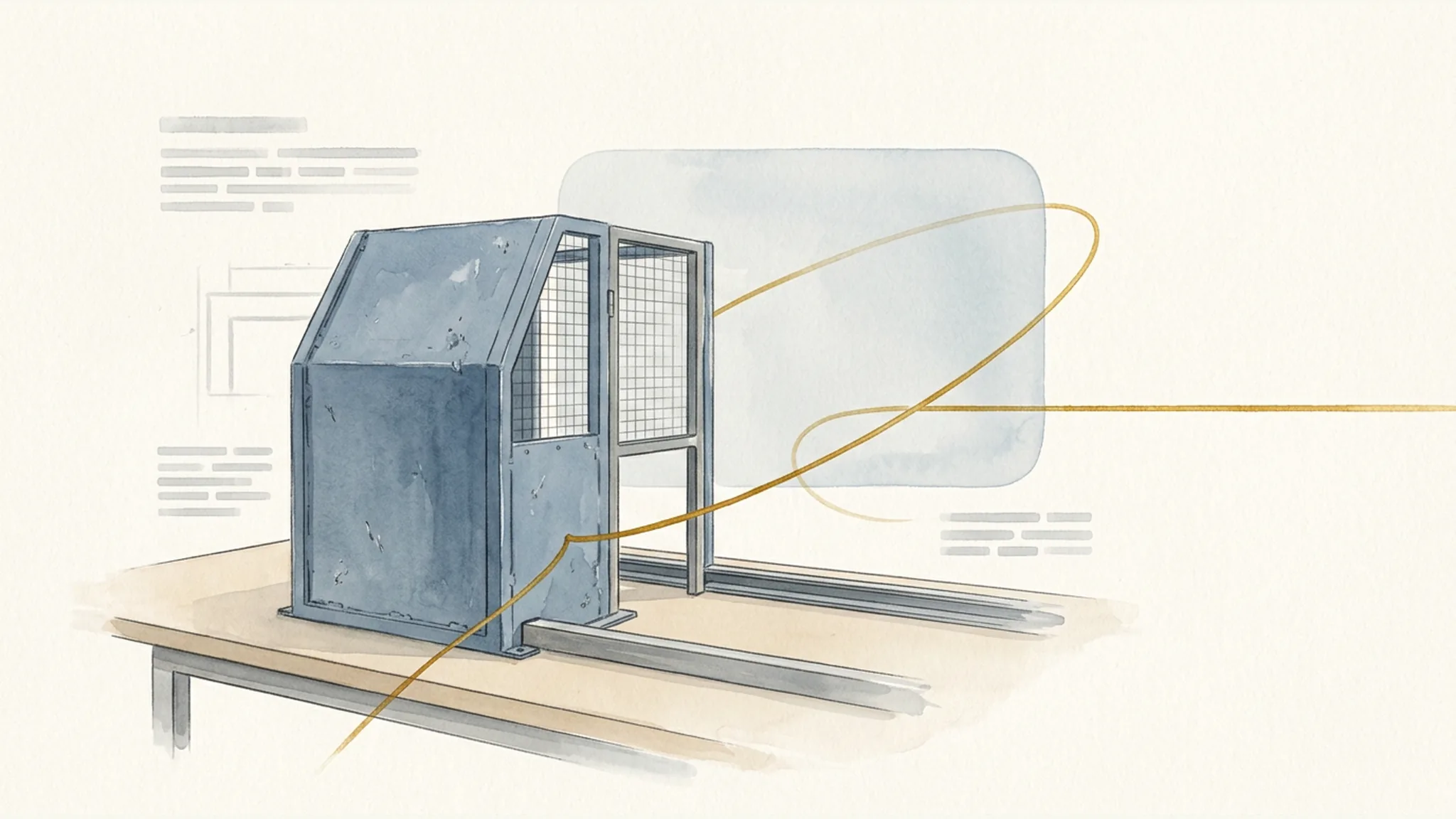
Machinery cases often turn on the condition of the equipment at the time of injury. Evidence may include guards, shields, interlocks, emergency stops, control settings, attachments, replacement parts, warning labels, maintenance status, and whether anything was moved, modified, repaired, or removed after the incident.
Federal OSHA’s general machine-guarding rule requires one or more guarding methods to protect operators and other employees in the machine area from hazards such as the point of operation, ingoing nip points, rotating parts, flying chips, and sparks. An OSHA rule does not automatically decide civil liability, but the presence, absence, or condition of guards and safety devices can be important evidence in a crush injury investigation.
Digital, video, and other time-sensitive evidence
Video and digital evidence may disappear before anyone asks for it. Depending on the workplace and equipment, time-sensitive evidence may include surveillance footage, jobsite cameras, dash or body camera footage if applicable, coworker photos or videos, equipment-related data known to exist in the case, and timestamps showing the sequence of events.
This article does not assume every machine has telematics, event data, or camera coverage. But if such evidence exists, it may need prompt preservation before normal deletion, overwriting, repair, or replacement occurs.
Records That May Show What Happened Before the Crush Injury
The machine and scene are only part of the evidence. Records may show whether the hazard was known, whether training was current, whether inspections were done, whether prior near misses occurred, and whether corrective action was recommended before the injury.
Incident and Oregon OSHA recordkeeping documents
Oregon OSHA’s public recordkeeping materials explain that the OSHA 300 Log is used to classify work-related injuries and illnesses and record the extent and severity of each case. Depending on the incident and employer, relevant records may include OSHA 300 Logs, OSHA 300A summaries, Form 801 Report of Job Injury or Illness, and OSHA 301-type incident records.
Oregon OSHA also states that employers must report work-related fatalities and catastrophes within eight hours. Work-related inpatient hospitalization, amputation or avulsion, or loss of an eye must be reported within 24 hours. Not every crush injury triggers the same reporting duty; reportability depends on the outcome and the applicable definitions.
These reporting and recordkeeping materials may help identify what was reported, when the employer documented the event, and how the injury was initially described.
Safety committee and internal investigation materials
Safety committee records can be especially important if there were earlier concerns about the same machine, production line, forklift route, crane operation, conveyor, press, or jobsite hazard.
Oregon OSHA materials state that many general industry and construction employers covered by the safety committee and safety meeting rules follow OAR 437-001-0765. That rule requires safety committee members to be trained in accident and incident investigation principles and hazard identification. It also requires written meeting records to be kept for three years, including attendees, date, safety and health issues discussed, recommendations for corrective action, the person responsible for follow-up, and committee reports, evaluations, and recommendations.
The rule also requires safety committees to work with management on accident-investigation procedures that identify and correct hazards, and to evaluate accident and incident investigations and make recommendations to prevent similar events.
Those records can matter because they may show prior complaints, near misses, hazard reports, recommended repairs, delayed corrective action, or post-incident changes. Rules and exceptions can vary for agriculture, forest activities, and other special industries, so the specific workplace matters.
Training, qualification, and refresher records
Training records can help determine whether operators and affected workers were prepared for the specific machine and work conditions involved.
For forklift and powered industrial truck cases, federal OSHA rules require employers to certify that each operator has been trained and evaluated. The certification must include the operator’s name, training date, evaluation date, and the identity of the person performing the training or evaluation. The powered industrial truck rule also requires refresher training and evaluation after certain triggers, including an accident or near-miss incident, observed unsafe operation, an evaluation showing unsafe operation, assignment to a different type of truck, or workplace condition changes that could affect safe operation.
For injuries during servicing, maintenance, repair, or jam-clearing, lockout/tagout records may be central. Federal OSHA’s lockout/tagout standard requires training so employees understand the purpose and function of the energy-control program and have the knowledge and skills needed for safe application, use, and removal of energy controls.
These equipment-specific rules should be used carefully. Forklift certification rules apply to powered industrial truck scenarios. Lockout/tagout evidence is most relevant when the injury involves servicing, maintenance, energy control, repair, or similar work.
Maintenance, inspection, lockout/tagout, and machine-specific records
Maintenance and inspection documents can show what the employer or equipment owner knew before the injury. Depending on the machine, relevant records may include:
- maintenance logs and repair orders;
- deficiency reports;
- inspection checklists;
- manufacturer’s manuals and warnings;
- replacement part records;
- machine-specific lockout/tagout energy-control procedures;
- annual periodic inspection certifications for energy-control procedures; and
- records of post-incident repairs, modifications, or corrective action.
Federal OSHA’s lockout/tagout rule requires periodic inspections of energy-control procedures at least annually, with certification identifying the machine or equipment, inspection date, employees included, and inspector.
For construction crane cases, federal OSHA rules require documented monthly inspections, maintained for at least three months by the employer conducting the inspection. Annual or comprehensive inspection documentation must include items checked, results, and inspector identity, and must be retained for at least 12 months. Those crane-specific retention rules should not be applied to unrelated machinery, but they show why machine-specific records matter.
Why Third-Party Evidence Can Matter in an Oregon Workplace Machinery Injury
Many Oregon workplace injuries involve workers’ compensation. That does not mean evidence preservation stops with a workers’ compensation claim file.
Workers’ compensation and employer immunity are not the whole story
Oregon workers’ compensation law generally makes workers’ compensation benefits the exclusive remedy against a covered employer for compensable workplace injuries, subject to statutory exceptions. That means an injured worker usually should not assume they can sue the employer directly for a workplace machinery injury.
But machinery cases may involve other entities. Evidence may need to show whether a non-employer party contributed to the injury and whether that party controlled the machine, maintained it, leased it, designed it, manufactured it, operated it, inspected it, or controlled the area where the injury happened.
Non-employer parties that may control key evidence
Oregon law allows a worker with a compensable injury caused by the negligence or wrong of a third person, other than persons exempt under Oregon’s workers’ compensation exclusive-remedy statute, to elect whether to recover damages from that third person.
Potential non-employer evidence holders may include:
- an equipment manufacturer;
- a maintenance contractor;
- a subcontractor;
- a rental company;
- a property owner;
- another company’s operator;
- a component-part seller or lessor; or
- a contractor with control over part of the worksite.
This does not mean a third-party claim exists in every machinery injury. It means evidence should be preserved early enough to evaluate whether a non-employer’s conduct, product, repair, inspection, or control contributed to the harm.
Oregon law also requires coordination when a worker or beneficiaries elect to recover damages from an employer or third person. Third-party proceeds may be subject to notice, lien, and statutory distribution rules involving the paying agency. Evidence preservation should be handled with those workers’ compensation coordination issues in mind.
Product-defect evidence in machinery cases
Product evidence may matter when a crush injury involves a defective machine, defective guard, failed interlock, inadequate warning, defective replacement part, or design or manufacturing issue.
Oregon product liability law provides that a seller or lessor engaged in selling or leasing a product may be subject to liability for physical harm or property damage if the product was sold or leased in a defective condition unreasonably dangerous to the user or consumer and reached the user or consumer without substantial change in condition.
For preservation purposes, the key point is simple: if product condition may be disputed, the machine and relevant components should not be casually repaired, discarded, replaced, or altered without considering the effect on potential proof.
What a Preservation Request May Need to Cover
A preservation request is not a magic switch that guarantees access to every record or freezes every decision. Evidence access may be limited before litigation, and Oregon OSHA files, witness statements, surveillance, and internal investigation materials may not be immediately available to the injured worker.
Still, a prompt, targeted preservation request can help identify what should not be destroyed, altered, overwritten, or lost. Depending on the case, counsel may ask relevant parties to preserve the following categories.
Equipment and scene items
Equipment and scene preservation may include the machine in substantially the same condition, guards, interlocks, control settings, attachments, damaged parts, warning labels, site measurements, photographs, video, and records of post-incident repairs or modifications.
If the machine must be repaired or moved for safety or business reasons, documentation before the change may become especially important. No one should ignore rescue needs, imminent danger, or lawful instructions from Oregon OSHA or law enforcement.
Records and data
Records and data may include training files, inspection records, maintenance records, lockout/tagout materials, forklift or powered industrial truck certifications when applicable, crane inspections when applicable, OSHA logs, incident reports, Form 801 or OSHA 301-type records, safety committee minutes, corrective action documents, video, and witness lists or contact information.
Oregon OSHA rules authorize compliance officers to privately interview a reasonable number of employees about workplace safety and health and to take notes and audio recordings as appropriate. That does not mean those statements are automatically available to a claimant, but it reinforces why witness identity and early witness information can matter.
Communications and post-incident changes
Preservation may also need to include internal incident reports, hazard complaints, near-miss records, repair orders, and communications about the machine or hazard, if those materials exist and are available through proper channels. Post-incident corrective action records may also be relevant, especially where a safety committee, maintenance department, contractor, or equipment owner identifies a hazard after the injury.
The request should be specific enough to be useful. A broad demand to “save everything” may be less practical than a targeted request identifying the machine, date, location, involved personnel, video sources, records, and equipment components at issue.
Time Limits and Reporting Issues Make Delay Risky
Delay can matter for two different reasons: evidence can disappear, and legal deadlines can run.
Oregon OSHA reporting requirements are employer obligations. Oregon OSHA’s public materials state that employers must report work-related fatalities and catastrophes within eight hours, and work-related inpatient hospitalization, amputation or avulsion, or loss of an eye within 24 hours. Injured workers and families should not treat those reporting duties as a substitute for medical care, workers’ compensation claim steps, or legal advice.
Oregon generally requires an action for injury to the person or rights of another not arising on contract and not otherwise specially enumerated to be commenced within two years. Product liability actions have distinct time-limit rules under Oregon law, including rules tied to injury discovery and the product’s purchase or lease for use. Other deadlines may differ for public-body defendants, minors, wrongful death claims, tolling issues, and other facts.
The safest practical lesson is not to wait. Machinery can be moved, repaired, cleaned, or returned to service long before a legal deadline expires.
When to Talk With an Oregon Workplace Injury Lawyer
An Oregon workplace machinery injury can involve several overlapping issues: workers’ compensation benefits, possible third-party claims, product-defect questions, OSHA investigations, safety committee records, liens or reimbursement rights, and evidence held by multiple companies.
Talking with a lawyer early may help identify who should receive preservation requests, what records matter for the specific machine, how workers’ compensation and third-party issues interact, and what deadlines or notice rules may apply. It can also help avoid unsafe or improper evidence collection.
The central question is not simply “who pays the claim?” It is also “what evidence needs to be protected now so the facts can be evaluated later?”
FAQ
Can I move or photograph the machine after a crush injury?
Medical care and safety come first. Do not move machinery, remove parts, enter restricted areas, or interfere with Oregon OSHA, law enforcement, or workplace safety personnel. Lawful photos taken from a safe, permitted location may be useful, but preservation should not create danger or violate workplace restrictions.
Does Oregon OSHA require the scene to be preserved after every machinery injury?
No. Oregon OSHA has a specific scene-preservation rule for fatalities and catastrophes, with exceptions for rescue and imminent-danger mitigation. Other machinery injuries may still require urgent preservation for practical and legal reasons, but that specific rule should not be treated as applying to every crush injury.
What records are important after a forklift or powered industrial truck injury?
When a powered industrial truck is involved, important records may include operator training and evaluation certifications, training dates, evaluation dates, trainer or evaluator identity, refresher training records, incident reports, maintenance records, video, and witness information. Refresher training may be triggered by events such as an accident, near miss, unsafe operation, a poor evaluation, assignment to a different type of truck, or changed workplace conditions.
What evidence matters if the injury happened during maintenance or jam-clearing?
Lockout/tagout evidence may be central. Relevant materials may include the employer’s energy-control program, machine-specific energy-control procedures, authorized and affected employee training records, retraining records, and annual periodic inspection certifications identifying the machine or equipment, inspection date, employees included, and inspector.
Can I sue someone besides my employer after a workplace machinery crush injury in Oregon?
Possibly, depending on the facts. Oregon workers’ compensation is generally the exclusive remedy against a covered employer for compensable workplace injuries, subject to statutory exceptions. Oregon law also allows certain claims against non-employer third parties when a compensable injury is caused by the negligence or wrong of a third person who is not protected by the employer immunity rule.
How fast should evidence be preserved?
As soon as safely and lawfully possible. Machinery can be repaired, moved, cleaned, modified, returned, or discarded. Video can be overwritten. Witness memories can fade. Prompt preservation requests can help protect evidence, although they do not guarantee immediate access to every record or file.
For broader preservation principles, see Johnson Law’s guide to preserving evidence after an accident. If the injury raises limb-pressure complications, also review compartment syndrome after a serious crush injury.
Sources
Key sources include:
- Oregon OSHA Division 1 inspection rules, including OAR 437-001-0053, OAR 437-001-0065, and OAR 437-001-0090.
- Oregon OSHA recordkeeping and reporting guidance, including employer reporting timeframes for fatalities, catastrophes, inpatient hospitalization, amputation or avulsion, and loss of an eye; OSHA 300 Log and 300A summary materials; and Form 801 references.
- Oregon OSHA safety committee and safety meeting materials and OAR 437-001-0765, including safety committee training, meeting records, accident-investigation procedures, and corrective-action recommendations.
- Federal OSHA standards: 29 C.F.R. § 1910.212 for machine guarding, 29 C.F.R. § 1910.147 for lockout/tagout, 29 C.F.R. § 1910.178 for powered industrial trucks, and 29 C.F.R. § 1926.1412 for construction crane inspections.
- Oregon statutes: ORS 656.018, ORS 656.578, ORS 656.593, ORS 30.920, ORS 30.905, and ORS 12.110.
Disclaimer
This article is for general educational information only and is not legal advice. Reading it does not create an attorney-client relationship. Evidence preservation, workers’ compensation rights, third-party claims, product-liability issues, OSHA reporting, and legal deadlines depend on the specific facts and current law.
Client-First Fee Promise
Client First = Bills First, Fees Second
Your unpaid medical bills do not have to make your lawyer's fee bigger. Johnson Law subtracts qualifying medical bills before calculating our fee, helping clients keep more of their settlement.
Applies to qualifying cases. Results vary.