Hit by a Falling Object on an Oregon Jobsite: Who Is the “Third Party” You Can Sue?
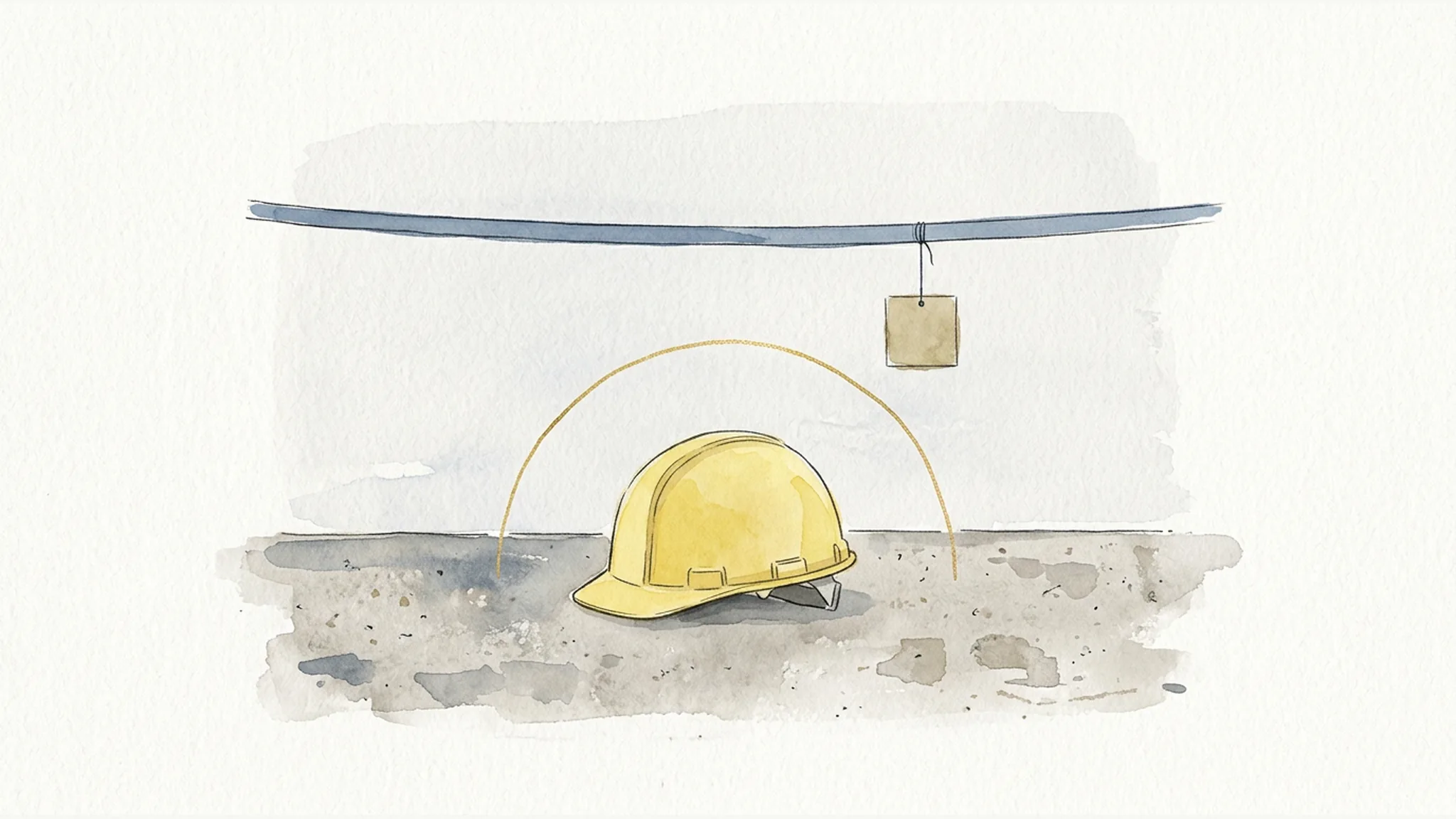
Hit by a Falling Object on an Oregon Jobsite: Who Is the “Third Party” You Can Sue?
If you were hit by a dropped tool, loose material, falling debris, or a suspended load on an Oregon jobsite, workers’ compensation is usually the first system involved. But it may not be the only one.
In Oregon, a “third party” is usually someone other than your own protected employer who may have caused or contributed to the injury. That could be another subcontractor, a general contractor or controlling contractor, a property owner with control over the dangerous work, a crane or rigging company, an equipment supplier, or a product manufacturer. The label alone does not decide the claim. The practical question is: who created, controlled, supplied, supervised, or had authority over the risk that caused the object to fall?
That question matters because Oregon workers’ compensation law generally makes a covered employer’s liability exclusive for workplace injuries. Oregon law also allows certain claims against a “third person not in the same employ” when the injury is due to that person’s negligence or wrong. Falling-object cases often sit at the intersection of those two ideas.
This article is educational information only and is not legal advice. Jobsite injury claims are fact-specific, and Oregon workers’ compensation and third-party rules can affect each other in ways that require individualized review.
Start With the Short Answer: A Third Party Is Usually Someone Other Than Your Protected Employer
Oregon workers’ compensation law generally protects a compliant covered employer from most lawsuits by an injured worker for the same workplace injury. That is the basic exclusivity rule under ORS 656.018.
But Oregon law also recognizes that someone outside that protected employer relationship may be responsible. ORS 656.154 refers to a remedy against a “third person not in the same employ” when the worker’s injury is due to that third person’s negligence or wrong. ORS 656.578 also addresses a worker’s election to recover damages from a third person, while preserving the important qualifier for persons exempt from liability under ORS 656.018.
In plain English: a third-party claim usually asks whether a non-employer person or company did something wrong that helped cause the injury. In a construction setting, that can require looking beyond the workers’ compensation accident report and into how the whole jobsite was organized.
Why Falling-Object Cases Are Different From a Simple Workers’ Comp Claim
A falling-object injury can happen because of one crew’s mistake, but it can also happen because multiple jobsite systems failed at once: storage, barricading, overhead protection, hoisting routes, scaffold work, trade coordination, or site-safety enforcement.
Common falling-object scenarios on construction sites
Falling-object cases can involve many different mechanisms, including:
- a tool dropped from a scaffold, lift, roof, or elevated platform;
- loose materials falling from an edge, deck, scaffold, or work platform;
- materials falling through a floor opening, roof opening, or skylight area;
- a suspended load, crane load, or rigging failure;
- steel-erection work occurring above other trades; or
- equipment or product components that fail, detach, or fall.
Those facts matter because the potential third party may change depending on what fell, where it fell from, and who had authority over the activity.
The investigation question: who controlled the overhead hazard?
The central investigation question is often not “who owned the project?” or “who was the biggest contractor?” It is more specific:
- Who was working above the injured worker?
- Who created or left the object where it could fall?
- Who controlled access to the area below?
- Who had authority under contracts, subcontracts, site-safety plans, or actual site practice?
- Who stored, stacked, rigged, hoisted, secured, or inspected the material or equipment?
- Were toeboards, screens, guardrails, canopies, barricades, covers, or other overhead protections used where required?
Oregon OSHA’s construction falling-object rule, OAR 437-003-2501, requires hard hats when employees are exposed to falling objects and also requires additional protective measures such as toeboards, screens, guardrails, canopies, or barricading the fall area and prohibiting entry while keeping potential falling objects back from edges. For employees working below holes, including skylights, the rule also addresses covers or equivalent protection.
Those safety rules do not automatically decide a civil case. But they can help identify what should have been in place, who was responsible for the area, and what evidence needs to be preserved.
Possible Third Parties in a Jobsite Falling-Object Claim
The following categories are examples, not automatic defendants. Whether any person or company is legally responsible depends on the facts, the duties they owed, their control or role, causation, and any statutory protections that apply.
Another subcontractor or trade contractor
Another subcontractor may be a potential third party if its crew dropped a tool, stacked materials unsafely, failed to secure objects near an edge, displaced material from above, or conducted overhead work without controlling the area below.
For example, if one trade is working from an elevated platform while another trade is assigned below, the investigation may focus on who coordinated the work, who allowed access below, and whether the overhead crew used appropriate protections. If the injured worker and the overhead crew were not in the same employ, Oregon’s third-party framework may become important.
A general contractor or controlling contractor
A general contractor or controlling contractor is not automatically liable just because it was in charge of the project overall. The evidence usually has to be more specific.
Relevant questions may include whether the general contractor or controlling contractor had contractual authority, actually exercised safety control, coordinated trades, controlled access to dangerous areas, required correction of hazards, or had authority to stop work. OSHA’s multi-employer citation policy and OSHA interpretations about “controlling employers” can be useful evidence context because they focus on roles such as creating, exposing, correcting, and controlling employers. Those OSHA enforcement concepts are not the same thing as a private civil-liability rule, but they can point investigators toward the right documents and witnesses.
In steel erection, the controlling-contractor concept can be especially important. OSHA’s steel-erection rules address circumstances where other construction processes occur below steel erection and require overhead protection in that setting. That is activity-specific; it should not be treated as a universal rule for every falling-object incident.
A property owner or project owner
A property owner may be relevant if the owner had charge of or responsibility for dangerous work, retained or exercised control over the risk-producing activity, or had safety responsibilities tied to the hazard. Ownership of the site by itself is not enough to assume liability.
Oregon’s Employer Liability Law uses language directed at owners, contractors, subcontractors, and others having charge of or responsibility for work involving risk or danger. The facts still matter: what did the owner control, what did the owner agree to do, and how did that role connect to the falling object?
Equipment suppliers, rental companies, or product manufacturers
Sometimes the issue is not only who was working overhead, but whether a product, tool, component, rental item, or piece of equipment failed. If a lift, scaffold component, hook, storage system, tool, or supplied product failed or was defective, the investigation may include a supplier, rental company, maintenance company, or manufacturer.
That does not turn every dropped-tool case into a product case. The product or equipment condition has to matter. Records such as rental agreements, inspection logs, maintenance records, product manuals, and photographs of the failed item can be important. Related evidence issues may overlap with defective power tools and jobsite product-liability evidence or other defective-equipment claims.
Crane, rigging, or hoisting companies
If the object was a suspended load or fell during crane, derrick, rigging, or hoisting work, the potential third-party analysis may focus on the company that planned the lift, rigged the load, selected the route, controlled the fall zone, or supplied the equipment.
OSHA’s crane and derrick rule on keeping clear of the load addresses hoisting routes, employee presence in the fall zone, and rigging materials to prevent unintentional displacement when employees are in the fall zone for permitted tasks. Steel-erection hoisting rules also address preplanned routes, work below suspended loads, rigging, hooks, and qualified riggers when steel erection is involved.
Again, these rules are evidence and safety-duty context. They do not automatically answer every liability question.
Oregon Employer Liability Law: Control Matters More Than Labels
Oregon’s Employer Liability Law, often called the ELL, can be important in dangerous-work and construction-site cases. It should be handled carefully because it does not make every contractor, owner, or general contractor liable for every jobsite injury.
The basic safety-duty concept
ORS 654.305 says that owners, contractors, subcontractors, and other persons having charge of or responsibility for work involving risk or danger to employees or the public must use every practicable device, care, and precaution for safety, without regard to the additional cost of suitable safety materials, appliances, and devices.
Related statutes require covered construction and dangerous-work actors to see that places of employment comply with applicable safety orders, rules, and standards, and require persons having charge of particular work to see that ORS 654.305 to ORS 654.336 are followed.
For a falling-object case, that can make control over the risky work more important than job titles. The question is not only “Who was the GC?” It is also “Who had charge of the overhead work, the area below, or the safety measures that should have prevented the object from falling or striking someone?”
Three control-related paths that may matter
Oregon appellate authorities and annotations describe three possible paths for ELL liability against someone other than the injured worker’s direct employer: common enterprise with the direct employer, retained right to control the risk-producing activity, or actual control over the risk-producing activity.
Those are legal theories, not boxes that can be checked from an accident report alone. Contracts, site-safety plans, daily reports, witness testimony, and actual jobsite practices can all matter.
A careful example from Oregon case law
In Yeatts v. Polygon Northwest Co., the Oregon Supreme Court addressed ELL theories in a construction context and held that a subcontractor’s employee had produced enough evidence to proceed on a retained-control theory against a general contractor. The case involved a fall, not a falling-object incident, and the court affirmed dismissal of the common-law negligence claim and other ELL theories in that case.
The lesson is narrow but useful: Oregon courts look closely at the specific theory and evidence of control. A general contractor, owner, or other jobsite actor is not liable merely because of its title.
Safety Rules That Often Shape the Evidence
Safety rules can help show what protections were expected and which jobsite actors had responsibilities. They can also shape what evidence an attorney looks for quickly after the injury.
Oregon falling-object protection rules
OAR 437-003-2501 addresses protection from falling objects in Oregon construction settings. When employees are exposed to falling objects, the rule requires hard hats and one of several additional protective measures, such as:
- toeboards, screens, or guardrails to prevent objects from falling;
- a canopy strong enough for the hazard, with objects kept back from the edge; or
- barricading the area where objects could fall, prohibiting entry, and keeping potential falling objects back from edges.
Federal OSHA’s 29 CFR 1926.502(j) criteria, referenced in this area, include details for toeboards, screening, guardrail openings, and canopies.
Holes, skylights, and openings
Objects do not only fall from edges. They can fall through floor openings, roof openings, or skylight areas. Oregon’s falling-object rule also addresses protection for employees working below walking or working surface holes, including skylights, through covers meeting applicable criteria or equivalent protection.
That means photographs of openings, covers, skylights, warning systems, and the area below can be important.
Hoisted loads and fall zones
If the object was being hoisted, different evidence may matter: the hoisting route, fall-zone controls, rigging method, load security, communication among crews, and who was allowed below the load.
OSHA’s crane and derrick rules address minimizing employee exposure to hoisted loads where available, limiting employee presence in the fall zone, and rigging materials to prevent unintentional displacement in certain circumstances. Steel-erection hoisting rules include their own activity-specific requirements.
Tool tethering and securing tools aloft—use caution
Tool tethering can be an important practical safety issue, but it should not be overstated as a universal legal rule. The strongest source in the provided research is steel-erection-specific: 29 CFR 1926.759 requires materials, equipment, and tools not in use while aloft to be secured against accidental displacement.
Outside that context, the safer way to frame the issue is to ask whether tools or materials should have been secured, moved back from edges, protected by toeboards or screens, kept under a canopy, or controlled through barricades and exclusion zones based on the work being performed and the rules that apply.
Evidence That Can Point to the Right Third Party
Construction sites change quickly. Materials are moved, barricades come down, crews rotate, and daily reports get buried. If a falling-object injury may involve a third party, early evidence preservation can be important in identifying who had control and what went wrong.
Documents and records
Useful records may include:
- prime contracts, subcontracts, and safety responsibility provisions;
- site-safety plans and job hazard analyses;
- daily reports, incident reports, inspection logs, and toolbox-talk records;
- competent-person inspection records;
- crane plans, lift plans, rigging records, and hoisting-route documents;
- equipment rental, maintenance, and inspection records;
- product manuals, warnings, and specifications; and
- prior reports of falling objects, overhead hazards, or missing protection.
These documents can show who had authority to coordinate work, correct hazards, control access, inspect equipment, or stop work.
Physical and visual evidence
Photos or video may help show:
- where the object came from and where it landed;
- whether barricades, fall-zone markings, toeboards, screens, guardrails, canopies, or covers were present;
- whether materials were stored near edges or openings;
- whether tools or materials were secured;
- the condition of scaffolds, lifts, platforms, rigging, hooks, or equipment;
- the position of crews working above and below; and
- any damage to the object, equipment, hard hat, or surrounding area.
Visual evidence can also help connect the incident to related mechanisms, such as scaffolding injury third-party claims or other evidence-heavy construction injury claims.
Witness and role evidence
Witnesses can help answer questions that paperwork may not show clearly:
- Who was working above?
- Who directed that work?
- Who controlled access below?
- Who had authority to correct the hazard?
- Who could stop work?
- Was the unsafe condition reported before the injury?
- Did the actual jobsite practice match the written safety plan?
Those answers can help distinguish a workers’ compensation-only claim from a possible third-party claim involving a non-employer contractor, owner, supplier, or equipment company. Similar role-identification issues can arise in other construction-site injury contexts, including questions about who may be liable besides the employer on a construction site.
How a Third-Party Claim Interacts With Workers’ Compensation
A third-party claim does not necessarily replace workers’ compensation. Oregon law recognizes that workers’ compensation benefits can continue even when a third-party cause of action exists, while the paying agency has lien rights on the third-party cause of action for compensation paid.
If a worker brings a third-party action, Oregon law also addresses notice to the paying agency, distribution of recovered proceeds, and agency participation in compromise of the third-party action. If a worker elects not to bring a third-party action, Oregon law provides for assignment of the cause of action to the paying agency.
Those rules can affect timing, settlement approval, lien repayment, and the final net recovery. This article does not provide deadline advice or lien math. For a deeper overview of the recovery side, see our discussion of how workers’ comp liens can affect a third-party recovery.
When to Talk With a Lawyer About a Falling-Object Jobsite Injury
It may be worth getting individualized legal guidance after a serious falling-object injury if multiple companies were present, overhead work was happening, materials were being hoisted or stored above, safety protection was missing, or the object involved rental equipment, defective equipment, or a failed product.
An attorney can evaluate whether a non-employer actor may fall outside workers’ compensation exclusivity, whether Oregon Employer Liability Law or negligence theories may apply, and how workers’ compensation liens or settlement rules could affect the case. Just as important, a lawyer can help identify and preserve jobsite evidence before it changes or becomes harder to obtain.
The key is not to assume that every falling-object injury creates a lawsuit against a third party. The key is to investigate the right roles early: who created the overhead hazard, who controlled the area, who had safety authority, and what protections were missing.
FAQ
Can I sue my employer if I was hit by a falling object at work in Oregon?
Usually, workers’ compensation exclusivity protects a compliant covered employer from most lawsuits by an injured worker for the same workplace injury. A separate claim may be possible against a non-employer third party if the facts support negligence or another wrongful act outside that protected employer relationship.
Who counts as a third party in a construction falling-object case?
Potential third parties may include another subcontractor, a general contractor or controlling contractor, a property owner with relevant control, an equipment supplier, a rental company, a product manufacturer, a crane or rigging company, or another non-employer actor. Liability depends on duties, control, conduct, causation, and statutory protections.
Is the general contractor automatically responsible for dropped tools or falling materials?
No. A general contractor’s liability is not automatic. Important questions include whether it retained or exercised control over the risk-producing activity, had contractual or actual safety authority, coordinated work below overhead hazards, could correct the condition, or helped cause the injury.
Do Oregon rules require all tools to be tethered when people work overhead?
The provided research does not support stating a broad Oregon construction rule requiring all tools to be tethered in every overhead task. Steel-erection rules specifically require materials, equipment, and tools not in use while aloft to be secured against accidental displacement. In other contexts, the analysis may focus on applicable falling-object protections such as toeboards, screens, guardrails, canopies, barricades, exclusion zones, covers, and whether tools or materials were reasonably secured for the work involved.
Can I receive workers’ comp and still bring a third-party claim?
Potentially, yes. Oregon law recognizes that workers’ compensation benefits can continue while a third-party cause of action exists, but the paying agency may have lien rights and may need to participate in a compromise. Distribution, settlement approval, and assignment issues can affect the result.
What evidence matters after a falling-object injury on a jobsite?
Evidence may include photos or video, the object itself, contracts, subcontracts, safety plans, incident reports, daily reports, witness statements, inspection records, lift or rigging plans, rental or maintenance records, and proof of who was working above, who controlled access below, and what overhead protection was in place.
Sources and Source Notes
- Oregon Revised Statutes, ORS Chapter 656 — Workers’ Compensation, including ORS 656.018, 656.154, 656.578, 656.580, 656.587, 656.591, and 656.593.
- Oregon Revised Statutes, ORS Chapter 654 — Occupational Safety and Health, including ORS 654.305, 654.310, and 654.315.
- Oregon Secretary of State, OAR 437-003-2501 — Protection From Falling Objects.
- OSHA, 29 CFR 1926.502 — Fall protection systems criteria and practices, including falling-object protection criteria.
- OSHA, 29 CFR 1926.1425 — Keeping clear of the load.
- OSHA, 29 CFR 1926.753 — Hoisting and rigging and 29 CFR 1926.759 — Falling object protection for steel-erection-specific issues.
- OSHA, Multi-Employer Citation Policy, CPL 02-00-124 and OSHA’s controlling-employer interpretation, used as enforcement and evidence context rather than standalone civil-liability rules.
- Yeatts v. Polygon Northwest Co., 360 Or 170, 379 P3d 445 (2016), for retained-control/common-enterprise framing in a construction Employer Liability Law context.
Client-First Fee Promise
Client First = Bills First, Fees Second
Your unpaid medical bills do not have to make your lawyer's fee bigger. Johnson Law subtracts qualifying medical bills before calculating our fee, helping clients keep more of their settlement.
Applies to qualifying cases. Results vary.