Freight-Broker Negligent Hiring After Montgomery: What the Supreme Court Decided

Research current through October 12, 2026.
A federal preemption defense did not bar the freight-broker negligent-hiring claim in Montgomery v. Caribe Transport II. On May 14, 2026, the Supreme Court unanimously held that the claim falls within the federal statute’s motor-vehicle safety exception. The Court did not decide that the broker was negligent or that the injured person was entitled to compensation.
That distinction matters when evaluating responsibility after a truck crash. The ruling answers a threshold question about whether federal law displaces a state-law claim. It does not answer the separate question of whether the evidence proves that claim.
The key points from the official opinion are:
- The safety exception preserved Montgomery’s negligent-hiring claim against this defense.
- The Court assumed, without deciding, that the general preemption provision otherwise covered the claim.
- Applicable state-law requirements still matter; surviving preemption is not a negligence verdict.
What was the claim against the freight broker?
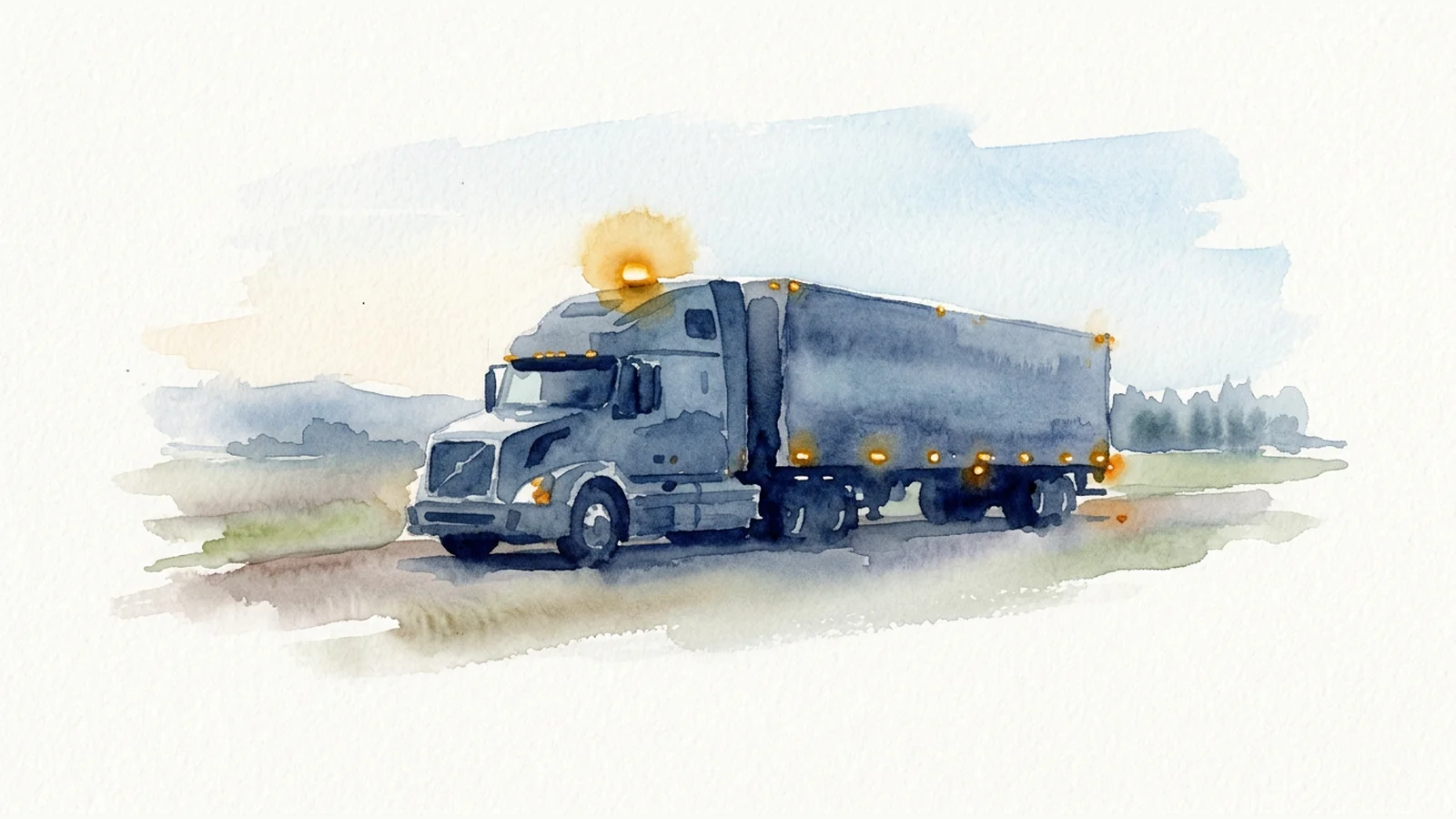
The case arose from an Illinois collision. A Caribe truck struck Montgomery’s tractor-trailer while it was stopped beside the roadway. C.H. Robinson was the freight broker coordinating the shipment.
Federal law distinguishes these roles: a broker arranges motor-carrier transportation for compensation, while a motor carrier provides motor-vehicle transportation for compensation. Those statutory definitions help explain why different parties’ conduct raises different questions.
Montgomery alleged that the broker knew or should have known that the carrier’s safety record made selecting it unreasonably risky. That was an allegation about the broker’s own selection decision—not a Supreme Court finding about the carrier’s deficiencies or the broker’s negligence.
It also differs from asking whether a company is responsible for a driver’s conduct. Our guide to truck-driver and company responsibility addresses that related issue. A carrier-selection claim should not be reduced to whether the broker employed or controlled the driver.
Preemption is a threshold question—not a negligence verdict
Preemption means federal law displaces state law. In this setting, a preemption defense can stop a state-law claim before a court resolves whether the challenged selection was negligent. The lower courts disposed of Montgomery’s negligent-hiring claims on preemption grounds, rather than deciding their merits.
The Supreme Court’s analysis involved two distinct parts of 49 U.S.C. § 14501(c).
The first question the Court assumed
Section 14501(c)(1), subject to exceptions, generally preempts state laws related to motor-carrier or broker prices, routes, or services concerning the transportation of property.
The Court assumed without deciding that this general provision otherwise preempted Montgomery’s claim. It did not settle that first question. Describing the decision as holding that negligent hiring necessarily falls within the general preemption provision would turn an assumption into a ruling.
The safety exception the Court applied
Section 14501(c)(2)(A) preserves state safety authority “with respect to motor vehicles.” The Court held that Montgomery’s negligent-hiring claim fits this exception: requiring ordinary care in selecting a carrier concerns the trucks that transport the goods.
The connection to motor vehicles did not disappear because the defendant arranged transportation rather than drove the truck. The Court reversed the preemption ruling on that basis.
Put simply, the exception kept this federal defense from ending Montgomery’s claim. It did not establish what the broker should have done under the applicable state law or whether its conduct caused the injuries.
What the decision did not resolve
The federal gateway and the state-law merits remain separate. A person pursuing a claim must still establish the applicable state-law requirements, including the necessary connection between the alleged negligence and the harm. The decision establishes neither insurance coverage nor a right to recovery.
Nor did the Court create a new federal damages claim or a universal carrier-vetting checklist. It did not prescribe mandatory database searches, disqualifying safety scores, or a nationwide rule that every broker must reject a carrier with a particular record.
The holding also does not mean that every claim against a freight broker escapes preemption. The opinion distinguishes safety concerns from unrelated economic regulation. Calling a claim “negligence” does not, by itself, answer which statutory provisions apply or whether an exception protects it.
Finally, a reversal on preemption is not a later trial result. The research supporting this article does not establish a subsequent negligence verdict, settlement, or other merits outcome in Montgomery’s case.
What Oregon and Washington readers should understand
Montgomery was not the first decision applying the safety exception to a crash-related broker negligence claim in this region’s federal appellate circuit. In 2020, the Ninth Circuit reached that conclusion in Miller v. C.H. Robinson Worldwide, Inc..
Miller involved a Nevada crash and federal preemption. Neither that ruling nor Montgomery supplies an Oregon or Washington broker-liability checklist. Which state’s law applies, and what that law requires, need separate analysis; the crash location alone is not the complete answer.
What information may help evaluate a carrier-selection claim?
Useful investigation starts with questions rather than assumptions about who must be liable:
- Who arranged the shipment and selected the carrier? The contracting chain and communications may help distinguish the broker’s role from the carrier’s role.
- What safety information was available when selection occurred? Carrier-selection records may help show what informed the decision. The inquiry concerns the selection at issue, not simply information discovered after the crash.
- What connection, if any, exists between the alleged selection problem and the collision? An allegation about selection still needs to be evaluated alongside evidence about how the crash happened.
These are investigative questions, not records the Supreme Court ordered every broker to obtain, retain, or produce. Broader truck-crash records may help explain the collision without independently proving negligent carrier selection.
For someone reviewing a possible claim, the practical task is to keep the two inquiries separate: does a federal defense bar the claim, and can the facts satisfy the applicable state law? Montgomery answers the first inquiry for the claim before the Court—not the second.
This article provides educational information only, not legal advice. Individual claims require review of their facts and applicable law.
Sources
- Montgomery official Supreme Court opinion, May 14, 2026, particularly pages 3–7 and footnotes 2 and 4.
- 49 U.S.C. § 14501(c): general preemption provision and safety exception.
- 49 U.S.C. § 13102(2), (14): broker and motor-carrier definitions.
- Miller official Ninth Circuit opinion, September 28, 2020: brief regional preemption context.
Client-First Fee Promise
Client First = Bills First, Fees Second
Your unpaid medical bills do not have to make your lawyer's fee bigger. Johnson Law subtracts qualifying medical bills before calculating our fee, helping clients keep more of their settlement.
Applies to qualifying cases. Results vary.