Intermodal Container Securement: Rules and Crash Questions
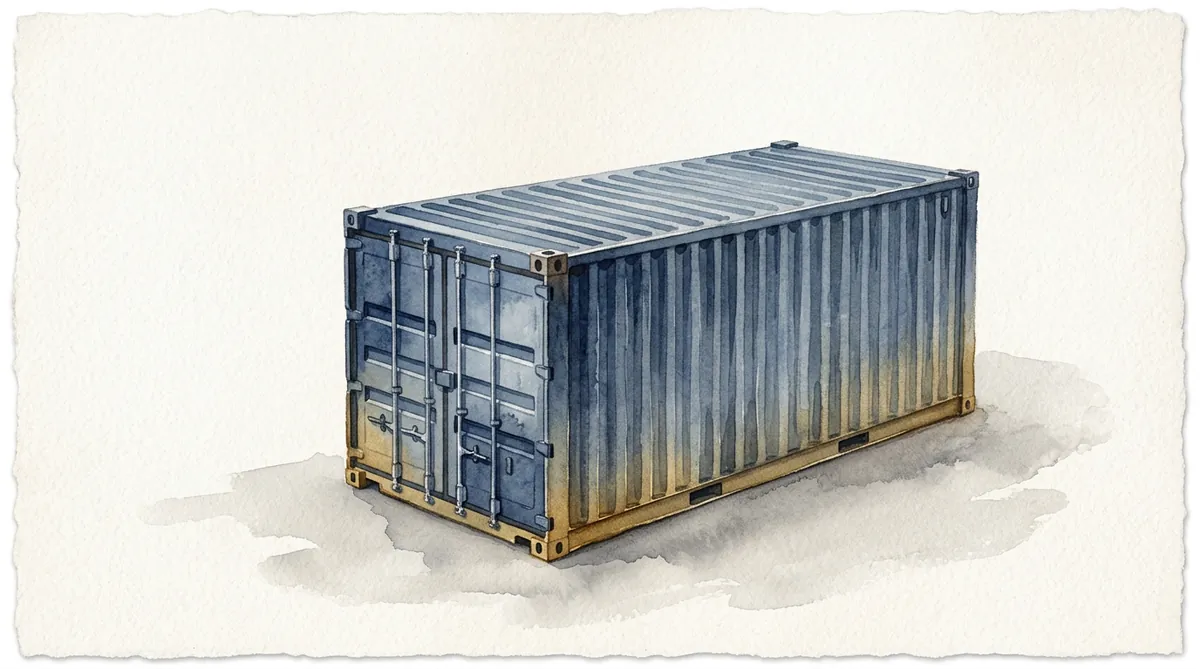
When an intermodal container separates from a truck in a crash, two different securement questions arise: how the cargo was secured inside the container, and how the container itself was attached to the carrying vehicle. The federal rules treat those separately, and the attachment requirements depend on the equipment and whether a container on a non-chassis vehicle is loaded or empty.
Understanding those distinctions helps explain what a preliminary crash report can—and cannot—tell us about container separation.
What the preliminary Highway 26 report says
In a release published September 18, Oregon State Police described a response to a September 14 crash near milepost 74 on Highway 26 in Wasco County. The preliminary account involved an eastbound Volvo semi hauling a 53-foot intermodal container. It described a rollover into the opposing lane before a collision with a Jeep and the container’s dislodgement. Both drivers died at the scene.
This is a preliminary account, not a final reconstruction or fault finding. Its narrative order does not establish when attachment hardware failed. The equipment configuration and whether the container was loaded or empty are also unresolved in the information cited here.
Cargo inside and container attachment are separate questions
There are two separate securement questions: Is the cargo secured inside the container? And is the container itself secured to the vehicle carrying it? An answer about one does not establish the condition of the other.
49 CFR 393.126(a) addresses cargo inside the container. The later subsections address securing the container itself to the carrying vehicle.
For broader responsibility questions, see the broader falling-cargo responsibility framework.
Which container attachment rules apply?
The answer depends on the carrying equipment and, for a vehicle other than a container chassis, whether the container is loaded or empty. The following summarizes three equipment categories in 49 CFR 393.126. It is federal background, not a complete compliance checklist or a finding that a particular rule applied to the Highway 26 crash.
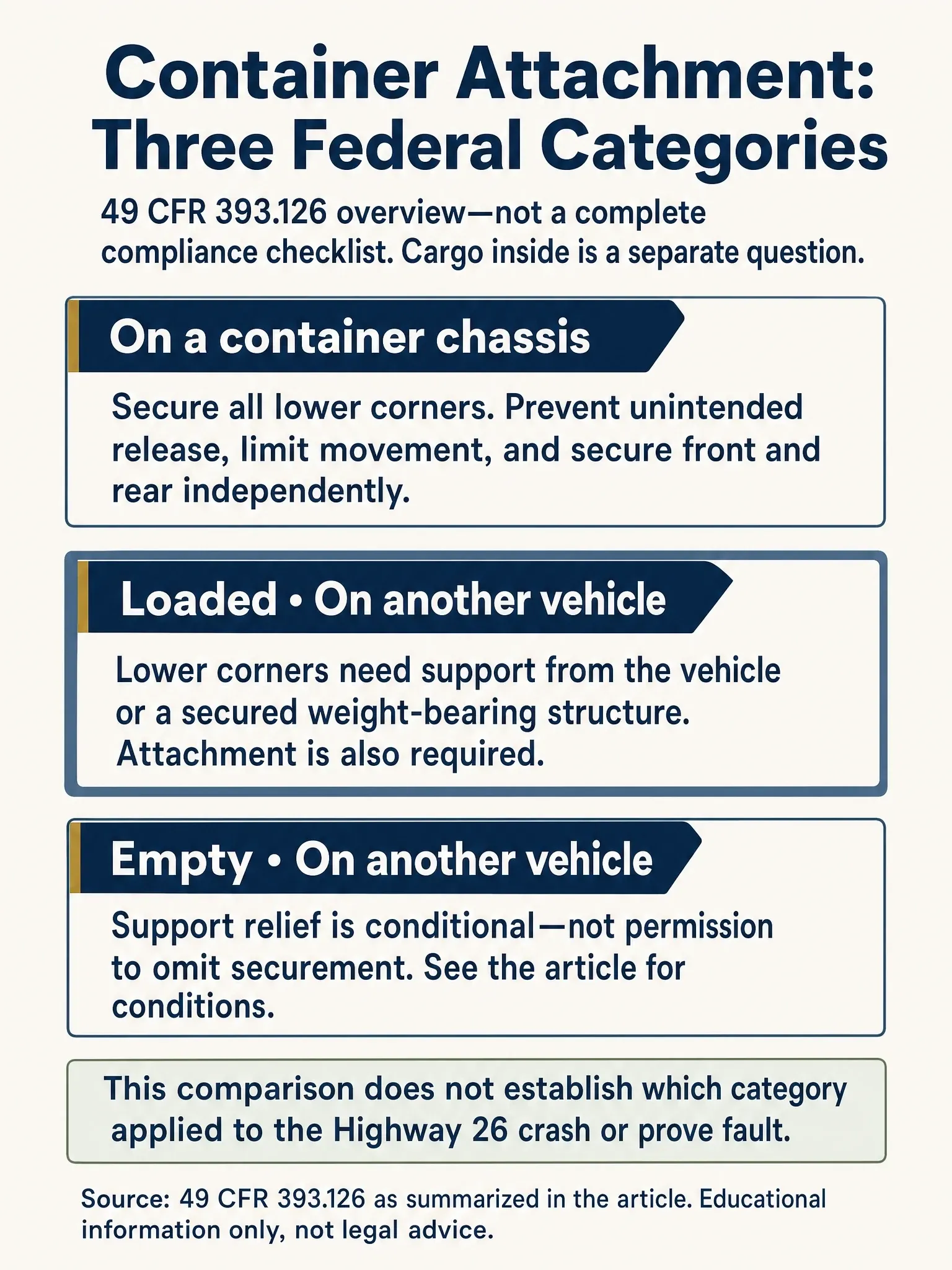
On a container chassis: secure all lower corners
Under subsection (b), the requirements address four points:
- Attachment locations: all lower corners must be secured.
- Unintended release: securement devices must be unable to unfasten unintentionally.
- Movement: container movement must be limited.
- Front and rear: each must be secured independently.
Loaded container on another vehicle: support and attachment
Subsection (c) addresses a loaded container carried on a vehicle other than a container chassis. It sets both support and attachment requirements: the lower corners must be supported by the vehicle or by a secured weight-bearing structure. Supporting the container’s weight and securing it to the carrying vehicle are separate requirements.
Empty container on another vehicle: conditional support relief
Subsection (d) conditionally relaxes support requirements for an empty container carried on a vehicle other than a container chassis. Conditions include:
- Stability before tiedowns are applied.
- No more than five feet of overhang at either end.
- Unaffected vehicle maneuverability.
- Prevention of shifting.
This is support relief under stated conditions, not permission to omit securement. It applies to the empty-container, non-chassis category—not chassis transport.
Periodic inspection includes operating the securement devices
When a container is attached to a chassis during a periodic inspection, the inspection includes operating the container securement devices, such as twist locks. FMCSA’s guidance explains that the container does not need to be removed for that inspection.
The older guidance refers to Appendix G; the current inspection-standards reference is Appendix A to Part 396. This explains the inspection requirement, not the reported vehicle’s inspection history or hardware condition.
Three unanswered questions about the container’s separation
The preliminary report leaves three equipment-specific questions unresolved:
- What equipment was carrying the container, and was it loaded or empty? Those facts are needed to identify the relevant equipment category in the federal rule.
- How were the attachment devices engaged before the crash? The report does not establish their pre-crash condition.
- When did hardware damage and separation occur relative to the rollover and collision? The reported dislodgement does not answer that timing question.
A separated container alone does not prove improper securement before the rollover. These unresolved facts do not support assigning fault or treating a federal rule as automatically establishing liability under Oregon law.
For questions about records, see our guide to trucking record retention, preservation and access. Johnson Law’s information on commercial truck crash claims provides broader service context.
This article provides educational information only, not legal advice.
Sources
- Oregon State Police release via FlashAlert, September 18, 2026: preliminary account of the September 14 Highway 26 crash.
- 49 CFR 393.126: internal-cargo and configuration-dependent container securement rules.
- FMCSA attached-container periodic-inspection guidance: securement-device operation during inspection without container removal.
- Appendix A to 49 CFR Part 396: current inspection-standards reference.
Client-First Fee Promise
Client First = Bills First, Fees Second
Your unpaid medical bills do not have to make your lawyer's fee bigger. Johnson Law subtracts qualifying medical bills before calculating our fee, helping clients keep more of their settlement.
Applies to qualifying cases. Results vary.