Herniated Disc vs. Bulging Disc: What the MRI Language Actually Means for Your Oregon Injury Case

Herniated Disc vs. Bulging Disc: What the MRI Language Actually Means for Your Oregon Injury Case
If you were hurt in a crash and your MRI report mentions a “disc bulge,” “disc herniation,” “protrusion,” “extrusion,” “annular fissure,” or “degenerative change,” it is natural to focus on the exact words. Those words matter. But they are not the whole case.
MRI language describes what the radiologist sees anatomically. It does not automatically prove that a crash caused the finding, that the finding is the source of pain, that a certain treatment is required, that the condition is permanent, or that the case has a predictable settlement value.
In an Oregon injury claim, the more useful question is usually this: does the MRI finding fit with the timing of symptoms, the location of pain, neurological exam findings, treatment history, functional limits, and qualified medical opinions? The stronger the connection among those pieces, the more meaningful the MRI language may become.
This article is educational information, not legal advice or medical advice. Spine symptoms should be evaluated by appropriate medical professionals, and case-specific legal questions depend on the facts, insurance coverage, deadlines, and available evidence.
What a “Herniated Disc” Means on an MRI
In the lumbar spine, a widely used medical nomenclature consensus defines a herniated disc as a localized or focal displacement of disc material beyond the normal disc space. In plain English, that means some disc material has moved outside where the disc normally sits, and the displacement involves a relatively limited part of the disc circumference.
That definition is anatomical. It describes shape and location. It does not, by itself, answer why the herniation happened, whether it is new, whether it is painful, or what it means for an Oregon personal injury claim.
That distinction is important because a claim is not won or lost by a single MRI label. A herniation may be significant when it matches the patient’s symptoms, exam findings, and medical timeline. It may be disputed when the report also describes degeneration, prior problems, inconsistent symptoms, or a weak treatment record.
Protrusion, Extrusion, and Sequestration
MRI reports often use more specific words under the broader herniation category:
- Protrusion generally describes a herniation where the displaced portion is smaller than its base.
- Extrusion generally describes displaced disc material that is larger than its base in at least one plane, or material that no longer has clear continuity with the parent disc.
- Sequestration is a subtype of extrusion where the displaced fragment has lost continuity with the disc it came from. Some reports may describe this as a “free fragment.”
Those distinctions can matter medically. They may influence how physicians understand nerve involvement, treatment options, or the need for specialist evaluation. But they still do not create an automatic legal conclusion. The claim proof still depends on whether the finding is connected to the event, symptoms, treatment, and losses.
What a “Bulging Disc” Means—and Why It Is Different
A bulging disc is different from a herniated disc under the lumbar nomenclature consensus. A bulge generally means disc tissue extends beyond the edges of the disc space more broadly—usually involving more than 25% of the disc circumference and usually extending less than 3 mm beyond the vertebral edges.
The consensus also states that bulging is not a form of herniation. Just as important, the word “bulging” does not imply a cause, prognosis, need for treatment, or presence of symptoms.
That does not mean a bulging disc is meaningless. It means the label must be read carefully. A bulge may be part of a symptomatic spine condition in one person and an incidental or age-related finding in another. The difference is not determined by the word “bulge” alone.
For an Oregon injury case, the practical question is whether the bulge lines up with the post-crash medical picture: when symptoms started, whether symptoms are consistent over time, whether there are signs of nerve involvement, what treatment providers found, and whether a qualified medical professional can explain the connection.
What About “Annular Tear,” “Annular Fissure,” and Degeneration?
MRI reports may also mention an “annular tear” or “annular fissure.” The preferred term in the lumbar disc nomenclature consensus is annular fissure. The consensus discourages “annular tear” because the word “tear” can wrongly suggest a traumatic injury when the imaging observation alone does not prove that.
In other words, seeing a fissure on imaging does not automatically prove trauma, pain, or a compensable injury. It may be relevant, but it needs clinical context.
The same is true for degeneration. Degenerative language in an MRI report does not automatically defeat a claim. Many people have preexisting or age-related spine changes. The harder question is whether the crash caused a new injury, worsened a preexisting condition, or made previously quiet findings symptomatic. The nomenclature consensus cautions that whether a less-than-violent injury contributed to or was superimposed on degenerative change is a clinical judgment that cannot be made from images alone.
That is why a radiology report is usually only one part of the evidence.
Why Disc Findings Can Be Present Even Without Pain
Insurance companies often focus on degenerative findings because many spine changes can appear in people who do not report pain. That point should not be overstated, but it is real.
One systematic review in the American Journal of Neuroradiology looked at imaging findings in 3,110 asymptomatic people. It reported that disc bulge prevalence increased from 30% of asymptomatic 20-year-olds to 84% of asymptomatic 80-year-olds. The same review reported that disc protrusion prevalence increased from 29% at age 20 to 43% at age 80.
Those numbers do not mean a crash cannot cause or aggravate symptoms. They mean imaging findings must be interpreted in the context of the patient’s clinical condition. A report that says “bulge” or “protrusion” is not the end of the analysis. It is the beginning of a correlation question.
That same principle applies whether imaging is normal or abnormal. Johnson Law has a separate discussion of why MRI results are only one part of pain-claim proof. A normal MRI does not always end a pain claim, and an abnormal MRI does not automatically prove one.
The Proof Question: Does the MRI Match the Symptoms and Exam?
Clinical correlation means asking whether the imaging finding matches the person’s symptoms and medical exam. For lumbar disc issues, medical sources describe possible symptoms such as sciatica, numbness or tingling into the leg or foot, and weakness in the leg or foot. A herniated disc may also be asymptomatic.
Clinicians may evaluate strength, sensation, reflexes, and signs that suggest nerve-root irritation. For example, medical references describe how certain lumbar or sacral nerve-root problems may affect reflexes such as the ankle jerk or knee jerk. They may also compare the level shown on the MRI to the pattern of radiating pain, numbness, or weakness.
Dermatome maps—general maps of skin areas supplied by different nerve roots—can also be part of that discussion. Common lower-extremity landmarks include areas such as the medial knee, anterior knee, dorsal foot, toes, or lateral ankle depending on the nerve root. But these maps vary and are not rigid proof for any individual person.
For claim purposes, this is why an MRI phrase may become more meaningful when it is supported by:
- symptoms that began or worsened after the crash;
- pain, numbness, tingling, or weakness in a pattern that fits the imaging level;
- documented strength, sensation, or reflex changes;
- consistent reports across medical visits;
- treatment recommendations that match the condition; and
- a qualified medical opinion connecting the findings to the event and symptoms.
None of those points should be treated as a self-diagnosis checklist. They are examples of the kinds of connections medical providers, insurers, lawyers, and sometimes experts may evaluate.
Red-Flag Symptoms Are Medical Issues First
Some spine symptoms require urgent medical attention. Loss of bowel or bladder control, saddle anesthesia, or progressive neurological deficits can be signs of a serious condition and should be addressed medically right away.
Those symptoms should not be analyzed first as “claim value” facts. They are health and safety issues first.
Why Timing and Treatment History Matter
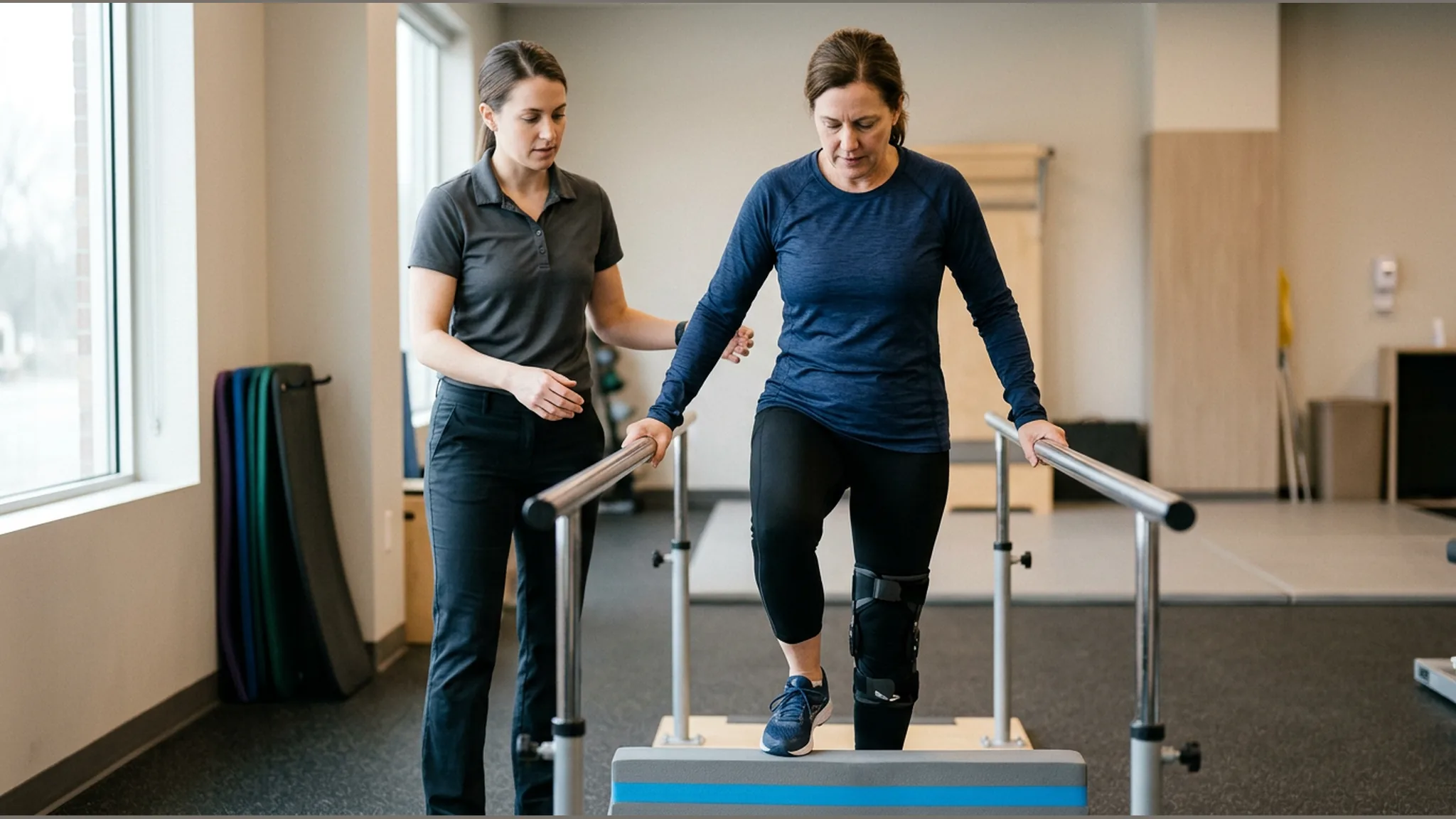
The timeline often matters as much as the MRI wording. A helpful medical record may show when pain started, whether symptoms changed over time, what activities became difficult, what treatment was tried, and how the patient responded.
In real cases, the relevant timeline may include:
- the crash date and immediate symptoms;
- when back, neck, hip, leg, arm, numbness, tingling, or weakness symptoms were first reported;
- primary-care, urgent-care, emergency, chiropractic, physical therapy, or specialist visits;
- whether symptoms improved, worsened, or changed;
- referrals for imaging, injections, surgical consultation, or other care;
- work restrictions or missed work; and
- daily activities that became limited.
An MRI does not always happen immediately. The American College of Radiology’s low-back-pain criteria state that uncomplicated acute low back pain or radiculopathy generally does not warrant imaging right away. Imaging may be considered after up to six weeks of medical management and physical therapy with little or no improvement, or when red flags suggest serious conditions such as cauda equina syndrome, malignancy, fracture, or infection.
So a delayed MRI is not automatically suspicious, and an immediate MRI is not automatically stronger proof. The question is whether the overall treatment history makes sense medically and evidentially. For more on documenting symptoms and functional effects beyond the radiology report, see Johnson Law’s article on injury claim documentation beyond medical records.
How Oregon Claim Proof Looks Beyond the MRI Report
In an Oregon negligence case, medical terminology eventually has to fit within legal proof. The Oregon Supreme Court has described “but-for” causation as the rule in most negligence cases, requiring proof that the defendant’s negligence more likely than not caused the plaintiff’s harm. The “substantial factor” formulation is more limited and is not the default label for every injury case.
For a spine injury claim, that usually means the evidence must do more than show that an MRI has an abnormal word on it. The evidence needs to support a case-specific connection between the defendant’s conduct and the harm being claimed.
Medical expert testimony may be important when specialized knowledge is needed to connect imaging, symptoms, crash mechanics, treatment, and prognosis. Oregon Evidence Code Rule 702 allows qualified expert testimony when scientific, technical, or other specialized knowledge will assist the trier of fact.
Other Oregon rules may also shape the case, but they answer different questions:
- Comparative fault: Oregon’s comparative fault statute can reduce damages in proportion to a claimant’s percentage of fault and can bar recovery if the claimant’s fault is greater than the combined fault of specified others. Fault allocation is separate from whether the medical condition was caused by the crash.
- Deadlines: Oregon’s general personal-injury limitation period is two years, but exceptions and special rules may apply. Government claims, minors, medical malpractice, and other contexts can change the analysis.
- PIP medical benefits: For covered Oregon motor-vehicle policies, PIP benefits include reasonable and necessary medical expenses incurred within two years after injury, up to the statutory aggregate medical-expense amount, subject to coverage facts and policy terms.
These rules are included as context, not individualized advice. Oregon injury claims are fact-specific.
What Evidence Can Make the MRI More Meaningful in a Claim?
The MRI becomes more useful when it is part of a coherent evidence package. Depending on the case, helpful evidence may include:
Pre-crash baseline and prior spine history
Prior back or neck problems do not automatically end a claim. But they can matter. Records that show the person’s baseline before the crash may help distinguish a preexisting condition from new symptoms, worsened symptoms, or new functional limits.
Symptom timing and consistency
When symptoms began, how they progressed, and whether they were consistently reported can be important. A clear timeline can help medical providers and claim evaluators understand whether the MRI finding fits the injury story.
Match between MRI level and symptoms
If the MRI describes a lumbar finding at a particular level, medical providers may compare that level to the pain pattern, numbness, tingling, weakness, reflex findings, and exam results. A mismatch does not automatically defeat a claim, but it may require explanation.
Neurological exam findings
Strength, sensation, reflexes, and other exam findings can sometimes make an MRI report more meaningful. Objective or repeatedly documented findings may help show that the imaging result is clinically important. For a closer look at how radiating symptoms can line up with exam findings, see Johnson Law’s discussion of nerve-root-compression symptoms and objective evidence.
Treatment course and medical recommendations
Physical therapy, medications, injections, specialist referrals, work restrictions, or surgical consultations may all become part of the proof picture. The key is not the amount of treatment alone, but whether the treatment history is medically connected to the condition being claimed. If future treatment is being considered, the proof issues often overlap with documenting future medical treatment costs.
Functional losses
A radiology report does not show what it feels like to stand, sit, sleep, lift, drive, work, care for children, or do normal activities after an injury. Functional evidence can help explain the real-life impact of the condition. That may include medical records, work documentation, family observations, photographs, calendars, or other records that support the timeline.
Bills, records, and qualified opinions
Medical bills and records matter, but they are usually strongest when organized around the actual proof questions: what happened, what changed, what treatment was reasonable and necessary, what symptoms remain, and what medical opinions support causation. For more on how those pieces can fit into a claim presentation, see Johnson Law’s article on organizing medical evidence in an Oregon injury demand package.
For qualifying Oregon claims pleaded at $10,000 or less, ORS 20.080 includes a written-demand process that requires medical records and bills adequate to reasonably inform the recipient of the nature and scope of the claimed injury when that information is available. That statute is limited to qualifying small tort claims and is not a universal rule for every injury demand.
Why This Post Does Not Give “Average Settlement” Numbers
Many people search for herniated-disc or bulging-disc “settlement values.” The problem is that reliable sources do not support generic Oregon dollar ranges based only on MRI wording.
A herniation is not automatically worth more than a bulge. A bulge is not automatically minor. A protrusion, extrusion, annular fissure, or degeneration finding is not automatically decisive in either direction.
Valuation depends on the whole case, including:
- liability and comparative fault;
- whether the crash more likely than not caused the claimed harm;
- whether symptoms and exam findings match the imaging;
- treatment type, duration, and medical necessity;
- functional loss and recovery timeline;
- medical expenses and wage loss;
- future treatment evidence, if any;
- available insurance coverage; and
- credibility and consistency of the evidence.
That is why a responsible evaluation starts with the records and facts, not an internet average tied to one MRI phrase.
Bottom Line: Translate the MRI, Then Build the Proof
The difference between a herniated disc and a bulging disc is medically meaningful. A herniation generally describes a localized displacement of disc material, while a bulge describes a broader extension of disc tissue and is not considered a type of herniation under the lumbar nomenclature consensus.
But in an Oregon injury claim, the label is not legally decisive by itself. The better question is whether the imaging fits the symptoms, exam findings, timeline, treatment course, functional losses, and medical opinions.
If you are dealing with spine MRI language after a crash, consider discussing the report with your medical provider and, if you have claim-specific questions, with an attorney who can review the full record. This article is educational information only and is not legal advice about any specific case.
FAQ
Is a herniated disc worse than a bulging disc for an injury claim?
Not automatically. A herniated disc and a bulging disc describe different MRI findings, but claim strength depends on the full context: symptoms, exam findings, treatment, causation proof, functional loss, liability, coverage, and damages evidence.
Does a bulging disc mean my crash caused my pain?
Not by itself. Disc bulges can appear in people without pain, especially as people age. A crash-related claim usually needs evidence connecting the timing, symptoms, medical findings, and treatment history to the event.
What is the difference between a disc protrusion and extrusion?
Both are types of herniation under lumbar disc nomenclature. A protrusion generally has a displaced portion smaller than its base. An extrusion generally involves displaced material larger than its base in at least one plane or material that has no continuity with the parent disc.
Does “annular tear” prove a traumatic injury?
No. The preferred term is “annular fissure,” and medical nomenclature cautions that “tear” can wrongly imply trauma. Imaging language alone does not prove traumatic cause or symptoms.
Why would an insurance company focus on degeneration in my MRI?
Degenerative findings are common, including in people without pain. Insurers may argue that the MRI reflects aging or a preexisting condition rather than crash-related harm. The response depends on the medical timeline, symptom pattern, exam findings, treatment records, and qualified medical opinions.
What MRI-related symptoms should be treated as urgent?
Loss of bowel or bladder control, saddle anesthesia, or progressive neurological deficits can be urgent medical issues. Those symptoms should be evaluated medically right away.
Source Notes
- Spine, “Lumbar Disc Nomenclature: Version 2.0” — used for lumbar definitions of herniation, bulging, protrusion, extrusion, sequestration, annular fissure terminology, and cautions about causation from imaging alone.
- American Journal of Neuroradiology, Brinjikji et al., “Systematic Literature Review of Imaging Features of Spinal Degeneration in Asymptomatic Populations” — used for asymptomatic disc bulge/protrusion prevalence and clinical-context framing.
- American Academy of Orthopaedic Surgeons OrthoInfo, “Herniated Disk in the Lower Back” — used for patient-facing lumbar herniated-disc symptom and emergency-warning context.
- MSD Manual and Merck Manual Professional Edition references on lumbar disc herniation and lumbosacral radiculopathy — used for clinical-correlation, nerve-root, reflex, and symptom-pattern discussion.
- ACR Appropriateness Criteria® Low Back Pain: 2021 Update — used for imaging-timing context in uncomplicated acute low back pain or radiculopathy.
- Oregon sources: ORS 12.110, 31.600, 40.410/OEC 702, 742.524, 20.080, and Haas v. Estate of Mark Steven Carter — used for Oregon limitations, comparative fault, expert-testimony, PIP, small-claim demand, and causation context.
Client-First Fee Promise
Client First = Bills First, Fees Second
Your unpaid medical bills do not have to make your lawyer's fee bigger. Johnson Law subtracts qualifying medical bills before calculating our fee, helping clients keep more of their settlement.
Applies to qualifying cases. Results vary.