Missing Handrail on a Staircase: When an Oregon Fall Becomes a Building-Code Case
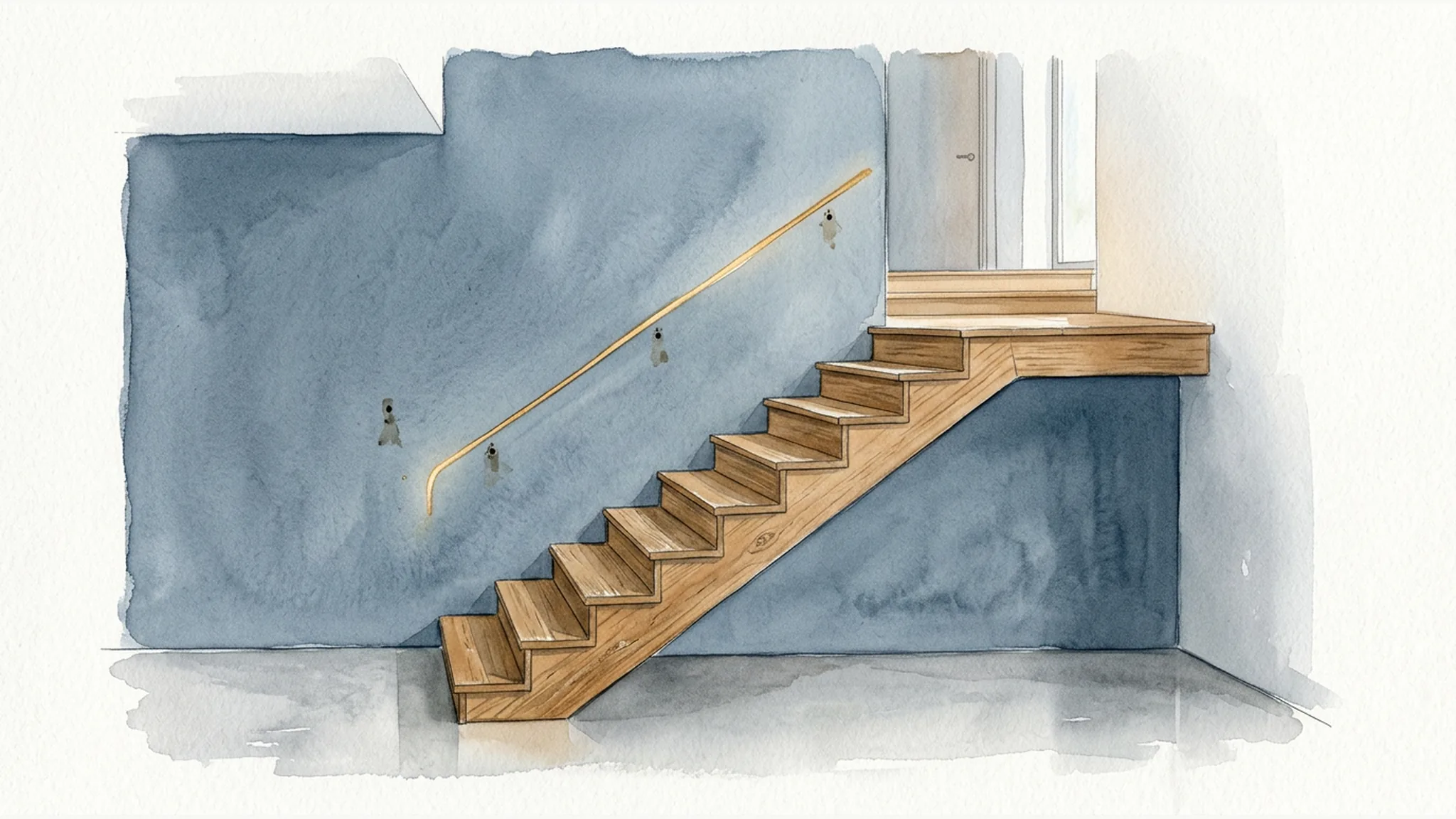
Missing Handrail on a Staircase: When an Oregon Fall Becomes a Building-Code Case
A fall on stairs is not automatically a building-code case. But when a staircase is missing a required handrail—or the rail is loose, removed, interrupted, too high or too low, or difficult to grasp—the claim may turn on more than the injured person’s footing.
In Oregon, a handrail-related fall may become a code or property-maintenance case when an applicable rule helps show three things: the stairway was unsafe, the owner, landlord, manager, business, or other responsible party was connected to the condition, and the handrail problem contributed to the fall or injury.
That analysis is fact-specific. The right rule may depend on the property type, occupancy, construction date, permit history, later repairs or alterations, local maintenance rules, rental-housing duties, and the date of the incident. A current code provision found online does not necessarily answer what applied to an older staircase.
This article explains the issues Oregon injury lawyers often look for in a missing-handrail stair fall. It is educational information, not legal advice for any specific case.
Not Every Stair Fall Is the Same
Some stair falls are primarily about a slippery surface, a loose tread, a curled carpet edge, poor lighting, ice, or a sudden spill. A missing-handrail case is different because the rail itself may be the safety feature that should have helped the person steady themselves, recover from a misstep, or move safely up or down the stairs.
That does not mean the absence of a handrail proves liability by itself. A useful handrail analysis usually asks:
- What type of property was this—home, rental, apartment common area, business, public building, manufactured-dwelling facility, or mixed-use space?
- How many risers did the stair flight have?
- Was a handrail required when the stairs were built, altered, repaired, or maintained?
- Was the handrail missing, removed, loose, broken, too high, too low, interrupted, or hard to grasp?
- Who had control over the stairs or responsibility for maintenance?
- Did anyone complain before the fall, inspect the stairs, write a work order, or repair the area afterward?
- How did the handrail problem connect to the way the fall happened?
Those questions are why a missing-handrail claim can become an evidence-heavy premises case rather than a generic “slip and fall.” For broader unsafe-property context, this type of claim fits within Oregon premises liability claims, but the handrail facts need their own review.
What a Handrail Is Supposed to Do in a Fall Claim
Oregon’s state building code is intended to provide uniform performance standards and reasonable safeguards for the health, safety, welfare, comfort, and security of people who use buildings. In practical terms, handrail rules are part of that safety framework.
In a stair-fall case, the legal importance of a handrail is usually not abstract. The question is whether the rail should have been there, whether it should have been maintained differently, and whether the missing or defective rail mattered to the fall.
For example, a person may allege that they reached for a rail that was not there, that a loose rail shifted when they tried to use it, or that an interrupted rail left no support at the point where they lost balance. Those allegations still need proof. Photos, measurements, witness statements, maintenance records, and sometimes code or building experts may be needed to connect the condition to the injury.
Careful wording matters. A code or maintenance problem can support a claim; it does not guarantee that the injured person will recover compensation.
The First Question: Which Rule Applied to This Staircase?
Handrail analysis starts with the staircase and the date—not just the newest code text. Oregon building-code requirements are generally statewide and uniform, while local governments may still have authority over certain administration, enforcement, dangerous-building, nuisance-abatement, and minimum housing health and safety standards.
That means a Portland rental-housing stairway, a rural single-family home, an apartment common stair, and a restaurant staircase may require different legal and code analysis.
Residential Homes, Townhouses, and Some Small Structures
The Oregon Residential Specialty Code generally applies to certain detached one- and two-family dwellings, townhouses, and related structures within its scope. The Oregon Building Codes Division lists the 2023 Oregon Residential Specialty Code as the current residential structures code as of the research date for this draft, with interim amendments also listed by the agency.
The 2023 residential code became effective October 1, 2023, with a phase-in period that ended March 31, 2024. During that phase-in, use of the prior 2021 residential code or the 2023 residential code was permitted. That timing can matter if the stairs were constructed, repaired, altered, or permitted around a code change.
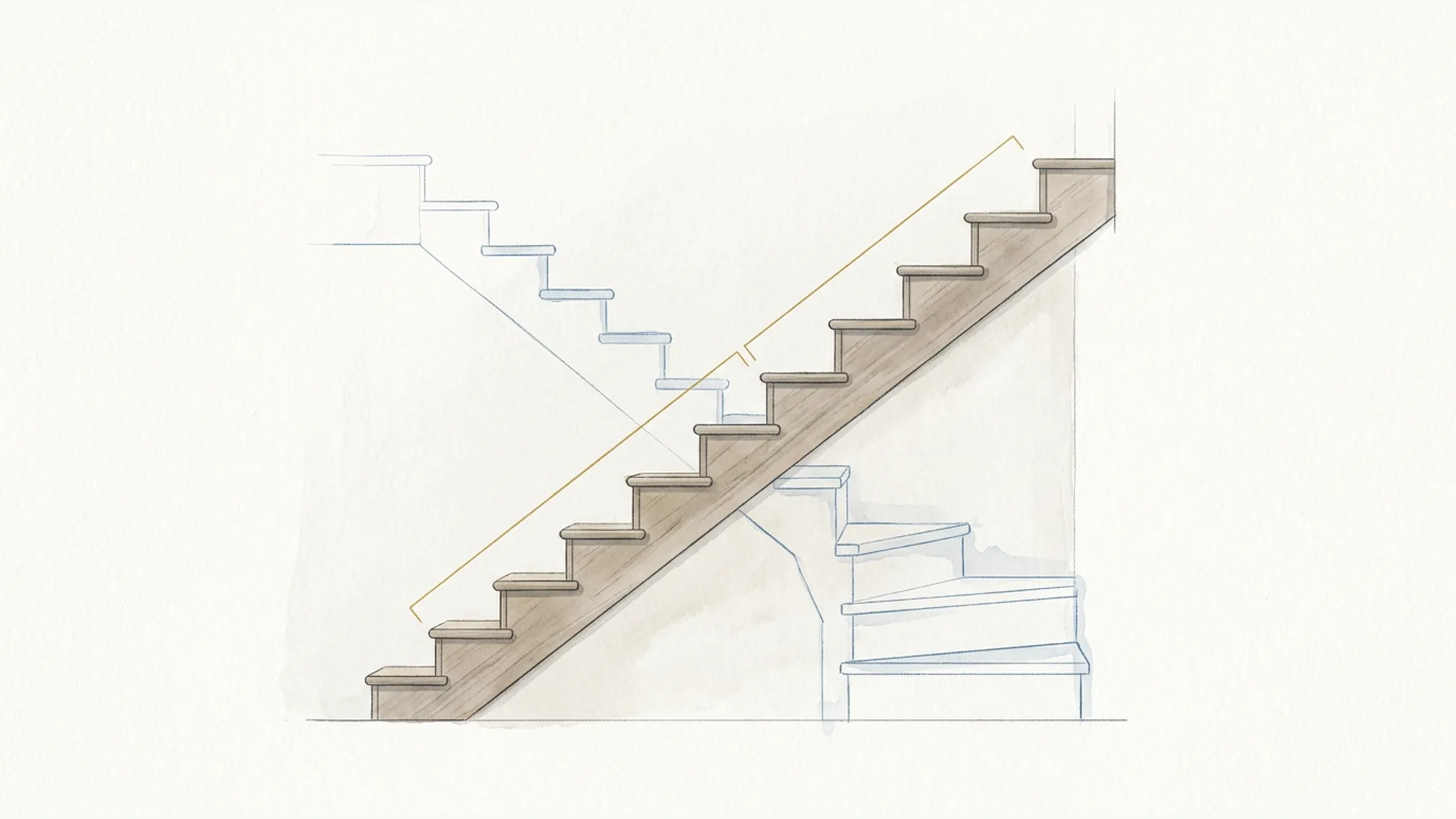
Under the Oregon Building Codes Division’s 2023 residential-code amendment summary, Section R311.7.8 requires handrails on at least one side of each flight of stairs with four or more risers. The same summary states that handrail height must be not less than 34 inches and not more than 38 inches, measured from the sloped plane adjoining the tread nosing or ramp slope surface.
Those points are useful for current residential-code framing, but they should not be treated as automatic answers for every older home or every stair fall. The applicable code cycle, construction date, permit history, and later alterations or repairs may matter.
Apartment Common Areas, Businesses, and Public or Mixed-Use Buildings
Apartment common areas, businesses, restaurants, public buildings, and mixed-use properties may fall outside the residential specialty code and require analysis under the Oregon Structural Specialty Code, existing-building rules, or other applicable standards.
The Oregon Building Codes Division lists the 2025 Oregon Structural Specialty Code as effective October 1, 2025, with a phase-in period and mandatory date in 2026, and lists the 2022 Structural Specialty Code as the prior code. Public excerpts of the 2022 Oregon Structural Specialty Code state that flights of stairways generally have handrails on each side and must comply with the handrail section identified in that code.
The exact code cycle matters. A fall in a business or apartment common area should not be analyzed only through the residential handrail rule unless that rule actually applies.
Portland Housing and Local Property-Maintenance Rules
Portland has an additional property-maintenance layer for covered housing conditions. Portland City Code Title 29 requires stairs, porches, and attachments to stairs or porches to be safe to use, capable of supporting loads, and kept in sound condition and good repair.
Portland Code Section 29.30.080 specifically addresses handrails and guardrails. It requires every handrail and guardrail to be firmly fastened, maintained in good condition, capable of supporting the loads to which it is subjected, and maintained or replaced as required. It also requires handrails and guardrails that were required by building codes at the time of construction to be maintained or, if removed, replaced.
Where not otherwise required by original building codes, Portland Title 29 also requires handrails for exterior stairs of more than three risers designed and intended for regular access to a dwelling unit, and for interior stairs of more than three risers. Required handrails must meet applicable building-code requirements in effect when installed.
Those Portland rules can be important in Portland slip-and-fall claims, especially when a rental-housing stairway has a missing, removed, loose, or deteriorated handrail. But Portland Title 29 is not the same thing as a statewide construction-code rule, and its scope should be checked before applying it to a particular property.
Common Handrail Problems That Can Change the Evidence
Not every handrail issue is the same. A missing handrail, a loose handrail, and a rail that is present but not graspable may involve different proof.
No Handrail on a Stair Flight With Enough Risers
The most direct scenario is a stair flight with enough risers that an applicable rule required a handrail, but no rail was installed or the rail had been removed.
Under the current Oregon residential-code summary noted above, the trigger is four or more risers for a residential stair flight within that code’s scope. Under Portland Title 29’s covered housing-maintenance wording, the rule refers to exterior stairs of more than three risers designed and intended for regular access to a dwelling unit, and interior stairs of more than three risers, where not otherwise required by original building codes.
Oregon case law has recognized that a handrail ordinance can matter in a negligence claim. In Lapp v. Rogers, the Oregon Supreme Court reversed dismissal of a tenant’s stair-fall complaint where the tenant alleged a Portland building-code handrail requirement, a failure to provide the handrail, and a fall resulting from that failure. The case does not mean every missing handrail automatically proves liability, but it shows why the handrail rule can be central to the pleading and proof.
Loose, Broken, Removed, or Poorly Maintained Handrails
A handrail can matter even when something that looks like a rail is present. If it is loose, broken, poorly anchored, deteriorated, or removed after originally being required, the issue may be maintenance rather than original design.
Portland Title 29 is especially direct on this point for covered housing: every handrail and guardrail must be firmly fastened, maintained in good condition, and capable of supporting the loads to which it is subjected. Portland also requires stairs and porch attachments to be kept safe to use and in sound repair.
In a claim, maintenance evidence may include prior complaints, photographs showing deterioration, work orders, inspection records, repair invoices, tenant communications, or testimony from people who used the stairs before the fall.
Wrong Height, Interrupted Rails, or Hard-to-Grasp Rails
Some stairways have a rail, but the rail may not perform like a usable handrail. The Oregon Building Codes Division’s 2023 residential-code summary identifies a 34-to-38-inch handrail-height range for the current residential code. Public excerpts of the 2021 International Residential Code—the model code on which Oregon’s 2023 residential code is based, with Oregon amendments—also include concepts such as continuity along the stair flight and graspability.
Those details can be important, but they should be verified against the integrated Oregon code text and the applicable code cycle before publication or litigation use. A lawyer or code expert may need to determine whether Oregon amendments changed the exact language, exceptions, or section numbering that applies.
Handrails Versus Guardrails
Handrails and guardrails are related, but they are not the same thing.
A handrail is the feature a person holds while using stairs. A guardrail or guard is intended to reduce the risk of falling from the side of stairs, a landing, porch, deck, or similar elevated area. Some cases involve both. For example, a porch or manufactured-dwelling stair improvement may raise questions about both a handrail and a guardrail.
Keeping the distinction clear matters. A person who fell while descending stairs because there was nothing to hold may have a handrail issue. A person who fell off the side of an elevated landing may have a guardrail issue. The facts can overlap, but the code questions may be different.
How a Code or Maintenance Violation Can Support an Oregon Fall Claim
A building-code or maintenance-rule violation can be important evidence, but it is not a shortcut around the rest of the case. Oregon decisions discussing negligence based on statutes or ordinances generally require attention to whether the rule applied, whether it was designed to protect people in the claimant’s position from the type of harm that occurred, whether it was violated, whether the defendant was responsible for the violation, and whether the violation caused the injury.
The Rule Has to Apply
The first step is identifying the correct rule. That can require looking at:
- the type of property and occupancy;
- whether the stairway is inside a dwelling, in a common area, outside a unit, or in a business;
- the construction, permit, alteration, repair, or inspection history;
- the incident date;
- applicable state codes, existing-building rules, landlord-tenant duties, or local maintenance rules; and
- any exceptions or definitions in the code.
Oregon courts have cautioned that later code changes do not automatically create liability for every older building that complied with earlier codes and remained unchanged. In Eduardo v. Clatsop Community Resource Development Corp., the Oregon Court of Appeals addressed a tenant’s fall on stairs lacking continuous handrails, but also cautioned that the court was not holding that owners face liability solely because codes later changed and an originally compliant building remained in its original condition.
That caveat is important. The question is not simply, “What does the current code say?” The question is, “What rule applied to this staircase, at this time, under these facts?”
The Responsible Party Has to Be Connected to the Condition
A handrail defect also has to connect to the person or entity being blamed. Depending on the property, that may involve ownership, operation, control, repair responsibility, rental-housing duties, common-area obligations, park rules, inspection knowledge, or maintenance contracts.
For rental housing, Oregon’s Residential Landlord and Tenant Act defines “building and housing codes” to include laws and governmental regulations concerning fitness for habitation and the construction, maintenance, operation, occupancy, use, or appearance of premises or dwelling units. ORS 90.320 requires a landlord to maintain a dwelling unit in a habitable condition during the tenancy and states that a dwelling unit is considered unhabitable if it substantially lacks floors, walls, ceilings, stairways, and railings maintained in good repair.
In manufactured-dwelling or floating-home facility contexts, ORS 90.730 addresses a landlord’s duties for the rented space, vacant spaces, and facility common areas, including keeping common-area buildings, grounds, and appurtenances safe for normal and reasonably foreseeable uses. That statute is context-specific and does not make a facility landlord responsible for every condition inside a tenant-owned dwelling or home.
The Oregon Court of Appeals’ decision in Buoy v. Soo Hee Kim shows how responsibility and notice facts can matter. There, the court reversed summary judgment in a manufactured-dwelling park case involving porch and stair improvements that lacked guardrail/handrail protections, alleged code and park-rule violations, manager observation, and a city inspector’s instruction to install a handrail. The case is fact-specific, but it illustrates why inspection records, rules, and manager knowledge can become important.
The Handrail Problem Has to Connect to the Fall
Finally, the missing or defective handrail has to matter to causation. A code violation that had nothing to do with the fall may not support the claim in a meaningful way.
Useful causation evidence may include the injured person’s description of the fall, witness statements, where on the staircase the person lost balance, whether they reached for a rail, whether the rail moved, photographs of the stairway, measurements, lighting conditions if relevant, and expert analysis when needed.
The safest way to frame the point is this: a handrail violation can help show why the stairway was unsafe and how the fall happened, but the connection still has to be proven.
Rental Housing, Landlords, and Stair Railings in Oregon
Many missing-handrail questions arise in rental homes, apartment buildings, duplexes, older houses converted to rentals, exterior stairs serving a unit, or common stairways.
In those cases, the location of the stairs matters. A stairway inside a rented dwelling, an exterior stair serving one unit, a shared apartment common stair, and a facility common area can raise different control and maintenance questions.
Inside the Rental Unit Versus Common Areas
For a rental dwelling unit, ORS 90.320’s habitability language regarding stairways and railings maintained in good repair may be important. For common areas, the analysis may also look at who controlled the area, who had authority to repair it, whether tenants were responsible for any portion of the structure, and whether the landlord, manager, association, or another entity had notice of the condition.
In Portland, Title 29 may add a property-maintenance layer for covered housing conditions. For example, a removed handrail that was required when constructed, or an interior or regular-access exterior stair of more than three risers in a covered context, may require close review under Portland’s handrail and guardrail rules.
Prior Complaints, Inspections, and Work Orders
Notice evidence can be critical in rental stair cases. Important records may include:
- tenant complaints about the missing or loose handrail;
- emails or text messages with the landlord or property manager;
- maintenance requests and work orders;
- inspection or code-enforcement notices;
- repair invoices or contractor records;
- lease provisions, house rules, or park rules;
- photographs taken before and after the fall;
- surveillance video or doorbell video; and
- statements from neighbors, tenants, maintenance workers, or visitors.
For local cases, these records may also connect to Multnomah County personal injury claims when disputed facts, local inspections, and property records become part of the claim file.
What Evidence Should Be Preserved After a Handrail-Related Fall?
Handrail evidence can disappear quickly. A landlord, business, manager, or owner may repair the rail, install a new one, repaint the stairway, or discard hardware before anyone documents what existed at the time of the fall.
Without taking unsafe risks or recreating the fall, consider preserving evidence as soon as practical.
Photos and Measurements
Useful photographs may show:
- the full stairway from several angles;
- the number of risers;
- whether a handrail was present on either side;
- where a rail started and stopped;
- missing brackets, holes, patch marks, or signs a rail was removed;
- looseness, broken attachments, or visible deterioration;
- the height of the rail, if it can be measured safely;
- the walking surface, tread condition, and landing area; and
- lighting, shadows, or obstructions if they played a role.
Measurements can matter, but they should be taken safely. If a person is injured or the staircase remains dangerous, it may be better to have someone else document the condition or to wait for a qualified professional.
Records and Witnesses
Preserve communications and records that show what people knew before the fall. That may include texts, emails, maintenance portals, complaint confirmations, inspection reports, notices from a city or county, repair estimates, invoices, lease documents, incident reports, and video.
Witnesses can include people who saw the fall, people who used the stairs before the fall, tenants who complained about the handrail, maintenance workers, or managers who inspected the area.
For more general evidence steps after an accident, see Johnson Law’s guide to preserving photos, maintenance records, and video.
Repairs After the Fall
Quick repairs may be important for safety, but they can also change the evidence. If the handrail is installed, replaced, tightened, or removed after the fall, try to preserve before-and-after photos, repair dates, invoices, contractor names, and any written explanation of what was changed.
This article does not address whether post-incident repairs may be admissible in court. That is a legal and evidentiary question for case-specific review.
Comparative Fault: What If You Knew the Handrail Was Missing?
Property owners and insurers may argue that the injured person knew the handrail was missing, should have watched their step, should have used another route, or should have avoided the stairs.
Oregon comparative-fault law does not make that question all-or-nothing in every case. ORS 31.600 provides that contributory negligence does not bar recovery if the claimant’s fault is not greater than the combined fault of specified others, but damages are reduced in proportion to the claimant’s percentage of fault.
Oregon cases also caution against treating a known or obvious danger as an automatic complete bar. In Woolston v. Wells, the Oregon Supreme Court discussed a possessor’s duty to make premises reasonably safe for invitees and rejected instructions that treated known or obvious danger as a complete bar inconsistent with comparative fault. In Lapp v. Rogers, the court also indicated that tenant knowledge of a missing handrail could relate to contributory negligence, but did not erase the handrail-duty analysis at the pleading stage.
The practical point is balanced: knowing about a missing or defective handrail may matter, but it does not automatically end every Oregon claim. The effect depends on the facts, the applicable duties, and how fault is allocated.
Related Stair-Fall Issues Are Separate
Handrail cases can overlap with other stair hazards, but they should not be blurred together.
If the fall involved a broken step, loose tread, or carpet edge, the key proof may be different from a missing-handrail case. See Johnson Law’s discussion of loose stair tread or carpet-edge evidence. If the fall involved darkness or shadows, poor stairwell lighting evidence may be the more direct issue. If the fall occurred in an apartment exterior common area, the control and maintenance questions may overlap with apartment common-area fall claims, though ice and handrails involve different mechanisms.
Keeping the theory narrow helps preserve the strongest evidence. A missing handrail is not just another way to describe a slippery stair or a bad step. It raises its own code, maintenance, notice, control, and causation questions.
When to Get Legal Help for a Missing-Handrail Stair Fall
A missing-handrail stair fall can be more technical than it first appears. The key questions may include which Oregon code cycle applied, whether Portland Title 29 or rental-housing duties add a maintenance rule, whether the stairway was altered or repaired, who controlled the area, what records existed before the fall, and how comparative fault may be argued.
Early review can also help preserve evidence before repairs change the stairway. Johnson Law can evaluate Oregon stair-fall claims involving missing, removed, loose, or defective handrails and explain what information may be needed to assess the claim.
If a disputed stair-fall claim is filed in Multnomah County, Johnson Law’s overview of the local Circuit Court lawsuit timeline explains how filing, service, discovery, ADR, arbitration, and trial-setting procedures may fit together.
This article is for educational purposes only and is not legal advice. Reading it does not create an attorney-client relationship. If you were injured, speak with an Oregon personal-injury lawyer about your specific facts.
FAQs
Does Oregon Require a Handrail on Every Staircase?
No. Whether a handrail is required depends on the applicable code or maintenance rule, property type, number of risers, construction or repair history, occupancy, incident date, and any local housing requirements. Current Oregon residential-code summaries identify a handrail requirement for flights with four or more risers within that code’s scope, but that rule does not automatically decide every older, commercial, apartment-common-area, or mixed-use stairway.
Is a Missing Handrail Automatically Negligence in Oregon?
No. A missing handrail may support a negligence or negligence-per-se theory only if the applicable rule applied, the rule fit the claimant and the type of harm, the rule was violated, the responsible party was connected to the violation, and the violation helped cause the injury. A code issue can be important evidence, but it does not guarantee liability or recovery.
What if the Staircase Is in Portland Rental Housing?
Portland Title 29 may be important in covered housing contexts because it addresses stair safety, handrail and guardrail maintenance, replacement of removed required rails, and handrails on certain interior and regular-access exterior stairs with more than three risers. Oregon landlord-tenant habitability rules may also matter. The scope of the rules, control over the area, and the facts of the fall still need case-specific review.
Can I Still Have a Claim if I Knew the Handrail Was Missing?
Possibly. Oregon comparative fault may reduce or affect recovery based on the injured person’s share of fault, but knowledge of a missing or defective handrail does not automatically end every claim. The effect depends on the facts, the applicable duty, whether safer alternatives were available, and how the handrail problem contributed to the fall.
What Evidence Helps Prove a Handrail-Related Stair Fall?
Helpful evidence may include photos, measurements, the number of risers, proof that a rail was missing or loose, repair history, work orders, prior complaints, inspection or code-enforcement records, permits, incident reports, witness statements, video, and communications with a landlord, manager, business, or maintenance worker.
Are Handrails and Guardrails the Same Thing?
No. A handrail is designed to be held while using stairs. A guardrail or guard is intended to reduce the risk of falling from the side of stairs, a landing, porch, deck, or other elevated area. Some cases involve both, but the code and causation questions may be different.
Source Notes
- ORS 455.020 and ORS 455.040 were used for Oregon building-code purpose, statewide-uniformity framing, and the distinction between state construction-code issues and local housing/property-maintenance authority.
- Oregon Building Codes Division adopted-code materials and the 2023 Oregon Residential Specialty Code amendment summary were used for current residential-code cycle, phase-in, residential scope, handrail-on-four-or-more-risers framing, and 34-to-38-inch handrail-height framing. Exact integrated code text and interim amendments should be verified before final publication or litigation use.
- Oregon Building Codes Division adopted-code materials and public 2022 Oregon Structural Specialty Code excerpts were used for the commercial/apartment/common-area caution that nonresidential or mixed-use stairs may require structural-code analysis rather than residential-code analysis.
- Portland City Code Sections 29.30.070 and 29.30.080 were used for Portland housing/property-maintenance discussion involving safe stairs, sound repair, firmly fastened and maintained handrails/guardrails, replacement of removed required rails, and handrails for certain stairs with more than three risers.
- ORS 90.100, ORS 90.320, and ORS 90.730 were used for rental-housing, habitability, stairway/railing, and manufactured-dwelling/floating-home facility context.
- ORS 31.600, Woolston v. Wells, and Lapp v. Rogers were used for comparative-fault and known-condition framing.
- Lapp v. Rogers, Landolt v. The Flame, Eduardo v. Clatsop Community Resource Development Corp., Buoy v. Soo Hee Kim, and McNamara v. Night Deposit were used for Oregon handrail/code-violation, negligence-per-se, retroactivity, responsibility/control/notice, and code-interpretation caveats.
- This post intentionally does not state Oregon limitation periods, tort-claims deadlines, OSHA requirements, accessibility-law requirements, or evidentiary rules about subsequent repairs because those issues were not researched in the supplied fact sheet.
Client-First Fee Promise
Client First = Bills First, Fees Second
Your unpaid medical bills do not have to make your lawyer's fee bigger. Johnson Law subtracts qualifying medical bills before calculating our fee, helping clients keep more of their settlement.
Applies to qualifying cases. Results vary.