Nerve Root Compression Symptoms: When Radiating Pain Becomes Objective Evidence
Nerve Root Compression Symptoms: When Radiating Pain Becomes Objective Evidence
Pain that shoots from your back into your leg can feel very different from ordinary soreness. After an Oregon crash or fall, that kind of radiating pain may raise an important question: is this just pain, or is it evidence of a nerve-root injury?
The careful answer is that radiating pain is a clue, not the whole case. It can be consistent with radiculopathy or nerve-root compression, but it does not automatically prove a diagnosis, accident causation, liability, damages, or claim value. The record usually becomes stronger when the reported pain path lines up with neurological exam findings, appropriate imaging or electrodiagnostic testing, treatment history, and real functional limits over time.
This article is educational information for Oregon injury claimants. It is not medical advice or legal advice for a specific case.
Radiating Pain Is a Clue, Not the Whole Case
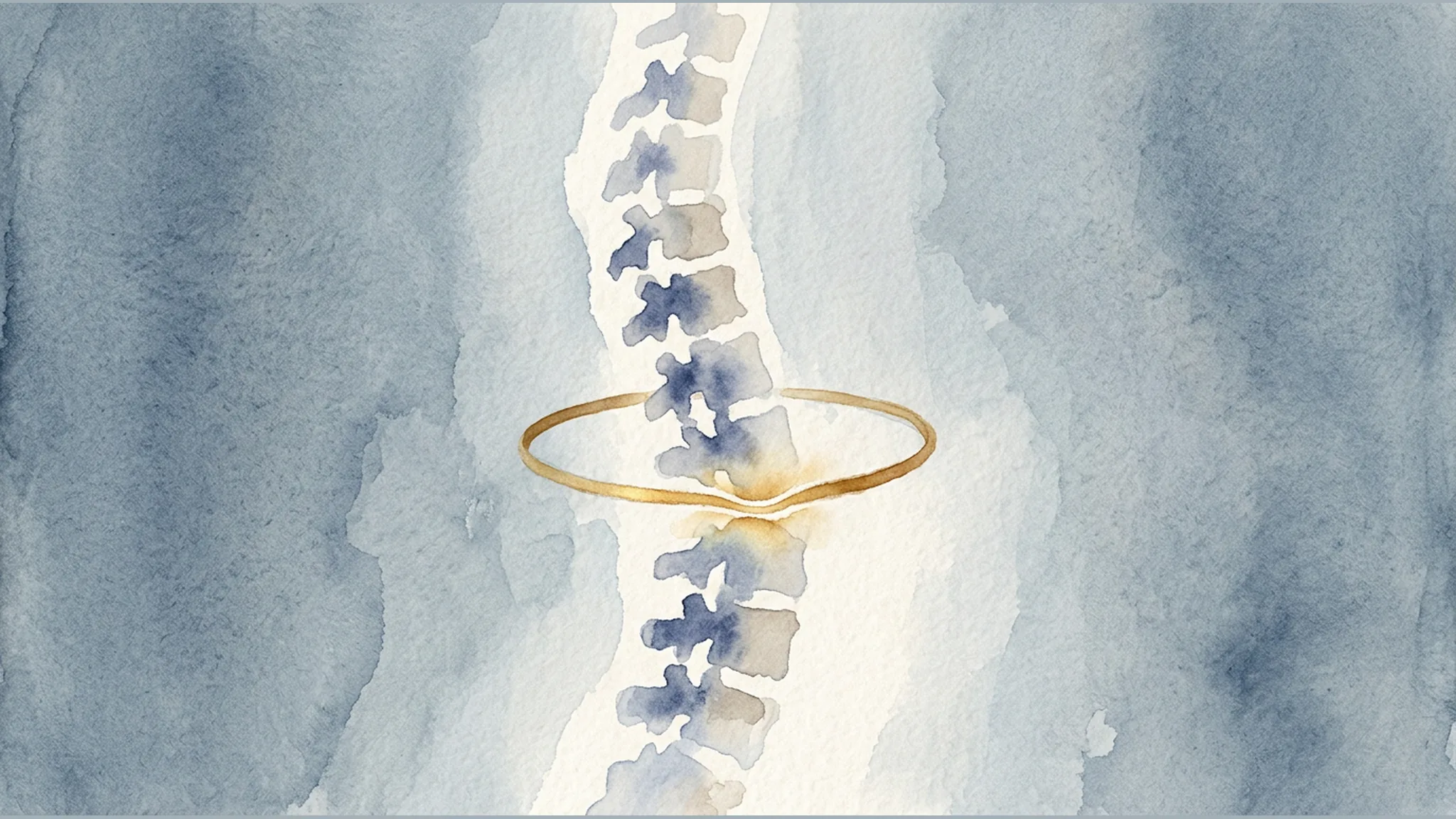
Lumbosacral radiculopathy generally refers to pain caused by compression or irritation of one or more nerve roots in the lower spine. It commonly appears as low back pain that travels into the leg in a dermatomal pattern, meaning the symptoms may follow an area served by a particular nerve root.
That pattern matters. A chart note that says “back pain” is less specific than a record describing pain traveling from the low back into the buttock, down the outside of the leg, and into the foot, especially if the same path is reported consistently across visits.
But radiating pain alone is not the same as proof. Symptoms can include radiating pain, numbness, tingling, weakness, and gait problems, but not every person has every finding. The absence of numbness, weakness, or reflex loss does not necessarily exclude lumbosacral radiculopathy. At the same time, the presence of radiating pain does not automatically establish that a crash or fall caused nerve-root compression.
Radiculopathy also should not be treated as interchangeable with Complex Regional Pain Syndrome. Johnson Law addresses that separate diagnosis and its clinical criteria in a guide to CRPS diagnosis disputes in Oregon injury claims.
For an Oregon injury claim, the practical issue is documentation. The stronger record usually connects:
- where the symptoms travel;
- whether the symptoms fit a recognized nerve-root pattern;
- what the neurological exam shows;
- whether imaging or EMG/NCS testing is appropriate and consistent;
- how symptoms change with treatment; and
- how the condition affects walking, sitting, sleeping, driving, work, or daily activities.
That is why objective findings can support the evidence record without becoming a shortcut or guarantee.
What Doctors Mean by Radiculopathy or Nerve-Root Compression
“Radiculopathy” is a medical term, not a settlement label. In the lower back, it generally involves irritation or compression of a lumbosacral nerve root. People often describe the result as sciatica, shooting pain, electric pain, burning, numbness, tingling, or weakness that travels away from the spine.
Lumbar vs. cervical symptoms
Most of the examples in this article focus on lumbar or lumbosacral radiculopathy: low back symptoms that travel into the buttock, leg, or foot. Neck-related nerve-root symptoms can travel into the shoulder, arm, or hand, but cervical radiculopathy uses different exam patterns. A straight-leg raise test, for example, is mainly a lumbar/lumbosacral test and should not be treated as a general test for every nerve-root problem.
Dermatomes, myotomes, and why the symptom path matters
Providers may look for whether symptoms follow dermatomes or myotomes. In plain English, that means they are looking for a pattern: where sensation changes occur, which muscles show weakness, and whether the findings make sense for a particular nerve root.
This is one reason consistent symptom descriptions are important. If pain, numbness, or tingling is vague and constantly shifting, it may be harder to connect to a specific nerve-root pattern. If the symptoms repeatedly follow a recognizable path and are paired with matching exam findings, the medical record may become more persuasive.
The Exam Findings That Can Make Radiating Pain More Objective
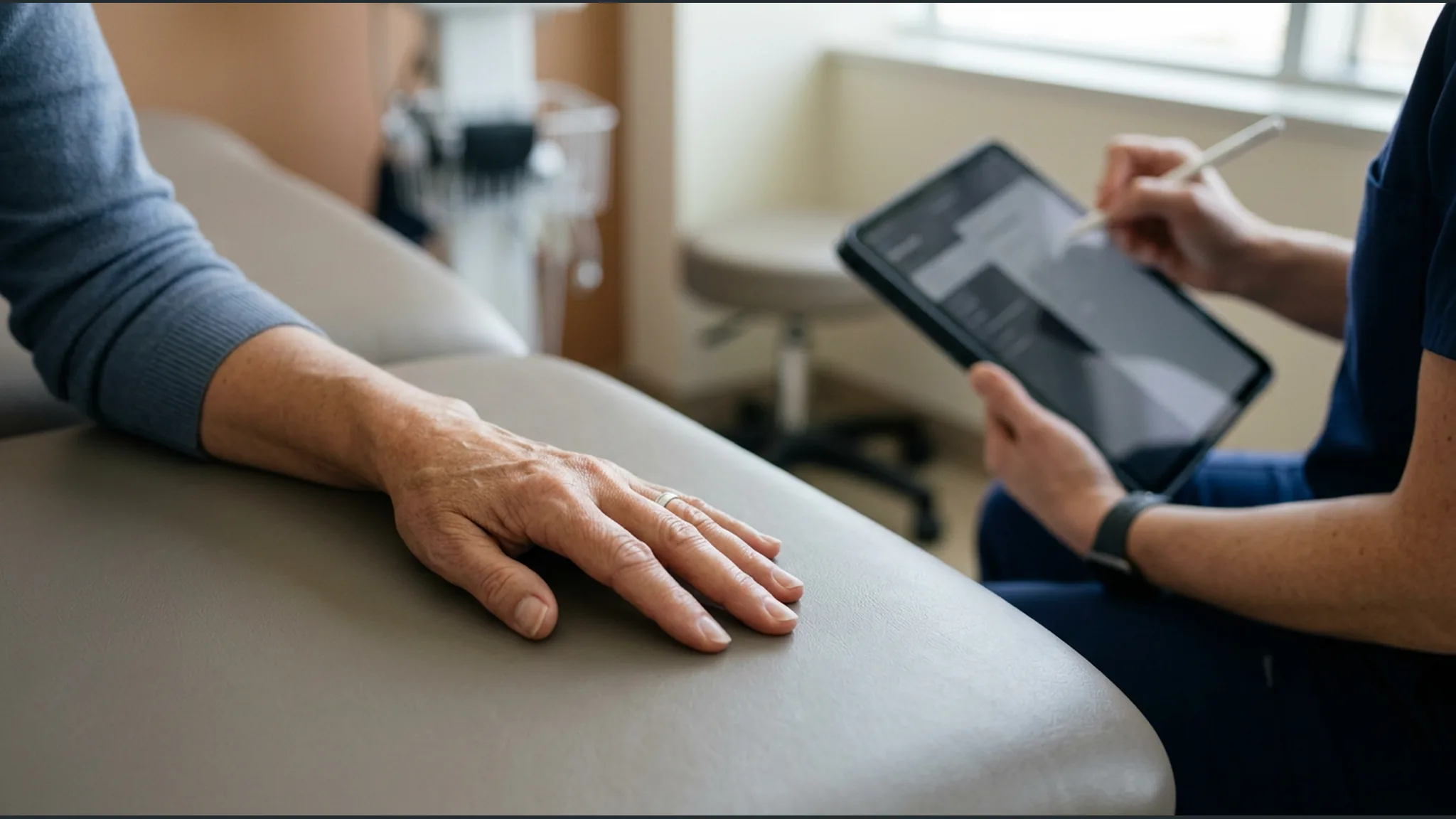
A focused radiculopathy exam often includes strength, sensation, reflexes, and provocative maneuvers. These findings do not decide an Oregon injury claim by themselves, but they can turn a patient’s report of radiating pain into a better-documented clinical picture.
Strength, sensation, and reflex testing
Providers may test whether both sides of the body respond the same way. They may ask you to push, pull, lift, or resist pressure. They may check whether sensation feels different in one leg or foot. They may test reflexes.
Some reflex changes can point toward particular lumbar roots. For example, the knee jerk is associated with L4, the medial hamstring reflex with L5, and the Achilles reflex with S1. Strength and sensation can also map to root-level patterns.
These findings matter most when they line up with the symptom path. A record showing radiating pain, sensory change, weakness, and reflex findings in a consistent pattern is usually more useful than a record containing only a general pain complaint.
Straight-leg raise and crossed straight-leg raise
The straight-leg raise, sometimes discussed with the Lasègue test, is a common lumbar/lumbosacral provocative test. The test tensions the sciatic nerve. Reproduction of symptoms around 30 to 60 degrees can suggest lower lumbar nerve-root involvement, especially around L4-S1.
A crossed straight-leg raise is different: raising the unaffected leg reproduces symptoms on the affected side. It is described as less sensitive but more specific for lumbosacral radiculopathy than the standard straight-leg raise.
Neither test proves the entire case. A positive test can support the clinical picture, especially when it matches the pain path and other neurological findings. A negative or unclear test does not necessarily answer every medical or legal question.
Gait and function observed in the medical record
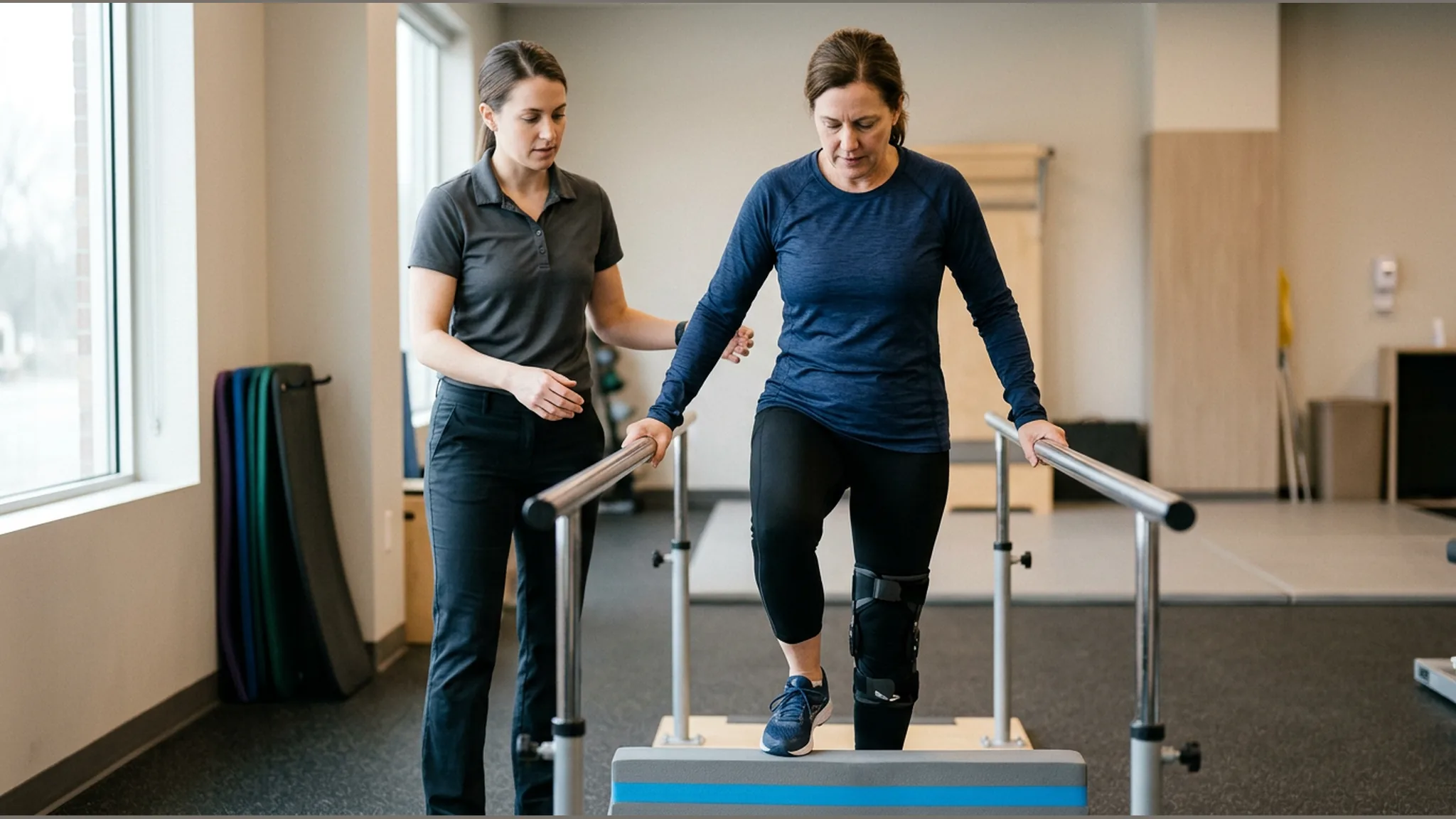
Radiculopathy can be associated with gait abnormalities. If a provider observes limping, guarded movement, difficulty heel-walking or toe-walking, or other functional changes, those observations may help document how symptoms are affecting the person in real life.
This is different from simply saying “I hurt.” Function-based records can show whether symptoms affect walking distance, stairs, sitting tolerance, sleep, driving, lifting, or job tasks. That kind of documentation may be important in both medical care and claim evaluation.
Imaging Helps Most When It Matches the Symptoms
MRI and other imaging can be important in spine-injury claims, but imaging is not magic. An MRI finding is strongest when it fits the symptom path, exam findings, timing, treatment course, and functional limitations.
Why an MRI finding is not automatically the answer
Degenerative spine findings are common in people who do not have pain. One systematic review reported disk degeneration in 37% of 20-year-olds and 96% of 80-year-olds, with disk bulges also increasing with age.
That does not mean an MRI finding is meaningless. It means the finding has to be interpreted in context. A disc bulge or herniation that matches the side, level, symptom pattern, exam findings, and accident timeline may carry different evidentiary weight than an incidental finding that does not fit the clinical picture.
For a deeper discussion of radiology wording, see Johnson Law’s article on what MRI terms such as herniation and bulge mean in an Oregon injury case. For a related issue, see the discussion of why imaging and pain do not always line up.
When imaging may be appropriate
Medical guidance generally does not recommend immediate imaging for uncomplicated acute low back pain or radiculopathy in every case. ACR guidance and AAFP Choosing Wisely guidance both caution against early imaging when there are no red flags, severe or progressive neurological deficits, or concerns for a serious underlying condition.
Imaging may become more appropriate when symptoms persist despite conservative care or when red flags or progressive neurological findings are present. That is a medical decision for the treating provider. From a claim perspective, the key is not “get an MRI as fast as possible.” The key is whether the medical record explains why imaging was or was not appropriate and how any imaging findings fit the rest of the evidence.
Where EMG and Nerve Conduction Studies Fit
Electrodiagnostic testing can also play a role, especially when symptoms are not fully explained by imaging or when the provider needs to consider other causes.
What EMG/NCS can help clarify
EMG/NCS generally refers to nerve conduction studies and needle electromyography. Electrodiagnostic evaluation may be useful when limb sensory or motor symptoms do not have a clear imaging explanation or when the provider needs help with differential diagnosis.
For example, electrodiagnostic testing can help distinguish radiculopathy from conditions that may mimic it, such as peroneal nerve palsy, mononeuropathy, or polyneuropathy. Needle EMG is often described as the most useful electrodiagnostic study for radiculopathy. Findings that support radiculopathy generally involve abnormalities in sampled muscles supplied by the same root but different peripheral nerves, often including paraspinal muscles.
Why timing and limits matter
EMG is not perfect. Electrodiagnostic abnormalities may not be evident for at least two weeks after symptom onset. An NCBI review reports EMG sensitivity for radiculopathy between 50% and 85%.
That means a negative early EMG does not necessarily rule out radiculopathy. It also means a positive EMG should still be read in context with symptoms, exam findings, imaging, and function. The AANEM evidence review found that peripheral limb EMG probably aids the clinical diagnosis of suspected lumbosacral radiculopathy, but “aids” is not the same as “proves every issue in the legal claim.”
What Makes the Record Stronger in an Oregon Injury Claim
In an Oregon personal-injury claim, the medical question and the legal question overlap but are not identical. A provider may diagnose radiculopathy or suspected nerve-root compression. A legal claim still considers how the injury happened, when symptoms began, prior medical history, liability, comparative fault, damages, and whether the medical evidence supports causation and severity.
Consistency across symptom path, exam, testing, and function
The most useful record usually tells a consistent story:
- Symptoms begin or change after the crash or fall.
- The pain path is described with enough detail to evaluate a nerve-root pattern.
- Exam findings such as strength, sensation, reflexes, gait, or straight-leg raise fit the reported symptoms.
- Imaging, if performed, is interpreted in light of the symptoms and exam.
- EMG/NCS, if performed, is used for the right reason and with timing limitations in mind.
- Treatment notes document whether symptoms improve, worsen, or persist.
- Functional limits are recorded over time.
This is also where documenting symptoms, function, and treatment over time can matter. The claim record is usually stronger when it does not depend on one dramatic appointment or one isolated test result.
What injured people should track
If you are dealing with radiating pain after an Oregon crash or fall, consider keeping practical notes for your medical providers and legal team. Track:
- where the pain starts and where it travels;
- numbness, tingling, burning, or electric sensations;
- weakness, tripping, foot drag, or gait changes;
- symptoms that affect sitting, standing, walking, driving, sleeping, or lifting;
- missed work, modified duties, or reduced hours;
- treatment response, including what helps and what makes symptoms worse;
- new or worsening symptoms; and
- questions your provider raises about MRI, EMG/NCS, injections, therapy, referrals, surgery evaluation, or future care planning.
If future treatment is being discussed, records about referrals, therapy, injections, or specialist evaluation may also connect to documenting treatment you have not had yet. If symptoms affect your job, lifting tolerance, driving tolerance, or long-term work options, the documentation may also relate to future earning-capacity questions.
Medical diagnosis vs. legal causation
It is important not to collapse the medical and legal questions into one sentence. A diagnosis can support the claim, but it does not automatically prove who was at fault or what compensation is available. Insurers may question whether imaging findings are degenerative, whether symptoms match the mechanism of injury, whether treatment was necessary, or whether functional limits are supported by the record. In vehicle cases, they may also try to reduce the medical picture to a property-damage argument; Johnson Law’s article on responding to the low impact = no injury argument explains that issue separately.
Those disputes are one reason objective findings can matter. They help show that the claim is not based only on subjective pain reports. But the evidence still has to be connected to the accident facts and Oregon law.
Oregon PIP, Treatment Access, and Claim Timing
Oregon-specific rules can affect how a claim moves forward, even though they do not diagnose nerve-root compression.
PIP may matter after motor-vehicle crashes
When an applicable Oregon motor-vehicle policy provides personal injury protection, often called PIP, that coverage can matter for treatment access and billing. Oregon PIP statutes may affect crash-related medical benefits, but PIP does not apply to every fall, premises-liability incident, or non-vehicle injury.
If you have radiating pain after a crash, the medical record and billing record may develop at the same time. It can be important to understand which coverage is paying bills, what treatment has been authorized, and whether disputes are developing over necessity or causation.
Deadlines and fault rules are separate from diagnosis
Oregon’s general personal-injury limitation period is commonly two years, and Oregon uses modified comparative fault rules. Some claims have shorter notice requirements or different limitation rules, so the specific deadline should be checked early. Those legal rules may frame the claim, but they do not decide whether a person medically has radiculopathy.
The practical takeaway is simple: do not wait until the medical picture is perfectly clear before learning what deadlines, insurance issues, and evidence-preservation questions may apply. If crash or fall evidence may be lost, Johnson Law’s discussion of preserving evidence after an accident explains why early preservation steps can matter.
When to Get Legal Help for Radiating Pain After a Crash or Fall
Legal guidance may be especially useful when radiating symptoms are persistent, worsening, or disputed. That can include situations where:
- symptoms travel into the leg or foot and do not resolve quickly;
- medical records show weakness, reflex changes, sensory changes, gait problems, or positive provocative tests;
- imaging findings are being dismissed as degenerative or unrelated;
- EMG/NCS is being considered because symptoms and imaging do not fully line up;
- treatment needs may include specialist referrals, injections, therapy, surgery evaluation, or future care planning;
- symptoms affect work, driving, sleep, or daily function; or
- an insurer disputes causation, necessity of treatment, or the seriousness of the condition.
Johnson Law helps injured people evaluate Oregon personal-injury claims, including claims involving disputed medical evidence. If you have questions about radiating pain after a crash or fall, you can learn more about the firm’s personal injury practice. For severe or long-term neurological impairment, the firm’s catastrophic injury information may also be relevant.
The goal is not to label every radiating-pain case as severe or high value. The goal is to build a careful record: symptoms, exam findings, appropriate testing, treatment response, function, and Oregon claim facts.
FAQs About Radiating Pain and Nerve-Root Evidence
Does radiating leg pain prove nerve-root compression?
No. Radiating leg pain can be consistent with radiculopathy, but pain alone does not prove nerve-root compression, accident causation, liability, damages, or claim value. The evidence is usually stronger when the pain path matches neurological exam findings, appropriate testing, treatment history, and functional limits.
Can I have radiculopathy without numbness, weakness, or reflex loss?
Yes. The absence of numbness, weakness, or reflex loss does not exclude lumbosacral radiculopathy. Those findings can strengthen the clinical record when present, but their absence does not automatically answer the diagnosis question.
Should I get an MRI right away after an Oregon crash or fall?
Not always. ACR and AAFP Choosing Wisely guidance generally discourages early imaging for uncomplicated acute low back pain or radiculopathy unless red flags, serious-condition concerns, severe or progressive neurological deficits, or persistent symptoms justify imaging. Your treating provider should decide what testing is medically appropriate.
What does a straight-leg raise test show?
A straight-leg raise is a lumbar/lumbosacral provocative test that tensions the sciatic nerve. Reproduction of symptoms around 30 to 60 degrees can suggest lower lumbar nerve-root involvement, especially L4-S1. It is supportive evidence, not a stand-alone answer.
Can a normal or unclear MRI still fit radiating pain?
Sometimes. Imaging and symptoms do not always line up. A claim record may also include clinical exams, treatment course, EMG/NCS when appropriate, functional limits, and provider opinions about whether the evidence fits a nerve-root pattern.
Does a negative EMG rule out radiculopathy?
Not necessarily. Electrodiagnostic abnormalities may not be evident for at least two weeks after symptom onset, and EMG sensitivity is imperfect. A negative EMG, especially early, should be interpreted in the context of symptoms, exam findings, imaging, and the treating provider’s assessment.
Source Notes
- NCBI Bookshelf, Lumbosacral Radiculopathy, for the definition of lumbosacral radiculopathy, dermatomal radiating pain, symptom patterns, exam components, straight-leg raise discussion, crossed straight-leg raise caveat, and reflex/root examples.
- NCBI Bookshelf, Electrodiagnostic Evaluation of Lumbosacral Radiculopathy, for EMG/NCS use, needle EMG, and supportive electrodiagnostic patterns.
- Merck Manual Professional, Lumbosacral Radiculopathy, for electrodiagnostic differential-diagnosis uses and timing limitations.
- NCBI Bookshelf, Radicular Back Pain, for the reported EMG sensitivity range of 50% to 85% for radiculopathy.
- AANEM evidence review, Utility of Electrodiagnostic Testing in Evaluating Patients with Lumbosacral Radiculopathy, for the point that peripheral limb EMG probably aids clinical diagnosis of suspected lumbosacral radiculopathy.
- ACR Appropriateness Criteria and AAFP Choosing Wisely guidance for avoiding early imaging in uncomplicated acute low back pain/radiculopathy absent red flags, severe/progressive neurological deficits, serious-condition concerns, or persistent symptoms after conservative care.
- Brinjikji et al., American Journal of Neuroradiology, systematic review of imaging features in asymptomatic populations, for the prevalence of degenerative disk findings in people without pain.
- ORS 742.520 and ORS 742.524 for PIP context; ORS 12.110 for Oregon’s general personal-injury limitation period; and ORS 31.600 for modified comparative fault.
Client-First Fee Promise
Client First = Bills First, Fees Second
Your unpaid medical bills do not have to make your lawyer's fee bigger. Johnson Law subtracts qualifying medical bills before calculating our fee, helping clients keep more of their settlement.
Applies to qualifying cases. Results vary.