Minimal Vehicle Damage, Maximum Doubt: Responding to the Low Impact = No Injury Argument
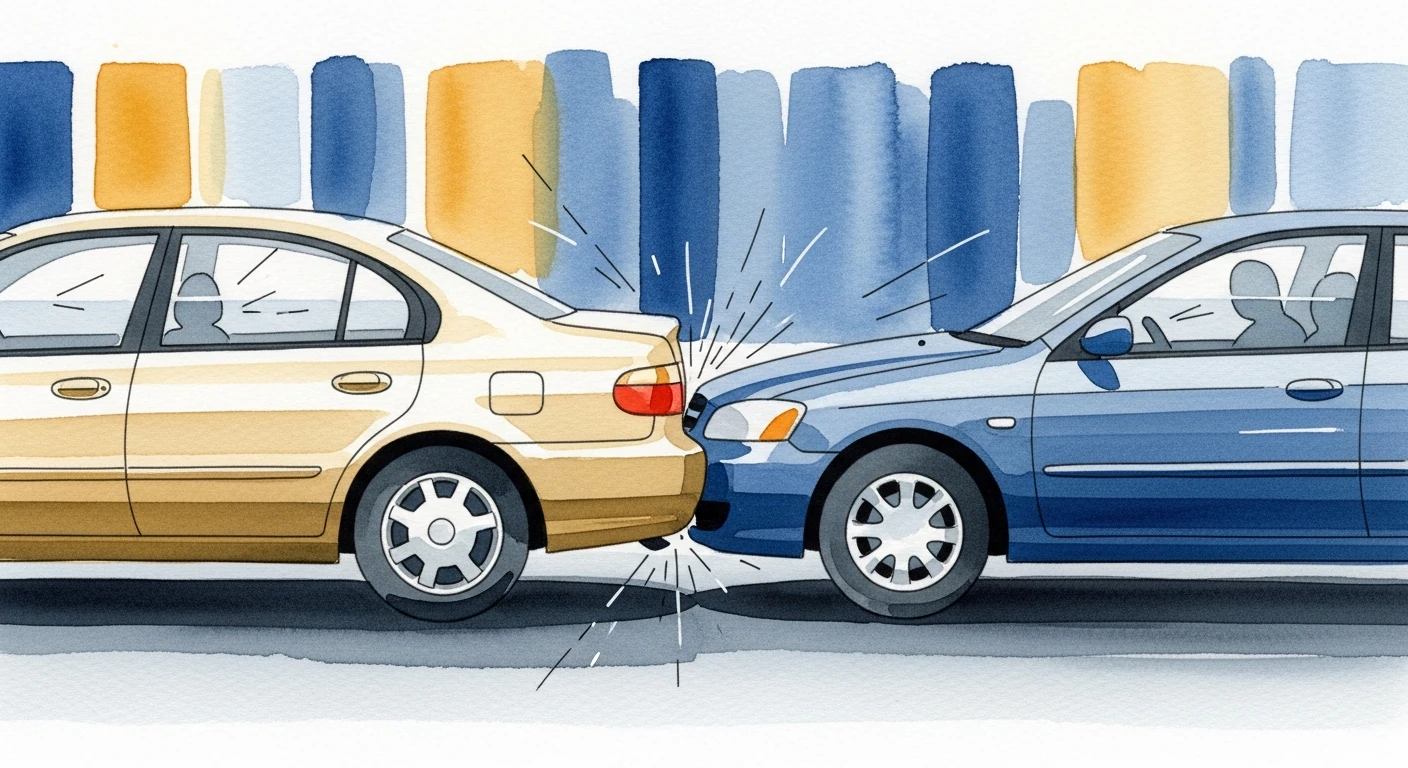
Minimal Vehicle Damage, Maximum Doubt: Responding to the Low Impact = No Injury Argument
You step out of your car after a rear-end collision and feel relief: the bumper looks mostly fine. Maybe there’s a scuff. Maybe nothing obvious at all. But later that day, your neck stiffens. The next morning, your headache is worse. By day three, you can’t sleep well, your shoulders ache, and concentrating at work feels unusually hard.
Then comes the insurer’s familiar script: “If there’s barely any vehicle damage, how could you be seriously hurt?”
That argument feels simple, but it leaves out how injury actually works. Cars and human bodies absorb force differently. A modern bumper can avoid visible damage while your neck, back, or brain still absorbs significant acceleration-deceleration forces.
This guide explains how low-impact injury claims are challenged, what evidence carries real weight, and what practical steps help protect your health and your legal rights in Oregon.
If you want the broader overview of what low-impact crashes are, what symptoms may show up, and when a minor-looking crash stops being simple, start with Low-Impact Car Accidents in Oregon.
Important: This article is educational and not legal advice.
Why “Little Car Damage” and “Real Injury” Can Both Be True
Insurance denials in these cases often rely on optics: no crushed metal, no injury. But crash injury risk is not determined by body-panel appearance alone.
1) Vehicle design and human physiology are not the same
Modern vehicles are built with energy-management systems and bumper standards meant to reduce repair costs in lower-speed impacts. You can review federal bumper requirements in 49 CFR Part 581.
Those systems help protect the vehicle exterior, but your body still experiences rapid motion changes inside the cabin.
2) Acceleration changes can injure soft tissue without dramatic photos
Whiplash-related disorders involve muscles, tendons, ligaments, discs, and joint structures that can be irritated or damaged by abrupt motion. Many of these injuries do not appear on initial plain X-rays.
For patient-facing medical overviews, see:
3) Concussion can occur without a direct head strike
A mild traumatic brain injury can happen when the brain moves rapidly within the skull due to sudden acceleration-deceleration. CDC’s overview of TBI is a useful starting point: CDC: About Traumatic Brain Injury.
In short: minimal visible vehicle damage does not automatically mean minimal biomechanical stress on the occupant.
4) Crash mechanics involve more than repair cost
Several concepts can be blurred together in a low-damage dispute: visible exterior damage, repair cost, change in velocity (delta-V), the duration and shape of the crash pulse, occupant position, seat and head-restraint geometry, and clinical findings. They may be related, but they are not interchangeable. A bumper photo or repair invoice does not establish how a particular occupant was positioned or medically affected.
The research is more nuanced than either side’s slogan. One real-world collision study found no delta-V threshold with acceptable sensitivity and specificity for predicting cervical-spine injury in the crashes studied. A separate review of low-speed rear-impact volunteer studies reported a very low risk of more serious cervical injury in impacts comparable to those tests, while symptoms could still be reported. The balanced conclusion is not that every small crash causes injury or that no small crash can cause injury. Individual mechanics, symptoms, examination, and causation evidence still matter.
Common Injuries in Low-Impact Collisions (and Why Symptoms Are Sometimes Delayed)
Low-impact crashes are frequently associated with injuries that may build over hours or days.
Cervical strain/whiplash symptoms
- Neck pain and reduced range of motion
- Headache (often at the base of the skull)
- Shoulder/upper back tightness
- Dizziness or fatigue
Thoracic/lumbar soft tissue strain
- Mid-back or low-back pain
- Spasm, stiffness, pain with bending/lifting
- Sleep disruption due to discomfort
Concussion / mild TBI symptoms
- Brain fog or slowed processing
- Light/noise sensitivity
- Short-term memory trouble
- Irritability, sleep changes, or nausea
Delayed onset is one reason these claims get disputed. Insurers may argue that symptoms appearing later are unrelated. Clinically, however, delayed inflammation and delayed symptom recognition are common in soft tissue and mild brain injury cases.
Normal imaging does not automatically mean no injury
X-rays, CT scans, and MRIs can be important, particularly when a provider needs to rule out fractures, neurologic injury, or another condition. But whiplash and cervical-sprain complaints may be evaluated clinically even when imaging does not show a clear structural injury. Medical sources note that imaging may be normal in a clinically evaluated cervical sprain or whiplash-associated disorder.
That does not make imaging irrelevant or prove that a crash caused a person’s symptoms. It means “the scan was normal” and “there was no injury” are not the same medical conclusion. The history, examination, symptom pattern, treatment response, and other possible causes remain important. For a focused discussion, see Can You Still Be Compensated for Pain if Your MRI Is Normal?.
What the Insurance Company Is Usually Testing
When adjusters focus on “low property damage,” they are usually probing for weak documentation. They may look for:
- Gaps in care after the crash
- Inconsistent symptom descriptions
- Statements minimizing pain (“I’m fine,” “just sore”)
- Broad medical-record access to search for unrelated prior issues
- Quick settlement acceptance before diagnosis is complete
Their process is predictable. Your response should be predictable too: prompt treatment, consistent records, and careful communication.
Oregon claim-handling standards also provide context. ORS 746.230 identifies unfair claim-settlement practices such as misrepresenting facts or policy provisions, refusing payment without conducting a reasonable investigation based on available information, and failing to promptly explain the basis for denying a claim. Those standards do not make every disputed or low offer unlawful, and rights can depend on the policy and facts. They do reinforce why a bumper photo should be treated as one part of an investigation rather than a complete medical-causation analysis.
First 72 Hours: Steps That Help Both Recovery and Claim Strength
If you feel pain after a low-impact collision, these early actions matter.
1) Get medically evaluated promptly
Even if symptoms feel mild at first, obtain an initial exam. Tell providers exactly what happened and where you hurt. Specificity helps:
- “Neck pain with right rotation” is stronger than “sore neck.”
- “Headache started six hours after crash” is stronger than “head hurts sometimes.”
2) Follow through on treatment
If referred to physical therapy, neurology, orthopedics, or imaging, complete the appointments when possible. Interrupted care can be used against your claim.
3) Start a daily symptom log
Track:
- Pain levels (0–10)
- Location and quality of pain
- Medication response/side effects
- Sleep quality
- Functional limits (work tasks, driving, childcare, exercise)
4) Preserve crash evidence
- Vehicle photos (all angles, close and wide)
- Scene photos, weather/road condition notes
- Witness names and contact information
- Repair estimate and final invoice
Even if repairs are inexpensive, documentation still matters.
5) Be careful with insurer communication
You can report facts, but avoid speculation. If asked about ongoing symptoms, it is usually safer to state that you are under medical care and evaluation is ongoing.
Evidence That Moves the Needle in Low-Impact Cases
Strong low-impact claims are evidence-rich. The most persuasive packages usually include:
A. Consistent medical chronology
The timeline from collision date to first visit, follow-up care, and specialist findings should be clear and coherent.
B. Objective findings where available
Not every injury shows up on imaging, but objective findings still matter when present (range-of-motion deficits, documented spasm, neurologic findings, abnormal imaging results).
C. Functional-loss evidence
Claims become stronger when they show how injury changed day-to-day life:
- Missed work or modified duties
- Sleep disruption
- Reduced household capacity
- Reduced ability to exercise or care for dependents
D. Cost and loss documentation
- Medical bills and Explanation of Benefits (EOBs)
- Out-of-pocket costs (medication, travel, parking, devices)
- Wage-loss records from employer/payroll
E. Vehicle and crash-data context
Vehicle photos are only one piece of the story. If available, event data can also be relevant. NHTSA provides an overview of crash-recording systems here: NHTSA: Event Data Recorders.
Preserve wide and close-up photos from different angles, repair estimates and invoices, inspection or towing records, dashcam or nearby-video leads, and records showing whether the vehicle was repaired, sold, or inspected. Do not assume the insurer’s selected photos capture hidden damage, vehicle geometry, or the full impact sequence. Johnson Law’s evidence-preservation guide explains why early preservation can matter.
F. Treating-provider or expert causation evidence when needed
Some claims can be evaluated through treatment records, symptom history, and ordinary factual proof. A more developed causation analysis may be needed when there are prior injuries, delayed treatment, unusual symptoms, competing medical explanations, or a serious dispute about crash mechanics.
If a case reaches litigation, Oregon evidence rules governing relevance, unfair prejudice, and expert testimony can affect how vehicle photos, repair estimates, medical opinions, and biomechanical opinions are presented. The practical point is narrower: when causation is genuinely contested, a qualified medical explanation may carry more weight than a lay conclusion drawn from the bumper alone.
Oregon Law Context: Deadlines and Coverage Basics to Know
Low-impact cases still follow the same Oregon legal framework as larger crashes.
Personal Injury Protection (PIP)
Oregon auto policies generally include PIP benefits that can help pay certain medical expenses and wage loss regardless of fault. See:
Comparative fault rules
Oregon uses modified comparative fault. Liability percentages can reduce recovery, and fault allocation is often contested in disputed crashes. Statutory source:
Injury filing deadlines
Oregon statutes include limitation periods for civil claims. Missing deadlines can end an otherwise valid case:
Crash reporting requirements
Depending on crash details, DMV reporting rules may apply:
Communication Mistakes That Commonly Damage Claims
Even legitimate injuries can be undervalued when communication goes off track.
“I’m okay” language in early calls
People often try to be polite. But offhand statements can later be framed as admissions.
Signing overly broad medical releases
Releases should be handled carefully. Overbroad forms can open unrelated medical history to unnecessary scrutiny.
Posting injury updates on social media
Photos or posts can be interpreted out of context. A smiling image does not prove absence of pain, but it may still be used to challenge credibility.
Settling too early
Early settlement can feel tempting when bills are mounting. But settling before prognosis is stable can leave future costs uncompensated.
How Preexisting Conditions Affect a Low-Impact Claim
When visible vehicle damage is limited, an insurer may point to prior neck pain, degenerative findings, old back problems, earlier headaches, or previous treatment as another explanation. Prior conditions are relevant and should not be hidden. They can affect causation, damages, and the medical analysis, but they do not automatically end the claim.
In Haas v. Estate of Carter, the Oregon Supreme Court discussed prior-infirm-condition principles and explained that a person’s susceptibility or preexisting condition does not automatically defeat causation for harm caused by negligence. The claimant must still prove what the crash caused or worsened, and a defendant may argue that a prior condition was an alternative or sole cause.
A credible record therefore focuses on the before-and-after difference:
- Were the symptoms new, worse, or different?
- Did their frequency or intensity change?
- Did work, sleep, driving, exercise, or household limits increase?
- Did treatment needs change?
- Did a treating provider connect the new or worsened condition to the crash?
Accurate prior history paired with clear before-and-after evidence is usually more useful than pretending the earlier condition did not exist.
A Practical Documentation Framework You Can Use
If you want one repeatable system, use this checklist weekly:
- Medical file updated: appointment notes, referrals, prescriptions
- Symptom log updated: daily entries, not retroactive summaries
- Expense file updated: receipts, mileage, unpaid balances
- Work impact updated: missed days, restrictions, employer confirmations
- Communication file updated: insurer emails/letters/call notes
This reduces memory gaps and gives your claim structure.
What About “Independent Medical Exams” (IMEs)?
In disputed claims, insurers sometimes request exams by physicians they select. Terminology differs by claim context, but the practical point is the same: prepare carefully.
Helpful preparation steps:
- Review your symptom history before the appointment
- Be accurate and concise
- Do not exaggerate, and do not minimize
- Note start/end times and what testing occurred
- Debrief your attorney afterward if you are represented
IME reports can materially affect valuation. Preparation and consistency matter.
When Legal Help Is Often Most Valuable
Many people wait too long to ask for help in low-impact disputes because they assume “minor crash = minor case.” Yet these are often the most heavily contested files.
You may want to seek legal guidance when:
- Liability is disputed
- The insurer keeps invoking “minimal damage” as a denial basis
- You receive a low offer that does not cover treatment needs
- You are asked for broad authorizations or a recorded statement
- Symptoms persist beyond the early recovery window
The earlier your evidence is organized, the easier it is to protect claim value.
Recovery Is Not Only Physical
The claim process can be emotionally draining, especially when your pain is questioned. Mental strain, sleep disruption, and anxiety after collisions are common and can interfere with recovery.
If needed, discuss behavioral-health support with your medical team. Addressing emotional health is part of whole-person recovery, not a side issue.
Frequently Asked Questions
Can I still have a valid claim if my car barely shows damage?
Yes. The central issue is whether evidence supports injury causation and damages, not whether your bumper looks severe.
Do I need to go to the ER after every low-impact crash?
Not always, but prompt medical assessment is usually wise when symptoms appear. Urgent care or primary care may be appropriate depending on severity. Emergency symptoms (severe headache, neurologic deficits, confusion, chest pain, significant worsening) need immediate emergency evaluation.
How long do whiplash symptoms last?
Recovery varies. Some people improve quickly; others have persistent symptoms. Your own records and treatment response are more important than averages.
What if symptoms started the next day?
Delayed symptom onset is common. Document onset timing clearly and consistently in your medical visits and symptom log.
Does a normal MRI mean there was no whiplash injury?
Not necessarily. Imaging can be important, but medical sources describe cervical sprain and whiplash-associated disorder as conditions that may be evaluated clinically even when imaging is normal. A claimant still needs evidence connecting symptoms and treatment to the crash.
Is property damage amount the same as injury value?
No. Property damage and bodily injury evaluate different harms. They can correlate in some crashes, but one does not automatically define the other.
Do preexisting neck or back problems prevent an Oregon claim?
Not automatically. Prior conditions can create real causation and damages disputes. The relevant evidence should explain what was new or worsened after the crash and support that change through medical and functional records.
Bottom Line
Low-impact crashes are often misunderstood because the visible evidence is incomplete. The better approach is to focus on what actually proves injury: timely medical care, consistent documentation, functional-loss evidence, and clean claim chronology.
If an insurer tries to collapse your case into “no dent, no injury,” your response should be disciplined and evidence-based. That is how valid low-impact injury claims are built.
Authoritative Sources and Further Reading
- NHTSA: Event Data Recorders
- NHTSA: Seat Belts and Occupant Safety
- CDC: About Traumatic Brain Injury
- MedlinePlus: Neck Injuries and Disorders
- Mayo Clinic: Whiplash
- eCFR: 49 CFR Part 581 (Bumper Standard)
- ORS 746.230: Oregon unfair claim settlement practices
- ORS Chapter 40: Oregon evidence and expert-testimony rules
- Oregon DFR: Auto Insurance FAQs
- Oregon Legislature: ORS Chapter 742
- Oregon Legislature: ORS Chapter 31
- Oregon Legislature: ORS Chapter 12
- Oregon DMV: Accident Reporting
- NCBI Bookshelf / StatPearls: Cervical Sprain
- Elbel et al.: real-world low-speed collision study
- 2018 review of low-speed rear-impact volunteer studies
- Haas v. Estate of Carter, Oregon Supreme Court (2023)
Related Resources
Client-First Fee Promise
Client First = Bills First, Fees Second
Your unpaid medical bills do not have to make your lawyer's fee bigger. Johnson Law subtracts qualifying medical bills before calculating our fee, helping clients keep more of their settlement.
Applies to qualifying cases. Results vary.