Fallen in a Produce Section? Why Grapes and Leafy Greens Can Change the Evidence
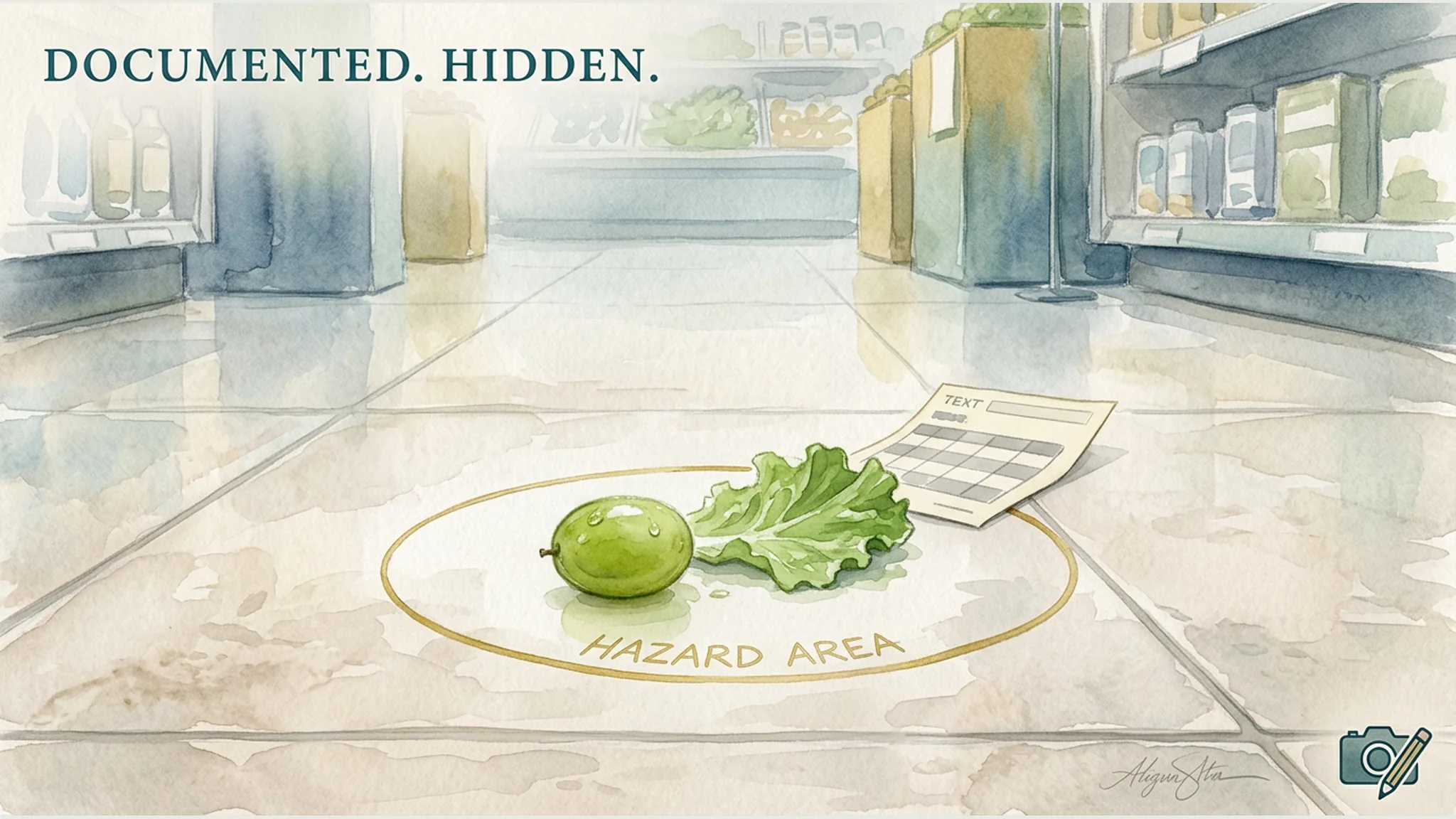
Fallen in a Produce Section? Why Grapes and Leafy Greens Can Change the Evidence
Short Answer: Produce Falls Are Not Automatic Wins, But They Can Point to Different Evidence
If you fell in a grocery-store produce section, the key question is usually not simply, “Was there a grape, lettuce leaf, water, or ice on the floor?” In Oregon, a grocery slip-and-fall claim involving a foreign substance generally turns on whether the store placed the hazard there, knew about it, or should have discovered and removed it through reasonable diligence.
That rule still applies in produce-section cases. A grape or piece of lettuce on the floor does not automatically make the store responsible.
What can make produce falls different is the evidence. Produce departments often involve self-service handling, misting, ice, refrigerated displays, stocking, bagging, and frequent cleanup needs. Those details may help show where the hazard came from, whether it was recurring, whether employees created or contributed to it, and whether the store’s inspection practices were reasonable.
For the broader Oregon notice framework in grocery-store spill cases, see our related discussion of how Oregon grocery-store notice evidence works. This post focuses more narrowly on produce-specific hazards: grapes, leafy greens, recurring debris, inspection records, and sweep evidence.
This article is educational information, not legal advice.
Why Grapes and Leafy Greens Can Raise Recurring-Hazard Questions
Produce cases are often more fact-specific than a simple “mystery spill” because the produce department itself can create identifiable risk patterns. That does not eliminate the need to prove negligence. It does explain why the investigation should look beyond the item on the floor.
Self-service handling makes dropped produce foreseeable
Loose produce is handled by customers all day. Customers pick up fruit, inspect it, put some items back, use bags, move carts, and sometimes drop small items without noticing. A study of grocery-store produce handling in Rhode Island found that many consumers handled produce directly, many put handled produce back, and some tasted grapes before selection. That study is not Oregon law and is not Oregon-specific proof in any one case, but it illustrates why customer handling is a predictable feature of produce departments.
For grapes, the practical problem is obvious: they are small, round, and easy to detach from stems. A single grape can roll away from the display and become difficult to see. For leafy greens, loose leaves or wet fragments may fall during handling, stocking, trimming, or bagging.
The legal point is not “customers drop produce, so the store is liable.” The point is that recurring self-service handling may make inspection, monitoring, display design, and cleanup policies especially important evidence.
Moisture, ice, refrigeration, and misting
Leafy greens can bring a different set of evidence issues. Some greens are displayed in chilled or moist conditions. FDA guidance for cut leafy greens addresses food-safety temperature control, not slip-and-fall liability, but it helps explain why retail greens may be stored or displayed in refrigerated, monitored environments.
In a fall investigation, relevant questions may include whether lettuce or another leafy green was displayed on ice, whether misters were operating nearby, whether water drained properly, whether floor mats were used safely, whether employees were assigned to monitor wet areas, and whether the store had a produce-specific inspection or sweep schedule.
Those facts may matter because a produce-section hazard is sometimes part of an ongoing condition, not a one-time spill by an unknown customer. But Oregon notice proof still matters.
Employee stocking, bagging, and cleanup
Employee activity can also change the proof. If an employee stocked grapes, trimmed greens, moved wet produce, bagged lettuce, cleaned a display, or left debris in a walkway, the case may involve a store-created hazard rather than only a question of how long an unknown item sat on the floor.
That distinction matters under Oregon law because one recognized path to liability is evidence that the store or its employee placed the substance on the floor. Source evidence can sometimes be as important as duration evidence.
The Oregon Notice Rule Still Matters
Oregon premises-liability law generally requires a business to protect invitees from dangerous conditions the possessor knows about or reasonably should know about. In foreign-substance cases, Oregon courts have long focused on whether the store created the hazard, actually knew about it, or should have discovered it with reasonable diligence.
Several Oregon cases show why produce evidence must be handled carefully:
- In George v. Erickson’s Sunnyslope Supermarket, the Oregon Supreme Court affirmed a directed verdict for a store where a customer slipped on a strawberry and there was not enough evidence of actual or constructive notice. The strawberry’s presence alone was not enough.
- In Kummer v. Fred Meyer Stores, the Oregon Court of Appeals reaffirmed in 2025 that constructive knowledge generally requires evidence about how long the foreign substance was on the floor or other facts connecting the hazard to the store.
- In Pribble v. Safeway Stores, the Oregon Supreme Court stated the core foreign-substance framework: the plaintiff generally must show the substance was placed there by the occupant, the occupant knew it was there and failed to remove it, or it had been there long enough that reasonable diligence would have discovered and removed it.
So, a produce-section fall is not exempt from Oregon’s notice requirement. The better question is whether produce-department facts supply better evidence of source, recurrence, inspection practices, or store knowledge.
Evidence That Can Make a Produce Fall Different
The most useful produce-fall investigation usually looks at recurring hazards and store systems, not just the item on the floor.
Store-created hazard evidence
Evidence that the store created or contributed to the hazard may include employee stocking or restocking shortly before the fall; trimming, misting, icing, moving, or cleaning produce; bagging activity involving leafy greens; display bins that allow loose produce to fall into walking paths; overfilled displays; wet produce carried into a walkway; or cleanup activity that spread water, ice, or debris.
In Swisher v. Albertson’s, the Oregon Court of Appeals reversed summary judgment where the plaintiff slipped on leafy produce near a checkout or bagging area. The record could support an inference that a store employee caused lettuce to be on the floor during bagging. That did not create a universal rule for all lettuce cases, but it shows why identifying the likely source of produce debris can matter.
Inspection and sweep evidence
Sweep logs, inspection schedules, and employee assignments are often central in produce-section cases. Helpful evidence may include written inspection policies, actual sweep logs from the day of the fall, who was assigned to inspect the produce aisle, documented sweep intervals, gaps between inspections, video showing whether employees actually inspected the area, and whether the inspection covered the specific walkway where the fall happened.
But Oregon law requires caution. In Diller v. Safeway, the plaintiff slipped in a produce section near lettuce packed in ice. Evidence showed Safeway had a policy to sweep the produce aisle every 15 to 30 minutes, and the aisle apparently had not been swept for more than an hour. Even so, the Oregon Supreme Court held that the theories submitted were insufficient because there was no evidence showing how long the specific ice or water had been on the floor.
The practical lesson is important: a missed sweep can be useful context, but it may not be enough by itself. The most useful inspection evidence ties the missed sweep to the specific hazard, to admissible proof that the store created or knew of a recurring condition, or to other facts showing the store should have discovered the danger under Oregon law.
Prior incidents and recurring conditions
Produce cases may also turn on whether the hazard was recurring. Evidence worth looking for can include prior falls in the same produce aisle, prior complaints about loose grapes or lettuce debris, recurring leaks from misters or refrigeration equipment, ice routinely falling from displays, wet or bunched floor mats, repeated cleanup calls, manager notes about problem displays, and employee testimony about how often produce or water ended up on the floor.
The dissent in Diller discussed evidence that Safeway knew ice could adhere to lettuce, fall when customers handled produce, and that water could drip when produce was sprayed. Because that was a dissent, it is not controlling Oregon law. Still, those are the kinds of facts lawyers look for when investigating whether a produce hazard was recurring and foreseeable.
Physical condition of the produce
The condition of the produce itself may also matter. A grape or leaf that is crushed, dirty, dried, tracked through, brown, wilted, or slimy may support arguments about timing, source, or whether it had been stepped on before. Photos taken immediately after the fall can be especially useful.
But appearance is not conclusive. A wilted or dirty item does not automatically prove how long it was on the floor. In Swisher, the lettuce’s condition mattered as possible evidence of duration, but that was a case-specific evidence ruling, not a shortcut around Oregon’s notice rules.
What to Preserve After a Fall in the Produce Section
Evidence in a grocery-store fall can disappear quickly. If you fell in a produce section, the most important preservation targets are usually the ones that show recurrence, inspection, sweep practices, and source.
Consider preserving or asking counsel about preserving:
- surveillance video from the produce aisle, checkout or bagging area, nearby entrances, cleanup routes, and employee work areas;
- sweep logs and inspection records for the produce department;
- produce-department policies for inspections, misting, icing, stocking, trimming, cleanup, mats, and warning signs;
- incident reports and manager notes created after the fall;
- employee schedules and assignments showing who was responsible for the produce area before the fall;
- misting, refrigeration, drainage, or ice-display maintenance records if water or ice was involved;
- prior complaints or incidents involving loose grapes, leafy greens, wet mats, leaks, ice, or recurring debris;
- photos of the produce, floor, shoes, clothing, display, mats, cones, warning signs, nearby cameras, and any visible water, tracks, or debris; and
- witness information from shoppers, employees, or companions who saw the fall or the condition beforehand.
For more on time-sensitive evidence, see our guide to how to preserve store surveillance and sweep-log evidence.
Comparative Fault and the Shopper-Blame Defense
Even when produce-department evidence is helpful, the store may argue that the shopper was also at fault. Oregon comparative fault law can reduce damages by the claimant’s percentage of fault. If the claimant’s fault is greater than the combined fault of the specified others, recovery can be barred.
In a produce case, a store may argue that the grape, lettuce, water, or ice was open and obvious; that the shopper was distracted; or that the shopper failed to watch where they were walking. The strength of those arguments depends on the facts, including lighting, visibility, crowding, display layout, floor color, warning signs, and whether the hazard was difficult to see.
Comparative fault is another reason why photos, video, witness accounts, and store inspection records can matter.
When to Talk With an Oregon Slip-and-Fall Lawyer
Produce-section fall cases can be evidence-sensitive. Grapes and leafy greens do not automatically prove negligence, but they may point to recurring self-service hazards, employee handling, missed inspections, prior incidents, or store-created conditions that deserve prompt investigation.
An Oregon lawyer can evaluate whether the available evidence supports a store-created hazard, actual knowledge, constructive notice, or other case-specific theories. Early review may also help preserve surveillance video, sweep logs, produce-department policies, equipment records, and witness information before they are lost.
If you were hurt in a fall involving grapes, lettuce, leafy greens, water, ice, or produce debris in the Portland area, you can contact a Portland slip-and-fall lawyer to discuss the facts. For a different premises proof problem, see the discussion of dark stairwell fall evidence.
This article is for educational information only and is not legal advice.
FAQ
Does slipping on grapes automatically make a grocery store liable in Oregon?
No. Oregon law still generally requires evidence that the store created the hazard, knew about it, or should have discovered and removed it through reasonable diligence. Grapes may matter because they can point to recurring self-service hazards and inspection issues, but they do not prove liability by themselves.
Why are leafy greens different from an ordinary spill?
Leafy greens may involve stocking, trimming, bagging, moisture, ice, refrigeration, or misting. Those facts can help identify the source of the hazard or show why the produce area required active monitoring. They are evidence clues, not automatic proof.
Is a missed sweep log enough to prove negligence?
Not necessarily. Diller v. Safeway shows that even a missed produce-aisle sweep interval may not prove constructive notice if there is no evidence showing how long the specific hazard was on the floor. A missed sweep is more useful when combined with video, recurring-condition evidence, employee activity, or physical clues about the produce.
What evidence should I try to preserve after a produce-section fall?
Important evidence may include surveillance video, sweep logs, produce-department inspection policies, incident reports, employee schedules, photos, witness information, prior complaints, mat placement, and misting or ice equipment records. The most useful evidence often shows how the produce got there, whether the risk was recurring, and whether inspections were reasonable.
Can the grocery store blame me for falling?
Yes. Oregon comparative fault rules may reduce or bar recovery depending on the allocation of fault. Stores may argue that the hazard was visible or that the shopper was distracted. The facts and evidence determine how those arguments are evaluated.
Are food-safety rules proof that the store was negligent?
Not by themselves. Food-safety rules and guidance may provide operational context for produce handling, monitoring, sanitation, and floor maintenance, but they do not automatically establish civil liability in an Oregon slip-and-fall case.
Source Notes
- Oregon foreign-substance notice framework: Pribble v. Safeway Stores, Inc.; George v. Erickson’s Sunnyslope Supermarket, Inc.; Diller v. Safeway Stores, Inc.; Swisher v. Albertson’s, Inc.; Kummer v. Fred Meyer Stores, Inc.
- Oregon comparative fault: ORS 31.600.
- Oregon food sanitation rules, FDA leafy-greens guidance, and produce-handling/store-fall studies are used as operational or safety context only, not automatic proof of civil liability.
Client-First Fee Promise
Client First = Bills First, Fees Second
Your unpaid medical bills do not have to make your lawyer's fee bigger. Johnson Law subtracts qualifying medical bills before calculating our fee, helping clients keep more of their settlement.
Applies to qualifying cases. Results vary.