Workplace Slip-and-Fall in a Break Room: When It’s Comp-Only vs. When a Vendor May Share Blame
Workplace Slip-and-Fall in a Break Room: When It’s Comp-Only vs. When a Vendor May Share Blame
Educational information only, not legal advice. This article focuses on Oregon law and does not predict the outcome of any specific workplace injury, workers’ compensation claim, third-party claim, lien issue, or settlement.
If you slip in a break room at work in Oregon, the first question is usually not “Who can I sue?” It is: who caused or controlled the hazard?
That question matters because many workplace falls are handled only through workers’ compensation, especially when the hazard is tied only to the employer or an immune coworker acting in an immune capacity. But Oregon law also leaves room for a separate claim when a negligent third person—someone not in the same employ and not protected by employer immunity—caused or contributed to the injury.
In a break-room case, that third person might be a building owner, property manager, janitorial contractor, food-service vendor, vending-machine company, appliance service company, plumber, or maintenance contractor. The practical decision tree looks like this:
- Was the break room controlled and maintained only by the employer?
- Was the only negligent actor the employer or an immune coworker, officer, agent, or related entity?
- Did a legally separate vendor, landlord, property manager, or contractor create the hazard, control the area, inspect it, service equipment, or have warning or cleanup duties?
- What evidence can show control, contract scope, actual notice, constructive notice, and timing?
When a Break-Room Fall Is Usually Workers’ Comp Only
Oregon employers subject to workers’ compensation must maintain the coverage and assurance required by ORS Chapter 656. When a complying employer provides required workers’ compensation coverage, Oregon’s exclusive-remedy statute generally replaces other liability against the employer for injuries arising out of and in the course of employment.
In plain English: if your injury happened at work and the only responsible party is your employer, Oregon workers’ compensation is often the exclusive path against the employer.
That rule can apply to ordinary break-room hazards such as:
- a spill created by employer staff;
- a slick floor caused by the employer’s own cleaning practices;
- an unsafe mat, trash area, or kitchenette condition maintained only by the employer;
- a coworker’s negligent act, if the coworker is protected by the workers’ compensation immunity rules; or
- an employer-controlled tenant break room with no meaningful involvement by a separate landlord, property manager, or vendor.
The important word is generally. Oregon’s immunity rules can be fact-specific. ORS 656.018 extends protection to certain related persons and entities, but it also includes exceptions. Leased-worker, temporary-service, client-employer, contracted-agent, officer/director, related-company, and dual-capacity facts can change the analysis.
For a broader overview, see Johnson Law’s guide to workplace injury exceptions in Oregon.
Employer-Controlled Break Rooms and Immune Actors
A break room does not stop being part of the workplace just because an employee is on a meal break or getting coffee. If the injury arises out of and in the course of employment, and the hazard is attributable only to the employer or an immune actor, the claim is usually handled through the workers’ compensation system.
That means the worker may pursue workers’ compensation benefits, but usually cannot bring a separate negligence lawsuit against the complying employer for the same injury. ORS 656.018 also says the exclusive-remedy provisions apply to injuries of subject workers arising out of and in the course of employment, whether or not they are ultimately determined to be compensable under Chapter 656.
Why a Denial Does Not Automatically Create a Lawsuit
A denied workers’ compensation claim does not automatically turn an employer-controlled fall into a negligence lawsuit. Denials can involve many issues, including notice, medical causation, whether the injury arose out of work, or whether the claim meets workers’ compensation standards.
The denial question and the third-party-liability question are related, but different. For more context, read about workers’ comp denial reasons and deadlines.
When a Separate Third-Party Claim May Be Possible
Oregon law also recognizes that some workplace injuries are caused by people or companies other than the employer. ORS 656.154 allows a worker to seek a remedy when the injury is due to the negligence or wrong of a third person not in the same employ. ORS 656.578 addresses a worker’s election after a compensable injury involving a third person outside the employer-immunity protection of ORS 656.018.
That is the opening for a workplace slip and fall third party claim.
The key is not simply that another company was present. A vendor, landlord, or contractor is not automatically liable because it had a contract, serviced a machine, cleaned the building, or managed the property. A third-party claim usually requires evidence that the non-employer owed a duty, had control or maintenance responsibility, created the hazard or had notice of it, failed to act reasonably, and caused harm.
Oregon case annotations under ORS 656.018 also caution against assuming that a contractor becomes immune merely because it contracted with a complying employer. At the same time, the vendor’s exact role, relationship, and capacity still matter.
Common Break-Room Third Parties
Possible third parties in a break-room fall may include:
- a building owner or landlord;
- a property manager;
- a janitorial or cleaning contractor;
- a cafeteria or food-service vendor;
- a vending-machine company;
- a coffee, refrigerator, water-dispenser, dishwasher, plumbing, or appliance service company; or
- a maintenance contractor responsible for floors, leaks, mats, fixtures, or repairs.
Each scenario turns on proof. A landlord-controlled common break room is different from an employer-controlled tenant kitchenette. A janitorial contractor who mopped and left no warning signs is different from a contractor whose work ended hours earlier in a different part of the building. A vending company with repeated leak complaints is different from one with no control over the spill.
The Control and Maintenance Questions That Usually Drive the Case
The most useful break-room investigation often starts with control, maintenance responsibility, and timing. Labels like “break room,” “common area,” or “tenant space” help, but they rarely answer the whole question.
Who Controlled the Break Room or Common Area?
If the break room was inside the employer’s leased suite and only employer staff cleaned and maintained it, the case is more likely to be workers’ compensation-only against the employer.
If the break room was a shared building amenity or landlord-controlled common area, the analysis may be different. Leases, common-area-maintenance provisions, property-management agreements, and actual inspection practices can show whether a landlord or property manager had responsibility for the space.
Related-company and closely held premises issues can be complicated. A corporate relationship alone may not answer immunity, and some owners, officers, directors, or related entities may argue they acted in an immune capacity. The question is not just who owns the space, but what role that person or entity was performing when the alleged negligence occurred.
Who Had the Contracted Maintenance or Inspection Duty?
Vendor contracts can be central in a break-room fall. The contract may identify:
- what rooms or equipment the vendor covered;
- how often the vendor was supposed to inspect or clean;
- whether the vendor had spill-response duties;
- whether the vendor had warning-cone or signage obligations;
- whether the vendor handled trash, mats, floors, refrigerators, vending machines, coffee equipment, or plumbing; and
- whether the vendor was on site before or near the time of the fall.
A contract alone does not prove negligence. But it can show the scope of responsibility and help identify which records should be preserved.
Who Actually Created the Hazard?
Some break-room hazards are transient: spilled coffee, water, soap, grease, melted ice, food, a recently mopped floor, or a sudden equipment leak. In those cases, the strongest evidence often concerns who created the condition and how long it existed.
Examples include:
- a cleaning contractor mops the floor but leaves no warning;
- a vendor uses a floor product that leaves a slick residue;
- a vending machine, refrigerator, coffee maker, dishwasher, or water dispenser leaks;
- a plumber or maintenance contractor leaves water on the floor after service;
- a cafeteria worker creates or misses a food-service spill; or
- a property manager receives complaints about recurring leaks but does not respond reasonably.
None of those facts automatically creates liability. They point to the questions that matter: who had responsibility, what they knew, what they should have found through reasonable inspection, what they did or failed to do, and whether that conduct caused the fall.
Actual Notice, Constructive Notice, and Timing Evidence
In many break-room slip-and-fall cases, the hardest issue is not whether the floor was slippery. It is whether a legally responsible third party created the hazard, knew about it, or should have discovered it in time to fix it or warn people.
For a deeper look at spill timing and inspection evidence in a different setting, see Johnson Law’s article on wet-floor notice and inspection evidence.
Actual Notice: Complaints, Work Orders, and Reports
Actual notice means there is evidence the responsible person or company knew about the problem. In a workplace break room, that evidence might include:
- emails reporting a leaking appliance;
- facility tickets about repeated spills or water on the floor;
- prior complaints to a property manager;
- service requests to a vending or maintenance company;
- janitorial notes or supervisor reports;
- incident reports from earlier falls or near misses; or
- text messages, radio logs, or vendor communications.
These records may help show what a vendor, landlord, property manager, or contractor knew and when. They do not automatically prove liability by themselves.
Constructive Notice: Should a Reasonable Inspection Have Found It?
Constructive notice asks, at a high level, whether the condition existed long enough or occurred in a way that a reasonable inspection should have found it. In a break-room fall, that may involve:
- the last documented cleaning or inspection time;
- the vendor’s inspection route;
- how often the area was supposed to be checked;
- whether the spill or leak was recurring;
- whether employees had complained before;
- whether the condition was visible in photos or video; and
- whether the responsible party skipped or falsely recorded inspections.
The timing evidence matters. A fresh spill seconds before a fall is different from a recurring leak that had been reported for days.
“Open and Obvious” Is Not the End of the Analysis
Do not assume that a visible hazard automatically defeats an Oregon claim. Oregon comparative fault law can reduce recovery based on a claimant’s share of fault and can bar recovery if the claimant’s fault is greater than the combined fault of legally compared persons. But “you saw it, so you lose” is too simplistic.
In a vendor case, comparative fault may involve the worker’s conduct, the vendor’s conduct, other third parties, and complicated questions about immune employer fault. That is one reason these cases need careful factual development rather than quick assumptions.
Vendor-Specific Examples: How the Decision Tree Applies
The same basic questions—control, contract scope, notice, creation of the hazard, breach, and causation—apply to different kinds of break-room third parties.
Cleaning or Janitorial Contractor
A third-party claim against a cleaning contractor may be more plausible if evidence shows the contractor:
- created the slick condition while mopping or applying floor products;
- failed to place warning signs or cones;
- ignored a reported spill;
- failed to perform contracted cleaning or inspection duties;
- used unsafe methods or products; or
- recorded inspections that did not actually happen.
Important evidence can include the janitorial contract, cleaning schedule, logs, supply or product information, warning-sign practices, work orders, and surveillance. For a related vendor-control discussion, see this article on cleaning-vendor responsibility in a slip-and-fall.
Vending, Coffee, Refrigerator, Water, Plumbing, or Maintenance Contractor
A leaking appliance or break-room fixture can create a different third-party theory. The question may be whether a non-employer contractor installed, serviced, maintained, repaired, or failed to warn about the unsafe condition.
Useful records may include:
- vending-machine or appliance service tickets;
- maintenance records;
- prior leak complaints;
- photos of the equipment and surrounding floor;
- serial or model information;
- repair emails;
- vendor work logs; and
- records showing when the equipment was last inspected or serviced.
The mere fact that equipment leaked does not identify who is legally responsible. Ownership, service responsibility, prior notice, and repair history all matter.
Cafeteria or Food-Service Vendor
Some workplaces have a cafeteria, staffed coffee bar, catered service area, or vendor-managed food station. A third-party claim may depend on whether vendor staff created the spill, controlled the area, had inspection or cleanup duties, received complaints, or failed to follow reasonable warning and cleanup practices.
Relevant evidence may include the food-service agreement, daily operating procedures, staffing records, cleanup logs, prior reports, and video from the food-service area.
Building Owner or Property Manager
If the fall happened in a landlord-controlled common break room, shared kitchenette, cafeteria area, hallway entrance to the break room, or building amenity space, a building owner or property manager may need to be evaluated.
The core documents include the lease, common-area-maintenance agreement, property-management contract, inspection schedule, prior complaints, repair records, and communications about the hazard. The issue is not simply who owned the building. It is whether the owner or manager was a non-immune third party whose control-related negligence caused the injury.
If several companies may share responsibility, Oregon comparative fault and multi-party allocation can become important. Johnson Law discusses related concepts in this post on how fault can be split among several companies at a worksite.
What Evidence Should Be Preserved Quickly?
Break-room fall evidence can disappear quickly. Cleaning logs may be overwritten, surveillance footage may be deleted, and vendors may close out service tickets without preserving detail. Early preservation matters because the case often turns on control, notice, timing, and contract scope.
Practical Evidence Checklist
Consider preserving or requesting the following, where available:
- workers’ compensation papers, including Form 801 or claim documents;
- written accident notice and the workplace incident report;
- photos of the floor, substance, warning signs, equipment, shoes, mats, lighting, and surrounding area;
- names and contact information for witnesses;
- witness statements or notes about what they saw before and after the fall;
- surveillance footage from the break room, hallway, lobby, cafeteria, loading area, or shared common area;
- lease terms and common-area-maintenance provisions;
- property-management contracts;
- janitorial, vending, food-service, appliance, plumbing, or maintenance contracts;
- vendor work logs;
- cleaning logs and inspection logs;
- service tickets and repair records;
- emails, facility requests, text messages, or help-desk tickets about the hazard;
- prior complaints, near-miss reports, or earlier incident reports;
- equipment information, including serial or model details when a machine leaked; and
- the workers’ compensation claim-cost ledger, if a third-party recovery becomes possible.
This checklist is not a substitute for legal advice. It is a practical way to think about the evidence that may separate a comp-only case from a possible third-party claim.
Workers’ Compensation Notice Is Different From Civil Evidence Preservation
Oregon workers generally must give notice of a workplace accident immediately and not later than 90 days after the accident. The notice must be written and state when, where, and how the injury occurred. That is a workers’ compensation notice requirement, not the same thing as a civil lawsuit filing deadline.
Preserving third-party evidence is a separate practical step. A worker may need both: timely workers’ compensation paperwork and early requests to preserve vendor, property, maintenance, and surveillance records.
Surveillance and Retention
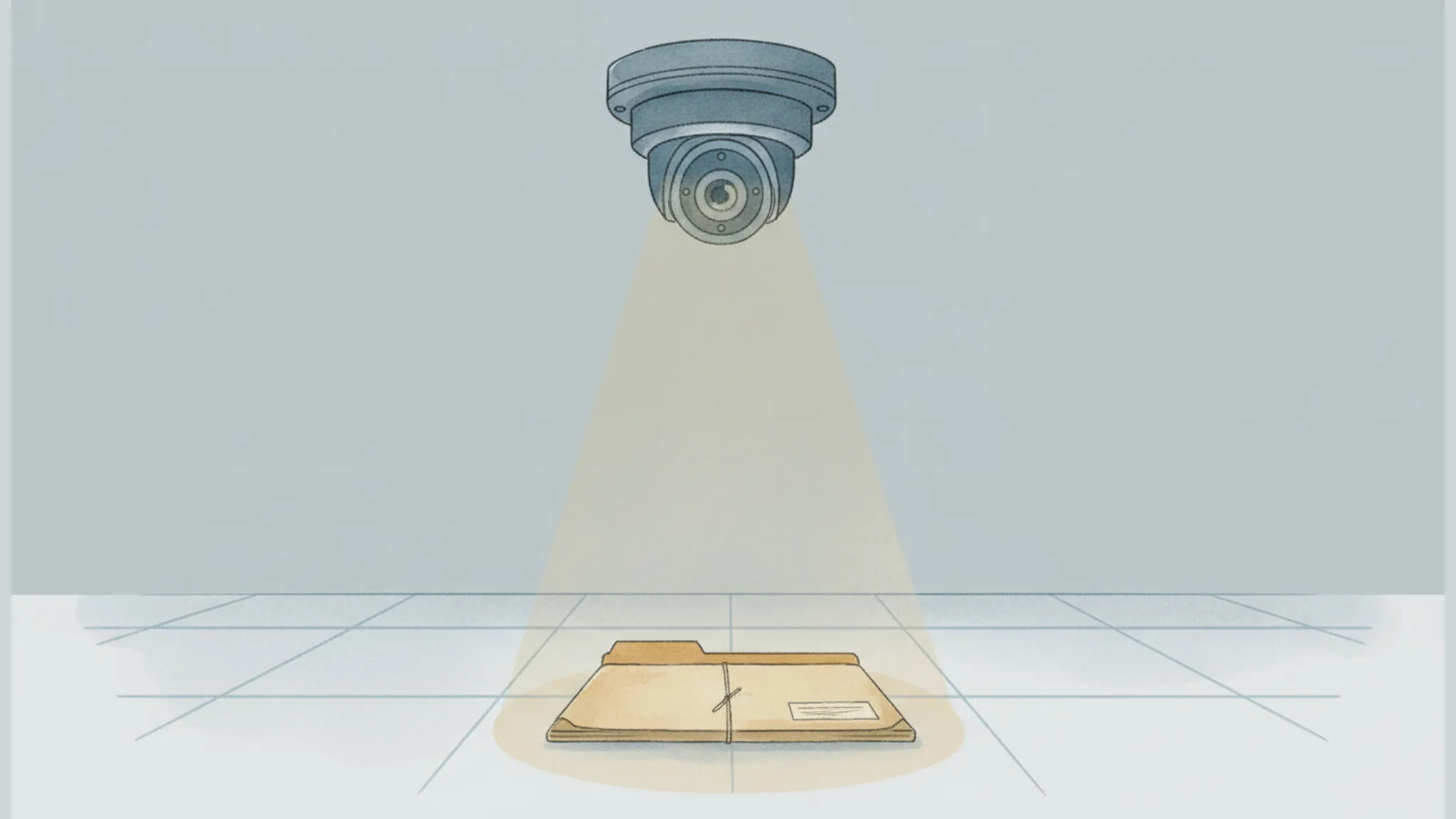
Video can be especially important in break-room cases, but it is not guaranteed to exist. Cameras may cover the hallway, entrance, lobby, cafeteria, common area, or vending area rather than the break room itself. Footage may also be overwritten quickly.
If video may exist, preservation requests should be made promptly. For more detail, see Johnson Law’s guide on how to preserve surveillance footage after a slip-and-fall.
How Workers’ Comp Liens and Third-Party Recoveries Fit Together
A third-party claim can proceed alongside workers’ compensation benefits, but the two systems interact. Under Oregon law, third-party proceeds may be subject to paying-agency lien, distribution, reimbursement, and approval rules.
At a high level, ORS 656.593 addresses distribution of third-party recoveries, including costs and attorney fees, a minimum worker share of the balance, and paying-agency reimbursement from the remaining recovery to the extent of allowed compensation, medical, and future-cost expenditures. ORS 656.587 also requires written approval of certain compromises by the paying agency or, if disputed, Workers’ Compensation Board approval.
That means a vendor or property-owner settlement should not be evaluated only by the gross settlement number. The workers’ compensation claim-cost ledger, lien position, future-benefit issues, and approval requirements may affect the practical result.
This article does not calculate lien repayment or settlement value. For that topic, see Johnson Law’s dedicated post on workers’ comp liens and third-party settlements.
Deadlines and Fault Allocation: Two Things Not to Guess About
Two deadline systems may be in play after a workplace break-room fall: workers’ compensation notice rules and civil claim filing deadlines. They are not the same.
Oregon’s general personal-injury limitations statute provides a two-year period for many injury claims, but specialized rules may apply to public bodies, minors, death claims, product claims, contract claims, and other situations. Public-body owners or operators can also raise separate notice issues not covered in this article.
Fault allocation also deserves care. Oregon comparative fault can reduce damages by the claimant’s percentage of fault and can bar recovery if the claimant’s fault is greater than the combined fault of legally compared persons. In a workplace third-party case, employer immunity may complicate how fault is compared, and multiple non-employer entities may point at each other.
The safest practical takeaway is simple: do not assume the case is comp-only, and do not assume a vendor case exists, until the documents and evidence are reviewed.
Practical Bottom Line: Build the Case Around Control, Notice, and Preserved Proof
An Oregon workplace break-room fall usually begins with workers’ compensation. If the hazard was controlled only by the employer, and the only negligent actor was the employer or an immune coworker or agent, the claim is often workers’ compensation-only against the employer.
But the analysis changes when a legally separate third person may have contributed to the hazard. A building owner, property manager, cleaning contractor, food-service vendor, vending company, plumber, appliance service company, or maintenance contractor may matter if evidence connects that entity to control, maintenance responsibility, notice, creation of the hazard, breach, and causation.
For related Oregon information, see Johnson Law’s pages on Oregon premises liability claims, Portland slip and fall claims, and personal injury practice.
Again, this article is educational information only, not legal advice. The correct path depends on the specific workplace, contracts, actors, timing, and evidence.
FAQ
Can I sue my employer after slipping in the break room at work in Oregon?
Usually not if the employer complied with Oregon workers’ compensation law, the injury arose out of and in the course of employment, and the only responsible actor was the employer or an immune person. In that situation, workers’ compensation is generally the exclusive remedy against the employer, subject to Chapter 656 exceptions.
Can I bring a claim against a cleaning company for a workplace break-room fall?
Possibly. A cleaning company may be evaluated as a third party if it is legally separate and not protected by employer immunity. The evidence would need to connect the company to the hazard, such as creating a slick condition, failing to perform contracted duties, failing to warn, or ignoring a known or reasonably discoverable problem.
What if a vending machine, coffee maker, refrigerator, or water dispenser leaked?
A third-party claim may depend on who owned, installed, serviced, maintained, or repaired the equipment. Service tickets, prior leak complaints, repair emails, photos, model information, and vendor work logs can be important.
Does a denied workers’ comp claim mean I can sue my employer or a vendor?
Not automatically. A workers’ compensation denial and a third-party negligence claim require separate analysis. A denial does not by itself defeat employer exclusivity or prove that a vendor, landlord, or contractor is liable.
What evidence matters most after a workplace break-room slip-and-fall?
Key evidence can include workers’ compensation papers, the incident report, photos, witness information, surveillance-retention requests, leases, vendor contracts, cleaning and inspection logs, service tickets, prior complaints, emails or facility tickets, vendor work logs, and the claim-cost ledger.
Will workers’ compensation take part of a third-party settlement?
Oregon third-party recoveries can interact with workers’ compensation lien, reimbursement, distribution, and approval rules. The effect depends on the claim and settlement details, so it should be reviewed before settlement.
Source Notes
- ORS Chapter 656 — Workers’ Compensation, including ORS 656.017, ORS 656.018, ORS 656.154, ORS 656.578, ORS 656.593, ORS 656.587, ORS 656.576, ORS 656.595, and ORS 656.265.
- ORS Chapter 12 — Limitations of Actions, including Oregon’s general two-year personal-injury limitations period in ORS 12.110, subject to important exceptions and specialized rules.
- ORS Chapter 31 — Tort Actions, including Oregon comparative fault under ORS 31.600.
- Oregon Workers’ Compensation Division injured worker overview — workers’ compensation process context.
- ORS 656.018 and ORS 31.600 annotations summarized in the approved fact sheet, including Oregon case-note guidance on contractor immunity, common enterprise, related entities, dual-capacity issues, and comparative-fault treatment of known or obvious conditions.
Client-First Fee Promise
Client First = Bills First, Fees Second
Your unpaid medical bills do not have to make your lawyer's fee bigger. Johnson Law subtracts qualifying medical bills before calculating our fee, helping clients keep more of their settlement.
Applies to qualifying cases. Results vary.