Slip and Fall in a Big-Box Store Aisle: What Evidence Disappears First?
Slip and Fall in a Big-Box Store Aisle: What Evidence Disappears First?
The Short Answer: Preserve the Changing Scene and Timeline, Not Just the Fall
After a slip and fall in an Oregon big-box store, there is no single type of evidence that always disappears first. The most vulnerable evidence is often whatever can change through cleanup, ordinary store traffic, routine digital overwrite, or fading memory.
That usually means paying prompt attention to five categories:
- The condition and its suspected source before cleanup or store traffic changes them.
- Witness identities and exact employee statements before people leave or memories fade.
- Surveillance and other digital records before routine system operation overwrites them.
- Incident, inspection, and cleanup records before their existence or meaning becomes disputed.
- Shopper-controlled evidence—such as original media, receipts, and footwear—before it is altered or separated from its context.
These materials may help reconstruct where the condition came from, whether store personnel knew about it, how long it may have existed, whether warnings were present, what employees did, and what the shopper was doing. They do not automatically prove that the store was negligent. The practical goal is to preserve a reliable scene and timeline while that remains possible.
Why These Details Matter Under Oregon Premises-Liability Law
A store is not automatically responsible simply because a shopper fell. Oregon’s premises-liability framework generally requires a store possessor to use reasonable care to discover conditions that create an unreasonable risk of harm and either eliminate the condition or warn foreseeable invitees so they can avoid it. A shopper also has a separate duty to use reasonable care for personal safety.
In an Oregon foreign-substance case, the evidence may need to support at least one of three paths: the store placed the substance on the floor; the store actually knew it was there and failed to use reasonable diligence to remove it; or the substance remained long enough that reasonable diligence should have discovered and removed it. The Oregon Court of Appeals applied that framework in Kummer v. Fred Meyer Stores, Inc..
That is why details that seem small immediately after a fall can become important later. Different facts may address different questions, including source, knowledge, duration, warnings, and comparative conduct. For a deeper discussion of how store knowledge of a spill may be proved, see our related Oregon guide.
Creation, Actual Knowledge, and Time on the Floor Call for Different Proof
No single photograph, record, or statement proves every theory.
For example, combined circumstantial evidence may connect a puddle to store operations. In Van Den Bron v. Fred Meyer, Inc., the evidence included a nearby produce-misting hose, wet produce carts traveling from a wet storage area, dry weather, and the location of the fall. Together, those facts permitted an inference that an employee more probably than not caused the puddle.
Proximity alone may not be enough. In Griffin v. K.E. McKay’s Market of Coos Bay, Inc., a dolly of bagged ice near an ice merchandiser and water on the floor did not establish when the dolly arrived, who caused the water, or how long the water had been there.
If the claim instead depends on constructive knowledge, Oregon law requires evidence from which a factfinder can reasonably infer how long the condition existed. Evidence consistent with several equally plausible timelines may leave that issue unresolved. Preserving the scene is therefore not just about proving that a substance or object was present; it is also about preserving facts that may help explain its source and timing.
1. The Condition and Suspected Source Before Cleanup or Store Traffic Changes Them
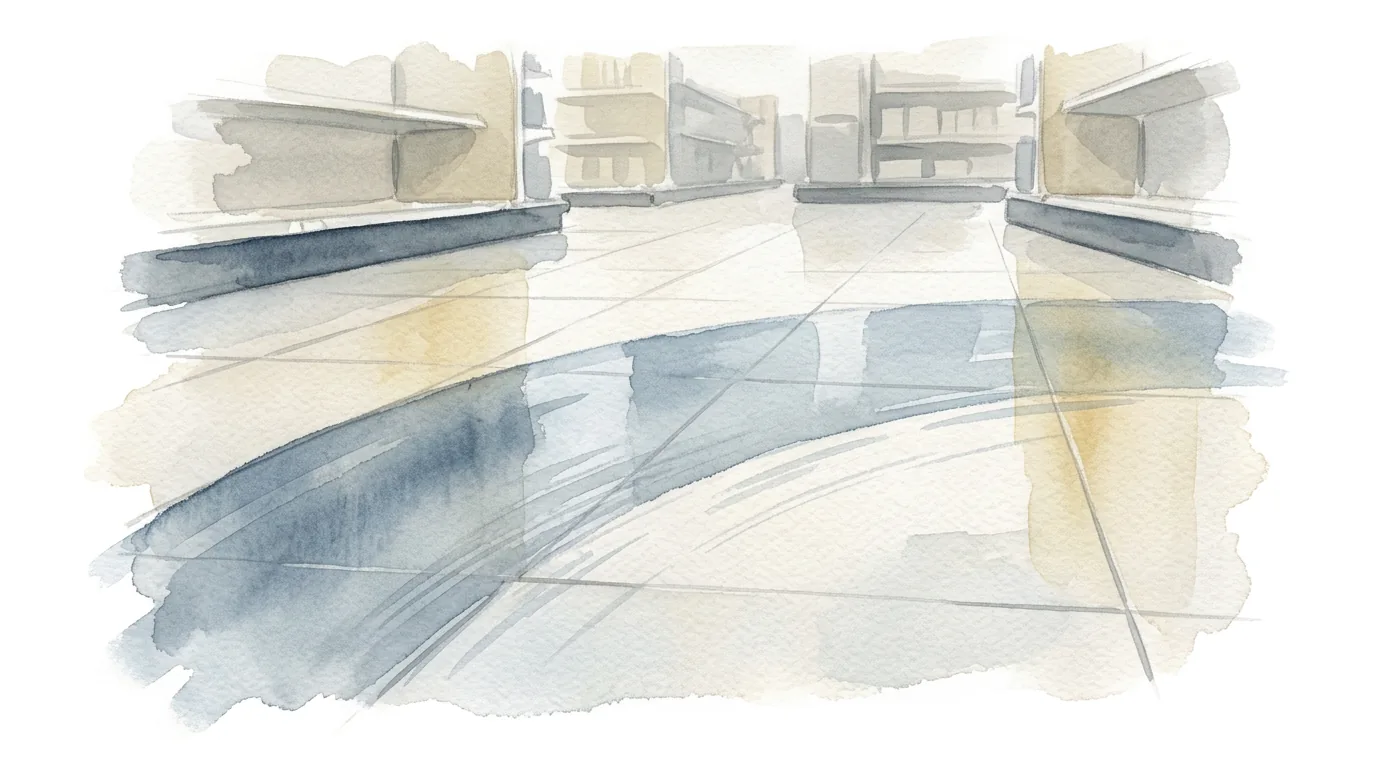
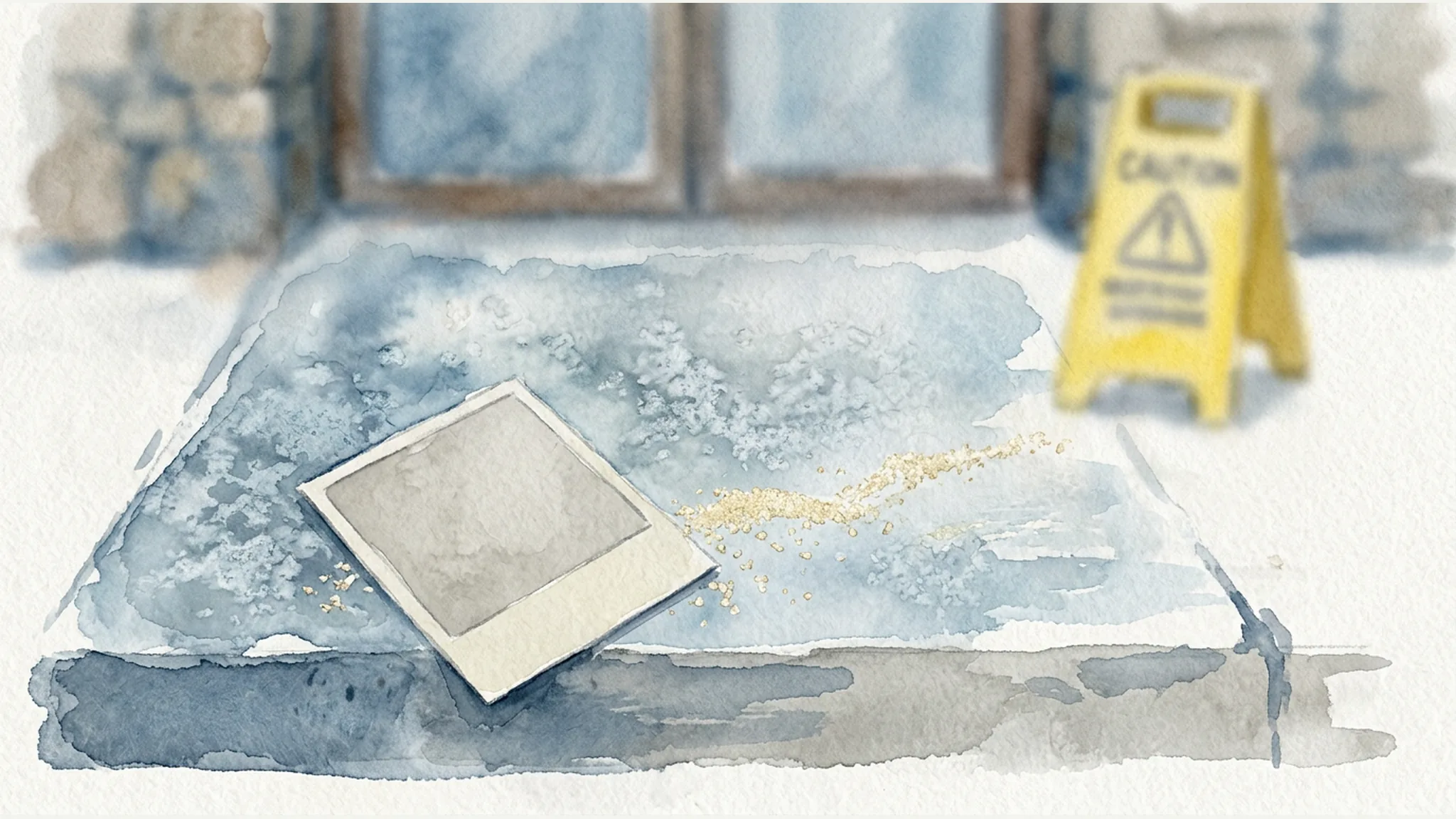
The physical scene may begin changing immediately. Employees may need to remove a hazard, customers and carts may pass through the aisle, merchandise may be moved, and warning signs may be repositioned. Safety should come first, but when circumstances allow, photographs or video can preserve what the area looked like before those changes.
Useful images may include:
- the substance or object involved;
- the suspected leaking, broken, or dropped product;
- nearby equipment, carts, shelves, displays, or containers;
- footprints, cart tracks, drying edges, debris, or other disturbance;
- the boundaries of a wet or obstructed area;
- warning signs, cones, barriers, or their absence from the photographed area;
- the wider aisle and available routes through it; and
- visible camera locations.
Do not interfere with cleanup, create another hazard, trespass, or take store property. Do not touch, taste, collect, or retain an unknown substance or leaking or broken product. Photographs and witness identification are safer ways to document an unfamiliar condition.
Details That May Help Reconstruct Source or Duration
The condition’s appearance and surroundings may help support—or weaken—a factual inference about what happened. A nearby source, tracks through a wet area, disturbed debris, or employee activity may become part of a larger picture. But none of those details is conclusive by itself.
In a fact-specific, nonbinding federal District of Oregon decision, Taylor v. Thrifty Payless, Inc., a manager testified that a puddle had no tracks leading away and did not look walked through. The decision illustrates why physical appearance may matter, but it does not establish a scientific “spill clock.” A footprint, track, drying edge, or debris pattern cannot be assigned a fixed age without supporting evidence.
The same caution applies to a nearby product or piece of equipment. It may be relevant, but the connection can remain speculative if the evidence does not establish when it arrived, whether it caused the condition, or who controlled it.
Photograph Context, Not Just a Close-Up
A close-up may show the condition but leave out the relationships that give it meaning. If it is safe and lawful, wider images may show:
- how far the condition was from a possible source;
- where employees, customers, or carts may have traveled;
- where warning signs or barriers were placed;
- the aisle layout and sight lines; and
- which cameras may have captured relevant parts of the timeline.
Both close and wide views can be useful because the issue may extend beyond what was under the shopper’s foot. The surrounding aisle can help explain source, movement, warnings, and who may have observed the condition.
If Store Cleaning May Be the Source, Document It Without Deciding Liability
Employee or contractor cleaning is one possible source of a wet condition, but seeing cleaning equipment nearby does not decide liability. If cleaning may be relevant, potentially useful details include the location of a mop or bucket, the wet area’s boundaries, the cleaning route, the identity of the employee or contractor, sign or barrier placement, and any available dry route.
Those facts may help reconstruct source and timing. Whether store cleaning created an unmarked wet floor presenting an unreasonable risk—or whether the precautions were adequate—requires a separate, fact-specific analysis.
2. Witness Identities and Exact Employee Statements Before People Leave or Memories Fade
Nearby shoppers, employees, managers, cleaners, contractors, or others may have seen the condition before the fall, observed where it came from, heard an earlier report, or watched the response. If possible, preserve:
- each person’s name and contact information;
- whether the person was a shopper, employee, manager, cleaner, or contractor;
- where the person was standing or working;
- what the person personally observed;
- the time and location of the observation; and
- the person’s exact words, rather than a later summary.
An account that “an employee admitted the spill had been there” may omit the very wording needed to determine what the employee actually knew. A contemporaneous note identifying the speaker, exact statement, time, location, and others who heard it is more useful than a paraphrased legal conclusion.
An Immediate Statement May Matter, but It May Not Prove Prior Knowledge
George v. Erickson’s Sunnyslope Supermarket, Inc. shows why context matters. An employee’s statement that strawberries “should have been cleaned up” did not establish prior knowledge after the employee testified that she had not seen them on the floor before the accident.
The lesson is not that immediate statements are irrelevant. It is that wording can be equivocal. Record what was actually said and the circumstances in which it was said; do not silently turn an uncertain statement into an admission that the store knew about the hazard before the fall.
3. Surveillance and Digital Records Before Routine Overwrite
Electronically stored information can be altered, overwritten, or destroyed through routine system operation. Actual retention practices vary by store, system, and type of record, so prompt identification of potentially relevant material matters.
Surveillance is only one part of the evidence picture. Still, it may show the condition developing, people moving through the area, an employee’s route, the placement of a warning, the report to staff, or cleanup. For more detail on how to preserve relevant store surveillance footage, including the distinction between preservation and production, see our dedicated guide.
Relevant Footage May Extend Beyond a Direct View of the Fall
A camera does not necessarily need a direct view of the spill to capture a relevant part of the timeline. Depending on the facts, targeted footage might include views of:
- the aisle and suspected source;
- entrances or registers that help establish timing;
- employee or cleaning routes;
- warning-sign placement;
- the shopper reporting the event;
- witnesses entering or leaving the area; or
- the cleanup response.
Relevance should not be assumed. A useful preservation effort identifies reasonable time windows and camera views tied to the event rather than demanding unrelated footage.
No Universal Oregon Retail Video-Retention Period
We did not identify a generally applicable Oregon rule requiring an ordinary private retailer to retain surveillance for a fixed number of days after a shopper falls.
In Taylor, the store’s system automatically deleted images after 37 days. That was one defendant’s policy—not an Oregon minimum, statewide rule, or safe harbor. Taylor is also a nonbinding federal trial-court decision with a fact-specific preservation analysis. A particular store’s cycle, camera coverage, export process, and control of the recordings would need to be determined from the facts.
Preservation Is Different From Production
A prompt pre-suit request can identify material the sender wants preserved, but it is not a subpoena, a discovery order, or a guarantee that the material will be retained or produced.
After Oregon litigation begins, Oregon Rule of Civil Procedure 43 permits requests for electronically stored information, writings, photographs, sound recordings, images, and other data, as well as certain tangible things in a party’s possession, custody, or control. That does not make a shopper’s pre-suit request an ORCP 43 discovery demand.
Relevant information may also be controlled by a landlord, security company, janitorial contractor, concession, or neighboring business rather than the store. ORCP 55 permits subpoenas seeking specified documents, electronically stored information, or tangible things from nonparties, subject to procedural requirements, objections, and court supervision. Neither rule promises that every requested item will be available, discoverable, admissible, or produced in the requested form.
4. Incident Reports, Inspection Logs, and Cleanup Records Before Their Meaning Is Disputed
Store-created records may preserve pieces of the timeline. An incident report may capture an early description. Inspection or task records may identify employees and store activity. Cleanup communications may help establish who responded and when.
Those records also have limits. They may be incomplete, disputed, unavailable, or subject to objections. Materials prepared in anticipation of litigation may receive qualified work-product protection depending on who prepared them, when, why, and what they contain. Discoverability does not guarantee admissibility.
An Incident Report Can Preserve an Account Without Proving the Claim
An incident report’s existence or wording does not necessarily prove where the condition came from, how long it existed, or whether the store knew about it beforehand.
In Griffin, a manager’s report referred to water in front of an ice merchandiser and characterized the shopper’s footwear. The court still found the evidence insufficient to establish source, prior knowledge, or duration. The decision did not hold that the footwear caused the fall.
If a report is made, it can be useful to note who supplied information, who prepared the report, and whether the shopper signed or adopted any wording. Retain any copy or statement actually provided. ORCP 36 B(3)(b) addresses a party obtaining that party’s own qualifying prior statement, but that does not mean every internal report or employee interview must be produced.
Inspection Gaps Do Not Establish How Long a Particular Spill Existed
Inspection logs can help identify who checked an aisle, when a check was recorded, and what store activity occurred. But a missing entry, overdue sweep, or allegedly deficient inspection schedule does not itself establish when the particular spill began.
In Kummer, evidence about an asserted industry inspection standard could not fill the missing proof of duration. The decision also discussed Oregon precedent holding that more than an hour since the last sweep did not establish constructive notice when the spill could just as readily have occurred immediately before the fall.
Logs may still contribute to the timeline. They simply cannot answer a duration question that the record otherwise leaves to speculation. Our related article explains more about what cleaning logs can—and cannot—show.
5. Shopper-Controlled Evidence Before It Is Altered, Cleaned, or Separated From Its Context
Some potentially relevant evidence may already be in the shopper’s possession. Preserving it does not prove a claim, but it can help maintain timing, context, and condition for later evaluation.
Keep Original Photos, Videos, and Timestamps
Retain the original scene photos and videos rather than keeping only cropped, edited, or social-media versions. Receipts or payment timestamps may also help locate the event within the store visit and reconstruct the sequence.
A simple contemporaneous chronology can preserve what the shopper remembers about the condition, statements, report, and response. It should distinguish personal observations from what someone else said. Avoid editing an original account to make it sound more certain later.
Preserve Footwear in Unchanged Condition When It May Be Disputed
A store may raise questions about footwear type, fit, tread, wear, contamination, or the shopper’s conduct. If footwear may be disputed, contemporaneous photographs of the shoes and soles and retention of the footwear in unchanged condition may be important. Continued wear, cleaning, repair, or other alteration can change what it shows.
Footwear is not automatically proof of shopper fault. Oregon follows modified comparative fault: damages may be reduced in proportion to a claimant’s fault, and recovery is barred when the claimant’s fault is greater than the combined fault compared under ORS 31.600. Whether conduct contributed to the harm is fact-specific. Preserving shoes does not relieve the store of its separate duty or establish that ordinary footwear was negligent.
What Prompt Preservation Can—and Cannot—Do
Prompt preservation can protect material for later investigation, evaluation, or formal discovery. It may help identify which person or entity controls a recording or record and which time windows, camera views, employees, or physical items deserve attention.
It cannot by itself:
- establish that the store was negligent;
- prove source, prior knowledge, or duration;
- compel pre-suit production;
- guarantee that an item exists or remains available;
- resolve privilege, work-product, admissibility, or foundation issues; or
- guarantee a sanction or other remedy if material is missing.
Control can also be divided. A local store, corporate risk office, landlord, security vendor, cleaning contractor, concession, or neighboring business may possess different pieces of the evidence. That makes precise, case-specific identification more useful than assuming the store controls everything.
Missing Evidence Does Not Automatically Mean Willful Suppression
Oregon Evidence Code Rule 311 lists a presumption that evidence willfully suppressed would be adverse to the suppressing party. “Willfully suppressed” is an important limitation. Routine automatic overwrite, accidental loss, or disposal before potential relevance is reasonably apparent should not be described as automatically producing an adverse presumption.
Oregon appellate law also does not cleanly resolve the source or scope of authority to impose dismissal for destruction of potential evidence before a production request. In Markstrom v. Guard Publishing Co., the Oregon Court of Appeals assumed without deciding that an ORCP 46 framework applied and reversed because the trial court had not adequately justified dismissal in the context of the whole case.
Missing evidence can raise important questions, but it does not automatically establish suppression, negligence, an adverse inference, or a particular sanction.
A Practical, Safe Evidence-Triage Checklist
This is a practical synthesis of the proof categories discussed above, not a checklist created by Oregon statute.
- Document the scene if safe and lawful. Photograph or record the condition, suspected source, visible disturbance, wider aisle, warning placement, and camera locations.
- Identify people. Preserve witness and employee names, contact information, locations, observations, and exact statements.
- Identify targeted digital material. Note reasonable time windows and camera views connected to the aisle, source, employee routes, reporting, warnings, witnesses, and cleanup.
- Record the store response. Note whether an incident report was made, who supplied information, and who prepared it. Retain any copy or qualifying statement actually provided to the shopper.
- Preserve shopper-controlled context. Keep receipts, payment timestamps, original photos and videos, a contemporaneous chronology, and unchanged footwear.
- Put safety and lawfulness first. Do not interfere with cleanup, trespass, take store property, or touch, taste, collect, or retain an unknown substance or product.
The Filing Deadline Is Not an Evidence-Retention Deadline
Oregon’s general limitation period for an action for injury to a person is two years under ORS 12.110(1). That does not mean a store must preserve video, an incident report, or an inspection log for two years. Scene conditions can be cleaned immediately, witnesses can leave, and digital material can be overwritten much sooner.
The two-year period is a general rule, not an individualized deadline calculation. Public-body involvement, death, minors, uncertain defendants, contractual relationships, or other special facts may require different analysis. The existence of a filing period is not a reason to delay evidence-preservation efforts.
When to Seek Case-Specific Legal Guidance
Case-specific legal guidance may help identify who controls relevant evidence, define proportionate preservation targets, evaluate whether the available facts support a source, actual-knowledge, or duration theory under Oregon law, and assess applicable deadlines.
If you were injured in an Oregon store and are concerned that evidence may change or be overwritten, you can contact Johnson Law to discuss the circumstances and possible next steps.
This article provides general educational information only and is not legal advice. Reading it does not create an attorney-client relationship, and the relevance, availability, discoverability, and effect of evidence depend on the specific facts and governing law.
Frequently Asked Questions
What evidence should I identify first after a slip and fall in an Oregon big-box store?
Start with the physical condition and suspected source before cleanup or store traffic changes the scene. Then identify witnesses and employees and preserve their exact statements. Targeted video, store records, receipts or payment timestamps, original media, and unchanged footwear may also matter. The order may vary with the facts, safety concerns, and what is at risk of changing.
How long must an Oregon store keep surveillance video after a fall?
We did not identify a generally applicable fixed Oregon retention period for ordinary private retailers. Actual retention cycles vary. The 37-day automatic deletion cycle discussed in Taylor was specific to one defendant’s system, not an Oregon rule, and Taylor is a nonbinding federal trial-court decision.
Does a missed aisle inspection prove the store knew about a spill?
No. Under Kummer and the Oregon precedent it discusses, an inspection gap or assertedly inadequate inspection practice does not by itself prove how long the particular spill existed. Logs may contribute to a timeline, but constructive knowledge still requires evidence supporting a reasonable inference about duration.
Does filing an incident report prove the store was responsible?
No. A report may preserve an early account of the condition and response, but its existence or wording may not establish source, prior knowledge, or duration. It may also contain assumptions or omissions, and discovery, privilege, work-product, foundation, or admissibility issues may apply.
Can I require the store to give me its video before filing a lawsuit?
A pre-suit preservation request does not compel production. Formal discovery under ORCP 43 and nonparty subpoenas under ORCP 55 operate under procedural rules after litigation begins and remain subject to objections and court supervision. A request also cannot guarantee that footage exists or is controlled by the store.
If surveillance footage was overwritten, will an Oregon court assume it hurt the store’s case?
Not automatically. OEC 311 concerns evidence willfully suppressed, and routine overwrite should not automatically be equated with willful suppression. Oregon authority concerning sanctions for prelitigation destruction is not cleanly settled, and the result depends on the facts and governing procedure.
Source Notes
- Kummer v. Fred Meyer Stores, Inc., 337 Or App 720 (2025) — Oregon’s foreign-substance framework, duration evidence, and limits of inspection-practice proof.
- Woolston v. Wells, 297 Or 548 (1984) — a possessor’s reasonable-care duty and an invitee’s separate duty of care.
- Van Den Bron v. Fred Meyer, Inc., 86 Or App 329 (1987) — fact-specific circumstantial evidence connecting store operations to a puddle.
- Griffin v. K.E. McKay’s Market of Coos Bay, Inc., 125 Or App 448 (1993) — limits of speculative source evidence and incident-report proof.
- George v. Erickson’s Sunnyslope Supermarket, Inc., 236 Or 64 (1963) — limits of an equivocal immediate employee statement.
- Oregon Rules of Civil Procedure 36, 43, and 55 — discovery scope, qualified work-product protection, ESI and tangible-item requests, and nonparty subpoenas.
- ORS 40.135, OEC Rule 311 — the presumption concerning evidence willfully suppressed.
- ORS 31.600 — Oregon’s modified comparative-fault rule.
- ORS 12.110 — Oregon’s general limitation period for personal-injury actions.
- Markstrom v. Guard Publishing Co., 294 Or App 338 (2018) — uncertainty surrounding dismissal for prelitigation destruction of potential evidence.
- Taylor v. Thrifty Payless, Inc., No. 3:16-cv-00474-HZ (D. Or. May 12, 2017) — nonbinding, fact-specific federal authority concerning physical scene details and one retailer’s automatic video deletion cycle.
Client-First Fee Promise
Client First = Bills First, Fees Second
Your unpaid medical bills do not have to make your lawyer's fee bigger. Johnson Law subtracts qualifying medical bills before calculating our fee, helping clients keep more of their settlement.
Applies to qualifying cases. Results vary.