Wet Floor, No Cone: How to Prove a Portland Grocery Store Knew About the Spill
Wet Floor, No Cone: How to Prove a Portland Grocery Store Knew About the Spill
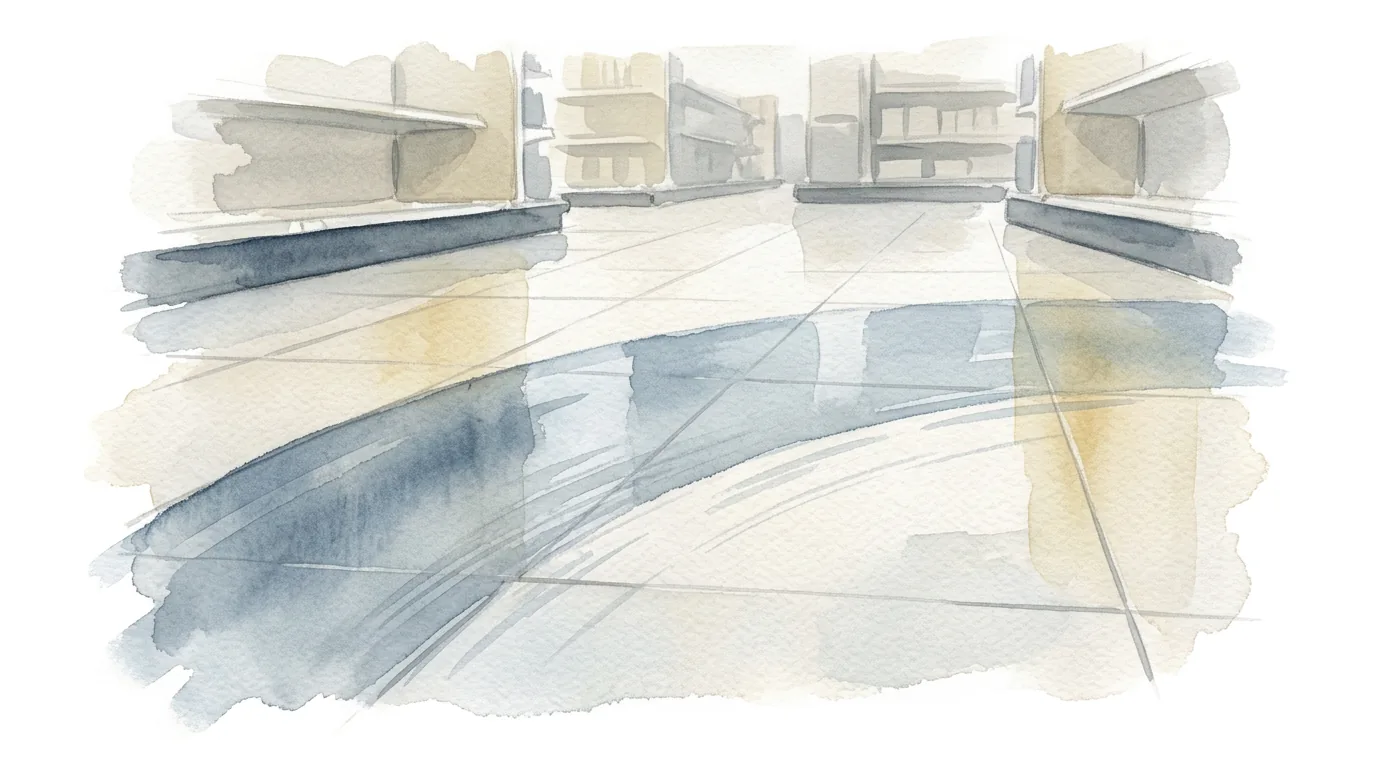
If you slipped on a wet grocery store floor in Portland and there was no cone, the key question is usually not just “Was the floor wet?” It is “What evidence shows the store created the hazard, actually knew about it, or should have found it through reasonable care before you fell?”
That distinction matters in Oregon. A grocery store is not automatically liable every time a customer slips on spilled water, melted ice, dropped produce, or tracked-in rain. But the absence of a warning cone can become important when it is tied to other evidence: an employee saw the spill, another shopper reported it, a prior customer slipped nearby, inspection logs show a gap, video shows the liquid sat there long enough to be discovered, or store routines created the wet area.
This article explains the evidence that may matter in a grocery store slip and fall in Oregon, especially when the store says, “We did not know about the spill.” It is educational information only, not legal advice about any specific claim.
The Oregon Notice Question in a Grocery-Store Spill Case
Oregon foreign-substance slip-and-fall cases commonly focus on three possible paths of proof. In plain English, the injured customer often needs evidence that:
- the store or its employees put the substance on the floor;
- the store actually knew the substance was there and did not use reasonable diligence to remove it or warn customers; or
- the substance had been there long enough that the store should have discovered and removed it through reasonable diligence.
These categories come up often in Oregon premises cases involving grocery stores, produce aisles, entryways, and other areas where transient spills may appear. They are fact-specific. The same type of evidence may be helpful in one case and insufficient in another if it does not connect the store to the hazard, the store’s knowledge, or the amount of time the hazard was present.
For broader context on property-owner duties, see Johnson Law’s page on Oregon premises liability claims. For local claim context, see the firm’s Portland slip and fall claims page.
Why “No Cone” Matters—But Does Not Prove the Whole Case
A missing wet-floor cone may feel like the clearest fact after a fall. It can matter because warning signs are one way a store may respond to a known wet area. If employees knew about a spill and left it unmarked, the lack of a cone may support the argument that the store failed to warn shoppers.
But in Oregon, “wet floor, no cone” should not be treated as automatic proof of negligence. A store may argue that the spill happened seconds before the fall, that no employee saw it, that reasonable inspections were being performed, or that the customer should have seen and avoided an obvious condition. Oregon courts have repeatedly looked for evidence that connects the store to the specific hazard—not just evidence that grocery stores generally have spill risks.
The practical takeaway: the missing cone is often a starting point, not the finish line. The stronger question is what other evidence explains why no cone was there.
Actual Notice: Proof the Store Knew About the Spill Before the Fall
Actual notice means the store knew about the specific dangerous condition before the customer fell. Evidence may support actual notice when, for example:
- an employee saw the spill and walked away;
- a shopper reported the spill to an employee;
- an employee was cleaning, stocking, misting produce, or moving carts in the same area and observed the wet floor;
- a prior customer slipped in the same area shortly before the fall; or
- the store’s own incident materials or witness statements identify someone who knew about the spill earlier.
Actual notice can be especially important when it is supported by timing. A statement like “they knew it was wet” is more useful if it identifies who knew, how they knew, when they knew, and what they did or did not do next.
Evidence That Can Support Actual Notice
Useful actual-notice evidence may include:
- witness names and phone numbers;
- statements from shoppers who reported the spill;
- employee names, descriptions, departments, or uniforms;
- photos showing employees nearby before cleanup began;
- incident-report details identifying prior complaints or prior slips;
- surveillance showing employees passing the spill before the fall; and
- store communications or logs showing when the condition was reported.
Be careful with post-fall statements. An employee saying “we need to clean this up” after the fall does not necessarily prove the employee knew about it before the fall. The timing of the knowledge is often the central issue.
Constructive Notice: Proof the Spill Was There Long Enough to Be Found
Constructive notice is different. It does not require proof that an employee actually saw the spill. Instead, it asks whether the spill had been on the floor long enough that the store, using reasonable care, should have discovered and addressed it.
This is where timing evidence becomes critical. Oregon cases caution against guessing that a spill “must have been there for a while.” A customer usually needs facts that allow a reasonable inference about how long the substance was present.
Evidence That May Help Show How Long the Spill Existed
Depending on the facts, the following may help establish time-on-floor:
- video showing the spill appearing or remaining before the fall;
- witness testimony that the liquid was present minutes earlier;
- footprints, cart tracks, dirt, or smear patterns through the liquid;
- dried edges, spreading, or other observable characteristics of the substance;
- proof that another customer slipped or complained in the same location earlier;
- checkout receipts or timestamps placing witnesses in the area before the fall; and
- cleaning or sweep logs showing when the area was last inspected.
No single item is always enough. For example, a sweep log showing that an aisle had not been inspected for a period of time may be important, but it may not prove constructive notice unless there is also evidence that the spill existed during that gap. If the liquid could have been spilled immediately before the fall, the store may argue it had no reasonable chance to discover it.
Reasonable Inspection: Why Sweep Logs and Cleaning Routines Matter
Grocery stores often use inspection routines: produce sweeps, entryway checks, restroom checks, spill response procedures, floor mats, wet-floor signs, and employee walk-throughs. In a Portland grocery store fall, those routines may help either side.
They may support the injured person’s claim if they show:
- the store’s own policy required more frequent checks than actually occurred;
- employees skipped documented inspections;
- inspection logs were filled out in advance or inconsistently;
- the spill was in a high-risk area such as produce, refrigerated cases, floral displays, entryways on rainy days, or near ice displays; or
- employees were assigned to the area but failed to notice a visible hazard.
They may support the store’s defense if they show:
- the area was inspected shortly before the fall;
- the inspection was documented and performed by an identified employee;
- no spill was visible at that time;
- the spill appeared only moments before the incident; or
- warning signs or mats were already in place and reasonably positioned.
The point is not that every missed inspection proves liability. It is that inspection evidence helps answer the Oregon notice question: did the store use reasonable care under the circumstances, and would a reasonable inspection have found the spill in time?
Employee-Created Hazards: A Different Path Than Notice
Sometimes the strongest evidence is not that the store knew about a customer-created spill. It is that store operations likely created the wet area in the first place.
In a grocery store, possible sources may include:
- produce misting hoses or sprayers;
- wet produce carts moved through aisles;
- leaking coolers or freezer cases;
- ice displays;
- floral buckets;
- mopping or cleaning without adequate drying or warning;
- rainwater tracked in through an entrance the store knew became slippery; or
- spills from employee stocking or maintenance work.
This evidence should be handled carefully. A general possibility that “water comes from produce” is not the same as proof that the store created the specific hazard. Stronger evidence connects the source to the location and timing: a hose lying near the fall, dry weather outside, a wet cart route, a leaking case, an employee mopping moments earlier, or video showing store activity that left liquid behind.
Evidence to Preserve After a Portland Grocery Store Fall
The evidence most likely to matter can disappear quickly. Floors get mopped. Cones appear after the fall. Video may be overwritten. Employees change shifts. Witnesses leave without giving names. In a different kind of trip-and-fall case, similar preservation urgency can apply when the issue is a loose stair tread or raised carpet edge that may be repaired before it is documented.
If you are physically able, or if someone is with you, consider preserving the following.
Photos and Short Video at the Scene
Photograph the spill, the surrounding aisle, the absence or placement of cones, nearby mats, lighting, displays, leaking cases, produce bins, employee carts, and camera locations. Take wider photos too. A close-up of water on tile may not show where it was, what employees could see, or whether a warning sign was nearby but poorly placed.
If the floor is cleaned before photos can be taken, photograph the cleanup activity, the mop bucket, newly placed cones, and the area as soon as possible.
Witness Timing
Witnesses can be especially important in Oregon notice disputes. Ask whether anyone saw the spill before the fall, reported it, saw an employee walk by, heard a customer complain, or saw another person slip. Timing details matter: “I saw it five minutes before” is different from “I noticed it after you fell.”
Try to preserve names, phone numbers, and a short description of what each person saw. Receipts, call logs, text messages, and photo timestamps may later help place people in the store at relevant times.
Incident Report Details
If the store prepares an incident report, ask for the report number and the names or roles of the employees involved. The store may not provide the full report immediately, and later disputes may arise over privilege, work product, or scope. Still, the existence of the report, who prepared it, and what information was collected can be important.
An incident report does not prove notice by itself. Its value depends on what it says about the source of the spill, prior complaints, employee observations, inspection timing, witnesses, photos, and cleanup.
Cleaning Logs, Sweep Logs, and Inspection Schedules
Customers usually do not have immediate access to internal logs. But it is useful to identify what to ask for later: sweep sheets, produce-department inspection logs, restroom or entryway checks, mopping records, employee assignments, spill-response logs, and policies for high-risk areas.
After a lawsuit is filed, Oregon discovery rules may allow parties to seek relevant documents, electronically stored information, photos, tangible things, and identities of people with discoverable knowledge. Requests may also seek inspection of property in appropriate circumstances. These tools are subject to scope, privilege, proportionality, and protective-order disputes. Johnson Law discusses the broader decision point in its article on when formal discovery may become necessary.
Surveillance Video and Preservation Requests
Store video may show when the spill appeared, who walked past it, whether an employee inspected the aisle, whether cones were placed before or after the fall, and how quickly the area was cleaned. Relevant footage may come from aisle cameras, checkout cameras, entry cameras, security cameras, or cameras controlled by a landlord, security contractor, or shopping-center owner.
Because video systems may overwrite footage, preservation should be requested promptly and specifically. The request should identify the store, date, time range, fall location, nearby cameras, entrances, checkout lanes, and cleanup activity. For more detail, see Johnson Law’s guide to how to preserve surveillance footage after a slip-and-fall.
Footwear, Receipts, and Medical Timing
Other evidence can also matter:
- Keep the shoes you wore, without washing or altering them.
- Save grocery receipts, loyalty-card records, parking receipts, rideshare records, or phone location data that may help confirm timing.
- Photograph visible injuries as they develop.
- Seek appropriate medical evaluation and keep records of when symptoms began.
- Write down what happened while details are fresh, including what you saw before the fall and what employees said afterward.
These items may help connect the incident to the injury, establish timing, and respond to later arguments about footwear, distraction, preexisting symptoms, or where the fall occurred. For a broader preservation overview, see Johnson Law’s guide to preserving evidence after an accident.
Rainy Portland Entrances and Wet Grocery-Store Floors
Portland rain can complicate grocery-store entrance cases. Tracked-in water is common, and Oregon law does not make stores insurers of customer safety whenever it rains. But rainy conditions also may make inspection and warning practices more important when a store knows an entrance area becomes wet and slippery.
Evidence that may matter includes mats, umbrella-bag stations, warning signs, prior slips, employee knowledge of recurring wetness, how recently the entrance was mopped, and whether the store adjusted inspections during heavy rain. A related comparison appears in Johnson Law’s discussion of hotel lobby wet-floor and cleaning-vendor issues, but grocery-store cases still turn on their own facts.
Evidence That Can Undermine a Grocery-Store Slip-and-Fall Claim
It is just as important to understand what may weaken a claim. In Oregon cases, courts have rejected claims when the evidence required too much speculation about who created the spill, whether anyone knew about it, or how long it had been there.
Potential defense evidence may include:
- video showing the spill appeared moments before the fall;
- a documented inspection shortly before the incident;
- witness testimony that no liquid was visible earlier;
- lack of evidence connecting the spill to employee activity;
- proof that cones, mats, or warnings were reasonably placed;
- evidence that the condition was open and obvious; or
- comparative-fault arguments that the customer failed to use reasonable care.
Oregon’s comparative fault statute can reduce damages in proportion to the claimant’s share of fault, and fault can bar recovery if the claimant’s fault is greater than the combined fault of others specified by the statute. That does not mean a store avoids responsibility whenever it blames the customer. It means evidence about visibility, warnings, lighting, distraction, footwear, and walking path may become part of the case.
Practical Next Steps After a Grocery-Store Wet-Floor Fall
After a fall, the most useful steps are often simple and time-sensitive:
- Get medical care if you are hurt.
- Photograph the floor, nearby displays, signs, mats, cones, cameras, and cleanup.
- Identify witnesses and employees.
- Ask that an incident report be created and record the report number if one is provided.
- Save your shoes, receipts, and time records.
- Request preservation of relevant surveillance and store records promptly.
- Avoid assuming that “no cone” proves the claim without evidence of creation, notice, timing, or unreasonable inspection.
Oregon personal-injury claims are often subject to a two-year limitation period, but deadline analysis can change based on the facts, the parties involved, and special rules. If the location involved a public entity, public employee, or government-owned premises, Oregon Tort Claims Act notice requirements may apply—often including a much shorter notice period under ORS 30.275—so those issues should be evaluated promptly.
Frequently Asked Questions
Is a Portland Grocery Store Automatically Liable If There Was No Wet-Floor Cone?
No. The absence of a cone may be important, but Oregon cases generally require evidence tied to the store creating the hazard, actually knowing about it, or having enough time to discover it through reasonable care. A missing cone is stronger when combined with timing evidence, employee observations, prior complaints, video, or inspection-log problems.
What Is the Difference Between Actual Notice and Constructive Notice?
Actual notice means the store knew about the specific spill before the fall. Constructive notice means the spill was present long enough that the store should have discovered it through reasonable inspections. Constructive notice usually depends heavily on timing evidence.
Are Sweep Logs Enough to Prove the Store Should Have Known About the Spill?
Not always. Sweep logs can be important, especially if they show skipped inspections or inconsistent practices. But Oregon cases caution that a missed inspection may not be enough if there is no evidence the spill existed during the missed inspection window.
What If the Spill Came From Produce, Ice, or a Leaking Cooler?
Evidence that store operations created the wet area can be important. The key is connecting the source to the specific fall location and timing. A general risk that produce or ice can create water on the floor may not be enough by itself.
How Quickly Should Surveillance Video Be Requested?
As soon as possible. You should not assume a specific store’s retention period because systems vary, but video can be overwritten. A preservation request should identify the date, time range, location, camera angles, and cleanup activity as specifically as possible.
Brief Disclaimer
This article provides general educational information about Oregon grocery-store slip-and-fall evidence. It is not legal advice and does not create an attorney-client relationship. Liability, deadlines, available evidence, and comparative-fault issues depend on the specific facts.
Source Notes
- Pribble v. Safeway Stores, Inc., 249 Or 184, 437 P2d 745 (1968): Oregon Supreme Court discussion of foreign-substance slip-and-fall theories, store knowledge, tracked-in rainwater, prior slip evidence, and the principle that a store is not an insurer of customer safety.
- Diller v. Safeway Stores, Inc., 274 Or 735, 548 P2d 1304 (1976): Oregon Supreme Court decision addressing actual notice, produce-area sweep evidence, and why a lapse in sweeping may not by itself prove the spill existed long enough to be discovered.
- Van Den Bron v. Fred Meyer, Inc., 86 Or App 329, 738 P2d 1011 (1987): Oregon Court of Appeals decision discussing employee-created-hazard evidence in a produce-area water fall and distinguishing it from actual-notice or time-based constructive-notice proof.
- Rex v. Albertson’s, Inc., 102 Or App 178, 792 P2d 1248 (1990): Oregon Court of Appeals decision emphasizing that general foreseeability of loose produce on the floor is not the same as notice of the specific foreign substance.
- Griffin v. K.E. McKay’s Market of Coos Bay, 125 Or App 448, 865 P2d 1321 (1993), aff’d, 319 Or 80 (1994): Oregon appellate decision illustrating that speculation about source, knowledge, or duration of water or ice on the floor is insufficient.
- Robinson v. Lamb’s Wilsonville Thriftway, 332 Or 453, 31 P3d 421 (2001): Oregon Supreme Court decision relevant to summary-judgment framing and the need to explore whether store personnel or others had knowledge of the liquid.
- Oregon Rules of Civil Procedure 36, 43, and 55: Rules relevant to discovery of documents, electronically stored information, witness identities, tangible things, property inspections, preservation issues, and subpoenas after litigation begins.
- ORS 12.110, ORS 30.275, and ORS 31.600: Oregon statute of limitations, public-body claim notice, and comparative-fault provisions referenced for general educational context.
Client-First Fee Promise
Client First = Bills First, Fees Second
Your unpaid medical bills do not have to make your lawyer's fee bigger. Johnson Law subtracts qualifying medical bills before calculating our fee, helping clients keep more of their settlement.
Applies to qualifying cases. Results vary.