Loose Stair Tread or Carpet Edge? Evidence That Can Matter in an Oregon Fall Claim
Loose Stair Tread or Carpet Edge? Evidence That Can Matter in an Oregon Fall Claim
A loose stair tread or frayed carpet edge can look insignificant after the fact. A property owner may call it “ordinary wear.” An insurer may say the person who fell should have looked more carefully. But in an Oregon injury claim, the label placed on the condition is not the end of the analysis.
The practical question is usually evidence-based: what exactly was wrong with the stair, carpet edge, nosing strip, or transition; who controlled that area; whether the owner or manager knew or should have discovered it; whether the defect actually caused the fall; and how Oregon comparative-fault rules may affect the claim.
That does not mean every worn stair, loose edge, or small height difference creates liability. Oregon premises claims are fact-specific. But it does mean that small-looking defects should be documented quickly, before a tread is tightened, a strip is replaced, carpet is trimmed, or surveillance footage disappears through routine handling.
This article is for educational information only and is not legal advice. Oregon premises-liability claims are fact-specific, and deadlines or rules may change depending on the property, parties, injuries, and claim type.
Why Small Stair and Carpet Defects Get Minimized After a Fall
Loose treads and carpet edges are easy to downplay because they often blend into the surroundings. A stair may look normal until it rocks under weight. A metal strip may appear slight until a shoe catches it. A carpet edge may be described as “worn” even though it is frayed, lifted, unsecured, or creating a measurable trip point.
Oregon case law includes examples that show why the details matter. In Naney v. Lane, an older Oregon Supreme Court stair case, the evidence involved rubberized stair matting and a raised or protruding aluminum strip; the court concluded the evidence could support a finding that the protruding edge caught the plaintiff’s shoe and caused the fall. Older loose-step cases also illustrate why notice, control, and repair history can matter, although those examples should not be treated as automatic rules.
A fall on stairs is not automatically a premises claim. Ordinary wear alone is different from a documented hazard. The stronger question is whether evidence can show instability, protrusion, fraying, a loose board or strip, prior complaints, ignored repairs, poor inspection practices, or another condition that created an unreasonable risk in context.
Common Mechanisms: Rocking Treads, Frayed Edges, Raised Strips, and Uneven Transitions
This type of claim often involves one of a few mechanisms:
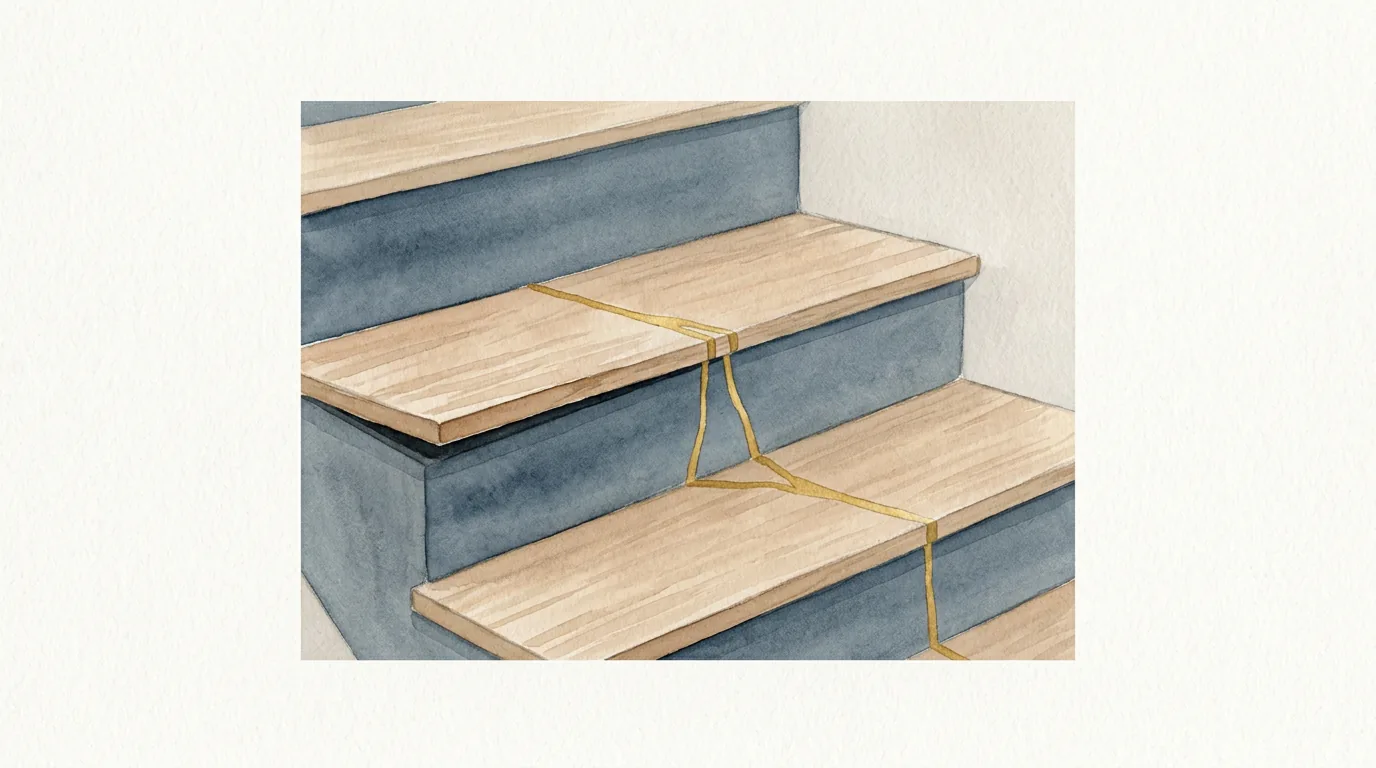
- a stair tread that rocks, shifts, or slides out of place;
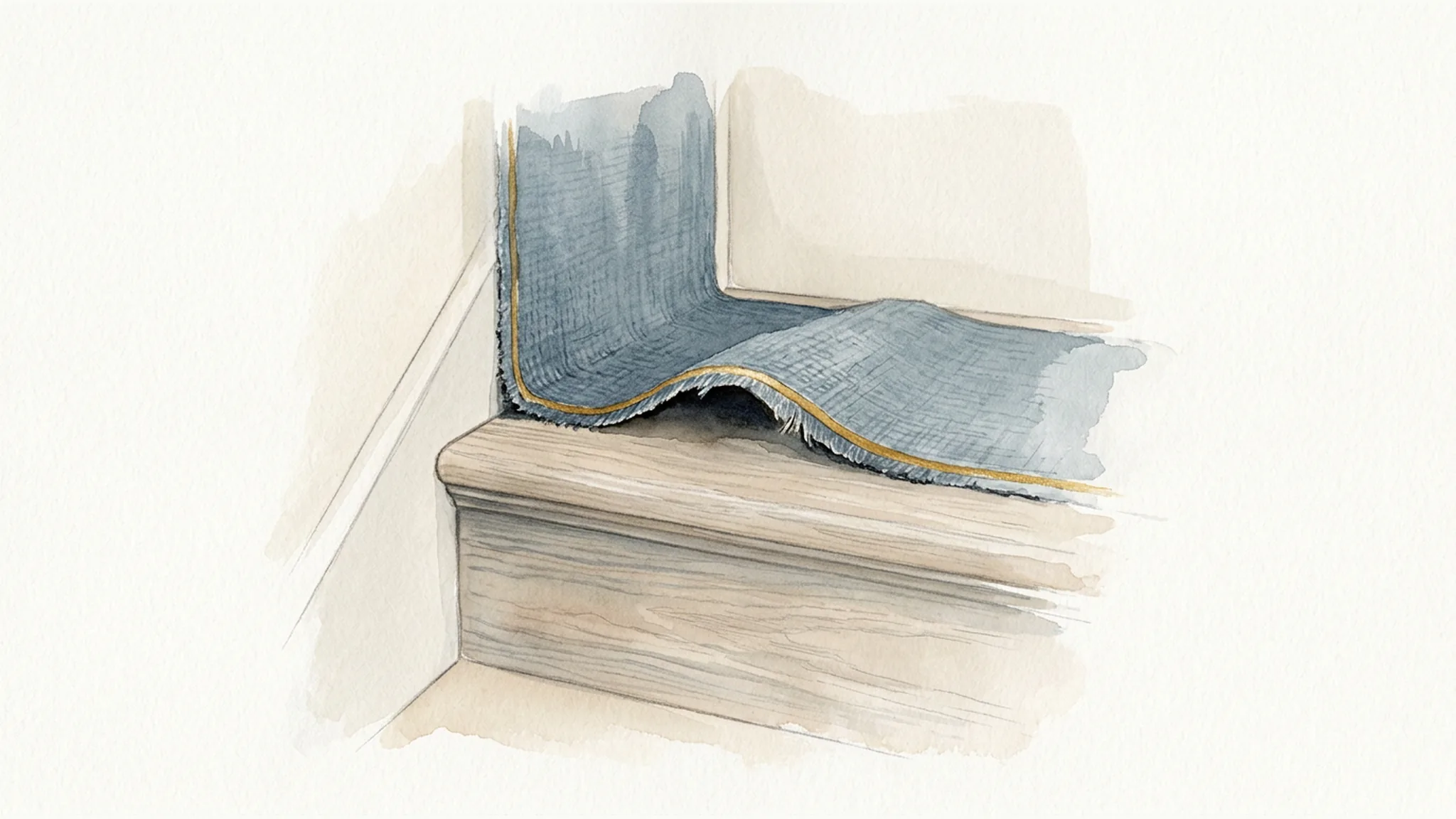
- a carpet edge that is frayed, curled, loose, or no longer secured;
- a metal strip, nosing, threshold, or transition piece that protrudes or lifts;
- a tread surface or matting edge that catches a shoe; or
- a height difference or uneven transition that is hard to see until someone trips.
This article is focused on deterioration and transition hazards. Other stair issues—such as missing handrails, poor lighting, wet floors, or worksite control—can raise their own questions. For example, poor-lighting evidence is discussed separately in Johnson Law’s article on falls in dark stairwells.
The Oregon Liability Question Is Not Just “Was There a Fall?”
For many Oregon premises-liability claims involving business visitors or other invitees, the core duty asks whether the possessor of the premises took reasonable steps to make the premises reasonably safe, used reasonable care to discover conditions creating an unreasonable risk of harm, and either corrected the condition or warned foreseeable visitors so they could avoid it. The Oregon Supreme Court discussed that general invitee-duty framework in Woolston v. Wells and Fulmer v. Timber Inn Restaurant and Lounge, Inc..
That framework is practical, not mechanical. The use of the property matters. A public-facing business, apartment common area, workplace stair, private residence, or government-maintained stairway may involve different duties, control issues, deadlines, and defenses. Landlord/tenant cases may turn on who controlled the stairway and who had repair responsibilities. Workplace cases may involve workers’ compensation and possible third-party questions.
For broader Oregon injury-claim context, see Johnson Law’s personal injury practice page and local guide to Portland slip-and-fall claims. The safe way to think about the claim is this: the fall matters, but it is only one piece of the proof.
Condition, Notice, Control, Causation, and Comparative Fault
Several questions usually drive the dispute:
What was the condition? A vague statement that “the stairs were bad” is usually less useful than photos, measurements, and details showing a rocking tread, raised strip, curled carpet, missing fastener, or specific protrusion.
Who controlled the area? The person or company responsible for the stair may not be obvious. In some settings, control may involve an owner, tenant, landlord, property manager, maintenance company, cleaning vendor, employer, or other entity.
Did the responsible party know, or should it have known? Prior complaints, repair requests, recurring problems, inspection schedules, and maintenance records can be important. If the defect developed suddenly, notice may be harder to establish. If it existed for a long time or had been reported before, the evidence picture may look different.
Did the defect cause the fall? A raised strip or loose tread matters only if it can be connected to the mechanism of the fall. The person’s description, witness observations, footwear, photos, video, and measurements may all matter.
Did the injured person share fault? Oregon’s comparative-fault rules can reduce or bar recovery depending on the percentages of fault assigned. That is why insurers often focus on visibility, footwear, distraction, prior use of the stairs, or whether the person was looking where they were going.
Why “You Should Have Seen It” Is Not the Whole Answer
Insurers often argue that a stair defect was obvious, that the injured person had used the stairs before, or that they “assumed the risk” by walking there. Those arguments should be evaluated carefully, not accepted as the complete answer.
Oregon’s comparative negligence statute, ORS 31.600, allows recovery only if the claimant’s fault is not greater than the combined fault of the persons specified in the statute, and any damages are reduced in proportion to the claimant’s percentage of fault. Oregon law also abolished implied assumption of risk as a separate doctrine under ORS 31.620.
In practical terms, a defendant cannot necessarily avoid the entire case merely by saying the injured person should have noticed the condition. But visibility can still matter. If a defect was clearly visible, if the person had safe alternatives, or if the person’s own conduct contributed to the fall, those facts may affect fault allocation. The point is not that “open and obvious” never matters; it is that Oregon claims often require a more complete comparative-fault analysis.
What Makes “Normal Wear” Look More Like a Hazard
“Normal wear” is a phrase, not proof. Sometimes it accurately describes ordinary aging that does not create an unreasonable risk. Other times, it is used to minimize evidence that a surface had become unstable, protruding, unsecured, or repeatedly complained about.
The difference often comes down to documentation.
Evidence of Instability or Protrusion
Photos and measurements can turn a vague fall report into a clearer evidence record. Useful documentation may include:
- wide-angle photos showing the stairway, landing, lighting, and approach path;
- close-up photos of the tread, carpet edge, strip, nosing, fasteners, or transition;
- side-angle photos that show whether an edge lifts, protrudes, or creates a height difference;
- short video showing whether a tread rocks or a strip moves when pressed;
- measurements of height differential, protrusion, tread movement, or the gap between surfaces; and
- photos of the shoes worn during the fall.
In some cases, an expert may need accurate measurements and photographs to evaluate whether a design, installation, or maintenance condition was unsafe. That is one reason early documentation matters.
Evidence the Owner or Manager Knew, or Should Have Known
Notice is often one of the most disputed issues. A property owner or manager may argue that no one knew about the loose edge before the fall. The injured person may suspect the condition had been there for weeks. The useful evidence is what can show the timeline.
Potentially important records include prior complaints, tenant emails, work orders, repair invoices, maintenance logs, inspection schedules, cleaning records, vendor reports, incident reports, and prior similar falls. Witnesses may include employees, tenants, other customers, maintenance workers, security personnel, or contractors.
Oregon civil procedure rules allow discovery of relevant, nonprivileged documents, tangible things, electronically stored information, and people with knowledge once litigation is underway. They also provide mechanisms for document requests, property inspection requests, and subpoenas to nonparties. Johnson Law’s plain-English overview of filing, discovery, and depositions explains how litigation-stage proof can develop.
That does not mean an injured person has an automatic right to all records or immediate access before a lawsuit. It does mean that early identification of what records may exist can be important.
Evidence the Condition Was Repaired or Changed After the Fall
Loose stair and carpet-edge hazards are often easy to change. A tread can be screwed down. A metal strip can be replaced. Carpet can be cut, glued, stretched, or taped. Those changes may be sensible from a safety standpoint, but they can also make it harder to document what the condition looked like at the time of the fall.
If possible, preserve evidence before the scene changes. Take photos, identify witnesses, report the incident in writing, and note whether cameras may cover the area. In some cases, an attorney may send a preservation request asking a property owner, manager, vendor, or insurer to preserve video, photos, inspection records, maintenance records, and communications. Johnson Law discusses related timing issues in its guide to surveillance footage in slip-and-fall cases and its broader article on preserving accident evidence before it disappears.
Oregon evidence law includes a disputable presumption that willfully suppressed evidence would be adverse to the party suppressing it. But that does not mean every missing video or changed stair automatically proves liability. Oregon spoliation and discovery-sanction issues are fact-specific and court-controlled. The practical goal is to reduce the risk of avoidable evidence loss, not to assume that missing evidence will solve the case.
What to Document Before the Scene Changes
If you are able to do so safely, the most useful evidence is often gathered early. Not every item will apply to every case, and medical care should come first when injuries are serious.
Scene Photos and Measurements
Try to document the condition from more than one perspective:
- the full stairway or walkway;
- the exact step, edge, strip, or transition involved;
- the approach path from the direction you were walking;
- the lighting conditions at the time of the fall, if possible;
- close-ups showing fraying, lifting, looseness, missing fasteners, gaps, or protrusion; and
- measurements showing the height difference, raised edge, or amount of movement.
If the hazard involves carpet, photograph the carpet edge, backing, pad, trim, and how the carpet meets the stair or adjacent surface. If the hazard involves a metal strip or nosing, photograph the edge from the side and the angle at which a shoe could catch.
People, Paperwork, and Video
Write down witness names and contact information as soon as possible. Ask for an incident report if the fall occurred at a business, apartment common area, workplace, public building, or managed property. Keep copies of emails, texts, repair requests, or messages about the condition.
Also identify possible video sources. Surveillance footage may be held by a business, landlord, property manager, security vendor, employer, or neighboring tenant. Formal discovery or subpoenas may become available if litigation is filed, but video can be overwritten or lost before then. Early preservation requests may help protect that evidence.
Footwear, Injuries, and Medical Timing
Save the shoes you were wearing. Do not repair, clean, or throw them away if they may become relevant to the mechanism of the fall. Photograph the shoes, especially the soles and any scuffing or damage.
Medical timing can also matter. Seek appropriate medical evaluation and keep records of symptoms, treatment, work restrictions, and follow-up care. Insurers may dispute whether the fall caused the injury, whether symptoms were reported promptly, or whether another explanation exists. Clear medical documentation helps connect the event, symptoms, and treatment history without relying only on memory.
When Codes, ADA Standards, or OSHA Rules May Matter—and When They May Not
Safety standards can help identify what should have been inspected, repaired, or designed differently. But they must be handled carefully. A code, ADA, or OSHA issue is not automatic proof of civil liability in every Oregon fall case.
Building-Code Issues Depend on the Building and Date
The Oregon Building Codes Division explains that the Oregon Structural Specialty Code establishes minimum requirements for construction, reconstruction, alteration, and repair of buildings and other structures. That can be relevant when a fall involves stair construction, alteration, repair, or design.
But the applicable code year and rule can depend on the building type, occupancy, location, construction or alteration date, local enforcement context, and phase-in or grandfathering issues. For example, the Oregon Building Codes Division states that the 2025 Oregon Structural Specialty Code had a six-month phase-in beginning October 1, 2025, and became mandatory April 1, 2026, with the 2022 or 2025 OSSC permitted during the phase-in. Those dates may matter in a newly constructed or altered building, but they do not automatically answer an older maintenance-failure claim.
Before a demand, lawsuit, or public-facing claim relies on a specific code provision, the applicable code and context should be verified.
ADA Standards Can Be Relevant to Carpet Edges, Level Changes, and Stairways
The 2010 ADA Standards address accessible design for covered facilities. Section 302 addresses floor and ground surfaces, including stable, firm, and slip-resistant surfaces and requirements related to carpet and exposed edges. Section 303 addresses changes in level. Section 504 addresses stairways.
Those standards may be relevant when the hazard involves carpet edges, level changes, or stair conditions in a covered setting. But ADA applicability depends on the facility, dates, alterations, and legal context. DOJ guidance also cautions that advisory notes, appendix notes, and figures in the ADA standards do not create separate enforceable requirements unless the standards specifically say so.
In other words, ADA materials may help frame an issue, but they should not be treated as a shortcut to liability without checking applicability.
OSHA Rules Are Mainly a Workplace-Safety Context
Oregon OSHA’s walking-working-surface rules and the adopted federal OSHA rules can be relevant in employee/workplace settings. OSHA 29 CFR 1910.22 addresses maintenance and inspection of walking-working surfaces and hazards such as protruding objects and loose boards. OSHA 29 CFR 1910.25 addresses stairways, including certain rise, tread-depth, width, and maintenance-related requirements. Oregon rules also include walking-working-surface provisions addressing holes, unevenness, obstructions, and debris that may create hazards.
These rules can matter in workplace safety analysis or as maintenance-practice context. They are not universal rules for every visitor claim on every property. Employee falls also require special care because workers’ compensation may be the primary remedy against an employer, while claims involving property owners, vendors, product defects, or other third parties may require separate analysis.
How Comparative Fault Disputes Arise in Stair and Carpet-Edge Claims
Comparative fault is often where insurers try to reduce the value of a stair or carpet-edge claim. Common arguments include:
- the defect was visible;
- the injured person had used the stairs before;
- the person was distracted;
- footwear contributed to the fall;
- lighting was adequate;
- other people used the same area without falling; or
- the condition was ordinary wear rather than a hazard.
Those arguments may or may not fit the evidence. The response is usually not just legal argument; it is documentation. Photos may show that the raised edge was difficult to see from the approach angle. Measurements may show more than a slight irregularity. Witnesses may confirm prior complaints. Maintenance records may show delayed repair. Footwear may show how the shoe caught the strip or edge.
What Oregon’s “Not Greater Than” Rule Means in Practical Terms
Oregon’s modified comparative-fault rule is important. Under ORS 31.600, a claimant may recover only if the claimant’s fault is not greater than the combined fault of the persons specified in the statute. If recovery is allowed, damages are reduced in proportion to the claimant’s percentage of fault.
For example, the legal concept is that fault percentages matter. The factual work is showing why the property condition, notice, control, maintenance history, and fall mechanism should be evaluated alongside any claimed fault by the injured person.
Deadlines and Special Contexts to Flag Early
Oregon’s general personal-injury limitations statute, ORS 12.110, provides a two-year period for many actions for injury to the person or rights of another, when the claim is not arising on contract and is not otherwise enumerated. That deadline is important, but it is not the only timing issue that can arise.
Some cases require faster or different analysis. Public-property claims may involve special notice rules and immunities that are not covered in this article. Workplace injuries may involve workers’ compensation deadlines and exclusivity issues. Wrongful death, minors, claims against certain entities, and other special contexts may involve different rules. Older construction, alteration, repair, design, or inspection theories may also raise Oregon statutes of ultimate repose, including ORS 12.115 for negligent injury and ORS 12.135 for claims arising from construction, alteration, repair, design, planning, supervision, or inspection of improvements to real property. Which statute and period applies can depend on the defendant, structure type, substantial-completion date, possession or control, and legal theory.
The key point is simple: do not wait until the scene has changed, records are gone, and deadlines are close.
Public Property, Workplace Falls, and Older Construction or Design Issues
If the fall happened on government property, at work, or in a building where old construction or design choices may be part of the claim, get context-specific advice early. This article does not cover Oregon Tort Claims Act notice requirements, workers’ compensation exclusivity, third-party workplace theories, or the code-year analysis needed for older structures.
Those issues can change the claim strategy significantly.
What to Do After a Loose Tread or Carpet-Edge Fall in Oregon
After a fall involving a loose tread, carpet edge, raised strip, or uneven transition, consider these practical steps:
- Get medical care first if you are hurt or unsure about the seriousness of your injuries.
- Photograph the condition quickly from multiple angles, including close-ups and the approach path.
- Measure the defect if it is safe and possible to do so.
- Report the incident in writing and request a copy of any incident report.
- Identify witnesses and write down what they saw.
- Save your footwear and document visible scuffs, damage, or tread condition.
- Preserve communications about prior complaints, repairs, or maintenance if you have them.
- Note possible video sources before footage is overwritten or lost.
- Be careful with broad recorded statements before you understand the likely disputes over fault, notice, and causation. Johnson Law’s insurance claims guide explains more about claim-handling pressure points.
- Ask about deadlines and evidence preservation if injuries are significant or the property owner, manager, or insurer is already minimizing the hazard.
Johnson Law can help injured Oregonians evaluate premises-liability issues, evidence preservation, and claim deadlines. A careful review does not guarantee an outcome, but it can help identify what needs to be documented before the condition, records, or memories change. You can also learn more about the firm’s process on Johnson Law’s our process page.
Frequently Asked Questions
Is a Loose Stair Tread Automatically Negligence in Oregon?
No. A loose stair tread may be important evidence, but an Oregon claim usually depends on facts such as whether the condition created an unreasonable risk, who controlled the area, whether the responsible party knew or should have known about it, whether the condition caused the fall, and how comparative fault applies.
What Evidence Should I Preserve After Tripping on a Carpet Edge or Stair Strip?
Useful evidence often includes photos from multiple angles, close-ups of the edge or strip, measurements, witness names, an incident report, footwear, prior complaints, maintenance or repair information, inspection records, and possible surveillance video. Not every item will exist in every case.
Can an Insurer Deny My Claim by Saying the Stair Defect Was Open and Obvious?
Not necessarily. Oregon comparative-fault principles may require a more complete analysis than simply saying the condition was visible. However, visibility and the injured person’s conduct can still affect the claim and may reduce or bar recovery depending on the fault allocation.
Do Building Codes, ADA Standards, or OSHA Rules Prove My Oregon Fall Case?
Not by themselves in every case. Codes, ADA standards, and OSHA rules may be relevant in the right setting, but applicability depends on the building, date, use, facility type, workplace context, and legal theory. Specific provisions should be verified before they are used as claim support.
How Long Do I Have to Bring an Oregon Stair or Carpet-Edge Injury Claim?
Oregon’s general personal-injury statute provides a two-year period for many injury claims, but special contexts may involve different or additional deadlines. Public-body claims, workplace injuries, minors, wrongful death, older construction/design theories, and other situations need separate analysis.
What If the Property Owner Repairs the Loose Tread Before I Can Inspect It?
Early photos, witness information, incident reports, and preservation requests can matter. But a later repair or missing evidence does not automatically prove liability. Oregon evidence and discovery remedies are fact-specific, and courts control sanctions or evidentiary consequences.
Brief Disclaimer
This article provides general educational information about Oregon premises-liability evidence issues. It is not legal advice and does not create an attorney-client relationship. Liability, deadlines, available evidence, and comparative-fault issues depend on the specific facts.
Source Notes
- Fulmer v. Timber Inn Restaurant and Lounge, Inc., including its discussion of Woolston v. Wells: Oregon Supreme Court authority relevant to premises-liability duty for invitees and comparative-fault framing.
- Naney v. Lane: Oregon Supreme Court stair-fall decision involving rubberized stair matting, a raised or protruding aluminum strip, causation evidence, and expert-safety-testimony context.
- ORS 31.600 and ORS 31.620: Oregon comparative negligence and abolition of implied assumption of risk.
- ORS 12.110, ORS 12.115, and ORS 12.135: Oregon personal-injury limitation and ultimate-repose statutes referenced for general deadline context.
- Oregon Rules of Civil Procedure 36, 43, and 55: Discovery, production, property inspection, electronically stored information, and nonparty subpoena rules that may become relevant after litigation begins.
- ORS 40.135 / OEC 311: Oregon disputable presumptions, including willfully suppressed evidence, referenced with preservation caveats.
- Oregon Building Codes Division, Commercial Structures Code Program: Oregon Structural Specialty Code context and 2025 OSSC phase-in information.
- U.S. DOJ 2010 ADA Standards for Accessible Design and DOJ guidance on the 2010 Standards: Accessibility-standard context for floor surfaces, carpet edges, changes in level, and stairways, with applicability caveats.
- Oregon OSHA Division 2, Subdivision D, OSHA 29 CFR 1910.22, and OSHA 29 CFR 1910.25: Walking-working-surface and stairway rules relevant primarily to workplace-safety contexts.
Client-First Fee Promise
Client First = Bills First, Fees Second
Your unpaid medical bills do not have to make your lawyer's fee bigger. Johnson Law subtracts qualifying medical bills before calculating our fee, helping clients keep more of their settlement.
Applies to qualifying cases. Results vary.