Post-Concussion Syndrome at Work: Documenting Reduced Productivity in an Oregon Injury Claim
Post-Concussion Syndrome at Work: Documenting Reduced Productivity in an Oregon Injury Claim
A person can look and sound like themselves after a concussion yet struggle to sustain the attention, pace, screen exposure, or accuracy their job requires. A short conversation or brief office task may not show what happens after several hours of reading, writing, analyzing data, attending meetings, switching between assignments, or correcting mistakes.
Those limitations can be important, but they are not self-proving. In an Oregon personal-injury claim, the evidence may need to connect several distinct questions:
- Did the incident cause a concussion or other medically supported condition?
- What functional limits did that condition cause over time?
- How did those limits affect the person’s actual work?
- Did the work effects produce lost income or a probable impairment of earning capacity?
Each link matters. A diagnosis does not by itself establish work disability, permanence, or a dollar loss. Likewise, slower work does not by itself establish why productivity changed.
Although “post-concussion syndrome” is common search language and may be a diagnosis used by a clinician, there is no single universally accepted duration threshold for that term. This article generally uses “persisting symptoms after concussion or mild traumatic brain injury (mTBI)” unless referring to a specific diagnosis.
Why Concussion-Related Work Limits May Not Be Obvious
Possible concussion symptoms include difficulty with attention or concentration, memory problems, feeling foggy or slowed down, fatigue, visual symptoms, and sensitivity to light or noise. Their effect depends on the person and the job.
For a knowledge worker, the problem may emerge as a reduced ability to:
- concentrate through a long document;
- resume work after an interruption;
- move between tasks without losing track;
- tolerate sustained screen use or a bright, noisy office;
- process information or respond as quickly as before;
- maintain accuracy without extra review; or
- complete a normal day without longer breaks or extended recovery afterward.
These effects may not be apparent during a brief interaction. At the same time, being difficult to observe does not make a limitation medically or legally established. The inquiry still requires careful assessment and context.
Normal Imaging Does Not Resolve the Work-Function Question
Under the American Congress of Rehabilitation Medicine’s 2023 diagnostic criteria, concussion or mTBI can be clinically diagnosed when routine structural CT or MRI is normal. Neuroimaging is not always necessary for that diagnosis.
That is a limited point. A normal scan does not exclude a clinically diagnosed concussion, but it also does not prove that a particular incident caused persisting symptoms, that those symptoms limit work, or that they caused an economic loss. The clinical history, plausible injury mechanism, acute signs and symptoms, supporting findings, and possible confounding factors remain relevant.
For a fuller explanation of why a normal CT does not end the concussion analysis, see Johnson Law’s related guide.
Symptoms Are Real Possibilities, Not Automatic Causation Findings
Concentration problems, fatigue, headache, sleep difficulty, light sensitivity, and reduced stress tolerance are nonspecific. Sleep disruption, pain, migraine, mood or anxiety conditions, medication effects, and other factors may cause or amplify similar problems.
That does not mean persisting symptoms should be dismissed. It means a sound assessment should consider the timing and course of symptoms, preinjury baseline, clinical findings, treatment history, and reasonable alternative explanations. In an Oregon negligence claim, a defendant’s conduct need not be the only cause of an injury. But timing and a diagnostic label alone do not establish that the incident caused every symptom or every claimed work loss.
Translate Symptoms Into Specific Job Demands
Terms such as “brain fog,” “screen intolerance,” and “less productive” may describe a real experience, but they do not explain the work function at issue. The more useful question is: What task became harder, under what conditions, and with what result?
For example, “screen intolerance” is a functional description rather than a standalone diagnosis. Its significance may depend on whether screen exposure reproducibly worsens documented symptoms, how long exposure can be tolerated, which tasks require it, what adjustments help, and how much recovery is needed.
The same is true of errors. An increased error rate is a workplace outcome, not a diagnostic criterion. Errors need context, including workload, software, staffing, training, sleep, medication, and ordinary variation.
A Practical Task-to-Function Framework
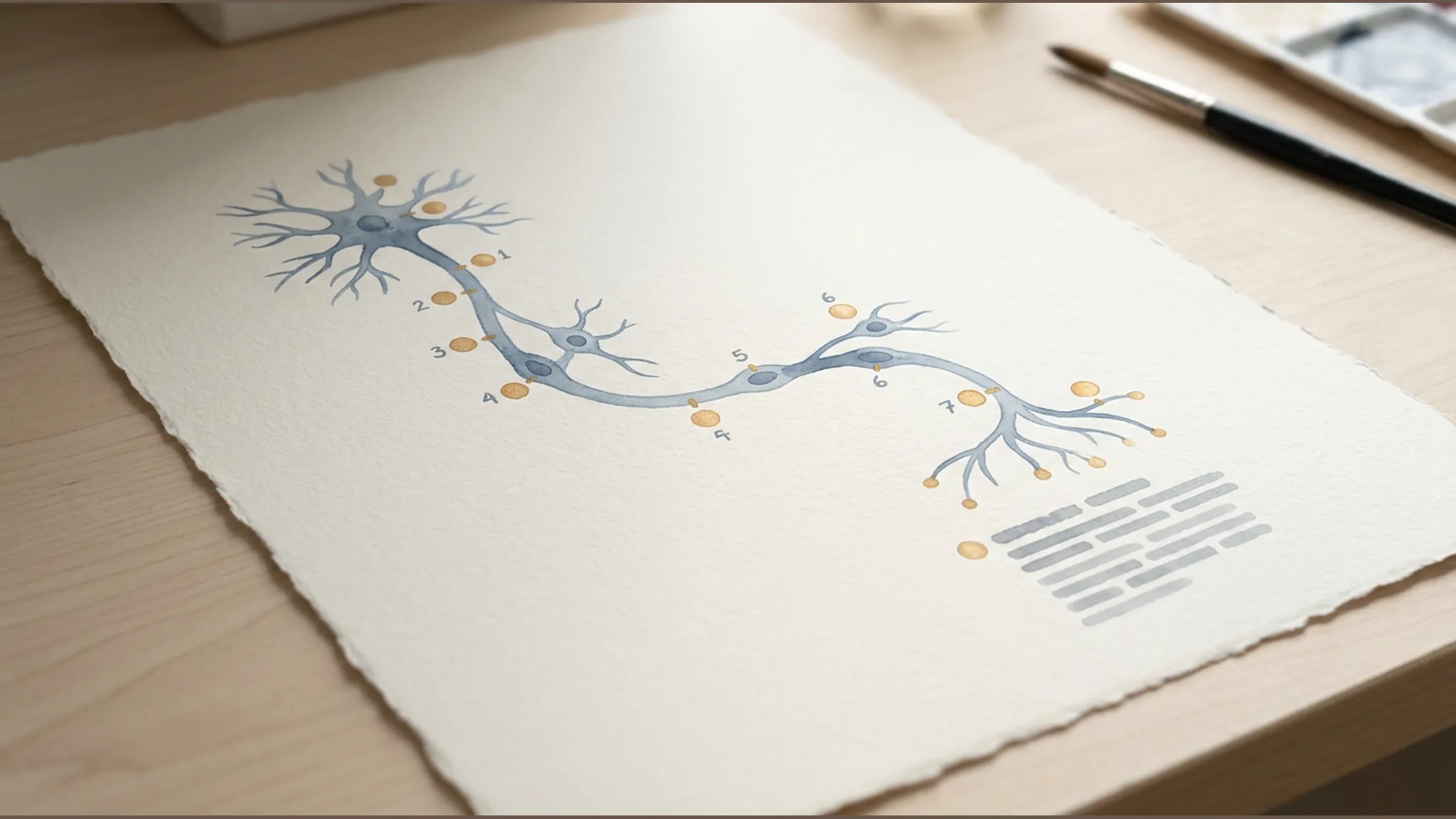
A task-specific account may organize information across several dimensions:
| Question | Examples of relevant detail |
|---|---|
| What was the task? | Reviewing a contract, analyzing a spreadsheet, coding, writing a report, joining a meeting, or responding to customers |
| How demanding was it? | Reading volume, complexity, interruptions, multitasking, deadlines, or required judgment |
| How long and how often? | Time tolerated in one session, total daily duration, frequency, and whether capacity changed over the week |
| What happened to pace or output? | Extra completion time, fewer completed units, delayed turnaround, or need for additional review |
| What happened to accuracy? | Corrections, revisions, missed details, or quality-review findings, considered in context |
| What conditions mattered? | Screen brightness, light, noise, meetings, or rapid task switching |
| What supports were used? | Breaks, written instructions, fewer distractions, reduced workload, task changes, or assistive technology |
| What was the response? | Symptoms during or after the task and the time needed to recover |
This is an evidence-organizing framework, not an Oregon legal checklist. No person needs to experience every listed issue, and one task result does not establish daylong capacity or causation.
Why a Generic “Light Duty” Note May Not Be Enough
A note that says only “light duty” may say little about a desk job. CDC return-to-work materials give clinicians more specific options, including reduced screen time, shorter days, later starts, additional task time, quiet rest breaks, temporary changes to tasks that worsen symptoms, and assistive technology. A follow-up date allows the plan to be reassessed.
Specificity can help an employer understand present abilities and can help a clinician evaluate whether an adjustment is working. It does not mean that every listed support is medically necessary, appropriate for a particular patient, or legally required. Restrictions and return plans should reflect the person’s clinical needs and actual job demands.
Build the Medical and Functional Record Through Ordinary Care
Medical assessment and workplace evidence serve different purposes. Clinical records may address diagnosis, causation, symptoms, findings, treatment, and restrictions. Work records may show what occurred in the job. Legal proof requires those materials to be connected to the applicable standards rather than treated as interchangeable.
Appropriate clinical documentation can include:
- the incident date and injury mechanism;
- acute signs and when symptoms began;
- relevant preinjury history, including prior concussion, migraine, sleep, pain, psychiatric, attention, or learning conditions;
- indicated neurologic, balance, visual, oculomotor, or cognitive findings;
- serial symptom measures and treatment;
- functional tolerances and work restrictions;
- response to work adjustments; and
- a dated plan for reassessment.
This is not a mandatory chart template. The goal is accurate care, not creating records for litigation. Contemporaneous records made in ordinary treatment generally provide more context than a later summary written solely for a claim.
Follow-Up and Graded Return to Activity
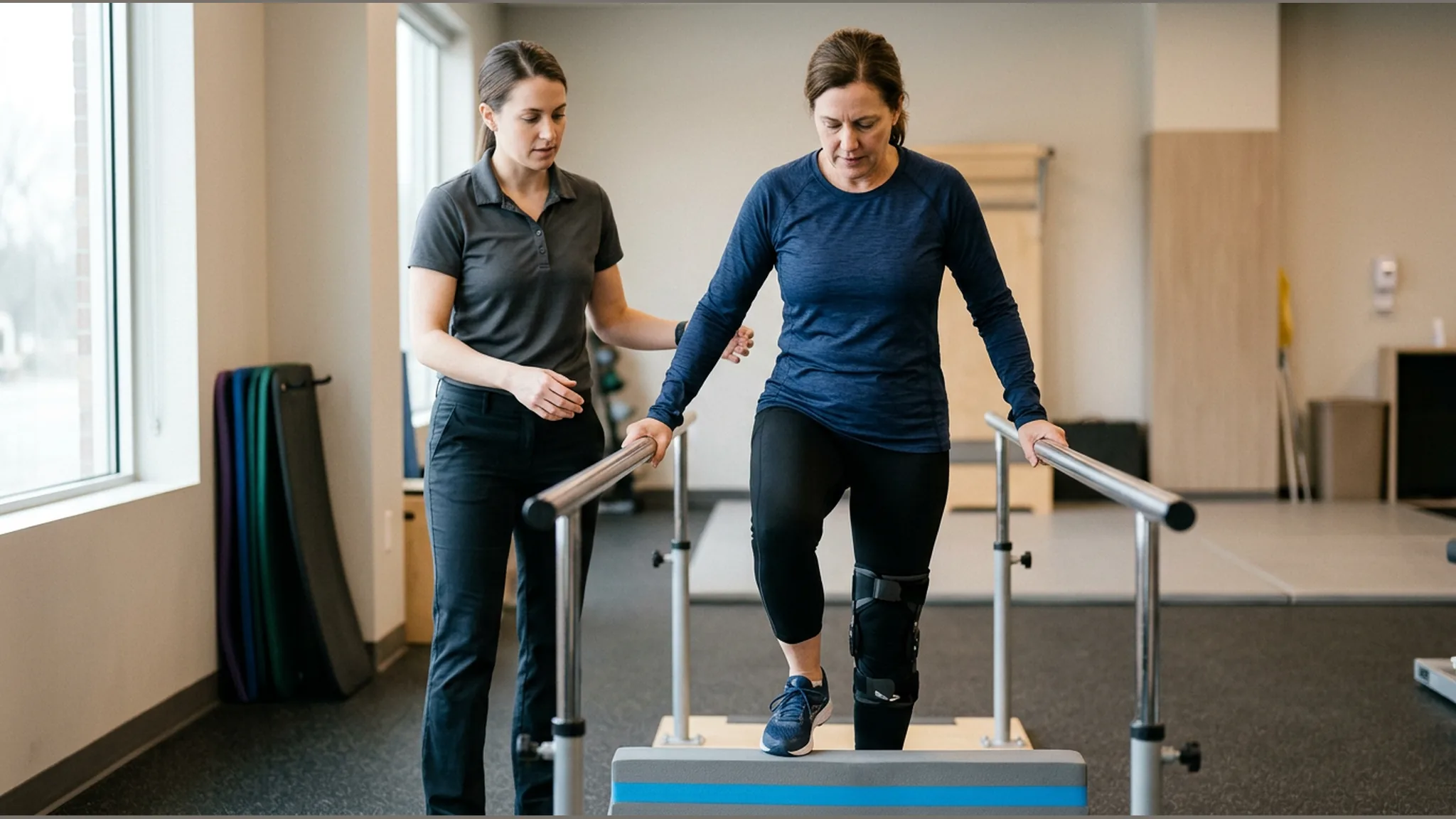
CDC adult guidance recommends follow-up within a few days after an mTBI, individualized written return-to-activity instructions, and gradual reintroduction of regular nonsport activity after the first one or two days when activity does not significantly worsen symptoms.
Cognitive pacing means adjusting mentally demanding activity to tolerance. It does not mean forcing an immediate full workload, and it does not mean prolonged total rest or complete screen avoidance for everyone. Symptoms may worsen or re-emerge with exertion, so repeated clinical evaluation can help guide changes in activity and work restrictions.
When work effects are discussed during ordinary care, task-linked information can be more useful than “I felt worse.” For example, a patient may accurately explain the type and duration of an activity, the symptoms that changed, the adjustment used, and the recovery time. Such reporting should support assessment and treatment—not self-diagnosis or the construction of a claim narrative.
When More Focused Assessment May Be Considered
A 2025 U.S. multidisciplinary guideline states that formal neuropsychological or other cognitive assessment may be offered when disabling or nonimproving cognitive symptoms persist for more than one month, to guide treatment and return-to-work planning. Canadian Living Concussion Guidelines similarly recommend considering specialized cognitive or neuropsychological assessment when cognitive symptoms continue to interfere with daily function beyond four weeks.
Those are source-specific clinical timeframes, not a universal definition of post-concussion syndrome or an Oregon proof rule. Testing is not required in every case, and one score cannot conclusively establish real-world productivity across a full workday, legal causation, permanence, or damages. Whether an assessment is clinically indicated is a medical question.
Use Authentic Workplace Evidence to Show What Changed
Medical records may describe restrictions, but they do not always show how a person performed in the actual job. Authentic workplace evidence can sometimes provide that additional context.
Depending on the work, existing records might include calendars, revision histories, ticket-closure data, audit reports, accommodation records, timed work trials conducted for ordinary business or clinical purposes, and firsthand supervisor observations. These are examples, not a required collection list. Their value depends on whether they are authentic, lawfully available, complete enough to understand, and fairly comparable.
Do not backfill a diary, alter existing records, ask a coworker to use scripted wording, or create an artificial productivity test for litigation. Those practices can distort the facts and create credibility, privacy, discovery, or admissibility problems.
Compare Like With Like
A preinjury/postinjury comparison is useful only if it accounts for meaningful changes. Before treating slower output, added corrections, or missed deadlines as injury-related, consider questions such as:
- Did the person’s role or assignments change?
- Was the workload, deadline pressure, staffing, or management different?
- Did the employer introduce new software, procedures, or performance measures?
- Were the compared tasks equally complex?
- Did training, market demand, or client volume change?
- Were sleep, medication, pain, migraine, or unrelated health and life events different?
No single metric identifies its own cause. A fair baseline should compare substantially similar circumstances and acknowledge ordinary performance variation. That context may strengthen a reliable comparison or reveal that the data cannot support the claimed conclusion.
Preserve Existing Records Rather Than Recreate Them
Preserving an existing record in its original form, including available metadata, is different from generating a new record after the fact. Before collecting, copying, or sharing employer or medical information, a person should seek case-specific advice and follow applicable workplace rules and legal obligations.
A record is not automatically admissible merely because it exists. Oregon evidence rules may require authentication or a business-record foundation, and questions involving hearsay, completeness, relevance, privilege, confidentiality, privacy, and discovery may also apply.
Connect Reduced Productivity to Oregon Economic Damages
Oregon Revised Statutes § 31.705 defines economic damages as “objectively verifiable monetary losses” and expressly includes loss of income and past and future impairment of earning capacity.
Reduced productivity is not automatically such a loss. It may be evidence of a functional change, but the claim still needs a supported connection to money already lost or a probable reduction in the ability to earn.
Specific Lost Income Versus Impaired Earning Capacity
A specific economic-loss claim may involve identifiable wages, commissions, bonuses, or other earnings lost because of injury-caused limitations. It may also include the supported value of accrued paid leave used because of the injury and no longer available, depending on the terms of the leave benefit and the evidence. The proof should identify the particular financial loss and connect it to the injury-caused work limitation without counting the same loss twice. Readers needing more detail can review records that may support a lost-income claim.
Impairment of earning capacity asks a different question: has the person’s ability to earn in their usual vocation been reduced? Oregon Supreme Court decisions recognize that exact matching wage loss is not the only possible evidence. The evidence must still fairly indicate the person’s earning capacity and the probable occupational effect rather than invite guesswork.
For example, continued employment or the same salary does not automatically establish that earning capacity is unchanged. A person might be working fewer hours, performing narrowed duties, relying on accommodations or coworker help, or facing reduced advancement or job options. But those possibilities are not proof by themselves. If pay has not changed, the occupational and economic evidence may be more difficult to establish, particularly when the claimed future effect remains theoretical.
Persistence also does not establish permanence. A future claim needs support for the probable duration of restrictions and their effect on work and earnings.
Self-Employment and Future Loss Need Careful Valuation
For a self-employed person, gross receipts are not the same as personal lost earnings. Business expenses must be considered, and changes in demand, seasonality, staffing, replacement labor, or other business conditions may explain some or all of a revenue change. Tax returns, profit-and-loss statements, invoices, and billable-hour records may be relevant, but each requires context.
Future earning-capacity analysis may also need to consider duration, work life, wage growth, mitigation, contingencies, and present value. Oregon law requires future impairment-of-earning-capacity awards to be reduced to present value. A current annual shortfall multiplied by a number of years is therefore not necessarily a proper valuation.
The Evidence Chain: Medical, Vocational, and Economic Questions
More complex claims can be organized around three separate bridges:
- Medical evidence may address whether the incident caused the condition and functional restrictions.
- Vocational evidence may connect those restrictions to actual job demands, realistic alternatives, and labor-market effects.
- Economic evidence may value the probable earning path without the injury compared with the probable postinjury path, including present value where appropriate.
This is a way to identify questions—not a rule that every case requires three experts. A treating clinician may be able to describe medical restrictions but not quantify a labor-market loss. A workplace record may show slower output but not establish medical causation. An economist can calculate a supported scenario but cannot make unsupported assumptions about diagnosis, restrictions, or realistic occupations.
Complex medical causation and specialized vocational or economic questions may require qualified opinion evidence. The need depends on the disputed issues and the available facts.
Why Individual Fit Matters
Oregon appellate law permits expert and statistical evidence concerning earning capacity, but the assumptions need a reasoned fit to the individual. Relevant considerations may include the person’s work history, occupation, characteristics, restrictions, and realistic alternatives.
General labor statistics can contribute to a model. They cannot replace case-specific evidence of causation, functional ability, job demands, and probable occupational effect. A calculation can be mathematically precise while still being unreliable if its assumptions do not fit the person.
A Responsible Next-Step Checklist
If concussion symptoms may be affecting work, responsible next steps can include:
- Obtain appropriate medical follow-up. Describe symptoms, timing, work effects, baseline conditions, and changes accurately.
- Discuss actual job demands. When clinically appropriate, ask whether restrictions, abilities, and reassessment plans can be stated in task-specific terms rather than only as “light duty.”
- Follow individualized return guidance. Decisions about activity, screens, workload, and assessment should be based on medical guidance rather than a claim strategy.
- Preserve existing records. Keep lawfully available medical, work, income, and accommodation records in their original form; do not alter or recreate them.
- Identify a fair baseline. Note changes in role, workload, staffing, systems, health, medication, or other circumstances that could affect a comparison.
- Define the claimed harm. Separate specific income already lost from a claimed impairment of earning capacity, while avoiding duplicate recovery theories.
- Get individualized advice before sharing information. Medical, employer, and income records can raise privacy, confidentiality, discovery, and evidentiary questions.
The central point is not to produce more paperwork. It is to keep the distinctions clear: medical assessment addresses clinical questions; authentic workplace records can show what happened on the job; and legal proof must connect supported limitations to Oregon causation and damages standards.
For information about Johnson Law’s approach to Oregon concussion and mild TBI claims, visit the firm’s service page.
This article provides educational information only and is not legal or medical advice. Concussion care, return-to-work decisions, evidence preservation, and Oregon injury claims require individualized guidance.
Frequently Asked Questions
Can I have a concussion if my CT or MRI was normal?
Yes. A concussion or mTBI can be clinically diagnosed when routine structural imaging is normal. But a normal scan does not determine whether an incident caused persisting symptoms, whether those symptoms limit work, or whether an Oregon claim includes recoverable damages.
What work problems can persisting concussion symptoms cause?
Possible effects include difficulty with sustained attention, memory, planning, pace, screen exposure, noise or light, multitasking, accuracy, and recovery after mental effort. Effects vary and should be considered in relation to the person’s actual tasks rather than assumed from a diagnosis.
How can reduced productivity be documented without exaggerating it?
Use accurate, contemporaneous information from ordinary medical care and authentic workplace records. Focus on actual tasks, duration, output, accuracy, supports, symptom response, and recovery time, with a fair baseline and context for other possible causes. Do not recreate records, script witnesses, or manufacture tests.
Does continuing to receive the same salary defeat an Oregon earning-capacity claim?
Not automatically. Oregon law distinguishes exact wage loss from impairment of the ability to earn. The claimant still needs nonspeculative evidence of a probable occupational and economic effect, and unchanged pay may make that connection more difficult to prove.
Is a symptom diary enough to prove lost income or impaired earning capacity?
No. If a person keeps contemporaneous notes for care or daily organization, specific task-linked information may help explain function. But no diary alone proves medical causation, work disability, permanence, income loss, or impaired earning capacity. It must be considered with clinical evidence, workplace context, and economic proof.
Do I need neuropsychological, vocational, and economic experts?
Not necessarily. The need depends on the clinical and legal questions in the individual case. Each discipline may address a different link in the evidence chain, and no one type of assessment automatically proves the entire claim.
Sources
Principal authorities supporting the medical, work-function, and Oregon-law discussion include:
- CDC, “Recovering from a Mild Traumatic Brain Injury or Concussion” (May 2024)
- CDC, “Instructions on Returning to Work” (May 2024)
- CDC, “Checklist to Assess for and Manage Mild Traumatic Brain Injury (mTBI) and Concussion for Emergency Department Physicians Treating Patients 18 Years and Older”
- CDC HEADS UP, “Managing Return to Activities”
- American Congress of Rehabilitation Medicine, 2023 Diagnostic Criteria for Mild Traumatic Brain Injury
- VA/DoD Clinical Practice Guideline for Management and Rehabilitation of Post-Acute Mild Traumatic Brain Injury, Version 3.0 (June 2021)
- Action Collaborative on Traumatic Brain Injury Care, 2025 Adapted Clinical Practice Guideline
- Living Concussion Guidelines, Return-to-Activity/Work/School Considerations (Canadian clinical guidance)
- Living Concussion Guidelines, Cognitive Difficulties (Canadian clinical guidance)
- ORS 31.705 (2025 Edition)
- Oregon Evidence Code, ORS Chapter 40
- State v. Buswell, 308 Or App 389, 479 P3d 341 (2021)
- Conachan v. Williams, 266 Or 45, 511 P2d 392 (1973)
- Holder v. Petty, 267 Or 94, 514 P2d 1105 (1973)
- Wilson v. B.F. Goodrich Co., 52 Or App 139, 627 P2d 1280 (1981)
- Pumpelly v. Reeves, 273 Or 808, 543 P2d 682 (1975)
- Osborne v. Bessonette, 265 Or 224, 508 P2d 185 (1973)
- Haas v. Estate of Carter, 370 Or 742, 525 P3d 451 (2023)
Client-First Fee Promise
Client First = Bills First, Fees Second
Your unpaid medical bills do not have to make your lawyer's fee bigger. Johnson Law subtracts qualifying medical bills before calculating our fee, helping clients keep more of their settlement.
Applies to qualifying cases. Results vary.