Injured Using a Tool or Machine in Oregon: Product Defect Claim or Misuse Defense?
Injured Using a Tool or Machine in Oregon: Product Defect Claim or Misuse Defense?
If you were hurt by a tool or machine in Oregon, the first legal question is usually not as simple as “Was it defective?” or “Did someone misuse it?” Oregon law looks at what the product was, how it left the manufacturer or seller, how it was being used, whether warnings or instructions were adequate, whether the product had been altered, and whether someone’s fault contributed to the injury.
That makes these cases evidence-driven. A broken guard, unexpected discharge, missing warning, or severe injury may justify a closer investigation, but it does not automatically prove a product-defect claim. At the same time, a defendant’s claim of “misuse” does not automatically defeat a claim just because the injured person made a mistake or used the tool in a real-world work setting.
This article is general educational information about Oregon law. It is not legal advice for any specific injury, tool, machine, employer, manufacturer, seller, or insurance dispute.
The Short Answer: It Depends on What the Evidence Shows
Oregon product-liability law can apply when a person is injured by a defective product, inadequate warning, or inadequate instruction. But a tool or machine injury can also raise defenses based on substantial change, alteration, modification, unforeseeable misuse, known-danger use, or comparative fault.
In a workplace case, there may be another layer: workers’ compensation is generally the main remedy against a covered employer, but Oregon law may allow a separate third-party claim when the injury was caused by the negligence or wrong of someone outside the same employment relationship. That third party could potentially be a manufacturer, distributor, seller, lessor, repair contractor, rental equipment provider, or another non-employer actor—if the facts support it. For broader context, see Johnson Law’s overview of when an Oregon workplace injury may involve claims beyond workers’ compensation.
The practical question is whether the evidence points to something more than the injury itself. Important facts often include the product’s condition, its design, guards or safety devices, warnings, manuals, prior repairs, maintenance records, model and serial numbers, recall information, photos, videos, witness accounts, and the exact task being performed when the injury happened.
What Counts as an Oregon Product-Liability Claim?
Oregon defines a product-liability civil action broadly. Under ORS 30.900, a product-liability action can be brought against a manufacturer, distributor, seller, or lessor for personal injury, death, or property damage arising out of a design, inspection, testing, manufacturing, or other product defect. It can also involve failure to warn or failure to properly instruct in the use of a product.
That definition matters because a product case is not limited to a tool that visibly snaps, explodes, or stops working. The question may be whether the product was unreasonably dangerous because of how it was designed, built, inspected, tested, labeled, sold, leased, or explained to users.
Product defect is broader than “the tool broke”
Potential defect theories in a tool or machine case may include:
- a design that left users exposed to a hazard an ordinary consumer would not expect;
- a manufacturing problem affecting the particular product;
- inadequate inspection or testing;
- a missing, unclear, or inadequate warning;
- inadequate instructions for foreseeable use, setup, adjustment, maintenance, or hazard avoidance; or
- a safety component, guard, control, or trigger system that did not function as expected.
Those categories are only starting points. A person still has to connect the product problem to the injury and satisfy Oregon’s legal standards. For a narrower jobsite example, Johnson Law’s guide to defective power tools on a Portland jobsite explains how product-chain questions can overlap with workers’ compensation.
Strict liability does not mean automatic liability
Oregon’s strict product-liability statute, ORS 30.920, can make a seller or lessor liable for physical harm or property damage caused by a product sold or leased in a “defective condition unreasonably dangerous” to the user or consumer, if the seller or lessor is engaged in that business and the product reaches the user or consumer without substantial change.
“Strict liability” can be misunderstood. The statute may apply even if the seller or lessor exercised all possible care, and even if the injured person did not buy or lease the product directly from that defendant. But that does not mean injury equals liability. The claimant still must prove the product was defective and unreasonably dangerous under the applicable law, that the product reached the user without the required kind of substantial change, and that the defect caused the harm.
Oregon law also includes a disputable presumption that a product as manufactured and sold or leased was not unreasonably dangerous for its intended use. In real cases, that presumption and the evidence offered to overcome it can matter.
Oregon’s Design-Defect Test: Consumer Expectations, Not Hindsight
Oregon’s controlling design-defect test is the consumer-expectations test. In general terms, the plaintiff must prove that, when the product left the defendant’s hands, it was defective and dangerous to an extent beyond what the ordinary consumer would have expected.
That test is not hindsight alone. The fact that a machine injured someone does not by itself prove that ordinary consumers would have expected a safer design, or that the design was legally defective when it left the defendant.
Why safer-alternative evidence may still matter
Although Oregon uses the consumer-expectations framework, evidence about risks, utility, and safer alternative designs may still matter. Oregon cases recognize that risk-utility evidence—including whether a safer alternative design was practicable and feasible—can help a jury evaluate what an ordinary consumer would expect.
The careful distinction is this: Oregon should not be described as using a separate “consumer risk-utility” theory for design defect. Safer-design evidence may be relevant within the consumer-expectations analysis, but the consumer-expectations test remains central.
“Misuse” Is Not the Same as Every Mistake
After a tool or machine injury, a manufacturer, seller, lessor, or insurer may argue that the injured person “misused” the product. Sometimes that defense is important. But under Oregon law, misuse is not the same thing as every mistake, every moment of inattention, or every deviation from ideal instructions.
Oregon cases distinguish ordinary carelessness from the kind of misuse that can defeat or limit recovery. In Findlay v. Copeland Lumber Co., the Oregon Supreme Court explained that misuse means use or handling so unusual that the average consumer could not reasonably expect the product to be designed and manufactured to withstand it. In Lakin v. Senco Products, Inc., an Oregon product-liability case involving a nail gun, the Court of Appeals approved an instruction that a manufacturer must protect against reasonably foreseeable uses and that misuse is a use the manufacturer could not reasonably foresee.
That distinction is important for real-world tool and machine injuries. A task may be dangerous and still be foreseeable. A worker may be clearing a jam, setting up a machine, adjusting material, cleaning, lubricating, maintaining equipment, or working near moving parts. OSHA materials recognize that serious injuries, including amputations, can occur during operation and during setup, adjustment, cleaning, maintenance, and clearing jams. Those safety materials do not automatically prove product liability, but they help show why the actual work sequence matters.
Foreseeable use versus abnormal use
The key question is often whether the use was reasonably foreseeable to the manufacturer or seller, or so abnormal that the product could not reasonably be expected to be designed for it.
For example, a case investigation may ask:
- Was the person using the tool for a common task or work sequence?
- Was the injury connected to setup, adjustment, cleaning, maintenance, or clearing a jam?
- Did the product’s instructions address that kind of use?
- Was a guard, trigger, control, cord, battery, or safety device involved?
- Was the product being used in a way the manufacturer should reasonably have anticipated?
- Was the use instead so unusual that the product maker could not reasonably foresee it?
Those questions should not be answered by labels alone. Calling something “misuse” does not make it so. Calling something “normal use” does not prove a defect either.
Knowing about a defect can change the analysis
Oregon law also treats known-danger situations differently from ordinary failure to discover a defect. Findlay explains that a user’s mere failure to discover a product defect, or to guard against the possibility that a defect exists, is not the kind of conduct that bars strict product-liability recovery under Restatement § 402A.
But voluntarily and unreasonably using a product after discovering the defect and knowing the danger can be a defense. That is a narrower point than “the injured person should have been more careful.” It depends on evidence of what the person actually knew, what danger was understood, and why the product was used anyway.
Altered, Modified, or Missing Guards: A Separate Defense Question
Alteration or modification is related to misuse, but it should not be collapsed into the same category. Oregon has a specific statutory defense for alteration or modification in ORS 30.915.
In plain terms, that statute applies when:
- an alteration or modification was made without the defendant’s consent or contrary to the defendant’s instructions or specifications;
- the alteration or modification was a substantial contributing factor in causing the injury, death, or property damage; and
- if the alteration or modification was reasonably foreseeable, the defendant gave adequate warning.
Those elements matter. A defendant may argue that a missing guard, changed control, replaced part, disabled safety feature, or modified power supply caused the injury. The response may turn on who changed the product, when the change happened, whether the change was contrary to instructions, whether it substantially contributed to the injury, and whether the change was reasonably foreseeable.
Guard removal and workplace rules
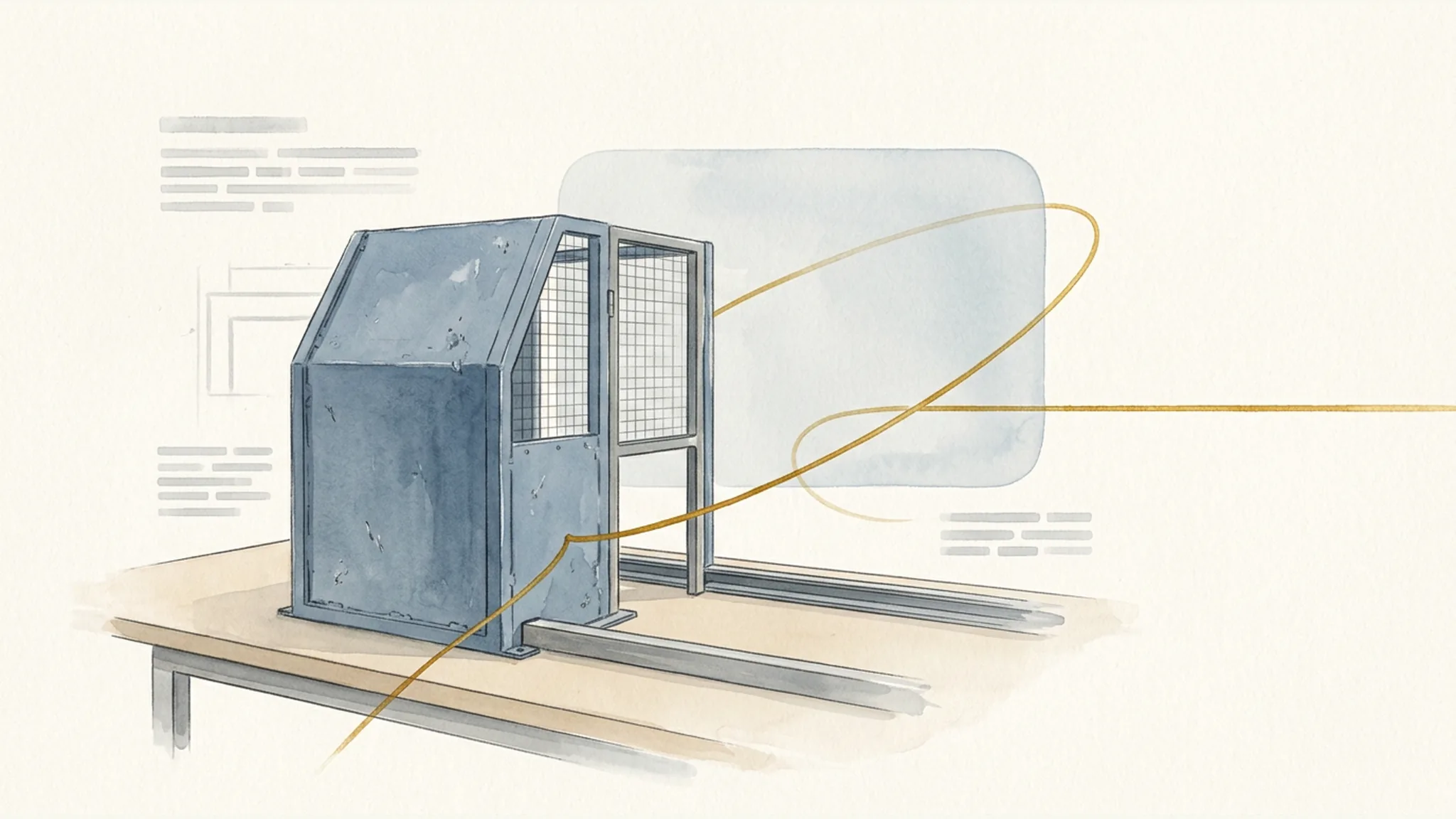
Machine guards deserve careful attention. OSHA’s general machine-guarding standard requires guarding methods to protect operators and other employees from hazards such as the point of operation, ingoing nip points, rotating parts, flying chips, and sparks. OSHA defines the point of operation as the area where work is actually performed on the material being processed and requires guarding when operation exposes an employee to injury.
Oregon OSHA’s machine-guarding rules use similar concepts. Oregon workplace rules also state that a worker must not operate a machine unless the guard or method of guarding is in good condition, working order, in place, and operative, and must not remove or render guards inoperative except for adjustment, oiling, repair, or setting up a new job.
Those rules should not be used as shortcuts to blame an injured worker. They point to facts that need investigation:
- Was a guard missing, broken, bypassed, or poorly designed?
- Who removed or changed it?
- Was the machine being adjusted, repaired, oiled, cleaned, or set up for a new job?
- Did the product’s design require users to place body parts near a danger zone during foreseeable work?
- Were warnings and instructions clear about guarding and servicing?
- Was lockout/tagout or another safety procedure relevant to the task?
OSHA and Oregon OSHA materials can help explain machine hazards and safety norms. They do not automatically establish product liability against a manufacturer, seller, distributor, or lessor in a specific Oregon case.
Warnings and Instructions: When “You Should Have Known” Is Not the Whole Story
Oregon product-liability law includes failure-to-warn and failure-to-instruct claims. That means a defendant’s argument that “the user should have known better” may not end the analysis.
Warning and instruction issues may include:
- whether the warning identified the specific hazard;
- whether the warning was visible and understandable;
- whether the instructions addressed foreseeable use, setup, maintenance, cleaning, repair, or jam clearing;
- whether the instructions matched how the tool or machine was actually expected to be used;
- whether a hidden defect or malfunction made the warning inadequate; and
- whether the user had access to the manual, labels, training materials, or updated warnings.
Defendants may still argue that the injured person ignored a warning or used the product contrary to instructions. Oregon cases recognize that these arguments can matter. But the analysis should include both sides of the warning issue: what the product maker said, what it should reasonably have anticipated, what the user knew, and what actually caused the injury.
Examples of warning and malfunction issues
Tool and machine cases often involve facts that do not fit neatly into one box. In Baker v. Infratech Corp., defendants argued both that the product was not defectively designed and that the plaintiff’s use of an extension cord missing the grounding prong was unforeseeable misuse contrary to a warning. That kind of dispute shows how design, warnings, misuse, and causation can overlap.
Public recall materials also show that tool hazards can involve mechanical or control-system issues. For example, CPSC recall notices have addressed a miter saw rear safety guard that could break or detach, creating projectile and laceration hazards, and a framing nailer engagement system that could malfunction and involuntarily discharge a nail by pulling the trigger alone.
Those examples should be used carefully. A recall can be important when it applies to the specific product, model, time period, and hazard involved. A recall for one product does not prove that a different tool was defective, and it does not automatically establish liability in any individual case.
NIOSH/OSHA nail-gun safety guidance also illustrates why design and instructions can matter. That guidance states that the risk of nail-gun injury is twice as high when using a multi-shot contact trigger as when using a single-shot sequential trigger nailer. That point does not decide any Oregon case by itself, but it is an example of how product configuration, foreseeable use, training, and safety instructions can all become relevant.
Workplace Injuries: Workers’ Comp May Not Be the Only Legal Track
Many tool and machine injuries happen at work. In Oregon, workers’ compensation coverage is generally exclusive and in place of other liability for a covered employer that satisfies its coverage duties, subject to statutory exceptions. That means an injured worker usually cannot treat a covered employer the same way as a product manufacturer or outside contractor.
But workers’ compensation does not necessarily eliminate every other claim. If a worker’s injury is due to the negligence or wrong of a third person not in the same employ, Oregon law allows the injured worker, or eligible beneficiaries if death results, to elect to seek a remedy against that third person.
This is why a workplace machine injury may require two tracks of analysis: workers’ compensation for the job-related injury, and a possible third-party claim if a non-employer’s product defect, warning failure, negligent repair, rental issue, or other wrong contributed to the harm. Johnson Law’s guide to industrial crush injury amputations and workers’ comp versus third-party recovery discusses that overlap in a catastrophic machinery context.
Who might be a third party?
Depending on the facts, a potential third party may include:
- the product manufacturer;
- a component manufacturer;
- a distributor;
- a seller;
- a lessor or rental equipment provider;
- a repair or maintenance contractor;
- an outside safety or service vendor; or
- another non-employer actor connected to the tool, machine, or worksite.
The fact that one of those parties exists does not mean it is liable. The issue is whether evidence connects that party’s product, conduct, warning, instruction, repair, or modification to the injury.
Coordination with workers’ compensation can affect the net result
When a compensable work injury is caused by a third person’s negligence or wrong, Oregon statutes address election, notice, assignment, distribution, and offsets. Those rules can affect who controls the third-party claim, how settlement funds are distributed, and how workers’ compensation benefits interact with a product or negligence recovery.
That coordination is technical. Injured workers should not assume that a third-party claim is separate from workers’ compensation in every practical respect, and they should not assume that workers’ compensation benefits prevent all third-party evaluation. For a deeper discussion, see Johnson Law’s guide to workers’ comp liens and third-party settlement reimbursement.
Comparative Fault: The Defense May Reduce or Bar Recovery
Oregon comparative fault law is another reason these cases are fact-specific. Under ORS 31.600, contributory negligence does not bar recovery if the claimant’s fault is not greater than the combined fault of the persons specified in the statute. If recovery is allowed, damages are reduced in proportion to the claimant’s percentage of fault.
In a tool or machine case, comparative fault arguments may focus on warnings, training, PPE, machine guarding, work sequence, product condition, or whether the injured person used the product after knowing about a danger. But comparative fault does not replace the need to prove a product defect, warning failure, or other viable theory. It also does not turn every defense into the same defense. Misuse, alteration or modification, substantial change, known-danger use, and comparative fault can overlap, but they are not identical.
Evidence That Can Help Sort Defect From Misuse
Because tool and machine cases often turn on physical condition and sequence of events, evidence can disappear quickly. The goal is not to repair the product or prove a conclusion immediately. The goal is to preserve enough information for a qualified evaluation.
Preserve the tool or machine if possible
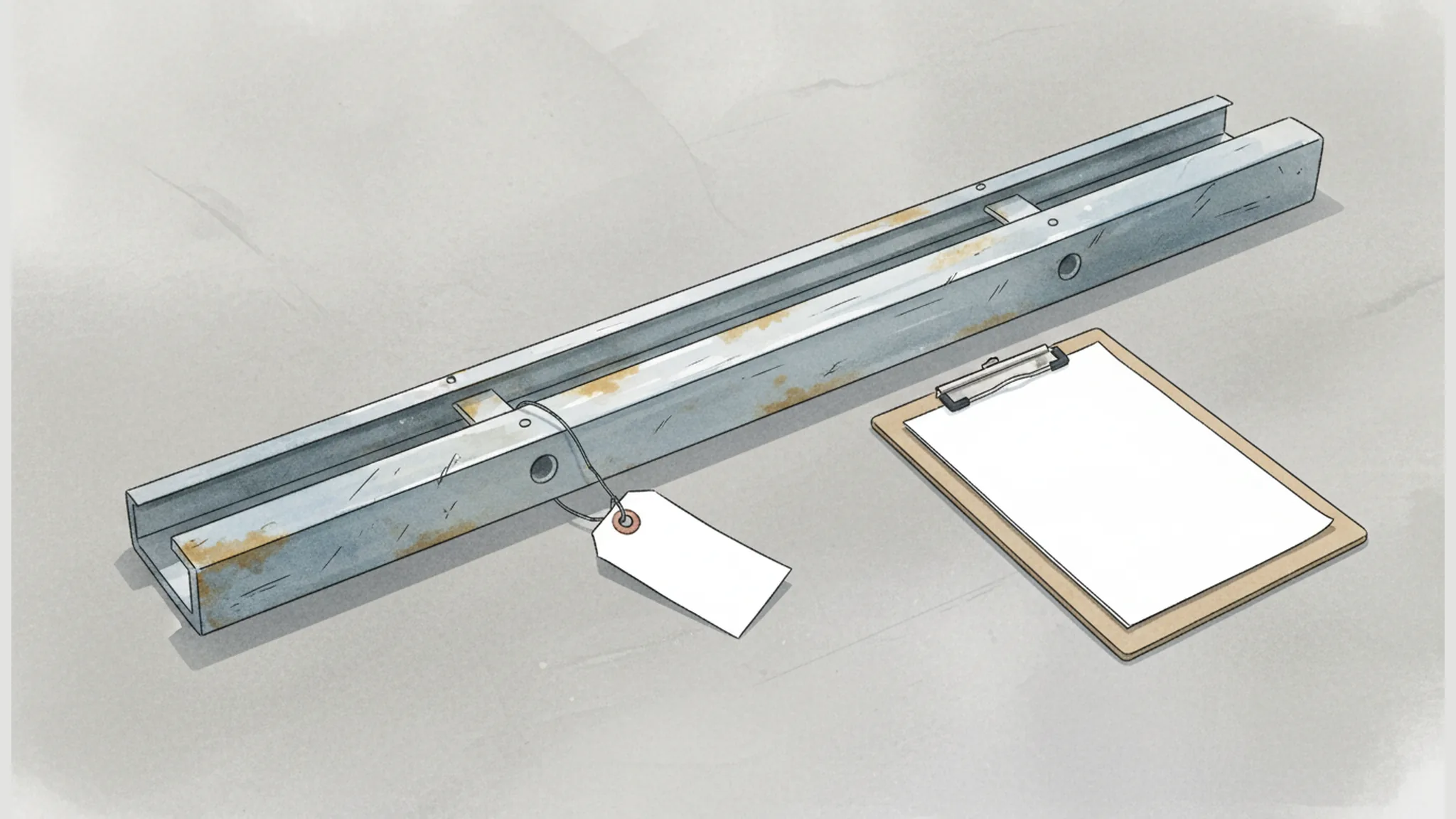
If it can be done safely and lawfully, preserve the tool or machine in its post-incident condition. Do not clean, repair, discard, return, or modify it before getting case-specific guidance if a product claim may exist. General evidence-preservation cautions also matter because repairs, disposal, overwritten video, and altered physical conditions can change the claim analysis.
Evidence that may matter includes:
- the tool or machine itself;
- guards, shields, attachments, blades, bits, cords, hoses, batteries, switches, triggers, sensors, and controls;
- warning labels, manuals, packaging, and instruction sheets;
- model number, serial number, lot number, purchase records, rental records, and maintenance records;
- photos or video of the product, work area, guard position, power source, and injury scene;
- incident reports, OSHA or employer reports, and witness names;
- repair, inspection, and prior complaint records;
- PPE involved in the task; and
- recall information tied to the specific make, model, and hazard.
Document the work sequence and product condition
The same product can present different legal questions depending on what was happening at the time. Document, while memories are fresh:
- what task was being performed;
- whether the injury occurred during ordinary operation, setup, adjustment, cleaning, maintenance, lubrication, repair, or jam clearing;
- who provided the tool or machine;
- whether the product had been modified or repaired;
- whether a guard or safety device was missing, disabled, broken, or hard to use;
- what instructions, warnings, or training were provided;
- whether anyone had previously reported the hazard; and
- whether similar incidents, recalls, or service bulletins are known.
Avoid repair, disposal, or alteration before advice
Repair, disposal, or additional modification can make it harder to evaluate defect, substantial change, alteration, warnings, and causation. That does not mean an injured person should keep using unsafe equipment. It means the condition of the product at the time of injury may be important evidence, and preservation should be considered promptly.
Time Limits Are Technical—Do Not Wait to Evaluate the Claim
Oregon product-liability deadlines are technical. For personal injury or property damage, ORS 30.905 generally requires a product-liability action to be commenced within two years after the plaintiff discovers, or reasonably should have discovered, the injury or damage and the causal relationship between the injury or damage and the product or defendant’s conduct.
ORS 30.905 also includes a repose rule. In general, product-liability personal-injury or property-damage actions must be commenced before the later of 10 years after the product was first purchased for use or consumption, or the expiration of any statute of repose for an equivalent civil action in the state of manufacture or import. The Oregon Supreme Court’s decision in Miller v. Ford Motor Co. shows that the manufacturing-state analysis can be technical; when the manufacturing state had no statute of repose for an equivalent civil action, the Oregon action was not subject to a statute of repose under the version of ORS 30.905 at issue.
Workplace third-party claims can also involve workers’ compensation election, notice, assignment, distribution, and offset rules. The safe takeaway is narrow: do not wait to investigate deadlines. A general article cannot determine the deadline for a specific injury.
When to Get Legal Help After a Tool or Machine Injury
It may be worth getting legal guidance promptly if a tool or machine injury involved:
- an amputation, crush injury, severe laceration, burn, electric shock, eye injury, or other serious harm;
- a missing, broken, bypassed, or detached guard;
- an unexpected discharge, start-up, control failure, or trigger issue;
- a suspected defect in design, manufacturing, inspection, testing, warning, or instruction;
- a product recall, service bulletin, or similar incident report;
- a rental tool, leased machine, repaired machine, or recently serviced product;
- a workplace injury where a non-employer manufacturer, seller, lessor, repair vendor, or contractor may have contributed; or
- an insurer, employer, or manufacturer blaming the injury entirely on user error.
Johnson Law can evaluate whether the facts point toward a product-defect theory, a workplace third-party claim, a misuse or alteration defense, comparative fault issues, or some combination of those questions. An evaluation does not promise a result, but it can help preserve evidence and identify the right legal track before key information is lost.
Frequently Asked Questions
Is a tool or machine injury automatically a product-liability case in Oregon?
No. A serious injury, by itself, does not prove a product defect. The injury must be tied to a supported theory such as defective design, manufacturing, inspection, testing, failure to warn, failure to instruct, or another product-liability basis recognized under Oregon law.
Does “misuse” mean I lose because I made a mistake?
Not necessarily. Oregon cases distinguish ordinary carelessness and foreseeable use from abnormal, unforeseeable use. A misuse defense depends on the facts, including whether the use was reasonably foreseeable and whether the injured person knowingly and unreasonably used the product after discovering a defect and understanding the danger.
Can I bring a product claim if I was hurt at work?
Possibly. Workers’ compensation is generally the main remedy against a covered employer, but Oregon law may allow a third-party claim when the injury was caused by the negligence or wrong of someone not in the same employ. A manufacturer, seller, distributor, lessor, repair contractor, or rental provider may be investigated as a potential third party when the facts support it.
What if a guard was missing or removed?
That fact needs investigation. A missing or removed guard may raise issues involving machine guarding, alteration or modification, substantial change, foreseeability, warnings, workplace safety rules, and comparative fault. It does not create one automatic answer for every case.
Does a recall prove my tool was defective?
Not by itself. A recall can be relevant if it applies to the specific product, model, hazard, and time period involved. But recalls are product-specific, and a recall for one tool does not prove that a different tool was defective or that liability exists in an individual case.
How long do I have to bring an Oregon product-liability claim?
Oregon product-liability cases can involve discovery-based limitation rules and technical repose rules, including possible manufacturing-state or import-state issues. Workplace cases may also involve workers’ compensation timing and election rules. Get case-specific advice promptly rather than relying on a general deadline summary.
Sources
- ORS Chapter 30 — Oregon product-liability definitions, limitation and repose provisions, disputable presumption, alteration/modification defense, and strict product-liability rule.
- ORS Chapter 31 — Oregon comparative fault, including ORS 31.600.
- ORS Chapter 656 — Oregon workers’ compensation exclusivity, third-party claims, election, notice, distribution, lien, and offset provisions.
- McCathern v. Toyota Motor Corp., 332 Or 59 (2001) — Oregon consumer-expectations design-defect framework.
- Purdy v. Deere & Co., 281 Or App 407 (2016) — safer-alternative and risk-utility evidence within Oregon’s consumer-expectations framework.
- Findlay v. Copeland Lumber Co., 265 Or 300 (1973) — misuse, ordinary carelessness, failure to discover a defect, and known-danger use.
- Lakin v. Senco Products, Inc., 144 Or App 52 (1996) — reasonably foreseeable use and misuse instruction in an Oregon nail-gun product-liability case.
- Baker v. Infratech Corp., 174 Or App 452 (2001) — Oregon product-liability warning, design, and alleged misuse issues involving a heat lamp and grounding warning.
- Miller v. Ford Motor Co., 363 Or 105 (2018) — technical statute-of-repose analysis under ORS 30.905.
- OSHA 29 CFR 1910.212 — general machine-guarding standard.
- Oregon OSHA Division 2, Subdivision O — Machinery and Machine Guarding and OAR 437-001-0760 — Oregon machine-guarding and workplace rule context.
- OSHA Publication 3170 — Safeguarding Equipment and Protecting Workers from Amputations — machine-safeguarding and amputation-prevention context.
- NIOSH/OSHA Nail Gun Safety guide — nail-gun trigger and training safety context.
- CPSC DeWALT miter saw recall and CPSC RIDGID framing nailer recall — product-specific recall examples used only as safety context.
Client-First Fee Promise
Client First = Bills First, Fees Second
Your unpaid medical bills do not have to make your lawyer's fee bigger. Johnson Law subtracts qualifying medical bills before calculating our fee, helping clients keep more of their settlement.
Applies to qualifying cases. Results vary.