Ladder Fall at Work in Oregon: Defective Ladder Claim, Third-Party Case, or Workers’ Comp Only?
Ladder Fall at Work in Oregon: Defective Ladder Claim, Third-Party Case, or Workers’ Comp Only?
If you fell from a ladder at work in Oregon, the legal question is not only whether the fall happened on the job. The next question is usually who or what caused the ladder fall.
Some ladder falls are handled mainly through workers’ compensation. Others may also involve a claim against a company or person outside the employer relationship. In some cases, the ladder itself—or a ladder component, warning, instruction, rental, sale, or maintenance history—may raise a product-liability issue.
That distinction matters because a defective-ladder claim after a workplace fall is not the same as a claim that someone selected the wrong ladder, set it up on an unsafe surface, failed to inspect it, or allowed another trade to knock it out of position. The evidence needed for each theory can be different.
Educational disclaimer: This article provides general educational information about Oregon law. It is not legal advice for a specific case and does not create an attorney-client relationship. Oregon workplace injuries, product-liability claims, third-party claims, deadlines, liens, and insurance issues are fact-specific.
Start with the main question: who or what caused the ladder fall?
An Oregon work ladder fall may point toward one or more of three tracks:
- Workers’ compensation: the baseline system for many injuries arising out of and in the course of employment.
- Third-party negligence: a claim against a non-employer person or company whose negligence or wrong contributed to the fall.
- Product liability: a claim involving a ladder or ladder component that was defective, unreasonably dangerous, lacked adequate warnings, or lacked proper instructions under Oregon product-liability law.
The same incident can involve overlapping questions. For example, a worker may need workers’ compensation benefits while the ladder, jobsite setup, contractor roles, rental records, and inspection history are reviewed. But not every ladder fall supports a lawsuit outside workers’ compensation, and not every unsafe ladder incident is a product defect case.
For the broader employer-lawsuit question, see Johnson Law’s guide to when an Oregon work injury may involve claims beyond workers’ compensation.
Track one: when the case may be workers’ comp first or workers’ comp only
Oregon workers’ compensation exclusivity
Oregon law generally makes workers’ compensation the exclusive remedy against a covered employer for injuries arising out of and in the course of employment. ORS 656.018 states that an employer that satisfies its workers’ compensation coverage duty generally has liability that is “exclusive and in place of all other liability.”
In plain English, that often means an injured worker cannot simply sue the employer in court because the employer provided a ladder that turned out to be unsafe or inappropriate. The workers’ compensation system may be the main path for benefits against the employer.
But the rule should not be overstated. ORS 656.018 has statutory nuance, and it can extend protection to certain related people and entities—such as some agents, employees, officers, directors, partners, and others—while also listing exceptions. Whether a supervisor, coworker, contractor representative, or related entity is protected depends on the facts and the statute.
The key point for a ladder fall is this: an employer-provided ladder does not automatically create an employer lawsuit. If the responsible actor is protected by workers’ compensation exclusivity and no viable non-employer product or site-control defendant is identified, the case may be workers’ comp first or workers’ comp only.
Practical workers’ comp steps after a ladder fall
Oregon workers generally must notify the employer of an accident causing injury or death immediately, but not later than 90 days after the accident, subject to statutory exceptions and other rules. Oregon’s Workers’ Compensation Division also tells injured workers that they have the right to file a workers’ compensation claim, seek medical care, and access benefits for time off.
The Oregon Workers’ Compensation Division says injured workers should tell the employer about a work injury as soon as possible. The employer should provide Form 801 and send the claim to the insurer within five days of being notified.
This reporting step is separate from preserving evidence. Even when a workers’ compensation claim is moving forward, the physical ladder, photos, labels, inspection records, and witness information may still matter if a third-party or product-liability investigation is needed.
Track two: when a third-party negligence claim may exist
Potential third parties in a ladder fall
Oregon law allows a worker, or certain beneficiaries if death results, to pursue a remedy against a negligent or wrongful “third person” not in the same employ when that third person’s conduct caused the injury. That rule appears in ORS 656.154.
In a ladder fall, a potential third party may include a non-employer contractor, property owner, site controller, equipment lessor, rental company, seller, distributor, manufacturer, or another entity—depending on the facts. None of those labels automatically proves responsibility. The question is what that person or company did, controlled, supplied, inspected, maintained, altered, required, or failed to do.
Examples of questions that may matter include:
- Who selected the ladder for the task?
- Who owned, rented, leased, sold, or supplied it?
- Who inspected it before use?
- Who controlled the surface, doorway, passageway, traffic path, or work area where it was used?
- Did another contractor’s activity displace the ladder or create a slipping hazard?
- Was the ladder tagged, removed from service, repaired, modified, or returned to use after a prior problem?
On a multi-contractor jobsite, those questions can become complicated. Johnson Law’s separate article on mapping which company controlled the jobsite hazard explains how fault can be split when multiple companies may have roles.
Site control, setup, and unsafe conditions
A third-party negligence theory often focuses on site conditions, setup, inspection, maintenance, or control—not necessarily on a defect in the ladder as manufactured.
Oregon OSHA ladder rules and related construction safety rules provide useful Oregon workplace-safety context. Federal OSHA’s construction ladder standard contains closely related ladder-standard text and can be useful for comparison. These rules address issues such as:
- using ladders only for the purpose for which they were designed;
- not loading ladders beyond maximum intended load or rated capacity;
- using non-self-supporting ladders at the proper angle;
- placing ladders on stable and level surfaces unless secured;
- securing ladders or using slip-resistant feet on slippery surfaces;
- protecting ladders from displacement by workplace activities or traffic;
- keeping ladders free of oil, grease, and other slipping hazards; and
- inspecting ladders for visible defects periodically and after events that could affect safe use.
Oregon OSHA and related construction safety rules also address safety programs, frequent and regular jobsite/material/equipment inspections by competent persons, and tagging, locking out, or removing unsafe equipment.
Oregon OSHA’s ladder safety page adds Oregon-specific context, including that more Oregon workers are injured in falls from ladders than from any other elevated surface and that many ladder falls happen because workers select the wrong ladder or set it up improperly so it shifts or slips.
Those safety rules can help frame the evidence, but they do not automatically establish civil liability, causation, damages, or a viable third-party claim. The facts still have to connect the unsafe condition to a legally responsible non-employer party.
Track three: when the ladder itself may support a product-liability claim
What Oregon product-liability law covers
A defective ladder claim is different from a claim that the ladder was merely set up wrong.
Oregon defines a “product liability civil action” as a civil action against a manufacturer, distributor, seller, or lessor of a product for personal injury, death, or property damage arising out of a design, inspection, testing, manufacturing, or other defect; a failure to warn; or a failure to properly instruct in product use.
Oregon law also addresses liability for a seller or lessor engaged in the business of selling or leasing a product when the product is sold or leased in a defective condition unreasonably dangerous to the user or consumer and reaches the user without substantial change in condition.
That can matter when the ladder was purchased by someone else, rented by a contractor, leased from an equipment company, or supplied to a worker who had no direct contract with the seller or lessor. ORS 30.920 states that this liability can apply even if the seller or lessor exercised all possible care and even if the injured person did not buy or lease the product or have a contractual relationship with the seller or lessor.
A product-liability theory may involve the ladder’s design, manufacturing, testing, inspection, warnings, instructions, or components. For a related equipment example, see Johnson Law’s article on defective jobsite equipment and product-liability claims.
Why defect proof is not automatic
A fall from a ladder does not prove the ladder was defective.
Oregon product-liability law includes a disputable presumption that a product as manufactured and sold or leased is not unreasonably dangerous for its intended use. Oregon law also provides a defense involving alteration or modification when statutory conditions are met, including when an alteration or modification substantially contributed to the injury or death.
That means the investigation may need to address questions such as:
- What is the ladder’s manufacturer, model, serial number, duty rating, and age?
- Was the ladder sold, leased, or rented, and when?
- Was it in substantially the same condition when used as when it was sold or leased?
- Were there broken or missing rungs, split rails, corroded components, failed locks, missing feet, or damaged spreaders?
- Were warnings or instructions present and readable?
- Was the ladder repaired, modified, altered, overloaded, misused, or used for a purpose it was not designed for?
- Did poor setup or site conditions—not a product defect—better explain the fall?
Some of those questions may require technical or expert analysis. The goal is not to force every ladder fall into a product-liability box. The goal is to identify whether the ladder itself, as a product, may have been defective or unreasonably dangerous under Oregon law.
For a fall-from-height comparison involving a different kind of work platform, Johnson Law’s article on scaffolding fall claims explains scaffold-specific third-party issues.
Evidence that can matter after a defective or improperly provided ladder fall
Evidence can disappear quickly after a worksite fall. Ladders may be moved, repaired, returned to a rental company, discarded, tagged, cleaned, or placed back into service. Practical preservation is important, but any evidence steps should be handled carefully and lawfully in the context of the jobsite and claim.
Evidence about the ladder
The ladder itself is often the most important piece of evidence in a defective or improperly provided ladder investigation.
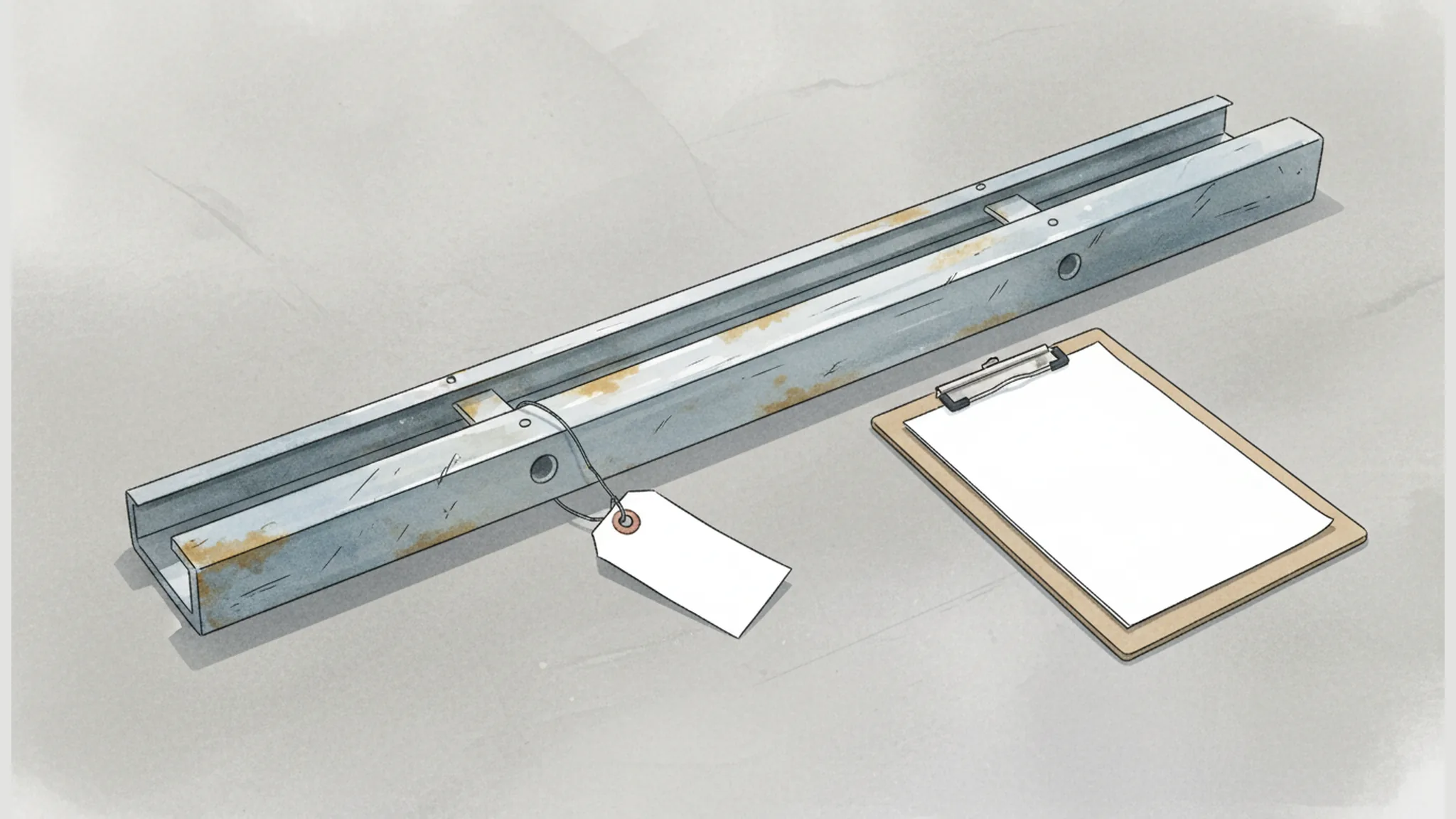
Oregon OSHA ladder rules, consistent with federal construction ladder standards, require portable ladders with structural defects—such as broken or missing rungs, broken or split rails, corroded components, or other faulty or defective components—to be immediately marked or tagged as defective, or with “Do Not Use” or similar language, and withdrawn from service until repaired. Ladder standards also address a metal spreader or locking device on each stepladder to hold the front and back sections open when used.
Useful ladder evidence may include:
- the actual ladder, preserved if possible;
- photos or video of the ladder before it is moved or altered;
- close-up photos of rungs, rails, locks, hinges, spreaders, feet, labels, warnings, and damaged areas;
- manufacturer, model, serial number, duty rating, and capacity labels;
- rental, lease, purchase, maintenance, repair, or inspection records;
- any “Do Not Use,” defective-equipment, lockout, or removal-from-service tags;
- the condition of the ladder immediately after the incident; and
- whether the ladder was loaded beyond rated capacity or used for a purpose it was not designed for.
This evidence can help distinguish a product defect from later damage, alteration, misuse, poor setup, wrong ladder selection, or site-control problems.
Evidence about the worksite and who controlled the hazard
Worksite evidence can be just as important as the ladder itself. A ladder may fail because it is defective, but a fall may also happen because the ladder was placed on an unstable surface, used near traffic, exposed to oil or grease, set at the wrong angle, or displaced by other work.
Worksite evidence may include:
- photos of the surface, floor, ground, doorway, platform, wall, roof edge, or work area;
- evidence of oil, grease, debris, slope, instability, moisture, or other slipping hazards;
- witness names and statements;
- incident reports and supervisor notes;
- job hazard analyses, toolbox talks, or safety meeting records;
- ladder inspection logs or competent-person inspection records;
- subcontractor agreements, site-control documents, rental records, or delivery records;
- OSHA or Oregon OSHA reports, if any; and
- medical records connecting the fall to the injury.
This evidence may help determine whether the issue was product liability, third-party negligence, workers’ comp only, or some combination.
How workers’ comp and a third-party case can interact
Workers’ compensation and a third-party ladder claim are not always either/or.
Oregon law separately addresses third-party and noncomplying-employer election procedures. ORS 656.578 applies when a worker of a noncomplying employer receives a compensable injury, or when a worker receives a compensable injury due to the negligence or wrong of a third person not in the same employ. ORS 656.580 addresses continuing compensation and liens, and ORS 656.593 requires notice to the paying agency when the worker or beneficiaries elect to bring an action, with recovered proceeds subject to the paying agency’s lien under the statutory procedure.
This article does not try to calculate liens, explain settlement distribution, or give case-specific election advice. The important point is that a third-party claim can affect the workers’ compensation side, and the workers’ compensation side can affect the third-party recovery.
Deadlines and timing issues: do not wait to preserve evidence
Different timing rules may apply to different parts of a ladder fall case.
For workers’ compensation, Oregon workers generally must give notice of an accident causing injury or death immediately, but not later than 90 days after the accident, subject to statutory exceptions and other rules.
For Oregon product-liability civil actions involving personal injury or property damage, ORS 30.905 generally includes a two-year discovery-based limitation period and repose limits, including rules tied to when the product was first purchased for use or consumption and potentially to repose periods in the manufacturing or import state.
Other deadlines may apply to third-party negligence claims, wrongful death claims, public-body involvement, insurance notices, or other circumstances. There is no single universal deadline for every ladder fall.
The practical point is simpler: evidence about the ladder’s condition, setup, ownership, rental history, inspection history, and post-incident handling can change quickly. Waiting can make it harder to answer the central question: was this a workers’ comp-only injury, a third-party negligence case, a defective ladder claim, or a combination?
Bottom line: the same ladder fall can point to different legal paths
After a ladder fall at work in Oregon, the legal path depends on the facts. Workers’ compensation is often the first system for an on-the-job injury, and employer lawsuits may be limited by workers’ compensation exclusivity. But a separate claim may be possible when a non-employer third party contributed to unsafe ladder selection, setup, inspection, maintenance, rental, supply, or site conditions.
A product-liability claim is narrower still. It depends on evidence that the ladder or a component was defective, unreasonably dangerous, inadequately warned about, or inadequately instructed for, along with evidence connecting that product issue to the injury.
If a ladder fall just happened, the most important practical questions are: What ladder was used? Who provided it? Who controlled the work area? What condition was the ladder in? What safety rules applied? And what happened to the ladder after the fall?
If you are trying to sort out whether an Oregon ladder fall involves workers’ compensation only, a third-party claim, or a possible product-liability issue, consider speaking with an Oregon workplace-injury attorney about the specific facts.
This content is for general educational purposes only and is not legal advice. An Oregon ladder fall involving workers’ compensation, a third-party claim, product liability, or multiple potentially responsible parties should be evaluated based on the specific facts and current law.
FAQ
Can I sue my employer after a ladder fall at work in Oregon?
Usually, Oregon workers’ compensation exclusivity limits lawsuits against a covered employer for injuries arising out of and in the course of employment. But the analysis can change if a statutory exception, a noncomplying employer issue, or a legally responsible non-employer third party is involved. The facts matter.
What is a defective ladder claim?
In Oregon, a defective ladder claim may involve product-liability theories against a manufacturer, distributor, seller, or lessor. The claim may focus on design, inspection, testing, manufacturing, another defect, failure to warn, or failure to properly instruct in product use. Evidence of product identity, condition, causation, warnings, instructions, and lack of substantial change can matter.
What if another contractor gave me the ladder or set it up?
That may raise third-party negligence or site-control questions if the responsible actor is outside the protected employer/coworker relationship. Important evidence may include who supplied the ladder, who selected it, who set it up, who inspected it, who controlled the work area, and whether unsafe site conditions contributed to the fall.
Does an OSHA or Oregon OSHA ladder violation prove my case?
No. Oregon OSHA and OSHA ladder rules can provide important safety context and may point investigators toward relevant evidence. But a regulatory issue does not automatically prove civil liability, product defect, causation, or damages.
What evidence should be preserved after a ladder fall?
Evidence may include the actual ladder, photos, model and serial labels, duty rating, warnings, damaged components, inspection or tagging records, rental or purchase records, incident reports, witness information, site-control documents, OSHA or Oregon OSHA materials, and medical records.
Can workers’ comp and a third-party ladder claim happen at the same time?
They can interact. Oregon law addresses third-party elections, continuing benefits, notice to the paying agency, and liens. This is a technical area, so this article keeps the explanation high-level rather than giving lien or settlement-distribution advice.
Sources
- ORS Chapter 656 – Oregon workers’ compensation exclusivity and third-party recovery rules
- ORS Chapter 30 – Oregon product-liability statutes, including ORS 30.900 to 30.920
- Oregon OSHA – Ladders
- Oregon Workers’ Compensation Division – Injured worker overview
- U.S. OSHA 29 CFR 1926.1053 – Ladders
- U.S. OSHA 29 CFR 1926.20 – General safety and health provisions
Client-First Fee Promise
Client First = Bills First, Fees Second
Your unpaid medical bills do not have to make your lawyer's fee bigger. Johnson Law subtracts qualifying medical bills before calculating our fee, helping clients keep more of their settlement.
Applies to qualifying cases. Results vary.