Forklift Injury in a Warehouse: When It’s More Than a Workers’ Comp Case
Forklift Injury in a Warehouse: When It’s More Than a Workers’ Comp Case
A forklift injury in an Oregon warehouse often begins with workers’ compensation. If you were hurt while doing your job, the workers’ compensation process typically starts with promptly reporting the injury, telling your medical provider it happened at work, and following the claim process.
But workers’ comp is not always the whole story.
Oregon workers’ compensation law generally limits claims against a complying employer for injuries arising out of and in the course of employment. Oregon law also recognizes that an injured worker may have a remedy against a negligent or wrongful “third person not in the same employ.” In a warehouse forklift case, that can matter when the hazard was caused or controlled by someone other than the injured worker’s direct employer or a co-worker in the same employ.
This article focuses on the practical question behind a forklift accident third-party claim in Oregon: who caused or controlled the forklift hazard?
For a broader overview of when a work injury may involve claims beyond workers’ comp, see Johnson Law’s Oregon workplace injury exceptions guide.
Educational disclaimer: This article provides general educational information about Oregon law. It is not legal advice for a specific case and does not create an attorney-client relationship. Forklift injury claims can involve workers’ compensation, third-party liability, product-liability timing, public-body notice, liens, and fact-specific control issues.
A forklift accident at work is not always only a workers’ comp issue
Workers’ compensation is usually the first system involved after an on-the-job warehouse injury. It can provide benefits without requiring the injured worker to prove fault against the employer. At the same time, workers’ compensation exclusivity can restrict lawsuits against the direct employer.
A separate third-party claim is different. It asks whether someone outside the worker’s same employ negligently or wrongfully caused the injury. In a forklift case, possible third parties may include:
- another company’s forklift operator;
- a delivery company, logistics contractor, vendor, or subcontractor;
- a warehouse owner, property manager, or premises operator;
- a maintenance company or repair vendor;
- an equipment lessor or rental company; or
- a manufacturer, distributor, seller, or lessor connected to defective equipment.
Not every forklift injury supports a third-party case. The analysis depends on the companies involved, who had control over the work area or equipment, what caused the incident, and whether Oregon law allows a claim against that actor.
The key question: who caused or controlled the forklift hazard?
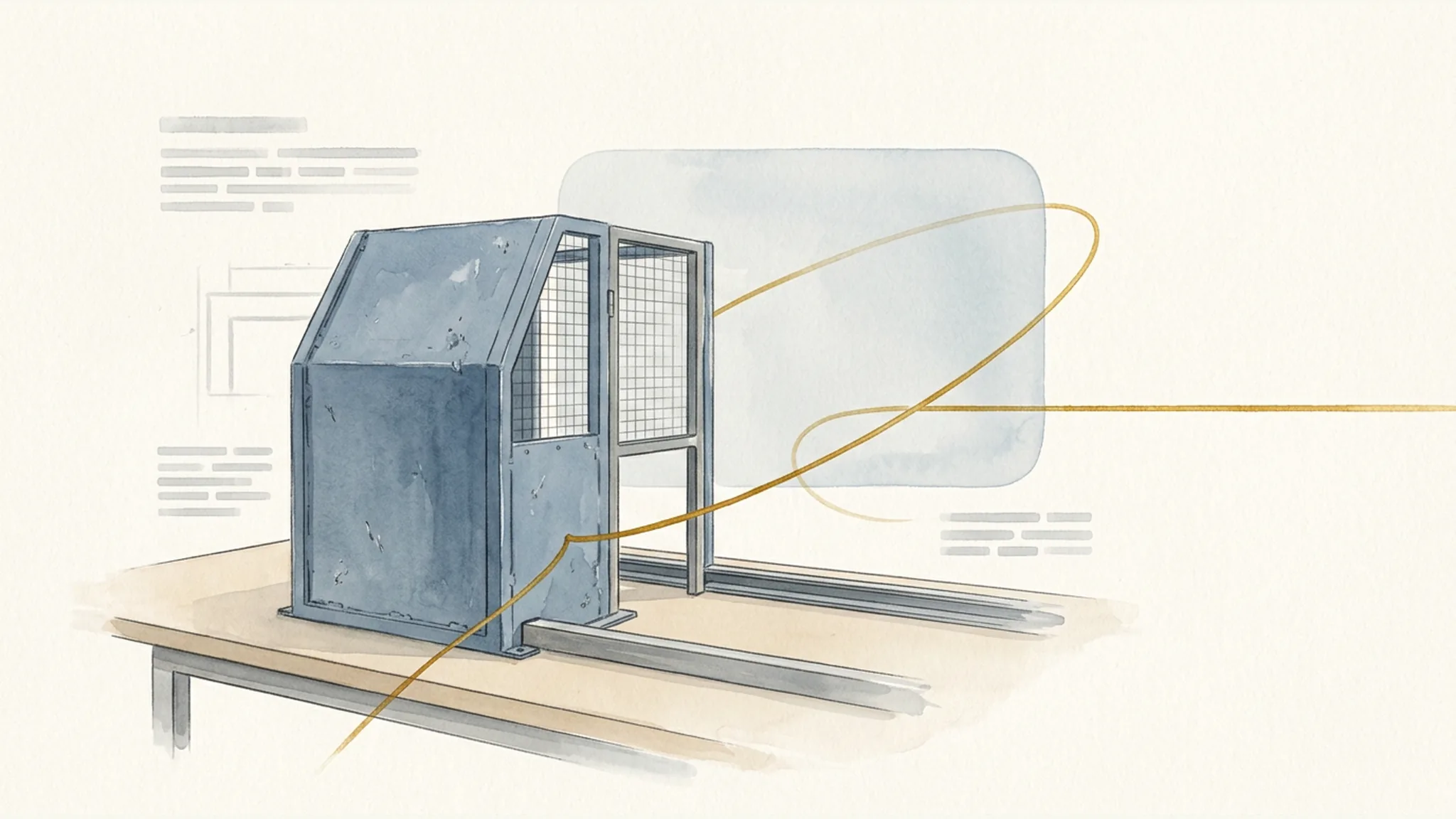
Warehouse operations can involve several businesses working in the same space. A single forklift incident may involve a direct employer, staffing agency, third-party logistics provider, property owner, loading-dock operator, maintenance vendor, delivery company, and equipment lessor.
That is why early investigation should identify:
- who operated the forklift;
- who employed or supervised the operator;
- who owned, leased, inspected, and maintained the forklift;
- who controlled the dock, aisle, traffic pattern, pedestrian route, or work zone;
- whether the forklift had been modified or fitted with attachments;
- whether there were prior complaints, near-misses, or defect reports; and
- whether video, inspection logs, training records, or incident reports exist.
This is similar to mapping which company controlled the hazard in other multi-company worksite injury cases. The point is not simply to name every company on site. The point is to determine which person or entity had responsibility for the act, equipment, or condition that caused the injury.
Same employer or co-worker versus a separate company
If the forklift operator was a co-worker in the same employ, the injured worker’s remedy may be primarily through workers’ compensation. That does not end every possible question, but it is a major distinction.
If the forklift operator worked for a different company, the analysis changes. A delivery driver, outside contractor, staffing-company worker, vendor employee, or third-party logistics worker may create a third-party issue if their negligence caused the crash, pedestrian strike, loading incident, or other injury.
The same distinction can apply when the operator is not the only problem. A direct employer’s role may be covered by workers’ compensation exclusivity, while an outside maintenance vendor, equipment lessor, property operator, or manufacturer may still require separate review.
Why multi-company warehouses require careful fact development
Warehouse injury cases often turn on documents and relationships that are not obvious from the accident scene. Contracts, staffing agreements, delivery records, work orders, site-access logs, maintenance agreements, and lease documents may show who had control over the relevant equipment or area.
That control analysis matters. Oregon third-party claims, premises theories, product claims, and Oregon Employer Liability Law issues can all depend on specific facts about responsibility, possession, supervision, and the right to control the work or hazard.
Third-party pathway 1: fault by another company
The most direct forklift accident third-party claim is one involving another company’s conduct. Examples may include:
- a delivery driver striking a warehouse worker while moving through a shared loading area;
- a contractor’s forklift operator backing into a pedestrian aisle;
- a logistics company employee operating too fast around a blind corner;
- a vendor creating a loading-zone hazard that contributes to a tip-over or crush injury; or
- a third-party operator using a forklift without proper workplace-specific instruction or supervision.
The legal question is not just whether the injury happened at work. It is whether the injury was due to the negligence or wrong of a person or company outside the worker’s same employ.
Examples of facts that may matter
Useful evidence in another-company forklift case may include:
- the operator’s identity and employer;
- delivery logs, dispatch records, bills of lading, and access records;
- work orders or contractor scopes of work;
- staffing agreements or site-supervision documents;
- incident reports and witness statements;
- warehouse camera footage;
- radio, scanner, or internal communication records;
- site rules for forklift speed, right-of-way, and pedestrian routes; and
- prior near-miss reports or complaints involving the same area, operator, or company.
Video and electronic records may be overwritten quickly. If a third-party claim may exist, early preservation can be important.
Comparative fault may be raised
In a third-party case, defendants may argue that the injured worker also contributed to the incident. In forklift cases, those arguments may include claims that the worker entered a marked aisle, failed to watch for equipment, ignored safety training, or moved into a restricted area.
Oregon comparative negligence law can reduce damages by the claimant’s percentage of fault. It does not bar recovery unless the claimant’s fault is greater than the combined fault of the persons whose fault is compared. Because fault allocation can become a central issue, evidence about traffic markings, visibility, training, supervision, and prior hazards can matter to both sides.
Third-party pathway 2: defective or unsafe forklift equipment
Some warehouse forklift injuries are not caused only by operator error. The equipment itself may need investigation.
Potential equipment issues can include:
- brake failure;
- steering problems;
- horn, backup alarm, light, or warning-device failure;
- mast, fork, chain, or hydraulic problems;
- seat, restraint, or operator-protection issues;
- unsafe attachments or modifications;
- capacity or stability problems; or
- prior defect reports that were not addressed.
OSHA’s powered industrial truck rules require defective or unsafe trucks to be taken out of service until restored to safe operating condition. Powered industrial trucks also must be examined before being placed in service, and they may not be placed in service if the examination shows a condition that adversely affects safety.
Those rules can help identify important evidence. They do not automatically prove civil liability, and they do not answer which company is legally responsible. But they do show why inspection, maintenance, and repair records can be critical.
Product liability versus maintenance or rental-chain negligence
An unsafe forklift can raise different types of claims depending on what went wrong.
An Oregon product-liability claim may involve a manufacturer, distributor, seller, or lessor when injury arises from a design, inspection, testing, manufacturing, or other defect; a failure to warn; or a failure to properly instruct. That theory requires proof connecting the product problem to the injury.
A maintenance or rental-chain claim may look different. For example, the issue may be whether a repair vendor failed to fix a known brake problem, whether a lessor provided unsafe equipment, or whether a company ignored inspection records showing the forklift should have been removed from service.
These theories can overlap, but they should not be assumed. The investigation usually needs the forklift’s age, ownership history, lease documents, maintenance records, modification history, attachment documentation, prior defect reports, and manufacturer warnings or instructions.
For a related discussion of defective equipment and third-party product claims, see Johnson Law’s product-liability-focused work injury article.
Preserve the forklift and records early
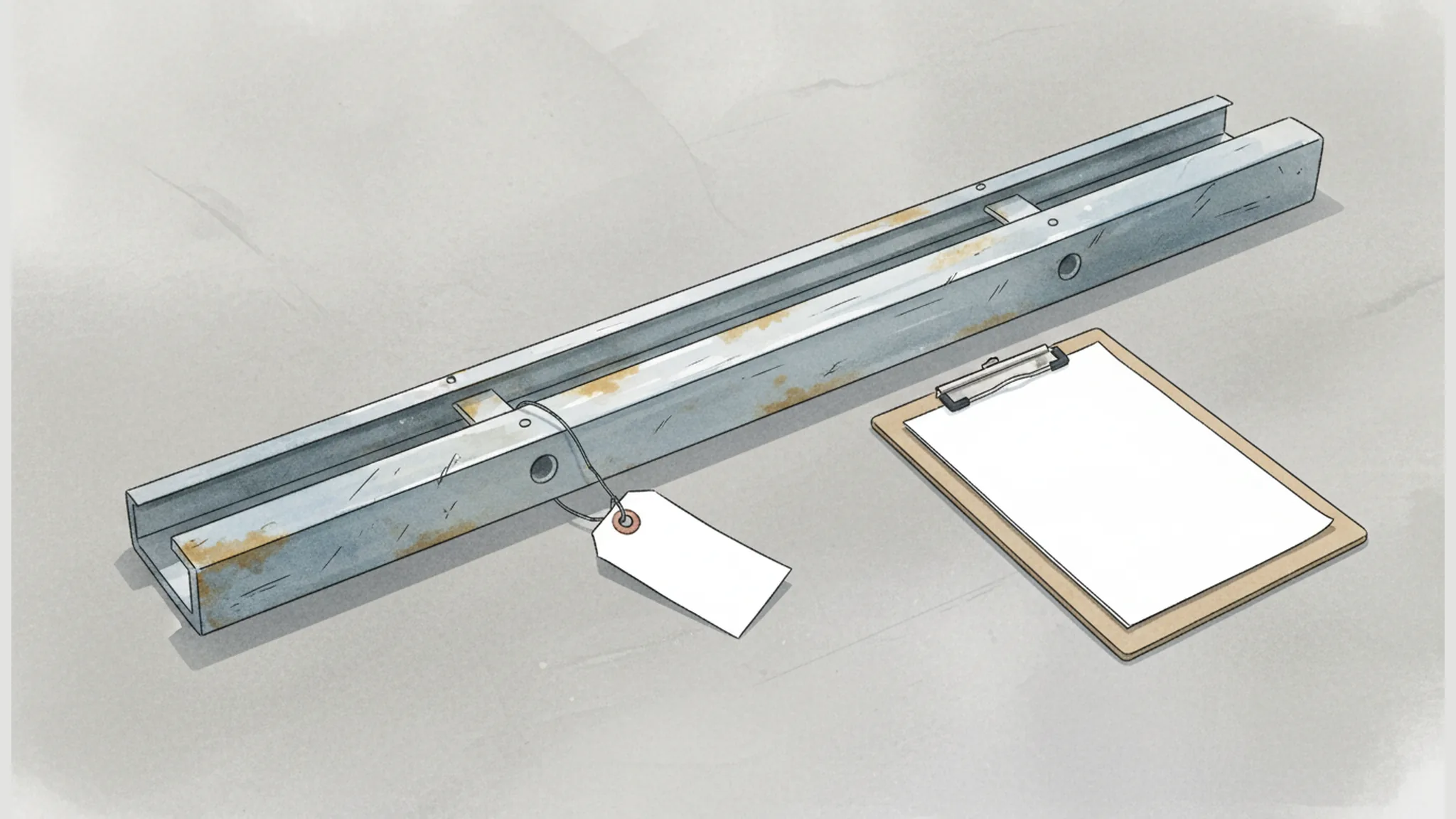
If a defect, repair failure, or maintenance issue may have contributed, the physical forklift should be preserved if possible. Important records may include:
- daily or pre-shift inspection checklists;
- defect reports;
- out-of-service tags or notes;
- maintenance and repair tickets;
- lease, rental, or ownership documents;
- attachment and modification records;
- photos and video of the forklift after the incident;
- manufacturer manuals, warnings, and instructions; and
- communications about prior problems with the truck.
Preservation is especially important because repairs, resale, continued use, or post-incident modifications can make it harder to evaluate what condition the forklift was in at the time of injury.
Product-claim timing needs special care
Oregon product-liability timing rules are not always the same as ordinary negligence timing rules. Product-liability personal-injury and property-damage claims generally have a two-year discovery-related period, but they are also subject to repose limits. Repose analysis can depend on the forklift’s first purchase for use or consumption and, in some cases, the state or country of manufacture or importation.
Because product timing can be fact-specific, a forklift defect theory often warrants prompt review rather than being treated as a simple add-on to workers’ compensation.
Third-party pathway 3: negligent training, evaluation, or supervision
Forklift training issues can be important in Oregon warehouse injury cases. Oregon OSHA’s general industry rules adopt federal powered industrial truck rules and add Oregon-specific powered industrial truck requirements. The federal powered industrial truck standard requires employers to ensure operators are competent to operate safely through required training and evaluation.
Training must include formal instruction, practical training, and workplace performance evaluation. Operators must be trained on subjects that can be directly relevant to warehouse injuries, including restricted visibility from loads, vehicle capacity, stability, pedestrian traffic, narrow aisles, ramps, surface conditions, and other workplace-specific hazardous conditions.
Again, a training violation does not automatically create a successful civil claim. The question is how the training failure connects to the injury and whether the responsible actor is a proper third party under Oregon law.
What forklift training records can show
Forklift training and evaluation records may help answer:
- whether the operator received formal instruction;
- whether practical training occurred on the type of truck and worksite involved;
- whether workplace performance was evaluated;
- who trained and evaluated the operator;
- the dates of training and evaluation;
- whether the operator had been involved in an accident or near-miss before;
- whether refresher training was required after unsafe operation, a near-miss, a different truck assignment, or changed workplace conditions; and
- whether the operator’s performance had been evaluated within the required timeframe.
OSHA rules require certification of operator training and evaluation, including the operator’s name, training date, evaluation date, and identity of the trainer or evaluator. Those records can be important when a third-party operator, contractor, logistics company, staffing arrangement, or worksite controller is involved.
Warehouse-specific hazards that training should address
Forklift training is not just classroom paperwork. It should connect to the actual warehouse environment.
In a serious forklift injury, questions may include whether the operator was trained for:
- pedestrian traffic in the specific warehouse;
- blind corners and restricted visibility;
- narrow aisles and congested loading areas;
- ramps, dock plates, or uneven surfaces;
- load handling and stability;
- speed limits and right-of-way rules;
- operation near racking, staging areas, or walkways; and
- changed workplace conditions after a layout change, new process, or recurring near-miss.
These facts can be especially important when the injured worker was not the forklift operator but was struck, pinned, crushed, or injured as a pedestrian in the work area.
Third-party pathway 4: premises hazards and unsafe warehouse layout
A forklift injury may also involve premises hazards. A warehouse owner, operator, property manager, logistics company, or contractor may be relevant if it controlled the condition or traffic system that made the injury foreseeable.
Oregon premises and negligence analysis is fact-specific. It may turn on who possessed or controlled the area, who created or knew about the hazard, what safety measures were practical, and whether the type of injury was foreseeable.
Examples of warehouse conditions to investigate
Warehouse-layout and premises evidence may include:
- blind intersections;
- missing or poorly placed mirrors;
- missing signs, warnings, or speed controls;
- poor lighting;
- blocked or poorly marked pedestrian walkways;
- unclear forklift traffic lanes;
- unsafe dock plates or dock areas;
- congested loading zones;
- unstable or slippery surfaces;
- racking layout that blocks sightlines;
- inadequate separation between forklifts and pedestrians; and
- recurring complaints or near-misses in the same area.
The key is control. A property owner, warehouse operator, logistics contractor, or other company may be relevant only if the facts connect that entity to the hazardous condition, traffic plan, work process, or safety responsibility at issue.
Oregon Employer Liability Law may matter in some controlled-work settings
Oregon’s Employer Liability Law can impose safety duties on owners, contractors, subcontractors, and others having charge of or responsibility for work involving risk or danger. In some multi-employer or contractor-controlled warehouse settings, that law may need to be evaluated.
Its application should not be assumed. The analysis depends on control, responsibility, and the particular work being performed. In a forklift case, that may require reviewing contracts, supervision practices, site-control documents, and how the relevant work area was managed.
How workers’ comp and a third-party claim fit together
A third-party claim does not mean the workers’ compensation claim disappears. Oregon law provides procedures for situations where a worker has a compensable injury and a possible claim against a third person.
In general terms, workers’ compensation benefits may continue while the third-party claim is being pursued until damages are recovered. But the third-party recovery is subject to Oregon election, lien, distribution, and settlement-approval rules.
That matters because a third-party claim should not be described as simply “extra money” on top of workers’ compensation. The paying agency may have a lien, and statutory distribution rules can affect the net recovery.
Why lien and approval analysis matters before settling a third-party forklift claim
Before a third-party claim is resolved, Oregon workers’ compensation lien and approval issues may need careful review. The paying agency may have a lien against the third-party cause of action under Oregon’s third-party recovery statutes. If the worker elects to bring a third-party action, notice to the paying agency is required, and recovered proceeds are subject to statutory distribution.
Oregon law also provides that a compromise of the worker’s right of action against an employer or third party is void unless made with written approval of the paying agency or, if disputed, by Workers’ Compensation Board order.
For that reason, settlement decisions should account for workers’ compensation coordination. Liens and subrogation can change the net recovery, especially when medical bills, indemnity benefits, and third-party proceeds all intersect.
Deadlines and notice issues can change the plan
Oregon forklift injury deadlines can vary depending on the claim type and the parties involved. A general Oregon personal-injury claim is commonly subject to a two-year statute of limitations, but that is not the only rule that may matter.
Different or additional rules may apply when:
- the claim involves product liability and repose issues;
- the injury caused death;
- a public port, public warehouse, public agency, or public employee may be involved;
- the injured person is a minor or incapacitated;
- tolling issues are present; or
- workers’ compensation reporting and claim procedures are involved.
Public-body claims require special attention because Oregon tort-claim notice rules can require notice for non-wrongful-death claims within 180 days. Product-liability timing can also require early review because the statute of repose may depend on facts about the product’s age and manufacturing or purchase history.
Workers’ compensation reporting still matters
Investigating a third-party claim does not replace the workers’ compensation process. Oregon Workers’ Compensation Division guidance tells injured workers to tell the employer about a work-related injury right away, complete Form 801, and tell the medical provider the injury is work-related.
Oregon rules also require a subject employer to accept notice of a workers’ compensation claim and report a claim to its insurer no later than five days after notice or knowledge of a claim or accident that may result in a compensable injury.
Public-body and severe-injury reporting caveats
If a public body may be involved, such as a public port, public warehouse, government agency, or public employee, the Oregon Tort Claims Act notice deadline can become urgent.
Separately, Oregon OSHA reporting rules may require employers to report work-related fatalities and certain serious injuries, such as inpatient hospitalizations, eye loss, amputations, or qualifying avulsions. OSHA reporting or investigation records may help identify evidence, but an OSHA report does not decide civil liability or workers’ compensation entitlement.
Evidence to preserve after an Oregon warehouse forklift injury
Forklift cases are evidence-sensitive. Video can be overwritten. Equipment can be repaired. Inspection sheets can be misplaced. Witnesses can change jobs. The sooner evidence is identified and preserved, the easier it may be to evaluate whether the case is only a workers’ compensation matter or may involve a third-party claim.
Records and physical evidence
Important records and physical evidence may include:
- surveillance video and photos;
- the forklift or powered industrial truck itself;
- daily or pre-shift inspection logs;
- defect reports and out-of-service records;
- repair and maintenance records;
- lease, rental, ownership, and purchase documents;
- attachment and modification records;
- operator training, certification, and evaluation records;
- incident reports and OSHA reports;
- manufacturer manuals, warnings, and instructions; and
- communications about prior defects, near-misses, or complaints.
People and location evidence
People and location evidence may include:
- the forklift operator’s name and employer;
- witness names and contact information;
- supervisor and safety-manager identities;
- site-control documents;
- traffic-layout maps;
- pedestrian aisle markings;
- dock-area rules and controls;
- lighting, mirror, and signage information;
- speed-limit or right-of-way policies; and
- prior near-miss reports involving the same area, equipment, or operator.
This evidence helps answer the core questions: who caused the incident, who controlled the hazard, whether the forklift was safe, whether training was current and workplace-specific, and whether a dangerous warehouse condition was known or foreseeable.
When to talk with a lawyer about a forklift accident third-party claim
It may be worth talking with an Oregon injury lawyer after a warehouse forklift injury if:
- another company’s worker operated the forklift;
- the injury happened in a shared dock, logistics, vendor, or contractor area;
- the forklift had brake, steering, horn, hydraulic, mast, fork, warning-device, or restraint problems;
- a maintenance vendor, lessor, or rental company may have been involved;
- training, evaluation, or certification records are missing or questionable;
- the accident involved a blind corner, poor lighting, unsafe dock plate, blocked walkway, or traffic-layout problem;
- a public body may be involved; or
- the injury was severe, fatal, or likely to involve significant medical treatment and work loss.
Early review can help identify potential third parties, preserve evidence, coordinate workers’ compensation lien and approval issues, and evaluate deadlines. It cannot guarantee that a third-party claim exists. The answer depends on the facts, the companies involved, and Oregon law.
Johnson Law provides educational information for Oregon injury readers and can review serious personal injury questions. This article is for general educational purposes only and is not legal advice for any specific case.
FAQ
Can I file a forklift accident third-party claim if I am already receiving workers’ compensation?
It may be possible in Oregon if the injury was caused by the negligence or wrong of a third person not in the same employ. Workers’ compensation and a third-party claim can coexist procedurally, but Oregon election, lien, distribution, and settlement-approval rules can affect the case.
What if the forklift driver was my co-worker?
If the driver was a co-worker in the same employ, workers’ compensation may be the primary remedy. A third-party analysis may still look at whether an outside company, defective equipment, a premises controller, or another non-immune actor contributed to the injury.
Can a defective forklift lead to a product-liability claim in Oregon?
It can if the facts support a qualifying defect, failure to warn, or failure to instruct against a manufacturer, distributor, seller, or lessor. Product-liability claims require proof of causation and are subject to Oregon timing and repose rules.
Do OSHA forklift training violations prove my injury case?
Not automatically. Training, inspection, repair, and maintenance rules can be important evidence, but civil liability still depends on the facts, causation, the responsible party, and applicable Oregon law.
What evidence should be preserved after a warehouse forklift injury?
Important evidence may include video, witness information, operator training records, forklift inspection and maintenance logs, defect reports, lease or ownership records, incident reports, photos, OSHA reports, and warehouse traffic or layout documents.
Are there special deadlines for Oregon forklift injury claims?
There may be. General personal-injury, product-liability, wrongful-death, public-body notice, workers’ compensation, tolling, and repose rules can differ. Prompt case-specific review is important, especially when a public body, product defect, fatality, or severe injury is involved.
Sources
- ORS Chapter 656 – Oregon workers’ compensation exclusivity and third-party recovery rules
- Oregon OSHA Division 2, Subdivision N – Material Handling and Storage
- U.S. OSHA 29 CFR 1910.178 – Powered industrial trucks
- ORS Chapter 30 – Oregon product-liability, wrongful-death, and public-body notice statutes
- ORS Chapter 12 – Oregon limitation of actions, including personal-injury timing
- ORS Chapter 31 – Oregon comparative negligence
- ORS Chapter 654 – Oregon Employer Liability Law provisions
- Oregon Workers’ Compensation Division – Reporting an injury and filing a claim
- Oregon OSHA – Recordkeeping and reporting
Client-First Fee Promise
Client First = Bills First, Fees Second
Your unpaid medical bills do not have to make your lawyer's fee bigger. Johnson Law subtracts qualifying medical bills before calculating our fee, helping clients keep more of their settlement.
Applies to qualifying cases. Results vary.