Overserved Patron Attacks Someone: How Oregon Dram Shop Laws Actually Work
Overserved Patron Attacks Someone: How Oregon Dram Shop Laws Actually Work
Educational information only, not legal advice. Oregon dram shop law is complex—verify details with ORS 471.565, related Oregon statutes, Oregon case law, and an attorney if you have a specific situation.
Pick the Right Legal Strategy in Minutes—Avoid Missing Deadlines and Losing Your Claim
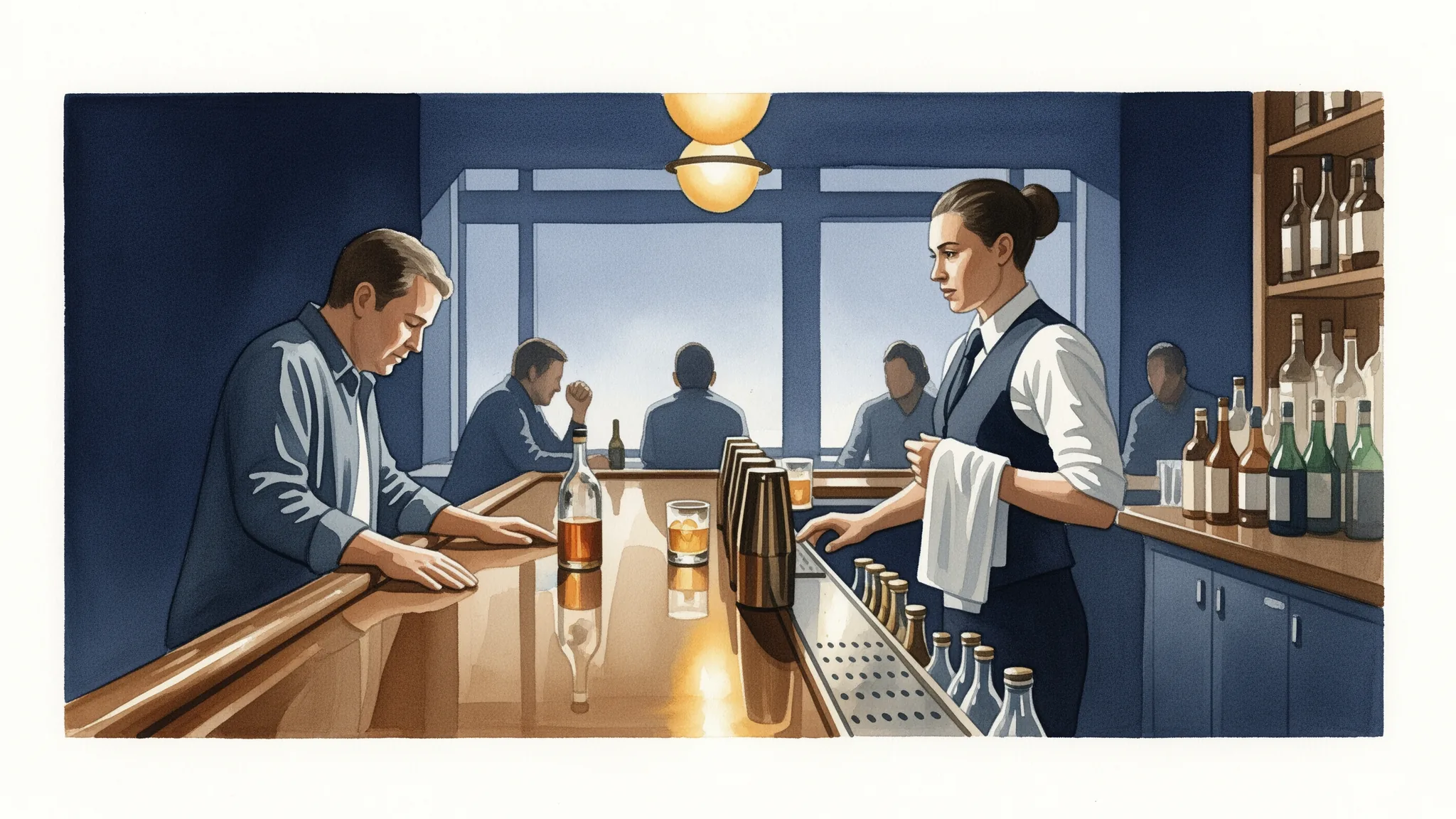
You’re at a favorite Portland bar. The night is going great. Then a fight breaks out. One patron attacks another—or you.
Who’s responsible? The person who threw the punch, absolutely. But what about the bar that kept serving alcohol to someone who was clearly intoxicated?
Oregon’s dram shop statute (ORS 471.565) can expose establishments to liability. But here’s what most people don’t understand: the legal requirements are narrower than you might think, and many claims fail because of evidentiary gaps.
What you’ll get here:
- A plain-English map of Oregon’s dram shop requirements and what must be proven
- The four specific elements that make or break overservice liability cases
- Why “visible intoxication” is harder to prove than most people assume
- How negligent security claims often work alongside dram shop claims
- A practical decision framework to evaluate your situation and next steps
Tip: If you’re in a hurry, jump to Section 10: Evaluation Framework for the evidence checklist and evaluation framework, then deep-dive the section that fits your situation.
Quick Start: 60‑Second Case Evaluator
- Clear visible intoxication + multiple witnesses + security footage → Stronger dram shop case; preserve evidence immediately
- Some visible signs + staff observations + timeline of service → Moderate case; needs detailed investigation
- General suspicion only + no documentation → Weak case; consult attorney to assess alternatives
- Serious injuries from assault → Two-year statute of limitations applies; act quickly
- Bar ignored escalating behavior → Negligent security claim may strengthen your position
1) First Principles: What Dram Shop Law Does
Oregon’s dram shop law creates a specific path for victims to seek compensation when alcohol overservice contributes to injury. It’s not a general “any alcohol = liability” rule; it requires specific conditions to be met. These cases often overlap with broader premises liability and injury-claim questions.
Core purpose: Hold establishments accountable when they continue serving visibly intoxicated persons, and that intoxication leads to injury or death.
What it’s not: A no-fault system, a guarantee of recovery, or a replacement for pursuing the actual assailant’s liability.
Key distinction: Dram shop claims are typically secondary to the perpetrator’s liability. The person who committed the assault remains the primary responsible party. The establishment’s liability exists only if specific overservice conditions are proven.
2) Oregon Legal Framework: ORS 471.565
The Statutory Language
ORS 471.565(2) states:
(2) A person licensed by the Oregon Liquor and Cannabis Commission, person holding a permit issued by the commission or social host is not liable for damages caused by intoxicated patrons or guests unless the plaintiff proves by clear and convincing evidence that:
(a) The licensee, permittee or social host served or provided alcoholic beverages to the patron or guest while the patron or guest was visibly intoxicated; and
(b) The plaintiff did not substantially contribute to the intoxication of the patron or guest by:
(A) Providing or furnishing alcoholic beverages to the patron or guest;
(B) Encouraging the patron or guest to consume or purchase alcoholic beverages or in any other manner; or
(C) Facilitating the consumption of alcoholic beverages by the patron or guest in any manner.
Oregon Revised Statutes 471.565
What the Statute Means in Practice
The key standard is service to a visibly intoxicated person. Unlike the incorrect ORS 471.310 citation, ORS 471.565 expressly uses the term “visibly intoxicated” and places the burden on the plaintiff to prove that element by clear and convincing evidence.
Critical point: It’s not enough that someone was intoxicated. They must have been obviously intoxicated at the time the establishment continued serving them.
The Proximate Causation Requirement
The overservice must be a substantial factor in causing the injury. This creates a chain-of-events requirement:
- Establishment served alcohol
- Person was visibly intoxicated at time of service
- Establishment continued serving despite visible intoxication
- Intoxication led to violent behavior
- Violent behavior caused injury
Break any link in that chain, and the claim weakens significantly.
3) The Four Elements You Must Prove
If you’re pursuing a dram shop claim in Oregon, you need to show all four of these elements. Missing any one typically means the case won’t proceed.
Element 1: The Establishment Served Alcohol
This seems straightforward, but it requires proof. Was the person actually served by this establishment, or did they get alcohol elsewhere?
Evidence needed:
- Bar receipts showing the intoxicated person’s drinks
- Security footage of the person at the bar ordering drinks
- Witness testimony from bartenders or servers
- Credit card records linking the person to the establishment
Common problem: The intoxicated person may have been served at multiple locations before the assault occurred. Pinpointing which establishment overserved becomes critical—and often disputed.
Element 2: The Recipient Was “Visibly Intoxicated”
This is the make-or-break element in Oregon cases. “Visibly intoxicated” means the establishment could see the person was intoxicated at the time of service.
What counts as visible intoxication:
- Slurred speech that staff could hear
- Unsteady gait or difficulty walking
- Aggressive or erratic behavior
- Bloodshot or glassy eyes
- Strong smell of alcohol
- Impaired coordination or balance
Critical point: Oregon courts require the signs of intoxication to be apparent to a reasonable person observing the individual. General suspicion or hunches don’t meet the standard.
Element 3: The Establishment Continued to Serve
The key question: Did the staff continue serving after the person became visibly intoxicated? The first drink might be fine. The fifth drink after someone is already stumbling? That’s where liability begins.
Evidence needed:
- Witness testimony about the person’s condition at the time of each drink
- Security footage showing the person’s demeanor before and after service
- Staff testimony about what they observed
- Timeline reconstruction of when service occurred versus when visible signs appeared
Element 4: The Intoxication Caused the Injury
You must prove causation. The overservice must be a substantial factor in causing the assault or injury.
Common defense arguments:
- The person would have been violent regardless of alcohol consumption
- The assault was an independent criminal act breaking the chain of causation
- Other factors contributed to the violence (personal disputes, pre-existing tensions)
4) Visible Intoxication: The Make-or-Break Standard
Why “Visible” Matters More Than “Actually”
Oregon law focuses on what the establishment could see, not what actually happened. This creates a significant evidentiary hurdle.
The legal standard: Could a reasonable person observing the individual have recognized signs of intoxication at the time of service?
What this means in practice:
- The intoxicated person’s own memory of how much they drank is less important
- What matters is what staff observed when serving them
- Other witnesses’ observations of visible signs become critical evidence
- The timing of when visible signs appeared versus when service occurred is crucial
What Staff Should Have Observed
Bartenders and servers are trained (or should be) to recognize signs of intoxication. Courts expect them to:
- Monitor patron behavior throughout their visit
- Notice changes in speech, gait, and coordination
- Recognize escalating signs of impairment
- Make judgment calls about continuing service
Training records can be evidence: If an establishment claims their staff didn’t notice visible intoxication, but they have no training program on responsible beverage service, that can be used against them.
The Subjectivity Problem
“Visible intoxication” is inherently subjective. Two people observing the same person might reach different conclusions.
How courts handle this: They apply a “reasonable person” standard. Would a reasonable bartender or server have recognized the signs of intoxication?
This creates challenges:
- Defense argues the person didn’t look that intoxicated
- Plaintiff argues the signs were obvious to anyone paying attention
- Juries must decide what a “reasonable person” would have seen
5) Why Many Dram Shop Claims Fail
Here’s the hard truth: Dram shop claims sound straightforward, but they’re notoriously difficult to win in Oregon. Here’s why:
The “Visible” Standard Is High
Oregon courts require actual visibility of intoxication. General suspicion isn’t enough. If a patron says “I thought they looked drunk” but there’s no clear evidence of visible signs at the time of service, the claim likely fails.
Real-world example: A victim testifies that the assailant “seemed drunk” when they arrived at the bar. However, security footage from the entrance shows the person walking steadily, speaking clearly, and showing no obvious signs of impairment. The bartender testifies they didn’t notice anything unusual. Without evidence of visible intoxication at the time of service, the dram shop claim typically gets dismissed.
Witness Testimony Gets Complicated
The people who matter most—the intoxicated person and the victim—are often unreliable witnesses for legal purposes. Their recollection of events may be questioned, especially if they were also drinking.
Challenges:
- The intoxicated person may have memory gaps about how much they drank
- The victim may not have been paying attention to the intoxicated person’s condition
- Bar patrons who witnessed the intoxication may not remember details clearly
- Staff may not have documented observations of intoxication
Memory degradation: Witness recollections fade quickly. Details that seem clear the first day may become fuzzy after a week. This is why evidence preservation must happen immediately.
Security Footage Doesn’t Always Help
While security footage can be crucial, it often doesn’t capture the subtle signs of intoxication that matter. A person can be visibly intoxicated without it being obvious on video.
Limitations:
- Camera angles may not capture facial expressions or speech
- Low-light conditions in bars reduce video quality
- Intoxication signs may evolve gradually rather than being obvious at any single moment
- Footage may not show interactions between staff and the intoxicated person
- Bars may not have cameras covering the bar area where service occurred
Critical timeline: Security footage often gets overwritten after 7-30 days. If you don’t request preservation immediately, it may be gone before you even consult an attorney.
Causation Is Hard to Establish
Even if overservice is proven, connecting it to a specific assault requires showing that the alcohol consumption directly led to violent behavior. Defense attorneys will argue the person would have been violent regardless.
Complications:
- Personal disputes may have existed before alcohol consumption
- The assault may have been planned or premeditated
- Other triggers (words spoken, actions taken) may have precipitated the violence
- The intoxicated person may have a history of violent behavior
Defense strategy: Attack the causation link. Even if the bar overserved, was that really what caused the assault, or would the person have been violent anyway?
Dram Shop Liability Is Secondary
Oregon courts view dram shop liability as secondary to the actual perpetrator’s liability. If the person who committed the assault can’t be found or has no assets, the dram shop claim might not provide meaningful recovery.
Practical considerations:
- The actual assailant remains the primary responsible party
- Dram shop claims often become secondary recovery sources
- Insurance coverage for establishments may be limited
- The establishment may argue the criminal act was an intervening cause
Reality check: A successful dram shop claim is better than nothing, but it’s rarely a complete solution if the assailant can’t be held accountable.
6) Negligent Security: The Overlapping Claim
Often, dram shop claims overlap with negligent security claims. Bars and restaurants have a duty to provide reasonable security, especially when they know or should know that intoxicated patrons may become dangerous. For a focused discussion of staffing, intervention, ejection, prior aggressive patron history, and incident response, see our guide to bar fight injury liability in Oregon.
What Does “Reasonable Security” Mean?
This standard varies based on several factors:
- The establishment’s size and capacity
- Location and crime history in the area
- Types of patrons typically served
- Whether intoxicated patrons are present
- Prior incidents at the establishment
Key question: What security measures would a reasonable establishment provide under similar circumstances?
Security Duties May Include
Physical Security Measures:
- Adequate lighting in parking areas and entrances
- Security personnel when appropriate for the venue
- Barriers between intoxicated patrons and other customers
- Panic buttons or emergency communication systems
Operational Security:
- Monitoring patron behavior and escalating situations
- Intervening when conflicts begin to develop
- Refusing service to visibly intoxicated persons
- Calling law enforcement when necessary
- Ejecting dangerous patrons safely
Documentation:
- Incident reports when conflicts arise
- Staff training records showing security protocols
- Security camera maintenance and coverage records
When Negligent Security Claims Strengthen Dram Shop Cases
These claims often work together:
- The establishment overserved a visibly intoxicated person (dram shop)
- Staff ignored warning signs of potential violence (negligent security)
- No security intervention occurred despite escalating behavior
- The assault could have been prevented with reasonable measures
Example scenario:
- Patron shows clear signs of intoxication after three drinks
- Bartender continues serving instead of cutting off service
- Other patrons complain about aggressive behavior
- Security is present but doesn’t intervene
- Assault occurs minutes later
In this scenario, both dram shop and negligent security claims may be viable, creating multiple paths to recovery.
Prior Incidents Matter
If the establishment has a history of similar incidents, it strengthens negligent security claims. Courts consider whether the establishment knew or should have known about the risk.
Evidence to look for:
- Previous assaults at the establishment
- Previous complaints about intoxicated patrons
- Previous police calls related to bar fights
- Industry knowledge of crime patterns in the area
7) Evidence You Need to Preserve
Immediate Actions (First 24-48 Hours)
Medical:
- Seek medical attention for injuries
- Keep all medical records and bills
- Document all treatments and follow-up care
Evidence:
- Request preservation of security footage immediately
- Document witness contact information while memories are fresh
- Take photos of the scene if possible
- Preserve any physical evidence (torn clothing, damaged items)
Documentation:
- Write down everything you remember while it’s fresh
- Document timeline of events in detail
- Note what the intoxicated person looked like before and after drinking
- Record staff descriptions if you interacted with them
Short-Term Actions (First Week)
Official Records:
- Obtain police incident reports
- Request medical records and billing documentation
- Document lost wages and other economic damages
- Get contact information for all witnesses
Legal:
- Consult with legal counsel about evidence preservation
- Send preservation letters to the establishment if advised
- Document all communications with insurance companies
- Avoid posting about the incident on social media
Evidence Types and How to Obtain Them
Security Footage:
- Contact establishment immediately and request preservation
- Police may be able to obtain it through investigation
- Your attorney can send formal preservation demands
- Act fast—footage is often overwritten within days
Witness Statements:
- Get contact information immediately
- Consider recording their statements while memories are fresh
- Look for patrons who saw the entire sequence
- Staff may be reluctant to talk; attorney involvement helps
Staff Records:
- Incident reports filed by the establishment
- Employee training records
- Security camera maintenance logs
- Alcohol service logs if available
Medical Documentation:
- Emergency room records
- Doctor visits and treatment plans
- Physical therapy records
- Mental health treatment if trauma occurred
8) Timeline: When to Act and Why
Immediate (First 24-48 Hours)
- Seek medical attention for injuries
- Preserve any physical evidence
- Document witness contact information
- Request preservation of security footage (it may be overwritten)
Short-Term (First Week)
- Obtain incident reports from the establishment
- Request medical records and billing documentation
- Document lost wages and other economic damages
- Consult with legal counsel about evidence preservation
Ongoing (Throughout Investigation)
- Continue medical treatment and document all care
- Keep records of all related expenses
- Avoid posting about the incident on social media
- Follow legal advice regarding communications with insurers
Critical Deadlines
Two-Year Statute of Limitations:
- Oregon’s general personal injury deadline applies to dram shop claims
- This is measured from the date of injury
- Missing this deadline permanently bars your claim
- Some exceptions exist but are narrow and fact-specific
180-Day Notice for Public Bodies:
- If the establishment is government-owned (rare for bars), different rules apply
- Notice may need to be filed within 180 days
- Consult attorney immediately if public entity is involved
Evidence Preservation Deadlines:
- Security footage: Often 7-30 days before overwriting
- Witness memories: Degrade rapidly over weeks
- Physical evidence: Can be lost, destroyed, or contaminated
9) Damages and Recovery Realities
Economic Damages
Medical expenses:
- Emergency care
- Hospital stays
- Doctor visits and specialist care
- Medications and medical equipment
- Physical therapy and rehabilitation
- Future medical care if long-term treatment is needed
Lost wages:
- Time off work for recovery
- Lost earning capacity if permanent impairment exists
- Loss of benefits during recovery period
- Future lost wages if injury affects career
Other economic losses:
- Transportation to medical appointments
- Home care expenses
- Property damage from the assault
- Other out-of-pocket costs related to the injury
Noneconomic Damages
Pain and suffering:
- Physical pain from injuries
- Emotional distress from the assault
- Mental anguish and anxiety
- Loss of enjoyment of life
- Disfigurement or scarring
Loss of consortium:
- Impact on relationships with spouse or family
- Loss of companionship or support
- Changes in family dynamics
Recovery Realities
Secondary liability:
- Dram shop recovery is often secondary to the perpetrator’s liability
- Establishments may have limited insurance coverage
- Collection can be challenging even with a successful claim
Comparative fault:
- Oregon follows modified comparative fault rules
- If you’re found 51% or more at fault, you recover nothing
- Your own conduct may be scrutinized
Insurance limitations:
- Establishments may have minimal liability coverage
- Insurance companies will minimize payouts
- Settlement values reflect recovery realities, not just damages
10) Evaluation Framework: Do You Have a Case?
Strong Case Indicators
You may have a viable dram shop or negligent security claim if you can document:
Evidence Quality:
- Clear evidence the person was visibly intoxicated when served
- Multiple witnesses can confirm the visible signs of intoxication
- Security footage shows concerning behavior before and after service
- The establishment ignored obvious red flags
- The assault was a direct result of the intoxication
Warning Signs Present:
- Staff documented concerns about the patron’s condition
- Other patrons complained about the intoxicated person’s behavior
- The establishment had prior incidents involving the same person
- Security personnel observed escalating behavior without intervention
Damages Significant:
- Serious physical injuries requiring medical treatment
- Long-term or permanent impairment
- Substantial medical expenses
- Lost wages from inability to work
- Pain and suffering from the assault
Moderate Case Indicators
Evidence Gaps:
- Some witness testimony about intoxication but no security footage
- Staff may have observed something but didn’t document it
- Timeline of service is unclear
- Causation is plausible but not definitively proven
Next steps:
- Conduct detailed investigation to fill evidence gaps
- Interview all potential witnesses
- Request all available documentation from establishment
- Consult attorney to assess if gaps are fatal or manageable
Weak Case Indicators
Critical Missing Elements:
- No evidence of visible intoxication at time of service
- Only general suspicion that someone was “drunk”
- No witnesses who can testify to visible signs
- Security footage shows no concerning behavior
- Assault appears unrelated to alcohol consumption
Reality check: These cases typically don’t survive motion practice or won’t justify the cost of litigation.
Decision Matrix
| Factor | Strong | Moderate | Weak |
|---|---|---|---|
| Visible intoxication evidence | Multiple witnesses + footage | Some witness testimony | No clear evidence |
| Service timeline | Documented overservice | Unclear timeline | No evidence of service |
| Causation | Direct link established | Plausible but not proven | Weak or no link |
| Damages | Significant injuries | Moderate injuries | Minor injuries |
| Prior incidents | Establishment has history | Unknown | No history |
11) Practical Scenarios and Outcomes
Scenario A: Clear Overservice with Witness Corroboration
Facts:
- Patron ordered 6 drinks over 2 hours
- Multiple witnesses testified patron was slurring speech and stumbling after drink 4
- Bartender continued serving drinks 5 and 6
- Security footage shows unsteady gait
- Patron assaulted another customer 30 minutes later
Analysis: Strong dram shop case. Visible intoxication is well-documented, service continued despite clear signs, and causation is reasonable.
Likely outcome: Settlement negotiation favored plaintiff; establishment faces meaningful liability exposure.
Scenario B: Unclear Intoxication Level
Facts:
- Patron was involved in assault after visiting bar
- Victim claims patron “looked drunk”
- No witness specifically observed visible signs of intoxication
- Security footage is blurry and doesn’t show bar area
- Patron has no prior record of violent behavior
Analysis: Weak dram shop case. “Looked drunk” without specific visible signs is insufficient. Evidence gaps are significant.
Likely outcome: Case may not survive motion to dismiss; settlement value is low.
Scenario C: Negligent Security Focus
Facts:
- Patron was intoxicated but visible signs are unclear
- Establishment had prior assaults on record
- Security was present but didn’t intervene in escalating conflict
- Patron had been arguing with victim for 20 minutes before assault
- Staff failed to call police despite visible conflict
Analysis: Dram shop is weak, but negligent security claim is stronger. Prior incidents and security’s failure to intervene are key factors.
Likely outcome: Negligent security claim may provide recovery even if dram shop claim fails.
Scenario D: Multiple Establishments Involved
Facts:
- Patron visited three bars before assault at third location
- Each bar served multiple drinks
- Intoxication level escalated across locations
- Assault occurred shortly after leaving third bar
Analysis: Complex liability question. Which establishment overserved? All three? The last one? Causation must be traced through the sequence.
Likely outcome: All establishments may be named; apportionment of liability becomes key issue.
12) Frequently Asked Questions
Can I sue a bar if someone assaults me there?
You may have grounds for a dram shop claim if the assailant was visibly intoxicated when the bar continued serving them. You may also have a negligent security claim if the bar failed to provide reasonable security measures. Both claims require specific evidence and legal analysis.
How much time do I have to file a dram shop claim?
Oregon’s general statute of limitations for personal injury claims is two years from the date of the injury. However, evidence preservation must happen much sooner, as security footage may be overwritten within days or weeks.
What if the person who assaulted me can’t be found?
You can still pursue claims against the establishment, though dram shop liability is often viewed as secondary to the perpetrator’s liability. A negligent security claim may also be viable independent of the dram shop claim.
How do I prove someone was “visibly intoxicated”?
This requires witness testimony from staff or patrons who observed the person before and after service, security footage showing the person’s behavior, and documentation of visible signs like slurred speech, unsteady gait, or aggressive behavior.
Does Oregon’s dram shop law apply to private parties hosting parties?
Sometimes. ORS 471.565 expressly refers to a “social host,” so private-party liability is not automatically excluded. But social-host claims are fact-specific and may differ from claims against licensed bars or restaurants.
What if the bar claims they didn’t serve the person?
This becomes a factual dispute requiring evidence. Receipts, credit card records, witness testimony, and security footage can all help establish whether service occurred. The establishment’s records may also be discoverable.
Can I sue if I was also drinking?
Yes, but your own intoxication may affect the case. Oregon’s comparative fault rules could reduce your recovery if you’re found partially at fault. However, being intoxicated doesn’t automatically bar your claim.
What damages can I recover?
Economic damages (medical expenses, lost wages) and noneconomic damages (pain and suffering, emotional distress). The amount depends on injury severity, impact on your life, and the strength of the evidence.
How long do these cases take?
Dram shop cases can take 1-3 years from filing to resolution, depending on complexity, whether settlement negotiations succeed, and whether the case goes to trial. Evidence preservation must happen immediately even though the full case takes time.
Will the bar’s insurance cover this?
Establishments carry liquor liability insurance, but coverage limits vary. Some policies have exclusions or limitations. Your attorney will investigate the specific policy terms and coverage available.
13) When to Seek Legal Advice
Consider consulting with an attorney if you:
- Were injured in an assault at a bar or restaurant
- Suspect alcohol overservice contributed to the incident
- Have significant injuries requiring medical treatment
- Are concerned about missing evidence preservation deadlines
- Need help evaluating whether you have a viable claim
- Receive contact from insurance companies or the establishment
Why Early Consultation Matters
Evidence preservation:
- Security footage may be overwritten within days
- Witness memories fade quickly
- Physical evidence can be lost or destroyed
Strategic planning:
- Attorney can send preservation demands immediately
- Investigation can begin while evidence is fresh
- Legal strategy can be developed before deadlines approach
Avoiding pitfalls:
- Don’t make statements to insurance companies without advice
- Don’t sign releases or accept settlements without review
- Don’t post about the incident on social media
What to Bring to Your Consultation
- Medical records and billing documentation
- Police incident report number or copy
- Witness contact information
- Any photos or videos of the incident
- Receipts or documentation of expenses
- Timeline of events you can recall
Key Takeaways for Oregonians
Remember the distinction: Dram shop liability requires proving visible intoxication at the time of service, not just that someone was intoxicated
Visible matters more than actual: The establishment must have been able to see the signs of intoxication
Evidence is time-sensitive: Security footage gets overwritten, witness memories fade—act quickly
Negligent security may help: Even if dram shop is weak, security claims may provide recovery
Two-year deadline: Oregon’s statute of limitations applies; don’t wait too long to consult counsel
Secondary liability: Dram shop claims are often secondary to the perpetrator’s liability; manage expectations
Sources:
- Oregon Revised Statutes 471.565
- Oregon Liquor and Cannabis Commission
- Oregon State Bar
- Oregon Revised Statutes 12.110
This information is for educational purposes only and should not be considered legal advice. Dram shop law is complex and fact-specific. For specific legal situations, consult with a qualified attorney.
Client-First Fee Promise
Client First = Bills First, Fees Second
Your unpaid medical bills do not have to make your lawyer's fee bigger. Johnson Law subtracts qualifying medical bills before calculating our fee, helping clients keep more of their settlement.
Applies to qualifying cases. Results vary.