Truck T-Bone Accident Settlement in Oregon: How Crash Reconstruction Builds Leverage
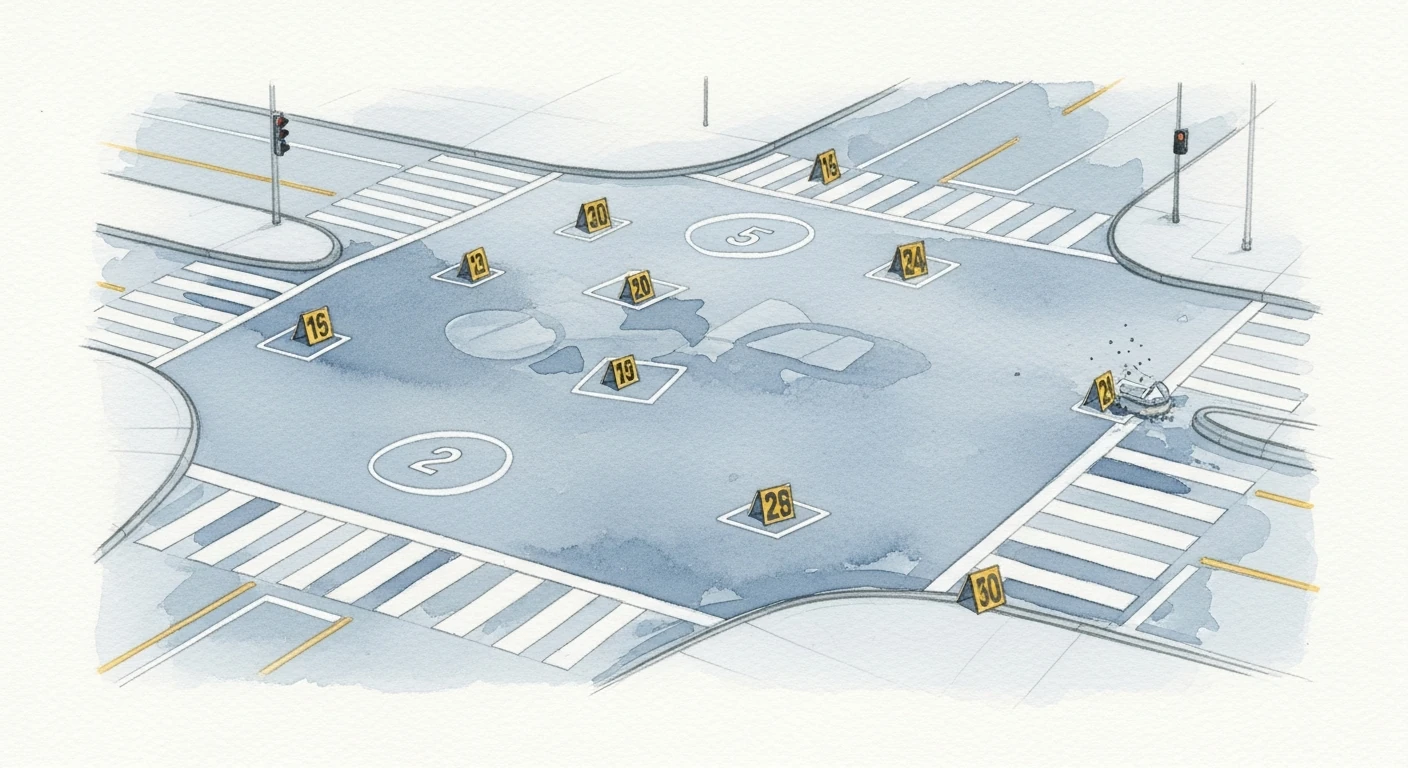
Truck T-Bone Accident Settlement in Oregon: How Crash Reconstruction Builds Leverage
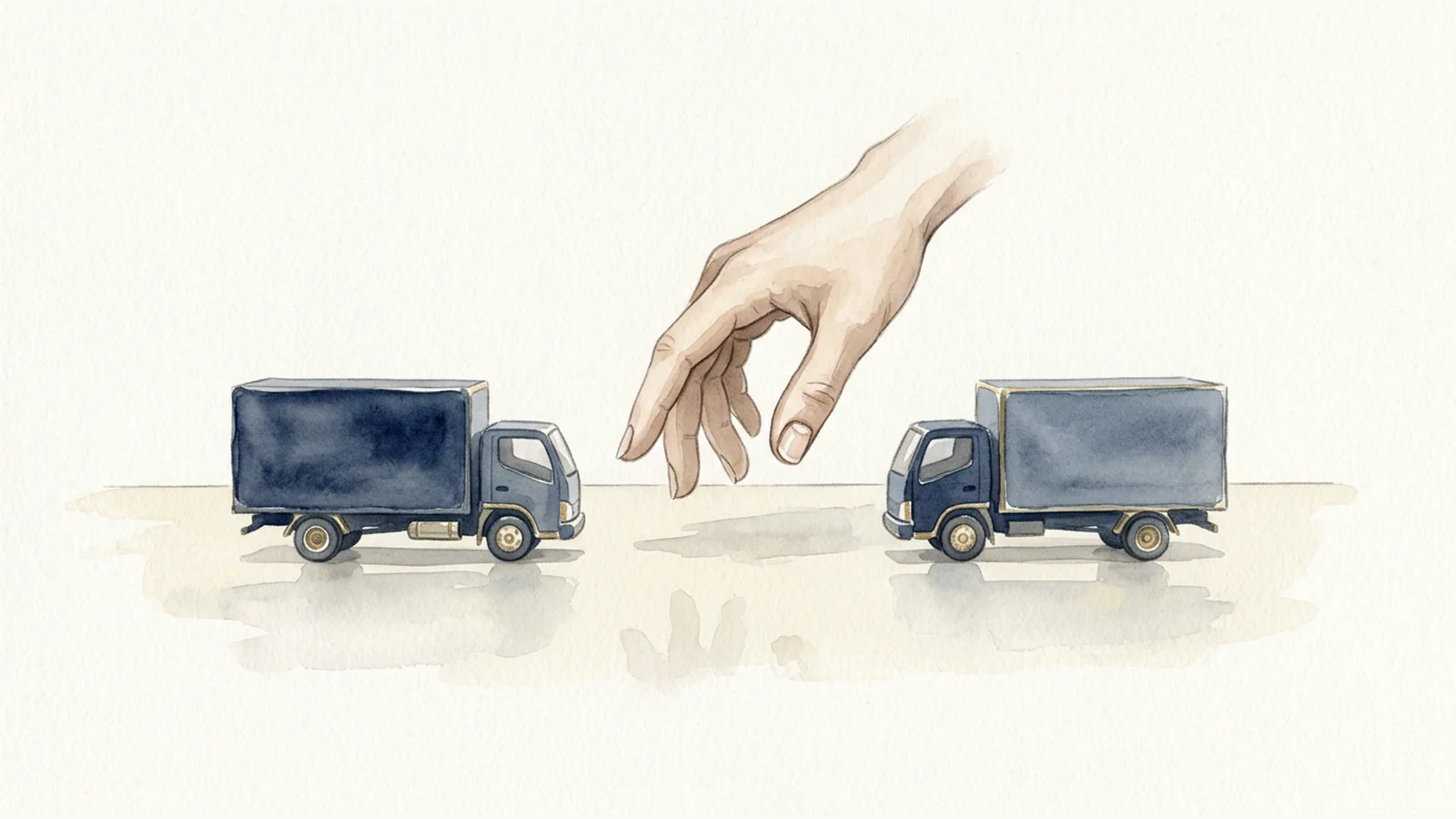
A truck-car side-impact crash can change a life in seconds. One vehicle enters an intersection, another crosses its path, and the impact hits where passenger vehicles are often most vulnerable: the side structure.
When people ask about a truck t-bone accident settlement, they usually want one thing: a realistic way to understand what actually drives claim value. Insurance companies often treat these cases as a blame story first and a damages story second. Crash reconstruction can reverse that order.
In plain terms, reconstruction can shift a truck side-impact settlement by replacing arguments with measurable facts: speed, signal phase timing, line-of-sight, impact angle, braking timeline, and avoidability.
If objective data shows the truck had the last clear chance to avoid the collision, entered late, or approached too fast for conditions, settlement posture often changes quickly.
Quick answer: how reconstruction affects a truck t-bone accident settlement
Crash reconstruction affects a truck t-bone accident settlement by helping prove four core issues:
- Who had right-of-way at impact
- Whether the crash was avoidable
- How severe the side-impact forces were
- Whether comparative-fault allegations are supported or exaggerated
When these points are supported by objective data instead of estimates, insurers often have less room to discount the claim.
Why truck side-impact claims are negotiated differently
A side-impact involving a commercial truck is not just a bigger version of a two-car T-bone crash. Several features increase complexity and settlement volatility:
- Higher mass and momentum from commercial vehicles
- Intersection timing disputes (yellow/red phase, late entry, turn phase conflicts)
- Visibility and perception issues tied to truck cab position and blind zones
- Multi-layer records (driver logs, telematics, event data, dispatch activity)
- Comparative-fault strategy often used aggressively by insurers
Because these cases are technical, a reconstruction-backed claim can move from “he said/she said” to “timeline and physics.” That shift often changes leverage more than any single witness statement.
What crash reconstruction actually does in a trucking T-bone case
Reconstruction is the process of analyzing collision evidence to estimate pre-impact movement, timing, and impact dynamics.
Typical inputs include:
- Scene measurements and roadway geometry
- Vehicle damage profiles and crush patterns
- Event data (when available)
- Telematics/ELD timing logs
- Signal timing plans and intersection phasing data
- Video sources (dashcam, traffic, private surveillance)
- Environmental factors (light, weather, road surface)
That analysis helps answer practical settlement questions: Did the truck run the red? Was speed too high for stopping distance? Could the collision have been avoided with earlier braking or lane choice?
Settlement leverage map: which reconstruction findings move value most
| Reconstruction finding | Why insurers care | Typical leverage effect |
|---|---|---|
| Truck entered on late yellow/red | Supports right-of-way and duty breach | Reduces fault-split arguments |
| Truck speed higher than traffic context | Increases avoidability exposure | Raises settlement pressure |
| Delayed or absent braking before impact | Suggests inattention, fatigue, or poor reaction | Strengthens liability position |
| Car had limited sightline or escape path | Counters “you could have avoided it” claim | Protects damages value |
| Impact severity metrics align with injury mechanism | Connects force profile to medical causation | Improves valuation credibility |
The evidence hierarchy in truck side-impact negotiations
Not all evidence has equal settlement impact. In many trucking T-bone cases, insurers weigh evidence in roughly this order:
Tier 1: High-impact objective evidence
- Event data / telematics speed-brake timeline
- Video that captures approach and impact sequence
- Signal phasing and intersection timing records
- Scene mapping that confirms vehicle paths
Tier 2: Strong supporting evidence
- Police diagrams and supplements
- Neutral witness timeline consistency
- Damage alignment consistent with claimed movement
Tier 3: Context evidence
- Driver narratives
- Secondary witness impressions
- Post-event assumptions about speed or timing
The more a claim is anchored in Tier 1 materials, the less leverage insurers generally have to downplay liability.
Why side-impact biomechanics matter in a truck t-bone accident settlement
Side impacts are often associated with significant occupant loading because intrusion and lateral acceleration can be severe, especially when struck by a heavy vehicle.
In settlement terms, reconstruction can help connect:
- Impact angle and strike location → likely injury vectors
- Closing speed and delta-V indicators → force intensity
- Compartment intrusion patterns → injury plausibility and severity
This helps prevent a common insurer tactic: minimizing injury by ignoring force-direction realities in side-impact collisions.
Oregon comparative fault and settlement leverage
Oregon comparative-fault rules can reduce recovery depending on assigned percentages, so liability framing has direct dollar impact.
In a truck T-bone claim, insurers may argue:
- “You should have seen the truck sooner.”
- “You entered too late.”
- “You could have braked or swerved.”
Reconstruction can test those claims using timing windows, line-of-sight limits, and stopping-distance math. If those calculations show low avoidability for the smaller vehicle, comparative-fault pressure often drops.
The first 48 hours: what preserves reconstruction value
If you are involved in a truck side-impact crash, early documentation can materially change the later settlement position.
- Get immediate medical evaluation and follow-up documentation.
- Document vehicle positions and damage before movement/repair if safely possible.
- Capture truck identifiers (USDOT number, unit/trailer numbers, plate).
- Preserve video leads quickly (nearby businesses and traffic systems may overwrite fast).
- Obtain reporting records required under Oregon rules.
Useful Oregon references:
- Oregon DMV – Accident and Insurance Report
- Oregon State Police – Public Records Requests
- ODOT TripCheck
Trucking records that frequently change settlement posture
In many side-impact trucking claims, the turning point is not the police narrative. It is operational data that clarifies what happened seconds before impact.
High-value record categories include:
- Driver hours-of-service and log compliance context
- ELD/telematics timeline near impact
- Vehicle inspection and maintenance records
- Carrier safety history context and compliance framework
Regulatory and safety references:
- FMCSA – Regulations
- 49 CFR Part 392 – Driving of Commercial Motor Vehicles
- 49 CFR Part 395 – Hours of Service
- 49 CFR Part 396 – Inspection, Repair, and Maintenance
Common insurer defenses in trucking T-bone cases (and how reconstruction addresses them)
Defense 1: “The car unexpectedly entered the intersection.”
Reconstruction response: signal phase timing + approach speed + distance-to-stop analysis.
Defense 2: “Injuries are inconsistent with a moderate side impact.”
Reconstruction response: impact geometry, intrusion evidence, and force-direction analysis.
Defense 3: “The truck driver had no realistic time to react.”
Reconstruction response: pre-impact perception-response window and braking timeline.
Defense 4: “Comparative fault is substantial.”
Reconstruction response: avoidability and line-of-sight calculations tied to objective scene data.
Practical valuation logic: what usually drives settlement ranges
For many Oregon truck side-impact claims, settlement leverage is shaped by the combination of:
- Liability clarity (strong reconstruction tends to increase clarity)
- Injury severity and duration (medical evidence quality matters)
- Comparative-fault exposure (percentage disputes can materially shift value)
- Documentation consistency (scene-to-medical-to-timeline coherence)
- Insurance layer realities (commercial policies and responsible entities)
No two cases are identical. But when liability and causation are backed by objective reconstruction evidence, negotiations are often less speculative and more evidence-driven.
Soft but practical: when speaking with a personal injury lawyer can help
Not every motor vehicle accident requires litigation. But a truck side-impact claim can involve technical records, fast-overwriting data, and early fault framing that affects settlement value for the life of the case.
In that setting, speaking with a personal injury lawyer early can help preserve records, coordinate reconstruction review, and evaluate a settlement offer against evidence rather than pressure.
When to push, pause, or reject a truck t-bone settlement offer
Many people receive an early offer before the claim is fully documented. In a T-bone truck crash claim, timing can strongly affect value.
Push for stronger terms when:
- Reconstruction evidence already clarifies right-of-way and avoidability
- Liability disputes are narrowing, but the offer still assumes heavy comparative fault
- Medical records show continuing treatment and functional limits that are not reflected in valuation
Pause and gather more evidence when:
- Treatment is ongoing and long-term prognosis is unclear
- Key records (video, telematics, signal timing, maintenance) are still being collected
- Insurer arguments rely on assumptions rather than objective timeline data
Consider rejecting and escalating when:
- The offer ignores documented side-impact force severity or intrusion evidence
- Fault allocation appears inflated against you without reconstruction support
- The insurer refuses to account for wage loss, future care, or sustained impairment supported by records
For practical next steps, these Oregon pages may help:
- Truck accident practice area overview
- Post-accident checklist
- Commercial truck rear-end evidence guide
- Truck maintenance failure liability guide
- Independent contractor truck driver responsibility in Oregon
- Falling cargo truck crash liability and evidence
- Contact Johnson Law, P.C.
Bottom line
- A truck t-bone accident settlement is often won or lost on liability clarity.
- Crash reconstruction can convert disputed narratives into measurable timelines.
- In Oregon, comparative-fault percentages directly affect value, so avoidability analysis matters.
- Early evidence preservation usually creates the strongest settlement leverage later.
Frequently asked questions
What is a truck t-bone accident settlement?
A truck t-bone accident settlement is financial resolution of an injury claim arising from a side-impact collision involving a commercial truck and a passenger vehicle. Value typically depends on liability clarity, injury evidence, and comparative-fault analysis.
Why does crash reconstruction matter in side-impact truck claims?
It helps establish objective timing, speed, right-of-way sequence, and avoidability. That can reduce uncertainty and improve negotiation leverage.
Can reconstruction lower comparative fault in Oregon?
It can. If calculations show limited visibility, short reaction windows, or truck-side avoidability, comparative-fault allegations against the injured driver may weaken.
What evidence is most important in a trucking T-bone case?
Video, telematics/ELD timing, event data when available, signal timing plans, scene measurements, and consistent medical documentation are often high-value evidence categories.
Do police reports alone determine settlement value?
Usually no. Police reports are important, but insurers often rely heavily on objective timeline and technical evidence when liability is contested.
How quickly should evidence be preserved?
As soon as possible. Some video and operational records may be overwritten in normal business cycles.
Are truck drivers always at fault in side-impact collisions?
No. Fault is fact-specific. Reconstruction is useful because it tests each party’s movement, timing, and avoidability using objective methods.
Does speed always decide a truck T-bone settlement?
Not by itself. Speed, signal timing, braking timeline, line-of-sight, and injury causation all interact in valuation.
How long does a truck t-bone settlement usually take in Oregon?
It varies by injury severity, treatment timeline, liability disputes, and evidence quality. Claims with clear reconstruction and complete medical documentation often negotiate more efficiently than claims with unresolved fault or ongoing care questions.
Can I still settle if I was partly at fault in a truck side-impact crash?
Potentially yes. Oregon comparative-fault rules may still allow recovery depending on fault allocation. Reconstruction can be important when insurers overstate your share of fault.
What is the difference between a truck t-bone claim and a regular car t-bone claim?
Truck cases often involve larger impacts, more severe injuries, federal safety records, and potentially multiple responsible entities. That usually makes investigation and valuation more technical than a standard two-car intersection crash.
Is this article legal advice for my specific crash?
No. This is general educational information. Case outcomes depend on specific facts, records, and applicable law.
Sources
- Federal Motor Carrier Safety Administration (FMCSA)
- FMCSA – Regulations
- National Highway Traffic Safety Administration (NHTSA)
- NHTSA – Traffic Safety Facts
- Insurance Institute for Highway Safety (IIHS) – Side Test
- 49 CFR Part 392
- 49 CFR Part 395
- 49 CFR Part 396
- Oregon DMV – Accident and Insurance Report
- Oregon State Police – Public Records Requests
- ODOT TripCheck
- Oregon Legislature – ORS 31.600
This page provides general educational information and is not legal advice.
Client-First Fee Promise
Client First = Bills First, Fees Second
Your unpaid medical bills do not have to make your lawyer's fee bigger. Johnson Law subtracts qualifying medical bills before calculating our fee, helping clients keep more of their settlement.
Applies to qualifying cases. Results vary.