FedEx/UPS Truck Collision: What Makes These Claims Different From Regular Car Wrecks
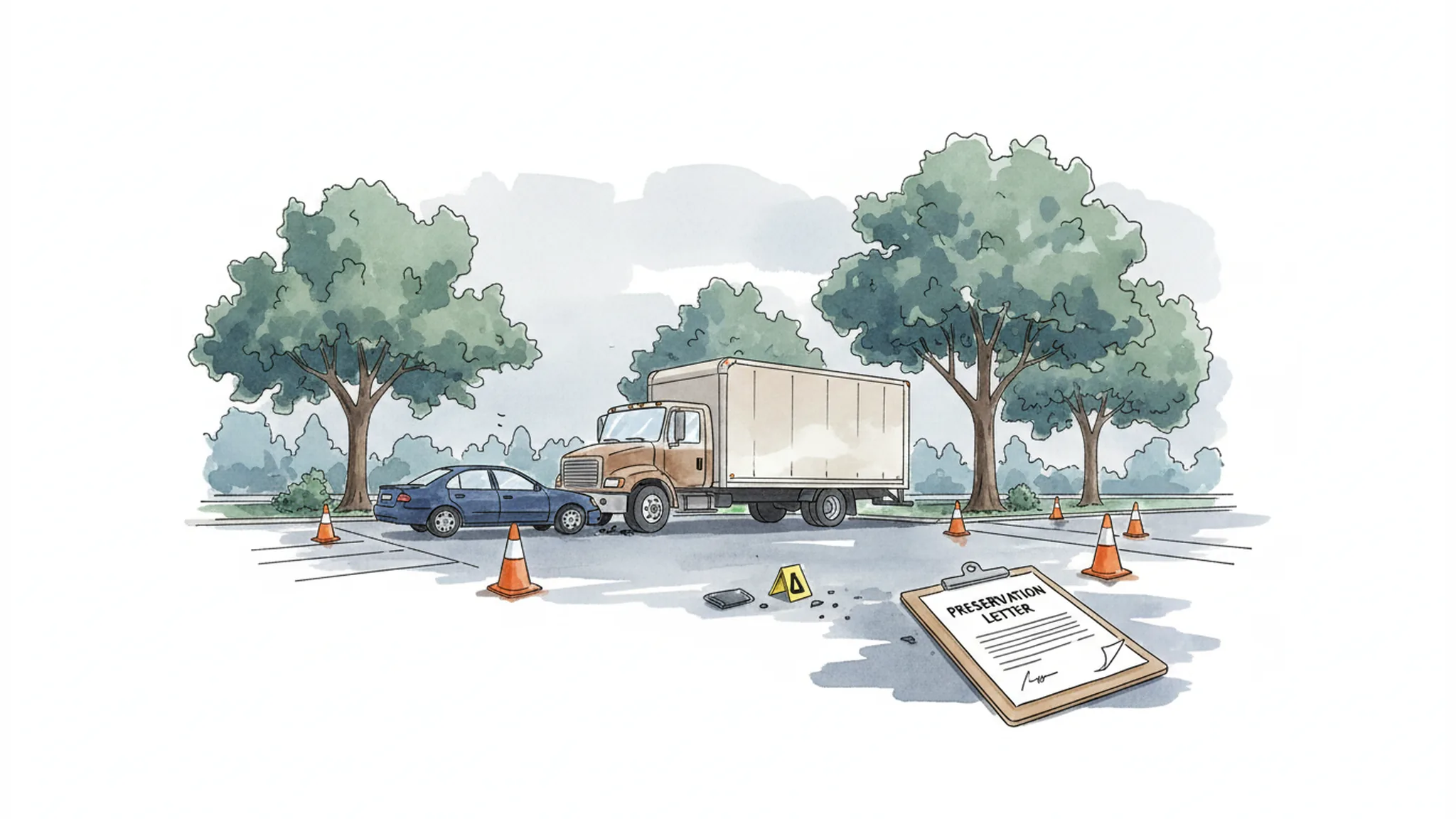
FedEx/UPS Truck Collision: What Makes These Claims Different From Regular Car Wrecks
Educational information only, not legal advice. Oregon delivery-truck claims depend on the facts, vehicle type, driver status, carrier structure, insurance policies, and evidence preserved after the collision.
Quick answer: commercial delivery claims are evidence and coverage cases
A FedEx, UPS, or similar delivery-truck collision may start like a normal crash: someone failed to yield, rear-ended a car, backed into a pedestrian, or sideswiped a cyclist.
But the claim often becomes different very quickly because delivery vehicles are part of a business operation.
Important differences can include:
- commercial auto insurance rather than only personal auto coverage;
- driver qualification, training, and supervision records;
- route, scanner, GPS, telematics, and delivery-timing data;
- vehicle inspection and maintenance records;
- corporate or third-party claims administrators;
- possible contractor, franchise, or related-company disputes; and
- faster evidence-loss risks.
That is why these claims often need to be evaluated as commercial-vehicle cases from the beginning.
For another delivery-vehicle coverage issue, see our post on Amazon delivery van crash responsibility.
Difference #1: the vehicle may be commercial even if it is not a semi-truck
Many people think “truck accident” means only tractor-trailers. Delivery collisions can involve step vans, box trucks, parcel vans, rented vehicles, sprinter-style vans, and other commercial vehicles.
The size and use of the vehicle matter because they affect:
- stopping distance;
- blind spots;
- backing visibility;
- loading and cargo stability;
- driver training expectations;
- route pressure; and
- what maintenance and inspection records should exist.
A package truck does not need to be an 80,000-pound tractor-trailer to cause serious harm. A neighborhood delivery truck can still severely injure a pedestrian, cyclist, motorcyclist, or occupant of a smaller car.
Difference #2: the company structure may not be obvious at the scene
The name people recognize may not be the only legally relevant entity.
Depending on the facts, a delivery crash may involve:
- the individual driver;
- a direct employer;
- a contractor or service provider;
- a vehicle owner or leasing company;
- a maintenance vendor;
- a loading or warehouse entity; and
- an excess insurer or third-party claims administrator.
That structure affects who must receive notice, which records exist, and which insurance policies may apply.
It may be risky to assume the case is limited to the first insurance card handed over at the scene. Commercial delivery cases often require identifying the full operating chain.
Difference #3: route and delivery data can help show what happened
Delivery drivers often use scanners, route software, navigation, dispatch systems, and handheld devices. Those records can matter when fault is disputed.
Useful data may show:
- where the truck was before and after the crash;
- whether the driver was behind schedule;
- whether the driver had just scanned or delivered a package;
- whether a route required unsafe parking, backing, or tight turns;
- whether the driver was interacting with a device near the collision time;
- how fast the vehicle was moving; and
- whether the driver stopped, braked, or swerved.
This information can be especially important when a defense says the injured person “came out of nowhere” or the crash “could not be avoided.”
Difference #4: evidence preservation needs to happen quickly
Commercial delivery records can be scattered across different systems. Some may be overwritten, deleted, or difficult to access later.
Evidence to preserve can include:
- vehicle photos, unit numbers, license plates, and company markings;
- driver logs, route records, scanner data, GPS, and telematics;
- dash camera or inward-facing camera footage, if any;
- delivery manifests and dispatch communications;
- driver qualification and training records;
- vehicle inspection and maintenance files;
- prior complaints, incidents, or route safety reports;
- insurance policies, endorsements, and excess coverage documents;
- nearby business, home, traffic, or fleet camera footage; and
- repair, towing, and post-crash inspection records.
For a general preservation framework, see our guide to preserving evidence after an accident.
Difference #5: maintenance and inspection may matter more
Delivery trucks stop, start, park, reverse, and turn repeatedly throughout the day. That work pattern can make maintenance and inspection records important.
Potential issues include:
- brake problems;
- tire wear;
- broken mirrors or cameras;
- defective backup alarms;
- lighting problems;
- cargo doors or liftgate hazards;
- steering or suspension defects; and
- ignored driver inspection reports.
Federal Motor Carrier Safety Regulations can apply depending on the vehicle and operation. Even when a specific federal rule does not decide the case, maintenance records still help show whether the delivery operation acted reasonably.
For a related equipment-focused discussion, see our post on truck maintenance failures and crash liability.
Difference #6: commercial insurers may defend differently
Commercial delivery claims often involve experienced adjusters, third-party administrators, defense counsel, or rapid-response investigators.
Defense themes may include:
- the injured person was in a blind spot;
- the delivery truck was stopped or moving slowly;
- the driver was an independent contractor;
- the collision was caused by another driver;
- there is no proof of route pressure or distraction;
- the injuries are unrelated or overstated; and
- only one limited policy applies.
Some defenses are legitimate. Others are incomplete until company records, insurance documents, and objective crash evidence are reviewed.
Oregon insurance and fault issues still apply
Delivery-truck cases still use ordinary Oregon fault and damages principles.
Under ORS 31.600, comparative fault can reduce or bar recovery depending on fault percentages. That makes evidence quality important when a company argues that the injured person, another driver, or a non-party caused the crash.
Oregon auto insurance issues may also involve personal injury protection, UM/UIM coverage, and coordination between policies. See our Oregon auto insurance guide for a broader overview.
What to do after a FedEx, UPS, or similar delivery-truck collision
If you can do so safely:
- Call 911 and get medical help.
- Photograph the truck from multiple angles, including markings and unit numbers.
- Get the driver’s name, employer, insurance information, and police report number.
- Identify witnesses and cameras before they disappear.
- Preserve your vehicle, bike, helmet, clothing, dash camera footage, and phone photos.
- Avoid assuming the first adjuster represents every responsible party.
- Be careful with recorded statements before the commercial-vehicle facts are known.
Oregon’s DMV crash reporting rules may also apply after injury or sufficient property damage. The Oregon DMV explains reporting requirements on its Accident Reporting and Responsibilities page.
Bottom line
A FedEx, UPS, or similar delivery-truck collision is not automatically more valuable than a regular car wreck. But it is often more complex.
The most important early questions are:
- Who actually employed, supervised, or controlled the driver?
- What route, scanner, GPS, and telematics records exist?
- What commercial insurance and excess coverage apply?
- Did maintenance, training, or delivery pressure contribute?
- What evidence needs to be preserved before it disappears?
If the injuries are serious, those questions may need to be answered before the claim is treated like an ordinary fender-bender.
Sources
Client-First Fee Promise
Client First = Bills First, Fees Second
Your unpaid medical bills do not have to make your lawyer's fee bigger. Johnson Law subtracts qualifying medical bills before calculating our fee, helping clients keep more of their settlement.
Applies to qualifying cases. Results vary.