ELD Logbook Violations in Oregon Truck Accidents: Can You Sue the Company?

ELD Logbook Violations in Oregon Truck Accidents: Can You Sue the Company?
Most people hear one story after a truck crash: driver error. Sometimes that is true. But in major Oregon trucking cases, that is often only the surface.
The deeper question is whether the company’s scheduling, dispatch instructions, compensation model, and safety oversight made unsafe driving predictable. When a carrier pushes a driver past legal limits—or looks away while logs are manipulated—liability can expand far beyond the person in the cab.
If you want a visual companion, see the interactive breakdown:
Executive summary
- ELD/HOS violations are frequently systems problems, not isolated mistakes.
- “Pushing” a driver is often economic (load timing, bonus pressure, detention losses), not just explicit threats.
- In Oregon, many claims combine federal safety-rule evidence with state tort law (fault, deadlines, damages).
- The most important practical step is fast evidence preservation before key records disappear.
Why Oregon context matters more than most states
Oregon is not a flat, low-friction freight environment. Large carriers run through:
- urban congestion and stop-and-go risk on I-5,
- steep mountain/weather corridors (including Siskiyou conditions),
- and dangerous grades like I-84’s Cabbage Hill area.
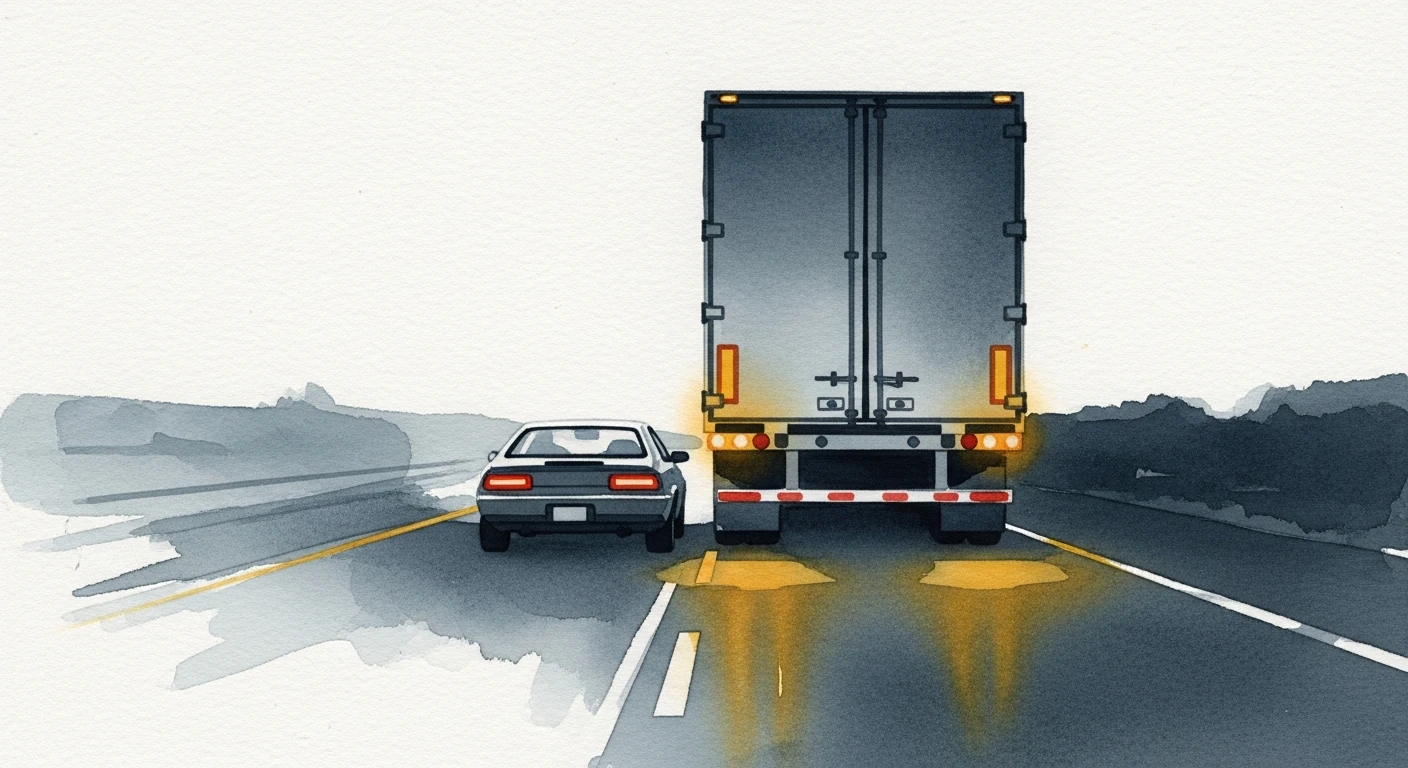
Fatigue that might produce a near-miss on an easy route can become catastrophic in Oregon terrain. That helps explain why “just driver error” can be an incomplete legal explanation.
Fatigue is biology, and law reflects that
Fatigue slows reaction time, narrows attention, and impairs judgment. Federal HOS rules exist because human alertness is finite.
For property-carrying operations, investigations commonly center on:
- 11-hour driving limit,
- 14-hour duty window,
- weekly duty limits (60/70-hour framework),
- break and restart structure.
When dispatch plans only work by bending those limits, violations start looking like predictable outcomes of company policy.
What counts as an ELD/logbook violation after a crash?
ELDs made old paper “comic book” logs harder to fake—but manipulation did not disappear. It evolved.
Common patterns investigators look for:
- HOS overages disguised through edits
- Duty status changed after the fact (e.g., on-duty time reclassified off-duty).
- Unassigned driving time accumulation
- Truck movement without valid driver assignment.
- Ghost/secondary account behavior
- Driving time shifted to another account.
- Personal conveyance abuse
- “Off-duty” miles that are actually advancing a load.
- Power/data gaps with mileage inconsistency
- Diagnostic events that don’t reconcile with distance traveled.
No single artifact wins a case. The strongest analysis is cross-source:
- ELD exports + edit history
- dispatch/telematics messages
- GPS and speed traces
- fuel, toll, scale, and shipping docs
- ECM and other speed evidence used in a jackknife reconstruction when available
The economics of “pushing” drivers
The pressure is often structural, not theatrical.
1) Pay-per-mile and production incentives
If earnings depend on wheels turning, safety tasks and delay time can feel financially punitive.
2) Detention time losses
A driver can lose hours at docks while the 14-hour window keeps burning.
3) Appointment windows that ignore reality
Timeline math can make legal compliance impossible unless speed/rest rules are violated.
4) “Safety policy on paper, production policy in practice”
Many cases turn on this gap.
Coercion and dispatch pressure: how it appears in evidence
Coercion is not limited to explicit threats. A common pattern looks like:
- Request: “Deliver this by X.”
- Driver objection: “Cannot do legally on remaining clock.”
- Pressure/adverse signal: “Make it work,” reduced loads, discipline threat, or equivalent.
Red flags in communications may include:
- messages challenging required breaks,
- timing changes that create impossible legal windows,
- repeated urgency language after drivers raise HOS concerns,
- ignored safety/maintenance concerns in favor of schedule completion.
Oregon + federal framework (plain language)
Oregon truck injury claims are usually a hybrid model:
- Federal safety evidence (HOS/ELD/coercion concepts) helps prove breach and foreseeability.
- Oregon civil law controls fault allocation, deadlines, and damages.
So the legal burden is not “federal or state”—it is usually both in different roles.
Liability theories beyond the driver
Depending on facts, plaintiffs may pursue:
- Vicarious liability (driver in scope of work)
- Negligent dispatch/scheduling
- Negligent hiring/retention/entrustment
- Negligent supervision/compliance enforcement failure
This matters because severe injury cases often require proving corporate-level responsibility, not only cab-level fault.
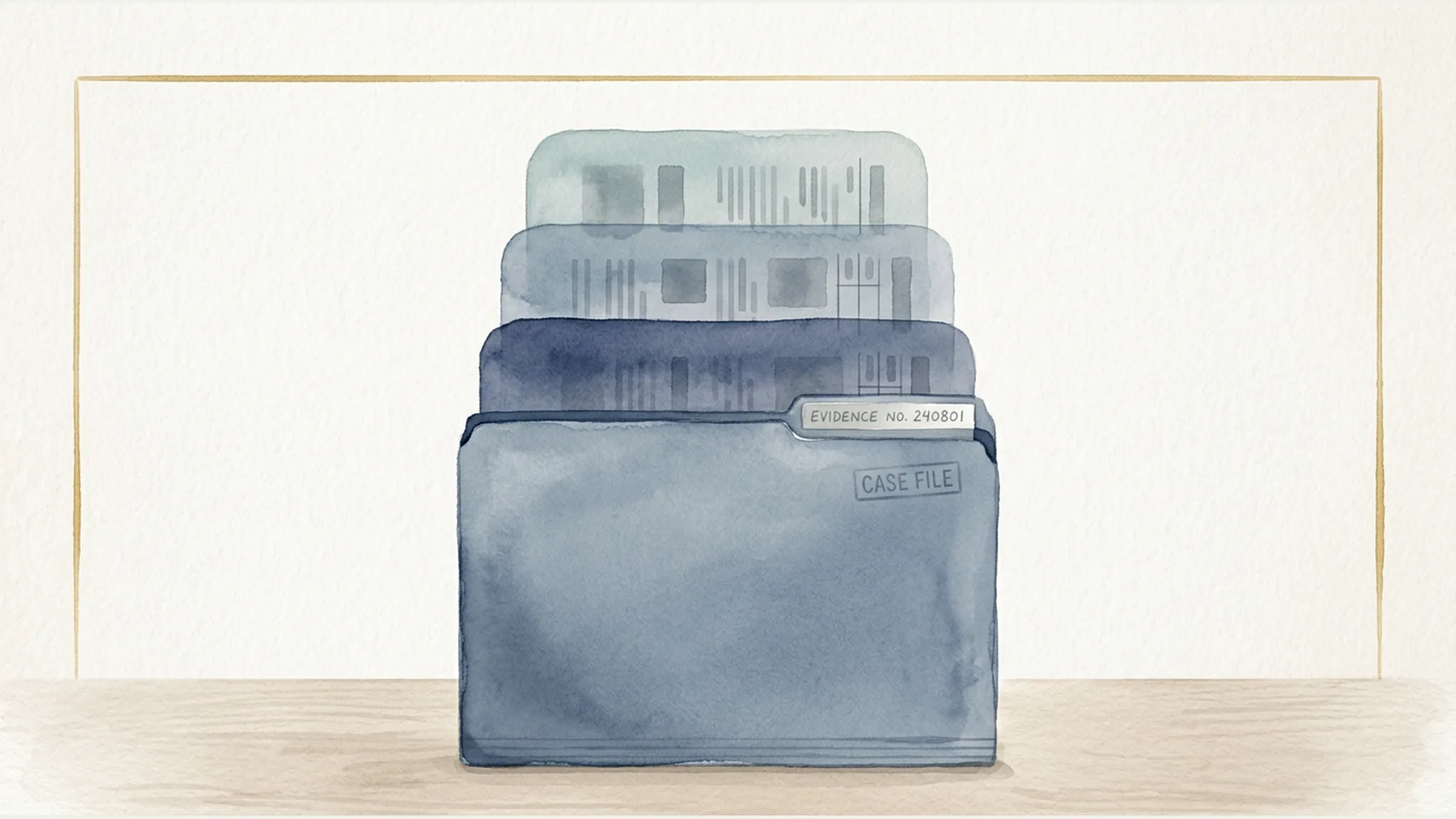
Discovery focus: what should be preserved early
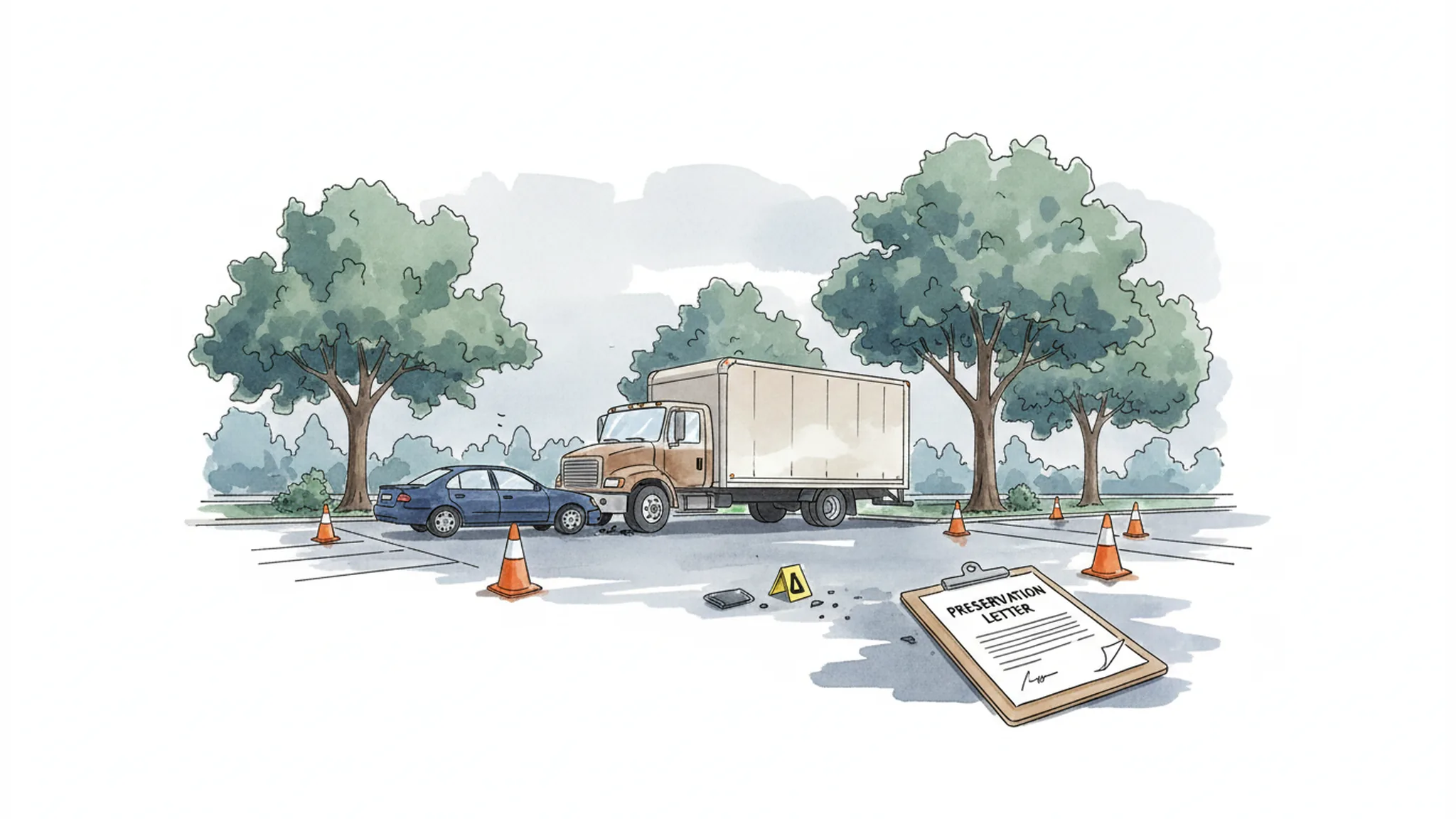
Time is leverage in trucking litigation. Key records can be overwritten or purged on routine cycles.
Early preservation requests often target:
- complete ELD datasets (including edits/unassigned segments),
- dispatch and app-based communication logs,
- telematics and location history,
- supporting documents (fuel/toll/scale/BOLs),
- qualification/training/discipline records,
- maintenance and crash-module data,
- relevant video if available.
Oregon-specific issues worth watching
- Comparative fault strategy: defense often pushes victim fault percentages.
- Safety corridor context: route risk context can matter in reasonableness arguments.
- Operational records beyond logs: Oregon-specific carrier reporting/tax pathways can become corroborating evidence in some cases.
Common defense themes—and practical counters
“The driver went rogue.”
Counter: pattern evidence of dispatch pressure, tolerated edits, and repeated compliance failures.
“ELD says compliant, so fatigue is irrelevant.”
Counter: ELD shows duty status/movement—not sleep quality, true rest opportunity, or manipulation context.
“Independent contractor means we’re not liable.”
Counter: direct-negligence theories can still target company conduct and supervision.
“You were mostly at fault.”
Counter: reconstruction + telematics + timing math often clarifies avoidability and reaction-window impairment.
What to do after a suspected fatigue-related truck crash
- Get medical care and document symptoms over time.
- Preserve your own evidence (photos, witnesses, receipts, notes).
- Capture carrier identifiers (USDOT, truck/trailer/company details).
- Complete Oregon reporting obligations where required.
- Seek early legal guidance when HOS/log pressure may be involved.
For practical next steps, use our Post-Accident Checklist and our guide to preserving evidence after a crash.
FAQ
Can you sue the trucking company if the driver violated HOS rules?
Often yes. Depending on facts, claims can include both vicarious liability and direct negligence theories tied to company conduct.
Is an ELD record always reliable proof the driver was compliant?
Not always. ELD outputs can require forensic context (edits, unassigned time, status misuse, supporting docs).
How long are records usually kept?
Some critical trucking records have limited retention windows, which is why early preservation requests are important.
For a record-by-record reference, see trucking record retention periods, including the distinction between ordinary retention and litigation preservation.
Does Oregon law still matter if federal trucking rules are involved?
Yes. Federal standards often shape safety breach evidence, while Oregon law governs civil fault and damages.
Bottom line
In serious Oregon truck crashes, the key question is usually not only what the driver did—it is what the company system made likely.
When dispatch practices, compensation incentives, and weak compliance controls predictably produce fatigue violations, the crash can be the foreseeable output of corporate choices.
For the visual companion:
Related resources on our site
- Truck accident legal help in Oregon
- Jackknife truck crash evidence guide
- How Oregon comparative fault works
- Evidence preservation and spoliation basics
- Schedule a free consultation
This page is general information, not legal advice. Laws and outcomes depend on specific facts. For advice about your situation, consult qualified counsel.
Client-First Fee Promise
Client First = Bills First, Fees Second
Your unpaid medical bills do not have to make your lawyer's fee bigger. Johnson Law subtracts qualifying medical bills before calculating our fee, helping clients keep more of their settlement.
Applies to qualifying cases. Results vary.