Assault in a Parking Garage: When "Negligent Security" Becomes a Real Claim
Assault in a Parking Garage: When “Negligent Security” Becomes a Real Claim
Educational information only, not legal advice. Oregon negligent security law is fact-specific and case-dependent. If you have a specific incident, talk with an attorney about the facts, deadlines, and evidence before records disappear.
You were assaulted in a parking garage.
Maybe it happened near the elevator. Maybe in a stairwell. Maybe while you were walking to your car after work, leaving a hotel, or exiting an event. Now you are trying to understand whether the garage owner, operator, landlord, venue, or security company may share responsibility — or whether the law treats the assault as only the criminal act of the attacker.
In Oregon, the answer is: sometimes.
A parking garage assault does not automatically create a negligent security claim. Property owners are not insurers of everyone’s safety. But a real claim may exist when the owner or operator knew, or should have known, that the garage presented a foreseeable risk of criminal harm and failed to take reasonable security steps.
That usually turns on evidence: prior incidents, police calls, lighting complaints, broken access controls, security patrol records, camera blind spots, and internal warnings that were ignored.
For the broader defense framework, see our post on the “we can’t control crime” defense. For related evidence patterns, see our guides to convenience store parking lot robbery claims, apartment complex assault and landlord security failures, and third-party security company liability.
Quick answer: not every garage assault is a claim
A negligent security claim usually becomes plausible when five things line up:
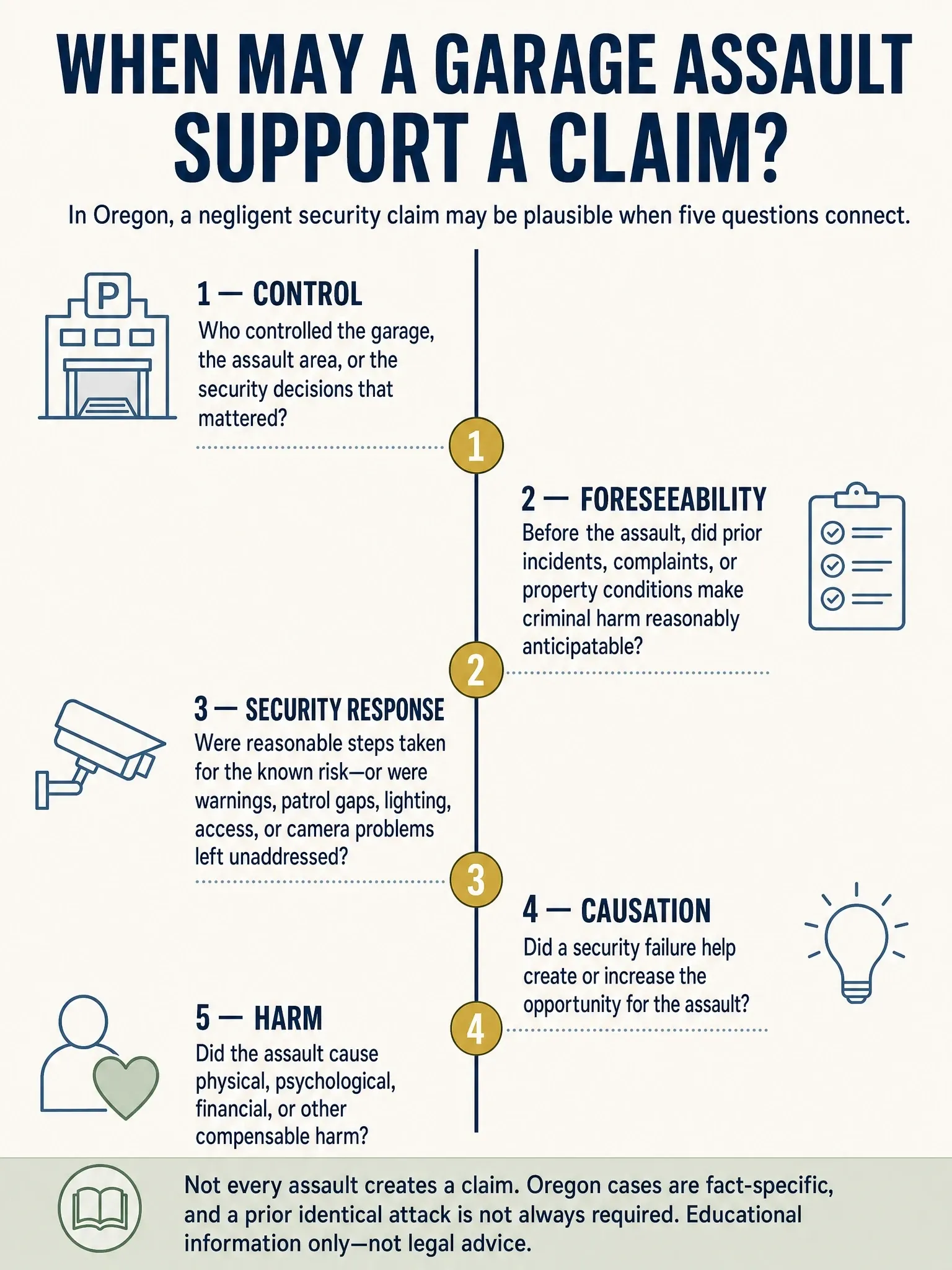
- Control: The defendant had control over the garage, the area where the assault happened, or the security decisions that mattered.
- Foreseeability: Prior incidents, complaints, property conditions, or the nature of the garage made criminal harm reasonably anticipatable.
- Unreasonable security response: The owner, operator, or security contractor failed to take reasonable steps in light of that known risk.
- Causation: The security failure helped create or increase the opportunity for the assault.
- Damages: The assault caused physical, psychological, financial, or other compensable harm.
The evidence does not have to show that the exact same attack happened before in the exact same parking space. But it does need to show more than hindsight. The question is what the responsible parties knew or should have known before the assault — and what they did with that information.
Oregon’s negligent security framework
Oregon does not have a special statute that says every parking garage must have a particular number of guards, cameras, or patrols. Instead, parking garage assault cases usually draw from broader Oregon negligence and premises liability principles.
Foreseeability under Oregon negligence law
Oregon’s general negligence framework comes from Fazzolari v. Portland School Dist. No. 1J. Unless a specific statute, status, or relationship supplies a more particular rule, the question is whether the defendant’s conduct unreasonably created a foreseeable risk of the kind of harm that happened.
In the parking garage context, that means asking whether the owner or operator should have anticipated the general risk of assault, robbery, threats, or similar criminal harm in that garage — not whether they could predict the exact attacker, route, or moment.
Business premises and third-party crime
In Uihlein v. Albertson’s, Inc., the Oregon Supreme Court applied Restatement (Second) of Torts § 344 to business premises. The rule recognizes that a business owner may have a duty to protect visitors from third-party criminal acts when the owner knows or has reason to know that such conduct is likely, based on past experience, the character of the business, or specific circumstances.
But Uihlein also matters for the defense side: the owner is not an insurer of visitor safety. A duty to warn or protect does not arise simply because crime can happen anywhere.
Common areas and the totality of circumstances
McPherson v. Oregon Dept. of Corrections is especially useful by analogy. It involved an assault in an apartment complex laundry shed, not a parking garage. But the Oregon Court of Appeals looked at the totality of circumstances: prior calls, trespass, vandalism, tenant safety complaints, dim lighting, a downed fence, visibility problems, and suspicious activity that management did not investigate.
The court emphasized that no prior violent incident in the exact room was required to get to a jury. The absence of an identical prior attack might help the defense, but it was not enough by itself to defeat the claim when the broader record supported foreseeability.
That same logic is often central in parking garage cases.
What makes a parking garage assault foreseeable?
Foreseeability is usually the heart of the case. A garage can look ordinary during the day and still have known security risks at night, after events, near stairwells, or in isolated levels.
Evidence that may support foreseeability includes:
- Prior assaults, robberies, threats, break-ins, car prowls, vandalism, trespass, or harassment in the garage or nearby area
- Police calls for service involving the garage, adjacent lots, stairwells, elevators, payment kiosks, or nearby businesses
- Tenant, customer, employee, or guest complaints about feeling unsafe
- Reports of people sleeping, loitering, threatening, or following visitors inside the garage
- Broken gates, doors, locks, emergency phones, call boxes, or access-control systems
- Repeated lighting complaints in stairwells, elevator lobbies, pedestrian paths, or payment areas
- Prior security recommendations that were not implemented
- Guard reports or incident logs showing recurring problems at predictable times or locations
The stronger cases usually show a pattern. One isolated maintenance issue may not be enough. But prior incidents plus repeated complaints plus a known blind spot or patrol failure can start to show that the risk was not random.
Security patrol gaps: what the records may show
Many parking garages advertise security patrols, contract for security services, or assign employees to check stairwells and decks. The claim often turns on whether those patrols actually happened and whether they were reasonable for the known risk.
Important questions include:
- What did the patrol schedule require?
- Were guards supposed to check every level, stairwell, elevator lobby, and payment area?
- Were patrols increased after prior incidents?
- Did logs show skipped rounds, identical copy-and-paste entries, or long gaps?
- Did a guard report suspicious activity but no one responded?
- Were post orders vague, outdated, or inconsistent with known garage risks?
- Was the attack area excluded from the regular route?
Patrol logs can help either side. If the records show consistent, reasonable checks in response to known risks, the defense will use them. If they show missed rounds, lack of coverage, or ignored warnings, they may support the claim.
Security contractor responsibility is also fact-specific. A guard company may matter if its contract, post orders, or actual conduct gave it responsibility for patrol, monitoring, reporting, or response connected to the danger. For more on that issue, see our guide to third-party security company liability.
Camera coverage: useful evidence, not a complete answer
Parking garage cases often involve surveillance footage — or the absence of it.
But cameras are not magic. A camera does not prevent an assault simply by existing, and the absence of video does not automatically prove negligence. The important questions are more specific:
- Did cameras cover the area where the assault happened?
- Were the cameras working at the time?
- Were they positioned to capture faces, routes, stairwell entries, elevators, pay stations, or vehicle exits?
- Was anyone monitoring the cameras live, or were they passive recording only?
- How long was footage retained before being overwritten?
- Were there known blind spots?
- Did the owner preserve footage after learning of the assault?
- Did missing footage conflict with policies, contracts, or prior representations about security?
Video can show the attacker, the path of entry and exit, lighting conditions, the presence or absence of guards, or how long the assault unfolded before anyone responded. It can also show that the area was not meaningfully covered at all.
Because garage video can be overwritten quickly, preservation matters. For more on that topic, see our guide to preserving evidence after an incident.
Lighting, access control, and garage design
Parking garages create security challenges because they combine vehicles, pedestrian paths, isolated levels, stairwells, elevators, blind corners, and public access. The physical condition of the garage can become central evidence.
Examples include:
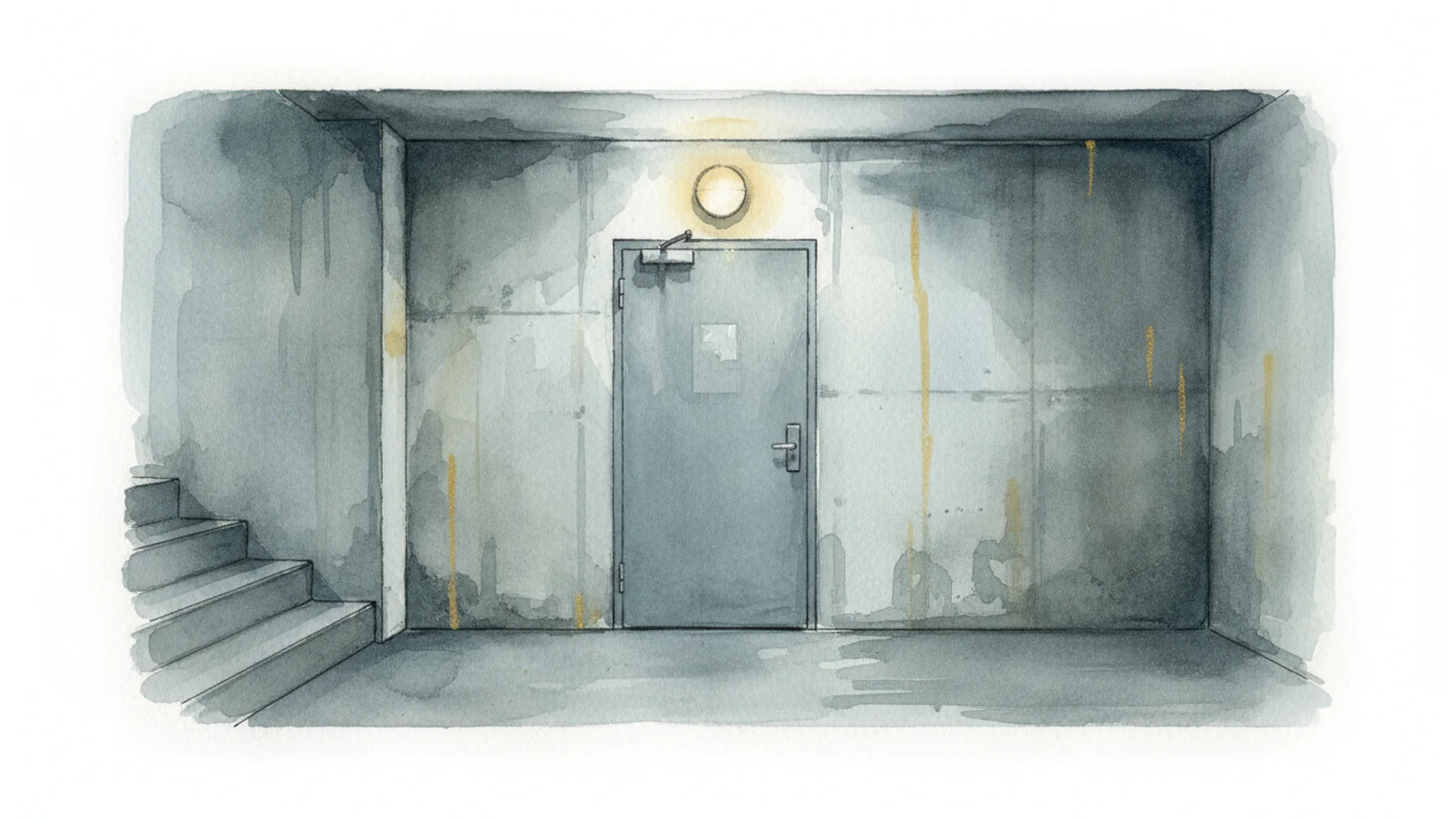
- Dark stairwells or elevator lobbies
- Burned-out fixtures or recurring lighting outages
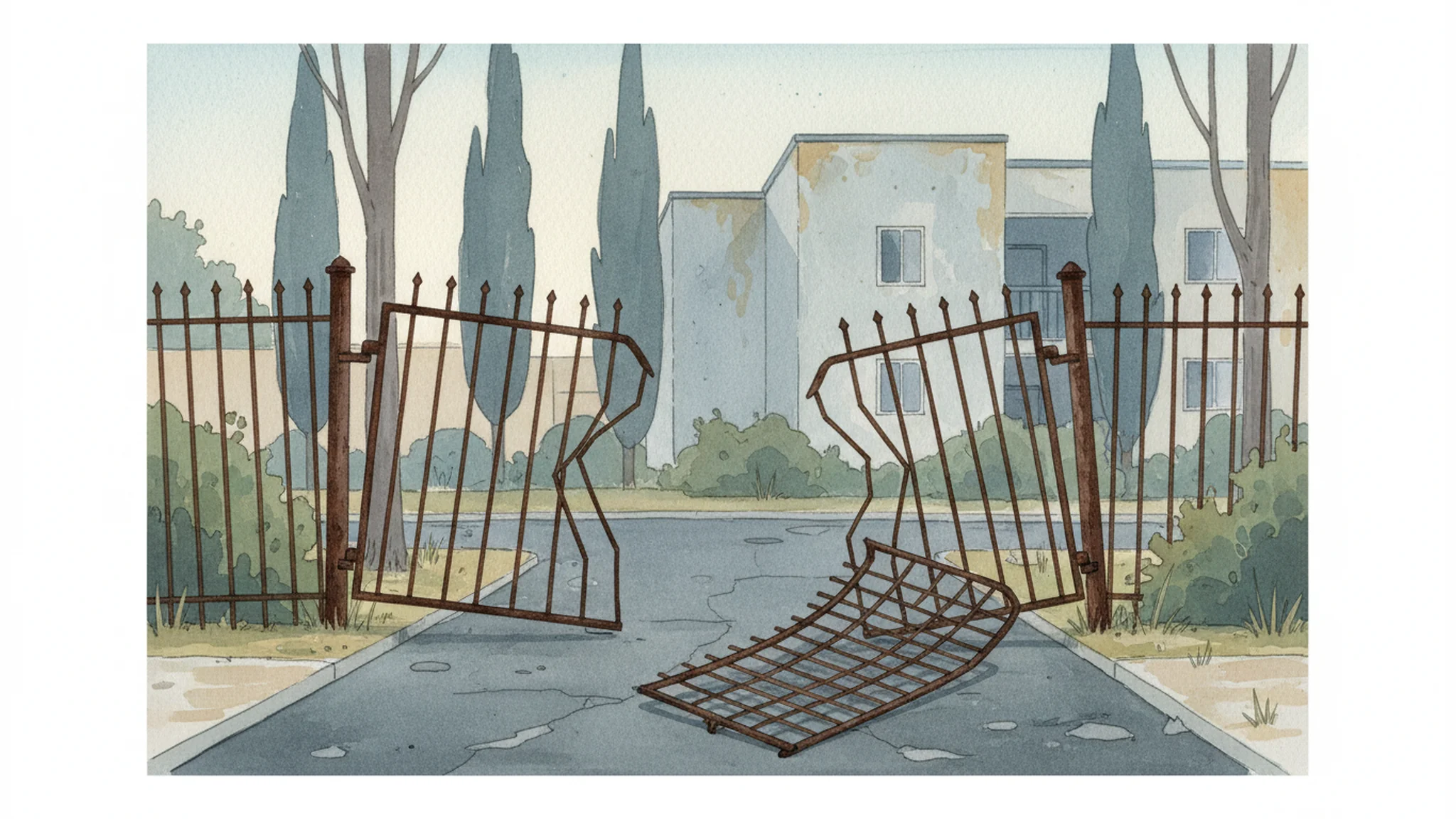
- Broken vehicle gates or pedestrian doors
- Propped-open access doors
- Nonworking call boxes or emergency phones
- Payment kiosks placed in isolated areas
- Blind corners or areas hidden from attendants
- Signage that directs visitors through unsafe routes
- Landscaping, walls, or structures that block visibility near entrances
None of those conditions automatically proves liability. The key is whether the responsible party knew or should have known about the condition, understood the security risk, and failed to respond reasonably.
That is why maintenance records can matter as much as police records. A repair ticket showing the stairwell lights had been out for weeks may be more important than a general claim that the area “felt unsafe.”
Who might be responsible?
A parking garage case often involves more than one potential defendant. Responsibility depends on ownership, control, contracts, and who had the practical ability to fix the problem.
Possible responsible parties may include:
- The property owner if it controlled the garage or retained responsibility for security conditions.
- A garage operator or management company if it handled staffing, patrols, cameras, access systems, maintenance, or incident response.
- A landlord, hotel, hospital, office building, apartment complex, or event venue if the garage served its tenants, guests, patients, employees, or customers and it had control over security decisions.
- A security contractor if it agreed to provide patrols, monitoring, reporting, or response and failed to perform those duties reasonably.
- A maintenance vendor in narrower cases involving lighting, locks, gates, or equipment failures within the vendor’s responsibility.
The most important question is not whose logo was on the sign. It is who had control over the dangerous condition or security practice that mattered.
Common defenses after a garage assault
Parking garage negligent security claims are heavily defended. Expect arguments like these.
“We can’t control crime”
This is the classic defense. The owner or insurer argues that the attacker alone caused the harm and that no property owner can guarantee safety.
That is partly true but incomplete. Oregon law does not make owners insurers. But it also does not automatically excuse a property owner who ignored foreseeable security risks. The issue is whether the owner’s conduct unreasonably increased or failed to address a known risk.
For a deeper discussion, read our post on how property owners use the “we can’t control crime” defense.
“Nothing like this happened here before”
The defense may argue there was no prior identical assault in the garage. Under Oregon’s broader foreseeability approach, that is not always the end of the case.
Prior similar incidents can be powerful evidence, but they do not always need to be identical. A pattern of robberies, threats, trespass, break-ins, harassment, or repeated safety complaints may show that criminal harm was reasonably anticipatable.
“The attacker alone is responsible”
The attacker is responsible for the assault. The legal question is whether another party’s negligence also contributed to the risk.
ORS 31.600 allows fault to be compared in Oregon personal injury cases and allows defendants to argue that someone else was solely at fault. That statute matters. But it does not automatically defeat a negligent security claim where the evidence shows that the property owner’s security failures contributed to the harm.
“You knew the garage was unsafe”
Defendants may argue that you should not have used the garage, should have taken a different route, or should have known the area was dangerous.
Oregon has abolished implied assumption of risk as a separate doctrine under ORS 31.620. That does not mean your conduct is irrelevant; the defense may still frame some facts as comparative fault. But “you assumed the risk” should not be treated as a simple, automatic bar.
Evidence to preserve quickly
The most important evidence in a parking garage case can disappear fast.
Try to preserve or identify:
- Surveillance video from the garage and nearby businesses
- Camera maps, retention policies, and footage-overwrite schedules
- Access-card logs, gate records, ticket data, and vehicle entry/exit records
- Security patrol logs, guard post orders, incident reports, and dispatch notes
- Maintenance tickets for lights, doors, locks, gates, call boxes, and cameras
- Prior complaints from tenants, workers, guests, or customers
- Police reports and calls for service
- Photos or video of lighting, sightlines, stairwells, elevators, signs, and access points
- Names and contact information for witnesses
- Medical records, counseling records, wage-loss records, and out-of-pocket expenses
- Damaged clothing or personal property
Also pay attention to deadlines. Many Oregon personal-injury claims are subject to a two-year limitation period under ORS 12.110, but exceptions and special rules can apply. If a public entity owns or operates the garage, separate formal notice rules may apply. Get case-specific advice quickly.
When the claim starts looking real
A parking garage negligent security claim starts looking more substantial when the facts show a clear chain:
Known risk -> ignored warning or security gap -> foreseeable assault -> harm that reasonable steps may have prevented or reduced.
For example, a claim may become stronger if the garage had repeated prior incidents, stairwell lights had been out for weeks, guards skipped scheduled rounds, cameras missed a known trouble spot, and management had received complaints before the assault. Even then, causation is still a separate proof issue: the evidence must connect the security failure to how the assault happened.
A claim may be weaker if the garage had no meaningful history of similar or related problems, security systems were working, patrols were reasonable, and the assault happened in a way no owner or operator could reasonably anticipate.
The line is fact-specific. The sooner the evidence is preserved, the easier it is to evaluate whether the assault was a tragic random crime — or the result of a security failure Oregon law may recognize.
Frequently asked questions
Do I need proof of a prior assault in the same parking garage?
Not necessarily. Oregon foreseeability is broader than an identical-prior-incident rule. Prior assaults help, but related evidence — robberies, threats, trespass, break-ins, repeated complaints, or known unsafe conditions — may also matter.
Is the garage liable if the cameras missed the attack?
Not automatically. Camera coverage matters when the evidence shows the owner knew of blind spots, failed to maintain cameras, lost footage after notice, or relied on cameras in a way that was not reasonable for the known risk.
Can a security company be responsible too?
Possibly. It depends on the contract, post orders, actual patrol practices, reporting duties, and whether the company’s failures contributed to the assault. For a deeper look at that issue, see our guide to third-party security company liability.
What if the attacker was never caught?
The claim may still be possible, but proof can be harder. A negligent security case focuses on the property owner’s or operator’s conduct, not only on identifying the criminal actor.
How long do I have to bring a claim in Oregon?
Many Oregon personal-injury claims are subject to a two-year limitation period under ORS 12.110. Exceptions and special rules may apply, so do not rely on a general article to calculate your deadline.
Source Notes
The legal framework and case references in this post are drawn from broader Oregon negligence and premises-liability authorities. No Oregon appellate parking-garage-specific rule is being cited here; the parking-garage discussion applies these sources by analogy and remains fact-specific.
- Fazzolari v. Portland School Dist. No. 1J, 303 Or. 1, 734 P.2d 1326 (1987) — Oregon Supreme Court decision establishing the foreseeability-based negligence framework. Available at Justia.
- Uihlein v. Albertson’s, Inc., 282 Or. 631, 580 P.2d 1014 (1978) — Oregon Supreme Court decision applying Restatement (Second) of Torts § 344 to business premises and third-party criminal acts. Available at Justia.
- McPherson v. Oregon Dept. of Corrections, 210 Or. App. 602, 152 P.3d 918 (2007) — Oregon Court of Appeals decision addressing common-area security, prior reports, lighting, visibility, and foreseeability. Available at Justia.
- ORS 31.600 — Oregon’s comparative negligence statute. Available through the Oregon Legislature.
- ORS 31.620 — Oregon statute abolishing implied assumption of risk. Available through the Oregon Legislature.
- ORS 12.110 — Oregon limitations statute for certain personal-injury actions. Available through the Oregon Legislature.
Client-First Fee Promise
Client First = Bills First, Fees Second
Your unpaid medical bills do not have to make your lawyer's fee bigger. Johnson Law subtracts qualifying medical bills before calculating our fee, helping clients keep more of their settlement.
Applies to qualifying cases. Results vary.