Poor Lighting in a Stairwell or Walkway: How Lighting Defects Connect to Crime Liability
Poor Lighting in a Stairwell or Walkway: How Lighting Defects Connect to Crime Liability
Educational information only, not legal advice. Oregon negligent security claims are fact-specific. If you were injured in an assault or robbery in a dark stairwell, walkway, hallway, parking area, or similar space, talk with an attorney promptly about deadlines and evidence preservation.
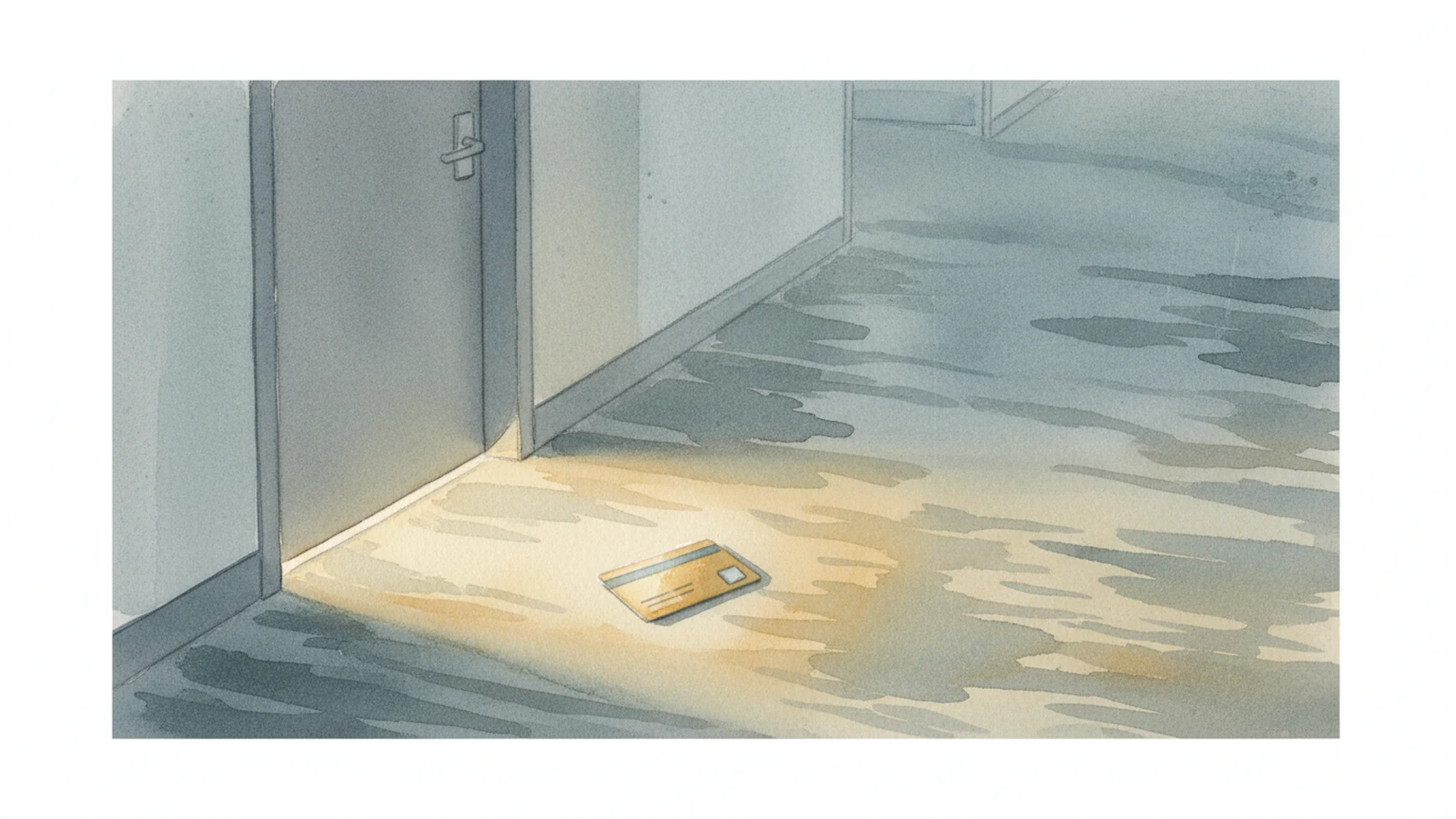
A burned-out stairwell light may seem like a small maintenance issue until someone is assaulted there.
After a robbery, attack, or attempted assault, the lighting question becomes much bigger: did poor lighting make it harder to see the danger, easier for someone to hide, harder for cameras to capture what happened, or harder for staff or security to respond?
That does not mean every crime in a dark area creates a lawsuit. Oregon law does not make property owners insurers of everyone’s safety. But poor lighting can become important evidence in a negligent security claim when it connects to notice, foreseeability, control, and causation.
This post is about crime liability — assaults, robberies, stalking incidents, or other third-party criminal harm — not ordinary fall-only claims. Lighting can matter in both settings, but the proof is different.
Quick answer: bad lighting matters when it connects to foreseeability and causation
Poor lighting is usually strongest when it is part of a bigger negligent-security story. A useful investigation asks:
- Notice: Did the property owner, landlord, business, hotel, property manager, employer, or security contractor know — or have reason to know — that the area was dangerous or poorly lit?
- Control: Did that person or company control the stairwell, walkway, light fixture, timer, electrical system, camera placement, landscaping, patrol route, or access point?
- Unreasonable failure: Was it unreasonable not to repair the light, improve visibility, preserve video, adjust patrols, warn people, or fix related access problems?
- Connection to the crime: Did the lighting defect help create the opportunity for the assault or robbery, make the danger harder to detect, reduce camera quality, or delay response?
A dark stairwell by itself may not be enough. A dark stairwell that management had received repeated complaints about, where prior incidents happened, where the only camera could not capture faces, and where the attacker used the darkness to approach unseen is a very different fact pattern.
For the broader defense property owners often raise, see our guide to how property owners use the “we can’t control crime” defense.
Why lighting defects are different in negligent security cases
In a fall case, lighting often matters because someone could not see a step, curb, spill, broken surface, or elevation change.
In a negligent security case, lighting matters for a different reason. It may affect whether people can see each other, whether suspicious activity is visible, whether cameras capture useful footage, and whether a stairwell or walkway provides concealment.
Security-design materials often discuss lighting as part of broader physical security, not as a magic shield against crime. CISA security guidance, for example, treats lighting as one part of layered security alongside access control, surveillance, barriers, and response. CPTED concepts similarly connect lighting with natural surveillance, sightlines, maintenance, and reducing places of concealment.
That practical point matters legally too: the claim should not be “the light was out, therefore the owner is liable.” The stronger claim is more specific: the lighting defect was a known, controllable condition that made a foreseeable criminal risk harder to detect or interrupt.
Oregon law: the owner is not an insurer, but crime is not always a complete defense
Oregon negligence law is fact-specific. The core question is whether the defendant’s conduct unreasonably created a foreseeable risk of the kind of harm that occurred.
That standard cuts both ways.
On one side, Oregon courts have rejected claims where the record did not show that a store had reason to know a criminal attack was likely. In Uihlein v. Albertson’s, Inc., for example, the Oregon Supreme Court affirmed judgment for a store after a purse-snatching incident where the evidence did not show the store had reason to anticipate that type of harm. A property owner generally does not have to protect against every random crime just because crime exists somewhere in the world.
On the other side, Oregon courts have also allowed third-party-crime claims to proceed when the surrounding facts could let a reasonable juror find the harm foreseeable. In Piazza v. Kellim, the Oregon Supreme Court explained that third-party criminal conduct is not automatically outside the scope of foreseeable risk. And in McPherson v. Oregon Dept. of Corrections, a case involving an attack at an apartment-complex laundry facility, the Court of Appeals pointed to a combination of facts including a dimly lit complex, suspicious activity, trespass and vandalism reports, a high-crime area, and design features of the laundry facility where the attack occurred. The court concluded a reasonable juror could find that the defendants should have foreseen the type of harm and taken more precautions.
The lesson is not that every dark area creates liability. The lesson is that lighting can matter when it is part of the total circumstances showing a foreseeable security risk.
Three ways poor lighting can connect to causation
Lighting evidence matters only if it helps explain how the security failure contributed to the harm. In stairwell and walkway cases, three causation theories often come up.
1. Visibility: could people see the danger?
Poor lighting can make it harder for a resident, customer, employee, hotel guest, or visitor to see someone waiting in a stairwell, near an entryway, along a walkway, behind landscaping, or in a shadowed corner.
It can also affect whether witnesses, staff, or security patrols can see suspicious activity before an attack. A patrol that walks through a dark breezeway without a flashlight, a camera, or working fixtures may not meaningfully inspect the area at all.
Useful evidence may include:
- photos of the area at the same time of night;
- video showing shadows, glare, or dead zones;
- witness statements about what could and could not be seen;
- maintenance records showing when lights were reported out;
- records showing whether staff or patrols checked the area before the incident.
The details matter. A single dim fixture in an otherwise visible walkway may be different from a stairwell where multiple lights were out for weeks.
2. Camera quality: did the lighting make video useless?
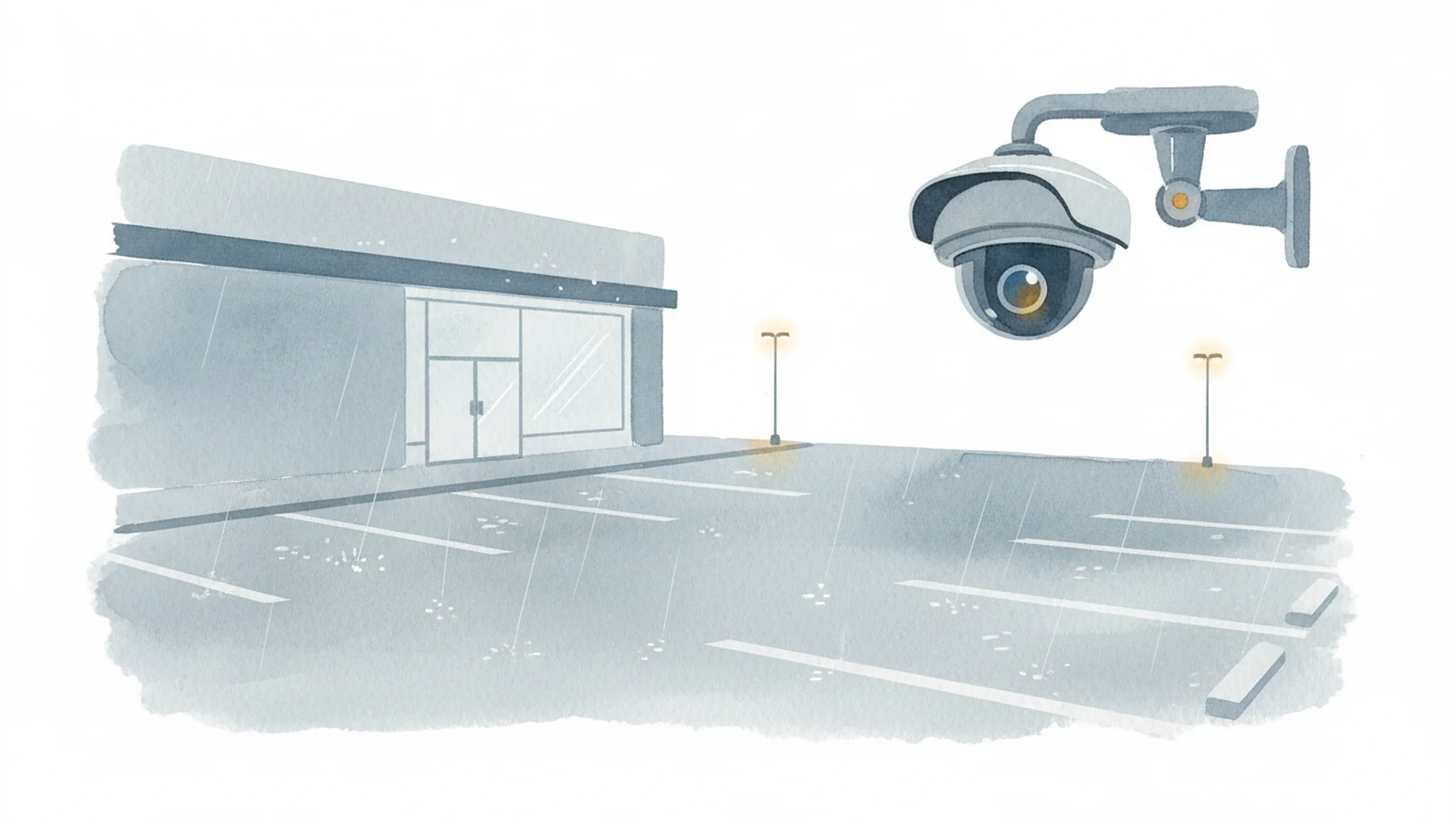
Many properties have cameras, but not all cameras capture useful evidence. A camera may point toward a stairwell door, exterior walkway, parking path, hotel hallway, or apartment breezeway, yet still fail to identify anyone because the area is too dark, the fixture creates glare, or the camera is aimed at a bright doorway with a dark background.
That can matter in two ways.
First, poor lighting may make it harder to prove what happened after the fact. Second, if the property relied on cameras as a security measure, poor lighting may show that the camera system was not actually adequate for the risk it was supposed to monitor.
The key questions are:
- Were cameras present and working?
- Did the owner know the video quality was poor at night?
- Were there prior complaints or incidents in the same camera zone?
- Did anyone inspect camera footage before the incident and notice the problem?
- Could reasonable lighting repair or camera adjustment have improved detection?
For related evidence issues, see our post on parking garage negligent security claims, where camera coverage, stairwells, and patrol gaps often overlap.
3. Deterrence and concealment: did darkness make the area easier to use for crime?
Lighting does not guarantee safety. No responsible negligent-security claim should say that better lighting would have prevented every possible crime.
But darkness can affect opportunity. A poorly lit stairwell, walkway, alley, breezeway, hotel side entrance, or employee path may give an attacker a place to wait unseen, approach without being noticed, avoid cameras, or leave without identification.
That is why lighting often pairs with other evidence:
- broken gates or unsecured doors;
- missing or skipped patrols;
- landscaping or storage that blocks sightlines;
- repeated loitering or trespassing complaints;
- prior robberies, assaults, threats, or police calls in the same area;
- staff knowledge that residents, guests, customers, or employees felt unsafe using the route.
In apartment cases, lighting evidence may overlap with broken gates, ignored threats, and landlord negligent security. In store or lot cases, it may overlap with convenience store parking lot robbery evidence.
Evidence that shows the property owner had notice
The most important lighting question is often not “Was it dark?” It is “Who knew it was dark, and when?”
Notice may come from:
- maintenance requests for burned-out or flickering lights;
- tenant, customer, guest, or employee complaints;
- prior incident reports in the same stairwell, walkway, parking path, hall, or entrance;
- inspection checklists showing lights were not working;
- vendor records showing delayed or incomplete repairs;
- emails or texts between management and maintenance staff;
- police calls or security reports involving the same location;
- photos or videos posted before the incident;
- prior camera footage showing the area was too dark at night.
Written records are especially valuable because they can show timing. A light that went out minutes before an unforeseeable attack is different from a light that residents reported five times over two months.
Notice can also be constructive. If a reasonable inspection program would have revealed that the fixtures were out, timers were wrong, or landscaping blocked lighting, the owner may not be able to avoid the issue simply by saying nobody filed a formal complaint.
Evidence that shows control and reasonable alternatives
Negligent security cases often involve several possible responsible parties. The owner may control the property budget. A property manager may handle maintenance. A tenant business may control daily operations. A security company may control patrols. A lighting contractor may have performed repairs. A hotel franchise, parking operator, HOA, employer, or commercial landlord may each control different pieces.
Control matters because a claim should connect the failure to the entity that could actually do something about it.
Possible reasonable measures may include:
- replacing burned-out bulbs or broken fixtures;
- correcting timers or sensors;
- repairing electrical problems;
- adding lighting to a known dark route;
- trimming bushes or removing objects that block light and sightlines;
- adjusting camera placement or adding illumination where cameras are used;
- changing patrol routes or check-in points;
- securing a stairwell, gate, door, or side entrance;
- warning residents, employees, guests, or customers about a specific known risk;
- documenting and escalating repeated complaints.
If a security company was involved, post orders, patrol logs, and incident reports may show whether guards were supposed to check the dark area and whether they actually did. Our post on security guard failures and shared blame explains how those records can affect responsibility.
Common defenses in poor-lighting negligent security claims
Property owners and insurers often respond to poor-lighting claims with several defenses:
- The attacker alone caused the harm. The attacker’s conduct is central, but Oregon law does not always treat third-party crime as a complete bar when the property’s own failures foreseeably contributed to the risk.
- There were no prior similar incidents. Prior incidents are important, but the analysis can include the whole risk picture: complaints, physical conditions, suspicious activity, access failures, and what the owner knew.
- The lighting met code. Code compliance may be helpful evidence for the defense, but it may not answer whether the overall security was reasonable under the specific circumstances.
- The plaintiff should have used another route. Comparative fault may be argued depending on the facts, but that does not automatically erase a property owner’s responsibility if the owner also acted unreasonably.
- Someone else controlled the area. This defense can matter. The investigation should identify who controlled the fixture, wiring, inspections, cameras, patrols, and repair decisions.
- Better lighting would not have changed anything. This is a causation argument. The answer often depends on video, sightlines, witness testimony, expert analysis, and the timing of the attack.
These defenses are why early evidence preservation is so important. The case may turn on photographs, video quality, repair logs, inspection records, and prior complaints rather than broad claims that the area was “unsafe.”
What to preserve after an assault or robbery in a dark stairwell or walkway
If you were hurt in a dark stairwell, walkway, breezeway, hallway, parking path, or entrance area, try to preserve evidence as soon as practical:
- Photograph the area at the same time of night and from the same direction of travel.
- Photograph every nearby light fixture, including burned-out bulbs, broken covers, missing fixtures, glare, shadows, and blocked lights.
- Photograph cameras, camera angles, gates, doors, locks, signs, landscaping, stairwell landings, and exits.
- Save texts, emails, maintenance requests, tenant portal submissions, or complaints about lighting or safety.
- Write down the exact date, time, weather, location, route, and where the attacker came from or went.
- Identify witnesses, staff members, security guards, responding officers, and medical providers.
- Ask that surveillance video, incident reports, maintenance records, lighting inspection logs, complaints, and patrol records be preserved.
- Do not rely only on a verbal promise that video or records will be saved.
Video may overwrite quickly. Maintenance staff may repair the light before anyone documents it. Security logs may be archived or deleted. For a broader checklist, see our guide to preserving evidence after an incident.
Talk with an Oregon injury lawyer before lighting and video evidence disappears
Poor lighting in a stairwell or walkway can be powerful evidence, but only when it is tied to the rest of the case: prior notice, control, foreseeable risk, unreasonable security choices, and a real connection to the assault or robbery.
If you were injured in Oregon, Johnson Law can help evaluate what evidence should be preserved and whether a negligent security claim may exist. The goal is not to assume the property owner is automatically liable. The goal is to find out what the responsible parties knew, what they controlled, and whether the lighting defect helped create the opportunity for the crime.
Oregon injury deadlines can be short, and special rules may apply depending on the defendant. Prompt advice is especially important when video, lighting conditions, and maintenance records may change quickly.
Frequently asked questions
Can poor lighting alone prove a negligent security claim?
Usually no. Poor lighting is strongest when it connects to notice, control, foreseeable criminal risk, and causation. A dark area matters more when the owner knew about it, prior incidents or complaints made the risk foreseeable, and the lighting defect helped the attacker avoid detection or delayed response.
Does the property owner have to predict the exact attacker?
No. Oregon foreseeability generally focuses on the general type of harm, not perfect prediction of the exact person, minute, or sequence of events. But the property owner still needs some reason to anticipate the risk before the incident.
What if the owner says the lighting met code?
Code compliance can be important evidence, but it may not end the question. A negligent security claim may look at the full circumstances, including prior incidents, complaints, camera performance, sightlines, and whether reasonable steps were available.
What should I photograph after an assault in a dark area?
Photograph the fixtures, shadows, cameras, sightlines, entrances and exits, stairwells, walkways, doors, locks, gates, landscaping, signs, and any blocked or broken lights. If possible, document the area at the same time of night and in similar conditions.
Sources
- Fazzolari v. Portland School Dist. No. 1J, 303 Or 1 (1987)
- Piazza v. Kellim, 360 Or 58 (2016)
- McPherson v. Oregon Dept. of Corrections, 210 Or App 602 (2007)
- Uihlein v. Albertson’s, Inc., 282 Or 631 (1978)
- ORS chapter 12, including ORS 12.110
- ORS chapter 31, including ORS 31.600
- ORS chapter 90, including residential landlord maintenance provisions
- CISA, Venue Guide for Security Enhancements
- CISA, K-12 School Security Guide
- Interagency Security Committee, Best Practices for Planning and Managing Physical Security Resources
Client-First Fee Promise
Client First = Bills First, Fees Second
Your unpaid medical bills do not have to make your lawyer's fee bigger. Johnson Law subtracts qualifying medical bills before calculating our fee, helping clients keep more of their settlement.
Applies to qualifying cases. Results vary.