Security Guard Failure: When a Third-Party Security Company Shares Blame
Security Guard Failure: When a Third-Party Security Company Shares Blame
Educational information only, not legal advice. Oregon negligent security claims are fact-specific. If you were injured in an assault, robbery, or workplace/premises incident, talk with an attorney promptly about deadlines and evidence preservation.
A security guard was supposed to be there.
Maybe the guard was assigned to patrol a parking garage, apartment complex, convenience store, hotel, bar, warehouse, or jobsite. Maybe the property advertised security. Maybe employees or tenants had already complained about threats, trespassers, fights, broken access controls, or suspicious activity.
Then an assault, robbery, or violent incident happened anyway.
That does not automatically mean the security company is liable. But it may raise an important question: did the third-party security contractor fail to act reasonably within the role it undertook, and did that failure help create or increase the risk of harm?
For the broader Oregon framework, see our guide to how property owners use the “we can’t control crime” defense. For a hotel-specific example involving guest access, prior calls, and camera gaps, see our post on hotel negligent security and foreseeable risk. This post focuses on the security contractor side of the case: contracts, post orders, patrol logs, incident reports, training records, and the evidence that can show shared responsibility.
Quick answer: yes, a security company can share blame
In an Oregon negligent security case, a third-party security company may share blame when the evidence supports these points:
- The company had a defined security role. A contract, scope of work, post order, assignment sheet, or course of conduct gave the company responsibility for patrols, monitoring, access control, reporting, intervention, or escalation.
- The risk was foreseeable enough to require reasonable action. Prior incidents, warnings, complaints, calls for service, suspicious activity, or known property conditions put responsible parties on notice.
- The security company failed to act reasonably within its role. Examples include skipped patrols, ignored post orders, poor documentation, inadequate training, understaffing, or failure to call police or management when required.
- The failure mattered. The security breakdown helped create, worsen, or fail to interrupt the opportunity for the assault, robbery, or injury.
- The incident caused harm. Physical injuries, trauma, medical bills, lost income, or other damages resulted from the security breakdown and the incident.
The key word is share. A security contractor may be one part of a larger case involving the property owner, landlord, tenant business, property manager, employer, event operator, or another contractor. Shared blame does not mean every defendant has the same duty or the same percentage of responsibility.
Oregon negligent security law starts with foreseeability and control
Oregon does not have a single statute that says every business must hire guards, use cameras, or patrol every lot at fixed intervals. These claims usually depend on general negligence and premises liability principles.
Under Oregon’s general negligence framework, the question is whether the defendant’s conduct unreasonably created a foreseeable risk of the kind of harm that occurred. On business premises, Oregon also recognizes that a business may have to take reasonable steps involving third-party criminal conduct when the business knows or has reason to know such conduct is likely, based on past experience, the nature of the business, or specific circumstances.
That rule cuts both ways. Property owners and security companies are not insurers of everyone’s safety. The claim usually needs more than hindsight. The evidence must show what was known before the incident, what reasonable security steps were required under the circumstances, and how the failure connected to the harm.
When a security company is involved, control becomes a central issue. The property owner may control lighting, gates, locks, cameras, budgets, and tenant rules. The security contractor may control guard training, scheduling, patrol completion, incident reporting, radio communication, and supervision. A strong investigation separates those responsibilities instead of assuming one defendant handled everything. If lighting is part of the risk picture, our article on poor lighting in stairwells and walkways explains how condition evidence can connect to foreseeability and control.
What the security contract can prove
The security contract is often the starting point. It may show:
- which areas the guard company agreed to cover;
- hours of coverage;
- patrol frequency;
- whether patrols had to be random or fixed;
- whether guards were expected to intervene, observe and report, call police, contact management, remove trespassers, monitor cameras, check doors, or escort employees;
- staffing levels;
- supervisor responsibilities;
- reporting requirements;
- insurance and indemnity terms; and
- limits on what the security company promised to do.
The contract does not automatically decide the injured person’s claim. The injured person may not be a party to that contract, and contract terms do not always define the full civil duty owed under Oregon law. But the contract can be powerful evidence of the contractor’s role, the property owner’s expectations, and the security company’s knowledge of the risk environment.
If the company promised only limited “observe and report” services, the case may look different than one where the company agreed to active patrols, access control, camera monitoring, or emergency response. The exact scope matters, but so does what the company actually did at the site over time.
Post orders may matter even more than the contract
Security contracts are often broad. Post orders are usually more practical.
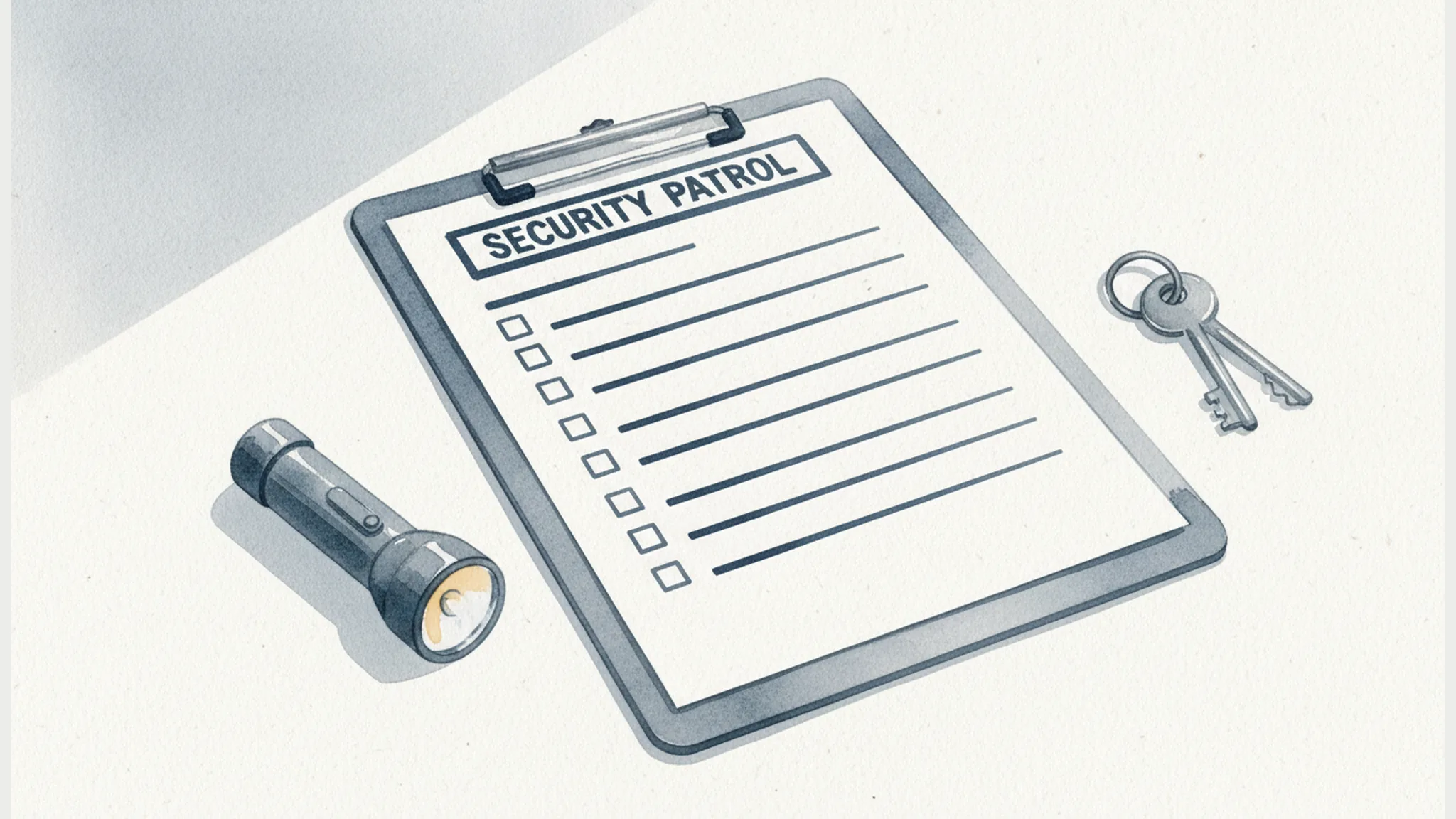
Post orders tell guards what to do at a particular site. They may explain patrol routes, high-risk areas, lock-check requirements, camera-monitoring procedures, trespass protocols, emergency contacts, when to call police, where to stand, how to document incidents, and how to escalate threats.
In a security company negligence claim, post orders can answer questions such as:
- Was the guard supposed to patrol the stairwell, parking lot, loading dock, lobby, or gate where the incident happened?
- Were there known problem areas that required extra checks?
- Did the guard have to document each patrol electronically?
- Was the guard required to call police after threats, fights, weapons, or trespassing?
- Were employees or tenants supposed to be escorted at closing time?
- Did management change post orders after prior incidents?
If the post orders required a guard to check a dark parking area every 30 minutes, but the records show a two-hour gap before the robbery, that gap may matter. If the post orders required police notification after repeated threats and no one called, that may matter too.
Patrol logs and daily activity reports can make or break the timeline
Many security cases turn on time.
Where was the guard? When was the last patrol? Did anyone report suspicious activity? Did the guard see the attacker earlier? Were doors, gates, or stairwells checked? Did the company document a problem but fail to escalate it?
Useful records may include:
- daily activity reports;
- patrol logs;
- electronic checkpoint scans;
- GPS records;
- dispatch records;
- radio traffic;
- text messages between guards and supervisors;
- incident reports;
- call logs to police or property management;
- supervisor inspection notes; and
- video showing whether patrols actually occurred.
These records can help prove a security failure. They can also hurt a weak claim. If logs show reasonable patrols, timely escalation, and a security company working within a narrow contract, the contractor may have a strong defense.
That is why early preservation is important. Digital logs, surveillance video, and routine security reports may be overwritten or discarded. For a broader evidence checklist, see our article on preserving evidence after an incident.
Training, licensing, supervision, and staffing failures
Oregon regulates private security providers through state statutes and the Department of Public Safety Standards and Training. Those rules do not make every security failure a civil lawsuit. But certification, training, and supervision records may still become relevant.
Examples of security-company issues include:
- assigning an unqualified or uncertified guard to a site;
- failing to train guards on site-specific post orders;
- ignoring repeated guard mistakes;
- staffing one guard where the contract or known risk required more coverage;
- placing a guard at a site without clear escalation instructions;
- failing to supervise overnight or high-risk posts;
- not training guards to document threats, fights, or trespassers; and
- failing to discipline or retrain guards after prior incidents.
The strongest cases connect training or supervision failures to the incident. It is not enough to say a guard could have been better trained in the abstract. The question is whether a specific failure made the injury more likely.
Incident response failures after warning signs
Security companies often defend cases by saying they could not predict the exact criminal act. Sometimes that is true. But the law usually does not require perfect prediction of the exact attacker and exact moment.
The more important question is whether the general type of harm was foreseeable and whether reasonable steps were taken.
Warning signs may include prior assaults, robberies, fights, threats, weapons reports, trespassing complaints, employee escort requests, broken gates, police calls, aggressive patrons, camera blind spots, lighting complaints, and earlier incident reports written by the security company itself.
If a security company documented repeated threats but never changed patrols, notified management, requested more staffing, or followed escalation procedures, those records may support shared responsibility. Similar evidence questions arise in parking garage negligent security claims, convenience store parking lot robbery claims, and apartment complex assault cases.
How defendants point fingers at each other
Shared-liability cases can become complicated quickly.
The property owner may argue: “We hired a professional security company, so blame them.” The security company may respond: “We only did what the owner paid us to do.” The tenant business may say it did not control the parking lot. The property manager may say the owner controlled the budget. The attacker may be blamed as the primary cause.
Oregon’s comparative fault rules can allow fault to be allocated among multiple responsible parties and, in some circumstances, certain third-party defendants. Oregon also generally uses several liability, meaning a defendant’s monetary responsibility is tied to that defendant’s percentage share, subject to statutory rules and possible reallocation issues. That makes identifying every responsible entity important.
For injured people, the practical point is simple: do not assume the property owner is the only possible defendant, and do not assume the security company is automatically responsible. The documents usually decide who controlled what.
Evidence to preserve in a security company negligence claim
If a security guard failure may be part of the case, preservation should happen quickly. Important evidence may include:
- the security contract and amendments;
- post orders and site instructions;
- guard schedules and timesheets;
- patrol logs and checkpoint data;
- daily activity reports;
- incident reports;
- video from cameras covering the area and guard movements;
- dispatch, radio, phone, and text records;
- police calls and reports;
- prior complaints from tenants, employees, customers, or guests;
- training and certification records;
- supervisor inspection notes;
- emails between property management and the security vendor;
- invoices showing actual staffing; and
- insurance and indemnity information.
This evidence can disappear if no one acts. Some video systems overwrite within days or weeks. Some vendors treat daily logs as routine business records that can be archived or purged. A preservation letter can help, but the right step depends on the facts.
Frequently asked questions
Can I sue the security company if the guard did nothing?
Sometimes. The issue is whether the security company had a role that required reasonable action under the contract, post orders, site practices, undertaking, or circumstances, and whether failing to act unreasonably increased a foreseeable risk of harm. A guard’s inaction is important evidence only if the guard was supposed to do something that would have mattered.
Is the property owner off the hook because it hired security?
Not necessarily. Hiring security may show the owner knew security mattered. The owner may still control lighting, access, cameras, staffing budgets, tenant rules, and whether the security contract was adequate. In many cases, the owner and security company blame each other.
What are post orders?
Post orders are site-specific instructions for security guards. They may describe patrol routes, reporting duties, emergency contacts, camera monitoring, access control, trespass procedures, and when to call police or management.
Do patrol logs really matter?
Yes. Patrol logs, checkpoint scans, GPS data, and daily activity reports can show whether the security company actually performed the patrols or checks it claimed to perform. They can also show warning signs before the incident.
How long do I have to bring an Oregon negligent security claim?
Many Oregon personal injury claims must be filed within two years, but deadlines can vary based on the claim, defendant, age of the injured person, public-body involvement, sexual assault allegations, and other facts. Get case-specific advice quickly.
Sources
- Fazzolari v. Portland School Dist. No. 1J
- Uihlein v. Albertson’s, Inc.
- McPherson v. Oregon Dept. of Corrections
- ORS Chapter 31, including ORS 31.600 comparative fault and ORS 31.610 several liability rules
- ORS Chapter 12, including ORS 12.110 personal injury limitation periods
- ORS Chapter 181A, including private security provider certification statutes
- Oregon DPSST Private Security
Client-First Fee Promise
Client First = Bills First, Fees Second
Your unpaid medical bills do not have to make your lawyer's fee bigger. Johnson Law subtracts qualifying medical bills before calculating our fee, helping clients keep more of their settlement.
Applies to qualifying cases. Results vary.