City Sidewalk Defects: When Portland Can Be Responsible for a Trip-and-Fall
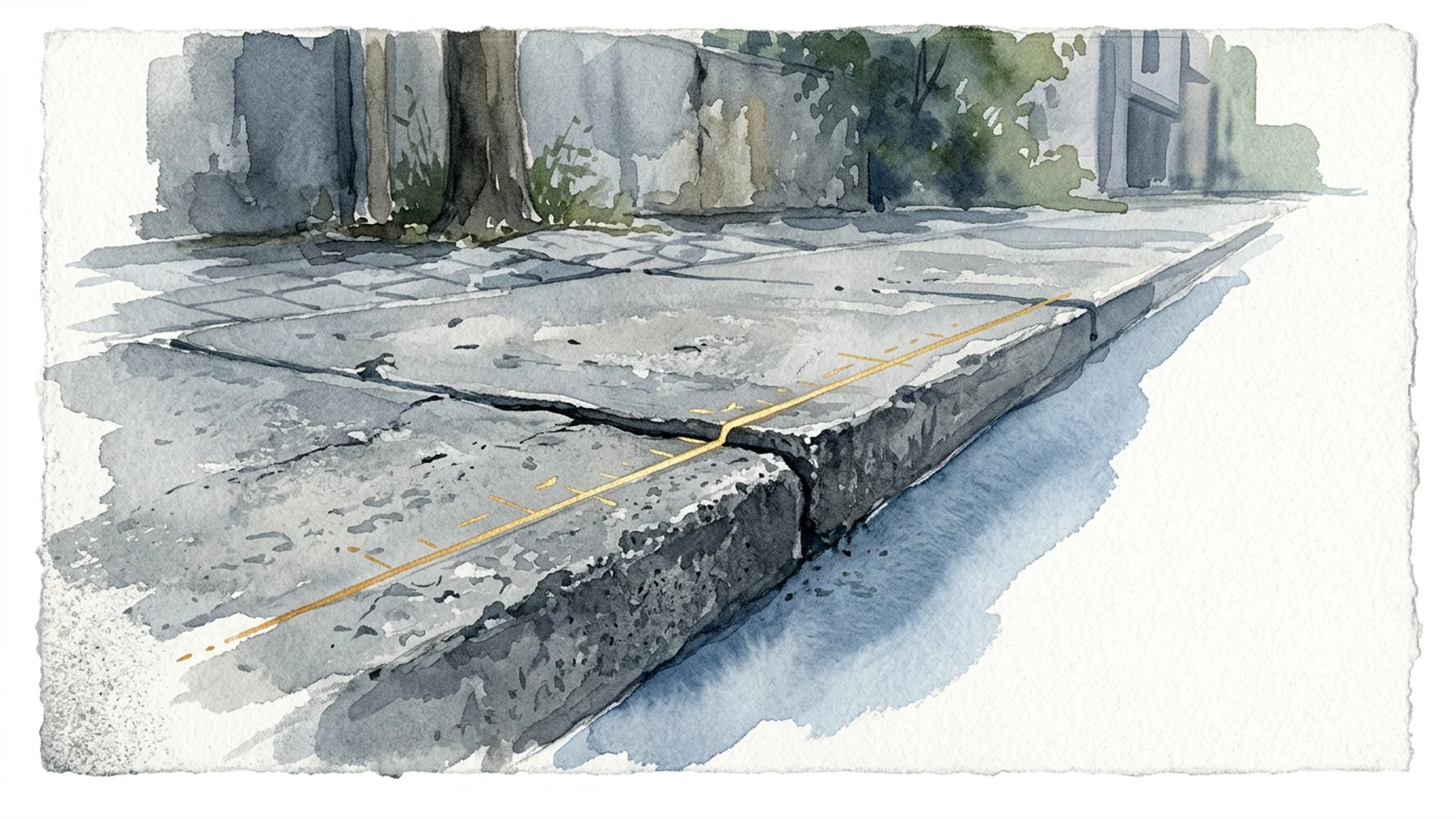
City Sidewalk Defects: When Portland Can Be Responsible for a Trip-and-Fall
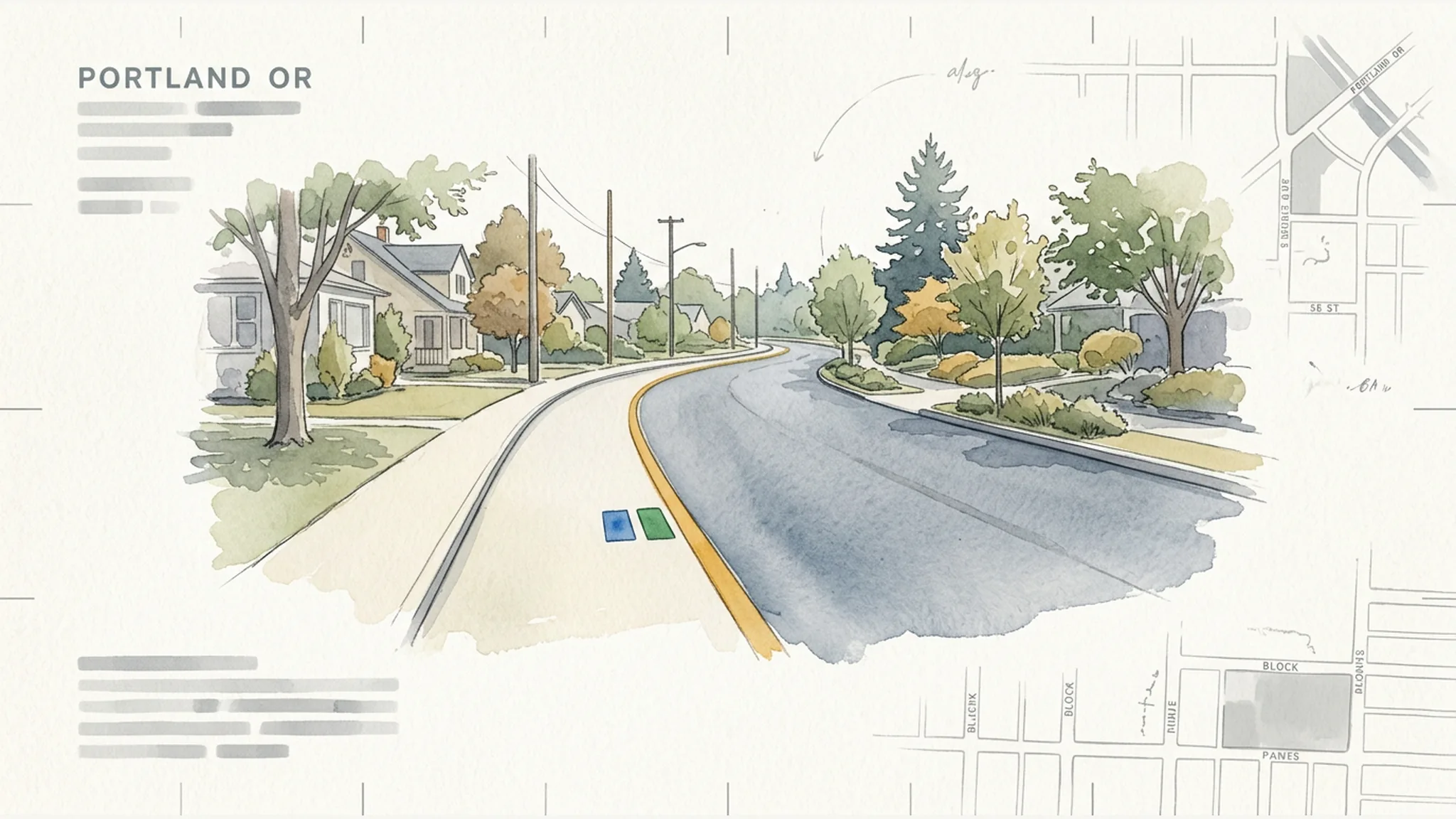
If you tripped on a Portland sidewalk, the City is not automatically responsible just because the sidewalk is public. Portland rules place significant sidewalk maintenance duties on the owner of the adjacent property. But that does not end every case.
The City of Portland may need a closer look when the fall involves City work, City employees or agents, certain City-controlled features, prior repair notices, unsafe right-of-way closures, or negligent performance of a task the City actually undertook. Public-body claims also raise strict Oregon Tort Claims Act notice issues, including a short notice period that is separate from the lawsuit deadline.
This article is educational information about Oregon and Portland rules. It is not legal advice for any specific case.
Public-sidewalk cases often turn on short notice and evidence preservation. See Johnson Law’s guide to the Oregon Tort Claims Act notice deadline and how to preserve slip-and-fall evidence quickly.
The Short Answer: Portland Sidewalk Claims Usually Require More Than “It Happened on a Sidewalk”
A Portland sidewalk fall usually starts with three questions:
- What exact feature caused the fall? Was it an ordinary sidewalk panel, curb, driveway apron, parking strip, green-street or stormwater facility, or construction-zone pedestrian route?
- Who had responsibility or control? The adjacent property owner, the City, a utility, a contractor, a permit holder, or another public entity may need to be investigated.
- Was a public-body claim deadline triggered? If the City may be involved, Oregon Tort Claims Act notice rules can matter quickly.
Portland’s Charter says owners of land abutting a Portland street have a duty to construct, reconstruct, and maintain adjoining sidewalks in good repair. Portland City Code also places responsibility on abutting property owners for constructing, reconstructing, maintaining, and repairing sidewalks, curbs, driveways, and parking strips, subject to specific exceptions.
At the same time, Oregon law allows tort claims against public bodies in some circumstances, subject to statutory limits and immunities. That means the practical answer is rarely as simple as “the City owns the sidewalk” or “the property owner is always the only target.” The facts of the location, hazard, timing, repair history, and work activity matter.
Why Portland Sidewalk Cases Often Start With the Adjacent Property Owner
Many injured pedestrians are surprised to learn that a sidewalk in the public right of way may still involve duties placed on the adjacent property owner.
Portland City Charter Section 9-407 gives abutting landowners the duty to keep adjoining sidewalks in good repair. Portland City Code 17.28.020 similarly states that owners of land abutting a street are responsible for constructing, reconstructing, maintaining, and repairing sidewalks, curbs, driveways, and parking strips next to the land, except as provided in the code.
PBOT’s public sidewalk repair guidance explains the same idea in plain language: property owners must keep sidewalks in good repair so they are free of tripping hazards and other safety hazards for pedestrians and people using wheelchairs.
What “sidewalk responsibility” can include
The Portland code language is broader than a single concrete slab. It refers to sidewalks, curbs, driveways, and parking strips adjacent to the property. It also states that abutting property owners are liable for damages to people injured because of defective sidewalks, curbs, driveways, or parking strips adjacent to the land, or because of the owner’s failure to keep them safe and in good repair.
That language is important in ordinary sidewalk-panel cases. But it should not be used too broadly. Curbs have specific rules. Green-street and public stormwater management facilities have specific rules. Construction or utility work in the right of way may involve permits, contractors, traffic-control plans, and other parties.
Why this does not automatically end the City-liability question
Local rules placing responsibility on abutting owners do not necessarily answer every question about the City’s own duties. The key is whether the facts point to City conduct, City control, negligent performance of an undertaken task, or another basis for public-body responsibility that is not barred by immunity.
For example, a case based only on the theory that the City should have inspected sidewalks more often may face very different defenses than a case involving negligent performance of work the City actually undertook. The distinction can be fact-specific.
Situations Where the City of Portland May Need a Closer Look
The City is not responsible for every sidewalk defect. Still, several Portland-specific scenarios may justify a closer investigation.
City work, employees, agents, contractors, or permit holders
Oregon’s Tort Claims Act provides that, subject to statutory limits and immunities, public bodies may be subject to civil action for their torts and for torts of officers, employees, and agents acting within the scope of their employment or duties.
For a Portland sidewalk fall, that framework may matter if the hazard is tied to City work, City employees or agents, or a task the City actually undertook. Contractors, utilities, and permit holders may also need investigation, but they may be separate responsible parties rather than City agents. The point is not to assume City liability; it is to avoid stopping the inquiry at the adjacent property line when the facts point to City activity or other right-of-way work.
Curbs, green streets, and stormwater facilities
The exact feature matters. Portland City Code 17.28.020 states that curbs are maintained by the City except when in combination with the sidewalk and when they have been willfully damaged or damaged by tree roots. That means a curb-related fall may require careful classification of the feature involved.
The code also treats green-street and other public stormwater management facilities differently. Those facilities in the right of way may be modified or repaired only by the City or under an appropriate permit from the City Administrator. If a fall occurs near a stormwater facility, planted curb extension, or similar right-of-way feature, it may be important to identify who controlled, permitted, modified, or repaired that feature.
Prior complaints, Sidewalk Repair Notices, and City repair records
PBOT says it investigates complaints of hazardous sidewalk conditions and issues Sidewalk Repair Notices as necessary to adjacent responsible property owners. Portland City Code allows the City Administrator to post a notice to repair a sidewalk or curb when repair is needed. After notice is posted, the owner, agent, or occupant generally has 60 calendar days to make repairs, and a permit is required for sidewalk or curb repair, construction, or reconstruction.
If the required repairs are not made within the 60-day period, the City Administrator may make the repairs when conveniently scheduled and assess the cost under the chapter.
Those records can matter. A prior complaint, repair notice, inspection record, or City communication may help show what was known, when it was known, and who was asked to act. But it is not automatic proof of negligence, causation, City liability, or compliance with Oregon Tort Claims Act notice rules.
Construction, utility work, and temporary sidewalk closures
Sidewalk fall cases can become more complicated when construction, utility work, property maintenance, or a temporary closure changes the pedestrian route.
Portland temporary street use permits can allow closure of portions of the sidewalk or traffic control in the street area for work such as construction, utility activity, or property maintenance. Portland transportation policy states that PBOT issues permits for temporary use of the public right of way, including sidewalk closures, and that parties working in the right of way are responsible for maintaining a valid temporary street use permit for the duration of their use.
In those cases, the investigation may need to identify the permit holder, contractor, subcontractor, utility, adjacent property owner, traffic-control plan, and any City involvement. A permit violation or unsafe closure may be important evidence, but it is not the entire negligence analysis by itself.
The Oregon Tort Claims Act Deadline Problem
If a sidewalk fall may involve the City of Portland, deadlines can become urgent.
Oregon’s Tort Claims Act defines public bodies to include local public bodies. For non-death personal injury claims against a public body, ORS 30.275 generally requires notice of claim within 180 days after the alleged loss or injury, with statutory caveats including certain incapacity periods of up to 90 days.
Formal notice must include a statement that a claim for damages is or will be asserted, a description of the time, place, and circumstances as far as known, and the claimant’s name and mailing address. For claims against a local public body, the statute describes ways formal notice may be given, including mail or personal delivery to the public body at its principal administrative office, a member of its governing body, or an attorney designated as general counsel.
Notice deadline is not the same as the lawsuit deadline
The 180-day notice issue is separate from the time to file a lawsuit. Oregon public-body tort actions generally must be commenced within two years after the alleged loss or injury, subject to listed statutory exceptions.
That distinction matters. A person may still be within a two-year lawsuit period but have a serious problem if the required public-body notice was not given on time.
City forms may help, but the statute controls
Portland Risk Management handles City liability claims. Portland’s claim-filing page says liability claims may involve personal injury, property damage, or damages and losses involving a City vehicle, and that claimants must submit a claim within 180 days of the incident. Portland’s FAQ states that City forms are designed to help comply with the notice requirement and that forms can be submitted by mail, personal delivery, fax, or email to Risk Management.
Those City resources can be useful, but ORS 30.275 is the controlling legal authority for formal notice requirements. The City FAQ also notes that requests for more information do not mean the City accepts liability.
Because notice issues can be case-ending, anyone considering a claim involving the City should act promptly and get advice about the specific facts and deadline calculations.
Discretionary Immunity: Why Some City Sidewalk Theories Are Harder Than Others
Oregon’s Tort Claims Act includes immunity for claims based on the performance of, or failure to exercise or perform, a discretionary function or duty, whether or not discretion is abused.
In plain English, some government decisions are treated as policy-level choices that cannot be the basis for liability. Sidewalk cases often raise this issue when the theory is that a city should have inspected more often, assigned more resources, or chosen a different repair priority.
Policy-level decisions versus specific work actually undertaken
ORS 30.265 includes discretionary-function immunity, and that defense can be important when a claim challenges inspection schedules, repair priorities, or resource-allocation choices. Claims based on negligent performance of a specific task the City actually undertook may require a different analysis.
For readers, the practical point is this: “The City should have found this sooner” may be a harder theory than “the City or someone acting for the City performed a specific task negligently.” The distinction depends on the actual records, the work performed, the decisions made, and the legal defenses available.
Evidence That Can Matter After a Portland Sidewalk Fall
Evidence can disappear quickly after a sidewalk fall. The goal is not to prove every legal element on day one. The goal is to preserve information that helps identify the hazard, the responsible parties, prior notice, and causation.
Photograph and measure the defect if it is safe to do so
Photos can help show the condition as it existed near the time of the fall. If it is safe, useful photos may include:
- the defect from several angles;
- the surrounding block, address, or nearby landmarks;
- lighting, weather, debris, or obstruction conditions;
- the walking path leading to the defect; and
- a measurement showing height difference, gap width, or depth.
PBOT identifies common sidewalk citation reasons such as vertical step separations of one-half inch or more, openings, cracks, or gaps one-half inch or wider, and spalling to a depth of one-half inch or more. Those are PBOT repair-enforcement or citation thresholds. They are not automatic civil-liability rules.
Identify the exact feature and adjacent property
The exact location can change the analysis. Try to identify whether the fall involved:
- an ordinary sidewalk panel;
- a curb;
- a driveway apron;
- a parking strip;
- a green-street or stormwater facility;
- a construction or utility work zone;
- a temporary pedestrian route; or
- a feature controlled by a non-City entity.
The adjacent property address may also matter because Portland rules place substantial sidewalk responsibilities on abutting owners.
Look for prior notice and permit records
Prior notice can be relevant, but it must be proven with records. Depending on the facts, useful records may include PBOT complaints, Sidewalk Repair Notices, permits, traffic-control plans, inspection records, contractor records, 311 or sidewalk hazard reports, and photographs.
Portland’s sidewalk hazard reporting page asks reporters to submit a photo with the online form and also provides a phone number for reporting sidewalk hazards. A prior report may help show that a hazard was known, but it should not be confused with formal Oregon Tort Claims Act notice for an injury claim.
Other Issues That Can Affect a Sidewalk Defect Claim
Even when a defect exists, several legal and practical issues can affect a Portland sidewalk injury claim.
Comparative fault
Oregon comparative fault law provides that a claimant’s negligence does not bar recovery if the claimant’s fault was not greater than the combined fault of specified others, but damages are reduced by the claimant’s percentage of fault.
In sidewalk cases, defense themes may include lighting, footwear, distraction, route choice, or whether the hazard was open and obvious. Those issues do not automatically defeat a claim, but they can affect liability and damages.
Public-body damages limits
Public-body claims are also subject to Oregon Tort Claims Act limits. For local public bodies, personal injury and death liability limits are adjusted annually by the State Court Administrator and depend on when the cause of action arose.
For causes arising July 1, 2025 through June 30, 2026, the listed local public body limits are $879,200 for a single claimant and $1,758,300 for multiple claimants. For causes arising July 1, 2026 through June 30, 2027, the listed limits are $902,700 for a single claimant and $1,805,300 for multiple claimants.
Those numbers are date-sensitive. They change each July 1 and may not apply the same way to every claim.
Multiple potentially responsible parties
A sidewalk fall may involve more than one potentially responsible party. Possible investigation targets can include the adjacent property owner, the City of Portland, a utility company, a contractor, a subcontractor, a permit holder, or another public entity such as a state, county, or transit-related entity.
This is especially true in construction-zone, utility-work, or temporary-sidewalk-closure cases.
When to Get Legal Help
Portland sidewalk cases can turn on details that are easy to miss: the exact feature involved, the adjacent property, prior PBOT complaints or repair notices, permits, traffic-control plans, City work records, and Oregon Tort Claims Act notice deadlines.
If you were injured in a Portland sidewalk fall and believe the City or another public body may be involved, it is important to act quickly. The OTCA notice period for non-death personal injury claims is generally 180 days, with statutory caveats, and that deadline is different from the general time to file a lawsuit.
This article is for general educational purposes only and is not legal advice. Reading it does not create an attorney-client relationship. A lawyer can evaluate the specific facts, deadlines, responsible parties, evidence, and defenses that may apply to your situation.
FAQ
Is Portland automatically responsible if I trip on a public sidewalk?
No. Portland code places significant responsibility on adjacent property owners for sidewalk maintenance and repair. City responsibility may require closer review when the facts involve City work, City-controlled features, prior repair processes, right-of-way permits, or negligent performance of a task the City undertook.
How long do I have to file a claim against the City of Portland after a sidewalk fall?
For non-death personal injury claims against a public body, Oregon Tort Claims Act notice is generally required within 180 days after the alleged loss or injury, with statutory caveats. That notice deadline is separate from the general two-year deadline for public-body tort actions.
Does a prior PBOT sidewalk repair notice prove the City is liable?
No. A prior complaint or repair notice may be relevant to knowledge, timing, and responsibility, but it does not automatically prove negligence, causation, City liability, or compliance with OTCA notice rules.
What sidewalk defects does PBOT cite for repair?
PBOT identifies examples including vertical step separations of one-half inch or more, openings, cracks, or gaps one-half inch or wider, and spalling to a depth of one-half inch or more. Those are repair-enforcement or citation thresholds, not automatic civil-liability rules.
What if I fell near a curb, green street, or construction closure?
The exact feature and control of the area matter. Portland rules treat some curbs and public stormwater or green-street facilities differently from ordinary sidewalk slabs. Construction, utility work, or temporary sidewalk closures may also involve permit holders, contractors, utilities, traffic-control plans, and City involvement.
Can my own fault affect a Portland sidewalk injury claim?
Yes. Oregon comparative fault can reduce damages by the claimant’s percentage of fault and may bar recovery if the claimant’s fault is greater than the combined fault of specified others.
For another public right-of-way issue, compare sidewalk defects with road-signage or traffic-control claims.
Sources
Key sources include:
- ORS 30.260 to 30.300, Oregon Tort Claims Act, including ORS 30.265 and ORS 30.275.
- ORS 31.600, Oregon comparative fault.
- Oregon Judicial Department annual adjustments to Oregon Tort Claims Act liability limits.
- Portland City Charter Section 9-407, Sidewalk Improvements and Repairs; Duty of Owners.
- Portland City Charter Section 1-106, claims timing language.
- Portland City Code Chapter 17.28, including Sections 17.28.020, 17.28.070, 17.28.080, and 17.28.090.
- Portland City Code 3.06.030, Risk Management responsibilities.
- Portland Bureau of Transportation sidewalk repair, sidewalk repair notice, sidewalk hazard reporting, and temporary street use permit materials.
- Portland Policy TRN-10.03 on temporary right-of-way use permits.
- ORS 30.265 discretionary-function immunity context; any detailed Oregon case-law discussion should be verified against official or complete sources before publication.
Client-First Fee Promise
Client First = Bills First, Fees Second
Your unpaid medical bills do not have to make your lawyer's fee bigger. Johnson Law subtracts qualifying medical bills before calculating our fee, helping clients keep more of their settlement.
Applies to qualifying cases. Results vary.