A Caregiver’s Medical Records Guide After Moderate or Severe TBI in Oregon

After an adult family member has been diagnosed with moderate or severe traumatic brain injury, start with the records you already have. Organize them around hospital care, rehabilitation, discharge, and help at home. A short timeline connects those pieces without requiring you to understand every medical term.
Keep three priorities in mind:
- An organized partial file can still be useful.
- Record what help made an activity possible, not just whether it was completed.
- Let the treating team interpret medical findings and future needs.
For a different reader question, see our guide to concussion and a normal CT.
Care comes before paperwork. New seizures, reduced consciousness, or new neurologic deficits need urgent medical evaluation; do not delay care to document them. NINDS describes these serious TBI warning signs.
Start with four simple steps—not a perfect file
- Put what you already have in one place. Use a paper or digital folder for discharge papers, instructions, and reports. List missing documents for later rather than trying to obtain everything today.
- Make a one-page care timeline. Note the injury date, facilities, transfers, rehabilitation stays, and follow-up appointments. Mark uncertain dates instead of guessing.
- Ask how to request the remaining records. Contact each records department about patient authorization or applicable representative documentation. Caregiving alone does not automatically make someone an adult patient’s HIPAA personal representative; authority and its scope matter. HHS explains personal-representative status.
- Begin a short dated observation log. Describe a meaningful task, the help actually provided, and a question for the treating team. You do not need to record every minute.
These are organization suggestions, not required legal forms. Choose a system you can maintain alongside caregiving.
Hospital records: preserve the sequence and clinical context
Group available records by date and facility. Useful documents to request may include:
- EMS and transfer records, emergency assessments, and discharge summaries.
- ICU notes, operative reports, and medication-administration records, where applicable.
- Dated neurologic examinations, imaging reports, and available images.
Not every patient has every record or intervention. The purpose is to preserve what happened, in order—not build a checklist of treatments that should have occurred.
A single Glasgow Coma Scale (GCS) total does not describe the whole injury. The American College of Surgeons’ TBI guideline explains the limits of a summed score and notes that intubation can make the verbal component untestable. Keep recorded components, timing, and related examinations together.
Medication context matters, too. Sedatives and paralytic medications can complicate GCS interpretation for prognosis, as explained in Brain Trauma Foundation prognostic guidance. Ask clinicians to explain unfamiliar notation; do not rescore the patient or draw a prognosis from one entry.
Keep scans with their dates and reports, but do not treat an image as a complete account of daily function or a measure of compensation. A changing hospital course also does not, by itself, establish negligent care.
Rehabilitation records: show what help made the task possible
Keep evaluations, progress notes, and discharge assessments together
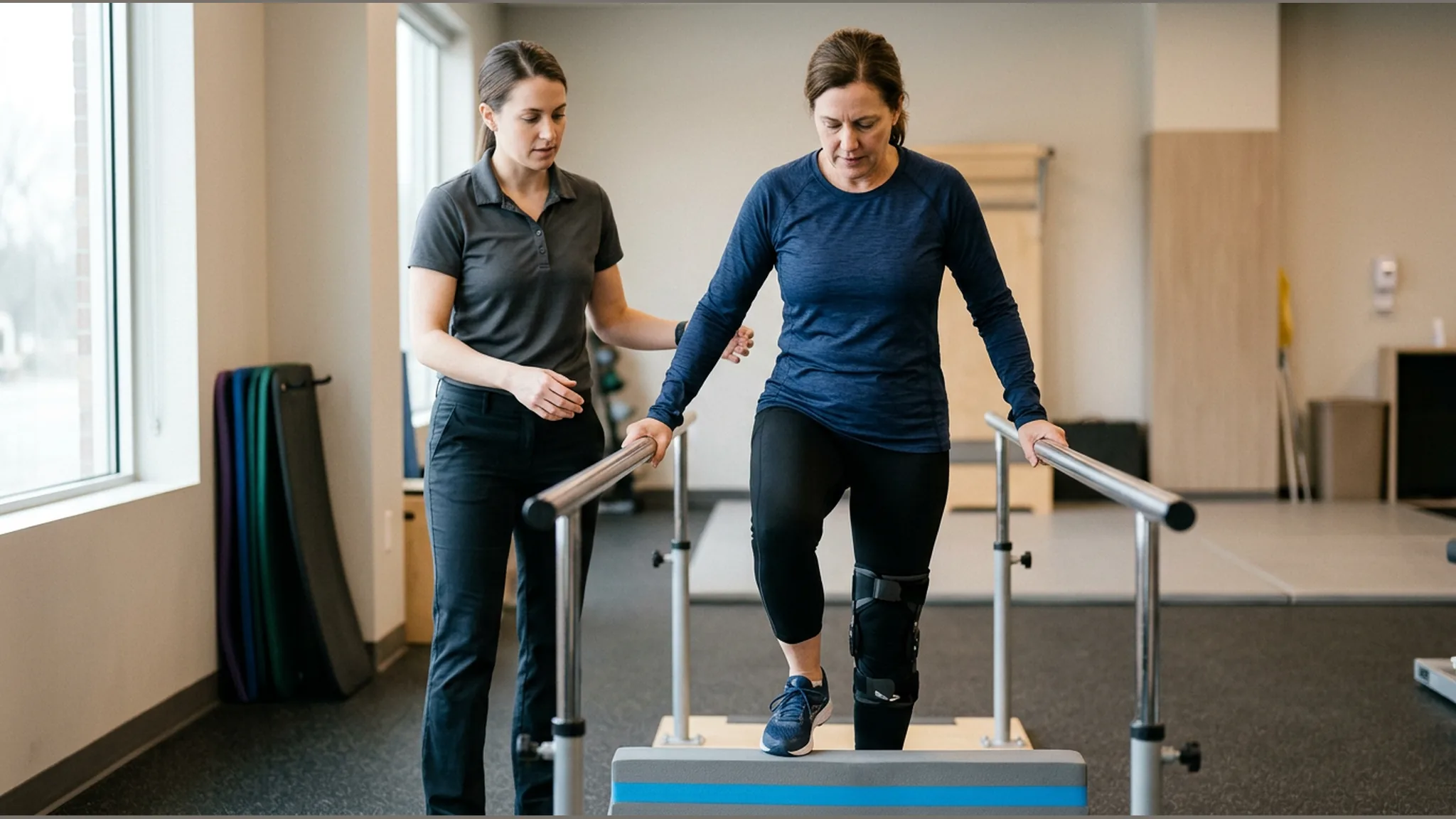
Rehabilitation records can explain abilities and difficulties that a diagnosis alone does not describe. Depending on the services actually provided, look for:
- Physical therapy: movement, walking, balance, and endurance.
- Occupational therapy: daily activities such as bathing, dressing, eating, and transfers.
- Speech-language pathology: communication and swallowing.
- Psychology or neuropsychology: thinking, memory, mood, and behavior where assessed.
These roles are described in MSKTC’s expert-reviewed inpatient rehabilitation factsheet. They are possible services, not a treatment roster every survivor needs. A referral alone does not establish a particular deficit.
Keep equipment recommendations, communication strategies, and any diet or swallowing instructions with the recommending provider’s record. Retain both the initial evaluation and later assessments so changes remain visible.
Preserve the assistance level and setting
“Completed the task” can leave out important information. Was the person independent, or did someone prepare the materials, give verbal cues, supervise, or provide hands-on help?
Preserve the clinician’s terminology and ask about unclear shorthand. Note the setting and supports rather than assuming successful performance in therapy means the same activity is manageable at home. Walking independently, for example, does not answer whether someone can manage meals or medications without help. The useful question is what the record says about each activity—not whether one success proves independence in everything.
At discharge, carry the recommendations into the home record
Keep the discharge summary, stated assistance or supervision needs, caregiver-training information, referrals, equipment recommendations, and follow-up instructions together. Add unresolved questions for the discharge team.
MSKTC’s rehabilitation guidance explains that discharge planning considers the help and supervision a person will need afterward. Going home is not the same as having no further support needs. Nor does every person follow the same hospital-to-inpatient-rehabilitation-to-home path; organize the transitions that actually occurred.
Write down who recommended a support and when. Keep later changes beside earlier recommendations, so an initial plan is not mistaken for a permanent one.
If recommended rehabilitation is delayed or interrupted, save the actual explanation and related communications. Insurance authorization, facility availability, and distance can affect access, according to the National Academies’ report on rehabilitation and long-term care. A gap alone does not show that care was unnecessary, and documenting it does not decide its legal effect.
A caregiver log: describe the task, the help, and the result
The VA’s TBI caregiver guidance discusses calendars, notebooks, and routines as practical supports. The observation log below is an editorial organization suggestion—not a VA-validated assessment or a substitute for clinical records.
Use these fields when useful:
Date/time and setting:
Task:
Source: Direct observation, patient report, or later recollection.
Difficulty observed and help provided:
Approximate time:
Result or safety concern:
Question or follow-up shared with the treating team:
Fictional example—not a patient account:
Monday, 8:30 a.m., home. Direct observation: while using the appointment calendar, Alex needed two verbal reminders to locate today’s appointment and write down its time. About five minutes of help; Alex then read the time back. No safety incident observed. Question to ask the rehabilitation team: is our calendar setup consistent with the recommended strategy?
A later entry might read:
Wednesday, same calendar task: Alex found the appointment without a reminder.
These entries show a task, specific help, and variability—not a diagnosis or prediction. Record easier days and improvements as honestly as difficulties. Include relevant pre-injury context when known, and identify recollections as recollections.
Distinguish a planned question from a conversation that actually happened. A log can give the team concrete observations to discuss; it does not establish medical causation, permanent care needs, or payment for each recorded minute.
A simple checklist for keeping the packet usable
Use this as a suggested filing system, not another obligation:
- Put the one-page timeline and provider/facility contact list at the front.
- Separate hospital care, rehabilitation, discharge/follow-up, and home observations; arrange each section by date.
- Track requests: facility, records/date range requested, request date, received date, and missing items.
- Keep original reports separate from family summaries; label each summary’s author and date.
- Use consistent labels, such as
date – provider – document type, and point from the timeline to relevant records. - Keep updated recommendations alongside earlier versions, with dates clear.
- Keep relevant bills, receipts, and brief work records separately: actual duties, provider restrictions, hours, and attempted returns.
- Maintain a short questions list; mark unknown information rather than filling it in by assumption.
The work-record item is not a wage-loss calculation. CDC guidance explains that returning to work depends on the injury, symptoms, and job demands—not one universal timetable.
Connect home observations to professional recommendations—not a lifetime-care estimate
A useful sequence is: record the help provided, ask the treating team about it, retain any resulting assessment or recommendation, and keep later reassessments. Family observations do not themselves prescribe services.
For each recommendation, preserve who made it, the functional need it addresses, and any stated duration or conditions for reassessment. The National Academies report describes varied long-term needs: some survivors need lifelong care, while others need periodic follow-up. Neither a serious-injury label nor a caregiver log establishes a fixed lifetime package.
Oregon’s ORS 31.705(2)(a)–(b) includes reasonable charges necessarily incurred for medical and rehabilitative services within economic damages, and interference with normal and usual activities apart from gainful employment within noneconomic damages. Those definitions do not guarantee recovery of every expense or establish a claim’s value.
For the separate planning and cost-evidence task, see documenting future medical costs. Broader legal questions belong with an individualized review of Oregon brain injury claims.
Common caregiver record questions
What if we did not start keeping records right away?
Start now with available documents and a partial timeline. Label later recollections and missing information; a perfect diary is not required.
Can I request an adult relative’s chart because I am their caregiver?
Not automatically. Ask the records department about patient authorization or applicable representative documentation.
Does discharge home mean no more assistance is needed?
No automatic conclusion follows. Look to the discharge plan and individualized recommendations for the support expected afterward.
This guide provides educational information only, not legal advice. Ask the treating team about individualized medical questions.
Client-First Fee Promise
Client First = Bills First, Fees Second
Your unpaid medical bills do not have to make your lawyer's fee bigger. Johnson Law subtracts qualifying medical bills before calculating our fee, helping clients keep more of their settlement.
Applies to qualifying cases. Results vary.