Cyclist Doored in Portland: How Fault Is Usually Proven After an Unsafe Door Opening
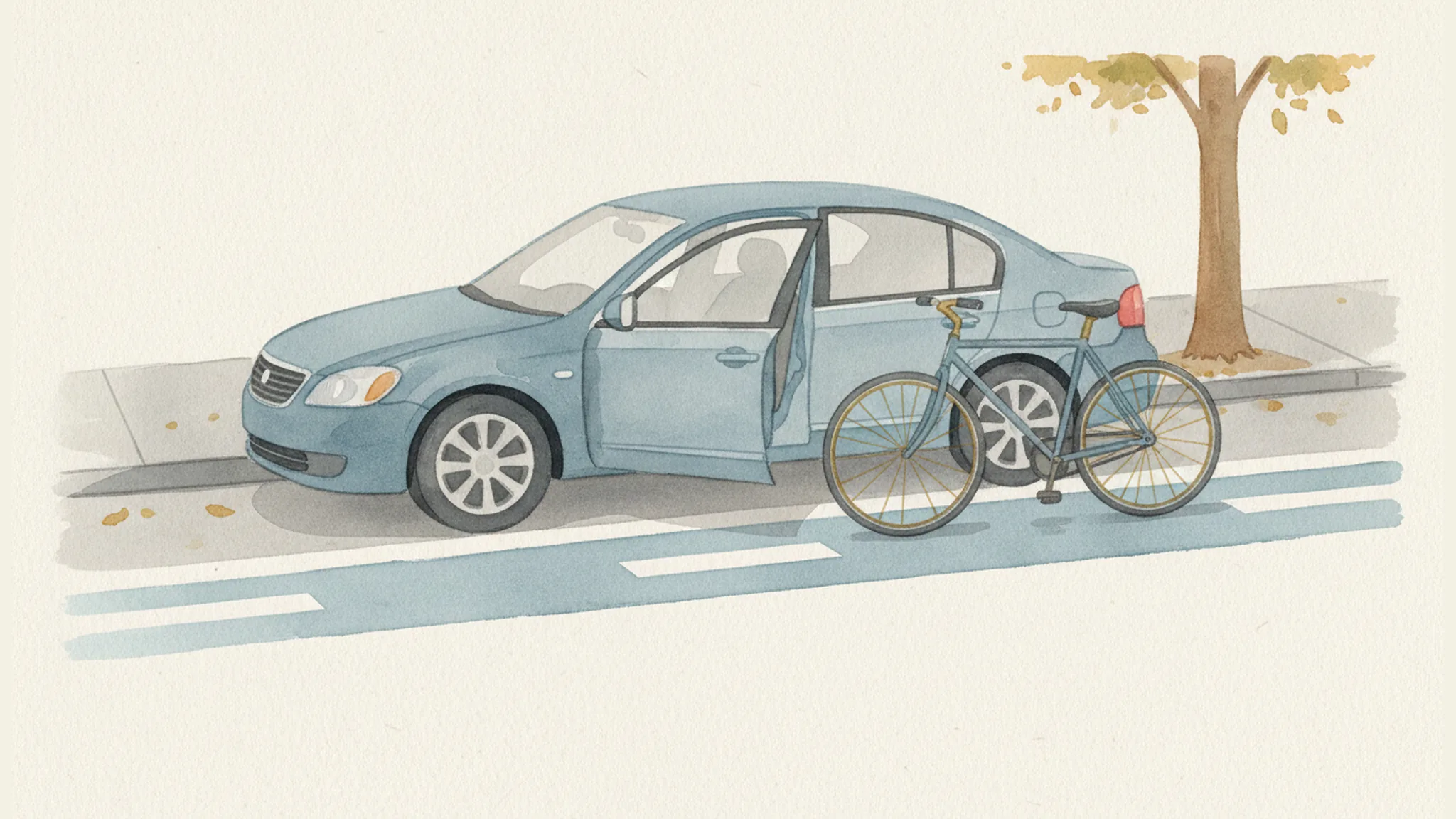
Cyclist Doored in Portland: How Fault Is Usually Proven After an Unsafe Door Opening
Educational information only, not legal advice. Oregon dooring cases are fact-specific, and liability often turns on the exact roadway layout, the parked vehicle’s position, and how quickly evidence was preserved.
If a driver or passenger opened a car door into your path, the core Oregon rule is straightforward: a vehicle door cannot be opened unless it is reasonably safe to do so.
That rule appears in ORS 811.490, and it is the starting point for most bicycle dooring claims in Oregon.
For injured bicyclists, though, the real fight is often about proof. Similar evidence-preservation issues can arise when Portland bike-lane layout, parking position, and sight distance shape a different conflict, such as a Portland bike-lane right-hook crash.
In a dooring case, the proof questions usually include:
- Where exactly were you riding?
- Where was the parked car positioned?
- When did the door open?
- Did the occupant have time to check first?
- What records, photos, video, and witness accounts support your version of events?
For the broader Oregon bicycle-claim picture, see our bicycle accidents page. For a related turning-conflict scenario, see Right-Hook Bike Crash in Oregon. If the same kind of unsafe door opening injured a motorcyclist in the general travel lane instead of a bicyclist in a bike-lane setting, see our companion Oregon post on motorcycle dooring liability.
1) The Core Oregon Rule in a Dooring Case
ORS 811.490 makes it unlawful to open a vehicle door unless and until it is reasonably safe to do so and it can be done without interfering with traffic.
That means a parked or stopped vehicle occupant cannot open a door into a bicyclist’s path without first making sure it is reasonably safe to do so.
In many real-world claims, the core theory is simple:
- The door opened into the bicyclist’s path.
- It was not reasonably safe to do so.
- The unsafe opening interfered with the bicyclist’s movement.
- The resulting collision caused injury and loss.
2) Bicyclists Still Have Full Road-User Status in Oregon
ORS 814.400 says people riding bicycles generally have the same rights and duties as drivers under Oregon’s vehicle code unless a statute specifically says otherwise.
That matters in dooring cases because insurers sometimes fall back on stereotypes: the rider should have been farther right, farther left, slower, or more defensive. Oregon law is more specific than those talking points.
3) What a Portland Cyclist Usually Needs To Prove
The door opened into the cyclist’s actual travel space
This is the basic event question. Useful proof may include impact damage to the door edge, handlebars, brake levers, clothing, or the bike frame, along with scene photos showing the door arc compared to the curb, parking lane, and bicycle lane.
It was not reasonably safe to open the door
This is the center of ORS 811.490. The issue is not whether the occupant meant to cause harm. The issue is whether it was reasonably safe to open the door when they did.
The bicyclist’s position was lawful or reasonably explained
This is where lane-position arguments usually begin. A rider may have been in a bike lane, in the general lane, or slightly left of parked cars for safety reasons. Oregon statutes are not as simplistic as “the bicyclist should always hug the parked cars.”
The crash caused real injury and loss
Even if fault looks strong, medical records, time-loss records, and property-damage documentation still matter.
4) The Evidence That Usually Makes the Difference
DMV reporting and the collision report
Oregon DMV says qualifying crashes require an Oregon Traffic Collision and Insurance Report within 72 hours, and the filing requirement can still apply even if police also responded. That can matter because the report may lock in identifying information, insurance details, and the driver’s own account.
Police records
If Portland Police responded, the report may contain party statements, witness names, a location description, and scene observations about the parked vehicle, the bike lane, and the point of impact. The Portland Police Bureau Records Division explains the public-records process for requesting available records.
ODOT crash coding
ODOT’s crash code manuals matter because they include specific door-opening and bicycle-lane codes. The system distinguishes a vehicle door opened into adjacent traffic and also treats bicycle-lane crashes as roadway crashes rather than off-roadway events.
Crash coding is not a substitute for proof, but it can support the basic narrative when the official records were coded consistently with a door-opening event.
Photos, video, and witnesses
Immediate scene proof is often the strongest proof. Try to preserve:
- close-up photos of the door edge and damage,
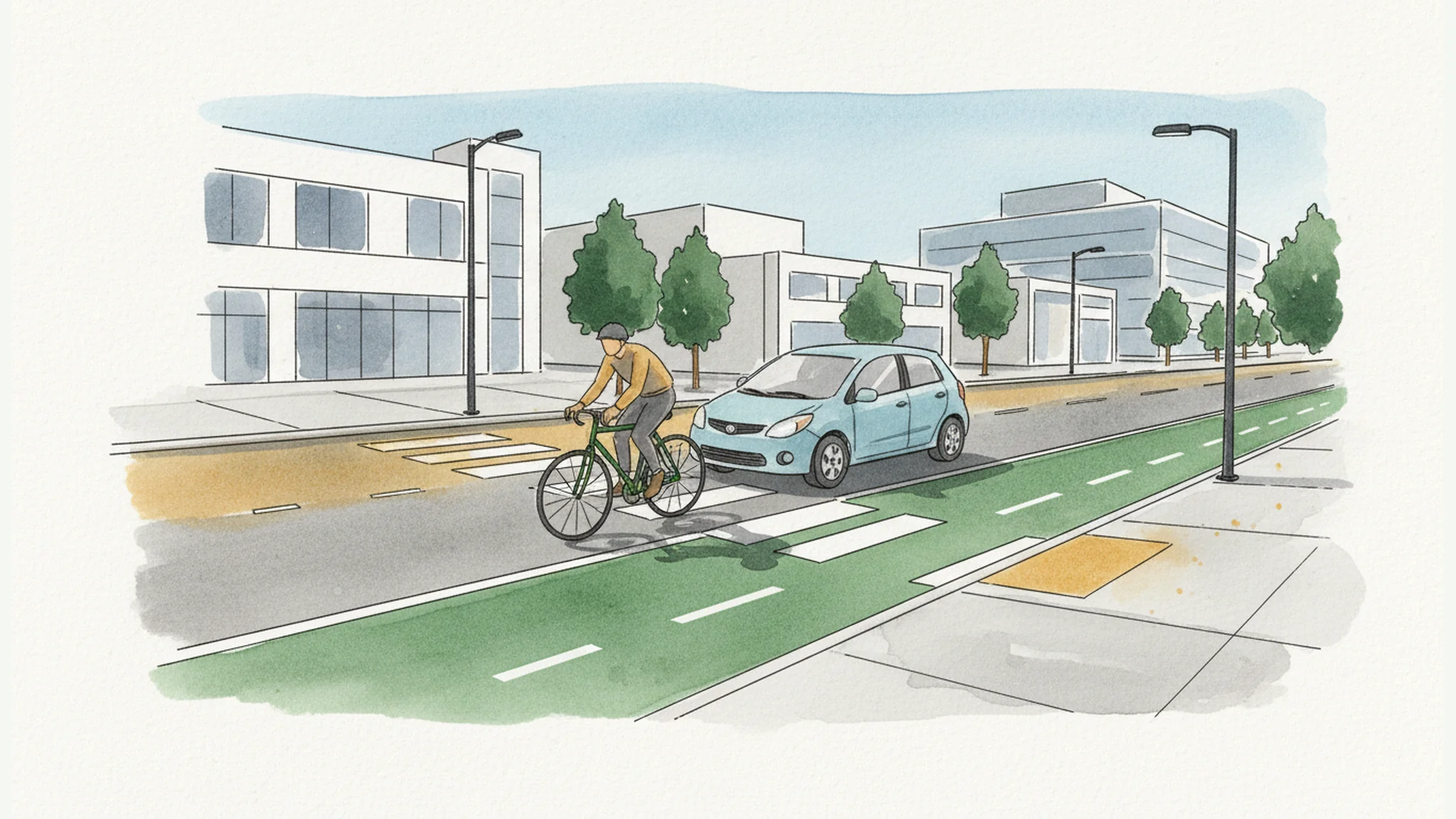
- wide photos showing the curb, parking lane, travel lane, and bike lane,
- nearby camera locations,
- witness names and contact information,
- and damage to the bike, clothing, backpack, and helmet.
5) Why Bike-Lane Position Becomes the Fight So Often
Drivers must yield to riders on a bicycle lane
ORS 811.050 requires drivers to yield to bicyclists on a bicycle lane. If the rider was already in the bike lane, that is an important starting point.
Limited motor-vehicle use of the bike lane does not erase safe-movement duties
ORS 811.440 allows limited motor-vehicle use of a bike lane in certain situations, such as turning or entering or leaving an alley, private road, or driveway. That does not mean a driver can interfere with a bicyclist there without consequence.
Bicyclists do not always have to stay tight against parked cars
ORS 814.420 and ORS 814.430 contain important exceptions for bike-lane use and lane position. Those statutes recognize situations involving hazards, passing, too-narrow lanes, and other unsafe conditions.
That can matter in a parked-car corridor where riding slightly left of the door zone may have been the safer and more lawful choice.
6) Parking Position Can Matter More Than People Expect
ORS 811.570 generally requires a parallel-parked vehicle to sit within 12 inches of the curb, subject to the terms of the statute.
If the car sat unusually far from the curb, that can widen the door zone and reduce the riding space available to the bicyclist. In a disputed case, the parked position can support the bicyclist’s account of why there was less room than the defense now claims.
7) Comparative Fault Still Comes Up in Dooring Cases
Oregon uses comparative fault. Under ORS 31.600, an injured bicyclist’s damages can be reduced by that bicyclist’s share of fault, and recovery is barred only if the claimant’s fault is greater than the combined fault of the people compared under the statute.
That is why insurers often argue:
- the rider was going too fast,
- the rider should have avoided the door,
- the rider should have been farther left or farther right, or
- the rider should have anticipated the opening.
Those are fact arguments, not automatic legal conclusions.
8) Oregon Limits Use of Helmet Nonuse To Reduce Damages in Covered Cases
ORS 814.489 says lack of protective headgear is not admissible to reduce damages or create a defense in the covered bicycle injury actions described by the statute when another person was at fault in whole or in part.
That does not decide every medical-causation dispute, but it does mean helmet nonuse is not a free shortcut defense to cut down damages.
9) Portland-Specific Practical Points
Use PBOT maps to preserve the roadway layout
PBOT’s bike maps of Portland can help preserve what the block looked like, including bike-lane presence, route type, and street layout.
Use police records early
If Portland Police created records, request them early through the City’s records process. Witness information and supplemental details often get harder to track down with time.
Be careful with crash-network summaries
PBOT’s High Crash Network page is useful for corridor context, but PBOT also warns that its collision lists rely on underreported crash data and should not be treated as a complete record. That caution matters in bicycle dooring cases, which are not always captured cleanly in public crash summaries.
10) What To Do After a Portland Dooring Crash
If you are physically able after the crash:
- Photograph the vehicle, the open door, the curb, striping, and your bike position.
- Get the plate number, driver information, and insurance details.
- Ask witnesses for names and phone numbers.
- Look for nearby cameras immediately.
- Preserve the damaged bike, clothing, helmet, and gear.
- Get medical care promptly.
- Request available police and DMV records.
- Preserve screenshots or maps showing the roadway layout.
Bottom Line
In Oregon, a Portland dooring case usually turns less on abstract legal slogans and more on whether the evidence shows the door was opened when it was not reasonably safe to do so.
That is why fast preservation of photos, witnesses, records, parked position, and roadway layout often makes the biggest difference.
FAQ
Is dooring illegal in Oregon?
Often, yes. ORS 811.490 prohibits opening a vehicle door unless it is reasonably safe to do so.
What if I was riding in a Portland bike lane when the door opened?
That may strengthen the analysis in your favor. ORS 811.050 requires drivers to yield to bicyclists on a bicycle lane.
What if I moved out of the bike lane before the crash?
That does not automatically defeat a claim. Oregon’s bike-lane and lane-position statutes include safety exceptions that may justify the rider’s position.
Can the defense argue I should have avoided the door?
Yes, and they often do. But that is a comparative-fault argument, not an automatic defense.
Does not wearing a helmet reduce damages in Oregon?
Often no. Under ORS 814.489, helmet nonuse is not admissible to reduce damages or create a defense in the covered actions described by the statute.
Does a badly parked car matter?
It can. Parking position can change the amount of space available to the bicyclist and may support the rider’s account of the crash.
Sources
- ORS 811.490
- ORS 814.400
- ORS 811.050
- ORS 811.440
- ORS 814.420
- ORS 814.430
- ORS 31.600
- ORS 814.489
- ORS 811.570
- Oregon DMV Collision Reporting and Responsibilities
- Oregon Traffic Collision and Insurance Report form
- ODOT Crash Analysis and Code Manual
- Portland Police Bureau Records Division
- PBOT Bike and Walk Maps of Portland
- PBOT High Crash Network streets and intersections
Client-First Fee Promise
Client First = Bills First, Fees Second
Your unpaid medical bills do not have to make your lawyer's fee bigger. Johnson Law subtracts qualifying medical bills before calculating our fee, helping clients keep more of their settlement.
Applies to qualifying cases. Results vary.