Bike vs. Car at an Unprotected Intersection in Oregon: Who Has the Right-of-Way?
Bike vs. Car at an Unprotected Intersection in Oregon: Who Has the Right-of-Way?
Educational information only, not legal advice. Oregon bicycle intersection cases are fact-specific, and the right-of-way answer can change based on where the rider was traveling, what control existed, and what the evidence shows.
Quick Answer
Oregon does not use one single bike-versus-car rule for every unprotected intersection crash.
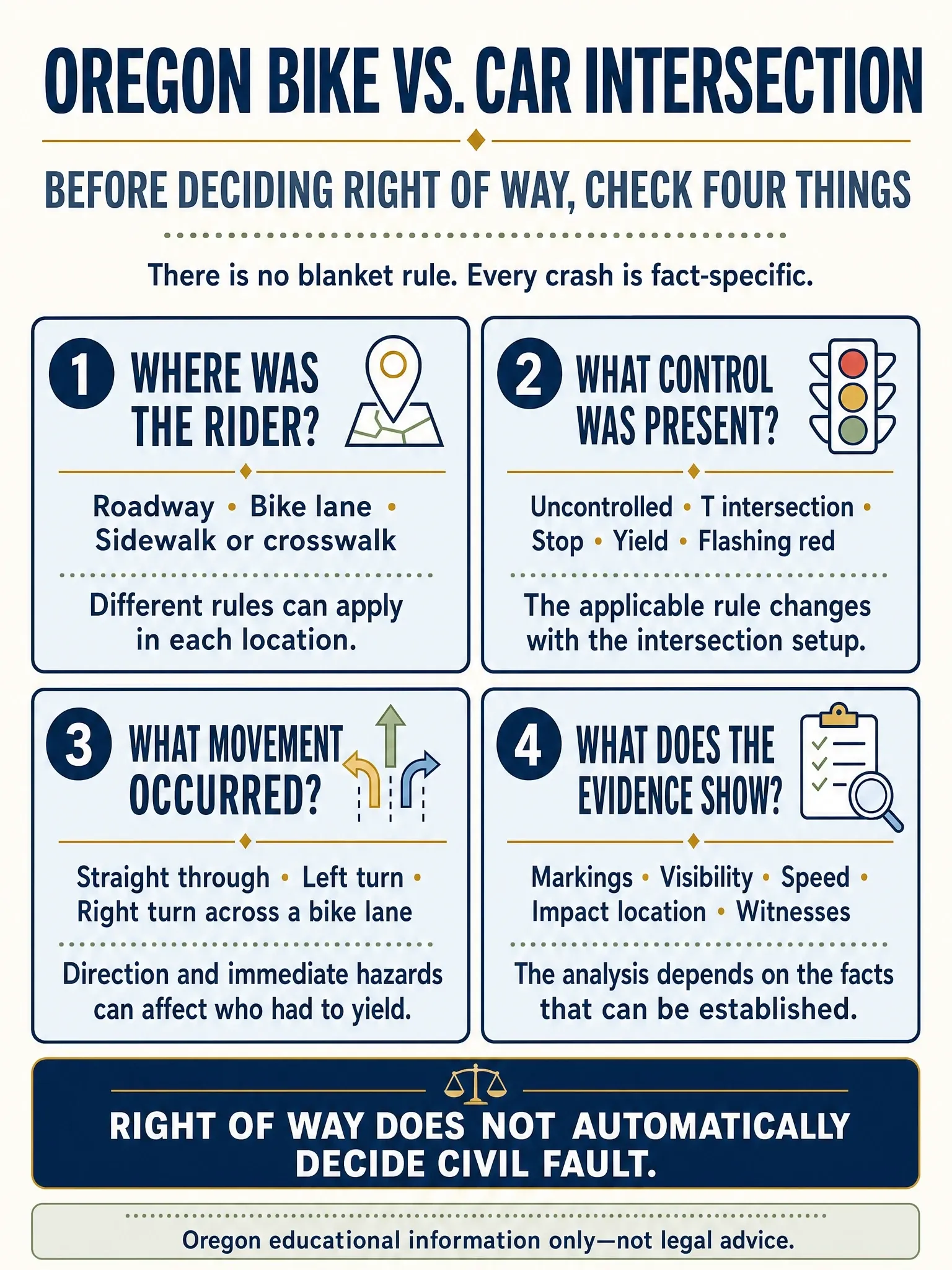
The analysis usually starts with four questions:
- Was the bicyclist riding in the roadway?
- Was the bicyclist riding in a bicycle lane?
- Was the bicyclist on a sidewalk or in a crosswalk?
- Was the intersection uncontrolled, stop-controlled, yield-controlled, or a flashing-red situation?
Those details often matter more than broad assumptions about who “got there first.” If you need broader claim context, our bicycle accidents page covers the larger Oregon bicycle-injury framework.
1) Oregon Does Not Have One Single Bike-Vs.-Car Intersection Rule
Under ORS 814.400, a bicyclist on a public way generally has the same rights and duties as the driver of any other vehicle unless a statute specifically says otherwise.
That is why Oregon does not have a blanket rule that cars always win at intersections or that bikes always win at intersections. The legal answer depends on the roadway setup, the applicable control device, and the exact movement each person made before the crash.
2) Start With Where the Bicyclist Was Traveling
Riding in the roadway
If the bicyclist was riding in the roadway, the starting point is usually the same general intersection rules that apply to other vehicles, filtered through Oregon’s bicycle-specific statutes.
That does not mean every defense claim about lane position is correct. Oregon law also recognizes that bicyclists may lawfully leave or avoid a bicycle lane in certain situations, and may move away from the curb when necessary for safety. See ORS 814.420 and ORS 814.430.
Riding in a bicycle lane
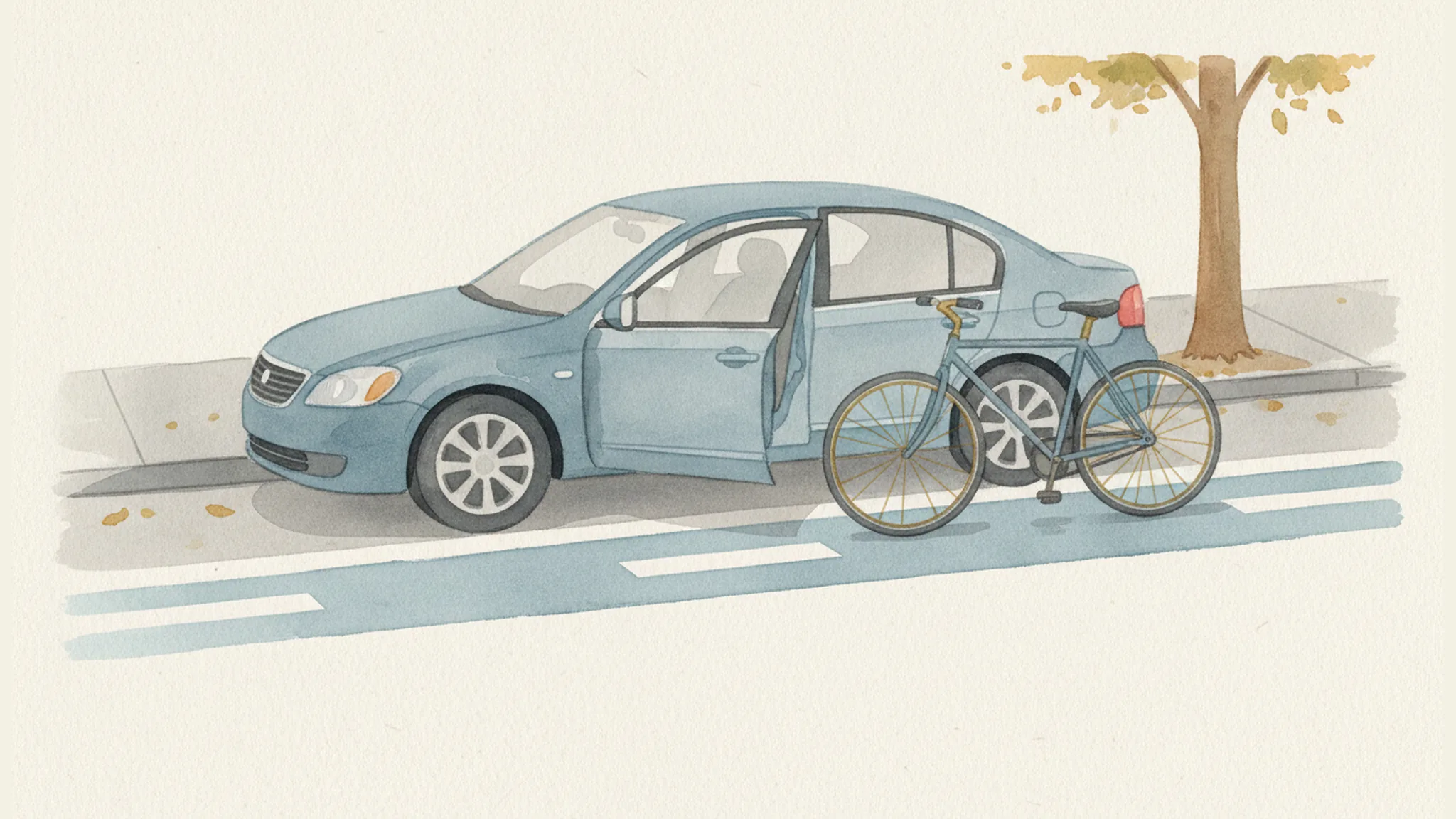
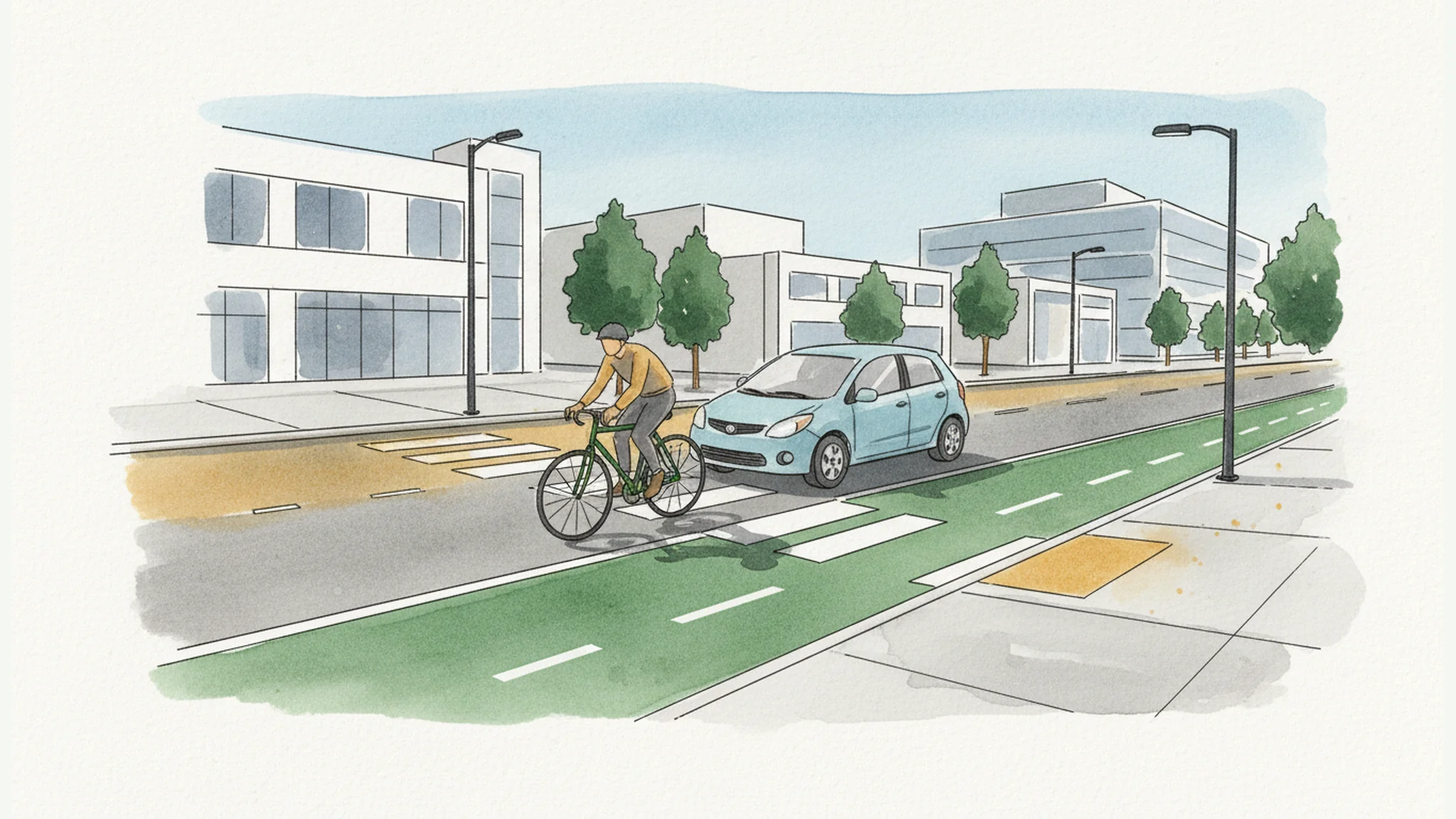
If the rider was in a bicycle lane, that can materially change the analysis. ORS 811.050 requires a motor vehicle operator to yield the right of way to a person operating a bicycle on a bicycle lane.
At the same time, ORS 811.440 allows limited motor-vehicle use of a bike lane for turning or entering or leaving certain places. That limited permission does not erase the separate duty to yield or the duty to move safely.
Riding on a sidewalk or in a crosswalk
Sidewalk and crosswalk bicycle cases are different from roadway cases. Under ORS 814.410, a bicyclist on a sidewalk or in a crosswalk generally has the same rights and duties as a pedestrian there, except where the statute provides otherwise.
ORS 811.055 also requires drivers to yield to bicyclists on sidewalks, while preserving separate limits on unsafe sidewalk riding. And ORS 801.220 defines crosswalks broadly enough that an unmarked crosswalk can matter even where nothing is painted on the pavement.
3) What Happens at a Truly Uncontrolled Intersection?
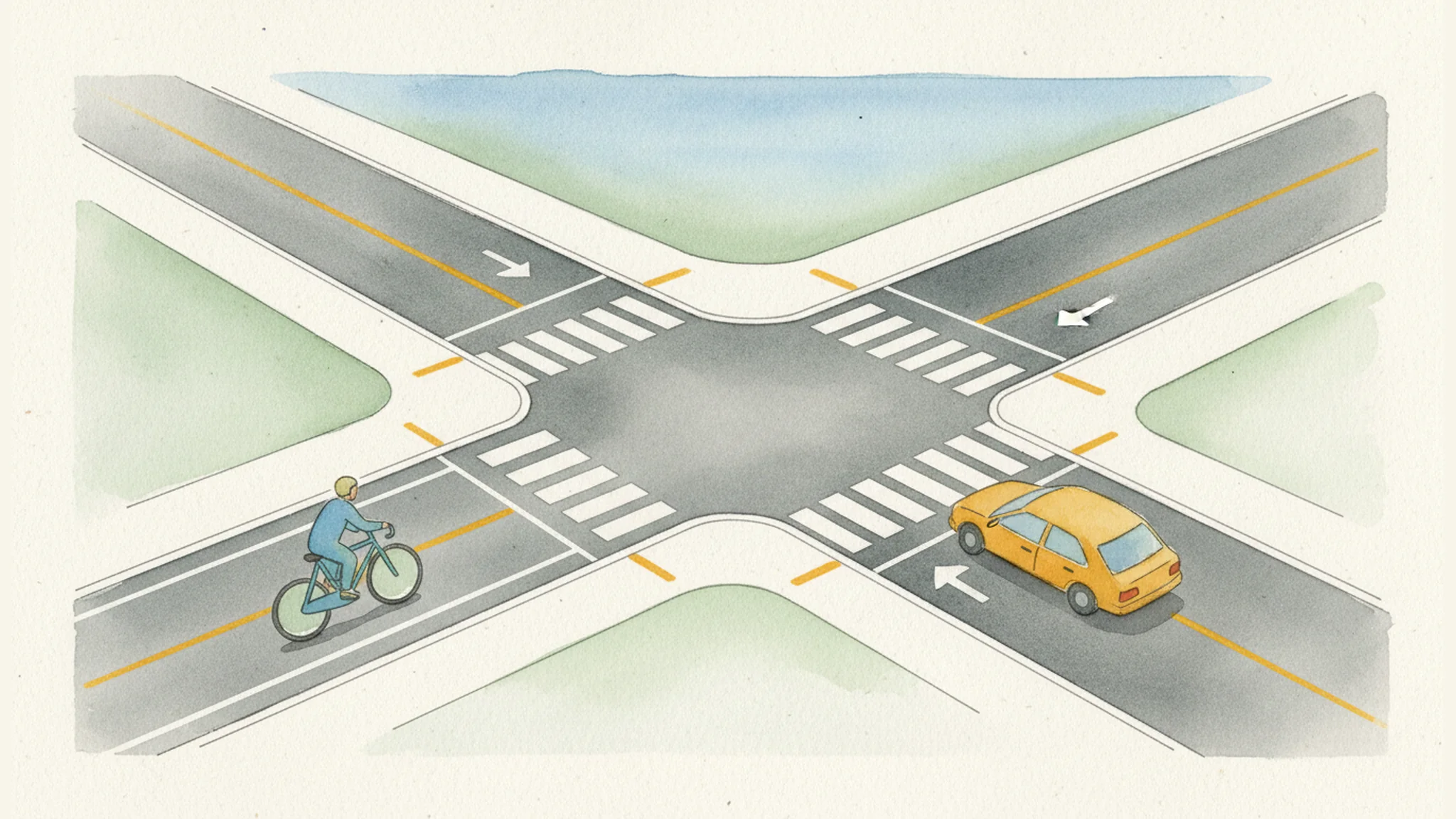
At a genuinely uncontrolled intersection, Oregon generally applies the ordinary uncontrolled-intersection rule. Under ORS 811.275, the operator on the right has the preference when both approach a given point at about the same time.
That same statute also says a person traveling at unlawful speed can lose a right-of-way claim that otherwise might have existed. So in a bike-versus-car crash, speed can matter even before anyone gets to comparative fault.
T intersections work differently
Unsignalized T intersections have their own rule. Under ORS 811.277, traffic on the terminating road yields to traffic on the through road.
4) Stop Signs, Yield Signs, and Flashing Red Signals Still Require Close Analysis
Stop signs
ORS 811.260 governs stop and yield duties. A driver must stop at the proper point and then yield to traffic already in the intersection or close enough to be an immediate hazard.
For bicyclists, Oregon has a separate stop-sign statute. Under ORS 814.414, a bicyclist may proceed through or turn at a stop sign without fully stopping if the rider slows to a safe speed and still yields where required. That statute does not create automatic bicycle priority.
Flashing red
Oregon also gives bicyclists a limited flashing-red exception. Under ORS 814.416, a bicyclist may proceed without a complete stop if the rider slows to a safe speed and still yields to immediate hazards and pedestrians.
Yield signs
Yield situations remain fact-specific too. The main questions are still who had the duty to slow or stop, who had the immediate hazard, and who entered the intersection lawfully.
5) Turning Movements Often Decide These Crashes
Left turns across the bicyclist’s path
Left-turn intersection crashes can be more straightforward under Oregon right-of-way rules, even though the facts are often disputed. Under ORS 811.350, a left-turning driver must yield to opposing traffic that is within the intersection or so close as to be an immediate hazard.
That can include a bicyclist approaching lawfully.
Right turns near a bicycle lane
Right-turn cases often involve overlapping rules on yielding to bicyclists in a bike lane, signaling, safe turning, and lane position. They deserve a separate analysis, which is why we cover them more directly in Right-Hook Bike Crash in Oregon.
6) Sidewalk and Crosswalk Bike Cases Need Separate Treatment
Many disputes come from treating a sidewalk-crossing bike crash like an ordinary roadway crash. That can be misleading.
If the bicyclist was on a sidewalk or entering a crosswalk, the fact questions often include:
- whether the rider entered suddenly,
- whether the rider approached faster than the sidewalk statute allows near a crosswalk or driveway,
- whether the motorist had a duty to yield,
- whether the location functioned as a marked or unmarked crosswalk, and
- whether visibility was blocked by parked cars, signs, landscaping, or building corners.
7) Right of Way Does Not Automatically Decide Civil Fault
Even if a citation was issued, civil liability is not automatic. Even if no citation was issued, civil liability is not automatically defeated.
Oregon uses modified comparative fault. Under ORS 31.600, an injured person’s damages can be reduced by that person’s share of fault, and recovery is barred only if the claimant’s fault is greater than the combined fault of the people compared under the statute.
That is why these cases often turn on careful fact development, not just on one label like “the bicyclist had the right of way” or “the driver had the green.”
8) What Evidence Usually Matters Most
Key evidence usually shows where each person was, what controls were present, and who moved into whose path.
Traffic controls and lane markings
Photograph or preserve:
- stop signs,
- yield signs,
- flashing red signals,
- lane arrows,
- bicycle-lane markings,
- crosswalks and stop bars, and
- any signs affecting turns or lane use.
Officer sketch and narrative
ODOT’s police crash-report instruction materials treat the sketch as a critical aid and direct officers to record roadway arrangement, visibility obstructions, impact location, paths of travel, and related details. Those records may not settle fault, but they can be important anchors for later analysis.
Witnesses, visibility, and speed
Independent witnesses may help establish whether anyone stopped, whether the bicyclist was in the roadway or bike lane, whether a turn signal was used, and whether visibility was blocked. Speed statements can matter too, especially in uncontrolled-intersection crashes where unlawful speed can affect the right-of-way analysis.
Exact impact location
The point of impact, debris field, and final resting positions can help confirm whether the collision occurred in the travel lane, bicycle lane, or crosswalk area. ODOT’s crash data manuals also treat a bicycle lane as part of the roadway, not an off-roadway area.
9) What To Do After a Bicycle Intersection Crash in Oregon
If you are physically able after the crash:
- Get medical attention.
- Call police when appropriate and note how to obtain the report.
- Photograph the whole intersection, not just the damaged vehicles or bike.
- Capture traffic controls, lane markings, bike-lane markings, and crosswalk lines.
- Get witness names and contact information.
- Preserve your bike, helmet, lights, clothing, and any camera or route data.
- Write down what you remember while it is still fresh.
- Avoid guessing about speed, timing, or fault if you are unsure.
For broader intersection-fault context in another crash setting, see our Portland intersection T-bone fault guide.
Bottom Line
There is no single bike-versus-car right-of-way rule for every Oregon unprotected intersection crash. The answer depends on where the rider was traveling, what control existed, what movement the driver made, and what the evidence shows.
That is exactly why early documentation matters so much in bicycle intersection cases.
FAQ
Does a bicyclist always have the same right of way as a car in Oregon?
Not exactly. Oregon generally gives bicyclists the same rights and duties as drivers on public ways, but bicycle-specific statutes and sidewalk or crosswalk rules can change the analysis.
Who has the right of way at an uncontrolled intersection in Oregon?
The answer often depends on who approached from the right, whether the crash happened at a T intersection, and whether anyone was traveling at unlawful speed under ORS 811.275.
Can a bicyclist roll through a stop sign in Oregon?
Sometimes. ORS 814.414 allows bicyclists to proceed at a stop sign without fully stopping in certain circumstances, but the rider still must yield where required.
What if the driver turned left in front of the bicyclist?
A left-turning driver generally must yield to opposing traffic that is already in the intersection or close enough to be an immediate hazard. That can include an oncoming bicyclist.
What if the bicyclist was riding on the sidewalk or in a crosswalk?
That is a different legal posture from a roadway case. Oregon uses separate sidewalk and crosswalk rules that can materially change the fault analysis.
Can an injured bicyclist still recover if they were partly at fault?
Potentially yes. Oregon comparative fault may reduce recovery, and it bars recovery only if the injured person’s fault is greater than the combined fault of the people compared under the statute.
Sources
- ORS 814.400
- ORS 814.410
- ORS 814.414
- ORS 814.416
- ORS 814.420
- ORS 814.430
- ORS 811.050
- ORS 811.260
- ORS 811.275
- ORS 811.277
- ORS 811.350
- ORS 811.440
- ORS 801.155
- ORS 801.220
- ORS 801.440
- ORS 31.600
- Oregon Driver Manual
- ODOT/DMV Police Traffic Crash Report Instruction Manual
- ODOT Statewide Crash Data System Code Manual
Client-First Fee Promise
Client First = Bills First, Fees Second
Your unpaid medical bills do not have to make your lawyer's fee bigger. Johnson Law subtracts qualifying medical bills before calculating our fee, helping clients keep more of their settlement.
Applies to qualifying cases. Results vary.