Right-Hook Bike Crash in Oregon: When a Car Turns Right Across a Bike Lane
Right-Hook Bike Crash in Oregon: When a Car Turns Right Across a Bike Lane
Educational information only, not legal advice. Right-hook bicycle crashes are highly fact-specific, and Oregon fault analysis depends on the bike lane, the turn path, the rider’s position, and the available evidence.
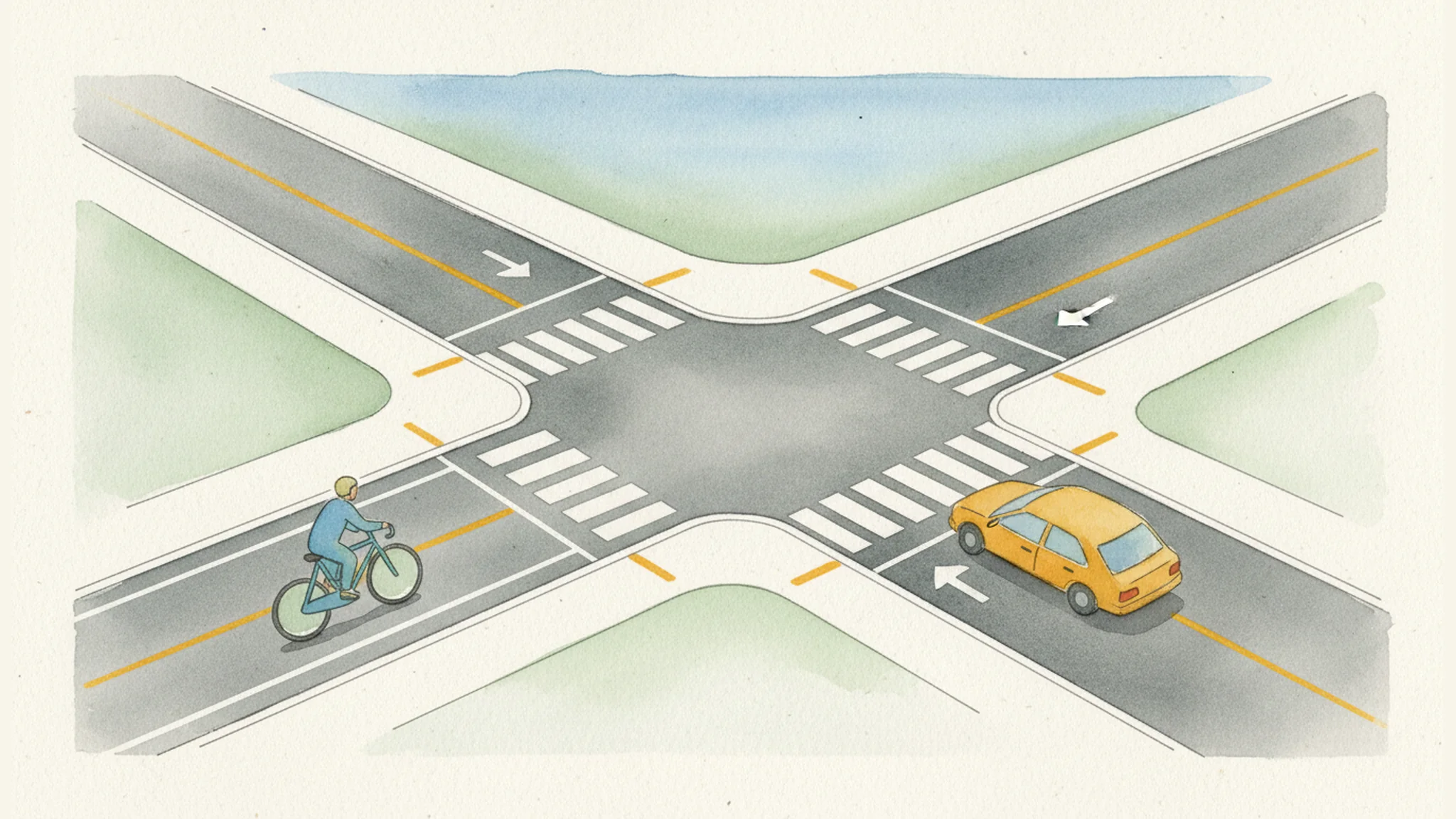
A right-hook crash usually happens when a driver turns right across a bicyclist’s path at an intersection, driveway, or alley.
In Oregon, these crashes often involve more than one rule at the same time:
- yielding to a bicyclist in a bicycle lane,
- making a turn with reasonable safety,
- signaling in time,
- avoiding an unsafe lane change,
- and, in some cases, comparative fault arguments about rider position or visibility.
If you need the broader statewide bicycle claim overview, start with our bicycle accidents page. For the wider right-of-way framework, see Bike vs. Car at an Unprotected Intersection in Oregon. For Portland-specific evidence issues involving bike boxes, no-turn-on-red signs, sight distance, and PBOT/ODOT records, see our guide to Portland bike-lane design factors in right-hook crashes.
1) What Is a Right-Hook Bike Crash?
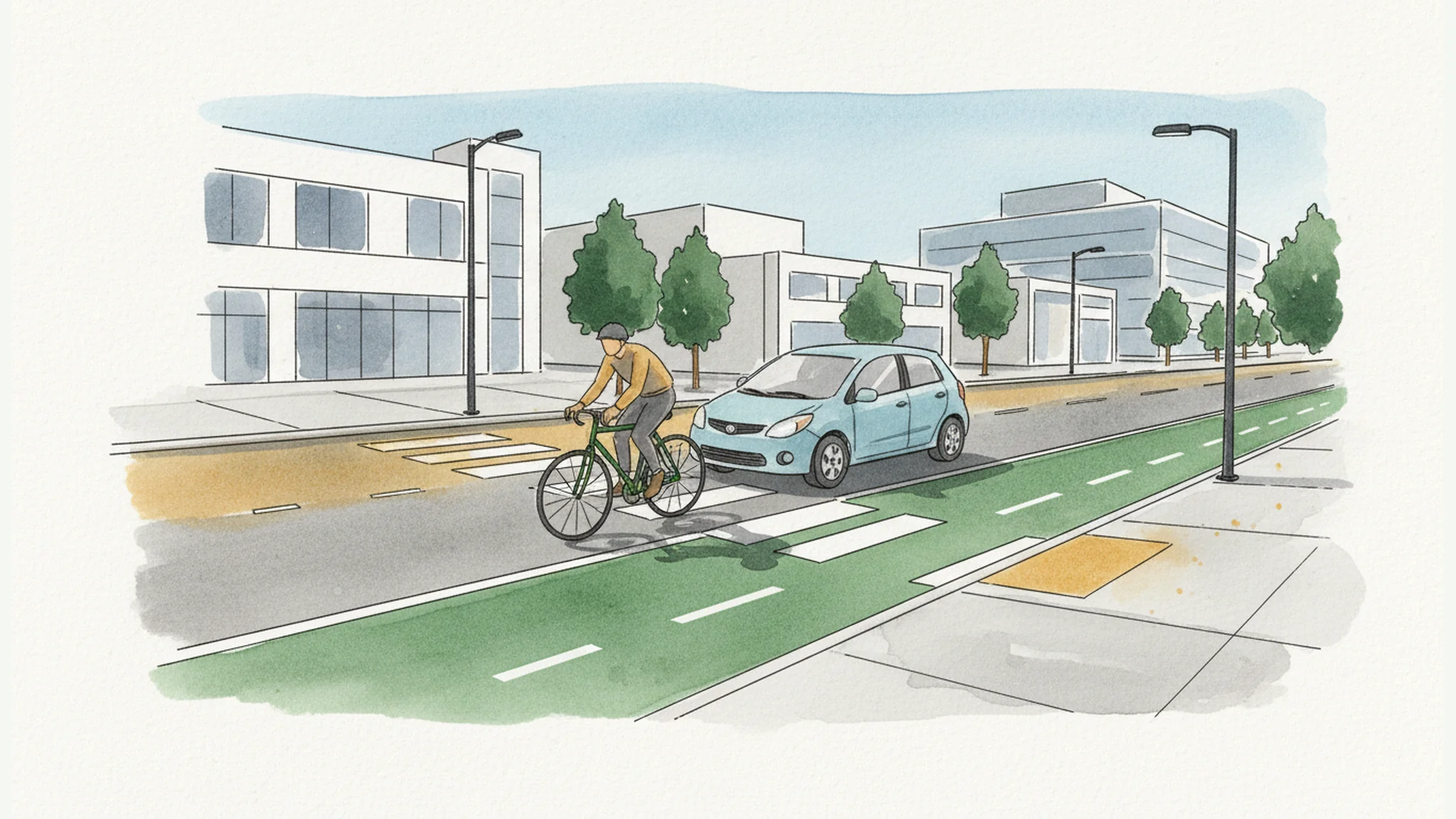
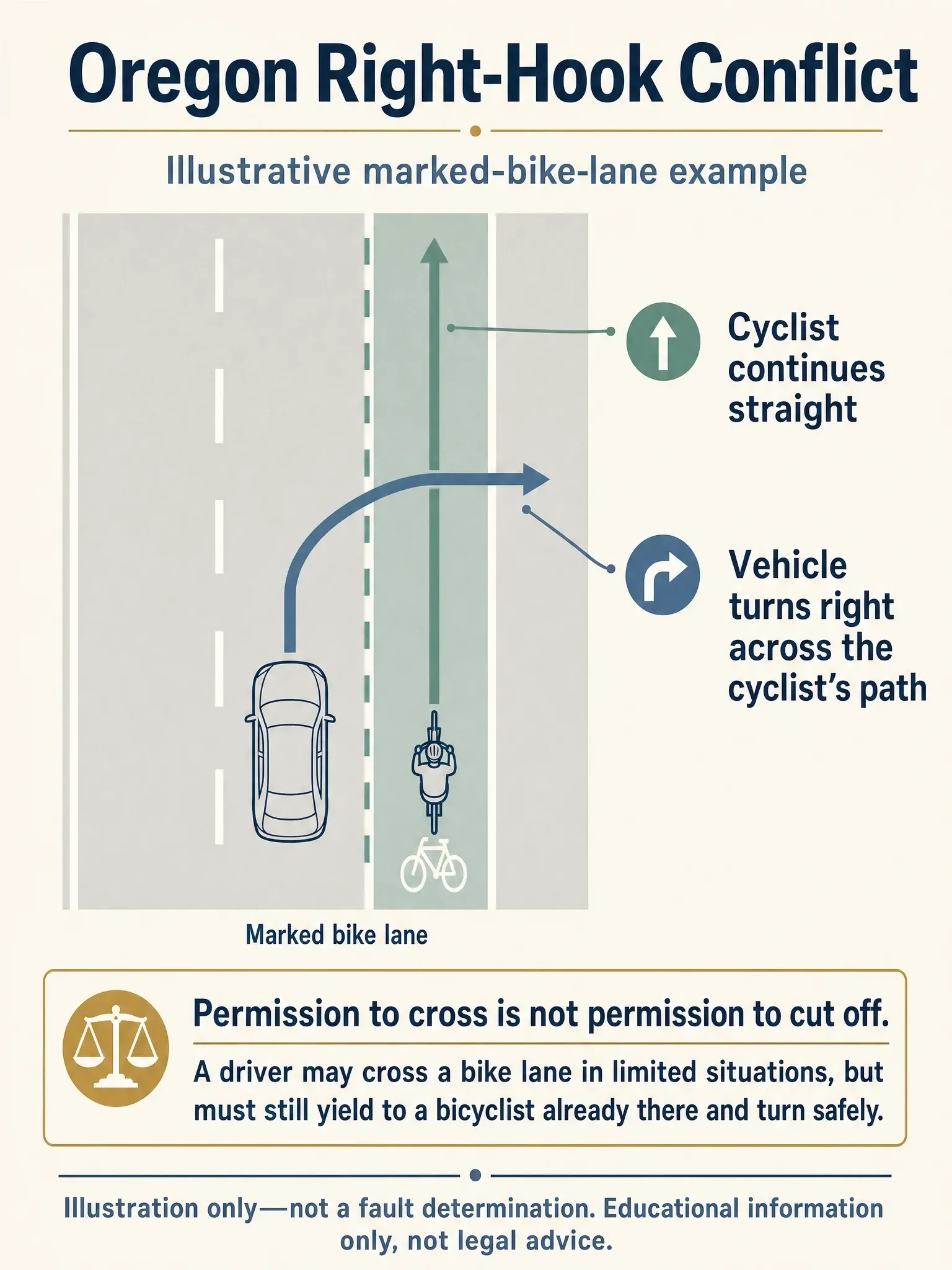
A right hook is a turning conflict. The bicyclist is going straight. The driver turns right across that line of travel.
Common versions include:
- a car passes a bicyclist and immediately turns right,
- a driver cuts across a marked bike lane at an intersection,
- a vehicle turns into a driveway or lot entrance across the rider’s path, or
- a truck or van turns while the rider is hidden in a blind spot.
ODOT’s Oregon Bicycling Manual uses the term “right hook” for the situation where a driver turns right across a bicyclist who is continuing straight. The manual also warns about conflict zones and blind-spot risks around turning vehicles.
2) Oregon Rule 1: Drivers Must Yield to Bicyclists in a Bicycle Lane
ORS 811.050 requires a motor vehicle operator to yield the right of way to a person operating a bicycle on a bicycle lane.
That is often the starting point in a right-hook crash. If the rider was already in the bike lane and the driver turned across that space without yielding, this statute may be central to the analysis.
3) Oregon Also Allows Only Limited Motor-Vehicle Use of the Bike Lane
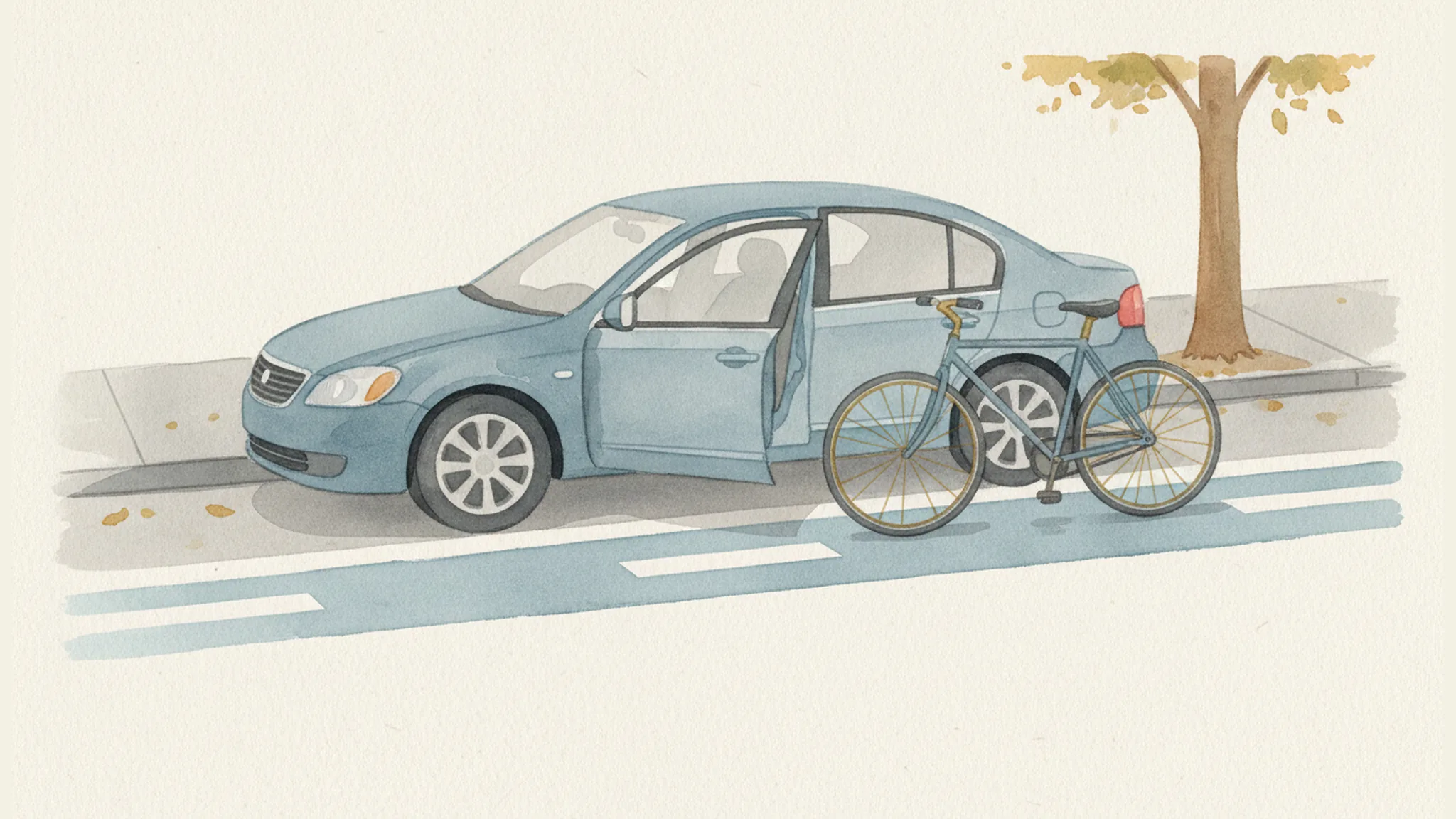
ORS 811.440 allows a motor vehicle to operate on a bicycle lane only in limited situations, including making a turn or entering or leaving an alley, private road, or driveway.
That matters because a driver may be allowed to cross a bike lane to turn, but that limited permission does not erase the separate duty to do so safely or the duty to yield to a bicyclist already there.
In other words, “I was allowed to cross the bike lane” is not the same as “I was allowed to cut off the bicyclist.”
4) Right Turns and Lane Changes Must Be Made Safely and Properly Signaled
Several Oregon statutes often work together in a right-hook crash.
Safe turns
ORS 811.335 says a turn is unlawful if it cannot be made with reasonable safety. The statute also generally requires continuous signaling for at least the last 100 feet before turning.
Proper right-turn position
ORS 811.355 requires a right turn to be made as close as practicable to the right-hand curb or edge of the roadway. That can matter if the driver swung wide or cut across from an unexpected position.
Lane changes and signals
ORS 811.375 separately governs lane changes and also requires reasonable safety and signaling. ORS 811.395 and ORS 811.400 address appropriate turn-signal use.
In practice, that means a last-second signal may still leave too little time for a bicyclist to react safely.
5) Oregon Bicyclists Also Have Rights and Duties
ORS 814.400 says bicyclists on public ways generally have the same rights and duties as drivers, unless a bicycle-specific rule says otherwise.
That is why an Oregon bicyclist in a bike lane or travel lane is not a lesser road user.
Bike-lane exceptions can matter
ORS 814.420 generally requires bike-lane use when one is available and suitable, but it also allows a rider to leave the lane in certain situations, including to avoid hazards or to continue straight where the bike lane is to the right of a lane from which a motor vehicle must turn right.
Lane position is not always “hug the curb”
ORS 814.430 generally requires riding as close as practicable to the right edge when traveling slower than traffic, but the statute also recognizes exceptions for hazards, too-narrow lanes, passing, and other unsafe conditions.
That can matter if the defense argues the rider was automatically out of position.
6) Sidewalk and Driveway Variants Need Separate Analysis
Not every right-hook crash happens from a standard on-street bike lane.
Sometimes the collision happens when the bicyclist is on a sidewalk or in a crosswalk area while a driver crosses that path to enter or leave a driveway.
ORS 814.410 governs sidewalk bicycle operation, and ORS 811.055 requires drivers to yield to bicyclists on sidewalks. Those cases can look similar factually but are not identical legally to a right hook across a marked bike lane.
7) Speed, Visibility, and Blind Spots Still Matter
ORS 811.100, Oregon’s basic speed rule, can matter even when the main fight is about yielding or signaling.
ODOT’s Driver Manual also instructs drivers to:
- check mirrors and blind spots before turning,
- look over the shoulder for bicyclists,
- avoid moving into the bike lane in preparation for a turn, and
- yield to people riding in a bike lane or on a sidewalk.
Blind spots may help explain how a crash happened, but they do not erase the duty to turn safely.
8) Comparative Fault Can Affect a Right-Hook Claim
Oregon uses comparative fault. Under ORS 31.600, a bicyclist’s claim is not automatically barred because the defense alleges some shared fault. Damages can be reduced by the rider’s percentage of fault, and recovery is barred only if the rider’s fault is greater than the combined fault of the people compared under the statute.
ORS 31.605 also confirms that fault can be allocated by percentages.
Common defense themes in a right-hook case include claims that the bicyclist:
- was riding too fast,
- passed on the right unsafely,
- failed to signal,
- was outside the proper lane position, or
- entered from a sidewalk too quickly.
Those are fact arguments, not automatic legal conclusions.
9) What Evidence Usually Matters Most
Right-hook crashes are often disputed because the driver says, “I never saw the bicyclist,” and the rider says, “The driver cut me off.”
The most useful evidence usually shows position, timing, and visibility.
Preserve the roadway setup
If possible, photograph or preserve:
- the bike lane,
- the turn lane,
- driveway or alley entrances,
- conflict-zone paint,
- stop bars and crosswalks,
- the vehicle position,
- skid marks or scrape marks,
- the bike’s damage,
- helmet and clothing damage, and
- any nearby surveillance cameras.
Get witness and route data early
Witness statements, dashcam or surveillance footage, and ride-tracking data can help show whether the driver signaled, whether the rider was visible, and exactly where the conflict happened.
Scene evidence disappears fast
Paint, debris, camera footage, and memory all change quickly. Early preservation can make a large difference in a disputed turning case.
10) What To Do After a Right-Hook Bike Crash in Oregon
If you are physically able after the crash:
- Get medical care.
- Call law enforcement when appropriate.
- Photograph the intersection, driveway, bike lane, and final positions.
- Get witness names and contact information.
- Ask about nearby cameras right away.
- Preserve your bike, helmet, lights, clothing, and route data.
- Avoid guessing about fault if you are unsure.
Bottom Line
A right-hook bicycle crash in Oregon is rarely about only one rule. These cases often turn on bike-lane priority, signaling, safe turning, lane changes, rider position, and comparative fault.
That is why the exact roadway setup and the early evidence matter so much.
FAQ
Can a driver legally cross a bike lane to turn right in Oregon?
Sometimes, but only in limited situations under ORS 811.440. That limited permission does not erase the duty to yield and turn safely.
Does Oregon law require drivers to yield to bicyclists in a bike lane?
Yes. ORS 811.050 requires drivers to yield to bicyclists on a bicycle lane.
Can a bicyclist leave the bike lane to avoid a right-hook conflict?
In some situations, yes. ORS 814.420 includes bike-lane exceptions that may apply when a rider continues straight or avoids a hazard.
What if the crash happened near a driveway or while riding on the sidewalk?
That can trigger different rules, including ORS 814.410 and ORS 811.055.
What if the driver signaled before turning?
A signal does not automatically make the turn lawful. The driver still must yield and make the movement with reasonable safety.
Can an injured bicyclist still recover if the defense says they were partly at fault?
Potentially yes. Oregon comparative fault may reduce recovery and bars it only if the injured rider’s fault is greater than the combined fault of the people compared under the statute.
Sources
Client-First Fee Promise
Client First = Bills First, Fees Second
Your unpaid medical bills do not have to make your lawyer's fee bigger. Johnson Law subtracts qualifying medical bills before calculating our fee, helping clients keep more of their settlement.
Applies to qualifying cases. Results vary.