Oregon E-Bike Accident Claims: Does Class 1, 2, or 3 Status Affect Liability?

Oregon E-Bike Accident Claims: Does Class 1, 2, or 3 Status Affect Liability?
Educational information only, not legal advice. Oregon e-bike crash claims are fact-specific. This article explains general Oregon rules and common fault arguments, not a guaranteed result.
If you were hit by a car while riding an e-bike in Oregon, the short answer is this: class can matter, but it usually does not decide the case by itself. This article is focused on the e-bike classification and bicycle-law issues that tend to arise after an Oregon e-bike accident, not every possible bike-versus-car fact pattern.
What decides most injury claims is still the basic negligence picture: who had the right of way, where the rider was positioned, whether anyone violated a traffic rule, and whether that conduct actually helped cause the crash. Oregon also uses comparative fault, which means blame can be divided instead of assigned all or nothing.
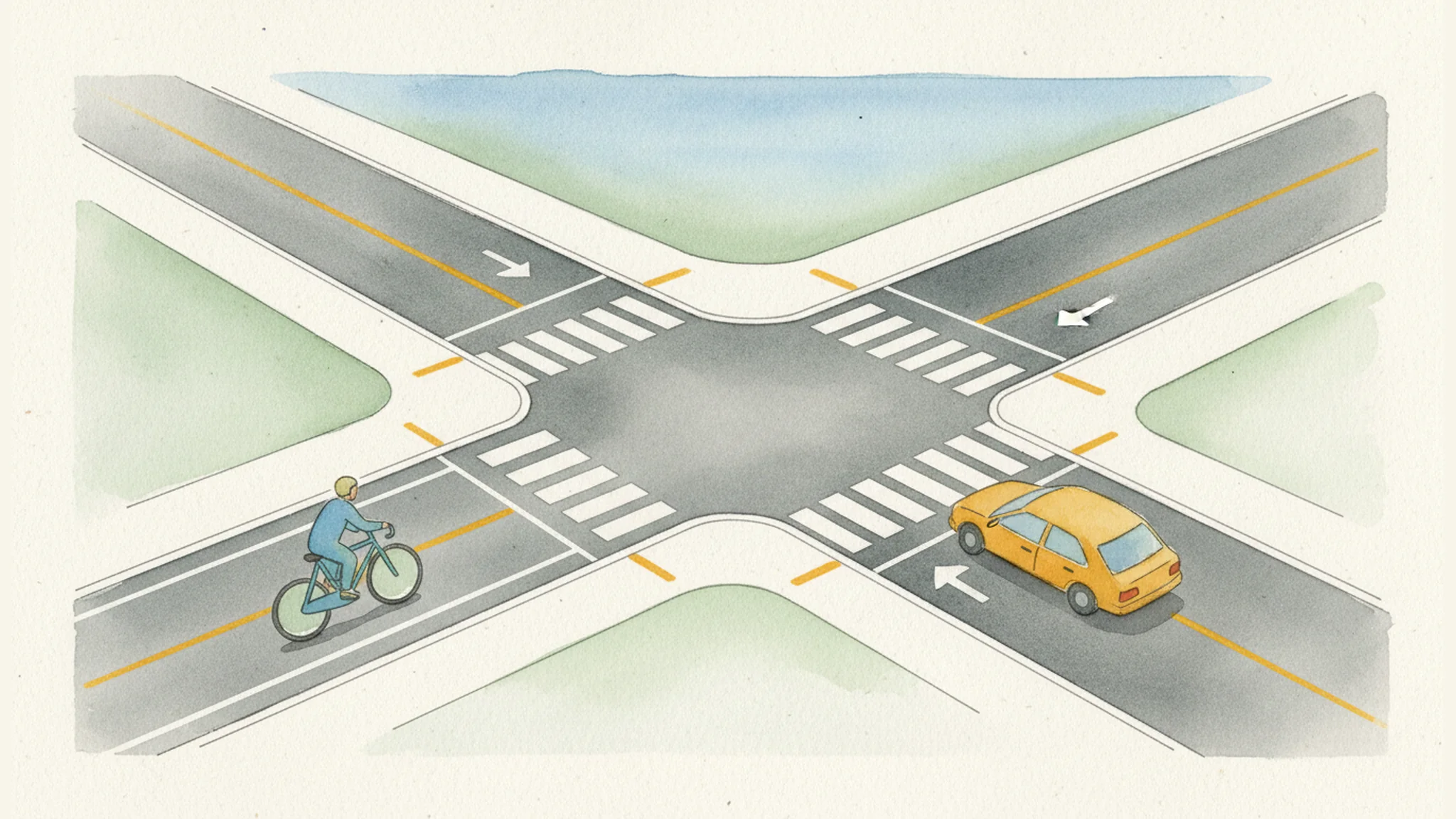
For broader Oregon bicycle-injury context, see our bicycle accidents page. For related bicycle fault issues that do not depend on e-bike class, see Bike vs. Car at an Unprotected Intersection in Oregon, Right-Hook Bike Crash in Oregon, and Bike or Motorcycle Hit by a U-Turning Driver in Oregon. If the device was an electric scooter rather than an e-bike, start with our electric scooter accidents page or our Oregon e-scooter fault article.
Quick Answer for Oregon E-Bike Riders
In most Oregon e-bike accident claims, the better question is not simply “Was it Class 1, Class 2, or Class 3?” The more useful questions are:
- Did the device qualify as an electric assisted bicycle under Oregon law?
- Was the rider in the roadway, a bicycle lane, a sidewalk area, or a crosswalk approach?
- Did the driver turn, merge, pass, or enter across the rider’s path without yielding or using reasonable care?
- Did any alleged e-bike rule violation actually contribute to the crash?
- How would Oregon modified comparative fault allocate responsibility between the rider and driver?
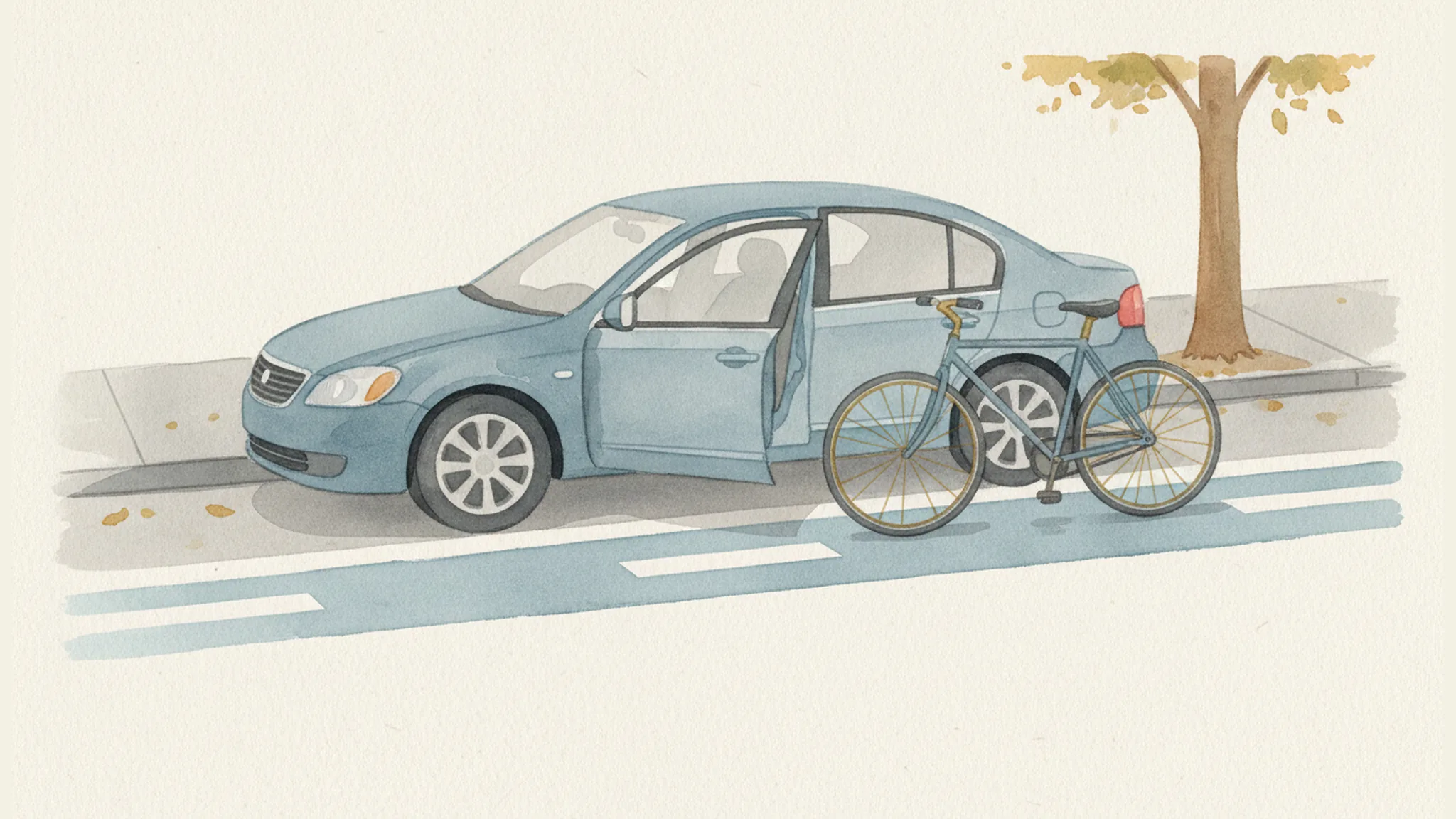
That framing helps keep this page distinct from our broader bicycle crash resources: this page covers classification and e-bike-specific operation arguments, while the linked bicycle articles cover specific crash mechanics such as right hooks, unprotected intersections, U-turns, uninsured drivers, and dooring.
1) Class Can Matter, but It Does Not Decide Liability
A Class 1, 2, or 3 label is not a shortcut to the answer.
In Oregon, the bigger legal question is often whether the device fits the statutory definition of an electric assisted bicycle under ORS 801.258. If it does, ORS 814.405 treats it as a bicycle rather than a motor vehicle for Oregon Vehicle Code purposes unless a statute specifically says otherwise.
That matters because bicycles in Oregon have their own roadway rights and duties. Under ORS 814.400, a person riding a bicycle on a public way generally has the same rights and duties as the driver of another vehicle, with exceptions built into the code.
So if an insurer says, “This was a Class 3 bike, so you lose,” that is usually too simplistic. In an Oregon e-bike accident claim, the classification issue should be connected to a specific statute, a specific location, and a specific causation argument.
2) What Oregon’s E-Bike Rules Actually Do
Oregon’s class structure
ORS 801.258 defines Oregon’s e-bike classes, including the assist method and speed thresholds associated with Class 1, Class 2, and Class 3 electric assisted bicycles.
Those distinctions matter because they help establish whether the device is actually a qualifying electric assisted bicycle under Oregon law.
Why classification is mostly an operation-rules question first
The class label matters primarily because it can affect how insurers and defense lawyers describe the rider’s operation of the bike. But the Oregon statutes do not create a separate negligence rule that automatically decides fault based only on the class label.
3) Operation Rules and Claim Rules Are Not the Same Thing
This is one of the most important distinctions in an Oregon e-bike claim.
Operation rules
These are rules about how the e-bike may be ridden:
- where it can be ridden,
- whether it belongs in a bike lane,
- whether sidewalk riding is allowed,
- equipment,
- lighting,
- signaling, and
- age-related operation rules.
Claim rules
These are the rules that decide money damages after a crash:
- negligence,
- causation,
- comparative fault,
- and whether certain evidence can reduce damages.
A rider can violate an operation rule and still have a valid claim. A driver can also violate a traffic rule and still argue that the rider shares fault. The legal outcome turns on the full evidence picture, not on one label in isolation.
4) Oregon Roadway and Bike-Lane Rules Still Matter Most
E-bikes generally get bicycle status
Because ORS 814.405 treats a qualifying electric assisted bicycle as a bicycle, many car-versus-e-bike crashes are analyzed much like car-versus-bicycle crashes.
That often means the claim turns on bicycle-accident questions such as:
- Did the driver yield when crossing or turning through a bike lane?
- Was the rider lawfully in the roadway?
- Was the rider allowed to leave the bike lane?
- Was the driver passing safely?
- Was either party careless?
Bike-lane priority can matter sharply
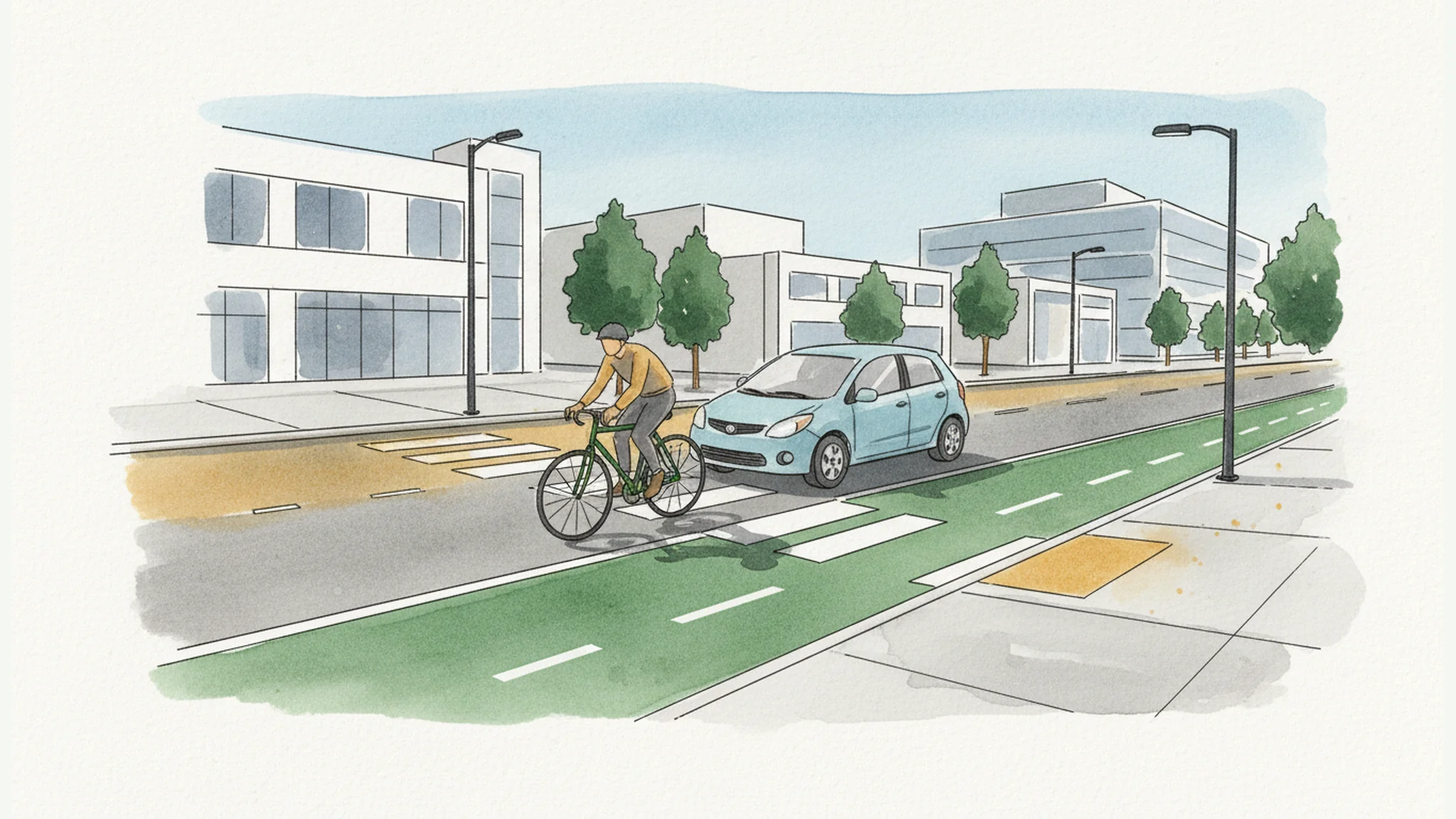
Under ORS 811.050, a motor vehicle operator must yield the right of way to a person operating a bicycle or electric assisted bicycle on a bicycle lane.
That can matter in right-hook crashes, driveway crossings, merge conflicts, and lane-entry collisions.
Oregon also limits when a motor vehicle may operate on a bicycle lane. ORS 811.440 allows limited motor-vehicle use of a bicycle lane for turns, driveway entries, and similar movements, but that limited permission does not erase the duty to yield or move safely.
Riders are not always required to stay in the bike lane
Under ORS 814.420, a rider may lawfully leave a bicycle lane or path for reasons such as passing, preparing for a turn, avoiding debris or hazards, or continuing straight where the bike lane is to the right of a lane from which a motor vehicle must turn right.
Lane position is often a fact question
Under ORS 814.430, a bicyclist riding slower than traffic generally must ride as close as practicable to the right edge, but Oregon recognizes important exceptions for hazards, passing, narrow lanes, turns, and similar conditions.
That means “you should have been farther right” is often an oversimplified defense argument.
5) Sidewalk Riding Is One of the Biggest E-Bike Issues
Under ORS 814.410, operating an electric assisted bicycle on a sidewalk is unsafe bicycle operation on a sidewalk.
This can become central in crashes involving driveways, curb cuts, and crosswalk approaches.
At the same time, ORS 811.055 still requires drivers to yield to bicyclists on sidewalks, while also recognizing that a driver may not be in violation of that statute when the bicyclist is operating in violation of the sidewalk statute. Even then, the driver still owes due care.
So sidewalk illegality can matter, but it does not automatically erase driver fault.
6) Signaling, Passing, Equipment, and Helmet Points Can Also Matter
Passing distance and driver conduct
Under ORS 811.065, a driver passing a bicyclist must move left at a safe distance and return only when safely clear.
Equipment and lighting
Under ORS 815.280, bicycles operated on a highway must meet brake and visibility requirements. Missing lights or brake issues may become part of the defense narrative, especially in low-light crashes.
Age and helmet rules
Under ORS 807.020, riders generally must be 16 or older to operate an electric assisted bicycle without driving privileges. Under ORS 814.485, Oregon’s bicycle helmet statute applies to riders under 16.
But ORS 814.489 separately limits the use of helmet nonuse to reduce damages or create a defense in covered bicycle injury cases.
7) How Insurers May Try To Use Class in an Oregon E-Bike Accident Claim
In practice, insurers may try several class-related arguments.
“This was not really an Oregon electric assisted bicycle”
If the bike’s specs or modifications suggest it falls outside ORS 801.258, the insurer may argue it should not be treated as a bicycle under ORS 814.405.
“You were riding where this bike should not have been ridden”
Expect arguments about sidewalk use, lane position, path use, visibility, or speed near driveways and crossings.
“Your setup made you harder to see or stop”
This often focuses on lights, reflectors, brakes, and post-sale modifications.
“Even if our driver was careless, you share enough fault to reduce recoverable damages”
That is where comparative fault becomes central.
8) Comparative Fault Is Usually the Real Claim Issue
Under ORS 31.600, Oregon uses modified comparative fault.
That means:
- a claim is not barred just because the rider may share some fault,
- damages can be reduced by the rider’s percentage of fault, and
- recovery is barred only if the rider’s fault is greater than the combined fault of the people compared under the statute.
So even when the defense focuses heavily on class, the actual question is usually whether the rider’s conduct and the driver’s conduct contributed to the crash, and in what proportions.
9) Practical Steps After an Oregon E-Bike Crash With a Car
If you are physically able after the crash:
- Get medical care promptly.
- Preserve the e-bike exactly as it was.
- Photograph the full bike, class labels, serial numbers, controls, lights, and damage points.
- Photograph roadway markings, bike-lane markings, curb cuts, sidewalks, and the vehicle involved.
- Save purchase records, owner manuals, app records, ride data, firmware or controller information, and any modification information.
- Get witness names quickly.
- Ask for the police report number.
- Be careful with recorded insurer statements, especially about class, speed, or modifications.
- Write down exactly where you were riding when the crash happened.
If the crash involved a bike lane, sidewalk approach, driveway, or intersection, photograph the scene from both the rider’s and driver’s perspectives before markings, debris, construction cones, or nearby camera footage disappear.
Related Oregon Bicycle and Micromobility Resources
- Oregon bicycle accident claims: broader bicycle-injury overview.
- Right-hook bike crashes in Oregon: when a driver turns across a bike lane or rider’s path.
- Bike-versus-car unprotected intersections: right-of-way rules at uncontrolled, stop-controlled, and yield-controlled intersections.
- Cyclist hit by an uninsured driver in Oregon: UM/UIM coverage issues after bike crashes.
- Oregon electric scooter accidents: separate framework for e-scooter injuries.
Bottom Line
In an Oregon e-bike accident claim, Class 1, 2, or 3 status can matter as evidence, but it usually does not decide liability by itself.
The stronger legal questions are usually whether the bike fit Oregon’s statutory e-bike definition, whether the rider and driver followed the rules that applied in that location, what caused the impact, and how Oregon comparative fault applies.
FAQ
Does a Class 3 label automatically ruin an Oregon e-bike injury claim?
No. A class label does not automatically decide liability. The more important issues are whether the bike fits Oregon’s legal definition of an electric assisted bicycle, what traffic rules applied, and what the evidence shows about fault.
Is an Oregon e-bike accident claim handled like a bicycle accident claim?
Often, yes, if the device qualifies as an electric assisted bicycle under Oregon law. But e-bike class, sidewalk restrictions, age rules, equipment, and modifications can create arguments that may not appear in a conventional bicycle accident claim.
Does Oregon treat an e-bike like a bicycle or a motor vehicle?
A qualifying electric assisted bicycle is treated as a bicycle rather than a motor vehicle under ORS 814.405, unless another statute specifically says otherwise.
Can I ride an e-bike on the sidewalk in Oregon?
No. ORS 814.410 specifically says operating an electric assisted bicycle on a sidewalk is unsafe bicycle operation on a sidewalk.
If I was outside the bike lane, does that mean I was at fault?
Not necessarily. ORS 814.420 and ORS 814.430 include important exceptions for hazards, turns, passing, and other situations.
Can the defense reduce my damages because I was not wearing a helmet?
Oregon law strongly limits that argument in covered bicycle injury cases. ORS 814.489 is the key statute.
What if the insurer says I was partly at fault?
That does not automatically defeat a claim. Oregon uses comparative fault, so damages may be reduced by a rider’s share of fault, and recovery is barred only if that share is greater than the combined fault of the people compared under the statute.
Sources
Client-First Fee Promise
Client First = Bills First, Fees Second
Your unpaid medical bills do not have to make your lawyer's fee bigger. Johnson Law subtracts qualifying medical bills before calculating our fee, helping clients keep more of their settlement.
Applies to qualifying cases. Results vary.