Cyclist Injured by Road Debris From a Vehicle: Identifying the Responsible Party
Cyclist Injured by Road Debris From a Vehicle: Identifying the Responsible Party
Educational information only, not legal advice. Oregon debris-related bicycle injury claims are fact-specific. Liability often depends on identifying the source vehicle, preserving corroborating evidence quickly, and separating vehicle-caused debris from independent roadway-defect issues.
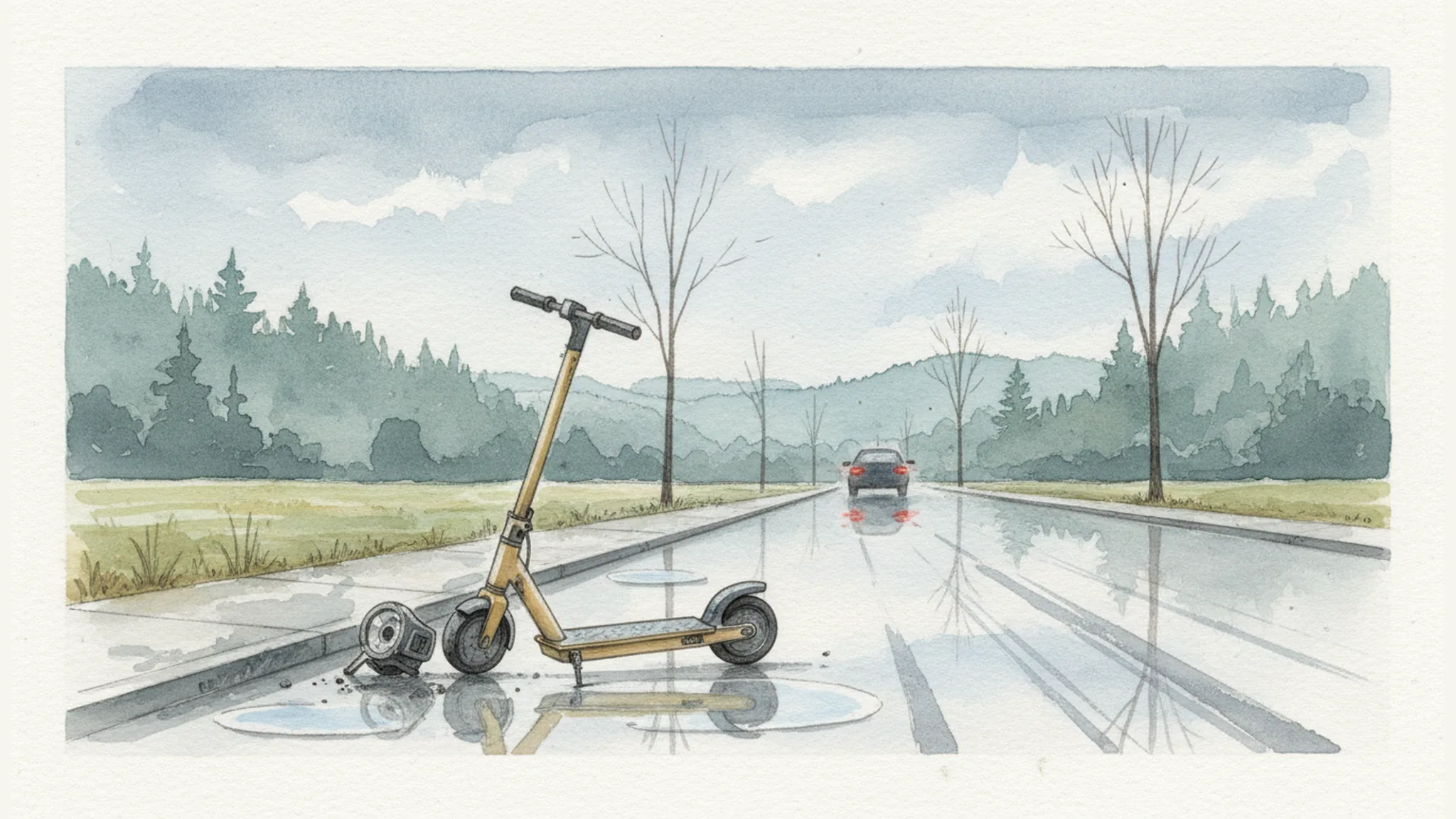
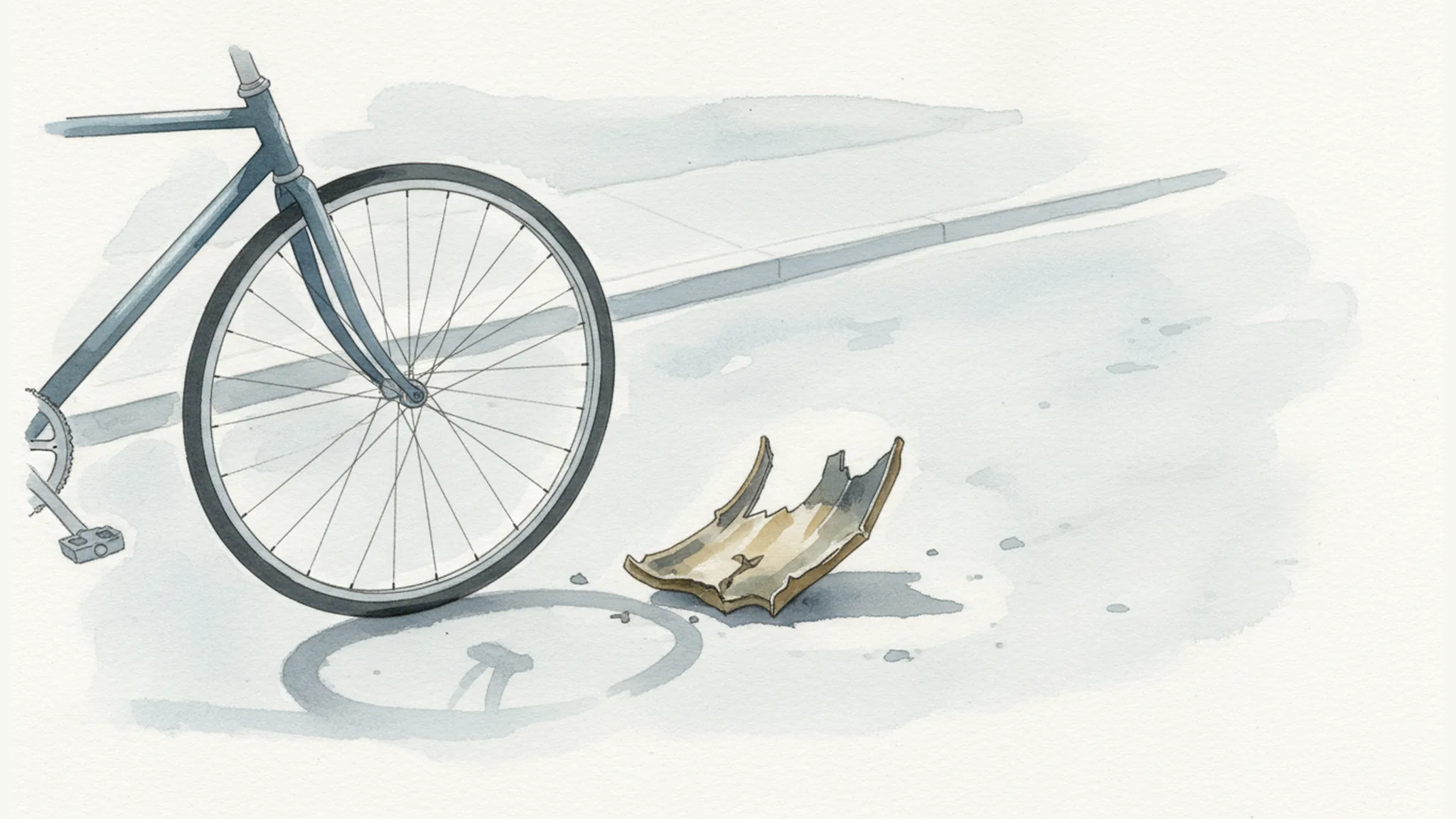
An Oregon cyclist can be seriously injured even when a vehicle never directly hits the rider.
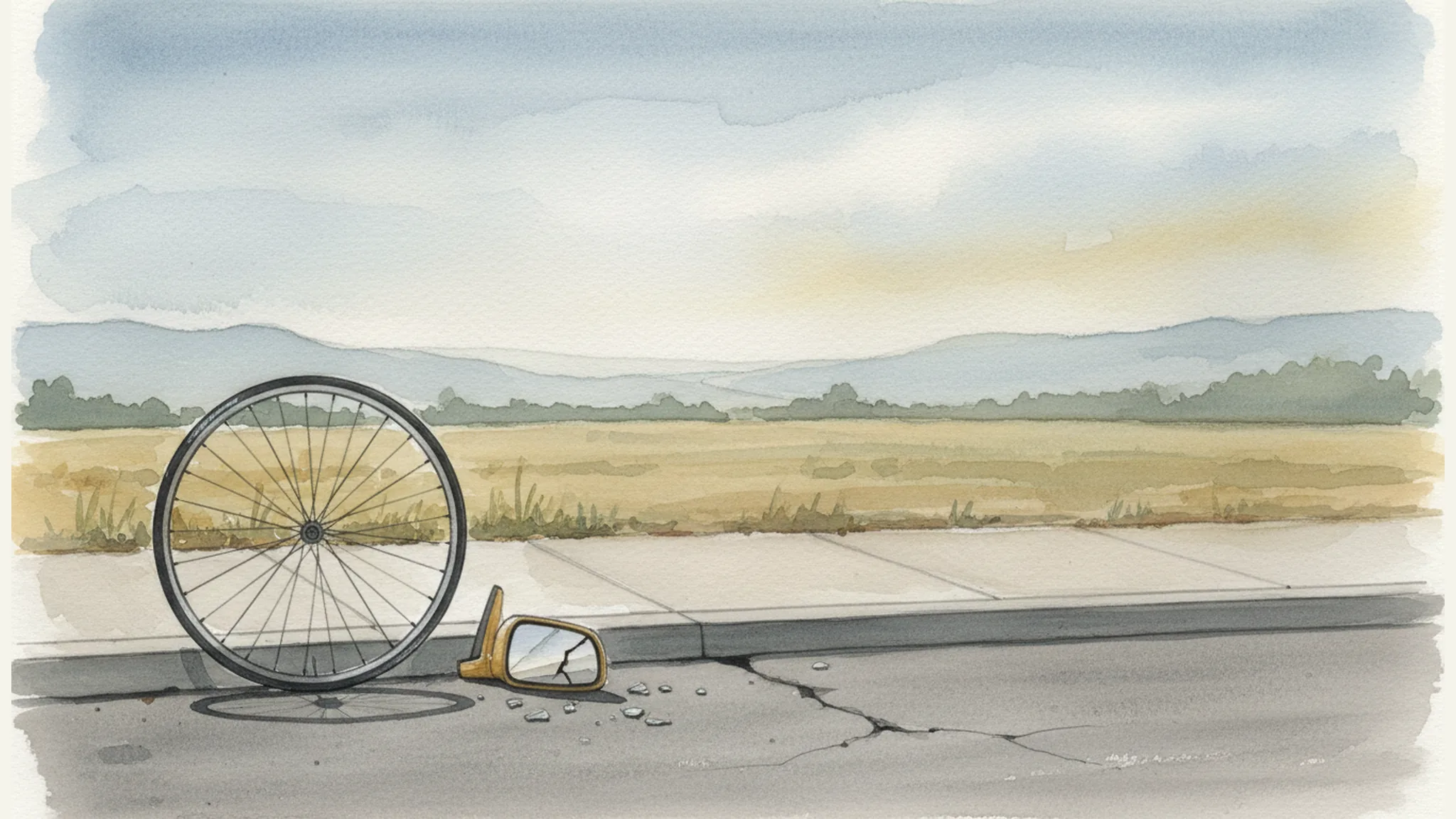
If gravel, tools, lumber, metal, construction material, or another object falls from a vehicle, or if a vehicle drags debris into a cyclist’s path, the driver, vehicle owner, or another responsible party may still be legally at fault. In many of these cases, the hardest issue is not whether the debris was dangerous. It is proving where it came from before the scene changes.
If you want the broader bicycle-claim overview first, see our bicycle accidents page. For a related commercial-load analysis, see Falling Cargo Truck Accident Oregon: Who Is Liable and What Evidence Do You Need?. If the responsible driver was uninsured or disappeared, see Cyclist Hit by an Uninsured Driver in Oregon: How UM/UIM Coverage May Apply.
1) A Debris Case Can Exist Even Without Direct Vehicle Contact
In Oregon, the absence of bumper-to-bike contact does not automatically end the analysis.
If a vehicle created the hazard by dropping cargo, spilling material, or dragging debris into the roadway, the core question is usually ordinary negligence: did a driver or another responsible party create an unreasonable roadway danger that injured the cyclist?
Several Oregon statutes may matter in that analysis:
- ORS 818.300, which addresses failure to prevent a load from dropping, sifting, leaking, or otherwise escaping from a vehicle;
- ORS 818.320, which addresses dragging objects on a highway;
- ORS 811.100, Oregon’s basic speed rule; and
- ORS 811.135, Oregon’s careless driving statute.
Depending on the facts, those statutes may help frame why the debris event should never have happened in the first place.
2) Who May Be Responsible?
The responsible party is not always just the person behind the wheel.
Driver
The driver may be responsible if the evidence suggests the load was not properly secured, the vehicle was operated carelessly, or the driver kept traveling after material was visibly spilling or dragging.
Vehicle owner
Sometimes the owner of the vehicle may also be important, especially when ownership, control, maintenance, or loading responsibility differs from the driver.
Employer or commercial carrier
If the debris came from a work truck, delivery vehicle, dump truck, or commercial rig, the inquiry may widen to the business that controlled the vehicle, the trip, the loading process, or the securement practices.
Loader, shipper, or another third party
In some cargo cases, the real failure happened before the trip began. A loading company, shipper, or another entity involved in preparing the load may matter if the evidence supports that theory.
3) Bicycle-Specific Oregon Issues Still Matter
Cyclists are not second-class road users under Oregon law.
ORS 814.400 generally gives a person riding a bicycle the same rights and duties as the driver of another vehicle, unless a bicycle-specific rule says otherwise.
That matters because debris cases sometimes trigger unfair arguments that the cyclist should simply have ridden somewhere else. Oregon’s bicycle statutes are more nuanced than that.
ORS 814.420 and ORS 814.430 recognize that lane position can depend on safety, hazards, turns, passing, and roadway conditions. So if a rider moved within or out of a bike lane to avoid hazards, that usually requires a fact-based analysis rather than a slogan.
4) Comparative Fault Often Becomes the Defense Argument
Oregon uses modified comparative fault under ORS 31.600.
That means the defense may argue the cyclist:
- should have seen the debris sooner,
- was riding too fast for conditions,
- chose an unsafe lane position, or
- overreacted while trying to avoid the object.
Those are not automatic defenses. They are fact arguments. In a sudden-debris case, timing, visibility, roadway geometry, witness accounts, and physical evidence often matter far more than hindsight.
5) The First Real Problem Is Usually Identification
When debris is still attached to a vehicle or the driver stops, the case is usually easier to identify.
But many cyclist debris claims involve a disappearing vehicle, scattered material, or a secondhand report from another witness. That is where early corroboration becomes critical.
Try to preserve or obtain, when possible:
- Photos of the debris, bike damage, and exact roadway location.
- Vehicle description, plate, company markings, trailer number, or DOT number.
- Witness names and contact information.
- Dashcam, business-camera, or home-camera footage from the route.
- 911 timing and law-enforcement response information.
- Your bike computer, phone, or ride-tracking data.
- The damaged bike, helmet, clothing, lights, and bags before repair or disposal.
For the broader preservation framework, see Preserving Evidence After an Accident.
6) What if the Vehicle Never Hit the Cyclist and Never Stopped?
Sometimes a rider crashes to avoid debris from an unidentified vehicle, or an object flies off a vehicle that keeps going.
That may raise a phantom-vehicle or uninsured-motorist issue rather than a simple known-driver liability claim. In Oregon, ORS 742.504 can matter in those no-contact and unidentified-vehicle scenarios, including corroboration and claim-preservation requirements.
That does not mean every debris case becomes a UM claim. It means an injured cyclist should be careful not to assume there is no recovery path just because the vehicle never made direct contact or was not identified immediately.
7) Could a Public Body Be Responsible Instead?
Sometimes yes, but that is a different theory and should not be confused with a falling-debris case.
If the injury was caused not by a vehicle’s fresh debris event but by a roadway condition, public-road maintenance issue, or another problem involving a city, county, or state entity, the Oregon Tort Claims Act may become relevant. See ORS 30.265 and ORS 30.275. For the motorcycle version of that issue, see our Oregon post on motorcycle crashes caused by road hazards and possible city-or-state maintenance claims.
That distinction matters because the evidence, notice rules, and defendants may be very different depending on whether the case is really about:
- debris newly created by a vehicle,
- debris left behind long enough to become a roadway-maintenance issue, or
- both.
8) Practical Steps After a Bicycle Crash Caused by Road Debris
If you are physically able after the crash:
- Get medical care promptly.
- Call law enforcement when appropriate and ask how to obtain the report.
- Photograph the debris, roadway, bike, and visible injuries.
- Identify the vehicle or business involved if possible.
- Get witness contact information immediately.
- Preserve damaged property and ride data.
- Avoid quick recorded statements that guess about fault or the debris source.
- If the vehicle is unknown, evaluate possible UM issues quickly rather than late.
Bottom Line
An Oregon cyclist injured by road debris from a vehicle may still have a valid claim even without direct vehicle contact.
The key questions are usually who created the hazard, whether the source vehicle can be identified, whether another party shared responsibility for the load or roadway condition, and how much evidence was preserved before it disappeared.
FAQ
Can I have a claim if the vehicle never actually hit my bicycle?
Potentially yes. If a vehicle dropped, spilled, or dragged debris that caused the crash, the lack of direct contact does not automatically defeat an Oregon injury claim.
Who is usually responsible when road debris comes from a vehicle?
Possible responsible parties include the driver, vehicle owner, employer, commercial carrier, loader, shipper, or more than one of them, depending on who controlled the vehicle and the load.
What if I do not know which vehicle caused the debris?
That is common in debris cases. Witnesses, camera footage, physical debris, 911 timing, and route data may become especially important. In some cases, uninsured-motorist or phantom-vehicle issues may also need review.
Can the defense say I should have avoided the debris?
Yes. That is usually a comparative-fault argument under ORS 31.600, not an automatic bar. The real issue is often how sudden the hazard was and what a reasonable cyclist could actually do in the moment.
What if the debris had been in the road for a while?
That may point away from a pure vehicle-debris case and toward a roadway-condition or public-body analysis, depending on the facts. Those cases often raise different notice and proof issues.
Sources
Client-First Fee Promise
Client First = Bills First, Fees Second
Your unpaid medical bills do not have to make your lawyer's fee bigger. Johnson Law subtracts qualifying medical bills before calculating our fee, helping clients keep more of their settlement.
Applies to qualifying cases. Results vary.